Which fish food is best for tropical fish? The answer depends on what species you keep, where they feed in the aquarium, how large their mouths are and what nutrients they need.
For many tropical freshwater fish, a good starting point is a nutritionally balanced commercial food formulated for their dietary needs. Flakes can suit some small community fish, micro-pellets work well for many mid-water feeders, and sinking pellets or wafers help bottom-dwelling species obtain their share. Frozen and freeze-dried foods can provide variety, but they aren’t automatically complete everyday diets.
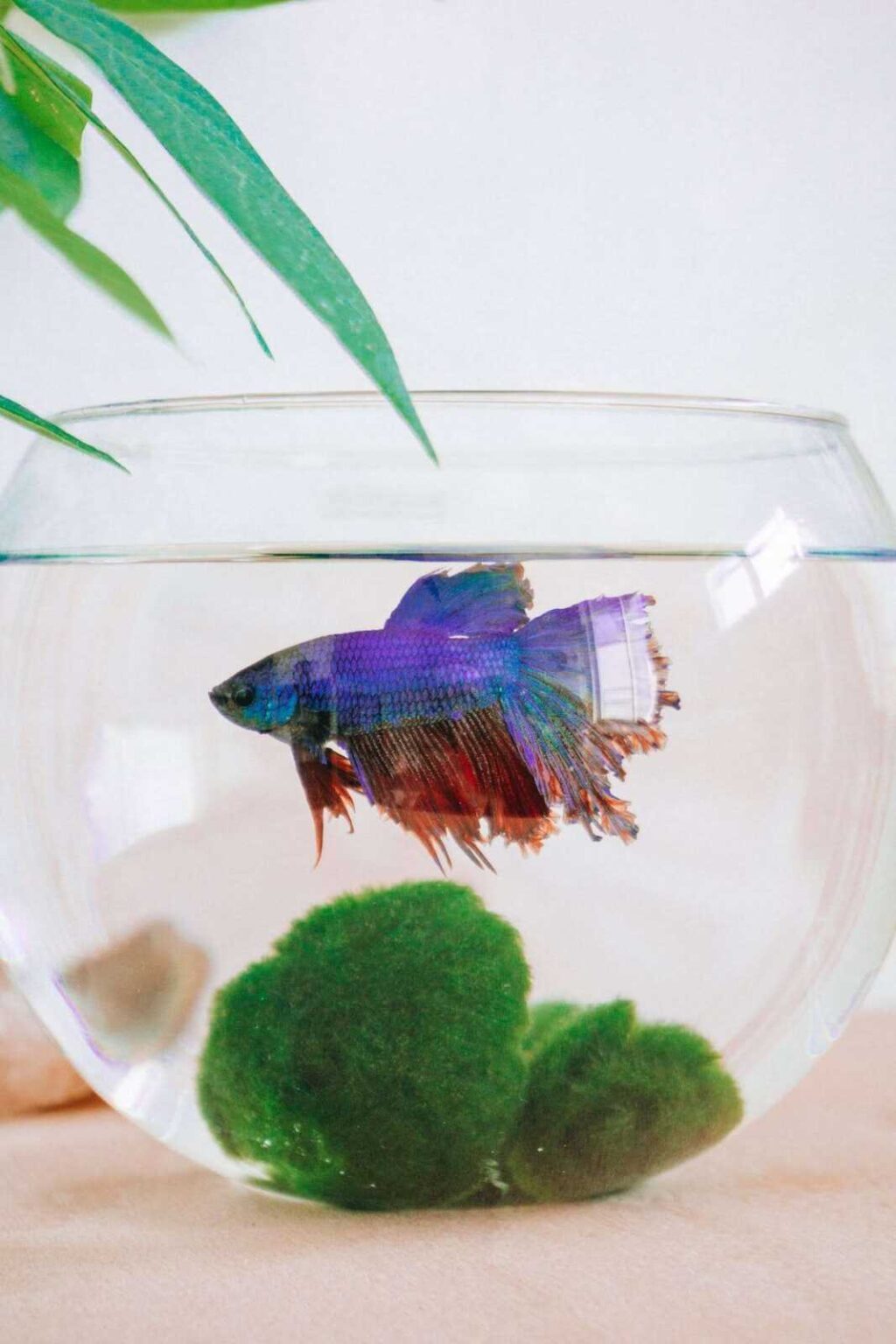
A betta, a shoal of neon tetras and a group of Corydoras may share similar water conditions in some aquarium setups, but they won’t necessarily thrive on the same food.
The Merck Veterinary Manual explains that ornamental fish have diverse nutritional requirements, many of which are not yet fully understood. A mixed-species aquarium may therefore need several appropriately selected foods.
This guide explains how to compare the main fish-food types, feed different parts of the aquarium, avoid waste and recognise when your feeding routine needs attention.
Table of contents
- What makes a good tropical fish food?
- Aquarium Diet & Feeding Matrix
- Flake food vs pellets for tropical fish: Pros and cons
- Best food for surface-feeding tropical fish
- Best food for mid-water tropical fish
- Best sinking pellets for bottom-feeding fish
- Best high-protein food for freshwater fish growth
- Frozen fish food: Bloodworms, brine shrimp and other supplements
- How to feed freeze-dried bloodworms to fish safely
- Does fish food make aquarium water cloudy?
- How much and how often should tropical fish eat?
- How to read a tropical fish-food label
- How to store fish food properly
- Common tropical fish feeding mistakes
- When is poor appetite a reason for concern?
- Frequently asked questions about tropical fish food
- Choosing the right food for your tropical aquarium
What makes a good tropical fish food?
A good fish food provides suitable nutrition in a form that the intended fish can actually eat.
That sounds straightforward, but two products labelled tropical fish food may behave differently in water and have different nutritional formulations.
Before choosing one, consider four things.
1. The fish’s natural diet
Tropical freshwater fish can be broadly described as carnivorous, herbivorous or omnivorous.
Carnivorous species obtain much of their nutrition from animal-derived food. Herbivorous species depend more heavily on plant-based material, while omnivores consume combinations of plant and animal foods.
These are useful starting categories, not complete feeding instructions. Two omnivorous species may still need different foods.
Bettas, for example, are commonly offered specialised betta pellets and suitable small animal-based foods. Some algae-grazing catfish require substantially different feeding arrangements.
The RSPCA’s fish-feeding advice stresses the importance of choosing food for the actual species rather than assuming that all aquarium fish can share one formulation.
2. Where the fish normally feeds
Some fish readily take food floating at the surface. Others intercept particles as they sink or search for food near the substrate.
Food that never reaches a bottom-dwelling fish is of little benefit, regardless of how nutritious its label appears.
Similarly, a small surface-feeding fish may struggle with a large, rapidly sinking pellet.
3. The size and texture of the food
A pellet needs to be small enough for the fish to ingest without difficulty.
Large flakes may need crushing for small-mouthed species. Very large fish, meanwhile, may find tiny flakes impractical.
Food should be selected to accommodate normal feeding behaviour rather than forcing fish to compete for unsuitable particles.
4. Whether it is a staple or supplement
A staple food is intended to form the regular foundation of the diet.
A supplementary food provides variety or additional nutritional components but may not be suitable as the only food offered.
This distinction matters with bloodworms, brine shrimp and other single-ingredient treats.
A fish may eagerly eat a treat without receiving the full range of nutrients required for long-term health.
Aquarium Diet & Feeding Matrix
Use this table to identify which food form may suit different feeding zones. Check the diet requirements of each species before choosing a product.
| Food category | Target feeding zone | Nutritional role | Best practice and common mistake |
|---|---|---|---|
| High-quality flakes | Surface and upper-to-middle water; suitable gouramis, livebearers and community species | Regular staple when appropriately formulated | Offer controlled portions; avoid allowing excess flakes to decay |
| Floating micro-pellets | Surface feeders, including suitable bettas and other small fish | Concentrated staple in a species-appropriate formulation | Match pellet diameter to mouth size; not all tropical pellets suit every species |
| Slow-sinking granules | Mid-water feeders, including many tetras and other community fish | Regular staple that can reach fish below the surface | Spread food appropriately so fast feeders do not take everything |
| Sinking granules and pellets | Corydoras, suitable loaches and other bottom feeders | Dedicated food that reaches lower aquarium zones | Confirm bottom feeders actually eat; do not rely on leftovers |
| Plant-based or algae wafers | Appropriate grazing catfish and other species requiring plant-based foods | Staple or supplement, depending on the formulation | Not every pleco has the same dietary needs; avoid automatically feeding algae wafers to all |
| Frozen bloodworms and brine shrimp | Multiple zones through controlled delivery | Dietary variety and species-appropriate supplementation | Use appropriately sized portions and follow safe storage instructions |
| Freeze-dried bloodworms and other dried treats | Surface or targeted feeding | Supplemental feeding and variety | Follow the particular product’s preparation instructions; don’t treat dried foods as universally complete |
Important: The often-repeated instruction to pre-soak all freeze-dried bloodworms for exactly five minutes to prevent constipation is not established as a universal veterinary rule. Follow verified product instructions and obtain species-specific guidance where necessary.
The same applies to the familiar two-minute feeding rule: it can be a useful guide for many routine feeds, but bottom grazers and specialist species may require different methods.
Flake food vs pellets for tropical fish: Pros and cons
Flakes and pellets are among the most accessible forms of aquarium food. Both can be suitable everyday staples, depending on their composition and the fish consuming them.
Neither is automatically more nutritious.
Flake food: Flexible for small community fish
Flakes are thin, dried pieces that generally float initially and soften after contact with water.
Many small freshwater aquarium fish can consume flakes, and larger pieces can often be crumbled to suit smaller mouths.
Flakes are convenient when feeding mixed communities of compatible fish that readily take food near the surface.
They are also relatively easy to distribute across more than one feeding area.
However, flakes have limitations.
Some may remain at the surface until they become waterlogged. Others break into fragments that circulate around the aquarium, making it harder to judge whether every particle has been eaten.
Fish that primarily forage at the bottom may receive little suitable nutrition if flakes are the only food supplied.
Advantages of flakes:
- Easy to portion for many small community species.
- Can be broken into smaller pieces.
- Widely available in different formulations.
- Convenient for fish comfortable feeding near the surface.
Limitations: Flakes can create waste when offered in excessive quantities, may not reach bottom dwellers reliably and may be unsuitable for larger fish.
Pellets and granules: More choices in sinking behaviour
Pellets are manufactured in different sizes, densities and formulations.
Some float, some sink slowly and others are designed to reach the bottom relatively quickly.
This makes them useful when feeding fish that occupy different aquarium zones.
Small granules or micro-pellets can be appropriate for certain tetras and other small community fish, whereas suitably formulated sinking pellets are useful for Corydoras.
Floating specialised pellets may also work well for bettas.
Pellets can make targeted feeding easier, but size matters. An oversized pellet is not a good choice simply because its ingredients look impressive.
Uneaten pellets can soften or break down, contributing to waste.
| Factor | Flakes | Pellets and granules |
|---|---|---|
| Size options | Can often be crumbled | Manufactured in specific particle sizes |
| Floating behaviour | Usually float initially | Floating, slow-sinking and sinking varieties |
| Small community fish | Often suitable | Micro-pellets may be suitable |
| Bottom-feeding fish | Unreliable as sole targeted food | Sinking formulations are available |
| Nutritional quality | Depends on recipe | Depends on recipe |
| Waste risk | Higher when excess flakes disperse | Higher when excess pellets remain uneaten |
| Main buying consideration | Formulation and particle size | Formulation, particle size and sinking rate |
Which should you choose?
For a community of small, predominantly mid-water fish, a suitably formulated flake or micro-pellet food may provide a practical staple.
For a tank with multiple feeding zones, a combination of appropriate foods may be necessary.
The Merck Veterinary Manual’s aquarium nutrition guidance supports matching food size and sinking characteristics to the fish rather than relying on a single form for every species.
Best food for surface-feeding tropical fish
Surface-oriented fish may readily consume floating flakes, granules and specialised pellets.
However, a shared feeding position doesn’t mean they all need the same nutritional formulation.
Bettas
Bettas are often kept individually and may be fed specialised commercial betta pellets.
Appropriately sized live or frozen foods can sometimes provide additional variety.
The Ornamental Aquatic Trade Association’s betta care sheet recommends good-quality commercial food along with suitable small supplementary foods.
Choose pellets that the individual fish can comfortably consume.
If the betta repeatedly ignores its regular food, assess the feeding routine and aquarium conditions rather than automatically offering richer treats.
Gouramis
Gouramis vary in size and feeding habits.
Appropriate tropical flakes or pellets may suit many commonly kept species, with suitable supplementary foods providing variety.
Always check the exact species. A dwarf gourami and a much larger gourami should not be assumed to have identical feeding needs.
Guppies, mollies and other livebearers
Many commonly kept livebearers readily take commercial flakes and granules.
Appropriately formulated foods may include both plant-derived and animal-derived nutritional components.
When choosing food, consider the species, age and whether all individuals are obtaining enough nutrition.
An aquarium containing adults and very small fry requires more planning than a tank containing only adult fish.
Best food for mid-water tropical fish
Mid-water fish commonly intercept food that enters the aquarium and sinks through the water column.
The food’s size, sinking speed and distribution can influence whether all fish receive a suitable share.
Tetras
Many small tetras can consume appropriately sized flakes or fine granules.
Larger particles may need crushing or replacing with a smaller formulation.
The OATA guide to tetras and pencilfish recommends good-quality flake or granule foods, with suitable live or frozen foods offered as supplements.
Observe how the group feeds.
If one area of the aquarium receives all the food, dominant or faster individuals may consume more than shy fish.
Distributing the appropriate portion across separate areas can help, although this must not become an excuse to feed more than the aquarium needs.
Rasboras and other small schooling fish
Small schooling fish may also benefit from finely sized commercial foods that remain available long enough to be eaten.
Choose food according to the species’ normal diet and mouth size.
Don’t assume that a large, slow-sinking pellet will be suitable simply because its ingredients are marketed for tropical fish.
Best sinking pellets for bottom-feeding fish
Bottom-dwelling aquarium fish are often misunderstood.
A Corydoras catfish searching through the substrate can appear to be cleaning the tank, but that does not mean leftovers from other fish provide a balanced diet.
The Merck Veterinary Manual specifically warns against relying on scraps to feed Corydoras and loricariid catfish.
These fish require appropriate targeted feeding.
Corydoras: Dedicated sinking food
Corydoras forage near the substrate, where they can consume food that reaches the bottom.
Small sinking pellets, granules or suitable tablets may help deliver food to their normal feeding area.
The particular formulation should meet the species’ requirements rather than merely being labelled bottom-feeder food.
The practical challenge in a community aquarium is competition.
Fast-moving mid-water fish may intercept sinking food before it reaches the substrate. Watch what happens when food is offered.
If the Corydoras are repeatedly missing their meals, review the feeding arrangement.
Plecos: Not all are algae eaters
Plecos include many species with different dietary needs.
Some graze on algae and other plant-associated materials. Others consume different combinations of foods, and particular species may need specialist feeding arrangements.
An algae wafer should therefore not be treated as the universal solution for every pleco.
Research the exact species before purchasing food.
Where suitable, plant-based wafers or other approved foods may form part of its diet.
The RSPCA’s advice on pet fish diets notes that certain pleco species have specific plant-material and grazing requirements.
Should you use a feeding tube?
A feeding tube can help deliver food towards a selected area of the aquarium.
It’s an optional technique, not essential equipment for every tank.
A feeding dish, suitable food placement or feeding at an appropriate time may also help some bottom dwellers, depending on the species and tankmates.
The important outcome is that the intended fish can access their food and that excessive leftovers do not accumulate.
Best high-protein food for freshwater fish growth
Protein is essential to fish growth, but more protein is not automatically better.
Fish need an appropriate balance of nutrients, including essential amino acids, fats, vitamins and minerals.
The ideal composition depends on the species, life stage, physiological condition and other factors.
Why young fish have different needs
Developing fish use nutrients to build tissue and support growth.
Their feeding requirements can differ substantially from those of mature fish receiving a maintenance diet.
Specialist fry and juvenile formulations may therefore be appropriate.
However, there is no scientifically justified single protein percentage that should be recommended for every young tropical fish.
The Merck Veterinary Manual’s fish nutrition reference explains that detailed nutritional information is not available for every aquarium species.
Should adult fish receive high-protein food?
That depends on the fish.
Some species naturally consume diets rich in animal-derived nutrients. Others require greater proportions of plant material or different dietary balances.
A highly concentrated food intended for one fish group may be inappropriate for another.
Read the product’s intended species and life-stage information rather than selecting the highest crude-protein figure on the shelf.
Can food improve fish colour?
Diet contributes to normal pigmentation and overall condition, but colour also depends on genetics, maturity, environmental factors and health.
Some commercial foods contain ingredients marketed for colour enhancement.
Those claims should be assessed individually rather than assuming that every colour-enhancing food produces visible results.
Paler or darker colouration can also accompany stress or illness. Don’t treat a change in colour as proof that the fish simply needs a different food.
Frozen fish food: Bloodworms, brine shrimp and other supplements
Frozen foods can offer variety and enrichment for species able to consume them.
Common examples include bloodworms, brine shrimp and daphnia.
Their nutritional characteristics differ, and they should not be treated as interchangeable complete diets.
Bloodworms
Bloodworms are the larvae of certain non-biting midges. They are widely sold as frozen or freeze-dried aquarium food.
Some carnivorous and omnivorous tropical fish readily accept them.
However, bloodworms should not automatically replace an appropriate formulated staple.
Choose suitably sized portions and check whether bloodworms are an appropriate food for the species.
Brine shrimp
Brine shrimp, often sold under the name Artemia, are another popular supplementary food.
They are available in different forms, including frozen and live preparations.
Their suitability depends on factors such as the fish species, size of the shrimp and how the food has been prepared.
Brine shrimp can be useful in certain rearing and breeding contexts, but specialist juvenile diets need their own feeding guidance.
Daphnia
Daphnia are small freshwater crustaceans sometimes called water fleas.
They may be offered as live or frozen supplementary foods where suitable for the species.
Like other single-ingredient foods, they shouldn’t automatically be regarded as providing complete nutrition.
Safe handling of frozen foods
Follow the product’s storage and preparation instructions.
Where frozen food needs thawing, thaw the required portion appropriately and avoid leaving it exposed at room temperature for unnecessarily long periods.
The Merck Veterinary Manual advises against refreezing commercial frozen fish food once thawed.
Offer controlled quantities, observe whether the fish consume them and avoid allowing substantial uneaten material to accumulate.
How to feed freeze-dried bloodworms to fish safely
Freeze-dried bloodworms are convenient because they do not require the same freezer storage as frozen preparations.
But convenience doesn’t mean they suit every fish.
Before offering them, establish whether the species can appropriately consume bloodworms and whether the product is intended as a supplement.
Check the product instructions
Some freeze-dried foods may be offered directly, while others may have preparation instructions supplied by the manufacturer.
Do not assume that every brand behaves identically once placed in water.
Consider the fish’s mouth size
Dried pieces may be unsuitable for particularly small fish.
Select an appropriate size or another food instead of forcing a fish to consume pieces it struggles to swallow.
Is pre-soaking necessary?
You may encounter advice to soak freeze-dried bloodworms in aquarium water for five minutes before feeding.
However, a universal five-minute soaking period has not been established as a proven method of preventing constipation in all tropical aquarium fish.
If a particular product instructs you to rehydrate it, follow its verified instructions.
Persistent abnormal buoyancy, swelling, inability to feed normally or unusual behaviour should not automatically be attributed to dried food or treated with improvised remedies.
Check the water conditions and seek advice from an appropriately qualified aquatic veterinary professional where health concerns arise.
Treat them as supplemental food
Use freeze-dried bloodworms as part of a suitable feeding plan rather than assuming that they can meet every nutritional requirement.
The fish’s normal staple remains the foundation of its diet unless a qualified specialist recommends another approach.
Does fish food make aquarium water cloudy?
Yes. Uneaten fish food can contribute to cloudy aquarium water, although food is not the only possible cause.
Particles may remain suspended in the water. Uneaten material can also decompose, increasing organic waste and contributing to conditions that affect water quality.
The RSPCA warns that overfeeding can contaminate an aquarium as uneaten food breaks down.
The OATA guide to freshwater aquarium care explains why appropriate feeding is part of maintaining a healthy aquarium.
Common feeding-related causes
Offering more food than the fish consume. Excess food can settle among plants, decorations or substrate.
Using particles poorly matched to the fish. Large fish struggling with tiny flakes, or small fish unable to eat large pellets, can leave significant waste.
Ignoring bottom-feeder access. Sinking food intended for one species may remain uneaten if it is unsuitable or placed where the fish cannot readily find it.
Leaving supplementary foods in the tank. Frozen or other supplemental food that isn’t consumed can also contribute to organic waste.
What should you check?
First, consider whether the cloudiness followed a particularly large feeding or a change in food.
Check for visible uneaten material and review the aquarium’s feeding routine.
Assess filtration and water quality, including relevant tests such as ammonia and nitrite when appropriate.
Avoid assuming that water is safe just because the cloudiness begins to clear.
Cloudy water may also have causes unrelated to feeding, such as disturbed substrate or changes in microbial activity.
If fish are gasping, behaving abnormally or showing signs of distress, seek prompt aquarium-specialist or aquatic veterinary advice rather than simply withholding food.
How much and how often should tropical fish eat?
Feeding frequency varies with species, age, food type and aquarium conditions.
There is no single schedule that should be applied without qualification to every tropical fish.
The RSPCA’s Australian tropical fish care guidance suggests a daily feed consumed within approximately two minutes for many ordinary tropical aquarium setups.
Its UK guidance also discusses small, regular feeds and a two-to-five-minute consumption window.
These are practical general guidelines, not precise biological limits for all species.
Bottom grazers may consume food differently from surface-feeding fish. Young fish and specialist carnivores may also have different requirements.
Start with the species’ needs
Consult reliable species-specific care guidance and the food manufacturer’s instructions.
Observe whether all fish obtain food and whether substantial amounts remain uneaten.
If one fish repeatedly monopolises food, improving distribution may be more useful than simply increasing the total amount.
Avoid compensating for poor feeding access with larger portions
Adding more food can increase waste without resolving competition.
Where appropriate, divide food between feeding zones, use suitably sinking formulations or offer targeted feeding.
The objective is appropriate intake for every fish, not merely ensuring that food appears somewhere in the aquarium.
How to read a tropical fish-food label
A product label offers important information, but it requires interpretation.
Before buying, look at the following details.
Intended species or feeding group
Some products are designed for general tropical community fish. Others are intended for bettas, herbivorous fish, bottom dwellers or particular life stages.
Choose a formulation compatible with the species rather than relying on packaging photographs.
Staple or supplementary use
Look for the manufacturer’s stated purpose.
A food sold as a treat should not automatically form the entire diet, however eagerly the fish accept it.
Food size and sinking characteristics
Check whether the particles float, sink slowly or reach the bottom quickly.
Particle size should suit the fish’s normal feeding behaviour and mouth size.
Nutritional analysis
Labels may list crude protein, crude fat, fibre and other components.
These figures describe aspects of the product’s composition. They do not, on their own, establish digestibility, completeness or superiority for every fish species.
Ingredients
Ingredients can help identify the food’s general composition.
However, the first ingredient alone is not enough to determine whether a food provides balanced nutrition.
A well-formulated diet should be assessed as a whole.
Packaging and storage instructions
Choose a pack size you can reasonably use while the food remains in good condition.
Large containers may be economical per gram but less practical for a small aquarium if much of the food deteriorates before use.
How to store fish food properly
Storage influences nutritional quality.
Dry fish food often contains oils and other components that can deteriorate when exposed to unfavourable conditions.
Keep dry foods cool and dry
Store flakes, pellets and granules in suitable sealed packaging, away from humidity, excessive heat and pests.
Avoid repeatedly exposing the contents to damp air or using wet feeding utensils inside the container.
Follow reliable shelf-life guidance
The Merck Veterinary Manual recommends conservative storage periods for opened aquarium feed, including replacing dry feed kept at room temperature after approximately two months.
Other general fish-care resources allow longer periods under particular conditions.
Because formulation, packaging and storage conditions vary, follow the product’s instructions and seek specialist guidance where advice conflicts.
Don’t assume that an unopened expiry date remains equally applicable after opening.
Discard deteriorated food
Food showing mould, unusual odours, moisture damage or other clear deterioration should not be fed.
Mouldy feed can present serious risks. Merck specifically discusses harmful fungal toxins associated with contaminated fish feed.
Handle frozen food carefully
Maintain the appropriate freezer conditions for frozen food.
Don’t repeatedly thaw and refreeze portions.
Use food within the manufacturer’s stated storage period and discard products that have been stored incorrectly.
Common tropical fish feeding mistakes
Even experienced aquarium keepers can run into feeding problems, particularly when several species share one tank.
| Feeding mistake | Why it matters | Better approach |
|---|---|---|
| Choosing food only by protein percentage | Nutritional suitability depends on more than one measurement | Match formulation to species and life stage |
| Using one floating food for every fish | Bottom dwellers may receive insufficient targeted nutrition | Provide appropriate sinking foods |
| Feeding large particles to small fish | Fish may struggle to consume the food | Choose smaller granules or suitable flakes |
| Assuming plecos live on algae alone | Different pleco species have different diets | Identify the species and research its requirements |
| Using bloodworms as the sole diet | Single-ingredient foods may lack nutritional balance | Use appropriate staple foods and supplements |
| Adding extra food when some fish miss out | Can increase waste without solving competition | Improve delivery and distribution |
| Keeping opened food for excessive periods | Oils and nutrients may deteriorate | Buy manageable quantities and store correctly |
| Interpreting cloudy water as a minor cosmetic problem | Waste and water-quality issues may require attention | Investigate the cause and test relevant parameters |
When is poor appetite a reason for concern?
A fish refusing food occasionally doesn’t, by itself, reveal the cause.
Changes in appetite can accompany environmental stress, unsuitable feeding conditions or illness.
Pay attention to the wider picture.
Has the fish stopped eating its normal food? Is it hiding more than usual? Has its swimming pattern changed? Are other fish affected?
The OATA tropical fish care sheets identify changes in feeding, swimming and breathing behaviour as observations that may indicate a developing problem.
Check relevant water-quality conditions promptly.
Do not repeatedly switch foods, increase feeding or administer medication based on an assumed diagnosis.
If the fish shows abnormal breathing, marked loss of condition, persistent refusal to feed or other significant changes, contact an aquatic veterinary professional or appropriately qualified fish-health service.
Frequently asked questions about tropical fish food
A suitable commercial staple formulated for the species is generally a sensible starting point. Depending on the fish, this may be flakes, micro-pellets or another food form. Mixed-species tanks may require multiple appropriate foods to cover different nutritional and feeding-zone requirements.
Not automatically. Both can provide useful everyday nutrition when properly formulated. Choose according to the fish’s nutritional needs, mouth size and feeding position rather than assuming one physical format is superior.
Some fish may obtain suitable nutrition from a well-formulated staple flake diet, but this cannot be assumed for all tropical species. Bottom feeders and fish with specialised dietary needs may require other formulations or targeted foods.
An appropriately formulated sinking food that reaches the substrate and can be readily consumed is a practical foundation. Corydoras should not be expected to survive solely on scraps left by other fish.
There is no universal recommendation that applies to all tropical species. Bloodworms may be suitable supplements for some fish but should not automatically replace a balanced staple. Frequency and amount need to reflect the species and overall diet.
The evidence does not establish a universal cause-and-effect rule for every species and product. Do not use an arbitrary five-minute soaking instruction as a medical guarantee. Follow reliable product directions and seek specialist advice if fish develop persistent symptoms.
Yes. Excess or uneaten food can produce suspended particles and contribute to organic waste as it decomposes. However, cloudy water has several possible causes, and appropriate water testing may be needed to understand what is happening.
Not for every pleco. Different species have different dietary requirements. Some consume significant plant-associated material, while others require different food combinations. Identify your fish before selecting its diet.
The best routine depends on species, age and feeding behaviour. General care organisations offer different schedules, so use appropriate species-specific guidance rather than assuming one frequency works for every aquarium.
Storage conditions and formulation matter. Merck recommends a conservative approach to opened dry feeds stored at room temperature, while some other general guidance gives longer intervals. Follow appropriate product instructions and discard food that has deteriorated.
Choosing the right food for your tropical aquarium
Start with the fish you actually keep.
A betta may benefit from specialised pellets, small tetras may need fine flakes or granules, and Corydoras require food that reaches the substrate.
If different species occupy several feeding zones, one container of floating flakes may not meet everybody’s needs.
Choose an appropriate staple, use supplemental foods thoughtfully, observe which fish are eating and keep food storage and water quality under review.
The best tropical fish food isn’t necessarily the one with the highest protein percentage, the brightest packaging or the most expensive ingredients. It’s a food that meets the needs of your particular fish, reaches them reliably and supports a sensible, consistent feeding routine.