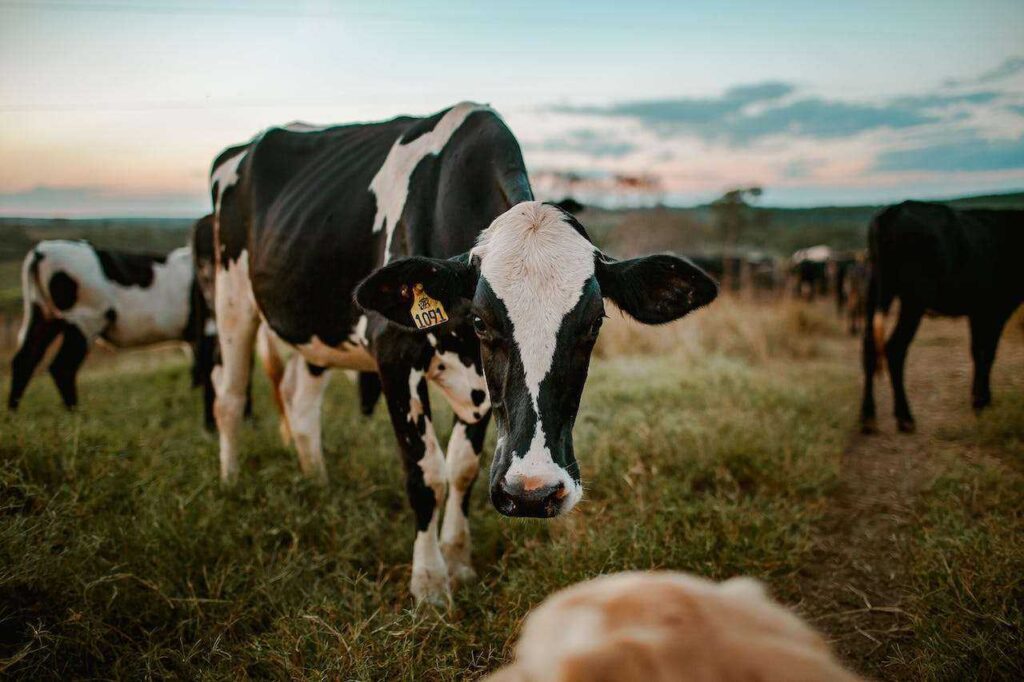
A miniature Highland calf with a shaggy fringe can look more like a cuddly toy than a farm animal. It’s easy to imagine one wandering around a small property, greeting the family at the fence and enjoying the occasional grooming session.
But what happens when that calf becomes a fully grown cow?
The answer matters more than its appearance.
Yes, cows can make good pets for a small farm, provided you have enough suitable land, secure livestock fencing, appropriate cattle companionship and the resources to care for them throughout their lives. Miniature cattle are sometimes easier to accommodate than large breeds, but they are not low-maintenance pets or guaranteed to be safe around children.
Some cattle become accustomed to familiar people and appear to enjoy calm, appropriate interaction. Others are more independent, nervous or difficult to handle.
A small cow may still weigh several hundred pounds, lean heavily against gates and need daily attention from someone who understands livestock behaviour.
According to the Texas A&M College of Veterinary Medicine’s guide to miniature cattle, these animals have similar fundamental care requirements to full-sized cattle, including training, companionship, feeding and veterinary services.
Before buying, you need to consider the animal’s mature size, the land you can provide and the cost of keeping more than one cow.
Here’s how to decide whether miniature cattle are a realistic match for your farm.
Table of contents
- Are miniature cows really easier to keep than full-sized cattle?
- Best miniature cow breeds for pet owners
- How much land do you need for a pet cow?
- Can you keep a single pet cow alone?
- Are pet cows friendly like dogs?
- Is it cheaper to keep a miniature cow than a standard cow?
- What should miniature pet cattle eat?
- Fencing and shelter for miniature pet cows
- Are miniature cows suitable for families with children?
- What to know before buying miniature cattle
- Signs that a miniature cow is not the right pet for you
- Frequently asked questions
- Final verdict: Are cows good pets for a small farm?
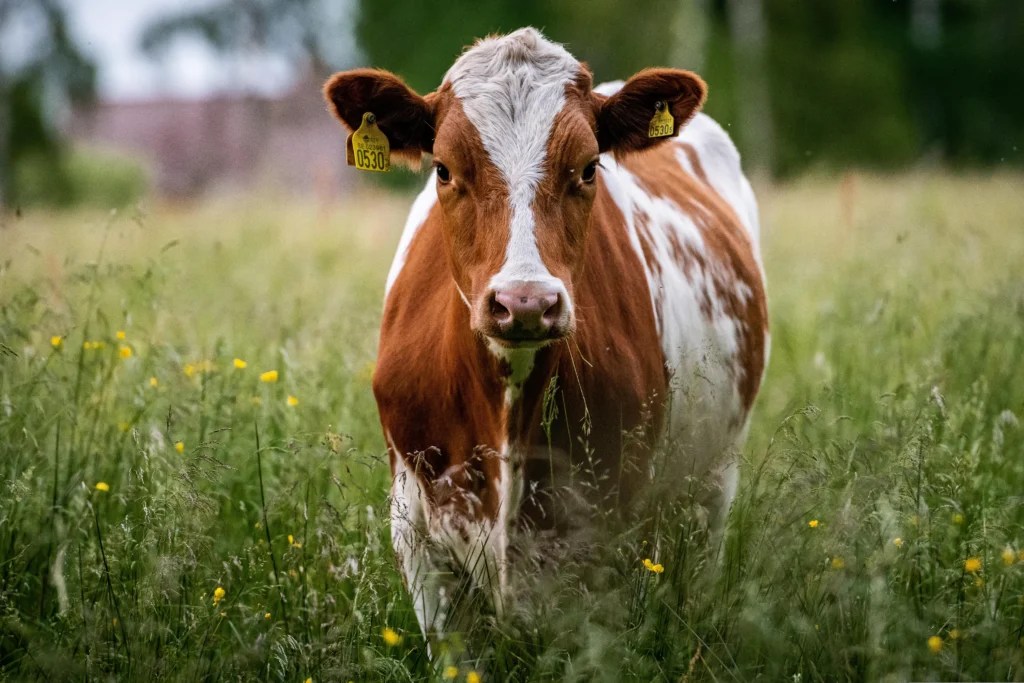
Are miniature cows really easier to keep than full-sized cattle?
Miniature cattle can offer some practical advantages. Their smaller bodies may mean lower total forage consumption, and some can be easier to accommodate within appropriately designed livestock facilities.
However, these advantages should be considered alongside the needs that do not change.
A miniature cow still requires clean water, appropriate food, shelter, secure fencing, space for normal movement, companionship and access to a livestock veterinarian.
It may also need professional handling for examinations, transport and other routine management.
| Consideration | Standard cattle | Miniature cattle |
|---|---|---|
| Mature size | Often considerably larger | Generally smaller, but size varies |
| Feeding | Depends on weight, age and other needs | Often lower total intake because of smaller body mass |
| Land | Site-specific grazing and housing requirements | Still needs cattle-appropriate space and management |
| Temperament | Depends on the individual | Also depends on the individual |
| Companionship | Suitable cattle companions needed | Suitable cattle companions needed |
| Fencing | Secure livestock fencing | Secure livestock fencing |
| Veterinary care | Routine and emergency care | Routine and emergency care |
| Safety | Large-animal handling risks | Similar types of risk, despite smaller size |
The difference is one of scale, not of basic responsibility.
If you cannot safely keep a standard cow because your property lacks adequate fencing, drainage, livestock access or daily care, choosing a miniature version may not solve the problem.
Best miniature cow breeds for pet owners
The best cattle breed for a small farm depends on mature size, temperament, climate, horn status, breeding history and the owner’s experience.
It also helps to distinguish a recognised small breed from an animal advertised as miniature.
Terms such as micro cow or teacup cow may be used in marketing, but they should not be treated as evidence of an established breed classification or guaranteed adult size.
1. Dexter cattle: A well-documented small-farm option
Dexters are among the best breeds for prospective miniature cattle owners to investigate.
Originating in Ireland, they are naturally small cattle with a history of keeping on traditional smallholdings.
The Livestock Conservancy’s Dexter breed profile describes the breed as generally gentle, efficient on forage and suitable for novice-to-intermediate livestock keepers.
Its breed information lists a broad adult-weight range of approximately 700–1,000 lb.
That is considerably smaller than many standard cattle, but it is still a substantial animal.
Why they appeal to smallholders
Dexters have a documented breed history and established characteristics. This makes it easier to research their expected development than relying on a seller’s description of a particularly tiny calf.
They may also appeal to owners who value traditional dual-purpose cattle, although someone keeping animals solely as companions does not need to pursue dairy or meat production.
What to check before buying
Ask about mature size, age, health, temperament, registration, whether the animal has horns and how it responds to ordinary handling.
Dexters may be naturally polled, meaning genetically hornless, or horned. Horn status should be confirmed for the individual animal.
A breed’s generally gentle reputation does not guarantee that a particular cow will be safe for inexperienced handlers.
Best match: A small farm with proper livestock facilities and an owner prepared to learn cattle handling.
2. Miniature Highland cattle: Appealing, but size claims need checking
Highland cattle are instantly recognisable by their long coats and distinctive appearance.
Smaller Highland-type cattle are frequently marketed as miniature Highlands.
They attract interest from people who want an unusual companion animal, particularly one with the familiar shaggy Highland look.
However, there is a crucial distinction between a recognised Highland breed and a breeder’s particular miniature line.
A young Highland calf may be small simply because it has not reached maturity.
What makes them attractive
Highland-type cattle have a distinctive appearance and may suit certain properties when the individual animals are appropriately selected.
Their coats and body characteristics can be useful in some cooler conditions.
What beginners often overlook
Horn safety, mature weight and summer management are important.
A heavily coated animal can still be vulnerable to uncomfortable or dangerous heat conditions.
Before purchasing, ask the breeder for records identifying the animals and documenting the adult size of the parents.
Don’t accept a promise that the calf will remain tiny without appropriate evidence.
Best match: Owners who have suitable cattle facilities and can verify the animal’s breeding background and climate suitability.
3. Miniature Zebu: A different type of small cattle
Miniature Zebu are distinctive small cattle, often recognisable by a hump over the shoulders.
They differ in appearance and background from the familiar shaggy miniature Highland type.
Texas A&M identifies Miniature Zebu among smaller cattle kept by hobby farmers, including for exhibition.
Why they may appeal
Owners interested in a distinctive breed may appreciate their appearance and the opportunity to learn more about their characteristics.
Their small size relative to many standard cattle can also be attractive.
What to check
Confirm the animal’s actual mature size, horn status, temperament and veterinary history.
Ask whether the breed and individual animals are suited to the local environment.
Do not assume that a small Zebu will naturally enjoy being hugged, walked around the garden or handled by children.
Best match: Prepared livestock owners interested in smaller, distinctive cattle.
4. Miniature Belted Galloway: An option requiring breeder verification
Belted Galloways are known for their striking coat pattern, with a contrasting belt of colour around the body.
Smaller breeding lines may be marketed as miniature Belted Galloways.
Like miniature Highlands, they require careful verification of adult size and lineage.
Why people consider them
Their appearance is distinctive, and some owners are interested in Galloway-type cattle for smallholdings.
What to check
Verify the actual animal’s breed records, age, parents’ mature dimensions and handling history.
Do not assume a young standard Belted Galloway is a miniature simply because it fits a seller’s description.
Best match: Owners who have located trustworthy, documented breeding stock and suitable livestock facilities.
Which breed should a beginner choose?
For a first-time cattle owner, Dexters are a particularly sensible breed to research first because their small size and breed characteristics are well documented.
That is not the same as saying that every Dexter is safer or friendlier than every other cow.
A calm, mature, appropriately trained animal is usually a more realistic companion prospect than a calf purchased solely for its appearance.
How much land do you need for a pet cow?
This is one of the most important questions to answer before buying cattle.
You may see recommendations suggesting that miniature cattle need half an acre each, while larger cattle need one or two acres.
Those figures can be useful only when their assumptions are understood.
There is no universal number of acres that guarantees enough space and food for every miniature cow.
Land requirements depend on rainfall, soil quality, forage growth, animal size, how many cattle are kept and whether hay or other suitable feed is supplied.
The University of Maryland Extension’s guide to determining pasture stocking rates explains how pasture production and livestock feed requirements must be assessed together.
Grazing land and exercise space are different
A paddock may provide room for cattle to walk, rest and interact without growing enough forage to feed them throughout the year.
That arrangement can work only if the owner has an appropriate feeding and land-management plan.
An area expected to supply most of the cattle’s diet needs a separate assessment of pasture productivity.
Land that grows well in a wet spring may produce much less during drought or winter.
Can two miniature cows live on one acre?
Possibly in some managed circumstances, but acreage alone is insufficient to answer.
The property may need purchased hay, carefully managed turnout, suitable drainage and a plan for waste.
One acre of productive pasture is not equivalent to one acre of compacted ground with sparse grass.
Texas A&M discusses roughly half an acre per miniature animal in a hobby-farm context, but that guidance should not be treated as a nationwide year-round grazing guarantee.
Check the practical conditions
Before bringing cattle home, assess whether the property offers:
- Secure fencing and reliable gates.
- Shelter and protection from extreme weather.
- Drinking water throughout the year.
- Enough usable space for the cattle to move and avoid conflict.
- Drainage and management of mud.
- Manure removal or suitable storage.
- Access for hay delivery, transport and veterinary work.
- A plan for periods when pasture does not supply enough forage.
Your local Cooperative Extension service can help you evaluate the property’s grazing capacity.
It’s far better to assess the land before purchasing cattle than to discover afterwards that the pasture cannot support them.
Can you keep a single pet cow alone?
Keeping one cow completely alone is not a good normal long-term plan.
Cattle are social animals. They form relationships with other cattle and may become distressed or behave differently when isolated.
Having a friendly human owner does not replace every part of cattle social life.
Research on social isolation when unfamiliar cattle join established groups found that new animals could remain socially isolated even when obvious aggression was absent.
This is a reminder that companionship depends on compatibility, not merely having another animal in the same field.
Can goats or donkeys keep a miniature cow company?
Different livestock species may coexist on a suitably managed farm.
However, a goat or donkey should not automatically be treated as a complete substitute for appropriate cattle companionship.
Their diets, social behaviour, fencing and management needs can differ.
Texas A&M recommends keeping miniature cattle with other cattle, often of similar size where that helps reduce management problems.
What does a good cattle companionship arrangement involve?
Plan for a compatible pair or group rather than purchasing one cow and hoping to solve its social needs later.
Make sure each animal can reach food, water and suitable resting areas.
Watch for signs of persistent bullying or exclusion.
A new cow may need time and appropriate management to settle into an established group.
For a small-farm owner, the realistic question is not simply whether there is enough room for one animal. It’s whether there are enough resources for suitable cattle companions.
Are pet cows friendly like dogs?
Some cattle learn to recognise familiar people, approach their handlers and become comfortable with predictable routines.
A calm cow may allow brushing or stand quietly during appropriate handling.
That can make cattle rewarding companion animals.
But cows do not behave exactly like dogs, and treating them as such can create safety problems.
Can pet cows become affectionate?
Some animals seek contact with familiar people. Others prefer to keep their distance.
Temperament reflects genetics, previous handling, experience and the individual’s circumstances.
An animal that comes towards you may be curious or expect food. That doesn’t mean it wants to be hugged.
Why handling still requires caution
Even a miniature cow can accidentally injure someone by pushing against a gate, turning unexpectedly or stepping on a foot.
Horned cattle create additional hazards.
The Virginia Cooperative Extension guide to low-stress cattle handling explains how handlers can work with cattle’s natural movement and behavioural responses rather than creating unnecessary fear or agitation.
For families, the essential rule is that children should not manage cattle independently.
Does raising a calf by hand guarantee friendliness?
No.
Early, calm and consistent handling can support training, but it cannot guarantee mature temperament.
A hand-reared animal may still develop difficult or unsafe behaviours.
A first-time owner should seek an animal with an established, suitable handling history rather than relying on a breeder’s claim that a young calf is exceptionally cuddly.
Is it cheaper to keep a miniature cow than a standard cow?
Sometimes, particularly when comparing substantially different body sizes.
Smaller cattle may require less total forage, which can reduce certain variable costs.
However, ownership is not priced according to body weight alone.
Veterinary visits, transport, fencing, water systems, shelter construction and emergency expenses can remain substantial.
A miniature cow with ongoing health or management needs could cost more than a healthy standard-sized animal.
Why feed savings are difficult to predict
A smaller cow’s total forage consumption depends partly on its weight, but actual requirements also vary with diet quality, growth, condition and other factors.
This means the claim that miniature cattle always consume 30–50% less hay than standard cattle cannot be used as a universal budgeting rule.
The most reliable approach is to obtain an appropriate feeding plan for the specific animals, then price the required forage locally.
How much does it cost to feed a pet cow monthly?
There is no dependable single national monthly figure.
Hay prices vary by region, season, bale type, quality and availability.
The number of cattle matters too. A responsible budget should account for the full herd rather than one hypothetical animal kept alone.
A useful farm budget separates expenses into categories.
| Expense | Information to obtain |
|---|---|
| Hay and forage | Expected quantity and local supplier price |
| Pasture management | Maintenance, soil amendments where appropriate and seasonal limits |
| Minerals and any additional feed | Suitable programme verified for the cattle |
| Water | Supply, plumbing and winter or drought provisions |
| Fencing | Installation and repair expenses |
| Shelter | Construction, bedding and ongoing maintenance |
| Veterinary care | Routine services and emergency provision |
| Handling and transport | Livestock equipment and professional transport |
| Companionship | Total costs for a compatible pair or group |
Some expenses happen monthly. Others may occur only occasionally but still need to be funded.
A sensible owner budgets for both.
What should miniature pet cattle eat?
Miniature cattle are ruminants, just like larger cattle.
Their feeding arrangements commonly involve suitable forage, whether from managed pasture, hay or a combination of sources.
Their actual nutritional requirements depend on body weight, age, condition and other individual factors.
The Texas A&M veterinary guide explains that miniature cattle require the same general dietary categories as larger cattle, although the quantities differ.
Why pasture alone may not be enough
A field that looks green does not automatically supply adequate nutrition year-round.
Forage quality and availability change with weather, season and management.
A farm may need additional hay or other professionally selected feeds when pasture is insufficient.
What about mineral licks?
Cattle require suitable mineral nutrition, but the right supplement depends on the rest of the diet.
The University of Georgia Extension guide to mineral supplements for beef cattle explains why forage composition and existing dietary mineral levels should guide supplementation.
A generic block labelled for livestock may not be appropriate for every cattle herd.
Mixed-species farms also require care because different animals may have different mineral tolerances and feeding requirements.
A veterinarian or qualified ruminant nutrition professional should advise on the appropriate mineral programme.
Fresh water is essential
Cattle must have dependable access to clean drinking water.
Owners also need a plan for freezing temperatures, interruptions to the supply and periods of high water demand.
These basics matter much more than marketing claims about a particular miniature breed being an exceptionally easy keeper.
Fencing and shelter for miniature pet cows
Miniature cattle require strong livestock facilities.
A cow may rub vigorously against posts, lean against gates or investigate an unsecured opening.
A lightweight garden fence is not automatically suitable simply because the animal is smaller than a conventional beef cow.
Choose secure livestock fencing
The fencing must suit the actual cattle, their horns, terrain and behaviour.
Gates need dependable catches and appropriate access for livestock handling.
Inspect posts, wire and other materials regularly for damage.
Provide appropriate shelter
Cattle need protection from environmental extremes.
In hot weather, shade and suitable water access are particularly important.
Wet and cold weather can create problems when resting areas become muddy or shelter is inadequate.
A long-haired animal such as a Highland-type cow should not be assumed comfortable in every climate.
Plan for veterinary and handling access
A small farm needs more than an attractive paddock.
Consider whether a veterinarian can safely reach and examine the animals, and whether suitable transport can be arranged when necessary.
Handling equipment should be appropriate to cattle, not improvised from ordinary household pet supplies.
Are miniature cows suitable for families with children?
They can be part of a family smallholding, but they should never be regarded as automatically child-safe.
Miniature cattle are strong animals with normal livestock reactions.
A child may not recognise early signs of agitation or understand how quickly an animal can turn or push.
Adults should supervise interactions and avoid activities that place children between cattle and hard surfaces.
Calm observation of feeding, social behaviour and pasture activity can be a valuable way for children to learn about farm animals.
Close handling should be managed by competent adults using suitable facilities and methods.
A small cow is not a substitute for a conventional family pet.
What to know before buying miniature cattle
Buying a miniature cow should begin with practical checks, not a photograph or an online advertisement.
1. Confirm that cattle are allowed on the property
Check county and municipal zoning, local animal-keeping rules and any property restrictions.
A property that allows dogs, goats or hobby poultry does not necessarily permit cattle.
2. Obtain a land assessment
Determine the usable area, grazing potential, drainage and likely need for purchased forage.
Don’t rely entirely on generic acres-per-cow figures.
3. Plan suitable cattle companionship
Establish how many animals the property can support and how they will be introduced and managed.
4. Find a livestock veterinarian
Identify a practice prepared to care for the animals before they arrive.
5. Verify breed and mature size
Ask the breeder for the animals’ records, actual ages and information about the adult parents.
Be particularly cautious when buying animals described as micro or teacup cattle.
6. Ask about temperament and handling
Find out whether the animal is accustomed to safe, routine livestock management.
Observe its behaviour in ordinary circumstances with the assistance of an experienced cattle handler.
7. Check identification and transport requirements
US livestock regulations may apply even when cattle are kept solely as pets.
The USDA APHIS guide to interstate livestock movement explains when official identification and veterinary documents may be required.
State requirements can be more specific, so check with the relevant animal-health authority before moving cattle.
8. Budget for long-term care
Consider the years after the initial purchase.
Cattle may remain part of the farm for many years, during which land, feed, repairs and veterinary expenses continue.
A low purchase price does not establish a low lifetime cost.
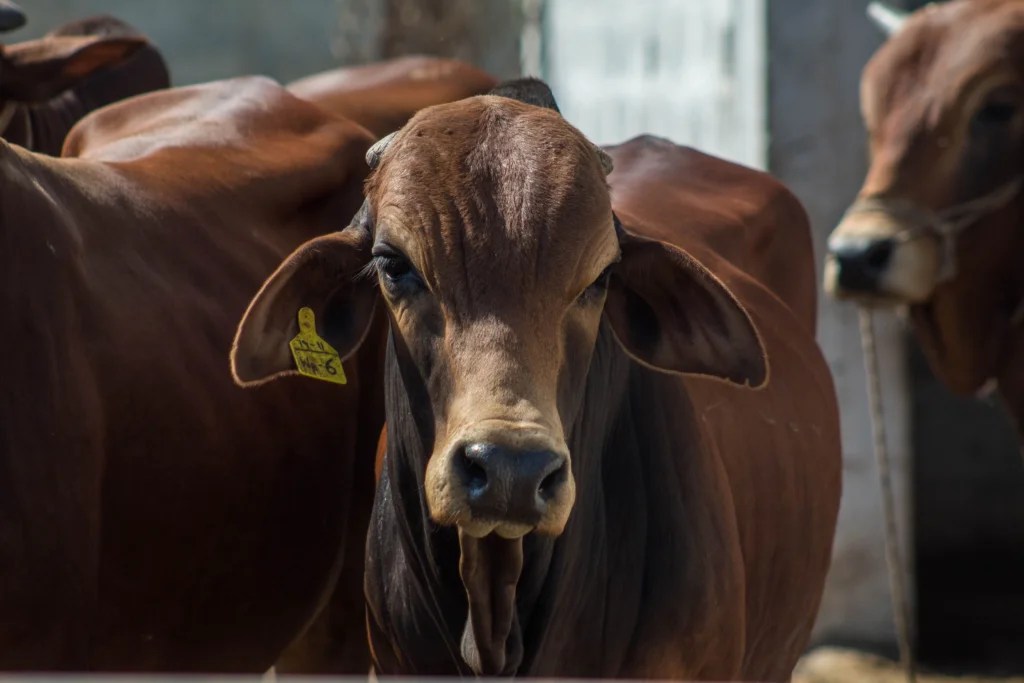
Signs that a miniature cow is not the right pet for you
A family should reconsider cattle ownership when the property lacks safe livestock fencing, suitable space, reliable water or necessary shelter.
The same applies when there is no plan for bovine companionship or no practical access to livestock veterinary care.
Other warning signs include expecting the cow to live in an ordinary residential garden, assuming it will enjoy being hugged or planning to leave its daily management entirely to children.
Sometimes the better decision is to gain experience at a reputable farm or with an experienced livestock keeper before buying.
Frequently asked questions
Dexters are often described as generally gentle, and they’re a well-documented smaller cattle breed. However, the individual animal’s temperament, training and handling history matter more than a breed label.
Their smaller body size can make some aspects of ownership more manageable. They still need suitable land, secure fencing, companionship, appropriate nutrition and livestock veterinary care.
There is no universal answer. It depends on animal weight, land quality, pasture productivity and whether suitable forage is supplied separately. Seek local agricultural extension advice.
Goats may live on mixed farms with cattle, but they should not automatically be considered an adequate replacement for suitable cattle companionship.
A genuinely small breed or established miniature breeding line may remain substantially smaller than standard cattle. However, a young calf’s appearance doesn’t establish its mature dimensions. Check parentage and reliable size records.
Some appropriately trained cattle can be led by experienced handlers. Halter training doesn’t eliminate the risk of sudden movement or injury, and owners need suitable livestock-handling skills.
They can be. Some feed expenses may be lower than for larger cattle, but fencing, land, shelter, veterinary services and care for compatible companions remain substantial.
Final verdict: Are cows good pets for a small farm?
Cows can make rewarding companions for people who genuinely enjoy livestock and can meet their needs.
Miniature cattle offer some advantages, particularly their smaller physical size and potentially lower forage consumption.
But those advantages should never obscure the realities of cattle ownership.
A suitable small farm needs secure fencing, appropriate land management, daily care, veterinary access and compatible cattle companions.
For many beginners, Dexters are an excellent breed to research first because their characteristics are comparatively well documented. Other miniature types may also suit particular properties, provided their breeding history and mature size can be verified.
The best pet cow isn’t the smallest one you can find. It’s an animal whose size, temperament and needs fit the farm you can responsibly provide.