The information and calculator data provided in this article are aggregated from peer-reviewed veterinary literature, including the Merck Veterinary Manual and AVMA guidelines. This content is for educational and informational purposes only and is not a substitute for professional veterinary advice, diagnosis, or treatment. Always consult with a licensed veterinarian before administering any medication or altering your pet’s health regimen.
How to tell if dog paws are burnt or irritated is the question every dog owner should know the answer to before stepping outside onto summer pavement, winter salted sidewalks, or beach sand at midday, because paw pad burns are among the most painful and most preventable injuries that dogs sustain in everyday life. The challenge with knowing how to tell if dog paws are burnt or irritated is that dogs rarely stop and lift a paw the moment the surface becomes dangerous they continue walking on tissue that is actively burning because their forward drive, their desire to follow their handler, or their excitement overrides the pain signal until the damage is already done. PetMD’s guide to burned dog paws confirms the mechanism: pavement and asphalt can reach temperatures of 125 to 145 degrees Fahrenheit on an 85-degree day, and paw pad burns can occur in as little as 60 seconds of contact with surfaces at those temperatures. American Kennel Club’s paw care guide confirms that paw care is one of the most overlooked aspects of canine health maintenance despite being one of the most directly impactful on a dog’s comfort and mobility. The 10 strategies in this guide address every paw health scenario from summer burns and winter salt damage to yeast overgrowth and mud contamination.
Table of contents
- The 5-Second Pavement Test: How to Tell If Dog Paws Are Burnt or Irritated Before the Walk
- How to Tell If Dog Paws Are Burnt or Irritated After the Walk: The Complete Post-Walk Assessment
- The Physical Signs of How to Tell If Dog Paws Are Burnt or Irritated
- Essential 1 Best Dog Paw Balm for Hot Pavement 2026: The Primary Protection Layer
- Essential 2 Are Dog Boots or Paw Wax Better for Snow: Winter Paw Protection
- Essential 3 Why Is My Dog Constantly Licking Their Front Paws: The Diagnostic Guide
- Essential 4 DIY Dog Paw Soak for Yeast and Allergies: The Weekly Decontamination Protocol
- Essential 5 How to Use a Dog Paw Plunger for Mud and Salt
- Essential 6 Nail Length and Paw Structural Health: How to Tell If Dog Paws Are Burnt or Irritated by Overgrown Nails
- Essential 7 How to Tell If Dog Paws Are Burnt or Irritated: Interdigital Cyst Identification
- Essential 8 Paw Pad Moisturization: The Weekly Conditioning Protocol
- Essential 9 Grass Seeds and Foreign Body Removal: The Walk-After Check
- Essential 10 Seasonal Paw Care Calendar: Year-Round Prevention for How to Tell If Dog Paws Are Burnt or Irritated
- Frequently Asked Questions About How to Tell If Dog Paws Are Burnt or Irritated
The 5-Second Pavement Test: How to Tell If Dog Paws Are Burnt or Irritated Before the Walk
Healthy Paws: Clinical Care Guidelines
Managing healthy paws requires monitoring core vitals including hydration, appetite, and body temperature. If you observe persistent lethargy, sudden behavioral shifts, or signs of pain, seek prompt veterinary evaluation for accurate diagnostic testing.
| Key Care Dimension | Recommended Standard | Primary Benefit | Management Best Practice |
|---|---|---|---|
| Preventative Veterinary Care | Annual or biannual clinical checkups | Early detection of underlying disease | Maintain up-to-date vaccine and wellness records |
| Species-Appropriate Diet | Formulated to life stage and activity level | Optimal muscle tone and metabolic balance | Measure exact daily feeding portions consistently |
| Environmental Enrichment | Daily mental exercise and physical activity | Prevents boredom and destructive behaviors | Rotate interactive toys and training games weekly |
| Emergency Preparedness | Dedicated pet emergency fund or insurance policy | Guarantees immediate medical care access | Keep 24-hour ER clinic contact readily accessible |
The Quick Safety Check That Answers How to Tell If Dog Paws Are Burnt or Irritated in Under 10 Seconds
How to tell if dog paws are burnt or irritated starts before the walk begins, not after the damage is done. The 5-Second Pavement Test is the single most reliable pre-walk safety check available to any dog owner and requires no equipment, no thermometer, and no app.
The 5-Second Pavement Test: Quick Safety Check
The Test: Kneel down and place the back of your hand flat on the pavement, asphalt, or sand where you plan to walk your dog. Hold it there for a full 5 seconds without lifting.
The Result: If the surface is too hot for your hand to remain comfortably for 5 full seconds, it is too hot for your dog’s paw pads. Your skin and your dog’s paw pads have comparable heat sensitivity, making your bare hand the most accurate real-time thermometer available. VCA Animal Hospitals confirms the science behind this test: if the pavement feels too hot to touch, then it is too hot for paws on a hot sunny day, asphalt can be 40 to 60 degrees hotter than the air temperature.
The Instant Solution:
- Shift your walk to the grass immediately: Grass temperatures run 10 to 20 degrees cooler than adjacent pavement on the same day; crossing from pavement to grass is the fastest zero-cost intervention
- Wait for sunset: Pavement retains heat and does not cool to safe temperatures until approximately 1 to 2 hours after direct sun exposure ends; the early morning window from 5 AM to 8 AM and the evening window from 7 PM onward are the safest walk windows in summer months
- Apply paw wax or boots before stepping onto hot surfaces: Paw wax creates a protective barrier that reduces direct heat transfer to the pad tissue; dog boots provide full insulation from hot surfaces for dogs who tolerate wearing them
How to Tell If Dog Paws Are Burnt or Irritated After the Walk: The Complete Post-Walk Assessment
The Physical Signs of How to Tell If Dog Paws Are Burnt or Irritated
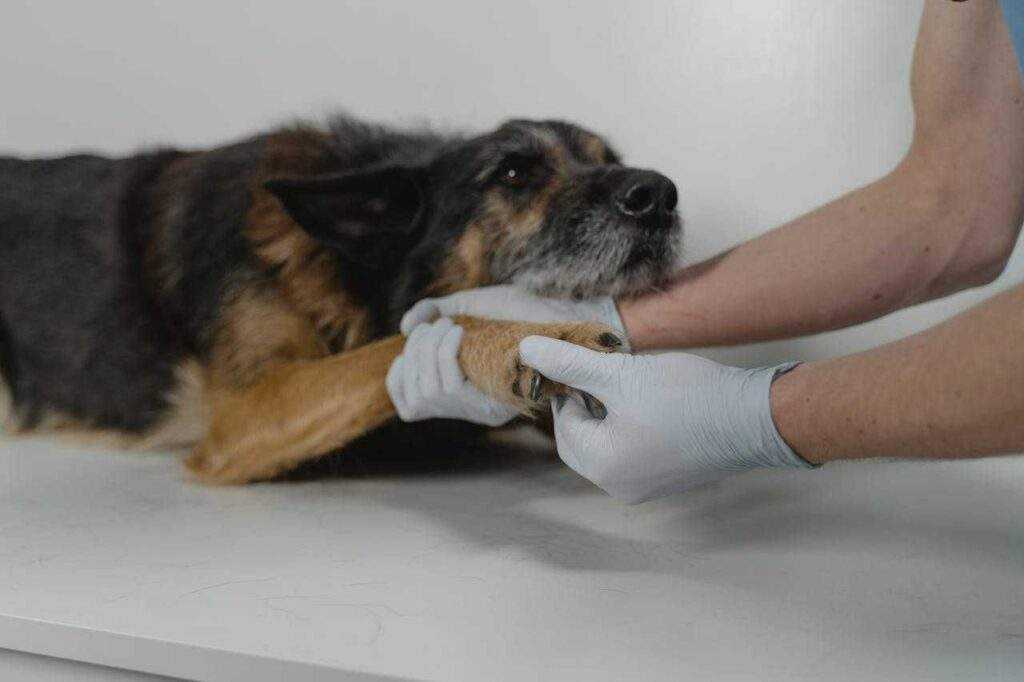
How to tell if dog paws are burnt or irritated after potential exposure requires a systematic inspection of all four paws immediately following the walk. PetMD confirms the specific signs of paw pad burns that distinguish thermal injury from other types of paw irritation:
Visual signs of how to tell if dog paws are burnt or irritated:
- Redness or discoloration of the pad surface, particularly along the pad edges and central pad surface
- Visible blistering or raw, shiny patches where the outer keratinized layer has been removed
- Loose or peeling pad tissue, which indicates a partial-thickness burn
- Darkened or charred-looking patches in severe cases of extended contact
Behavioral signs of how to tell if dog paws are burnt or irritated:
- Limping on one or multiple legs during or immediately after the walk
- Licking or chewing at the paw pads persistently after returning indoors
- Refusing to bear weight on one paw or walking with an abnormally high-stepping gait
- Whimpering or pulling paws away when the pad area is touched during post-walk inspection
AKC’s paw care guide confirms the immediate action protocol when any of these signs are present: move to a cool, shaded area; rinse the paws with cool (not cold) water for several minutes to draw out heat; do not apply butter, ice, or any home remedy to burned pads; and contact a veterinarian if blistering, raw tissue, or loss of the pad surface is visible.
Essential 1 Best Dog Paw Balm for Hot Pavement 2026: The Primary Protection Layer
Best Dog Paw Balm for Hot Pavement 2026 and How to Tell If Dog Paws Are Burnt or Irritated With vs Without It
Best dog paw balm for hot pavement 2026 is the first essential because paw balm serves a dual function: it provides a protective barrier against heat transfer from hot surfaces during the walk and actively moisturizes and repairs cracked, dried pad tissue after the damage has occurred. Understanding both functions positions the owner to use paw balm correctly as prevention during hot weather rather than only as treatment after burns appear.
Rover’s guide to the best paw balms for dogs and Dogster’s 2026 paw balm review together confirm the top best dog paw balm for hot pavement 2026 products with the strongest veterinary and owner community endorsement:
| Product | Primary Ingredients | Best For | Price Range |
|---|---|---|---|
| Musher’s Secret Paw Protection Wax | White refined wax, carnauba wax, vitamin E | Hot pavement, snow, and salt all-season protection | $15 to $25 |
| Natural Dog Company Paw Soother | Organic shea butter, coconut oil, vitamin E | Dry, cracked, irritated pads needing deep repair | $12 to $20 |
| Burt’s Bees Paw and Nose Lotion | Rosehip oil, green tea extract | Sensitive skin dogs; light daily conditioning | $8 to $12 |
| Bag Balm Original Petrolatum | Petrolatum base with 8-hydroxyquinoline sulfate | Severely cracked or calloused pads | $6 to $10 |
| Warren London Paw Nectar | Shea butter, jojoba oil, lavender | Post-walk repair and softening | $12 to $18 |
How to apply best dog paw balm for hot pavement 2026 correctly:
- Apply 5 to 10 minutes before the walk, not immediately before stepping outside; the balm needs brief absorption time before sun and heat exposure begin
- Rub a small amount between each paw pad and along the pad edges, which are the most vulnerable areas to heat cracking
- Reapply after every walk that involves hot pavement, sand, or chemical salt contact
- VCA Animal Hospitals confirms that paw balm and wax reduce the surface temperature the pad itself experiences but do not eliminate the risk of burns on extremely hot surfaces; the 5-Second Pavement Test remains the definitive safety check even when paw balm has been applied
Essential 2 Are Dog Boots or Paw Wax Better for Snow: Winter Paw Protection
Are Dog Boots or Paw Wax Better for Snow: How to Tell If Dog Paws Are Burnt or Irritated by Winter Salt
Are dog boots or paw wax better for snow is the winter equivalent of the summer paw balm question, and the answer depends on three factors: the specific winter hazard present, the dog’s tolerance for wearing boots, and the walk duration. Understanding are dog boots or paw wax better for snow also addresses how to tell if dog paws are burnt or irritated by road salt and ice melt chemicals, which cause chemical burns to pad tissue that produce identical external signs to heat burns but through a different mechanism.
AKC’s winter paw care guide provides the direct comparison between are dog boots or paw wax better for snow:
When dog boots are the better choice:
- Extended outdoor exposure over 20 minutes in temperatures below 20 degrees Fahrenheit
- Walks on roads and sidewalks treated with rock salt or chemical ice melts, which are the most damaging winter surface hazard for pad tissue
- Dogs with existing paw injuries, cracked pads, or chronic paw sensitivity who cannot tolerate any chemical contact
- Working dogs and sled dogs who require full pad coverage for hours of continuous outdoor work
- AKC confirms that dog boots provide the only complete barrier against road salt and chemical ice melts, which bypass wax protection when the dog walks through pooled slush containing concentrated chemical runoff
When paw wax is the better choice:
- Short walks under 15 minutes in light snow with minimal chemical treatment on the surface
- Dogs who refuse to walk in boots after multiple desensitization attempts
- Post-walk barrier application to prevent the pad cracking that cold, dry winter air accelerates
- Musher’s Secret specifically developed its wax formulation for sled dogs in extreme cold, confirming wax as a professional-grade winter paw protection option for moderate cold exposure
The practical conclusion for are dog boots or paw wax better for snow:
Use boots for salt-treated urban winter walks and extended cold exposure; use paw wax for light snow, short walks, and as a daily conditioning base in cold weather climates. For maximum protection, apply paw wax as the base layer and add boots over the top for urban winter walks on heavily salted surfaces.
Essential 3 Why Is My Dog Constantly Licking Their Front Paws: The Diagnostic Guide
Why Is My Dog Constantly Licking Their Front Paws and How to Tell If Dog Paws Are Burnt or Irritated vs. Allergic
Why is my dog constantly licking their front paws is one of the most common paw-related behavioral questions in veterinary practice, and distinguishing the cause determines whether the solution is a topical treatment, a dietary change, an environmental modification, or a veterinary prescription.
PetMD’s guide to dogs licking their paws confirms the five most common causes behind why is my dog constantly licking their front paws:
- Environmental allergies (atopy): The most common cause of chronic paw licking in adult dogs; the feet are one of the primary contact sites for environmental allergens including grass pollen, mold, and dust mites; dogs with atopy often lick specifically the top surface of the paw and between the toes, producing the characteristic rust-brown saliva staining on white-coated dogs
- Food allergies: Similar presentation to atopy but accompanied by gastrointestinal signs; elimination diet trials are the definitive diagnostic tool
- Yeast overgrowth (Malassezia): Produces a distinctive corn chip or “Frito feet” odor from the paw; yeast overgrowth between the toes creates intense itching and is often secondary to the moisture created by the dog’s own licking behavior
- Contact irritants: Road salt, lawn chemicals, cleaning products on floors, and garden fertilizers cause contact dermatitis of the paw pads and interdigital spaces that produces immediate licking during and after exposure
- Boredom and anxiety: Psychogenic licking produces lick granulomas on the dorsal paw and pastern area with a different distribution than allergen-driven licking; this is a diagnosis of exclusion after medical causes have been ruled out
VCA Animal Hospitals’ paw licking diagnostic guide confirms the rust-brown staining as a reliable environmental allergy indicator: if the fur between your dog’s toes is staining rust-brown from licking, environmental allergies are the leading cause and veterinary confirmation with a skin cytology or intradermal test is the appropriate next step.
Essential 4 DIY Dog Paw Soak for Yeast and Allergies: The Weekly Decontamination Protocol
DIY Dog Paw Soak for Yeast and Allergies to Address How to Tell If Dog Paws Are Burnt or Irritated vs. Infected
DIY dog paw soak for yeast and allergies is the most cost-effective, evidence-supported home intervention for the two most common chronic paw conditions in dogs, and it provides a post-walk decontamination benefit that prevents environmental allergen buildup between the toes from accumulating into full inflammatory episodes.
Veterinary dermatologist-approved DIY dog paw soak for yeast and allergies has two distinct formulations depending on the target condition:
The antifungal paw soak for yeast (Malassezia) overgrowth:
- Mix 1 gallon of warm water with 1 cup of white vinegar or apple cider vinegar
- Soak all four paws for 2 to 3 minutes, ensuring the interdigital spaces are fully submerged
- Do not rinse after the soak; allow the paws to air dry completely or pat dry with a clean towel, as the acetic acid residue continues to inhibit yeast growth after the soak ends
- Use 2 to 3 times per week during active yeast episodes; maintain weekly as a preventive during high-humidity seasons
- AKC confirms the dilute vinegar soak as a veterinarian-commonly-recommended home adjunct for mild yeast paw infections, noting it works best as a complement to veterinary antifungal treatment rather than a standalone cure for moderate to severe cases
The allergy decontamination paw soak:
- Mix 1 gallon of warm water with 1 tablespoon of povidone iodine (Betadine) until the solution reaches the color of iced tea
- Soak all four paws for 5 minutes after every outdoor walk during allergy season
- The povidone iodine solution removes pollen, mold spores, and environmental allergens from the interdigital spaces and pad surfaces before the dog has the opportunity to lick them off and ingest the allergens
- Rinse lightly after this soak as Betadine has a higher drying effect than the vinegar formulation
- VCA Animal Hospitals confirms post-walk decontamination as one of the most effective environmental allergy management strategies for atopic dogs, significantly reducing the paw-licking frequency in dogs whose symptoms are driven by contact with outdoor allergens
DIY dog paw soak for yeast and allergies container options:
- A small plastic storage tub (approximately 12 by 8 inches) fits one paw at a time; hold each paw submerged for the full soak period
- A silicone bucket with a non-slip base prevents tipping during the soak
- For dogs resistant to foot soaking, a saturated washcloth applied to each paw for 3 minutes achieves comparable decontamination without requiring the dog to stand in a bowl
Essential 5 How to Use a Dog Paw Plunger for Mud and Salt
How to Use a Dog Paw Plunger for Mud and Salt as a Daily How to Tell If Dog Paws Are Burnt or Irritated Prevention Tool
How to use a dog paw plunger for mud and salt is the practical daily cleaning question that bridges the gap between post-walk paw inspections and weekly soaks, providing a faster, less messy cleaning option for routine daily decontamination.
A paw plunger is a cylindrical container with soft silicone bristles on the interior walls. The dog’s paw is inserted into the water-filled cylinder and moved gently up and down, with the bristles reaching into the interdigital spaces and around the pad edges to dislodge mud, salt crystals, grass seeds, and chemical residue without requiring the dog to stand still in a tub of water.
MudBuster’s paw plunger instructions and the broader dog grooming community confirm the correct how to use a dog paw plunger for mud and salt technique:
The step-by-step how to use a dog paw plunger for mud and salt protocol:
- Fill the paw plunger to the fill line with warm water; for salt decontamination, add half a teaspoon of mild dog-safe shampoo to the water; for standard mud cleaning, plain warm water is sufficient
- Insert the dog’s front paw first, with the bristles making contact with all pad surfaces and the spaces between the toes
- Move the paw gently up and down 5 to 8 times; the silicone bristles dislodge debris without abrading the pad surface
- Remove the paw and immediately dry it thoroughly with a microfiber towel, working between the toes where moisture accumulates and creates the warm, damp environment that yeast overgrowth requires
- Repeat for all four paws, changing the water between front and rear paws if the initial water becomes heavily muddied
- Follow with paw balm application if the walk involved salt-treated surfaces or hot pavement, as the cleaning process removes any residual paw wax applied before the walk
MudBuster sizing guide confirms three sizes are available: small for dogs under 15 pounds, medium for 15 to 40 pounds, and large for dogs over 40 pounds; the correct size allows the paw to enter the cylinder fully while maintaining bristle contact on all pad surfaces.
Essential 6 Nail Length and Paw Structural Health: How to Tell If Dog Paws Are Burnt or Irritated by Overgrown Nails
How to Tell If Dog Paws Are Burnt or Irritated by Nail-Driven Structural Changes
How to tell if dog paws are burnt or irritated covers thermal and chemical causes, but the most chronic and most commonly overlooked paw injury source is nail overgrowth, which causes compressive pain in the toe joints and forces the dog to walk on the side of the paw pad rather than the center, producing uneven pad wear, callus formation, and joint stress that the owner interprets as reluctance to walk rather than paw pain.
AKC’s nail care guide confirms the nail length standard: a dog’s nails should not touch the floor when the dog is standing. When nails click audibly on hard floor surfaces, they are already too long and have been redistributing the dog’s weight for long enough to create measurable joint stress in the toe and pastern.
The correct nail trimming frequency by lifestyle:
- Dogs who walk daily on concrete or asphalt: nails may need trimming every 4 to 6 weeks because hard surface contact provides natural filing
- Dogs who walk primarily on grass or soft surfaces: nails need trimming every 3 to 4 weeks because no natural filing occurs
- Senior dogs with reduced activity: every 2 to 3 weeks; reduced walking decreases natural wear and nails overgrow faster relative to activity level
- Cornell Feline Health Center’s nail trimming resource confirms the two-person nail trimming protocol for dogs who resist: one person provides treat reinforcement with high-value treats (a lick mat with peanut butter is the most widely effective distraction tool) while the second person handles the foot and performs the trim
Essential 7 How to Tell If Dog Paws Are Burnt or Irritated: Interdigital Cyst Identification
How to Tell If Dog Paws Are Burnt or Irritated vs. Interdigital Cyst Presence
How to tell if dog paws are burnt or irritated versus affected by an interdigital cyst is a distinction many owners miss because both conditions produce persistent paw licking and visible redness between the toes. VCA Animal Hospitals’ interdigital cyst guide confirms the key distinguishing feature: an interdigital cyst presents as a round, pink to red, shiny nodule between two toes, often with a soft, fluctuant texture when gently palpated, while paw burns and contact irritation produce diffuse redness across the pad surface rather than a discrete nodule in the interdigital space.
Interdigital cysts occur most frequently in dogs with short, coarse-coated paws including bulldogs, Labrador retrievers, and boxers, where the short hair shafts are pushed back into the follicle during walking and trigger a foreign body inflammatory response. They can also be secondary to yeast or bacterial infection in the interdigital space created by chronic moisture from licking. Veterinary evaluation is required for interdigital cysts because the treatment depends on whether the cause is follicular, infectious, or allergic in origin, and home treatment without diagnosis produces temporary resolution followed by recurrence.
Essential 8 Paw Pad Moisturization: The Weekly Conditioning Protocol
The Proactive Weekly Conditioning That Prevents How to Tell If Dog Paws Are Burnt or Irritated Scenarios
How to tell if dog paws are burnt or irritated is easier when the pad tissue is in good baseline condition, because healthy, well-hydrated pad tissue has greater thermal and chemical resistance than dry, cracked, or calloused pads. Weekly pad moisturization is the simplest preventive investment in the 10-way paw health program.
AKC confirms that paw pads should be checked and moisturized regularly, using a product specifically formulated for dogs rather than human hand lotions, which contain fragrances, preservatives, and humectants that are safe for human skin but irritating to dog paw pad tissue when licked during the post-application grooming period that virtually every dog performs. The correct moisturization frequency is once weekly as maintenance and twice weekly during winter when cold, dry air and salt contact accelerate pad dehydration and cracking.
Essential 9 Grass Seeds and Foreign Body Removal: The Walk-After Check
How to tell if dog paws are burnt or irritated from grass seed foreign body penetration is a seasonal concern in late spring through early fall, when dried grass seeds (foxtails in particular) become barbed projectiles that embed in the interdigital skin and migrate inward with every movement. VCA Animal Hospitals confirms that foxtails and similar grass seed awns cannot migrate outward; once embedded, they move deeper with muscle contraction, causing abscess formation, chronic draining tracts, and in severe cases systemic infection.
The post-walk foreign body check requires direct palpation of each interdigital space with the fingers, spreading the toes apart and examining the skin between them visually with a flashlight if the coat is dense. Any visible seed or awn should be removed immediately with tweezers if the tip is accessible; if the seed has already penetrated below the skin surface, veterinary removal under sedation is required to ensure complete extraction. The behavioral sign of foxtail penetration is sudden, acute, intense licking of a single interdigital space on one paw within minutes of returning from a grassy walk.
Essential 10 Seasonal Paw Care Calendar: Year-Round Prevention for How to Tell If Dog Paws Are Burnt or Irritated
The Complete Year-Round Schedule That Prevents How to Tell If Dog Paws Are Burnt or Irritated Scenarios
How to tell if dog paws are burnt or irritated is most efficiently managed through a seasonal prevention calendar that anticipates the hazard before exposure rather than identifying damage after it has occurred. AKC’s year-round paw care guide and VCA Animal Hospitals’ seasonal paw care resource together confirm the seasonal hazard profile:
| Season | Primary Hazard | Prevention Essential | Post-Walk Protocol |
|---|---|---|---|
| Spring | Grass seeds; lawn chemicals; pollen allergens | Post-walk paw inspection; Betadine decontamination soak 3x weekly | Check interdigital spaces for seeds; paw plunger wash |
| Summer | Hot pavement burns; sand burns; cracked pads from heat | 5-Second Pavement Test before every walk; paw wax pre-walk; early morning and evening timing only | Cool water rinse; reapply paw balm; check for blister formation |
| Fall | Fallen leaves concealing debris; early frost on metal surfaces; grass seed persistence | Continue interdigital checks; begin transition to winter paw wax routine | Paw plunger wash; inspect for late-season seed embeds |
| Winter | Road salt chemical burns; ice ball formation between toes; cold-induced pad cracking | Dog boots for salt-treated walks; paw wax as base layer; paw plunger with warm water post-walk | Immediate warm water rinse after any salt contact; dry thoroughly; apply balm |
Frequently Asked Questions About How to Tell If Dog Paws Are Burnt or Irritated
How to tell if dog paws are burnt or irritated vs. dirty: PetMD confirms that burned paw pads show redness, blistering, peeling, and raw-appearing tissue, while dirty paws show discoloration without tissue disruption. The behavioral test is equally reliable: a dog with dirty paws walks normally and does not lick after cleaning; a dog with burned or irritated paws limps, licks persistently, and resists having the paw touched. Any redness that does not resolve after 30 minutes of rest and cool water rinsing warrants veterinary examination.
Why is my dog constantly licking their front paws: PetMD confirms the five leading causes are environmental allergies, food allergies, yeast overgrowth between the toes, contact irritants from lawn chemicals or road salt, and anxiety-driven psychogenic licking. Rust-brown saliva staining on the dorsal paw surface is the most reliable indicator of chronic environmental allergy. VCA Animal Hospitals confirms veterinary cytology as the diagnostic tool to distinguish yeast from bacterial infection when the licking is accompanied by visible redness, odor, or discharge between the toes.
DIY dog paw soak for yeast and allergies: for yeast overgrowth, mix 1 cup of white vinegar or apple cider vinegar per gallon of warm water, soak all four paws for 2 to 3 minutes, and allow to air dry without rinsing 2 to 3 times per week. For environmental allergy decontamination, use a dilute povidone iodine solution (iced-tea color) after every outdoor walk during allergy season. AKC confirms the vinegar soak as a veterinarian-commonly-recommended home adjunct for mild yeast cases, used alongside veterinary antifungal treatment for moderate to severe infections.
🐾 Related Resources & Interactive Tools in This Guide:
- Interactive Calculator: Pet Age in Human Years Calculator — Convert your pet chronological age to accurate biological human years.
- Clinical Resource: Majesty Of Saint Bernards: From No. 1 Adorable Puppies to Lifesaving Heroes 2026
- Behavior & Training Guide: How to Clean Cat Teeth Without Brushing: 5 Shocking Tricks for Pearly Whites in 2026
- Related Expert Guide: Things You Didn’t Know About Your Dog: 10 Fascinating Fun Facts Every Dog Owner Should Discover
Growth & Immunization Tracking: To predict your puppy’s adult weight based on current breed trajectory, use our interactive Puppy Growth Calculator. For core vaccine timelines and veterinary cost planning, refer to the Puppy Vaccination Schedule Tool.
📚 Related Topic Cluster Guides & Veterinary Tools
Explore our complete Pet Care & Clinical Health Hub for comprehensive guides, veterinary diagnostic checklists, and daily care protocols.