If you’re starting your first backyard flock, choosing the right chicken breed can make everyday care more manageable. A calm hen that’s comfortable around people may suit a family garden, while a productive layer might be a better choice if your main goal is collecting fresh eggs.
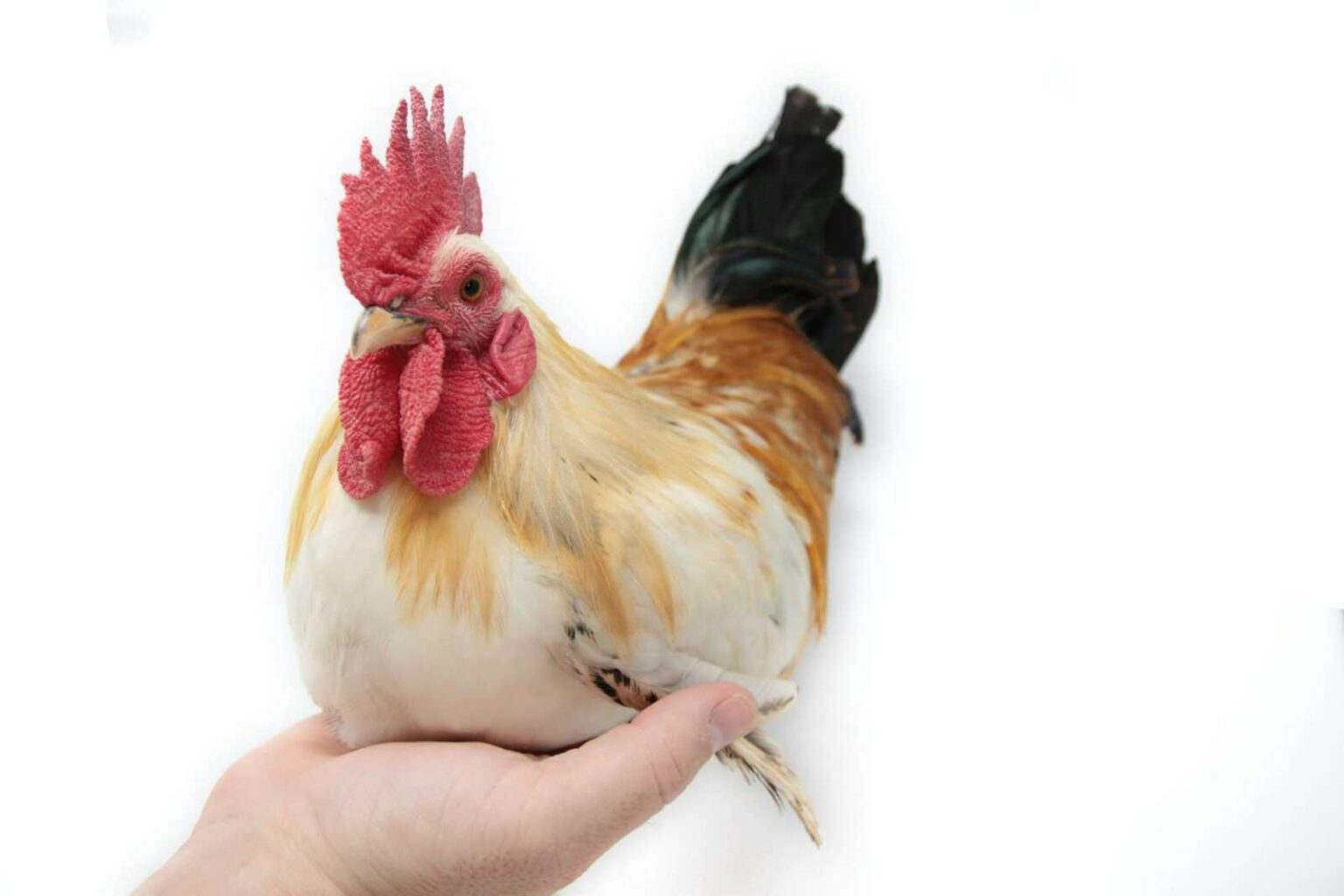
The easiest chicken breeds to raise for beginners include Buff Orpingtons, Australorps, Plymouth Rocks, Sussex, Rhode Island Reds and Wyandottes. Silkies and Cochins appeal to people who want gentle companion birds, while Brahmas and New Hampshires offer different advantages for traditional smallholdings.
No breed is completely maintenance-free. Every chicken needs suitable housing, nutritious food, clean water, other chickens for companionship, protection from predators and daily attention.
Breed matters, but so do the individual bird’s temperament, the weather where you live and the space available in your garden.
The University of Minnesota Extension guide to raising chickens for eggs recommends considering temperament, egg production and climate suitability when choosing a small flock.
Here’s how ten popular breeds compare, including their advantages, limitations and practical care requirements.
Table of contents
- The 10 easiest chicken breeds at a glance
- 1. Buff Orpington: A gentle choice for a first flock
- 2. Australorp: An excellent option for productive backyard hens
- 3. Barred Plymouth Rock: A dependable all-round backyard chicken
- 4. Sussex: A curious and versatile British heritage breed
- 5. Rhode Island Red: A productive breed for egg-focused beginners
- 6. Wyandotte: A handsome dual-purpose chicken for cooler climates
- 7. Silkie: A gentle ornamental breed for patient owners
- 8. Brahma: A calm giant for well-equipped beginners
- 9. Cochin: A friendly companion with modest egg expectations
- 10. New Hampshire: A practical dual-purpose chicken
- Flock Selection & Hardiness Matrix
- Best egg-laying chickens for cold weather
- Friendly chicken breeds for families with kids
- Quiet chicken breeds for suburban backyards
- Best dual-purpose chicken breeds for small homesteads
- How to set up a beginner-friendly chicken coop
- What should beginners feed their chickens?
- Should you start with chicks or point-of-lay hens?
- What beginners should know about chicken health and biosecurity
- Common mistakes first-time chicken keepers should avoid
- Frequently asked questions
- Which chicken breed should you choose?
The 10 easiest chicken breeds at a glance
| Breed | Temperament tendency | Egg-laying potential | Main advantage | Main consideration |
|---|---|---|---|---|
| Buff Orpington | Generally calm and friendly | Moderate to good | Gentle family companion | Heavy build, heat management, broodiness |
| Australorp | Usually calm and approachable | High | Strong laying potential | Can struggle in extreme heat |
| Plymouth Rock (Barred) | Curious and generally easygoing | Good | Practical all-round backyard bird | Needs enrichment and secure housing |
| Sussex | Calm, curious and active | Good to high | Traditional dual-purpose breed | Shade especially important in hot weather |
| Rhode Island Red | Hardy, energetic, sometimes assertive | High | Productive brown-egg layer | May dominate quieter flockmates |
| Wyandotte | Usually composed and independent | Moderate | Useful cold-weather characteristics | Temperament varies between individuals |
| Silkie | Often gentle and docile | Relatively low | Companion and ornamental appeal | Delicate feathering, predator protection |
| Brahma | Calm and generally docile | Moderate | Large, cold-tolerant heritage bird | Needs generous space and dry feet |
| Cochin | Friendly, quiet and frequently broody | Relatively low | Gentle companion breed | Feather maintenance and broodiness |
| New Hampshire | Active, practical, sometimes assertive | Moderate to good | Dual-purpose smallholding bird | Monitor flock compatibility |
These descriptions are breed tendencies, not guaranteed behaviours or egg-production measurements.
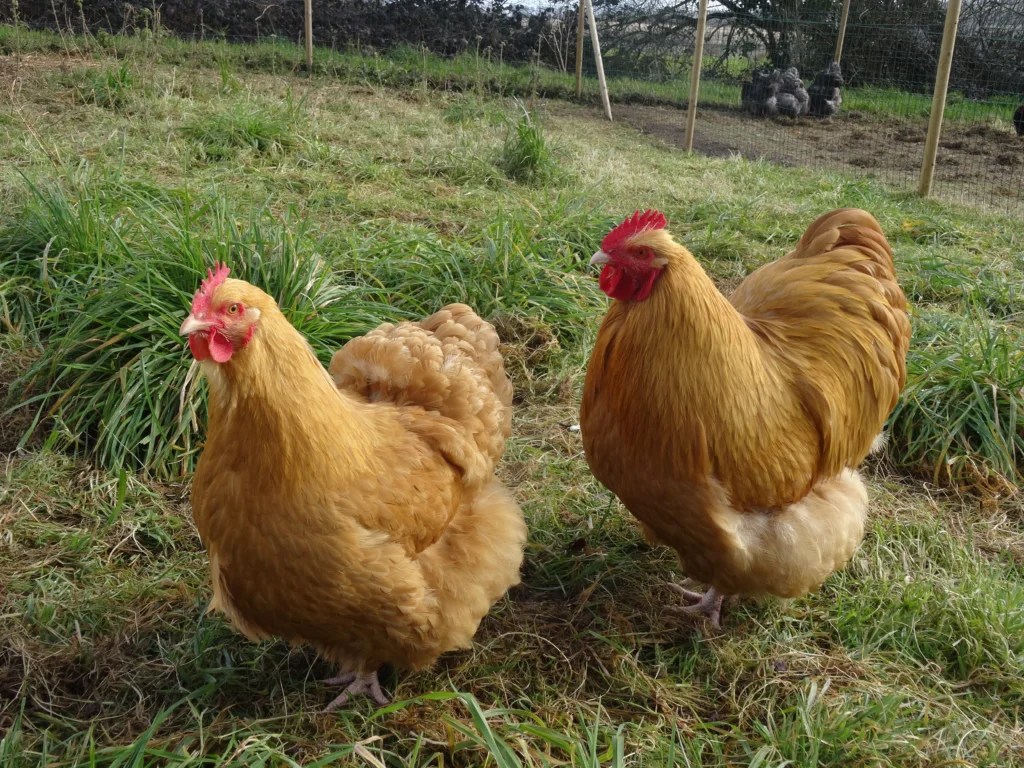
1. Buff Orpington: A gentle choice for a first flock
<image brief: Photograph a healthy adult buff-coloured Orpington hen standing naturally in an outdoor run, with visible rounded body and feathering. Obtain publication rights and verify breed identification.>
Buff Orpingtons are frequently recommended for beginners because of their generally calm personalities and substantial build.
They are large, rounded birds with soft buff-coloured feathers, although Orpingtons exist in other colour varieties.
The University of Minnesota Extension identifies Orpingtons as substantial dual-purpose chickens that lay brown eggs and are well suited to colder conditions.
Their temperament can make routine flock management more approachable for someone who is still learning to handle chickens.
If you and your dog haven’t discovered the Charlotte Dog Club yet, you’re both missing out on something genuinely special. Check out these 3 unmissable Charlotte Dog Club events where like-minded dog lovers come together to celebrate, connect, and give their dogs the kind of epic, tail-wagging fun they were absolutely born for.
Why beginners may like Buff Orpingtons
Many keepers appreciate their relatively relaxed manner around people. Some individuals become comfortable taking food from the hand or approaching familiar caregivers.
However, that doesn’t mean every Orpington enjoys being picked up or sitting on someone’s lap.
Allow birds to approach voluntarily and use calm, secure handling when necessary.
Egg production
Buff Orpingtons are capable of producing useful numbers of brown eggs, but they’re not automatically as productive as commercial laying hybrids.
Production varies with the breeding line, age, daylight, nutrition and whether a hen becomes broody.
If dependable egg numbers are your highest priority, compare the actual breeding stock rather than buying an Orpington solely for its reputation.
Management considerations
Because Orpingtons are heavy birds, perches should be accessible, secure and appropriate for their size.
Avoid unnecessary long drops from roosting areas. Provide space for movement, dry bedding and ventilation without direct draughts across resting birds.
Their substantial feathering can make hot-weather management particularly important.
Best suited to: Beginners who prioritise calm temperament and companionship alongside moderate egg production.
2. Australorp: An excellent option for productive backyard hens
Australorps combine attractive black plumage, a generally manageable temperament and a reputation for good egg production.
They are descended from Orpington-type birds developed in Australia and are commonly kept as dual-purpose or laying chickens.
The University of Maryland Extension poultry breed comparison classifies Australorps as excellent layers with calm dispositions.
What makes Australorps beginner-friendly?
Australorps can fit well into a small mixed flock when introductions and housing are properly managed.
Their comparatively calm nature may appeal to first-time keepers who want productive hens without choosing an especially flighty breed.
They also provide a useful balance between egg production and the appearance of a traditional large chicken.
How many eggs can an Australorp lay?
Utah State University Extension lists approximately 250–300 eggs annually as a breed comparison estimate.
Treat this as potential performance under suitable conditions, not a guarantee for each hen or every year of her life.
Older hens generally lay fewer eggs than young productive birds.
Management considerations
Australorps need suitable shade, ventilation and reliable drinking water during hot weather.
Dark feathers do not automatically make a bird incapable of tolerating heat, but they are no substitute for proper environmental management.
Best suited to: Keepers wanting a relatively calm breed with strong egg-laying potential.
3. Barred Plymouth Rock: A dependable all-round backyard chicken
The Barred Plymouth Rock is a familiar black-and-white striped chicken belonging to the Plymouth Rock breed.
It is widely appreciated as a practical small-flock bird.
Plymouth Rocks are traditional dual-purpose chickens, historically selected for both egg production and body size.
They are often curious and active without being as flighty as some lighter Mediterranean breeds.
Why they appeal to beginners
Barred Rocks are worth considering when you want hens that will explore the garden, use enrichment and take part in normal flock activities.
They can be suitable for a family interested in watching chickens forage, scratch and dust bathe.
The hens’ willingness to investigate their surroundings means they still need a secure run and appropriate entertainment.
Egg production
Utah State University Extension gives a broad comparison estimate of approximately 200–250 brown eggs a year for Plymouth Rocks.
Actual laying depends on age, strain, nutrition, season and management.
Management considerations
Provide secure perches, adequate nesting areas and space for foraging.
Like other substantial chickens, they need suitable housing through winter and shade during summer.
Best suited to: Beginners seeking a balanced chicken for eggs, garden activity and traditional small-flock keeping.
4. Sussex: A curious and versatile British heritage breed
The Sussex is particularly relevant for UK chicken keepers.
This established British breed is known for its dual-purpose history, attractive feather varieties and curious disposition.
The Livestock Conservancy’s Sussex breed profile describes Sussex birds as calm and curious, and considers them suitable for beginner keepers and families.
What makes Sussex chickens appealing?
Sussex hens can be engaging birds to observe because they tend to investigate their surroundings.
Their interest in foraging makes a well-managed outdoor area especially valuable.
A curious chicken needs more than a bare run. Appropriate vegetation, scratching material and sheltered exploration areas can help keep the flock occupied.
Egg production
Sussex hens lay tinted to brown eggs.
Some productive lines can deliver substantial annual egg totals, but the exact number varies considerably by strain and management.
Don’t assume every heritage Sussex will match the output of a specially selected commercial hybrid.
Cold and hot weather
Sussex chickens can do well in cold conditions when housed properly.
However, the Livestock Conservancy specifically notes that they are less comfortable in heat.
This is an important correction to descriptions of Sussex as equally suited to every climate.
Provide shade, ventilation and ample fresh water, especially during summer heat.
Best suited to: Beginners who want a traditional British chicken with a manageable temperament and useful laying ability.
5. Rhode Island Red: A productive breed for egg-focused beginners
Rhode Island Reds are well-known for their red plumage, hardiness and brown-egg production.
They’re often recommended when regular eggs matter more than having the quietest possible companion birds.
The University of Minnesota Extension describes the Rhode Island Red as a hardy, dual-purpose breed that performs well in small flocks.
How many eggs does a Rhode Island Red lay per year?
Utah State University Extension lists approximately 250–300 eggs per year for productive Rhode Island Red hens in its breed comparison.
This figure is a planning estimate.
Some heritage strains lay fewer eggs than selectively bred production lines. A hen’s output also changes with age, moulting, daylight and health.
Temperament and flock behaviour
Rhode Island Reds are often active and confident.
Some individuals can be assertive around food or in a mixed flock, particularly when housed with notably timid breeds.
That does not mean every Rhode Island Red is aggressive.
Observe how individual birds interact, provide adequate access to resources and avoid relying on breed labels alone.
Management considerations
Their active behaviour makes foraging space and enrichment useful.
If you’re planning to keep Rhode Island Reds with Silkies or particularly quiet hens, consider whether the birds will be compatible.
Best suited to: Beginners whose main priority is reliable brown-egg production and who are prepared to monitor flock dynamics.
6. Wyandotte: A handsome dual-purpose chicken for cooler climates
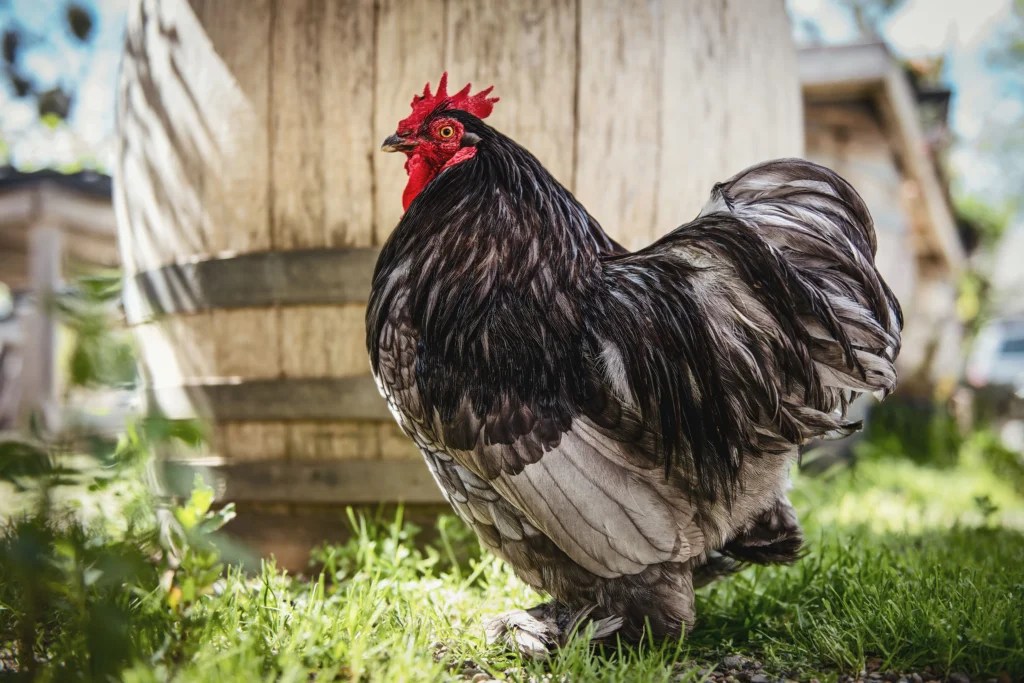
Wyandottes have rounded bodies and distinctive feather patterns, with varieties including silver-laced and gold-laced birds.
They are traditional dual-purpose chickens and can be appealing additions to smaller flocks.
According to the University of Minnesota Extension, Wyandottes are suited to rugged conditions, are useful dual-purpose birds and generally have good dispositions.
Why they can suit beginners
Wyandottes offer a balance of size, egg production and practical small-flock characteristics.
Their compact rose comb is one feature that may reduce exposure compared with large, prominent single combs in freezing conditions.
However, comb type alone doesn’t make a bird winter-proof.
Egg production
Wyandottes generally lay brown eggs, but annual output varies between breeding lines and individual birds.
A keeper should expect useful egg production rather than commercial-hybrid performance.
Management considerations
Wyandottes may be less interested in close handling than particularly people-oriented breeds.
Allow individual birds to establish confidence without repeatedly trying to pick them up.
Best suited to: Keepers in cooler regions who want a traditional dual-purpose chicken with attractive plumage.
7. Silkie: A gentle ornamental breed for patient owners
Silkies look markedly different from most backyard chickens.
Their unusually soft, fluffy feathering and distinctive appearance make them popular ornamental birds.
They’re often described as friendly, docile and inclined towards broodiness.
For beginners who are more interested in keeping companion birds than collecting large quantities of eggs, Silkies may be appealing.
What beginners should know
Silkies require more careful environmental management than their gentle appearance might suggest.
Their feather structure offers different protection from that of ordinary hard-feathered chickens, making dry housing particularly important.
Their crests can sometimes affect visibility, and their small size may make them vulnerable in a flock containing larger, more assertive birds.
Egg production
Silkies are not appropriate choices if your main priority is obtaining 250–300 large eggs annually.
Their eggs are generally small and their laying can be interrupted by broodiness.
Handling and children
Silkies may be gentle, but they should not be treated as cuddly toys.
Supervision and hygiene remain essential, especially around children.
Best suited to: Keepers who value ornamental appearance and gentle companionship over high egg output.
8. Brahma: A calm giant for well-equipped beginners
Brahmas are among the largest traditional chicken breeds.
Their size, feathered legs and generally composed temperament can make them attractive to keepers who appreciate substantial heritage birds.
The Livestock Conservancy’s Brahma profile describes the breed as calm and docile, with medium-to-large brown eggs and good cold-weather characteristics.
What makes Brahmas suitable for some beginners?
Their relatively calm reputation may simplify ordinary observation and handling, provided the keeper is comfortable managing a large bird.
Brahmas can be productive enough for a small household without being chosen purely as maximum-output layers.
Housing needs
Size is the main practical consideration.
Brahmas need enough room to move, turn, perch and enter nesting areas comfortably.
High perches that require awkward landings may be unsuitable for heavy birds.
Feathered feet can also trap mud in wet conditions, so well-drained ground and dry resting areas matter.
Climate considerations
Brahmas are associated with good cold tolerance, but this doesn’t remove the need for shelter, dry bedding and ventilation.
Their large bodies and dense plumage also call for careful summer heat management.
Best suited to: Beginners who have enough space and want a calm, substantial heritage breed.
9. Cochin: A friendly companion with modest egg expectations
Cochins are heavily feathered chickens with rounded bodies and feathered legs.
They are often valued for their gentle temperament and ornamental appearance rather than maximum egg production.
The Livestock Conservancy describes Cochins as friendly and docile, and notes that they are particularly inclined to go broody.
Why they appeal to beginners
A calm Cochin can be a pleasant bird to keep in a small garden flock.
Its slow, deliberate appearance may appeal to people who enjoy observing and caring for chickens rather than measuring their performance by egg numbers alone.
Egg production
Cochins can lay brown eggs, but they’re not usually the most efficient choice for households that want a steady high volume of eggs.
Broodiness may also interrupt laying.
Management considerations
Feathered feet and abundant plumage require particular attention to ground conditions and cleanliness.
Wet, muddy runs can make feather maintenance difficult.
Cochins also need appropriately accessible perches and nesting boxes.
Best suited to: Beginners seeking gentle companion hens with modest egg-production expectations.
10. New Hampshire: A practical dual-purpose chicken
The New Hampshire was developed from Rhode Island Red breeding stock, with selection historically emphasising growth and practical farm qualities.
It is a traditional dual-purpose breed rather than a purely ornamental chicken.
The Livestock Conservancy’s New Hampshire profile identifies the breed’s large tinted-to-brown eggs and notes that temperaments can range from docile to competitive or aggressive.
What makes New Hampshires useful?
They may appeal to people seeking practical, active chickens for a smallholding.
Their body size and laying potential make them relevant to discussions of traditional dual-purpose breeds.
Temperament considerations
New Hampshires illustrate why a breed reputation should never be treated as a guarantee.
Some individuals are calm, while others may become assertive in a mixed group.
Beginners should consider sourcing birds from a reputable breeder who can discuss the actual flock’s temperament.
Management considerations
Allow adequate feeding access, nesting areas, outdoor space and opportunities for natural behaviour.
Monitor interactions, particularly when adding New Hampshires to a flock of smaller or timid hens.
Best suited to: Beginners interested in traditional practical poultry breeds who can manage normal flock competition.
Flock Selection & Hardiness Matrix
The following matrix compares three broad flock goals.
| Flock category | Example breeds | Laying expectations | Temperament and climate | Management priority |
|---|---|---|---|---|
| Docile, companion-oriented | Buff Orpington, Silkie, Cochin | From relatively low in Silkies and Cochins to moderate or good in Orpingtons | Often calm, but individual behaviour varies; heavy or delicate feathering requires climate-aware housing | Appropriate roost heights, dry bedding, gentle handling |
| Egg-focused | Australorp, Rhode Island Red | Potentially high; extension comparisons cite around 250–300 eggs annually for productive strains | Australorps generally calmer; Rhode Island Reds often more assertive | Suitable laying diet, enough nesting space and careful flock introductions |
| All-round, dual-purpose | Plymouth Rock, Sussex, Wyandotte, New Hampshire | Moderate to good, with line-dependent variation | Useful adaptability, but no breed is equally suited to extreme weather | Shade, ventilation, weather protection and secure outdoor access |
| Large heritage birds | Brahma | Moderate | Generally docile and suited to cooler conditions | Spacious housing, accessible perches, dry feathered feet |
The egg ranges sometimes quoted for breeds are estimates from particular sources and populations. They are not guaranteed yearly totals. Egg colour and size also differ between breeds and individual hens.
Best egg-laying chickens for cold weather
Winter egg production is affected by more than breed hardiness.
Shorter daylight hours, moulting, age and health can reduce laying even when chickens remain comfortable.
Some relatively heavy breeds, including Australorps, Plymouth Rocks, Orpingtons and Wyandottes, are often considered useful candidates for cooler climates.
Brahmas also have a reputation for cold tolerance.
However, a cold-hardy chicken still needs dry shelter, proper ventilation, unfrozen drinking water and protection from severe weather.
The Livestock Conservancy’s heritage chicken guidance explains that body size and comb characteristics influence cold tolerance.
Don’t interpret cold hardiness as a promise of uninterrupted egg production.
Friendly chicken breeds for families with kids
Orpingtons, Australorps, Sussex and Silkies may be worth considering when family temperament is a priority.
But friendly chickens are not automatically safe for unsupervised child handling.
Individual birds may peck, scratch or flap unexpectedly when frightened or restrained.
There is also a human-health concern.
The CDC’s 2026 backyard poultry guidance explains that healthy-looking poultry can carry Salmonella.
Adults should supervise children and ensure handwashing after contact with chickens, eggs and coop equipment. Children younger than five should not handle backyard poultry or enter areas where the birds live.
Avoid kissing chickens, holding them near faces or bringing them into the kitchen or living areas.
For older children, appropriate supervised activities include observing flock behaviour, helping prepare supplies and learning how to approach hens calmly.
Quiet chicken breeds for suburban backyards
Chickens aren’t silent animals.
Hens communicate through clucks, alarm calls and sometimes loud vocalisations associated with laying.
Cockerels can crow, and local restrictions may treat them differently from hens.
Cochins, Brahmas and some Orpingtons may be reasonable candidates when a quieter temperament is desirable.
The Livestock Conservancy identifies Asiatic breeds, particularly Brahmas and Cochins, among the calmer and quieter heritage groups.
However, no hen breed can be guaranteed silent.
Noise also depends on environmental disturbance, flock dynamics, predators and individual behaviour.
Before keeping chickens in a suburban garden, check local restrictions and consider how close the coop will be to neighbouring properties.
Best dual-purpose chicken breeds for small homesteads
A dual-purpose breed has traditionally been selected for both egg production and meat utility.
Common examples include Plymouth Rocks, Sussex, Rhode Island Reds, Orpingtons, Wyandottes and New Hampshires.
For a small household, choosing a dual-purpose chicken can mean obtaining useful eggs while keeping birds with traditional body characteristics.
However, the term doesn’t guarantee superior productivity or lower care requirements.
Modern commercial laying hybrids may produce more eggs than many heritage dual-purpose strains, while specialised meat birds differ in growth rate and management needs.
The University of Maryland Extension comparison of poultry breeds explains the trade-offs between laying efficiency, meat production, temperament and foraging ability.
For beginners, welfare and suitable facilities should come before expectations about production.
How to set up a beginner-friendly chicken coop
Even the calmest breed will struggle in unsuitable housing.
A good chicken coop and run should be designed around the number, size and behaviour of the birds, as well as the local climate.
Provide secure shelter
Chickens need a dry, ventilated house that protects them from predators and adverse weather.
Ventilation helps control moisture and air quality, but direct draughts across sleeping birds should be avoided.
The RSPCA’s backyard chicken housing advice provides guidance on housing, perches, nest boxes and outdoor space.
Use suitable perches
Perches should be comfortable, stable and appropriate for the birds’ size.
The RSPCA recommends rounded edges and adequate space so chickens can roost without crowding.
For heavy breeds such as Orpingtons, Brahmas and Cochins, ensure access and landing arrangements are suitable.
A high perch with a hard landing is not automatically better than a lower, safer design.
Keep nesting areas clean
Provide suitable nest boxes in relatively quiet parts of the housing.
Use clean, appropriate bedding such as suitable wood shavings or straw where compatible with the coop design.
Collect eggs regularly and replace damp or contaminated material.
Good nesting conditions support normal laying behaviour and help reduce egg damage.
However, cleanliness alone doesn’t guarantee that egg-eating behaviour will never develop.
Provide shade and weather protection
All chickens need protection from extreme heat, regardless of breed.
Shade, ventilation and reliable water access are essential in hot conditions.
During cold or wet weather, keep resting areas dry and protect birds from prolonged exposure.
Do not assume that heavy feathering makes chickens immune to heat stress or that cold-tolerant breeds can safely sleep in damp housing.
Include dust-bathing areas
Dust bathing is a normal chicken behaviour.
Birds use loose material to work through their feathers and help maintain feather condition.
The RSPCA’s hen welfare guidance identifies dust bathing, perching, foraging and nesting as important natural behaviours.
A dry dust-bathing area is therefore a useful part of a well-managed run.
But dust bathing is not a guaranteed treatment for mites or lice. Regular inspection and appropriate veterinary advice remain necessary if parasites are suspected.
What should beginners feed their chickens?
A suitable commercial feed formulated for the birds’ life stage and intended use is the foundation of a practical feeding plan.
Growing chicks, developing pullets and actively laying hens have different nutritional requirements.
Do not automatically feed adult laying-hen rations to young chicks or rely on treats and garden scraps as the main diet.
Provide clean water at all times and arrange feeders so every bird can access food without persistent competition.
The British Hen Welfare Trust’s starter guide offers practical feeding and routine-care advice for people adopting laying hens.
In the UK, feeding catering or kitchen waste to poultry is restricted, including waste originating from domestic kitchens. Follow current government biosecurity and animal-feed rules rather than assuming household leftovers are suitable.
Should you start with chicks or point-of-lay hens?
Chicks may be appealing, but raising them requires specialist brooding equipment, appropriate heat, age-specific feed and careful monitoring.
Beginners who mainly want a manageable flock and fresh eggs may prefer healthy point-of-lay pullets or suitable adult rescue hens.
Older birds may also have more established behaviour, making their temperament easier to assess.
The British Hen Welfare Trust offers opportunities to adopt ex-commercial laying hens. These birds can make engaging pets, although they may have particular nutritional, feather and health needs during retirement.
Whatever age you choose, source birds responsibly and plan introductions rather than adding unfamiliar hens directly to an established flock.
What beginners should know about chicken health and biosecurity
Chicken keeping carries responsibilities beyond feeding and egg collection.
A healthy-looking hen can still carry infectious organisms, and some poultry diseases spread between premises.
New keepers should establish a relationship with a poultry-experienced veterinary practice before a health emergency occurs.
Check birds daily for changes in appetite, movement, breathing, droppings and usual behaviour.
Seek veterinary advice promptly if birds become markedly weak, have difficulty breathing, stop eating or show other serious changes.
Bird registration in the UK
Rules vary by nation.
In England and Wales, poultry keepers must register their birds under current government requirements, including people with small backyard flocks.
The official bird-keeper registration guidance explains the applicable process.
Requirements in Scotland and Northern Ireland must be checked separately.
Not all chickens are created equal when it comes to filling your egg basket every morning and choosing the right breed makes all the difference. Discover the best chicken breeds for maximum egg production and find the perfect feathered flock that keeps your kitchen stocked with fresh, beautiful eggs day after glorious day.
Avian influenza restrictions
Bird flu protection measures can change.
Even when routine outdoor access is permitted, additional biosecurity measures or local disease-control restrictions may apply.
Consult the current government avian influenza guidance before moving birds, changing housing arrangements or introducing new poultry.
Common mistakes first-time chicken keepers should avoid
The first mistake is choosing birds solely for their advertised egg production.
A highly productive chicken may be unsuitable if its temperament, size or activity level doesn’t fit the available facilities.
A second mistake is assuming that friendly breeds tolerate constant handling. Chickens need choice and opportunities to move away from people.
Another common problem is purchasing a coop advertised for a certain number of hens without checking its actual usable space, ventilation, perch arrangement and run size.
The British Hen Welfare Trust recommends choosing a house with more capacity than the planned flock rather than buying to the tightest possible advertised limit.
Mixing birds without planning can also lead to bullying and unequal access to food or resting space.
Finally, chickens should not be treated as occasional weekend pets. They require daily care, even when they aren’t laying.
Frequently asked questions
Buff Orpingtons, Australorps, Sussex and Plymouth Rocks are useful breeds to consider because they combine practical backyard characteristics with generally manageable temperaments. The best individual bird still depends on the keeper’s facilities and priorities.
Australorps and Rhode Island Reds have strong egg-production reputations. Some commercial laying hybrids may produce even more eggs, but this article focuses on recognisable traditional breeds. Egg numbers vary by line, age and management.
Silkies can be good companion birds for patient beginners, but their feathering, smaller size and relatively low egg output mean they need different expectations and management from productive standard hens.
Utah State University Extension lists around 250–300 eggs annually for productive Rhode Island Reds. Individual hens and heritage strains may produce fewer, and laying changes over time.
Brahmas, Orpingtons, Wyandottes and Plymouth Rocks are often considered for cooler climates. Cold-weather suitability still depends on dry, well-ventilated housing and proper husbandry.
Yes. Hens can lay eggs without a cockerel. A cockerel is needed for fertile eggs, but not for ordinary egg production.
Chickens can be interesting family animals, but children require supervision and careful hygiene. The CDC advises that children younger than five should not handle backyard poultry or enter their living areas because of infection risk.
Cochins and Brahmas are recognised for relatively calm, quiet temperaments. However, individual hens still vocalise and no breed can be guaranteed silent.
Chickens are social animals and should normally be kept with suitable companions. The British Hen Welfare Trust commonly favours groups of at least three hens, provided there is adequate space and appropriate care. Local regulations and practical flock management also matter.
Chickens can use appropriately designed outdoor accommodation, but they require shelter from adverse weather, secure housing, adequate ventilation and protection from predators. Local bird-flu restrictions may temporarily change how poultry must be housed.
Which chicken breed should you choose?
If you want calm hens and don’t need the maximum number of eggs, consider Buff Orpingtons, Cochins or suitable Silkies.
If fresh eggs are your main goal, Australorps and Rhode Island Reds are strong candidates, while Plymouth Rocks and Sussex offer a useful balance of traditional traits.
For cooler conditions, Wyandottes and Brahmas may also deserve a place on your shortlist.
Before buying or adopting, look beyond the breed description. Ask about the actual birds’ temperament, age, health, laying history and suitability for your facilities.
Most importantly, make sure your chickens can enjoy normal flock behaviour, safe shelter, suitable food and daily care.
The easiest chicken breed for a beginner is the one whose needs you can meet consistently — not simply the breed advertised as the friendliest or most productive.