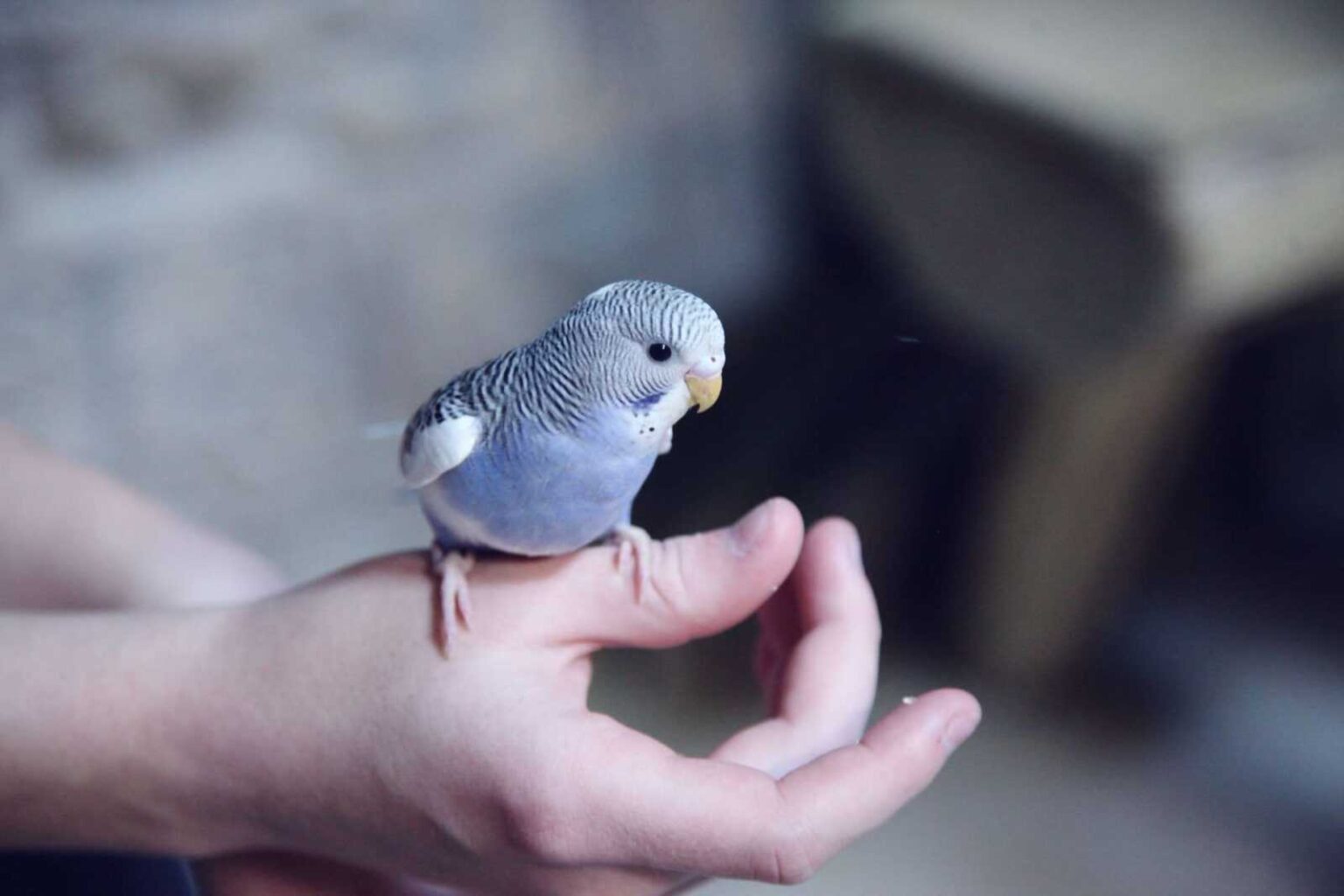
A budgie chatting from its perch, a cockatiel whistling across the room or a pair of finches darting through an aviary can make keeping birds look wonderfully simple.
The reality depends on which bird you choose.
Some species enjoy learning to interact with people. Others prefer the company of their own kind and are happiest when you watch rather than handle them. Even a tiny bird needs room to move, appropriate food, regular cleaning, suitable companionship and veterinary care.
The easiest pet birds for beginners to consider are budgies, cockatiels, zebra finches, society finches and canaries. Budgies and cockatiels are often better choices for owners seeking interactive companions. Finches and canaries are usually better suited to people who enjoy observing natural behaviour and birdsong.
Lovebirds, parrotlets and conures can also be rewarding pets, but they tend to require more preparation, training and behavioural management.
The RSPCA’s guidance on housing pet birds explains why birds need space for natural movement and flight, rather than spending their lives confined to small cages.
Before choosing, consider how much room you can provide, what level of noise you can tolerate and whether you want a bird that may voluntarily interact with you or one you can enjoy observing.
Table of contents
- Which pet birds are easiest for beginners? Quick comparison
- 1. Budgies: One of the best interactive beginner birds
- 2. Cockatiels: Gentle companions for prepared first-time owners
- 3. Zebra finches: Small birds best enjoyed through observation
- 4. Society finches: Sociable birds for observation-focused owners
- 5. Canaries: A good choice for birdsong enthusiasts
- 6. Lovebirds: Small parrots with big personalities
- 7. Parrotlets: Tiny parrots that need consistent training
- 8. Green-cheeked conures: Engaging but demanding companions
- 9. Sun conures: Colourful birds with serious noise considerations
- Avian Species & Lifestyle Matching Matrix
- Best quiet pet birds for apartment living
- Friendly pet birds that like to be held
- Small pet birds with a short lifespan: What should you know?
- How much room does a pet bird need?
- Good starter birds for kids and families
- What do beginner pet birds need every day?
- Common mistakes first-time bird owners make
- How to choose your first pet bird responsibly
- Frequently asked questions
- Choosing the right bird for your home
Which pet birds are easiest for beginners? Quick comparison
| Bird | Noise tendency | Human interaction | Main housing requirement | Beginner suitability |
|---|---|---|---|---|
| Budgie | Regular chatter and chirping | Can learn step-up and other behaviours | Spacious cage and daily flight opportunities | Strong interactive candidate |
| Cockatiel | Whistles and contact calls | Often enjoys gentle social contact | Large flight space and enrichment | Strong family candidate |
| Zebra finch | Soft, frequent chirping | Usually prefers observation | Flight enclosure with compatible companions | Good hands-off candidate |
| Society finch | Soft social calls | Generally observational | Spacious group housing | Good for birdwatching owners |
| Canary | Song and chirping | Usually limited physical handling | Room for horizontal flight | Good for song enthusiasts |
| Lovebird | Can be sharp and persistent | Social but sometimes assertive | Spacious housing and daily enrichment | More demanding |
| Parrotlet | Can be vocal and assertive | Interactive with training | Safe, spacious parrot housing | More demanding |
| Green-cheeked conure | Variable calls, sometimes loud | Highly interactive | Large enclosure and substantial exercise | Dedicated beginners only |
| Sun conure | Very loud calls possible | Social and active | Extensive enrichment and noise-tolerant home | Usually challenging for beginners |
The best choice is the species whose normal behaviour fits your household. A bird isn’t easy to care for merely because it is small.
1. Budgies: One of the best interactive beginner birds
Budgerigars, commonly called budgies or parakeets, are among the most familiar companion birds.
They are small Australian parrots with lively personalities and a reputation for curiosity.
Budgies can learn to step onto a finger or perch, investigate toys and respond to consistent training.
The VCA Animal Hospitals guide to budgies describes their cheerful chatter, trainability and potential to develop positive relationships with caregivers.
Why beginners may like budgies
Budgies are small enough to be physically manageable with appropriate handling skills, yet active and intelligent enough to offer plenty of opportunities for enrichment.
They may enjoy exploring bird-safe toys, climbing and learning simple behaviours.
Some individuals develop an interest in human speech, but talking ability shouldn’t be the reason you choose a bird.
Not every budgie will learn words, and a bird that doesn’t speak can still be an engaging companion.
What care do they need?
Budgies need suitable social contact, room to fly, appropriate nutrition and daily enrichment.
A budgie should not be expected to spend most of its life in a small decorative cage.
If its housing doesn’t allow meaningful flight, the owner needs to provide safe opportunities outside the enclosure.
Budgies are social birds, so their need for compatible bird companionship also deserves careful consideration.
Best suited to: Beginners who want an interactive bird and can provide daily training, exercise and social opportunities.
Potential challenge: Their small size can disguise substantial activity and enrichment needs.
2. Cockatiels: Gentle companions for prepared first-time owners
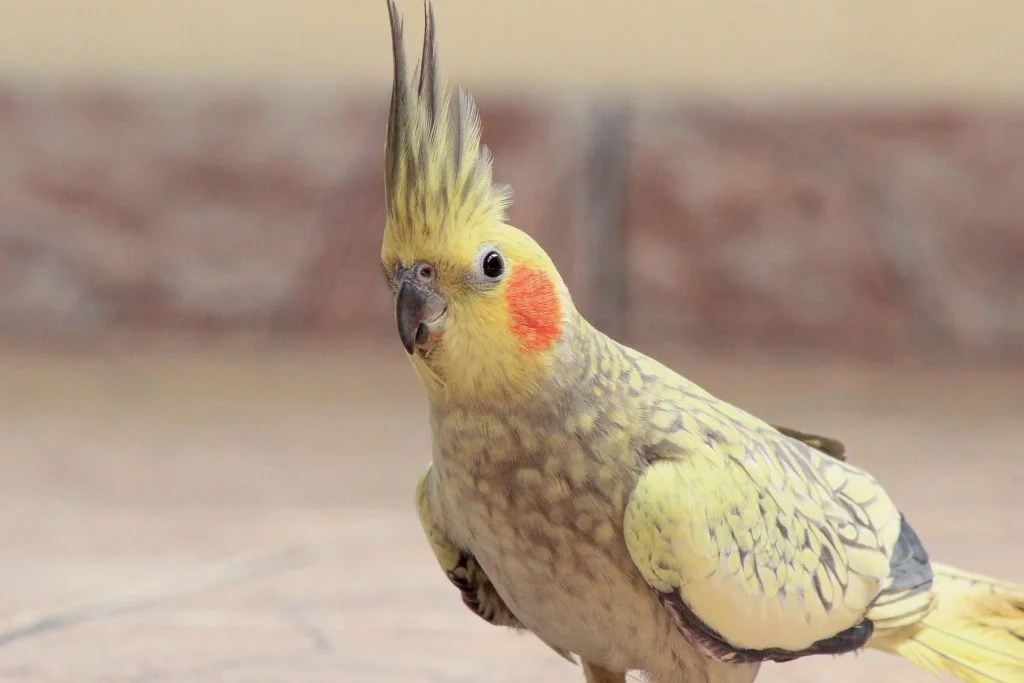
Cockatiels are recognisable by their crests, long tails and distinctive whistling.
They are often considered among the more approachable companion parrots for beginners.
The VCA Animal Hospitals cockatiel profile describes them as generally gentle birds that can suit family households.
What makes cockatiels appealing?
Many cockatiels enjoy interacting with familiar people, learning simple routines and exploring toys.
Some voluntarily approach caregivers for attention or accept gentle head scratches.
However, their willingness to interact varies.
A cockatiel that turns away, moves off or shows signs of discomfort should be allowed to stop an interaction.
Trying to force a reluctant bird to accept handling can damage trust and provoke defensive behaviour.
How noisy are cockatiels?
Cockatiels often whistle and make contact calls.
They may be more suitable for some homes than louder parrot species, but they are not silent.
A bird calling repeatedly may be seeking social contact, responding to household activity or communicating another need.
Before adoption, spend time listening to the species in a realistic environment.
What should beginners prepare for?
Cockatiels need ample space, suitable flight opportunities, enrichment and daily social care.
Their feather dust may also be relevant to households with respiratory sensitivities.
Best suited to: Families and individual owners prepared for a social bird with regular vocalisations and a substantial long-term commitment.
Potential challenge: Ensuring adequate interaction, exercise and appropriate social opportunities.
3. Zebra finches: Small birds best enjoyed through observation
Zebra finches are small, active birds that are popular among people who enjoy watching natural bird behaviour.
Rather than seeking constant attention from humans, they generally prefer the company of compatible finches.
They are particularly engaging when moving between perches, exploring an aviary and communicating with one another.
The VCA guide to finches describes their social behaviour, relatively quiet calls and limited inclination towards human handling.
Why do they suit some beginners?
Zebra finches don’t ordinarily require the same direct physical interaction as a companion parrot.
That may suit an owner who wants birds to observe rather than train to sit on a hand.
However, reduced handling doesn’t mean less responsibility for their welfare.
Finches need suitable social companions, a proper diet, regular husbandry and enough horizontal space to fly.
Are zebra finches quiet?
Their calls are generally softer than those of many parrots, although they may vocalise frequently.
A pair or group of finches can create a steady background of chirping during active periods.
Housing considerations
A tall, narrow cage is not a substitute for a flight enclosure.
Finches move through the air horizontally, so usable length and unobstructed flight space matter.
Best suited to: Owners who enjoy observing active social birds and don’t expect frequent handling.
Potential challenge: Providing adequate flight space and selecting compatible companions.
4. Society finches: Sociable birds for observation-focused owners
Society finches, sometimes called Bengalese finches, are another small finch commonly kept in aviaries.
They are valued for their social behaviour and relatively gentle calls.
A group can be interesting to watch as birds forage, rest and interact.
What makes them appealing?
Society finches are generally better suited to an observational relationship than close physical handling.
They may offer companionship for people who prefer watching birds rather than teaching parrot-style tricks.
As with other finches, their welfare depends on appropriate housing and compatible social arrangements.
A beginner should not assume that every finch species can be mixed together safely.
Different birds may compete for resources, disturb one another or become aggressive, particularly around nesting areas.
The RSPCA’s bird companionship guidance explains the importance of species compatibility and sufficient space.
Best suited to: Owners interested in small, social birds and natural flock behaviour.
Potential challenge: Managing group compatibility and preventing unplanned breeding.
5. Canaries: A good choice for birdsong enthusiasts
Canaries are small songbirds with a long history of companion keeping.
Their appeal is often their singing rather than physical affection.
The VCA Animal Hospitals guide to canaries describes their attractive vocalisations and suitability for owners who appreciate relatively hands-off companionship.
Are canaries easy to keep?
Canaries can be suitable for beginners who understand that their main relationship with the bird may involve observation.
They still require suitable nutrition, a spacious living environment, bathing opportunities and routine care.
Some canaries become accustomed to their caregivers, but they should not be selected with the expectation that they will enjoy frequent petting.
Do all canaries sing?
Male canaries are especially associated with elaborate song, but individual ability varies.
Age, sex, health, season and environment may influence singing.
If song is your main reason for choosing a canary, listen to the individual bird before making a decision.
Are canaries suitable for small flats?
A canary may suit an apartment where regular song is acceptable, but adequate flight space must still be available.
The bird’s enclosure needs to be positioned away from cooking fumes, tobacco smoke, aerosol products and other household hazards.
Best suited to: People who appreciate birdsong and observation rather than frequent handling.
Potential challenge: Balancing indoor space, suitable flight opportunities and normal vocalisations.
6. Lovebirds: Small parrots with big personalities
Lovebirds are colourful, active parrots known for their social nature.
Their small size sometimes leads first-time owners to underestimate their needs.
Lovebirds can be energetic, assertive and capable of a surprisingly strong bite relative to their size.
The VCA lovebird care guide describes their characteristics, social tendencies and housing considerations.
Are lovebirds suitable for beginners?
They can suit a well-prepared owner willing to learn about parrot behaviour.
However, they’re generally more demanding than finches, and many owners will find budgies or cockatiels more forgiving first choices.
Lovebirds need regular opportunities to exercise, investigate objects, forage and interact appropriately.
Social housing must be planned carefully because not all individuals will tolerate sharing space.
Best suited to: Owners ready for an active small parrot rather than a low-interaction pet.
Potential challenge: Territorial behaviour, biting and substantial enrichment requirements.
7. Parrotlets: Tiny parrots that need consistent training
Parrotlets are among the smallest parrots commonly kept as companions.
Their size is appealing to people with limited space, but they’re not miniature versions of quiet finches.
Parrotlets can be assertive, curious and energetic.
They may develop strong relationships with familiar caregivers, but they also need boundaries and consistent training.
Why do they need careful handling?
A small parrot may become defensive if cornered, restrained or repeatedly approached when it wants to be left alone.
Use calm, reward-based training and allow voluntary participation.
A parrotlet’s living area should provide opportunities to climb, explore and exercise, not merely enough room to perch beside a food bowl.
Best suited to: Owners who want a small but active companion parrot and are prepared to learn appropriate handling.
Potential challenge: Assertiveness and the need for regular mental stimulation.
8. Green-cheeked conures: Engaging but demanding companions
Green-cheeked conures are popular small parrots recognised for curiosity and playfulness.
Some are highly interactive and enjoy exploring toys or learning trained behaviours.
However, they have substantial social and enrichment needs.
The VCA conure guide explains that conures are intelligent, social birds requiring appropriately sized housing, veterinary care and suitable opportunities for activity.
Are green-cheeked conures quieter than other conures?
They may have less piercing calls than some larger or more vocal conure species, but this doesn’t make them silent.
Individual birds vary, and excited or frustrated calls may be disruptive in a quiet household.
What do they need?
A green-cheeked conure needs more than a decorative cage and occasional attention.
Provide safe exercise, appropriate foraging opportunities, climbing and chewing materials, and regular social interaction.
Best suited to: Dedicated owners willing to invest considerable time in enrichment and behaviour.
Potential challenge: Vocalisations, strong bites and long-term social needs.
9. Sun conures: Colourful birds with serious noise considerations
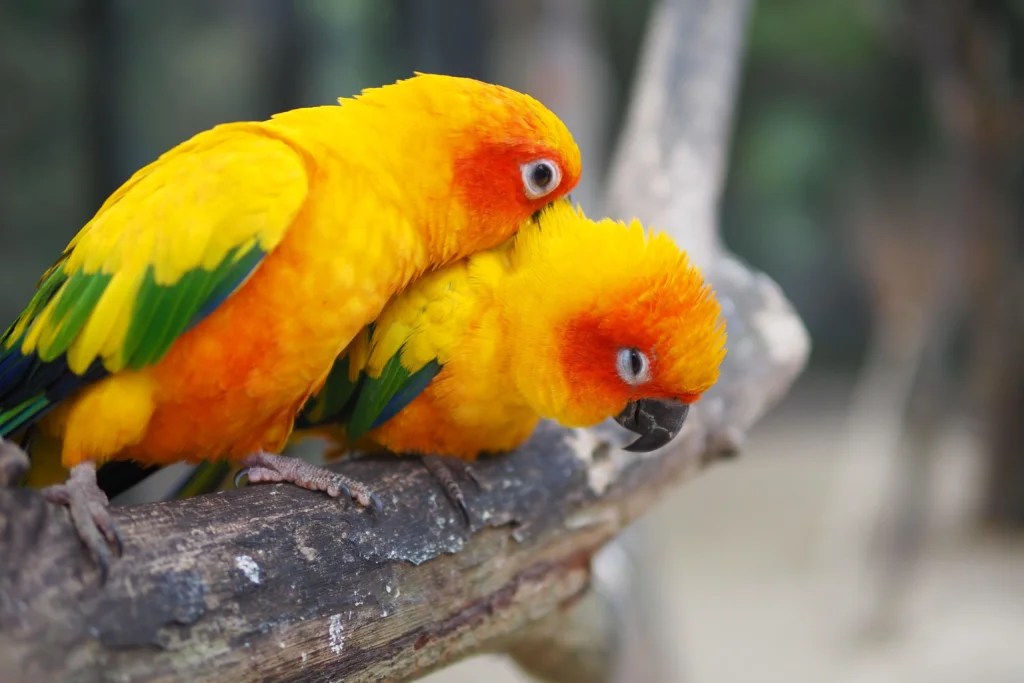
Sun conures are striking parrots with orange, yellow and green plumage.
Their appearance can make them attractive to first-time buyers.
But appearance is a poor basis for selecting a companion bird.
Sun conures can produce very loud contact calls, which may be unsuitable for flats, shared buildings or noise-sensitive homes.
They also require substantial space, social interaction and behavioural enrichment.
Are sun conures beginner-friendly?
They are generally a more challenging choice for someone without experience of parrots.
A prospective owner should spend time with the species, listen to its normal vocalisations and speak to experienced avian caregivers before committing.
Best suited to: Owners who understand demanding parrot care and have an appropriate noise-tolerant environment.
Potential challenge: Loud calls, exercise requirements and a potentially decades-long commitment.
Avian Species & Lifestyle Matching Matrix
The following matrix translates bird characteristics into household choices.
| Category | Species | Typical interaction | Space and noise | Suitable owner |
|---|---|---|---|---|
| Observational, hands-off | Zebra finches, society finches | Mostly watching rather than handling | Large flight enclosure; frequent soft calls | Owners who enjoy social bird behaviour |
| Singing companion | Canary | Birdsong and observation | Spacious flight accommodation; variable song | Owners who enjoy listening to birds |
| Interactive beginner | Budgie | Gentle training, voluntary contact | Large cage or flight enclosure; regular chatter | Owners able to provide frequent interaction |
| Gentle social companion | Cockatiel | Training, social contact and some voluntary petting | Spacious flight environment; whistles and calls | Families with time for daily involvement |
| Active small parrot | Lovebird, parrotlet | Structured interaction and enrichment | Spacious, secure housing; assertive vocalisations | Owners prepared for behavioural management |
| High-demand interactive parrot | Green-cheeked conure, sun conure | Extensive enrichment and relationship building | Large enclosure; moderate-to-very-loud calls | Dedicated, well-prepared caregivers |
The original time allowances of 15–30 minutes, one to two hours and two to three hours have not been retained as minimum welfare standards. Birds need more than basic feeding and cleaning, and the amount of handling required is not the same as the opportunity they need for exercise and normal behaviour.
Best quiet pet birds for apartment living
For many apartment residents, finches and canaries are worth considering before larger parrots.
Their vocalisations are often less intrusive than the powerful calls of some conure species.
However, no bird is completely silent.
Finches may chirp throughout active periods, and a singing canary may be clearly audible in a small flat.
Budgies also chatter, while cockatiels whistle and give contact calls.
Before bringing a bird home, consider the acoustic layout of your property, neighbours, the species’ typical vocal behaviour and whether the home can provide safe flight space.
Quiet doesn’t mean low-maintenance. A quiet finch still needs suitable housing and social companionship.
Friendly pet birds that like to be held
Some budgies and cockatiels become comfortable stepping onto a hand or accepting gentle contact.
Certain well-socialised small parrots may also enjoy interacting closely with familiar people.
However, birds should not be treated as animals that naturally want to be hugged or restrained.
A bird that tolerates sitting on a finger is not necessarily comfortable being held around the body.
Teach step-up behaviour instead of grabbing
Reward-based step-up training allows a bird to voluntarily move onto a finger or suitable perch.
Keep early interactions calm and brief.
If the bird moves away or becomes frightened, reduce the difficulty rather than chasing it around the enclosure.
The Association of Avian Veterinarians’ enrichment guidance includes behavioural enrichment, social opportunities and exercise as important parts of bird welfare.
Never force a bird to accept petting to make it more affectionate.
Small pet birds with a short lifespan: What should you know?
Small birds are often assumed to have short lifespans, but that isn’t always true.
Finches may have shorter typical lifespans than many parrots, while cockatiels, lovebirds and conures can represent much longer commitments.
| Bird | Broad longevity reference | Planning consideration |
|---|---|---|
| Common pet finches | VCA reports typical figures around 4–6 years for finches, with some individuals living much longer | Species and husbandry matter |
| Canary | Can live for many years; exact expectation varies | Plan for a long-term companion, not a temporary pet |
| Budgie | Often lives for several years and may live considerably longer | Long-term care and veterinary access needed |
| Cockatiel | VCA reports about 10–14 years on average, with longer-lived individuals | May remain in the family through major life changes |
| Lovebird | VCA reports around 10–15 years, with longer-lived individuals possible | Substantial social and housing commitment |
| Conure | VCA reports around 20–35 years for conures | Potentially decades of responsibility |
These are source-specific general estimates, not guaranteed lifespans. Species, genetics, nutrition, environment and healthcare affect longevity.
A shorter lifespan should never be the main reason to choose an animal. Every bird deserves good care throughout its life.
How much room does a pet bird need?
Bird size alone is a poor way to estimate housing requirements.
A tiny finch needs room to fly horizontally. A budgie needs space to move between perches and explore. A conure needs a secure environment with adequate room for exercise and enrichment.
The RSPCA’s housing guidance recommends substantial flight opportunities and explains that indoor cages should not be used as lifelong substitutes for meaningful movement.
Choose length rather than decorative height alone
Birds don’t normally fly like helicopters.
A narrow, tall cage with numerous perches may offer less useful flying space than a longer, appropriately designed enclosure.
For finches and canaries, horizontal flight space is particularly important.
For parrots, the enclosure should also accommodate suitable perches, climbing opportunities and foraging materials without becoming overcrowded.
Think beyond the cage
Consider the room where the enclosure will stand.
Keep birds away from kitchen fumes, cigarette smoke, scented aerosols and unsuitable heating or cooling conditions.
Birds are particularly vulnerable to certain airborne substances.
The RSPCA Australia’s housing guidance highlights ventilation, protection from fumes and safe positioning.
Prepare a safe flying environment
Birds flying indoors need protection from open windows, ceiling fans, mirrors, glass and other hazards.
Doors and windows must be secured before flight sessions.
Other household pets should be kept appropriately separated.
Do not assume wing clipping makes a bird safer; the RSPCA’s flight guidance describes welfare and injury risks associated with clipping.
Good starter birds for kids and families
Budgies and cockatiels are often considered suitable family birds when adults are prepared to supervise care and interaction.
Canaries and finches may also offer children opportunities to learn about animal behaviour through observation.
But a child should not be the sole person responsible for a bird.
Adult caregivers must provide consistent nutrition, cleaning, social management, veterinary arrangements and appropriate supervision.
Match the bird to the child’s behaviour
A child who enjoys quietly observing wildlife may appreciate finches or a canary.
An older child interested in patient training may enjoy learning alongside a budgie or cockatiel.
A child who frequently grabs, squeezes or startles animals is not yet ready for direct unsupervised bird handling.
Birds are physically delicate, and frightened parrots can bite.
Parents should teach children to approach calmly and allow the bird to choose whether to interact.
Protect children and birds from injury
Supervise interaction, practise appropriate handwashing and keep bird-care equipment out of food-preparation areas.
Don’t allow children to chase birds around a room or hold them tightly.
If a bird bites, end the interaction calmly and investigate what may have caused fear or frustration.
What do beginner pet birds need every day?
Daily care involves more than changing the seed bowl.
Birds need a species-appropriate diet, clean drinking water, a hygienic environment, opportunities to move and appropriate social contact.
The Association of Avian Veterinarians’ basic care guidance explains the importance of physical activity, nutrition and mental stimulation.
Appropriate feeding
A seed-only diet isn’t automatically suitable for every companion bird.
Dietary needs vary between finches, canaries and different parrots.
Commercial formulated foods, vegetables and other items may be included according to species-specific veterinary guidance.
Avoid universal feeding percentages without checking the particular bird’s requirements.
Enrichment
Different birds benefit from different types of enrichment.
Finches may value opportunities to fly, forage and interact with compatible companions.
Budgies and cockatiels may investigate toys, learn simple behaviours and explore safe climbing structures.
More demanding parrots often require varied, regularly assessed enrichment.
Cleaning and observation
Food and water containers need regular attention.
Check the enclosure for soiled surfaces, damaged equipment and unsafe toys.
Observe the bird’s normal behaviour, including appetite, posture, activity and vocalisations.
A sudden change in breathing, perching, eating or general behaviour deserves prompt attention from a suitably qualified avian veterinarian.
Common mistakes first-time bird owners make
Buying a cage based on the bird’s body length. Flying animals need much more than enough room to stand and turn around.
Choosing a bird for its ability to talk. Talking is not guaranteed and doesn’t establish compatibility.
Expecting finches or canaries to enjoy cuddling. Many are better suited to observation.
Assuming a small parrot is easy to train. Lovebirds, parrotlets and conures can require substantial behavioural knowledge.
Ignoring companionship needs. Birds differ in their social arrangements; unsuitable isolation or forced grouping can both create welfare problems.
Using wing clipping as the main escape-prevention strategy. Safer housing, supervised flight and training should be considered.
Underestimating longevity. A bird purchased for a child may still need care after that child becomes an adult.
Failing to locate an avian veterinarian. Specialist care can be harder to access than general dog or cat veterinary services.
How to choose your first pet bird responsibly
Before adopting or buying, spend time observing the species in person.
Listen to its normal calls and watch how it moves.
Find out whether it prefers other birds, whether it has been properly socialised and what daily care its species requires.
Avoid purchasing an unweaned baby bird. Hand-rearing requires specialist skills and can cause serious harm when attempted by inexperienced owners.
Ask the rescue organisation or responsible breeder about the bird’s age, history, health, social behaviour and any known handling difficulties.
Arrange a suitable veterinary assessment and establish a long-term care plan.
If your household cannot provide enough flight space or social enrichment, postponing bird ownership is better than choosing a bird solely because it fits on a small shelf.
Frequently asked questions
A budgie is often a practical option for someone wanting an interactive small parrot. Finches or canaries may suit people who prefer observation. The easiest match depends on time, space, noise tolerance and the relationship you’re hoping for.
Budgies are smaller, but that doesn’t automatically make their welfare needs easier. Both need appropriate housing, enrichment and social interaction. Cockatiels are larger and may have different space, feather-dust and handling considerations.
Finches are commonly kept for observation and often prefer compatible bird companionship to direct human contact. They still require daily care, suitable social arrangements and substantial flight space.
Finches and canaries are worth considering where quieter vocalisations are important. Budgies may also suit some flats, but no species is silent, and sufficient exercise space remains essential.
That depends on its species and individual circumstances. Many birds have strong social needs, and compatible bird companionship may be important. Human attention should not automatically be treated as an equivalent substitute.
Flight and physical activity are important natural behaviours. Housing should provide meaningful exercise opportunities, with safe indoor flight or a suitable aviary where appropriate. Birds unable to fly also need suitable alternative exercise and specialist welfare planning.
A suitably socialised budgie or cockatiel may learn voluntary step-up behaviour, but no bird should be bought with the expectation that it will tolerate being grabbed or cuddled. Adults must supervise handling.
Choosing the right bird for your home
If you want an interactive companion, start by learning about budgies and cockatiels.
If you prefer watching natural social behaviour, consider compatible finches in a spacious flight enclosure. And If birdsong interests you most, a canary may be appealing.
Lovebirds, parrotlets and conures deserve consideration only when you’re prepared for greater demands on your time, space and behaviour-management skills.
Before committing, make sure you can provide suitable housing, daily exercise, appropriate nutrition, companionship and avian veterinary care.
The easiest bird to keep isn’t necessarily the smallest or quietest. It’s the bird whose natural needs you can meet consistently throughout its life.