
The information and calculator data provided in this article are aggregated from peer-reviewed veterinary literature, including the Merck Veterinary Manual and AVMA guidelines. This content is for educational and informational purposes only and is not a substitute for professional veterinary advice, diagnosis, or treatment. Always consult with a licensed veterinarian before administering any medication or altering your pet’s health regimen.
Calm cat breeds for apartment living are not simply cats that happen to tolerate small spaces. They are cats whose fundamental temperament, vocalization patterns, activity levels, and enrichment requirements align naturally with the conditions of apartment life: limited square footage, shared walls with neighbors, no outdoor access, and owners who may be away for standard working hours. Choosing calm cat breeds for apartment living correctly from the start prevents the frustration, behavioral problems, and welfare concerns that arise when a cat whose natural temperament requires territory, high activity, or constant stimulation is placed in an environment that cannot deliver any of those things.
The good news is that a well-chosen cat thrives in an apartment. The Royal Canin apartment living cat guide confirms that a cat’s welfare and happiness in any space is determined not by square footage but by the quality and suitability of the environment relative to the cat’s specific behavioral needs. A calm, independent, low-activity breed in a thoughtfully enriched apartment is a more content animal than a high-energy, territorial breed in a large house with insufficient stimulation.
This guide profiles the top calm cat breeds for apartment living, covers the quietest breeds for shared-wall environments, identifies the genuinely low-maintenance options, addresses whether cats experience sadness in small spaces, and provides the catification and enrichment strategies that make any apartment a genuinely satisfying feline home.
Table of contents
- Why Calm Cat Breeds for Apartment Living Are a Distinct Category
- Top Calm Cat Breeds for Apartment Living: Breed-by-Breed Guide
- British Shorthair: The Premier Calm Cat Breed for Apartment Living
- Ragdoll: The Gentle Giant Among Calm Cat Breeds for Apartment Living
- Persian: The Classic Low-Activity Breed Among Calm Cat Breeds for Apartment Living
- Russian Blue: The Quiet Intellectual Among Calm Cat Breeds for Apartment Living
- Scottish Fold: The Adaptable Apartment Specialist Among Calm Cat Breeds for Apartment Living
- Exotic Shorthair: The Low-Maintenance Face of Calm Cat Breeds for Apartment Living
- Chartreux: The Rare Gem Among Calm Cat Breeds for Apartment Living
- Quiet Cat Breeds That Don’t Meow Much: Managing Neighbor Relations
- Why Quiet Cat Breeds That Don’t Meow Much Matter in Apartments
- Best Low Maintenance Cats for Small Spaces 2026: The Practical Selection
- Best Low Maintenance Cats for Small Spaces 2026 by Care Requirement
- Do Cats Get Sad in Small Apartments: Understanding Feline Wellbeing
- How to Keep a Cat Happy in a Small Apartment: The Complete Enrichment Guide
- Catification Ideas for Small Apartments: Transforming Limited Space
- Renter-Friendly Catification Ideas for Small Apartments Without Drilling
- Vertical Catification Ideas for Small Apartments That Create Territory From Thin Air
- Calm Cat Breeds for Apartment Living: Choosing Between One or Two Cats
- Frequently Asked Questions About Calm Cat Breeds for Apartment Living
- Your Action Plan for Choosing Calm Cat Breeds for Apartment Living
Why Calm Cat Breeds for Apartment Living Are a Distinct Category
Calm Cat Breeds for Apartment Living: Care & Wellness Guide
Providing optimal care for calm cat breeds for relies on creating a safe home environment, establishing predictable daily routines, and supporting natural instincts. Balanced nutrition, engaging physical activity, and regular preventative checkups ensure long-term health and vitality.
| Key Care Dimension | Recommended Standard | Primary Benefit | Management Best Practice |
|---|---|---|---|
| Preventative Veterinary Care | Annual or biannual clinical checkups | Early detection of underlying disease | Maintain up-to-date vaccine and wellness records |
| Species-Appropriate Diet | Formulated to life stage and activity level | Optimal muscle tone and metabolic balance | Measure exact daily feeding portions consistently |
| Environmental Enrichment | Daily mental exercise and physical activity | Prevents boredom and destructive behaviors | Rotate interactive toys and training games weekly |
| Emergency Preparedness | Dedicated pet emergency fund or insurance policy | Guarantees immediate medical care access | Keep 24-hour ER clinic contact readily accessible |
The Behavioral Traits That Define Calm Cat Breeds for Apartment Living
Calm cat breeds for apartment living share a consistent behavioral profile that makes them fundamentally different from high-energy or highly territorial breeds in a small-space context. Understanding what these traits are, and why each matters specifically in an apartment, allows you to evaluate any breed against your specific living situation accurately.
The traits that matter most in calm cat breeds for apartment living:
- Low to moderate activity level: Cats with high energy demands require space to run, jump, and chase. In a studio or one-bedroom apartment, a high-activity cat cannot meet its exercise needs through normal exploration, leading to furniture destruction, nighttime zoomies, and stress-related behavioral problems. Low to moderate activity cats are naturally content with shorter, focused play sessions and extended periods of resting and observing
- Low vocalization: Shared walls in apartment buildings mean that a persistently vocal cat becomes a neighbor problem quickly. Quiet breeds communicate softly and infrequently, making them fundamentally more appropriate for multi-unit buildings than high-vocal breeds like Siamese, Tonkinese, or Bengal
- Adaptability to routine: Apartment cats without outdoor access rely on a predictable indoor routine for psychological stability. Breeds that adapt well to routine and handle solitude during standard working hours without developing separation anxiety are significantly better suited to apartment living than breeds requiring constant interaction
- Non-territorial aggression toward small spaces: Some breeds respond to limited territory by developing stress-related inappropriate elimination, over-grooming, or redirected aggression. Calm, adaptable breeds with low territorial drive accept a well-enriched apartment as sufficient territory without these behavioral responses
Top Calm Cat Breeds for Apartment Living: Breed-by-Breed Guide
British Shorthair: The Premier Calm Cat Breed for Apartment Living
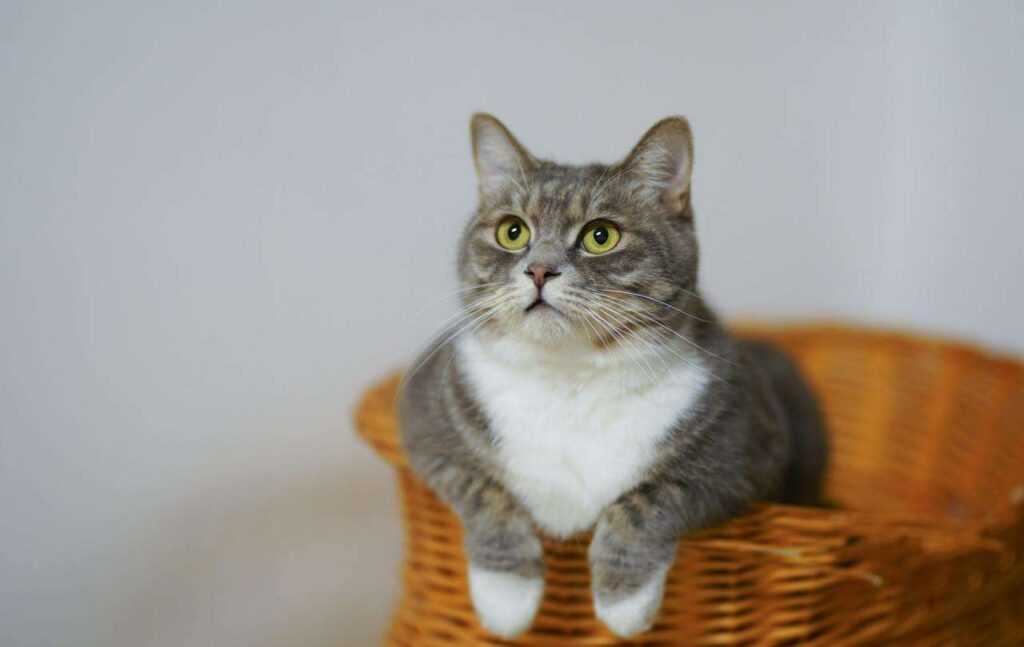
The British Shorthair is the single most consistently recommended of all calm cat breeds for apartment living across veterinary and breed authority sources, and the reasons are compellingly consistent. Almonte Cats’ apartment breed guide describes the British Shorthair as one of the most self-sufficient cat breeds in existence, noting that they handle solitude with ease, rarely develop separation anxiety, and maintain emotional stability even when left alone for a standard workday.
Their communication style is ideally suited to shared-wall living. The Feline Logic apartment breed analysis confirms that the British Shorthair communicates with small, soft sounds rather than demanding yowls, communicates infrequently, and is unlikely to be heard by neighbors under any normal circumstances. Their plush, dense coat requires only weekly brushing despite its luxurious appearance, and the breed is characteristically strong in health with fewer hereditary problems than many popular breeds.
British Shorthair apartment suitability profile:
| Trait | Rating | Notes |
|---|---|---|
| Activity Level | Low | Primarily a napper and observer |
| Vocalization | Very Low | Soft, infrequent communication |
| Grooming Needs | Low | Weekly brushing only |
| Solitude Tolerance | High | Handles 8-hour workdays reliably |
| Affection Style | Calm and dignified | Enjoys proximity without demanding it |
| Space Requirement | Low | Content in studio to one-bedroom |
Ragdoll: The Gentle Giant Among Calm Cat Breeds for Apartment Living
The Ragdoll presents what appears to be a paradox for apartment suitability: males reach 7 to 9 kilograms, making them one of the largest domestic cat breeds, yet the Feline Logic breed analysis specifically identifies the Ragdoll as among the most apartment-appropriate breeds available because of its exceptional temperament. A large calm cat is simply better suited to apartment living than a small anxious one.
Ragdolls are deeply relaxed animals by nature, earning their name from their characteristic tendency to go limp when picked up and held. They communicate with soft chirps and trills rather than persistent yowling, making them excellent neighbors in multi-unit buildings. Almonte Cats notes that Ragdolls follow their owners around the apartment with dog-like loyalty without being hyperactive, providing companionship without the behavioral complexity of high-energy breeds. Their only practical apartment consideration is ensuring a sturdy, appropriately large cat tree to accommodate their size.
Persian: The Classic Low-Activity Breed Among Calm Cat Breeds for Apartment Living
The Persian has been a defining member of the calm cat breeds for apartment living category for generations, and its suitability remains unchanged in 2026. World Animal Foundation’s quietest cat breeds guide describes the Persian as typically communicating softly and not relying on frequent vocalization to express needs or emotions. Daily life with a Persian is steady, predictable, and quiet in the way apartment living demands.
Persians move slowly, prefer established routines, observe quietly, and spend the majority of their day resting in comfortable, elevated spots. Their primary care consideration is their coat: the long, flowing Persian coat requires daily brushing to prevent matting, and many Persian owners maintain a shorter grooming trim during warmer months to reduce maintenance commitment. The Kitty Kiosk apartment breed guide describes the Persian as the “regal roommate,” observing that their composed dignity and unhurried presence elevates the atmosphere of a small apartment rather than overwhelming it.
Russian Blue: The Quiet Intellectual Among Calm Cat Breeds for Apartment Living
The Russian Blue occupies a unique position among calm cat breeds for apartment living by combining genuine intelligence and moderate playfulness with an exceptionally quiet, reserved demeanor that makes it particularly well suited to apartment environments. Bark and Luv’s small space cat breed guide describes the Russian Blue as elegant and low-maintenance, adapting easily to different environments while remaining engaged through interactive toys that satisfy its intelligence without requiring significant physical space.
Russian Blues form deep bonds with their primary owner while remaining reserved with strangers, a temperament that works excellently in the relatively controlled social environment of an apartment. Their short, plush double coat is hypoallergenic relative to many breeds, shedding minimally and requiring only occasional brushing, making them particularly practical for apartments with limited space for cat hair management.
Scottish Fold: The Adaptable Apartment Specialist Among Calm Cat Breeds for Apartment Living
The Scottish Fold’s distinctive folded ears are immediately recognizable, but its temperament is equally notable and equally relevant to apartment suitability. Feline Logic’s breed analysis identifies the Scottish Fold as one of the most adaptable domestic cat breeds, comfortable in a wide range of living conditions including small apartments, and naturally calm and quiet in a way that makes it a practical choice for every dimension of apartment life.
Catvills’ quiet cat breed guide confirms that Scottish Folds rarely make loud purrs or meows even when upset, maintain a laid-back temperament that is highly resistant to the minor stressors of apartment living, and are fully content with a puzzle toy for engagement when their owners are at work. The PetPlace small space breed resource notes that the Scottish Fold provides hours of quiet companionship when owners are home and requires only moderate interaction to remain content and well-adjusted.
Exotic Shorthair: The Low-Maintenance Face of Calm Cat Breeds for Apartment Living
The Exotic Shorthair delivers the Persian’s exceptional calm temperament in a short-coated, low-grooming package that makes it among the most practical of all calm cat breeds for apartment living for owners who want Persian-level tranquility without the daily grooming commitment. KwikPets’ indoor cat breed guide describes Exotic Shorthairs as calm, super low-key, gentle, quiet, and loving, rating them specifically as ideal for apartment dwellers and cat cuddlers.
Catvills notes that Exotic Shorthairs have soft, musical voices, are not big talkers, and are capable of entertaining themselves during solo time, communicating primarily when hungry or seeking specific attention. Their only unique acoustic characteristic is occasional snoring during deep sleep, a product of their short nasal passages that most owners find endearing rather than disruptive.
Chartreux: The Rare Gem Among Calm Cat Breeds for Apartment Living
The Chartreux is less widely known than the British Shorthair or Ragdoll but deserves specific mention as one of the most genuinely quiet and calm cats available. A-Z Animals’ quietest cat breeds guide identifies the Chartreux as one of the quietest of all domestic breeds, communicating through soft meows and body language and adapting readily to different living situations including apartments. Their characteristic permanent smile gives them an expression of contented calm that reflects their actual temperament accurately.
Quiet Cat Breeds That Don’t Meow Much: Managing Neighbor Relations
Why Quiet Cat Breeds That Don’t Meow Much Matter in Apartments
Quiet cat breeds that don’t meow much are not simply a preference for owners who value silence. In multi-unit apartment buildings, a persistently vocal cat creates genuine neighbor relations problems that can result in noise complaints, lease complications, and the stress of managing a cat whose vocal needs conflict with the building’s social expectations.
World Animal Foundation’s quietest cat breeds research identifies the Persian, British Shorthair, Scottish Fold, Russian Blue, Exotic Shorthair, Chartreux, and Ragdoll as the seven most consistently quiet breeds across verified owner experience. The quiet cat breeds that don’t meow much on this list share the characteristic of expressing most of their communication through body language, scent marking behavior, and soft vocalizations rather than persistent yowling or loud demands.
Breeds to avoid in apartment buildings due to vocalization:
- Siamese: highly vocal by genetic predisposition, communicates loudly and persistently throughout the day
- Bengal: territorial vocalization, particularly at night
- Tonkinese: communicative and demanding, requires consistent vocal response from owner
- Abyssinian: active and vocal, produces frequent high-energy vocalizations during play periods
- Burmese: exceptionally people-oriented and vocal when bored or seeking attention
Best Low Maintenance Cats for Small Spaces 2026: The Practical Selection
Best Low Maintenance Cats for Small Spaces 2026 by Care Requirement
The best low maintenance cats for small spaces 2026 are defined by minimal grooming requirements, predictable health profiles, independent temperaments that do not require constant owner engagement, and behavioral stability that does not produce apartment-incompatible destructive or territorial behaviors.
KwikPets’ 2026 to 2026 indoor cat breed analysis provides the following assessment of the best low maintenance cats for small spaces 2026 ranked by overall care demand:
Tier 1: Lowest Overall Maintenance
- British Shorthair: Weekly brushing, rare veterinary concerns, independent temperament, low play demand. The single lowest-maintenance breed for apartment living across all care dimensions
- Russian Blue: Short coat requires minimal grooming, self-sufficient temperament, consistent and predictable behavior without behavioral surprises
- Exotic Shorthair: Short coat replaces daily Persian grooming with weekly brushing, while retaining the Persian’s self-entertaining, low-demand temperament
2nd Tier: Low to Moderate Maintenance
- Ragdoll: Semi-long coat requires brushing two to three times per week, but temperament is exceptionally low-demand and the breed is predictably behaviorally stable
- Scottish Fold: Moderate grooming depending on coat length variant, occasional ear cleaning required due to fold structure
Tier 3: Moderate Maintenance with High Temperament Reward
- Persian: Daily coat grooming is the price of entry. Every other dimension of Persian ownership is exceptionally low-demand. For owners who enjoy the ritual of grooming as a bonding activity, Persians are a genuinely rewarding moderate-maintenance choice
Do Cats Get Sad in Small Apartments: Understanding Feline Wellbeing
Do Cats Get Sad in Small Apartments? What the Research Shows
Do cats get sad in small apartments is a question that carries genuine welfare weight, and the honest answer is: cats can experience depression and boredom in small apartments, but whether they do depends almost entirely on the quality of the environment and the suitability of the breed, not on the size of the space alone.
PetMD’s veterinarian-reviewed guide to cat depression identifies moving from a larger space to a smaller apartment as a recognized trigger for feline depression, noting that a reduction in available exploration space and activity restriction can lead to a decrease in general engagement, increased sleep, and loss of interest in previously enjoyed activities. These are the hallmark signs of depression in cats, and they are real, clinically recognized behavioral states, not anthropomorphic projections.
Furry Critter Network’s small-space cat welfare resource identifies the specific unmet needs that produce emotional distress in small-space cats:
- Boredom from limited environmental variety with no new stimuli to investigate
- Stress from insufficient territory perception or absence of hiding options that create a sense of safe private space
- Frustration from unfulfilled hunting and exercise instincts that have no appropriate outlet
- Social isolation in cats who were previously accustomed to more human contact or outdoor social stimulation
Do Cats Get Sad in Small Apartments? Signs to Monitor
The Blue Cross UK indoor cat welfare guide specifies the behavioral indicators that apartment cats may not be having their needs met:
- Increased sleeping beyond the normal 12 to 16 hours, particularly if the cat stops initiating activity during peak waking periods
- Loss of interest in toys or play sessions previously enjoyed
- Increased clinginess or conversely increased withdrawal from interaction
- Changes in appetite, grooming frequency, or elimination habits
- Redirected aggression, over-grooming, or repetitive behaviors indicating stress
- New sensitivity to changes in routine, new people, or minor environmental alterations
None of these signs indicate that apartment living itself is the problem. They indicate that the current apartment environment is not meeting the specific cat’s needs, which is an entirely solvable problem with the enrichment and catification strategies below.
How to Keep a Cat Happy in a Small Apartment: The Complete Enrichment Guide
Vertical Space: The Most Impactful Change for How to Keep a Cat Happy in a Small Apartment
How to keep a cat happy in a small apartment most effectively begins with vertical space, because vertical territory is functionally equivalent to horizontal floor space for a cat’s sense of territory and security. A cat with access to high perches, wall-mounted shelves, and elevated observation points in a small apartment has more usable territory than its square footage suggests.
The Refined Feline’s cat happiness in small apartment guide recommends a wall-mounted shelf positioned at window height as one of the highest-return single enrichment investments for a small apartment. A single half-moon shelf beside a window becomes the cat’s primary observation and resting point, providing both vertical territory and the passive enrichment of the outdoor view simultaneously.
Class Act Cats’ small space living guide adds that encouraging movement through vertical space is a key strategy for how to keep a cat happy in a small apartment: using an interactive wand toy to guide the cat up and down cat trees, on and off furniture, and through tunnel toys replicates the full hunt cycle that cats need to feel physically and psychologically satisfied, without requiring any additional floor space.
Daily Play and Enrichment for How to Keep a Cat Happy in a Small Apartment
The Caticles single-cat apartment happiness guide identifies the following as the most essential daily enrichment practices for how to keep a cat happy in a small apartment:
- 15 minutes of focused interactive play twice daily: Wand toys, laser pointers, and feather teasers satisfy hunting instincts directly. Store toys out of reach between sessions to maintain novelty and excitement when play sessions begin
- Window access with a comfortable perch: Birds, pedestrians, and passing vehicles provide constantly changing stimulation. A window perch turns a standard apartment window into the cat’s primary entertainment source during the hours you are away
- Puzzle feeders replacing standard bowls: Hiding kibble in puzzle feeders or around the apartment in three to five locations replicates natural foraging behavior, adds daily mental engagement, and extends the stimulation value of mealtime significantly
- Cat grass and sensory variety: A small pot of growing cat grass provides a safe plant interaction. Rotating toy types, introducing new textures periodically, and occasionally rearranging climbing furniture keep the environment feeling novel without additional cost
- Consistent daily routine: Cats regulate their psychological wellbeing through routine. Feeding, play, and sleep at consistent times each day provides the predictability that calm cat breeds for apartment living use as their primary stress management mechanism
Catification Ideas for Small Apartments: Transforming Limited Space
Renter-Friendly Catification Ideas for Small Apartments Without Drilling
Catification ideas for small apartments operate on a specific constraint that owner-occupied homes do not face: most renters cannot drill into walls, cannot make permanent modifications, and must restore the space to original condition at move-out. Effective catification ideas for small apartments achieve the enrichment goals of a full catification project without any permanent wall modifications.
Lola the Rescued Cat’s rented apartment catification guide establishes the foundational principle: catification does not require a major project with lots of shelves and bridges drilled into walls. Out-of-the-box thinking mixed with creativity can make any environment genuinely catified while maintaining the stylish and undamaged appearance a rental requires.
Renter-friendly catification ideas for small apartments:
- Freestanding cat trees positioned at windows: The most versatile single investment in any catification project. A tall cat tree with multiple platforms placed directly beside the primary window delivers vertical territory, scratching surface, observation point, and resting space in a single freestanding unit that leaves no wall damage
- Tension-pole cat shelves: Available from multiple manufacturers, tension-pole systems create vertical cat highways between floor and ceiling using adjustable compression poles rather than wall screws. They are fully removable and leave no trace
- Bookshelf superhighways: Existing bookshelves, TV stands, and storage units can be repositioned to create connected elevated pathways for the cat. Placing a low unit adjacent to a taller unit creates a stepping-stone route that functions as a cat highway without purchasing any dedicated cat furniture
- Window hammocks with suction cup attachment: Suction cup window perches and hammocks attach to clean glass surfaces without any wall penetration. Modern suction cup designs hold cats up to 12 kilograms reliably and are easily repositioned as needed
- Cat tunnels and hide boxes: Floor-level soft tunnels, hide boxes, and igloo beds create private territory and safe hiding spaces that cats use intensively for stress management, without occupying functional human living space when positioned under beds or beside furniture
Vertical Catification Ideas for Small Apartments That Create Territory From Thin Air
The Cats.com apartment cat entertainment guide identifies vertical territory creation as the single most impactful strategy in any catification ideas for small apartments project, and the principle extends to every element of the catification design: wall-mounted floating shelves (where permitted), modular cat wall panel systems that assemble without tools, and positioning existing human furniture to create cat-accessible elevated routes all add vertical territory that the cat experiences as meaningfully expanded living space.
The benchmark for successful apartment catification is whether the cat can travel from floor level to the highest accessible point in the apartment using multiple different routes. A cat that can climb up, across, and down through multiple paths experiences its environment as far larger and more complex than its footprint suggests.
Calm Cat Breeds for Apartment Living: Choosing Between One or Two Cats
Should You Get Two Cats for an Apartment?
Calm cat breeds for apartment living do not universally benefit from a companion, and the decision to get one or two cats depends on the specific breed’s social needs, the apartment size, and the owner’s daily schedule.
Cat in a Flat’s apartment breed guide notes that breeds with high independence and solitude tolerance, specifically the British Shorthair, Russian Blue, and Persian, can thrive as solo apartment cats provided daily interactive enrichment is consistent. Breeds with higher social needs, including the Ragdoll and Scottish Fold, benefit more meaningfully from a feline companion when owners work standard away-from-home hours.
When introducing two cats in an apartment, a gradual multi-room introduction protocol over one to two weeks prevents territorial conflict that in a small space has no resolution through avoidance. The How to Attract a Cat to the Litter Box guide in this series covers the litter box provision standard for two-cat households: three boxes minimum, placed in separate locations, following the N+1 rule that applies to multi-cat apartments exactly as it does to larger homes.
Frequently Asked Questions About Calm Cat Breeds for Apartment Living
The most consistently recommended calm cat breeds for apartment living across veterinary and breed authority sources are the British Shorthair, Ragdoll, Persian, Russian Blue, Scottish Fold, Exotic Shorthair, and Chartreux. Almonte Cats’ apartment breed guide confirms that these breeds share the defining apartment-compatible traits: low to moderate activity, low vocalization, high solitude tolerance, and behavioral adaptability that allows them to remain content within a well-enriched small space.
Do cats get sad in small apartments with inadequate enrichment? Yes. PetMD’s cat depression resource confirms that reduced territory, limited stimulation, and unmet behavioral needs can produce genuine feline depression with observable behavioral signs including reduced activity, appetite changes, and loss of interest in play. However, Furry Critter Network confirms that apartment size itself is not the causal factor. Environmental quality and breed suitability determine cat wellbeing, not square footage.
The best low maintenance cats for small spaces 2026 by total care demand are the British Shorthair (lowest overall maintenance), Russian Blue, and Exotic Shorthair. All three share short or easy-care coats, independent temperaments, and behavioral stability that does not require constant owner management. KwikPets’ indoor cat breed guide rates all three breeds as ideal for city living, working professionals, and first-time cat owners who want an enriching companion without high-demand grooming or behavioral complexity.
Your Action Plan for Choosing Calm Cat Breeds for Apartment Living
Calm cat breeds for apartment living reward careful selection and thoughtful setup with years of contented, quiet, mutually enriching companionship. The cat that is right for your apartment exists within this guide. The preparation that makes them genuinely happy in your space is achievable before they arrive home.
Here is your action plan:
- This week: Review your lease for pet policy specifics including permitted cat numbers, deposit requirements, and any breed or weight restrictions. Contact your building management to clarify any ambiguous terms before selecting a breed.
- Before bringing your cat home: Purchase and position a tall cat tree beside your primary window. Set up at least one additional elevated perch using existing furniture. Purchase puzzle feeders to replace standard food bowls from day one. Source an appropriate litter box setup following the guidance in our Cat Litter Training Guide.
- First week home: Provide one quiet room as an initial safe base before introducing the full apartment. Maintain feeding, play, and sleep on the schedule you intend to sustain permanently. Begin building the interactive play routine from day one.
- First month: Assess the catification setup against your cat’s actual usage patterns. Add a second vertical option if the cat gravitates primarily to one spot. Introduce a rotation of toy types to identify which hunting simulation style your specific cat prefers. Schedule a veterinary wellness check within the first 30 days.
For continued reading, explore How to Attract a Cat to the Litter Box: Complete Litter Training Guide 2026 and Dog Waste Management: From Pickup to Proper Disposal 2026 in our complete responsible pet ownership series.
🐾 Related Resources & Interactive Tools in This Guide:
- Interactive Calculator: Puppy Growth & Target Adult Weight Calculator — Estimate your puppy target adult size and milestone weight trajectory.
- Clinical Resource: German Shepherd Leash Training: A Complete Guide
- Behavior & Training Guide: Pitbull Dog: 5 Reasons Why They Make Great Family Pets
- Related Expert Guide: Dreaming of a Siberian Husky? 7 Causes Why They Would possibly Be the Excellent Pet
Growth & Immunization Tracking: To predict your puppy’s adult weight based on current breed trajectory, use our interactive Puppy Growth Calculator. For core vaccine timelines and veterinary cost planning, refer to the Puppy Vaccination Schedule Tool.
📚 Related Topic Cluster Guides & Veterinary Tools
Explore our complete Pet Lifestyle & Living Hub for comprehensive guides, veterinary diagnostic checklists, and daily care protocols.
- The Best Family Dog Breeds: First-Time Owner and Financial Reality Guide 2026
- Gentle Giant Cat Breeds Pros and Cons: Exploring 10 Magnificent Large Feline Breeds in 2026
- Cat Beds That Look Like Real Furniture: Top 10 Best Brands for Luxury and Comfort in 2026
- Types of Dog Leashes: The Complete 2026 Guide From Training to Trail
- Interactive Tool: Puppy Growth & Weight Predictor Calculator



1 Comment
Hi,
the way you write about pets is fantastic. good work keep it up.