The information and calculator data provided in this article are aggregated from peer-reviewed veterinary literature, including the Merck Veterinary Manual and AVMA guidelines. This content is for educational and informational purposes only and is not a substitute for professional veterinary advice, diagnosis, or treatment. Always consult with a licensed veterinarian before administering any medication or altering your pet’s health regimen.
What to look for in a horse boarding facility is the most consequential decision a horse owner makes outside of purchasing the horse itself. The facility you choose determines what your horse eats, how many hours it moves each day, whether its feet are trimmed on schedule, who responds when it shows the first signs of colic at 2 a.m., and whether its physical and psychological needs are met on every single day that you are not present. Getting that decision right on a first visit requires knowing exactly which facility elements to evaluate, which red flags to trust, and which professionally worded tour scripts to see through before signing a boarding contract that may be difficult to exit cleanly.
What to look for in a horse boarding facility spans five interconnected categories: physical safety infrastructure, daily care standards, turnout protocol, feed and water management, and the human factor of staff competence and barn culture. This guide covers all five categories in depth, provides the complete Barn Safety Audit matrix for your facility inspection visit, and includes the cost data, turnout science, and training fee benchmarks every owner needs to evaluate what they are being offered against what the industry standard actually requires in 2026.
Table of contents
- What to Look for in a Horse Boarding Facility: The Types of Board and What They Include
- Full Care vs Pasture Board for Horses: The Complete Decision Framework
- The Barn Safety Audit: What to Look for in a Horse Boarding Facility Inspection
- Signs of a Poorly Managed Horse Boarding Stable: The Red Flag Recognition Guide
- Questions to Ask a New Boarding Barn: The Complete Interview Framework
- How Much Turnout Do Stabled Horses Need Daily: The Science Behind the Requirement
- What to Look for in a Horse Boarding Facility with a Training Program
- What to Look for in a Horse Boarding Facility: Green Flags That Confirm a Professional Operation
- Frequently Asked Questions About What to Look for in a Horse Boarding Facility
What to Look for in a Horse Boarding Facility: The Types of Board and What They Include
Equine Boarding Facility Checklist
When evaluating a horse boarding barn, verify turnout pasture drainage, individual feed customization, daily stall cleaning protocols, and 24/7 emergency veterinary access. Ensure fencing is sturdy, secure, and free of protruding nails or broken rails to prevent injury.
| Key Care Dimension | Recommended Standard | Primary Benefit | Management Best Practice |
|---|---|---|---|
| Preventative Veterinary Care | Annual or biannual clinical checkups | Early detection of underlying disease | Maintain up-to-date vaccine and wellness records |
| Species-Appropriate Diet | Formulated to life stage and activity level | Optimal muscle tone and metabolic balance | Measure exact daily feeding portions consistently |
| Environmental Enrichment | Daily mental exercise and physical activity | Prevents boredom and destructive behaviors | Rotate interactive toys and training games weekly |
| Emergency Preparedness | Dedicated pet emergency fund or insurance policy | Guarantees immediate medical care access | Keep 24-hour ER clinic contact readily accessible |
What to look for in a horse boarding facility depends significantly on which type of board arrangement the facility offers and whether that arrangement genuinely matches your horse’s physical needs, your management philosophy, and your available schedule. The four primary board types deliver very different levels of care at very different price points, and understanding precisely what each includes prevents the billing surprises and care-standard mismatches that generate the majority of boarder dissatisfaction.
What to look for in a horse boarding facility begins with matching the board type to your horse’s needs
Millbrook Tack’s horse boarding guide confirms the complete board type breakdown and their target owners:
Full Care Board:
Includes feeding, stall cleaning, turnout, and basic health monitoring; the most hands-off arrangement for the owner; best suited for busy owners, novice owners, and horses with complex health management needs that require consistent daily professional observation. Equine Systems confirms full board costs range from $700 to $1,200 or more per month in 2026 depending on region and facility tier, with urban-adjacent and show-facility full board pricing exceeding $2,000 per month in high-cost markets.
Partial Care Board:
Hay and water are included but the owner handles grain, stall cleaning, or turnout management; best for hands-on owners who want cost reduction without complete care transfer; requires reliable owner availability on a daily basis, which eliminates it as an option for owners with irregular schedules.
Self-Care Board:
The facility provides the stall or pasture access only; the owner provides every element of daily care; the lowest cost option but demands full daily owner presence and is appropriate only for experienced horse owners who can deliver consistent care independently.
Pasture Board:
Horses live in a field environment with group or individual shelter access; River Ranch confirms pasture board costs range from $150 to $400 per month, representing the most economical professional boarding option available; appropriate for horses who thrive in a herd environment and who do not require the stall confinement that facilitates monitoring of feed intake, manure output, and early illness signs.
Bathing a cat sounds like a guaranteed disaster but with a little patience and the right technique, it can actually be a surprisingly smooth experience for you both. Discover these practical DIY cat bathing tips that keep your fluffy companion fresh, clean, and cooperatively calm without the scratches, the soaking, or the dramatic aftermath.
Full Care vs Pasture Board for Horses: The Complete Decision Framework
Full care vs pasture board for horses is not simply a budget question. It is a health management question, a horse temperament question, and a monitoring capability question that requires honest assessment of your individual horse’s needs before the cost comparison begins.
Millbrook Tack confirms the fundamental difference between full care vs pasture board for horses from a daily management perspective: full-care boarding delivers individually managed feeding, individual health monitoring, and the stall environment that allows staff to observe each horse’s manure output, appetite, and behavior changes that indicate developing health problems; pasture boarding delivers a more natural horse lifestyle with continuous movement and social interaction but reduces the level of individual daily observation that enables early illness detection.
Full care vs pasture board for horses: evaluating the health and management tradeoffs
The full care vs pasture board for horses decision matrix:
| Consideration | Full Care Board | Pasture Board |
|---|---|---|
| Monthly cost 2026 | $700 to $2,000+ | $150 to $400 |
| Individual health monitoring | Daily, staff-managed | Limited; herd-environment observation only |
| Natural behavior expression | Restricted by stall time | Maximized through continuous movement and social access |
| Appropriate for senior horses | Yes; medication, feed monitoring, and shelter control are manageable | Only if the horse can compete successfully for feed in a herd |
| Appropriate for horses with metabolic conditions | Yes; diet control is precise | Generally no; pasture access and group feeding prevent precise diet management |
| Appropriate for horses in active work | Yes; condition monitoring and pre-ride observation are facilitated | Yes, with adequate shelter and daily owner presence |
| Appropriate for horses with respiratory conditions | Dependent on barn ventilation quality; stall confinement increases ammonia exposure risk | Generally superior; open air reduces dust and ammonia exposure significantly |
The full care vs pasture board for horses recommendation for most horses in active work with a present, experienced owner is a hybrid arrangement: stall or paddock at night with a minimum of 8 to 12 hours of daily turnout. This configuration combines the health monitoring advantages of individual housing with the physical and psychological benefits of daily free movement that the turnout science confirms is non-negotiable for equine welfare.
The Barn Safety Audit: What to Look for in a Horse Boarding Facility Inspection
What to look for in a horse boarding facility during the physical inspection visit is best organized by the Barn Safety Audit matrix, which maps each facility checkpoint to the specific injury or illness it prevents when managed correctly and the specific medical emergency it creates when neglected. The matrix transforms a facility tour from an aesthetic assessment into a structured safety evaluation with medically grounded criteria at every checkpoint.
What to look for in a horse boarding facility using the complete Barn Safety Audit matrix
| The Facility Checkpoint | The High-Risk Red Flag | The Medical and Physical Threat | The Professional Standard |
|---|---|---|---|
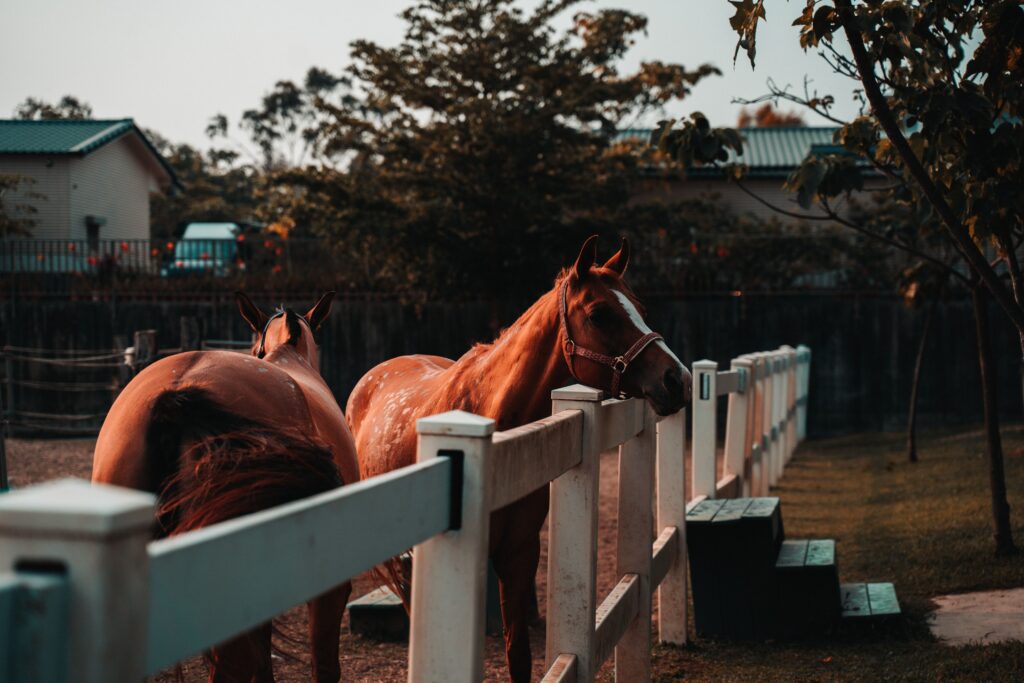
| Perimeter and Turnout Fencing | Uninsulated loose wire, rusty T-posts, broken boards, cattle wire, barbed wire, or any fencing with protruding sharp edges at horse height | Catastrophic degloving injuries from wire contact during fence-line running; torn tendons and severed ligaments from wire entanglement; lacerations that penetrate to bone in horses that panic and impact inadequate fencing at speed | Rigid wooden board fencing or safe no-climb mesh with smooth top rails; round or square wooden posts set at correct spacing; no wire at horse height; gates with horse-safe latches that cannot be opened by a horse leaning or pawing |
| Indoor Arena Footing | Deep, dusty sand with no binding agent; hard-packed clay; rubber alone on a concrete base; uneven surface with hidden holes or drainage trenches | Severe suspensory ligament strain and superficial digital flexor tendon damage from deep footing that creates variable resistance across the stride; respiratory heaves from dust-saturated arena air during repeated work; joint concussion injuries from hard-pack footing with zero shock absorption | Regularly dragged and watered GGT Footing premium blend, sand-rubber composite, or engineered arena surface maintained at a consistent 4 to 6-inch depth; visibly level surface; no standing dust cloud during active use; proper drainage preventing water pooling |
| Feed Room and Hay Storage | Sweet or musty-smelling hay stored in contact with the ground or in a humid space; hay with visible mold patches, excessive dust, or discoloration; feed room with rodent evidence or open grain bags | Fatal colic from moldy or fermented hay that disrupts gut microbial balance and triggers impaction or gas colic; toxic mold respiratory distress in horses stabled adjacent to moldy hay storage; choke from grain-only feeding without adequate forage | Freshly filled twice-daily hay nets or feed from bright, sweet-smelling orchard grass or timothy hay stored on pallets in a dry, ventilated space; grain stored in rodent-proof containers; visible hay quality assessment possible on request |
| Water Sources | Stagnant, green-tinted, or algae-coated water buckets or troughs; half-empty buckets in stalls; automatic waterers with no visible cleaning protocol; unheated outdoor water sources in freezing temperatures | Severe impaction colic from voluntary dehydration when water is contaminated or insufficiently tempting; fatal large colon displacement from chronic inadequate water intake; urinary tract complications from concentrated urine in chronically under-hydrated horses | Clean, full water buckets replenished a minimum of twice daily; automatic waterer cleaning protocol documented and visible; outdoor water sources heated in winter with functioning heaters inspected before freezing season begins |
| Stall Condition and Sizing | Stalls smaller than 12 by 12 feet for standard horses; thin or wet bedding with visible urine soaking; ammonia odor detectable from the aisle; exposed nails, protruding boards, or floor drains without covers | Musculoskeletal joint damage from insufficient room to lie down and rise safely; chronic respiratory disease from ammonia exposure in inadequately bedded, poorly ventilated stalls; entrapment injuries from exposed hardware or uncovered drain openings | 12 by 12-foot minimum stall size for standard breeds; rubber stall mats under minimum 4-inch bedding depth as confirmed by Millbrook Tack; no ammonia odor detectable from the barn aisle; smooth walls and floor with no exposed hardware |
| Electrical and Fire Safety | Exposed wiring within horse reach; light fixtures without protective guards; extension cords running through hay storage areas; no visible fire extinguishers; no exit signs | Electrocution from chewed or horse-contacted wiring; barn fire with rapid spread through hay and bedding that produces mass casualty events in stabled horses within minutes of ignition | All wiring enclosed in conduit throughout the barn; fixture guards on all lights; no extension cords in hay or bedding areas; fire extinguishers mounted visibly at barn entry points; emergency exit plan posted at barn entrance as confirmed by University of Guelph’s boarding barn checklist |
Boarding Facility Guide
The United Horse Coalition’s boarding facility guide confirms the non-negotiable physical safety requirements: clean stalls and pastures, secure fencing, hazard-free areas, clean water access, adequate shelter, sufficient ventilation, drainage, and lighting are the foundational baseline below which no boarding facility should be considered regardless of cost, convenience, or amenity offerings.
Signs of a Poorly Managed Horse Boarding Stable: The Red Flag Recognition Guide
Signs of a poorly managed horse boarding stable are observable within the first 15 minutes of an unannounced visit, which is why every boarding facility evaluation should include at least one visit made without prior scheduling notice. A barn that presents well on a pre-arranged tour but shows dramatically different conditions on an unannounced visit has revealed its true operational standard.
Millbrook Tack’s red flag guide confirms the complete list of signs of a poorly managed horse boarding stable that represent either immediate departure criteria or serious concerns requiring direct answers before signing:
Horses in Noticeably Varied Body Condition:
A barn where some horses are in excellent condition and others are visibly underweight is a barn with inconsistent or individualized-care failures; Horse Sense and Cents confirms that the condition of the horses already on the property is the single most informative observable indicator of the facility’s actual care standard.
Stall-Walker, Cribber, Weaver, or Severely Anxious Horses throughout the Barn:
One horse with a stable vice is a horse with a behavioral history; an entire barn population displaying stereotypic behaviors indicates a systemic management failure in turnout, social access, and forage availability that the facility’s marketing does not disclose.
Dirty or Algae-Coated Water Sources:
Texas Equine Emergency Hospital’s boarding guide confirms clean water access as a fundamental requirement; murky, green, or half-empty water buckets at any time of day indicate a staffing frequency problem that directly increases colic risk for every horse in the facility.
Ammonia Odor Detectable in the Barn Aisle:
Ammonia at detectable levels in the barn aisle means the stall interiors have ammonia concentrations that cause progressive respiratory tract damage with every breath a stalled horse takes; this is a confirmed chronic heaves and inflammatory airway disease risk that no quality of other amenities compensates for.
Non-Disclosure Agreements Requested Before or After Boarding:
Millbrook Tack confirms that being asked to sign an NDA before moving in or after leaving is highly unusual and should raise serious concern, as this practice is used to discourage clients from sharing negative experiences and indicates a facility that cannot defend its practices in open review.
High Staff Turnover:
Frequent changes in barn staff signal management instability, low operational morale, and the care inconsistency that produces the lapses in feeding schedules, health monitoring, and emergency response that compromise horse welfare.
Every great horse owner knows that bath day is about so much more than just getting your horse clean it’s a meaningful moment of care and connection. Master these easy, effective DIY horse bathing tips that keep your magnificent equine companion refreshed, gleaming, and feeling absolutely wonderful from head to hoof.
Questions to Ask a New Boarding Barn: The Complete Interview Framework
Questions to ask a new boarding barn fall into five categories: daily care logistics, staff competence and emergency preparedness, facility use policies, financial transparency, and the social environment of the existing boarder community. Asking questions from all five categories before signing provides the complete information profile that distinguishes a professional operation from a well-presented facility with care standard gaps.
Equus Magazine’s boarding barn selection guide and Horse Info’s questions guide together confirm the critical questions every owner should ask before making a commitment:
Questions to ask a new boarding barn before committing to a contract
Daily Care Logistics Questions:
- What is the exact daily feeding schedule in clock times, and does it vary on weekends or holidays when regular staff are absent?
- How many times per day are stalls cleaned, and is that frequency maintained by a dedicated staff member or distributed across whoever is present?
- What is the turnout schedule, how long is turnout each day, and who manages introduction of new horses to existing turnout groups?
- Are horses checked at night, and at what time, by a person physically present on the property?
Staff and Emergency Preparedness Questions:
- Who is the barn manager and what is their professional equine care background; do they own and ride horses themselves?
- Is there a person living on the property, not merely reachable by phone, at all times including overnight?
- What is the written emergency protocol for colic, lacerations, and foaling, and which veterinarian does the barn maintain as its primary contact?
- Are quarantine procedures in place for newly arriving horses or horses returning from shows, and what is the required health documentation for entry?
Financial Transparency Questions:
- What is included in the base board fee, and what services are billed additionally; specifically, are blanketing, fly spray application, medication administration, and farrier appointment management included or extra?
- What is the notice period required to leave, and is the notice period mutual or does the barn retain the right to ask a boarder to leave with shorter notice than the boarder must provide?
United Horse Coalition confirms that a written boarding agreement outlining responsibilities, fees, and expectations is non-negotiable at any professional facility, and that any barn unable or unwilling to provide a written contract should be disqualified from consideration regardless of other positive qualities.
The anxiety your pet feels when you leave is as real and as painful as any emotion they experience and they deserve your help navigating it. Explore these warm, proven strategies for helping your pet cope with separation anxiety and give them the comfort, confidence, and calm they need to feel safe even when you’re apart.
How Much Turnout Do Stabled Horses Need Daily: The Science Behind the Requirement
How much turnout do stabled horses need daily is one of the most important questions to ask a new boarding barn and one of the most reliably understated answers a facility provides when its actual practice does not meet the welfare standard. The answer from equine behavioral and veterinary science is specific, measurable, and significantly higher than the token 2-hour paddock turnout that many boarding facilities describe as adequate.
Equus Magazine’s turnout requirements guide confirms the research-backed standard: horses should ideally receive 8 to 12 hours of daily free turnout, with 8 hours as the minimum for horses who are not living out full-time. KPP’s limited turnout research summary confirms that research has shown horses require at least 8 to 10 hours of turnout per day on good quality pasture to achieve the minimum dry matter intake of 1% of body weight, and that limited turnout directly restricts forage access in a way that affects both gastrointestinal health and behavioral welfare.
The injury risk data for turnout duration is equally compelling. Equipepper’s soft tissue injury research summary confirms a study finding that 50.6% of horses turned out for less than 12 hours per day experienced a soft tissue injury during the study period compared to only 24.6% of horses turned out for 12 or more hours per day, representing a more than 25% reduction in soft tissue injury risk associated with adequate daily turnout duration.
Jelka’s welfare literature review confirms that while the research does not yet provide a universal formula for the exact number of hours of turnout required, the scientific consensus is clear and consistent that insufficient turnout is directly associated with stereotypic behavior development, musculoskeletal stiffness, gastric ulcer development from stress and inadequate forage access, and soft tissue injury when exercise follows extended stall confinement.
How much turnout do stabled horses need daily and what happens when the minimum is not met
The questions to ask a new boarding barn about turnout:
- What is the exact daily turnout duration in hours, not a general description like “adequate” or “daily”?
- Is the turnout duration consistent 7 days a week including weekends and holidays?
- What is the paddock or field size and how many horses share the space?
- Is there shelter, shade, and water available in the turnout area at all times?
- Is there a pasture rotation protocol that prevents overgrazing and maintains adequate forage access?
- How does the barn manage turnout for horses that are new to the herd or who have individual turnout requirements from veterinary instruction?
Dog racing is raw speed, pure instinct, and electric excitement all rolled into one breathtaking spectacle. Dive into the thrilling world of dog racing and discover the fascinating history, the remarkable athletes, and everything that makes this sport one of the most exhilarating celebrations of canine athleticism in the world.
What to Look for in a Horse Boarding Facility with a Training Program
What to look for in a horse boarding facility that combines board with a training program requires evaluating the training operation as a separate and equally rigorous assessment from the facility physical inspection, because a beautifully maintained barn managed by an unqualified trainer is not a safe training environment regardless of its arena footing quality.
The average cost of horse training per month 2026 varies significantly by discipline, trainer credential level, and geographic market. Oreate AI’s horse training cost research confirms that average monthly training fees range from $300 to over $1,200 depending on location and instruction type. Lambert Vet Supply’s training cost guide confirms professional training fees of approximately $600 to $800 per month as a mid-range professional benchmark. Elite show training programs in disciplines including Grand Prix dressage, upper-level eventing, and hunter-jumper A-circuit competition exceed $2,000 to $3,000 per month in training fees alone before board, farrier, veterinary, and competition costs are added.
What to look for in a horse boarding facility that offers professional training services
The professional credential and competence questions for a boarding facility with a training program:
- What are the trainer’s certifications, competition record, and verifiable professional references from current and former clients?
- What is the training method philosophy; specifically, does the trainer use positive reinforcement, classical training principles, or pressure-and-release methods, and are those methods consistent with your horsemanship values?
- How many horses does the trainer personally ride and manage per day, and does that number leave adequate physical and attentional capacity for each horse’s individual training needs?
- What happens to your horse’s training program when the trainer is traveling to shows; who covers sessions and at what level of qualifications?
- Is there a written training agreement that specifies session frequency, goals, and communication protocols for progress reporting and injury or problem notification?
What to look for in a horse boarding facility training program also includes evaluating the training infrastructure: an indoor arena with quality footing that can be used year-round, a safe and appropriate warm-up area, available cross-training terrain including trails or hills, and a barn culture that supports the training goals you have for your horse without the social dynamics that pressure boarders to use the facility’s trainer rather than an independently contracted professional.
Owning a horse is one of the most profoundly rewarding relationships a human being can experience and it all starts with genuinely knowing how to care for them. Explore this ultimate, all-encompassing guide to horse care that covers everything from daily nutrition and grooming to health, training, and building a bond that lasts a lifetime.
What to Look for in a Horse Boarding Facility: Green Flags That Confirm a Professional Operation
What to look for in a horse boarding facility extends beyond the absence of red flags to the positive indicators that confirm the facility is proactively managed to a professional standard rather than simply maintaining minimum acceptable conditions.
Millbrook Tack’s green flag indicators confirm the positive markers of a well-run facility: horses throughout the property appear relaxed, alert, and in good body condition with clean coats and bright eyes; most horses are at a healthy weight rather than the thin or higher weight extremes that signal inconsistent nutrition management; staff notice and respond to subtle health changes including appetite reduction, behavioral shifts, and altered manure output that are the earliest observable indicators of developing illness.
Equus Magazine confirms the property management green flags: farm owners or managers who ride or own horses themselves are better attuned to the horses’ care needs and client priorities; an owner or caretaker who lives on the property provides the overnight monitoring capacity that emergency response requires; written policies outlining turnout schedules, feeding routines, visitor access hours, and boarder conduct expectations are present and provided without prompting.
What to look for in a horse boarding facility that demonstrates genuinely professional standards
The University of Guelph’s equine boarding barn checklist confirms the operational standards that distinguish a professionally managed facility: 24-hour water access with outdoor sources heated in winter; quality hay assessed and confirmed free of mold, dust, and excessive weed content; good footing in turnout and riding areas; adequate shelter with shade and windbreak; stalls clean and free of dangerous odors; paddock sizes adequate for cantering rather than merely standing; and a documented emergency action plan with safe electrical wiring and fire safety equipment visible throughout the barn.
Choosing the wrong horse breed can turn your dream equestrian journey into a frustrating, costly uphill battle but it doesn’t have to go that way. Follow these expert tips for finding the perfect horse breed for your experience level, lifestyle, and riding goals and set yourself up for a partnership built on trust, joy, and absolute compatibility from day one.
Frequently Asked Questions About What to Look for in a Horse Boarding Facility
What to look for in a horse boarding facility begins with daily care quality over facility aesthetics. United Horse Coalition confirms that clean stalls, secure fencing, clean water, adequate shelter, and sufficient ventilation are the non-negotiable baseline below which no facility should be considered regardless of arena quality or amenity offerings. The single most informative observable indicator is the body condition and behavioral state of the horses already on the property: relaxed, alert horses in consistent good condition confirm that the daily care standard matches what the facility’s marketing claims.
How much turnout do stabled horses need daily: Equus Magazine confirms the research-backed minimum is 8 to 12 hours of daily free turnout for horses not living out full-time. Equipepper’s injury research confirms that horses turned out for less than 12 hours per day experienced soft tissue injuries at more than double the rate of horses turned out for 12 or more hours. Any boarding facility offering less than 8 hours of daily turnout is operating below the welfare standard confirmed by current equine behavioral and veterinary science.
Average cost of horse training per month 2026: Oreate AI confirms the range is $300 to over $1,200 depending on location, discipline, and trainer credential level. Lambert Vet Supply confirms $600 to $800 per month as the professional mid-range benchmark. Elite show training in upper-level disciplines exceeds $2,000 to $3,000 per month before board and competition expenses. Training fees and board fees are typically separate costs unless a facility offers a combined training board package; always confirm exactly what the monthly total includes before committing.
📊 Interactive Pet Health & Care Calculators
Plan your pet’s healthcare and daily budget with our free interactive tools:
🐾 Related Resources & Interactive Tools in This Guide:
- Interactive Calculator: Pet Insurance & Lifetime Cost Calculator — Estimate policy premiums, deductibles, lifetime ownership costs, and emergency medical savings.
- Clinical Resource: The Ultimate Guide to Luxury Pet Hotels: Premium Care for Your Beloved Companion
- Behavior & Training Guide: Is Pet Insurance Worth It for Older Pets: The Ultimate Guide to the Top 9 US Pet Insurance Providers in 2026
- Related Expert Guide: Performance Horse Hoof Care: The Complete Farrier and Hoof Health Guide 2026
Growth & Immunization Tracking: To predict your puppy’s adult weight based on current breed trajectory, use our interactive Puppy Growth Calculator. For core vaccine timelines and veterinary cost planning, refer to the Puppy Vaccination Schedule Tool.
📚 Related Topic Cluster Guides & Veterinary Tools
Explore our complete Pet Behavior & Training Hub for comprehensive guides, veterinary diagnostic checklists, and daily care protocols.
- Show Jumping Gymnastics Exercises for Horses (Stop Rushing!)
- Consistent Dog Training Routine: The Complete Guide to Patience, Persistence, and Lasting Results
- What Is Clicker Training, and Why Does It Actually Work?
- Pet Swimming Classes: The Complete Guide to Safe Water Training for Dogs in 2026
- Interactive Tool: Pet Age to Human Years Conversion Calculator