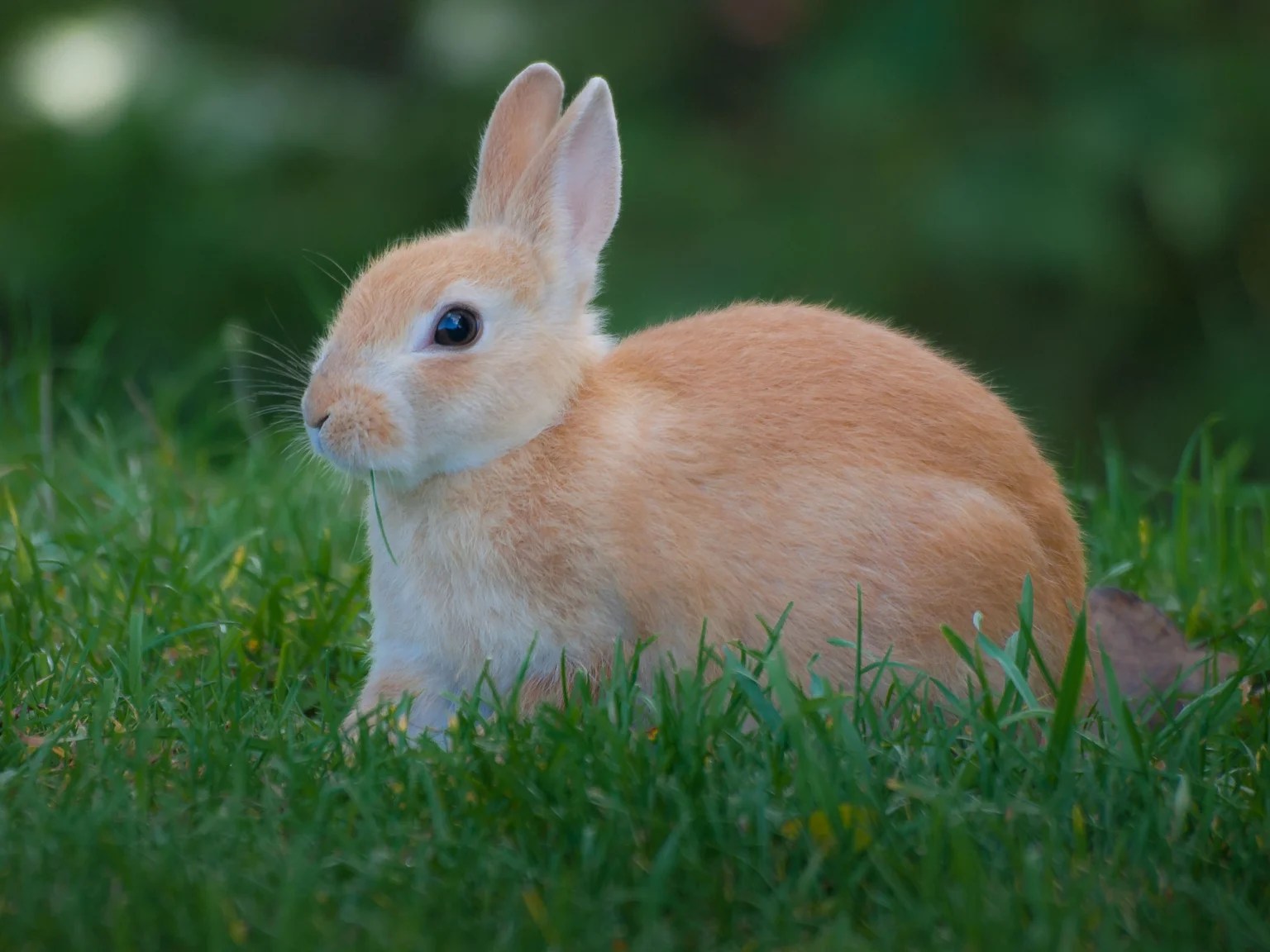
A rabbit doesn’t need a biscuit shaped like a carrot to enjoy a treat. A few familiar herbs hidden in fresh hay might be just as interesting, and they’ll encourage the natural foraging behaviour rabbits spend much of their time practising.
If you enjoy making food for your pets, homemade rabbit treats can be a good way to provide variety. The trick is choosing ingredients that suit a rabbit’s digestive system rather than adapting recipes made for humans, dogs or other pets.
To make healthy homemade treats for rabbits, start with familiar rabbit-safe ingredients such as feeding hay, coriander, basil or dandelion greens. For occasional sweeter snacks, use small portions of approved fruit, such as seedless apple or banana. Avoid added sugar, honey, oils, dairy and cereal-heavy mixes.
The simplest preparations require no baking. Others, such as dried apple chips, can be made using established recipes from animal welfare organisations.
Before you begin, remember that treats are only a small addition to a rabbit’s diet. According to the RSPCA’s rabbit diet guide, hay and grass should provide most of the diet, with a smaller proportion of leafy greens and measured rabbit nuggets.
This guide explains which ingredients to choose, how to prepare four types of homemade snacks, why dried fruit needs caution, and when even a healthy-looking treat may be unsuitable.
Table of contents
- What makes a homemade rabbit treat healthy?
- Best ingredients for homemade rabbit treats
- Recipe 1: Fresh herb-and-hay foraging mix
- Recipe 2: Banana-and-hay treats
- Recipe 3: Homemade dehydrated apple chips
- Recipe 4: Dried botanical hay blend
- What about grain-free baked rabbit treats?
- Are oats safe for rabbits in homemade treats?
- How many treats can a rabbit eat a day?
- How to introduce a new homemade treat
- Storing homemade rabbit treats safely
- How to make treat time more interesting
- Common homemade rabbit-treat mistakes
- Frequently asked questions
- The best rabbit treats keep things simple
What makes a homemade rabbit treat healthy?
Rabbits have digestive systems adapted to eating large quantities of fibrous plant material.
Hay and grass encourage the chewing their continuously growing teeth need and provide fibre that supports normal digestive activity.
Sweet fruit and concentrated foods are different. They can be enjoyable occasionally, but they should not take the place of forage.
The RSPCA gives a broad adult-rabbit feeding pattern of approximately 85% hay and grass, 10% leafy greens and 5% nuggets. Individual needs differ, particularly for young, pregnant, nursing or unwell rabbits.
A good homemade snack therefore has four characteristics:
- Its ingredients are suitable for rabbits and already familiar to the individual animal.
- It contains no unnecessary sugar, salt, oils, sweeteners or flavourings.
- Its portion doesn’t displace normal hay, greens or the rabbit’s measured pellet ration.
- It can be prepared, offered and stored hygienically.
Homemade does not automatically mean healthy. A biscuit containing a little hay but lots of mashed banana still adds concentrated sweet ingredients to the diet.
That first nose-to-nose meeting between your new rabbit and your existing pets can go beautifully or go sideways fast and the difference comes down to how well you prepare. Learn how to introduce a new rabbit to your existing pets with confidence and care using these thoughtful, proven strategies that keep every animal safe, calm, and on the path to becoming the most unlikely and heartwarming household friends.
Best ingredients for homemade rabbit treats
Use this ingredient guide before choosing a recipe.
| Ingredient | Best use | Main consideration |
|---|---|---|
| Timothy or another suitable feeding hay | Foraging mixes and hay-based activities | Must remain the main everyday food |
| Coriander | Fresh herb scatter | Introduce gradually if new |
| Basil, mint or dill | Leafy herb mixes | Use familiar, clean leaves |
| Parsley | Varied herb mix | Rotate with other greens rather than relying on it alone |
| Dandelion greens | Fresh or appropriately dried forage | Correct identification and clean sourcing |
| Rose petals | Botanical enrichment | Only untreated, correctly identified flowers |
| Chamomile | Botanical mix | No medicinal claims or concentrated extracts |
| Plantain leaf | Foraged or dried herbal addition | Means the correctly identified Plantago plant |
| Apple flesh | Occasional fresh or dried fruit treat | Remove core and seeds |
| Banana | Occasional sweet ingredient | Use sparingly |
| Plain rabbit nuggets | Some established baked recipes | Count towards normal concentrated feed |
| Oats | Not recommended as a default ingredient | Higher-starch choice; source guidance differs |
The Rabbit Welfare Association & Fund’s recommended plants list includes familiar herbs, dandelion, plantain, rose flowers and chamomile. It also advises introducing new greens gradually.
Don’t use decorative potpourri, florist flowers, fragranced dried petals or plants gathered from areas sprayed with chemicals.
Recipe 1: Fresh herb-and-hay foraging mix
This is the most useful recipe to start with because it uses a rabbit’s ordinary feeding hay and familiar greens.
It also avoids an unnecessary fruit binder.
Ingredients
- Your rabbit’s usual clean feeding hay.
- A small selection of familiar rabbit-safe herbs, such as coriander, basil or mint, taken from its ordinary greens provision.
How to prepare it
- Wash the fresh herbs and remove damaged leaves.
- Place a generous amount of the rabbit’s usual hay in a clean feeding tray or another appropriate foraging area.
- Distribute the familiar herb leaves through the hay.
- Gently separate some hay strands so the herbs aren’t all visible at once.
- Offer the arrangement while keeping the rabbit’s normal hay supply available.
The rabbit can investigate the hay and search for the leaves.
This is a form of scatter feeding, a method the RSPCA recommends for dietary enrichment.
Why this works as enrichment
Rabbits naturally spend time seeking out food.
A hay scatter gives them something to investigate without making the treat more sugary.
The herbs should be included within their usual greens allocation rather than added as unlimited extra food.
For bonded rabbits, spread the mixture across several accessible areas if one animal tends to monopolise feeding.
What to avoid
Don’t hide herbs under unsuitable plastic objects, use contaminated hay or introduce several unfamiliar plants at once.
Discard wet or contaminated hay and refresh the feeding area as necessary.
Recipe 2: Banana-and-hay treats
If your rabbit already tolerates banana, a simple hay-and-banana treat may be an appealing occasional reward.
This preparation is based on the PDSA’s published banana-skewer recipe.
Ingredients in PDSA’s published batch
- 1 small banana.
- 15 strands of appropriate feeding hay.
These quantities describe the recipe batch, not a recommended serving of one whole banana for a rabbit.
How PDSA prepares it
- Cut the banana into small slices, approximately 1 cm thick.
- Select suitable firm strands of clean feeding hay.
- Pass several strands through a banana slice to create the hay-and-fruit arrangement.
- Make it fresh and offer only the appropriate small portion for the rabbit.
PDSA’s published instructions provide further details and advise limiting the finished banana skewer because banana is high in sugar.
An owner should review the complete source recipe and ensure the arrangement doesn’t create a hazard for the individual rabbit.
What makes this an occasional treat?
Although the hay is familiar, banana contains considerably more sugar than ordinary leafy forage.
The banana portion counts as fruit. It should not be added on top of another generous fruit serving.
For rabbits that shouldn’t receive sweet treats, skip the banana and use the hay-and-herb enrichment recipe instead.
Can you prepare these in advance?
PDSA recommends making its banana-and-hay preparation fresh on the day it is offered.
Don’t assume a fresh fruit treat will remain suitable for several days after preparation.
Recipe 3: Homemade dehydrated apple chips
Apple chips are one of the easiest homemade rabbit treats to understand because they require only one ingredient.
The important distinction is that drying apple removes water—not sugar.
A small, lightweight chip can contain more fruit than it appears to.
Ingredients
- 1 fresh apple.
Step-by-step preparation
The following is a summary of the PDSA apple-chip recipe, rather than a newly tested Howdy Fox drying method.
- Preheat the oven to 90°C (194°F).
- Wash the apple and remove the core and all seeds.
- Cut the apple into pieces suitable for the published preparation.
- Arrange the pieces on a baking tray.
- Bake for approximately one hour, turning the pieces halfway through.
- Allow the apple pieces to cool completely before offering an occasional small portion.
PDSA recommends a small piece or two in moderation, alongside the rabbit’s normal diet.
Oven performance, piece thickness and moisture removal can vary, so the published time must not be treated as proof that every batch is shelf-stable.
Can you use a food dehydrator?
A suitable food dehydrator can dry certain fruits, but the exact settings and storage method depend on the fruit and equipment.
The verified PDSA oven instructions are not a validated dehydrator programme.
If using a dehydrator, follow an appropriate tested food-drying method and don’t assume the finished fruit has an established storage life without checking its dryness and handling.
Can you dehydrate strawberries, blueberries and papaya?
These fruits may be offered occasionally when appropriate for the rabbit, but they don’t all dry in the same way.
The apple-chip oven time should not be copied automatically for berries or papaya.
For a beginner recipe, apple has the advantage of having a direct, published preparation method from PDSA.
Why remove apple seeds?
The RSPCA specifically advises avoiding apple pips as part of safe rabbit feeding.
Remove the core and seeds while preparing the slices rather than expecting the rabbit to eat around them.
Recipe 4: Dried botanical hay blend
A botanical hay blend offers a different kind of treat: scent, texture and the opportunity to search through familiar forage.
It needn’t contain any fruit.
Ingredients to consider
Choose a small amount of correctly identified, food-grade botanicals that the rabbit already tolerates. Possible examples from RWAF’s plant guidance include:
- Dried dandelion leaf.
- Dried plantain leaf (Plantago species).
- Untreated rose petals.
- Chamomile flowers.
You don’t need to use every ingredient.
How to prepare it
- Start with the rabbit’s regular feeding hay.
- Inspect the selected dried plants and discard material that appears mouldy, damp or contaminated.
- Mix a small amount of familiar botanical material through the hay.
- Offer it in a clean foraging tray or safe hay-feeding area.
- Observe the rabbit’s normal eating and droppings when using a new food source.
Botanicals should be part of an appropriate forage or greens plan, not treated as unlimited supplements.
Is echinacea safe for rabbit treat mixes?
RWAF includes echinacea among plants discussed in its rabbit-safe forage resources.
That does not establish that all echinacea products are suitable.
A concentrated herbal extract, supplement or medicinal preparation is different from a correctly identified plant material used as forage.
Avoid claiming that echinacea boosts immunity or treats illness.
Why buying dried flowers needs caution
A decorative rose petal from a florist may have been treated with chemicals not intended for consumption.
Potpourri may contain fragrance or essential oils.
Choose plants intended for appropriate animal forage from a reputable source, or use correctly identified, uncontaminated plants following specialist foraging guidance.
For additional detail, see RWAF’s rabbit foraging guide.
What about grain-free baked rabbit treats?
Baking a rabbit biscuit is more complicated than drying an apple.
The ingredient ratios, moisture content, pellet quantity, binder and finished biscuit size all affect what the rabbit eventually eats.
A recipe may look healthy because it contains Timothy hay or herbs while still delivering more concentrated feed or fruit than intended.
Can you use crushed Timothy hay pellets?
Plain rabbit nuggets may be used in some established recipes.
However, nuggets are a concentrated part of a rabbit’s normal diet. Baking them into a biscuit doesn’t create a separate allowance for extra pellets.
If a treat uses nuggets, account for them within the rabbit’s existing feed plan.
Can pumpkin or banana hold the mixture together?
A small amount of appropriate produce may be included in a professionally reviewed recipe, but there is no verified universal ratio such as one or two tablespoons of binder for every batch.
The safe amount depends on the finished recipe and rabbit.
Is 250°F a safe baking temperature?
A blanket instruction to bake all rabbit biscuits at 250°F (approximately 121°C) until dry is not a verified recipe.
Different mixtures need different preparation conditions.
Drying the exterior also doesn’t prove that the centre is sufficiently dry for long-term storage.
Is there a published rabbit biscuit recipe?
Yes. PDSA’s homemade rabbit treat article includes a baked biscuit recipe using rabbit food, strawberries and cauliflower, with specified preparation instructions.
PDSA identifies its original recipes as veterinarian-approved.
However, modifying that recipe by replacing cauliflower with parsley, pumpkin or another ingredient creates a different formulation that has not inherited PDSA’s approval.
For a genuinely grain-free Howdy Fox biscuit recipe, the final formulation needs an actual tested batch, ingredient weights, finished yield and rabbit-nutrition review. Until then, it should not be promoted as a verified daily snack.
Are oats safe for rabbits in homemade treats?
Oats appear in some homemade rabbit biscuit recipes because they are easy to blend into flour and bind with fruit.
But convenience isn’t a good enough nutritional reason to use them.
Rabbits need a diet dominated by fibrous hay and appropriate plant matter. Grain-heavy mixtures can displace those foods.
The RSPCA’s feeding guidance advises against cereal-rich muesli foods, particularly because they encourage selective eating and may contribute to dietary imbalance.
Some rabbit welfare resources discuss tiny quantities of plain oats as an occasional food, but that is not the same as recommending oat-based biscuits every day.
For most beginner homemade treats, oats are unnecessary. Use familiar hay and herbs instead.
Don’t assume all oats are poisonous, but don’t treat oat flour as a healthy replacement for long-strand hay.
How many treats can a rabbit eat a day?
There is no single daily biscuit count that works for every rabbit.
A small herb scatter, a banana treat and a dried apple chip are nutritionally different.
What matters is the combined amount of supplementary food and whether the rabbit continues to eat enough hay and its normal diet.
| Treat | Feeding principle |
|---|---|
| Hay-based forage mix | Uses the rabbit’s normal feeding hay |
| Familiar herbs | Can form part of the daily greens allowance |
| Banana treat | Occasional fruit serving |
| Dehydrated apple | Occasional sweet treat; portion conservatively |
| Baked biscuit | Follow only a reviewed recipe’s serving guidance |
| Multiple treats | Consider total fruit, pellet and other concentrated ingredients together |
For fruit, RWAF advises keeping it occasional, with a recommendation of no more than once or twice a week.
Other organisations provide different guidance on limited fruit amounts. These are general recommendations, not a validated daily allowance for every dried chip or biscuit.
What if a rabbit is higher weight?
If a rabbit is higher weight or on a prescribed feeding plan, ask a rabbit-experienced veterinarian whether sweet or concentrated treats are appropriate.
There is no need to give fruit simply because it appears in a recipe.
Can baby rabbits eat homemade treats?
A growing rabbit’s feeding needs differ from those of a healthy adult.
Don’t apply adult fruit or biscuit recommendations automatically to young rabbits, particularly those still being weaned or having an unfamiliar diet introduced.
Use age-appropriate veterinary dietary guidance.
How to introduce a new homemade treat
Even a food listed as rabbit-safe may be unfamiliar to a particular animal.
Start with an ingredient the rabbit has already eaten comfortably whenever possible.
For genuinely new greens or herbs, introduce them gradually, one at a time, and observe normal appetite and droppings.
PDSA also warns that unfamiliar ingredients should initially be offered in tiny amounts.
Avoid presenting several new fruits, flowers and herbs in one mixed biscuit. If the rabbit reacts poorly, you won’t know which change caused the problem.
What if your rabbit stops eating after a treat?
A rabbit that suddenly stops eating, produces markedly fewer droppings or appears unusually unwell needs prompt rabbit-experienced veterinary attention.
Don’t use banana, biscuits or other sweet snacks to hide or manage a loss of appetite.
Rabbit digestive problems can become serious quickly. See the RSPCA’s rabbit health guidance.
Storing homemade rabbit treats safely
Fresh hay-and-fruit preparations, dried apple and baked biscuits have different storage characteristics.
Avoid assigning one shelf life to every homemade rabbit treat.
Fresh preparations
Make fruit-and-hay snacks fresh, as PDSA recommends for its banana recipe.
Remove uneaten fresh material before it becomes spoiled.
Dried fruit
Allow fruit to cool fully after drying.
Keep it protected from moisture and contamination. If there is uncertainty about adequate drying or safe storage, avoid preparing large batches.
Baked biscuits
Use the storage instructions associated with the exact verified recipe.
Do not transfer storage guidance from PDSA’s biscuit recipe to a modified version with different moisture, produce or binder ingredients.
Discard treats that show mould, unusual odours or spoilage.
Dried flowers and leaves
Store identified food-grade plants in a clean, dry location away from heat, moisture, household chemicals and fragrances.
If plant identity or storage quality is uncertain, don’t feed them.
How to make treat time more interesting
The treat itself doesn’t have to carry all the enrichment value.
Try distributing familiar leafy herbs through a clean hay tray rather than presenting them in a bowl.
Scatter part of the ordinary pellet ration through suitable forage areas.
Offer safe cardboard foraging arrangements, provided the rabbit does not chew or swallow inappropriate material.
For bonded rabbits, give each animal access to the enrichment so one cannot monopolise it.
The RSPCA’s dietary enrichment guidance recommends using ordinary daily food in foraging activities rather than continually adding extra treats.
Common homemade rabbit-treat mistakes
| Mistake | Better choice |
|---|---|
| Assuming homemade snacks are automatically healthy | Check ingredients and how they fit the entire diet |
| Giving multiple sweet treats daily | Keep fruit occasional and consider combined intake |
| Using a whole banana as one serving | Separate recipe-batch amounts from rabbit portions |
| Including apple seeds | Remove seeds and core before preparation |
| Baking with lots of oats or flour | Choose hay-based enrichment instead |
| Using unverified herbal powders | Choose properly identified, suitable plants |
| Treating dried fruit as sugar-free | Remember drying removes water, not sugar |
| Guessing oven times for different fruits | Use a specific validated preparation method |
| Storing homemade biscuits indefinitely | Follow recipe-specific handling and storage guidance |
| Giving treats to stimulate an unwell rabbit’s appetite | Seek prompt veterinary assessment |
Frequently asked questions
Simple hay-based activities and familiar safe herbs are good starting choices because they align more closely with a rabbit’s normal diet. Fruit and baked biscuits are best kept occasional.
Some established rabbit recipes include banana, but its sugar content means portions need care. A biscuit containing banana is not automatically a suitable daily treat.
Some sources discuss tiny amounts of plain oats, but cereal-heavy recipes are not appropriate substitutes for hay. Oats are unnecessary in a beginner rabbit-treat recipe.
Use an established fruit-specific method. PDSA’s apple-chip preparation uses a low oven setting, removes apple seeds and core, and calls for complete cooling before serving. Other fruits require their own preparation checks.
They can be suitable when correctly identified and sourced from clean, untreated plants. Avoid decorative flowers, fragranced products and medicinal extracts.
There is no universal daily number. Use ordinary hay and greens as the foundation and consider sweet or concentrated treats together, not as separate allowances.
Don’t assume adult treat recipes are appropriate for young rabbits. Their diets change with age, and unfamiliar or sugary foods may be unsuitable. Seek rabbit-experienced veterinary guidance.
The best rabbit treats keep things simple
You don’t need an elaborate biscuit recipe to give your rabbit something interesting.
A few familiar coriander leaves hidden in hay, a safe botanical foraging mix or an occasional small piece of apple can make feeding time more engaging.
When you do bake or dry fruit, use an established preparation method and don’t mistake a homemade label for proof of nutritional suitability.
Above all, protect the ordinary diet that keeps your rabbit eating, chewing and behaving normally.
A good treat adds interest to a rabbit’s day without taking the place of the hay it needs.