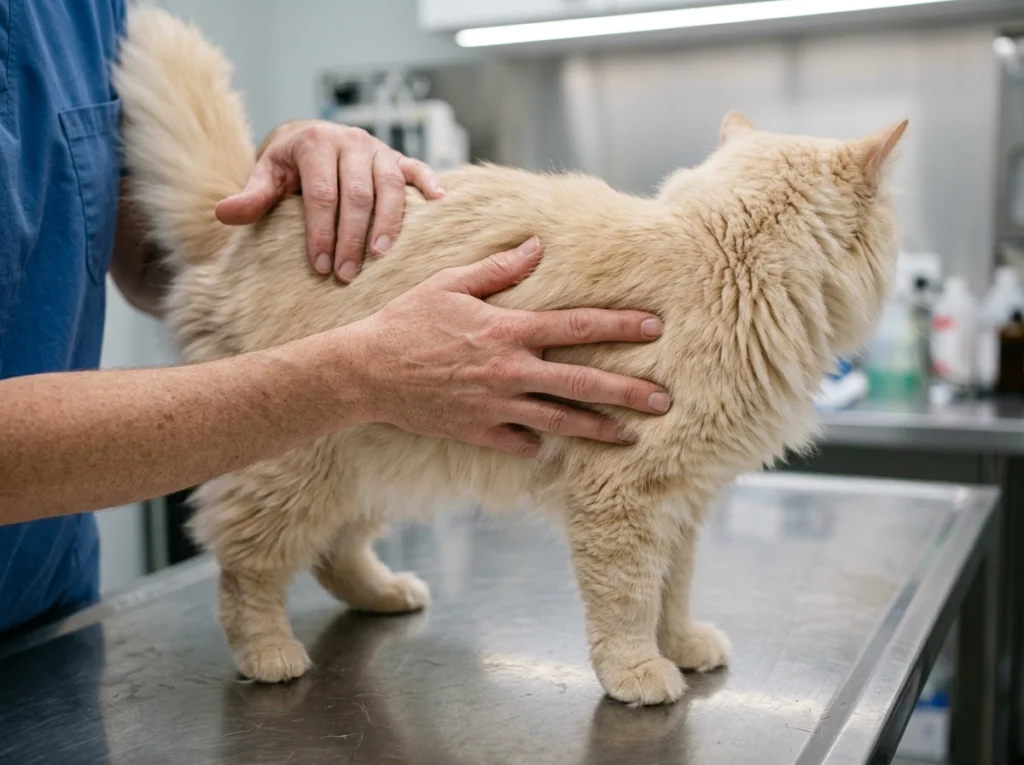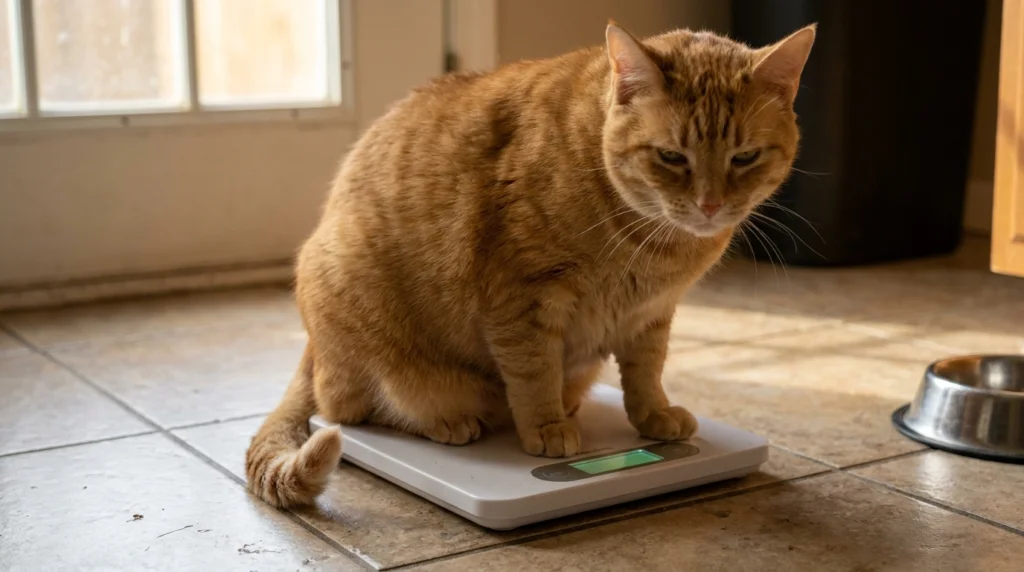
Unlike humans and dogs, an overweight cat cannot simply be placed on an aggressive calorie restriction. Restricting calories too abruptly or allowing an overweight cat to go without food for even 24 to 48 hours can trigger feline hepatic lipidosis (fatty liver syndrome), an acute and potentially fatal metabolic crisis. Use our veterinary calculator below to establish a safe, medically monitored daily caloric deficit and realistic weekly milestone timeline.
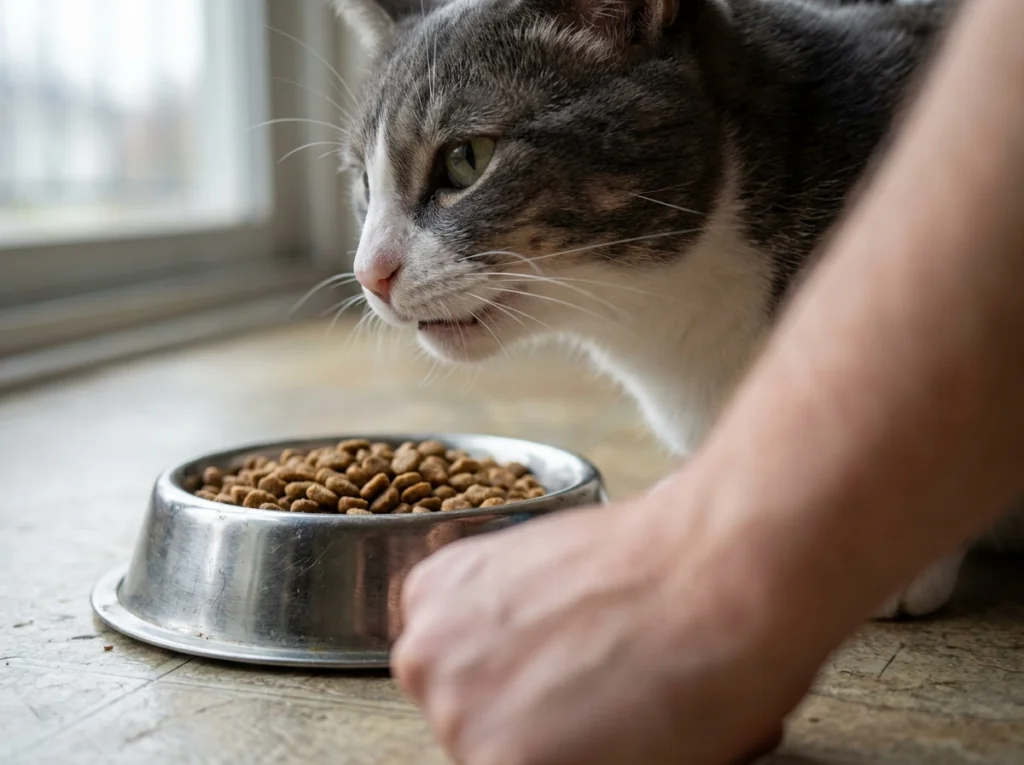
Calculate safe daily calories, weekly weigh-in targets, and metabolic safeguards built strictly for cats.
⚠️
Critical Feline Safety Rule: The 24-Hour Anorexia Limit
If your cat refuses meals, consumes less than half their calculated daily target, or appears lethargic for more than 24 hours, stop the weight-loss plan immediately and consult your veterinarian. Fasting in cats mobilizes massive peripheral fat stores to the liver, which can trigger acute, life-threatening feline hepatic lipidosis (fatty liver disease) within 48 to 72 hours.
lb
lb
Ribs difficult to palpate under moderate fat cover. Waist barely visible from above. Noticeable abdominal fat pad. Estimated excess body weight: ~20%.
🐟 Is your cat eating normally right now?
🩺 Vet exam in the last 6 months?
🛑 Caloric Restriction Blocked: Seek Veterinary Care
Because your cat is not eating normally, starting a restricted weight-loss plan is medically contraindicated. Inappetence in an overweight cat is an urgent clinical signal that requires veterinary diagnosis before any diet is considered.
Voluntary anorexia or reduced food consumption can precipitate hepatic lipidosis (fatty liver disease) within days. Please schedule a physical examination and blood panel with your veterinarian before adjusting food quantities.
Invalid Weight Parameters: Target weight must be lower than your cat's current weight to calculate a weight-loss plan. If your cat is at BCS 5 or lower, weight reduction is not medically recommended. Please consult your veterinarian.
Target Daily Calorie Intake
190kcal / day
Calculated as 0.8 × Resting Energy Requirement (RER) at ideal weight.
Strict 24-Hour Feeding Rule: If your cat leaves more than half their daily portion or goes without food for 24 hours, suspend this restriction immediately and call your vet. Never force an inappetent cat to starve.
Weight to Lose
4.0 lb
Target Weekly Rate
1.2 oz / wk
Percent Overweight
36.4%
Estimated Timeline
Staged Plan
🩺 Significant Obesity Protocol (>25% Overweight)
Cats with over 25% excess body weight should not follow a single straight-line countdown. Doing so risks metabolic slowdown and hepatic stress.
Recommended Staged Plan: Target an initial 8% to 10% weight loss phase (Phase 1). Have your veterinarian perform baseline bloodwork (liver chemistry, renal panel, thyroid) and re-evaluate caloric intake before beginning Phase 2.
Pre-Diet Veterinary Recommendation: Because your cat has not had a physical exam in the last 6 months, we strongly advise scheduling a routine wellness visit to confirm organ function and joint mobility before starting caloric restriction.
Calculate safe daily calories, weekly weigh-in targets, and metabolic safeguards built strictly for cats.
⚠️
Critical Feline Safety Rule: The 24-Hour Anorexia Limit
If your cat refuses meals, consumes less than half their calculated daily target, or appears lethargic for more than 24 hours, stop the weight-loss plan immediately and consult your veterinarian. Fasting in cats mobilizes massive peripheral fat stores to the liver, which can trigger acute, life-threatening feline hepatic lipidosis (fatty liver disease) within 48 to 72 hours.
lb
lb
Ribs difficult to palpate under moderate fat cover. Waist barely visible from above. Noticeable abdominal fat pad. Estimated excess body weight: ~20%.
🐟 Is your cat eating normally right now?
🩺 Vet exam in the last 6 months?
🛑 Caloric Restriction Blocked: Seek Veterinary Care
Because your cat is not eating normally, starting a restricted weight-loss plan is medically contraindicated. Inappetence in an overweight cat is an urgent clinical signal that requires veterinary diagnosis before any diet is considered.
Voluntary anorexia or reduced food consumption can precipitate hepatic lipidosis (fatty liver disease) within days. Please schedule a physical examination and blood panel with your veterinarian before adjusting food quantities.
Invalid Weight Parameters: Target weight must be lower than your cat’s current weight to calculate a weight-loss plan. If your cat is at BCS 5 or lower, weight reduction is not medically recommended. Please consult your veterinarian.
Target Daily Calorie Intake
190kcal / day
Calculated as 0.8 × Resting Energy Requirement (RER) at ideal weight.
Strict 24-Hour Feeding Rule: If your cat leaves more than half their daily portion or goes without food for 24 hours, suspend this restriction immediately and call your vet. Never force an inappetent cat to starve.
Weight to Lose
4.0 lb
Target Weekly Rate
1.2 oz / wk
Percent Overweight
36.4%
Estimated Timeline
Staged Plan
🩺 Significant Obesity Protocol (>25% Overweight)
Cats with over 25% excess body weight should not follow a single straight-line countdown. Doing so risks metabolic slowdown and hepatic stress.
Recommended Staged Plan: Target an initial 8% to 10% weight loss phase (Phase 1). Have your veterinarian perform baseline bloodwork (liver chemistry, renal panel, thyroid) and re-evaluate caloric intake before beginning Phase 2.
Pre-Diet Veterinary Recommendation: Because your cat has not had a physical exam in the last 6 months, we strongly advise scheduling a routine wellness visit to confirm organ function and joint mobility before starting caloric restriction.
Weekly Weigh-In Milestone Tracker
Weigh on the same weekday & scale
Week
Target Weight
Cumulative Loss
Check-In Action
How to Calculate Your Cat's Safe Weight Loss Plan
Formulating an effective weight-management protocol for cats requires balancing energy reduction against physiological safety limits. Follow these three clinical steps before initiating any dietary transition.
1
Enter Accurate Weights and Body Condition
Weigh your cat on a dedicated digital scale accurate to fractional ounces or grams. If your veterinarian has not yet provided an exact target body weight, use our Body Condition Score estimator (WSAVA 1 to 9 scale) to calculate an estimated baseline ideal weight.
2
Enforce the Appetite Gate and Veterinary Screening
Confirm that your cat has a consistent, normal appetite. If your cat is currently refusing food or eating intermittently, caloric restriction is dangerous and strictly contraindicated. Verify whether a veterinary wellness check has occurred within the past 6 months to rule out underlying endocrine conditions.
3
Select Safe Rates and Track Weekly Weigh-Ins
Opt for the recommended 0.5% weekly reduction rate, which protects lean muscle tissue and prevents hepatic stress. Generate your weekly milestone table, log progress on the same scale each week, and suspend the diet immediately if your cat fasts for more than 24 hours.
WSAVA Body Condition Score Reference Guide (Feline 1 to 9 Scale)
Body Condition Scoring assesses subcutaneous fat and muscle mass through physical palpation rather than scale weight alone. In the validated 9-point system developed by veterinary nutritionists, score 5 represents ideal body composition. Each score above 5 correlates with roughly 10% to 15% excess body fat.
BCS 5: Ideal (0% Excess)
Well-Proportioned Frame
Ribs are easily palpable with a minimal fat covering. A visible waistline can be identified behind the ribs from above. Minimal abdominal fat pad is observed, with a slight abdominal tuck.
BCS 6: Slightly Overweight (~10%)
Slight Adipose Layer
Ribs are palpable with a slight excess fat cover. The waist is visible from above when viewed directly down, but not prominent. The abdominal tuck remains present with minor ventral fat accumulation.
BCS 7: Heavy / Overweight (~20%)
Moderate Fat Covering
Ribs are difficult to palpate beneath a moderate layer of subcutaneous fat. Waistline is barely discernible from above. The abdomen shows clear rounding with a prominent primordial fat pad.
BCS 8: Obese (~30%)
Thick Fat Pad
Ribs are very difficult to feel under a thick fat layer. Waist is absent, with distinct abdominal distention. Subcutaneous fat deposits appear over the lumbar spine and pelvic structure.
BCS 9: Severely Obese (~40%)
Severe Adiposity
Ribs cannot be palpated under dense fat deposits. Massive abdominal distention with heavy fat pads along the thorax, spine, and limbs. Significant risk of mobility and hepatic complications.
Safe Weekly Weight Loss Targets by Baseline Weight
Tracking feline weight loss requires precise measurements. Below is a clinical reference breakdown demonstrating the exact safe weekly loss targets across common adult cat body weights.
Current Cat Weight
Conservative Rate (0.5% / week)
Upper Safe Ceiling (1.0% / week)
Clinical Recommendation
10.0 lb (4.5 kg)
0.8 oz (23 g)
1.6 oz (45 g)
Target 0.5% for steady adipose loss without metabolic stress
12.0 lb (5.4 kg)
1.0 oz (27 g)
1.9 oz (54 g)
Weigh weekly before breakfast on the same digital scale
14.0 lb (6.4 kg)
1.1 oz (32 g)
2.2 oz (64 g)
Ideal baseline for standard adult domestic shorthair cats
16.0 lb (7.3 kg)
1.3 oz (36 g)
2.6 oz (73 g)
Significant excess; maintain food diary to prevent treats
18.0 lb (8.2 kg)
1.4 oz (41 g)
2.9 oz (82 g)
Pre-diet veterinary exam and baseline bloodwork advised
20.0 lb (9.1 kg)
1.6 oz (45 g)
3.2 oz (91 g)
Staged Phase 1 plan; never attempt straight-line dieting
🔬 HowdyFox Veterinary Finding
What Feline Hepatic Lipidosis Actually Is
What the Research Actually Says
Cats are obligate carnivores that evolved on a high-protein, moderate-fat diet with virtually zero carbohydrates. Their hepatic biochemistry differs fundamentally from omnivores like dogs or humans. Unlike dogs, feline liver tissue has a continuous, non-adaptive requirement for amino acids and possesses limited capacity to synthesize and export very-low-density lipoproteins (VLDL).
When an overweight cat enters severe caloric restriction or experiences acute anorexia (as little as 24 to 48 hours without food), the peripheral neuroendocrine response triggers rapid lipolysis. Massive quantities of non-esterified fatty acids flood into hepatocytes. Because the feline liver cannot oxidize or package this surge into lipoproteins quickly enough, triglycerides accumulate inside liver cells.
Within 48 to 72 hours, intracellular triglyceride vacuolation causes hepatocellular swelling, intrahepatic cholestasis, and catastrophic liver failure. Mortality rates without aggressive feeding-tube intervention exceed 35%. This is why caloric restriction for cats must be calculated meticulously, and why food refusal during a diet requires immediate emergency action.
Significant Obesity Management (>25% Overweight): The Staged Protocol
When an owner has a cat that weighs 18 to 22 pounds with a healthy target weight of 10 to 11 pounds, naive calculators generate a 40-to-50-week single countdown. Clinically, attempting a single straight-line weight loss plan over a 10-month period almost always results in failure, metabolic adaptation, or hepatic complications.
As a cat loses weight, their resting metabolic rate decreases. If caloric intake remains rigidly suppressed on a long timeline, the cat becomes ravenous, lethargic, or develops food-begging stress that leads owners to abandon the protocol.
The 3-Phase Staged Protocol
Phase 1 (Initial 8% to 10% Reduction): Target a realistic initial milestone over 8 to 12 weeks. This drops systemic joint load and improves insulin sensitivity without exhausting the cat's resting metabolism.
Phase 2 (Mandatory Metabolic Pause): For 2 to 4 weeks, adjust caloric intake upward to maintain the new body weight. This stabilizes leptin and thyroid hormone concentrations and verifies normal liver chemistry.
Phase 3 (Subsequent Deficit Phase): Re-evaluate body condition score and calculate a new RER baseline based on the updated body weight.
Three Fatal Mistakes to Avoid During Feline Weight Loss
🥣
1. Free-Feeding Dry Kibble
Leaving dry food out in a bowl makes portion measurement impossible. Dry kibble is calorie-dense, often containing 350 to 450 kcal per cup. A mere 10 kibble pieces over budget can completely stall weight loss in a 12-pound cat. Measure food in grams on a kitchen scale.
🔄
2. Abrupt Dietary Transitions
Switching from regular canned food or dry kibble to a therapeutic weight-loss formula overnight frequently causes food refusal. If the cat goes on a food strike for 24 hours, hepatic lipidosis risks spike immediately. Transition diets gradually over 10 to 14 days.
⚖️
3. Using a Human Bathroom Scale
Holding your cat while stepping on a human scale and subtracting your weight is not clinically accurate. Human scales round to the nearest 0.2 to 0.5 lb, completely obscuring the 1-ounce weekly shifts that confirm a safe feline weight-loss rate.
Frequently Asked Questions
Cats are obligate carnivores with unique hepatic lipid metabolism. When an overweight cat experiences sudden caloric restriction or stops eating, body fat is rapidly mobilized to the liver. The feline liver cannot metabolize high concentrations of free fatty acids efficiently, causing triglycerides to accumulate in hepatocytes. This leads to hepatic lipidosis (fatty liver disease), which can cause fatal liver failure within 48 to 72 hours without intensive veterinary intervention.
Veterinary nutrition consensus from WSAVA and AAHA recommends a safe weight loss rate between 0.5 percent and 1.0 percent of current body weight per week. For a 15-pound cat, this equates to roughly 1.2 to 2.4 ounces (34 to 68 grams) weekly. Losing weight faster than 1.0 percent weekly significantly elevates the risk of hepatic lipidosis and lean muscle catabolism.
Never allow a dieting cat to fast for more than 24 hours. If your cat refuses a newly introduced therapeutic weight-loss food, immediately offer their previous familiar diet to ensure caloric intake. Contact your veterinarian to develop a gradual 14-day transition plan or investigate whether nausea, texture aversion, or dental discomfort is driving the inappetence.
Human bathroom scales lack the precision needed to track fractional ounce weight changes in cats. Use a dedicated digital baby scale or pet scale accurate to 0.1 ounce (2 to 5 grams). Weigh your cat once weekly, on the same day of the week, before breakfast, to avoid false fluctuations caused by post-meal hydration or litter box habits.
No. Canine weight management calculators use different energy coefficients and assume omnivorous metabolic tolerance for steep caloric deficits. Cats have higher baseline protein requirements, an inability to downregulate liver urea-cycle enzymes, and acute vulnerability to hepatic lipidosis. Applying canine caloric equations to felines can produce dangerously low daily allowances.
Cats with more than 25 percent excess body weight experience metabolic adaptation and resting energy decline when subjected to prolonged linear dieting. A staged protocol targets an initial 8 to 10 percent reduction followed by a mandatory metabolic pause and veterinary bloodwork. This prevents weight plateaus, verifies liver function, and ensures sustainable long-term success.
🐾 Explore Free HowdyFox Pet Health Calculators
Explore our clinical-grade interactive tools designed by veterinary professionals to support companion animal nutrition, wellness, and preventive care.