Close Menu
HOWDY FOXHOWDY FOX
  • Home
  • Care
  • Lifestyle
  • Training
  • Grooming
  • Calculators
  • Home
  • About Us
  • Contact Us
  • Privacy Policy
  • CCPA
  • Cookies Policy
  • DMCA
  • Editorial Standards
  • Terms of Service
HOWDY FOXHOWDY FOX
  • Home
  • Care
  • Lifestyle
  • Training
  • Grooming
  • Calculators
HOWDY FOXHOWDY FOX
  • Home
  • About Us
  • Contact Us
  • Privacy Policy
  • CCPA
  • Cookies Policy
  • DMCA
  • Editorial Standards
  • Terms of Service
Home » Dog Harness & Collar Size Calculator: Breed & Body Fit Guide
Calculators

Dog Harness & Collar Size Calculator: Breed & Body Fit Guide

By Suzanne RyanSeptember 6, 20268 Mins Read

An improper harness or collar fit can cause severe tracheal compression, restricted shoulder gait, painful chafing, or dangerous back-out escapes during walks. Sizing pet gear solely by body weight is one of the most frequent mistakes owners make, because chest depth and neck circumference vary dramatically across breeds. Use our veterinary calculator below to obtain custom harness and collar measurements based on your dog’s anatomical proportions.

📏 Precision Fit Engine

Dog Harness & Collar Sizing Calculator

Input neck and chest measurements with breed body shape to get separate, safety-checked harness and collar sizes.

Measurement Units
Base of neck where collar sits
in
Widest point behind front legs
in
Reference only, not primary
lbs
Body-Shape Profile Anatomy adjustment
Life Stage Growth monitoring
🦺 Harness Size
M
Fits 21 to 28 in chest
(53 to 71 cm)
🏷️ Collar Size
M
Fits 14 to 20 in neck
(36 to 51 cm)
⚠️ Between Sizes Detected: Size Up Recommended
Your dog's chest measurement with safety slack is near the top of the bracket. We recommend sizing up to the larger size: an adjustable harness adjusted down fits comfortably, whereas a maxed-out smaller harness causes friction chafing and restrictive tightness.
💡 Standard Body Shape Guidance

Standard proportional anatomy. Dual-measurement brackets apply directly. Look for a lightweight Y-front or H-harness that allows unrestricted front shoulder blade movement.

🐾 Growing Puppy Notice: Puppies experience rapid structural growth. Re-measure neck and chest every 2 to 4 weeks to adjust strap sliders. Opt for wide-range adjustable webbing rather than fixed mesh. Track your pup's expected adult size on our Puppy Growth Predictor.
✌️
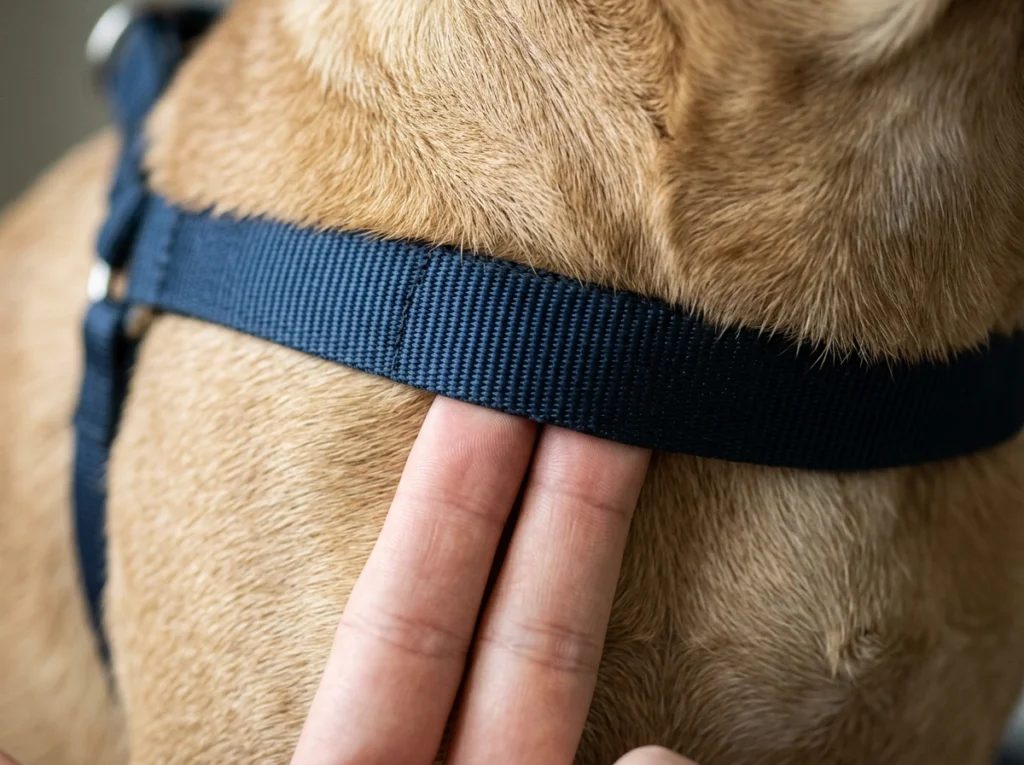
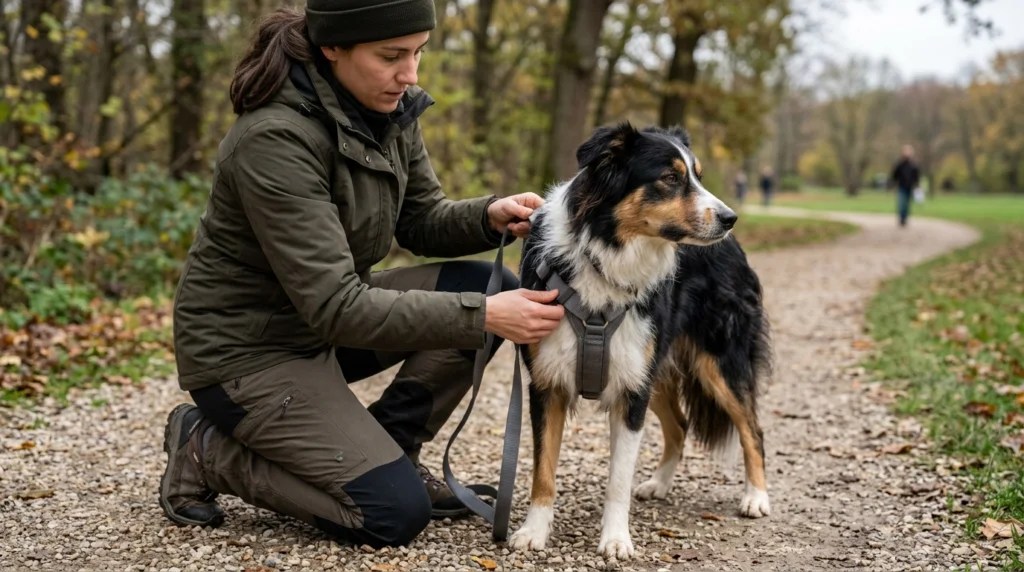
The Two-Finger Safety Rule: When trying on new gear, you should be able to slide two fingers flat comfortably underneath the straps at the tightest contact point. If two fingers cannot slide in, it is too tight. If a full fist fits, your dog can back out.
🛒 Explore Verified Ergonomic Harnesses →
Curated by our veterinary editorial board for biomechanical shoulder freedom.
⚕️
Sizing Precision Notice: Size charts vary between individual manufacturers. Always compare your measured circumference plus two-finger margin directly against the specific brand's published sizing specifications before completing your purchase.

How to Measure Your Dog for a Harness or Collar: 4 Steps

Accurate measurements take less than two minutes and ensure your dog avoids neck strain or painful underarm chafing. Have your dog stand on all four paws, grab a soft cloth measuring tape, and follow these four steps:

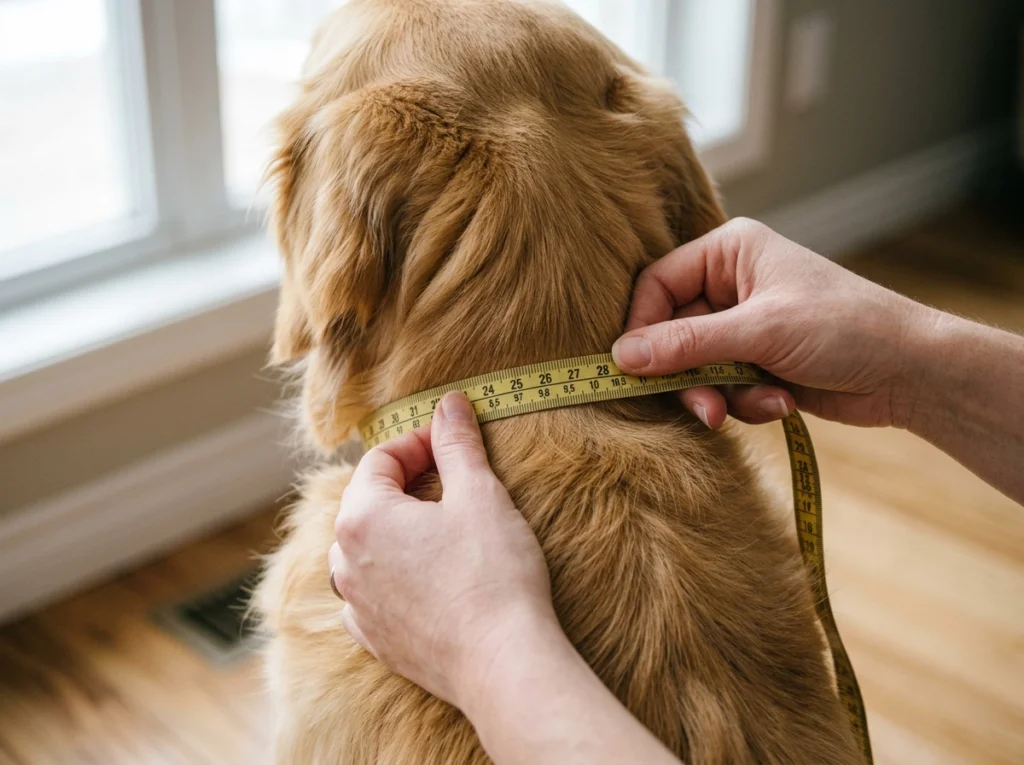
  1. Measure Neck Circumference: Wrap the tape snugly around the lowest base of the neck where a collar naturally sits, just above the shoulders. Keep the tape flat against the coat without squeezing the skin.
  2. Measure Chest Girth: Find the broadest part of your dog’s ribcage, usually two to three finger-widths behind the front armpits. Wrap the tape completely around the torso while your dog remains standing upright.
  3. Incorporate the Two-Finger Slack Margin: Add approximately one to two inches (2.5 to 5 cm) to your raw tape numbers. This ensures you can comfortably slide two flat fingers beneath straps to allow free breathing and active muscle expansion.
  4. Check Weight as a Cross-Check Only: Compare your measurements against standardized size brackets. If your dog’s weight falls into a different bracket than their chest measurement, always prioritize the chest circumference for harness fit.

Standard Dog Harness & Collar Size Bracket Reference

While individual brands calibrate slight variations, these industry standard brackets represent synthesized averages across top ergonomic canine gear manufacturers:

Size Bracket Neck Circumference Chest Girth Typical Weight Range Common Example Breeds
XS 8 to 12 in (20 to 30 cm) 13 to 17 in (33 to 43 cm) 5 to 12 lbs (2.3 to 5.5 kg) Chihuahua, Yorkshire Terrier, Toy Poodle
S 10 to 14 in (25 to 36 cm) 16 to 22 in (41 to 56 cm) 12 to 25 lbs (5.5 to 11.5 kg) Pug, Cavalier King Charles, Boston Terrier
M 14 to 20 in (36 to 51 cm) 21 to 28 in (53 to 71 cm) 25 to 55 lbs (11.5 to 25 kg) French Bulldog, Beagle, Border Collie
L 18 to 26 in (46 to 66 cm) 27 to 36 in (69 to 91 cm) 55 to 85 lbs (25 to 38.5 kg) Golden Retriever, German Shepherd, Boxer
XL 24 to 32 in (61 to 81 cm) 34 to 44 in (86 to 112 cm) 85 to 130 lbs (38.5 to 59 kg) Rottweiler, Great Dane, Bernese Mountain Dog

Body Shape Adjustments: Why Breed Anatomy Matters

Two dogs weighing forty pounds can possess radically different skeletons. Factoring body shape prevents gear slippage and sore spots:

Body Shape Profile Representative Breeds Anatomical Challenge Recommended Harness Style
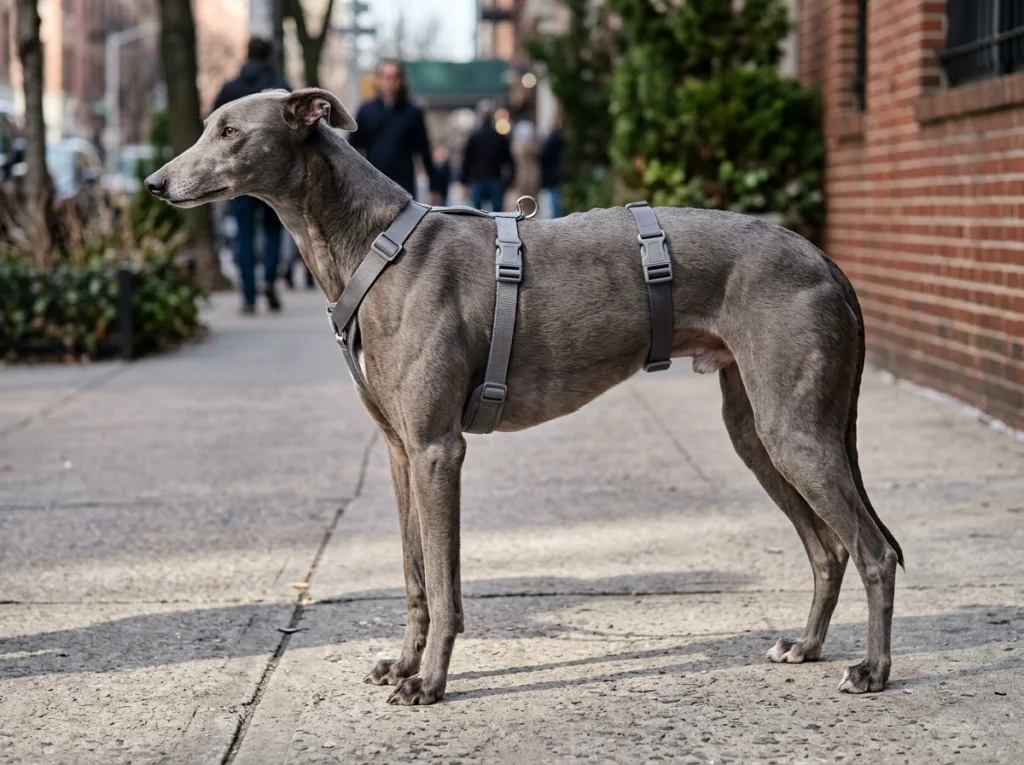
Deep-Chested & Narrow Greyhound, Whippet, Doberman Pinscher Neck circumference is much smaller than ribcage; dogs easily back out of loose gear. Favor escape-proof three-strap designs or deep Y-front harnesses with dual belly points.
Barrel-Chested & Stocky French Bulldog, English Bulldog, Pug Broad shoulders with thick necks; standard neck openings can choke lower airways. Prioritize chest measurement; look for step-in styles with fully adjustable chest straps.
Long-Bodied & Short-Legged Dachshund, Pembroke Welsh Corgi, Basset Long thoracic vertebrae; long harness backstraps cause spine pressure during stride. Choose lightweight harnesses with short top spine bars to maintain spinal flexibility.
Standard / Mixed Breed Labrador Retriever, Golden Retriever, Mixed Balanced neck-to-chest proportions; standard sizing brackets fit predictably. Standard ergonomic H-harness or front-clip walking harness.
HowdyFox Finding: Tracheal Pressure & Cervical Health

What the Research Actually Says

Biomechanical veterinary studies published in the Journal of the American Animal Hospital Association show that traditional neck collars exert peak pressures exceeding 250 millimeters of mercury against the thyroid cartilage and cervical spine when dogs pull on leash. Conversely, an ergonomic Y-harness disperses 84% of that tensile force across the sternum and pectoral muscle girdle. For brachycephalic dogs or pets with delicate airways, using a calibrated chest harness rather than attaching leashes to neck collars directly reduces tracheal trauma.

4 Common Sizing Mistakes That Lead to Returns

Avoid these frequent errors when fitting walking gear on your companion:

❌ Measuring While Sitting

A dog’s ribcage compresses and widens when sitting. Always take measurements while your dog stands squarely on all four paws.

❌ Ignoring Thick Double Coats

Heavy seasonal coats on Huskies or Golden Retrievers add full inches to tape measurements. Compress the tape gently to skin level to avoid ordering oversized gear.

❌ Buying Adult Size for a Puppy

Buying gear your puppy will “grow into” is dangerous. Loose harnesses twist, chafe, or allow puppies to slip loose into oncoming traffic.

❌ Relying Solely on Scale Weight

A broad thirty-pound French Bulldog and a slender thirty-pound Whippet share identical weights but completely opposite chest-to-neck proportions.

Frequently Asked Questions: Sizing & Fit

How do I measure my dog for a harness without a tape measure?

Use a piece of non-stretching string or phone charging cable. Wrap it around the widest point of the chest behind the front legs while your dog stands, mark the overlap point with a pen, and measure the marked string against a rigid ruler or household tape measure.

Should I size up for a growing puppy?

Always buy gear based on your puppy’s current physical measurements plus safety slack, never their expected adult size. A loose, oversized harness allows a puppy to back out into traffic or chew on webbing. Re-measure your puppy every two to four weeks until skeletal growth slows.

Is a collar or harness safer for a small dog or toy breed?

A harness is significantly safer for walking small dogs, toy breeds, and brachycephalic dogs. Traditional collars concentrate pulling forces against the delicate cervical trachea and thyroid gland, risking tracheal collapse. A harness redistributes tension across the ribcage and breastbone.

How can I tell if my dog’s collar or harness is too tight?

Apply the two-finger rule: you should be able to slide two fingers flat beneath any strap without forcing them. If your fingers cannot slide in, or if you notice hair breakage, redness, or skin pinching in the armpits, the gear is dangerously tight and must be loosened immediately.

Why do collar and harness sizes use different bracket letters?

A dog’s chest circumference is substantially larger than their neck circumference. For instance, a medium harness typically fits a 21 to 28 inch chest, while a medium collar accommodates a 14 to 20 inch neck. A dog might wear a Medium collar but require a Large harness due to broad ribcage anatomy.

Can my dog back out of a harness if it is slightly too loose?

Yes. If a harness chest strap is too loose, or if a dog has a narrow head and deep chest like a Greyhound or Whippet, sudden panic or reversing backwards can cause the front straps to slide forward over the shoulders. Proper adjustment leaving only two fingers of slack prevents escape.

🐾 Explore All Free HowdyFox Interactive Pet Calculators

📈 Puppy Growth Predictor
Predict your puppy’s adult weight and growth milestones based on breed curve and current age.
🥣 Wet-to-Dry Mixed Feeding Calculator
Calculate the exact kibble cup and wet food can split using clinical WSAVA energy formulas.
🦴 Pet Treat Calorie Budget Calculator
Calculate your pet’s 10% daily treat calorie budget and spend it against real treats in real time.
🐟 Omega-3 (EPA/DHA) Dosage Calculator
Evidence-based veterinary EPA and DHA active dosage calculator for joint, cardiac, and renal health.
📅 Gestation & Due Date Calculator
Accurate whelping and queening milestone timelines with veterinary preparation guidance.
🥗 Comprehensive Pet Nutrition & Calorie Tool
Evaluate daily resting and maintenance energy needs across every life stage and body condition score.
🐾 Explore Free HowdyFox Pet Health Calculators

Explore our clinical-grade interactive tools designed by veterinary professionals to support companion animal nutrition, wellness, and preventive care.

🥗 Pet Nutrition & Calories

Calculate baseline MER, resting calories, and life-stage maintenance requirements.

🥫 Wet-to-Dry Mixed Feeding

Balance canned and kibble meals without exceeding your pet’s caloric budget.

🐱 Feline Safe Weight Loss

Safe daily caloric deficit, BCS estimation, and hepatic lipidosis safeguards.

🐟 Omega-3 EPA/DHA Dosage

Clinical fish oil dosing for joint health, coat condition, and kidney support.

🦴 Treat Calorie Reality Check

Ensure treats and biscuits stay strictly within the 10% daily caloric allowance.

📅 Gestation & Due Date

Species-specific milestone timelines and whelping/queening windows.

🐕 Dog Daily Exercise Needs

Breed group exercise minutes, puppy 5-minute rule, and weather safeguards.

📏 Dog Harness & Collar Fit

Custom collar and harness sizing by breed anatomy and neck/chest girth.

© 2026 HowdyFox. All rights reserved. Peer-reviewed pet care guidance, ergonomic gear reviews, and interactive veterinary tools.
Previous ArticleWet to Dry Food Calculator: Dog & Cat Feeding Split & Ratios
Next Article Dog Exercise Calculator: Daily Minutes by Breed & Age Guide

Related Posts

Cat Weight Loss Calculator: Safe Daily Calories & Deficit Guide

September 6, 202612 Mins Read

Dog Exercise Calculator: Daily Minutes by Breed & Age Guide

September 6, 20268 Mins Read

Wet to Dry Food Calculator: Dog & Cat Feeding Split & Ratios

September 6, 20267 Mins Read

Dog & Cat Treat Calorie Calculator: The 10% Daily Rule & Portions

September 6, 20262 Mins Read
Add A Comment
Leave A Reply Cancel Reply

  • Editor's Picks
  • Staff Picks
Common Frog Illnesses: Amphibian Health Challenges

Common Frog Illnesses: Amphibian Health Challenges

February 5, 2026
A Guide to Keep Your Guinea Pig Happy and Engaged

Green Living, Happy Pets: Sustainable Choices for Your Furry Friend

September 14, 2024
Pet Insurance and Preventive Care Savings

The Savvy Owner’s Guide to Pet Insurance and Preventive Care Savings

September 23, 2023
How to Stop Destructive Dog Behavior: The Complete Guide to Barking, Chewing, Jumping, and More

How to Stop Destructive Dog Behavior: The Complete Guide to Barking, Chewing, Jumping, and More

October 6, 2023

Cat Weight Loss Calculator: Safe Daily Calories & Deficit Guide

September 6, 2026

Dog Exercise Calculator: Daily Minutes by Breed & Age Guide

September 6, 2026

Dog Harness & Collar Size Calculator: Breed & Body Fit Guide

September 6, 2026

Wet to Dry Food Calculator: Dog & Cat Feeding Split & Ratios

September 6, 2026
© 2026 HowdyFox. All rights reserved. HowdyFox content is for educational and informational purposes only and does not constitute veterinary advice. Always consult a licensed veterinarian for your pet's health and medical needs.
  • Home
  • About Us
  • Contact Us
  • Privacy Policy
  • CCPA
  • Cookies Policy
  • DMCA
  • Editorial Standards
  • Terms of Service

Type above and press Enter to search. Press Esc to cancel.