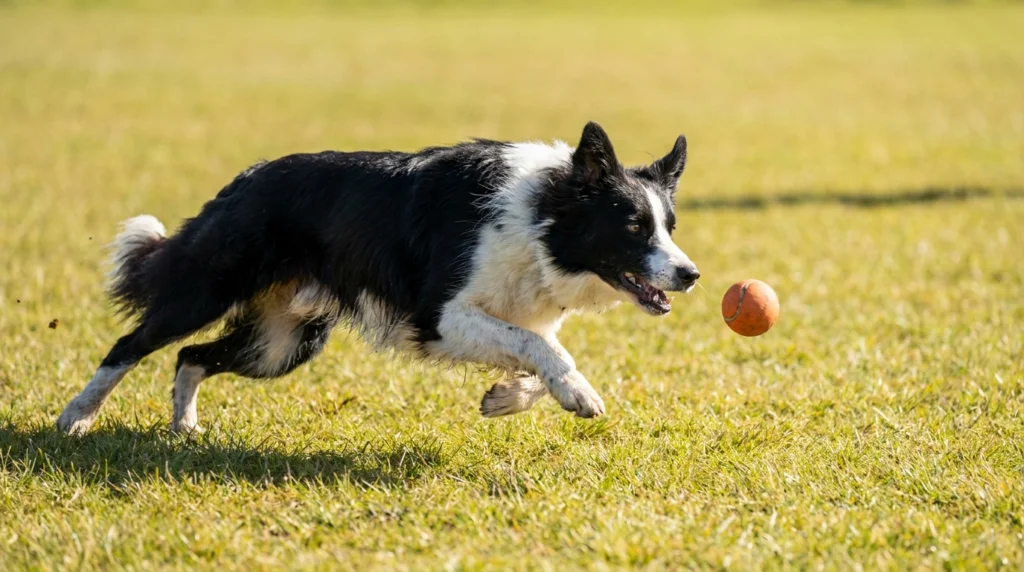
Meeting your dog’s true physical and mental activity needs is the single most effective way to prevent chronic anxiety, destructive indoor behaviors, and joint stiffness. However, an exercise plan cannot follow a one-size-fits-all formula: high-drive working breeds require intense stamina, puppies risk permanent growth plate deformities from repetitive forced running, and brachycephalic dogs face life-threatening heat stroke on humid days. Use our interactive Dog Exercise Calculator below to customize daily exercise minutes, activity intensity levels, and weather safety limits tailored specifically to your canine companion’s age, breed profile, and overall health.
How to Calculate Your Dog’s Daily Exercise Needs: 4 Steps
Establishing an evidence-based daily exercise regimen requires balancing your dog’s ancestral drive, physiological life stage, and ambient environmental conditions. According to exercise standards outlined by the American Kennel Club (AKC) and the American Animal Hospital Association (AAHA), determining an optimal routine involves four progressive steps:
- Step 1 — Identify the Breed Group Baseline: Working, herding, and sporting breeds require 90 to 120 minutes of daily physical and mental exertion. Non-sporting and companion breeds require 30 to 60 minutes, while toy breeds thrive on 20 to 30 minutes of gentle activity.
- Step 2 — Apply the Life Stage Modifier: Puppies under 12 months require short, controlled exercise bursts rather than sustained road work. Senior dogs require low-impact mobility walks broken into multiple 15-minute segments to protect arthritic joints.
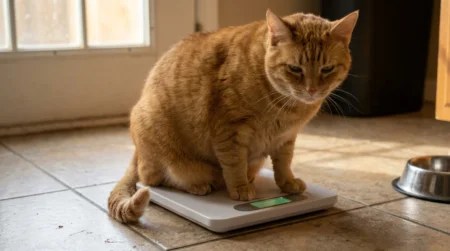
- Step 3 — Adjust for Body Condition: Overweight dogs must build stamina gradually through low-impact leash walks and swimming to avoid excessive load on cranial cruciate ligaments.
- Step 4 — Implement Weather and Temperature Throttle Caps: Ambient temperatures above 75°F (24°C) paired with high humidity necessitate cutting outdoor cardio by 50% for standard breeds and switching to early morning or indoor enrichment for flat-faced breeds.
Daily Exercise Needs by Breed Group
Canine exercise requirements are heavily determined by selective genetic breeding over centuries. Below is the clinical breakdown across major breed categories:
| Breed Group | Representative Breeds | Daily Minutes Target | Recommended Activity Formats |
|---|---|---|---|
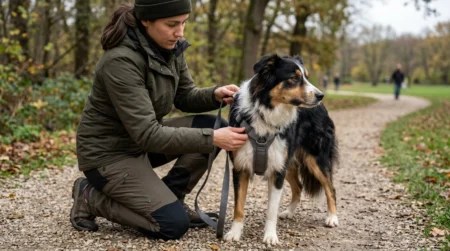
| Herding Breeds | Border Collie, Australian Shepherd, German Shepherd | 90 – 120+ Minutes | Agility, fetch, frisbee, structured nose-work, obedience drill tracking |
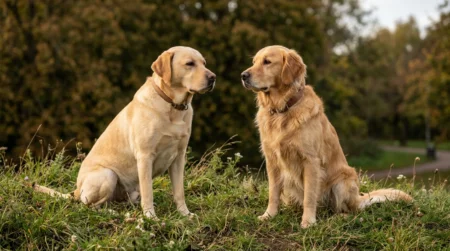
| Sporting Breeds | Labrador Retriever, Golden Retriever, Pointer | 80 – 100 Minutes | Swimming, off-leash trail hiking, retrieving drills, dummy hunting |
| Working Breeds | Boxer, Doberman Pinscher, Siberian Husky | 70 – 90 Minutes | Canicross, urban mushing, weighted backpack walks, long hikes |
| Terriers & Hounds | Jack Russell, Beagle, Rhodesian Ridgeback | 60 – 80 Minutes | Flirt pole chasing, long-line exploratory sniff-walks, lure coursing |
| Toy & Companion Breeds | Chihuahua, Cavalier King Charles, French Bulldog | 20 – 45 Minutes | Leisurely neighborhood walks, indoor interactive play, puzzle toys |
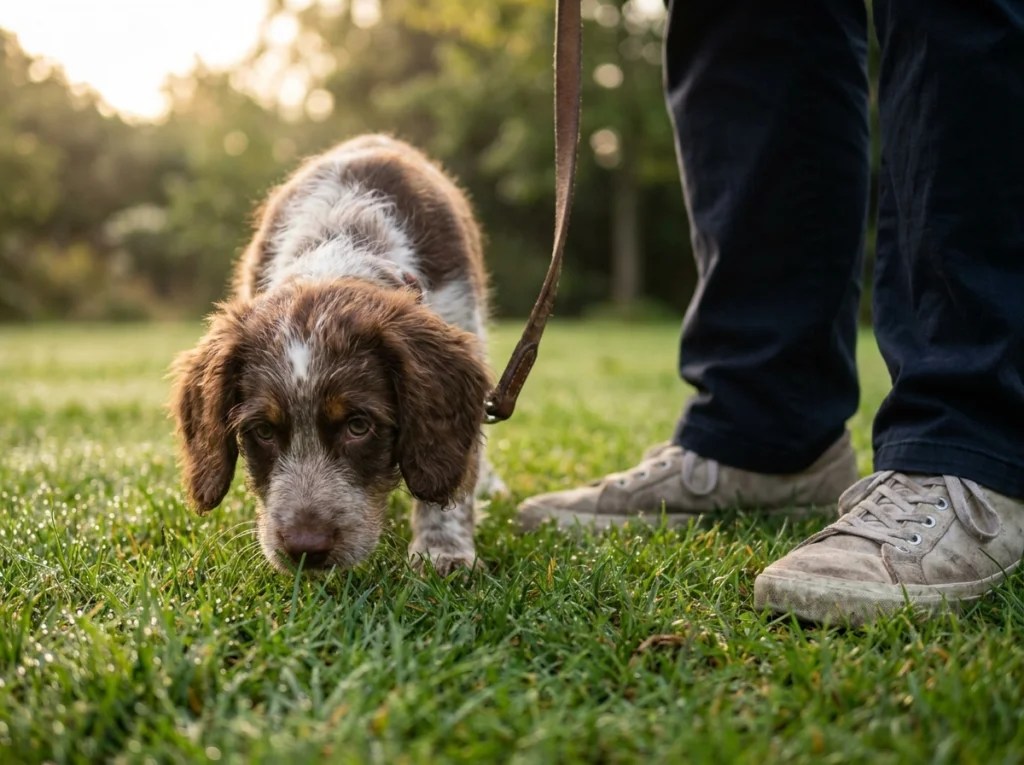
Puppy Walking Limits: Protecting Developing Growth Plates
One of the most frequent mistakes made by well-meaning puppy owners is taking a 4- or 6-month-old dog on long road jogs or continuous multi-mile hikes. Until a puppy reaches skeletal maturity (between 12 months for small breeds and 18 to 24 months for giant breeds), their long bones contain soft growth plates (epiphyseal plates) made of dividing chondrocytes.
Repetitive, forced concussive exercise on hard asphalt can crush or shear these sensitive growth zones, leading to angular limb deformities, early osteochondritis dissecans (OCD), and severe hip dysplasia. Veterinary orthopedic specialists recommend the conservative 5-minute rule:
- Formula: 5 minutes of structured walking per month of age, up to twice daily.
- 3 Months Old: 15 minutes per session (maximum 30 minutes daily total).
- 6 Months Old: 30 minutes per session (maximum 60 minutes daily total).
- Self-Directed Play: Unforced, free play on natural grass or soft dirt does not count against this limit because puppies naturally pause and rest when tired.
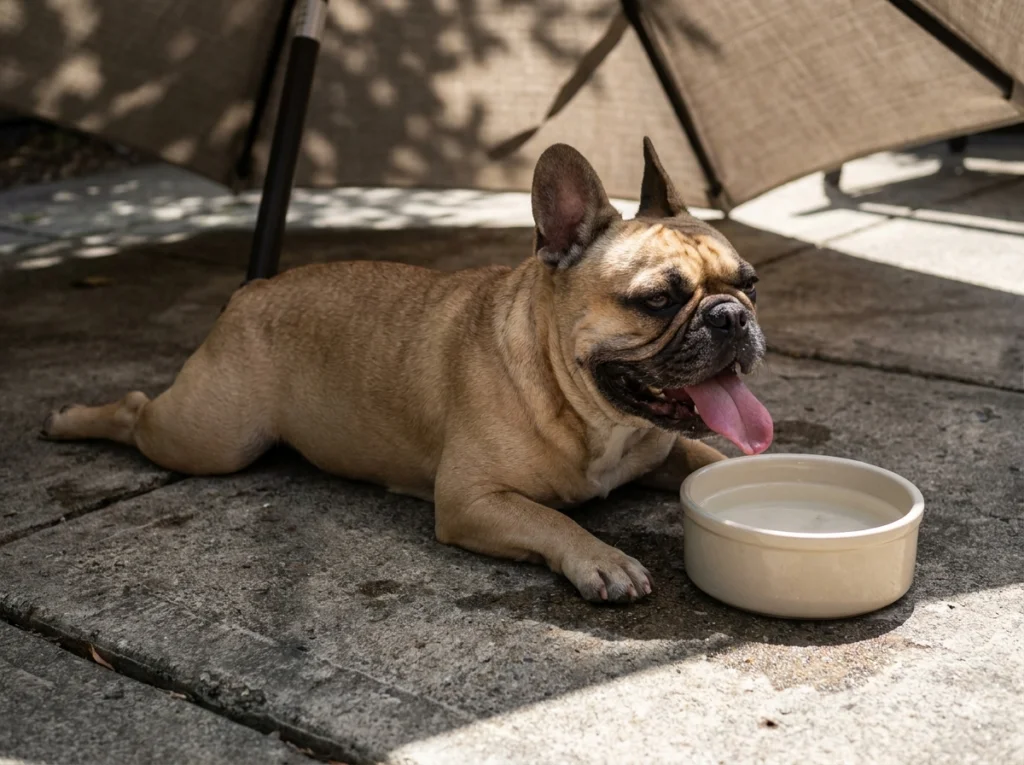
Brachycephalic Heat Throttle: Temperature Thresholds & Heatstroke Risks
Dogs do not possess dermal sweat glands across their bodies; their sole evaporative cooling mechanism is the rapid movement of air over the moist mucosal membranes of their nasal turbinates and tongue during panting. In brachycephalic breeds (Pugs, French Bulldogs, English Bulldogs, and Boston Terriers), shortened skull morphology creates compressed upper airways (stenotic nares, elongated soft palate, and everted laryngeal saccules).
A comprehensive epidemiological investigation published on canine heat-related illness (Hall et al., 2020) demonstrated that flat-faced dogs face a 17-fold greater risk of developing fatal exertion-induced heatstroke compared to mesocephalic dogs. Adhere to these clinical weather thresholds:
- Above 75°F (24°C) with Moderate Humidity: Restrict outdoor walks to 10 to 15 minutes in shaded areas during early morning or late evening.
- Above 85°F (29°C): Zero intense cardiovascular exercise. Rely entirely on indoor air-conditioned mental enrichment games.
- Emergency Warning Signs: Loud rasping stridor, dark red or purplish tongue, glassy eyes, and excessive thick saliva indicate immediate pre-heatstroke requiring rapid veterinary intervention.
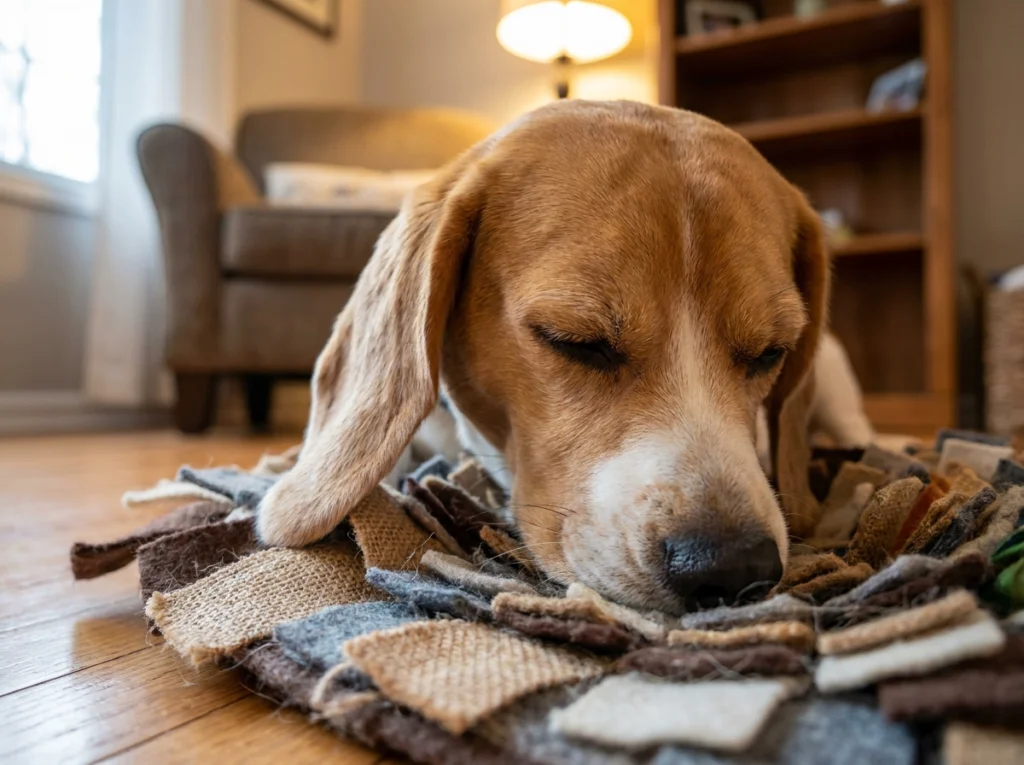
4 Signs of Exercise Imbalance: Under vs. Over-Exercise
Striking the correct balance requires monitoring your dog’s physical stamina and behavioral signals throughout the week:
- Sign 1 — Restlessness & Night Pacing (Under-Exercised): An under-stimulated dog cannot settle, whines persistently at doorways, and engages in repetitive destructive chewing of furniture or drywall.
- Sign 2 — Post-Walk Stiffness & Slow Rising (Over-Exercised): Hesitation to stand up after resting, reluctance to climb stairs, or subtle gait asymmetries indicate muscle strain or micro-tears in joint cartilage.
- Sign 3 — Hyperactive Displacement Zoomies (Overtired): In puppies and adolescent dogs, frantic zoomies and excessive mouthing often signify exhaustion rather than excess energy. An overtired puppy needs an enforced crate nap rather than more walking.
- Sign 4 — Pad Abrasions & Licking Paws (Frictional Strain): Inspecting foot pads after rough terrain or hot pavement walks reveals redness, thinning epidermis, or raw blisters that require immediate resting.
Frequently Asked Questions: Canine Exercise Needs
How much exercise does a puppy need by age?
Follow the standard veterinary rule of thumb: 5 minutes of structured walking per month of age, up to twice daily. For example, a 4-month-old puppy can safely handle two 20-minute gentle walks per day. Free unforced play in a fenced yard does not count against this limit.
Can dogs get too much exercise?
Yes. Chronic over-exercise causes micro-trauma to ligaments, cartilage degeneration, and chronic systemic cortisol elevation. If your dog exhibits morning stiffness, licks their joints, or struggles to get up after lying down, reduce their walking duration by 30% and consult your veterinarian.
How hot is too hot to walk a Bulldog, Pug, or Frenchie?
Temperatures above 75°F (24°C)—especially with humidity exceeding 60%—are dangerous for brachycephalic breeds. When temperatures exceed 80°F (27°C), keep flat-faced dogs inside air-conditioned rooms and replace outdoor walks with interactive puzzle games.
Does mental stimulation count toward daily exercise minutes?
Absolutely. 20 minutes of intense nose-work, scent games, or complex obedience training tires a dog’s central nervous system as effectively as a 45-minute physical walk, while significantly reducing stress and indoor arousal levels.