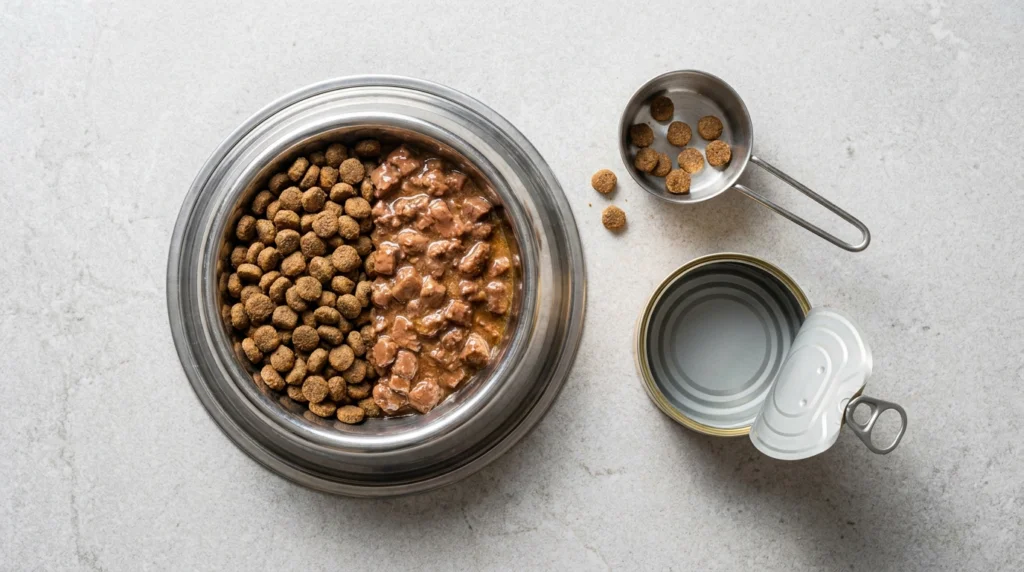
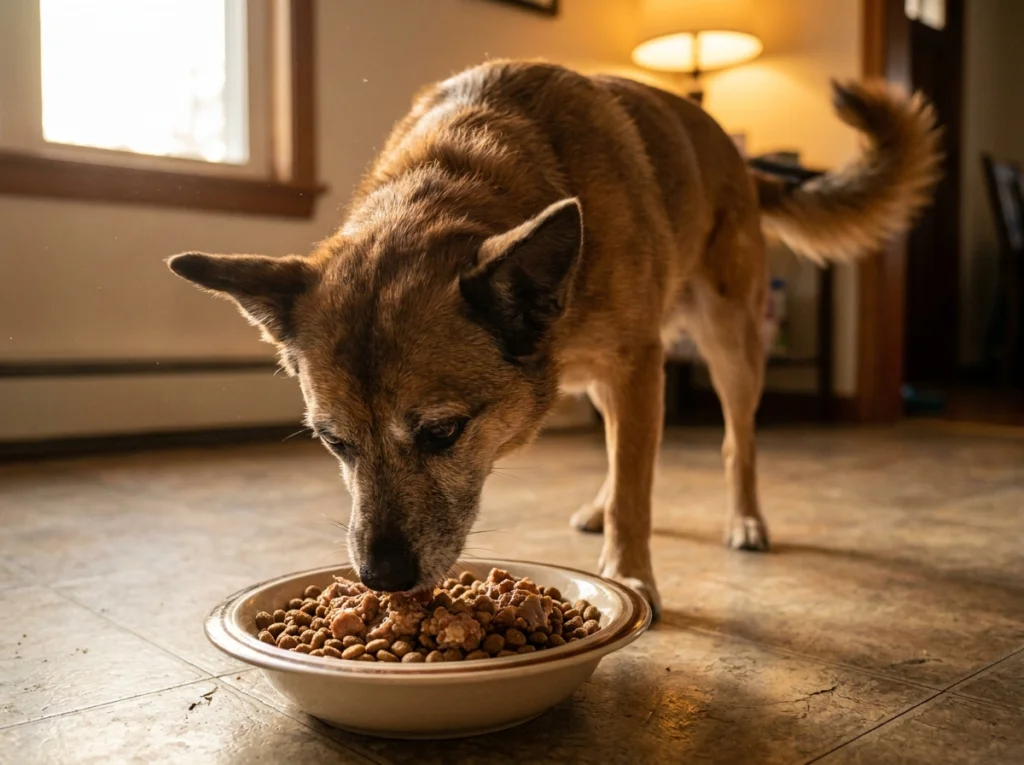
Combining wet canned food and dry kibble—commonly referred to in clinical veterinary nutrition as “mixed feeding”—is one of the most effective strategies to optimize pet health, manage mealtime palatability, and significantly elevate daily dietary hydration. However, calculating mixed feeding rations cannot be done by simply guessing “half a can plus half a cup.” Dry kibble is approximately four times more calorie-dense than moisture-rich wet food, making volumetric guesswork the leading trigger for unintentional pet weight gain. Use our interactive Wet to Dry Food Calculator below to compute exact gram-for-gram feeding portions, moisture intakes, and custom calorie split percentages for both dogs and cats.
How to Calculate a Wet and Dry Food Split: 4 Clinical Steps
To establish a balanced mixed feeding protocol without oversupplying calories, veterinary nutrition guidelines established by the World Small Animal Veterinary Association (WSAVA) and the American Association of Feline Practitioners (AAFP) recommend four systematic calculation steps:
- Step 1 — Determine Daily Caloric Target (MER): Calculate your pet’s Maintenance Energy Requirement based on species, ideal weight, life stage, and neuter status using standard veterinary equations:
MER = Multiplier × 70 × (Body Weight in kg)^0.75. - Step 2 — Select Your Split Ratio (Caloric, Not Volumetric): Decide on your caloric distribution. A 50/50 split means 50% of the daily energy comes from wet food and 50% from dry kibble.
- Step 3 — Convert Wet Calories to Grams / Cans: Divide the wet calorie budget by the published energy density of your canned food (typically 75 to 110 kcal per 100g, or listed per can).
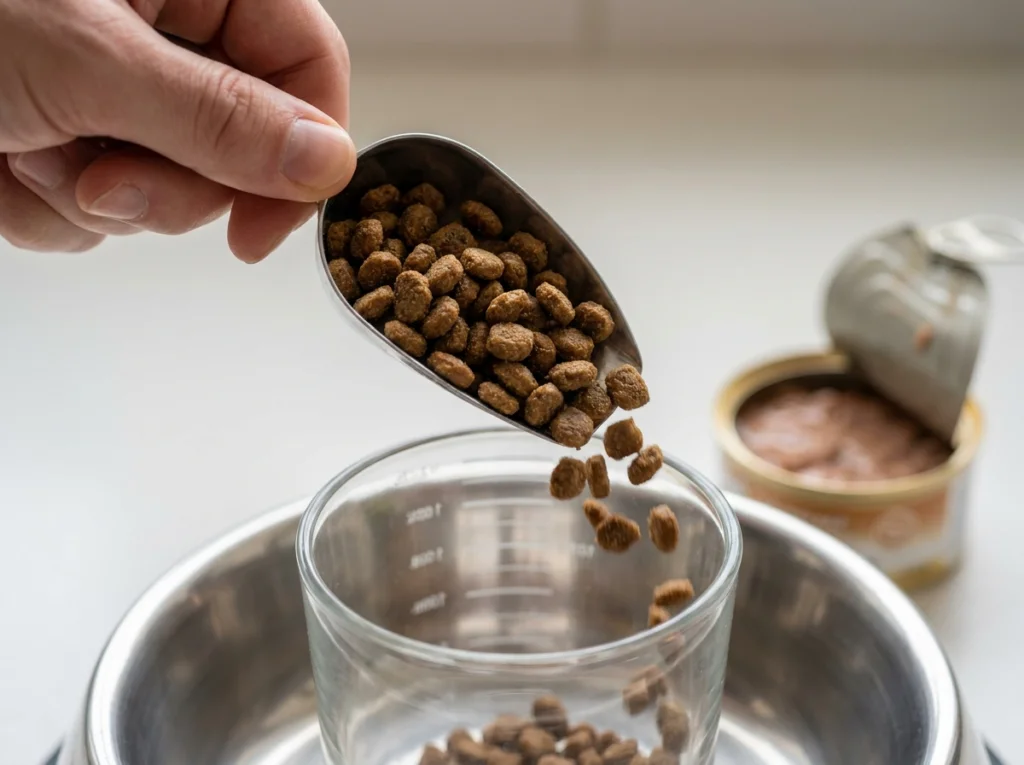
- Step 4 — Convert Dry Calories to Grams / Cups: Divide the dry calorie budget by the dry food density (typically 350 to 420 kcal per 100g). Weigh portions on a digital kitchen gram scale for precision.
Mixed Feeding Ratio Comparison: Which Balance Fits Your Pet?
Every pet household manages different logistical, budget, and health requirements. Below is the clinical breakdown of the three most popular mixed feeding models:
| Feeding Ratio | Best Suited For | Key Clinical Benefits | Cost & Prep Factor |
|---|---|---|---|
| 50% Wet / 50% Dry | Adult cats, indoor small dogs, pets needing moderate hydration | Optimal balance of urinary tract hydration and crunch dental stimulation; highly palatable. | Moderate cost; requires splitting daily cans evenly morning and evening. |
| 25% Wet / 75% Dry | Large & giant dog breeds, budget-conscious multi-pet homes | Adds tempting aromatic moisture to kibble to stimulate appetite without exorbitant canned food expenses. | Budget-friendly; single can or pouch split across 2 to 3 days. |
| 75% Wet / 25% Dry | Feline FLUTD/CKD patients, senior dogs, weight loss patients | Maximum moisture intake (promotes dilute urine SG < 1.030); expands stomach volume for rapid satiety. | Higher expense; requires refrigerated storage for opened cans. |
The Hydration Paradox & Feline Urinary Tract Health
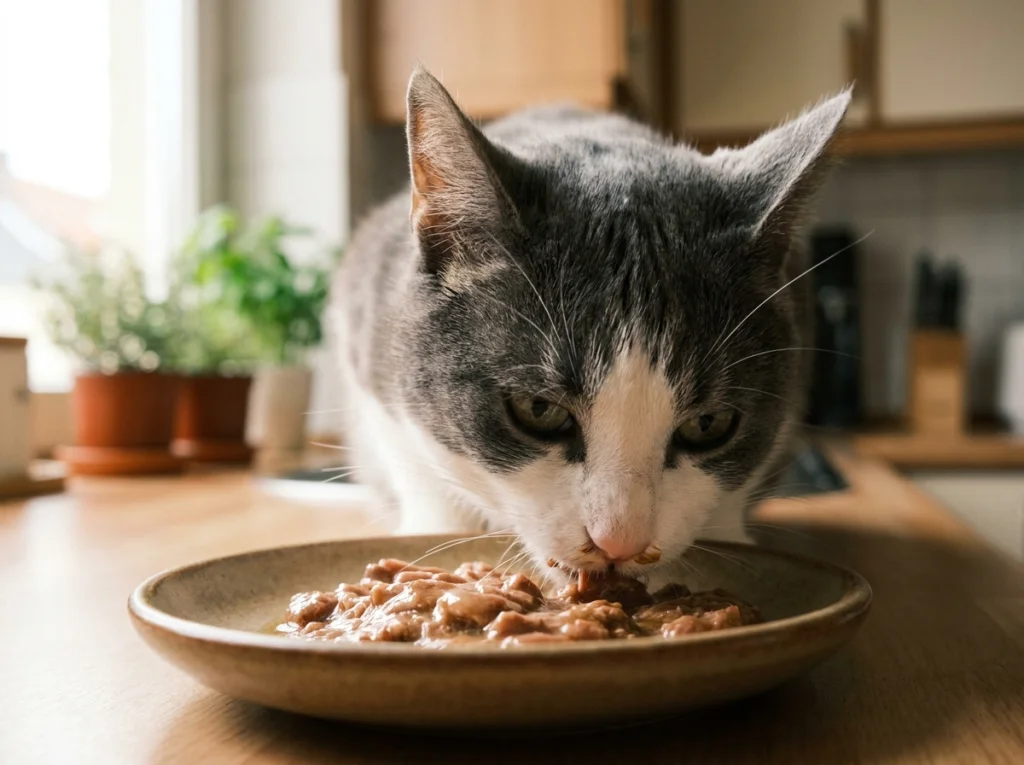
Domestic felines evolved from desert-dwelling African wildcats (Felis lybica) and possess a biologically low thirst drive. In nature, cats obtain 70% to 75% of their total bodily moisture directly from consumed prey. When fed an exclusively dry diet (which contains only 8% to 10% moisture), cats do not compensate by drinking enough water from bowls to match the total water turnover of a wet-fed cat (Cameron et al., 2011).
This chronic mild dehydration leads to highly concentrated urine (specific gravity often exceeding 1.045 to 1.050), which supersaturates urine with calcium oxalate and struvite precursors, paving the way for feline lower urinary tract disease (FLUTD), urethral plugs, and accelerated chronic kidney disease (CKD). Increasing the wet food portion to at least 50% of daily calories is the single most reliable non-invasive way to keep urine dilute and protect feline renal health.
Frequently Asked Questions: Mixed Feeding Protocols
Can I mix wet and dry pet food in the exact same bowl?
Yes. Combining wet food directly over kibble is an excellent way to entice picky eaters and ensure thorough moisture consumption. However, once wet food touches dry kibble, the entire bowl must be consumed or discarded within 2 to 4 hours because the moisture triggers bacterial growth and makes the kibble soggy.
Why can I not simply feed half of the kibble bag recommendation plus half a can?
Because feeding instructions printed on pet food packaging are formulated assuming that product is fed as 100% of the daily diet. Furthermore, manufacturer charts regularly overestimate caloric needs by 15% to 25%. Calculating the exact calories of both components independently prevents severe overfeeding.
Does feeding wet food cause dental disease or tartar buildup?
This is a pervasive pet myth. Standard dry kibble shatters instantly upon contact with canine or feline teeth, providing virtually zero abrasive plaque removal at the gumline. Regular mechanical toothbrushing or certified veterinary dental diets are required for true plaque control; feeding canned food does not accelerate dental decay.
What is the best way to transition my pet to a mixed feeding routine?
Transition gradually over 7 to 10 days. Start by replacing 10% to 15% of your pet’s kibble calories with wet food for 2 to 3 days, monitoring stool quality. Slowly increase the wet food portion every few days until you reach your target feeding split.