The information and calculator data provided in this article are aggregated from peer-reviewed veterinary literature, including the Merck Veterinary Manual and AVMA guidelines. This content is for educational and informational purposes only and is not a substitute for professional veterinary advice, diagnosis, or treatment. Always consult with a licensed veterinarian before administering any medication or altering your pet’s health regimen.
Why is my cat aggressive towards my child is a question most families ask only after something frightening has already happened: a scratch that seemed to come from nowhere, a hiss during what looked like gentle petting, or a swat during play that turned serious in an instant. Maddie’s Fund’s dedicated guide to cat aggression toward children confirms that cat aggression toward children is particularly dangerous, largely because many cats are naturally reluctant to being picked up or having their bodies touched extensively, and children frequently do both without understanding the risk.
Why is my cat aggressive towards my child is best answered as a question of absence rather than malice: the absence of an escape route, the absence of recognized warning signals, and the absence of clear rules teaching a child how to interact safely. Best Friends Animal Society’s cat aggression toward people guide confirms that cat aggression toward people can be both frustrating and dangerous, and that understanding the underlying cause is the essential first step toward changing the behavior rather than simply reacting to each incident after it happens.
Table of contents
- Why Is My Cat Aggressive Towards My Child? The Spectrum of Feline Stress
- Cat Scratches Toddler Unprovoked: Why It Wasn’t Really Unprovoked
- Signs a Cat Is Overstimulated by Children
- How to Teach a Child to Respect a Cat’s Space
- Safe Zones for Cats Away From Toddlers
- How to Discipline a Cat for Scratching a Child
- Kids & Kitty Rules Chart: A Printable Fridge Reference
- Frequently Asked Questions About Cat Aggression Toward Children
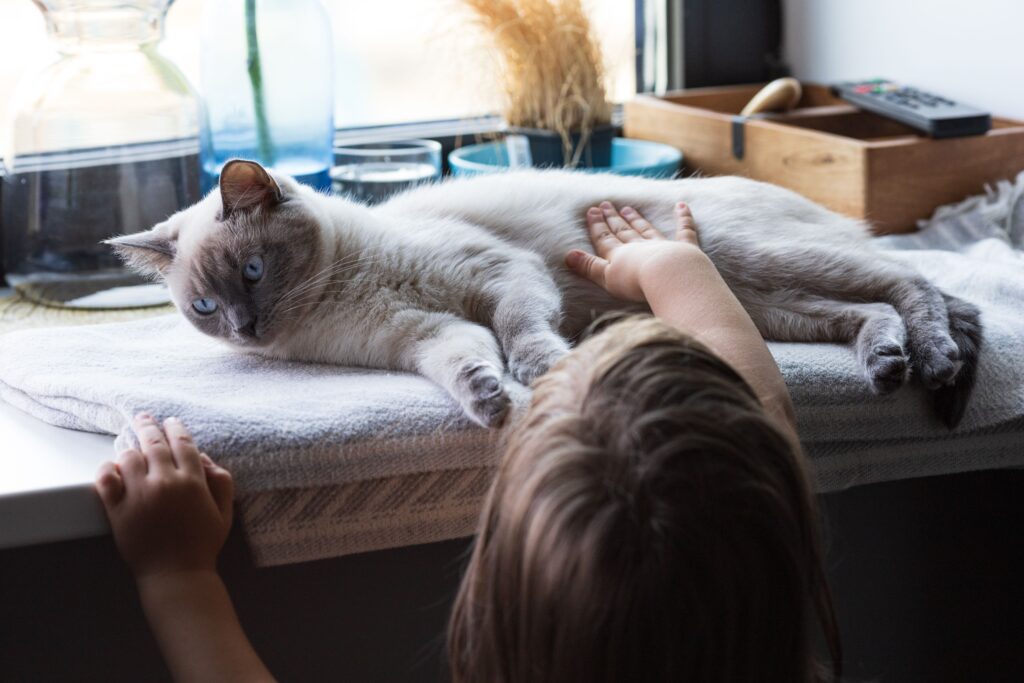
Why Is My Cat Aggressive Towards My Child? The Spectrum of Feline Stress
Child-Directed Cat Aggression Triggers
Cats typically show aggression toward children due to fear of unpredictable movements, loud noises, or improper handling that causes physical discomfort. Establish safe, high vertical climbing perches where your cat can retreat, teach children gentle touch boundaries, and never force physical interactions.
| Observed Behavioral Cue | Primary Underlying Motivation | Accompanying Physical Signal | Recommended Owner Response |
|---|---|---|---|
| Direct Focused Staring | Affection, communication, or resource request | Soft eye gaze with relaxed facial muscles | Acknowledge calmly with gentle praise or routine cue |
| Shadowing / Following Closely | Attachment, territorial routine, or insecurity | Upright tail position with forward-facing ears | Maintain calm consistency; reward independent settling |
| Sudden Agitation / Avoidance | Overstimulation, pain, or environmental stress | Flattened ears, stiff posture, or tail flicking | Give immediate space; remove provoking triggers |
| Repetitive Frustration Behaviors | Boredom, lack of exercise, or barrier frustration | Pacing, whining, or destructive scratching | Introduce puzzle feeders and daily structured exercise |
Why is my cat aggressive towards my child becomes far easier to answer once you can read the Spectrum of Feline Stress, a framework that translates subtle, easily missed cat body language into clear tiers of risk and clear parental action. Most aggression toward children is not sudden at all; it is the final stage of a sequence that began with quiet, ignored signals minutes or even seconds earlier.
Cornell University’s feline behavior aggression guide confirms that aggression in cats is a normal, adaptive behavior used to communicate a need for distance, and that recognizing the early signs of stress is critical for preventing escalation to biting or scratching.
Why is my cat aggressive towards my child: mapping the behavioral tiers
| The Behavioral Tier | The Invisible Cat Signal | The Child’s Common Misinterpretation | The Immediate Parental Protocol |
|---|---|---|---|
| Green Zone (Mild Signs) | Cat avoids eye contact, turns head away, or subtly shifts its body weight away from the child | “The cat is just sitting there being calm and wants me to keep petting them!” | Safe Zone: Perfectly fine for quiet interaction, but watch for a shift in body language |
| Yellow Zone (Moderate Signs) | Ears rotate slightly to the side, brow furrows, and the tip of the tail begins to twitch or flick | “The tail wagging means the cat is happy and playing a fun game with me!” | Intervene: Verbally redirect the child to give the cat space; step in before the threshold is crossed |
| Red Zone (Severe Defensive Aggression) | Ears pin flat against the head, pupils dilate completely, and the cat hisses, growls, or swats | “The cat is being mean or playing aggressively on purpose.” | Complete Separation: Separate the cat and child immediately; your presence or a physical door is mandatory to prevent injury |
Why is my cat aggressive towards my child once it reaches the Red Zone
Its most severe form, the Red Zone, represents a cat that has exhausted every quieter option for communicating distress. The ASPCA’s aggression in cats guide confirms that fear-based and defensive aggression is one of the most common categories seen in cats, and that a cat displaying flattened ears, dilated pupils, and hissing has moved into pure self-protection, not deliberate cruelty.
Your home should be a place where beautiful design and your pet’s safety exist in perfect, effortless harmony and they absolutely can. Get these gorgeous, practical ideas for creating a truly pet-friendly home that looks stunning from every angle while keeping your beloved companion protected, comfortable, and completely at ease every single day.
Cat Scratches Toddler Unprovoked: Why It Wasn’t Really Unprovoked
Cat scratches toddler unprovoked is one of the most alarming phrases parents search after an incident, but behavior specialists consistently note that from the cat’s perspective, the scratch was provoked by something the adults in the room simply did not register as threatening. A community discussion documenting weird, seemingly unprompted aggression toward a toddler illustrates how frequently parents report this exact confusion, often discovering only in retrospect that the child had been repeatedly approaching, touching, or cornering the cat.
Why is my cat aggressive towards my child when the scratch seems to come from nowhere
The most common hidden triggers behind cat scratches toddler unprovoked:
- Persistent chasing after the cat has already tried to retreat to a bed, sofa corner, or hiding spot
- Pulling on tails, ears, or whiskers, frequently in an attempt to hug or hold the cat close
- Leaning over or physically cornering the cat in a tight space with no visible exit
- Repeatedly touching, poking, or waking a resting or sleeping cat, especially in a favored hiding location
Gumtree’s expert-sourced explainer on cat aggression toward children confirms that what looks like unprovoked aggression is almost always a delayed response to repeated smaller stressors, and that cat scratches toddler unprovoked incidents nearly always have an identifiable triggering pattern once parents review what happened in the minutes leading up to the scratch.
Aggression in a beloved pet is confusing, scary, and heartbreaking but with the right approach, real and lasting change is absolutely possible. Discover these safe, compassionate behavior modification tips for dealing with pet aggression that address the root cause, rebuild trust, and help your companion find their way back to the calm, confident pet you always knew lived inside them.
Signs a Cat Is Overstimulated by Children
Signs a cat is overstimulated by children explain why so many aggression incidents happen during interactions that started out perfectly pleasant, since a cat’s tolerance threshold during petting or play can be crossed within seconds, flipping a calm cat into a defensive one almost instantly. PetMD’s cat aggression guide confirms that overstimulation during petting, sometimes called petting-induced aggression, is a well-documented and common trigger, and that most cats give clear physical warnings before biting or scratching.
Why is my cat aggressive towards my child during play that seemed fun moments earlier
The complete list of signs a cat is overstimulated by children:
- Ears shifting from an upright position to sideways “airplane ears,” then progressing toward fully flattened
- The tail tip beginning to twitch, escalating into faster, more forceful thrashing along the full length of the tail
- Pupils dilating and back or shoulder muscles visibly tensing beneath a child’s petting hand
- The cat freezing rigidly under touch rather than leaning into it or relaxing
- Gentle warning nips or paw swats directed at hands, sleeves, or nearby toys before any harder contact occurs
Cats.com’s inter-cat and general aggression explainer confirms that recognizing these escalating physical cues in real time, rather than after a bite has already occurred, is the single most effective way to prevent overstimulation from turning into a defensive injury.
Your Golden Retriever puppy is bursting with love, curiosity, and enough wiggly energy to light up an entire room and they are ready to learn more than you might think. Discover these heartwarming, proven training tips for nurturing your Golden Retriever puppy into the loyal, gentle, and beautifully well-mannered companion they were always destined to become.
How to Teach a Child to Respect a Cat’s Space
How to teach a child to respect a cat’s space directly addresses one of the most common underlying causes behind why is my cat aggressive towards my child, because affection and respect are not the same thing to a cat, and a child who adores their cat can still be the primary source of that cat’s ongoing stress. Cats Protection’s dedicated cats and children advice page confirms that teaching children how to interact safely and gently with cats is essential for building a genuinely positive relationship rather than one built on the cat’s constant, unaddressed tolerance.
Why is my cat aggressive towards my child when the child clearly loves the cat
The core rules for how to teach a child to respect a cat’s space:
- Teach a “gentle hand only” rule, guiding the child’s hand in flat, slow strokes along the back and shoulders while avoiding the tail, legs, and belly, areas most cats find threatening when touched by unfamiliar or unpredictable hands
- Establish that the cat must approach the child rather than the reverse, removing the option to chase, corner, or pick up a cat that is walking away
- Designate specific “cat-only” locations, such as cat trees, gated rooms, and hiding spots, as places a child is never permitted to enter or disturb
- Redirect physical affection toward toy-based play, letting the child drag a wand toy or roll a ball so the cat can choose to engage from a comfortable distance
Cats Protection’s “Teach your child to care for your cat” resource confirms that involving children in positive care tasks, including feeding and supervised gentle play, helps build a genuine bond while simultaneously reducing the unwanted grabbing and rough handling that most commonly triggers defensive aggression.
Your cat scratching everything in sight isn’t a personal attack on your furniture it’s one of the most deeply wired instincts they were born with. Explore these smart, effective cat scratching solutions that lovingly redirect that powerful natural urge toward the right places and keep your sofa, curtains, and carpets looking brand new for years to come.
Safe Zones for Cats Away From Toddlers
Safe zones for cats away from toddlers are non-negotiable in any household asking why is my cat aggressive towards my child, because a cat with no reliable escape route will eventually rely on teeth and claws to create the distance it cannot otherwise achieve. Maddie’s Fund confirms that providing consistent, reliably safe spaces the child cannot access is one of the most effective long-term management strategies for households with young children and an anxious or reactive cat.
Why is my cat aggressive towards my child when there is nowhere left to retreat
The essential safe zones for cats away from toddlers:
- Tall cat trees, shelves, or window perches positioned above a toddler’s reach, allowing the cat to observe household activity without risk of being grabbed
- A gated room the cat can jump into but the child cannot cross, functioning as a guaranteed retreat during high-energy play sessions
- Covered beds, boxes, or under-furniture hideouts that the entire household agrees are strictly off-limits to children, regardless of curiosity
- Elevated feeding and litter box locations, since American Humane’s cats and kids guide confirms that even routine activities like eating and using the litter box should happen in spaces protected from toddler interference
Safe zones for cats away from toddlers work only if the cat trusts they will never be pursued or removed from these locations, since a hideout that is regularly violated stops functioning as a safe zone and instead becomes just another place the cat feels cornered.
Before you commit to a pet insurance plan, there’s one important question every pet parent deserves a clear answer to is it actually worth it for your specific pet? Use this easy pet insurance calculator to find out exactly what coverage makes financial sense for your companion and make the most informed, confident decision for their long-term health and your peace of mind.
How to Discipline a Cat for Scratching a Child
How to discipline a cat for scratching a child is a question with a counterintuitive answer: virtually every major animal welfare authority agrees that punishment makes feline aggression worse rather than better, since it introduces additional fear on top of whatever original stressor triggered the scratch. Maddie’s Fund’s specific guide on aggression when reprimanded confirms directly that reprimanding or punishing a cat for aggressive behavior tends to escalate the aggression rather than resolve it, since the cat associates the punishment with fear rather than learning the intended lesson.
Why is my cat aggressive towards my child, and should punishment be part of the response
The correct, evidence-based approach to how to discipline a cat for scratching a child:
- Never yell at, hit, or physically punish the cat following a scratching incident, since WebMD’s guide to managing aggression between cats confirms punishment-based approaches consistently backfire across virtually every category of feline aggression, not just aggression directed at other cats
- Calmly and immediately separate the cat and child, allowing the cat to retreat to one of its established safe zones without being chased or cornered further
- Review the incident for missed warning signals, checking whether the cat had displayed Yellow Zone signs like tail flicking or ear shifting in the moments before the scratch occurred
- Reinforce and reward the cat’s choice to walk away from a stressful interaction instead of punishing the eventual scratch, reinforcing the exact behavior you want to see more of in future encounters
- Consult a veterinarian first to rule out pain or illness as a contributing factor, then a certified feline behavior consultant if aggression toward the child continues despite consistent management changes
The ASPCA confirms that persistent aggression toward people should always be addressed with professional guidance, since even seemingly minor incidents can escalate in frequency or severity without a structured behavioral intervention plan.
Kids & Kitty Rules Chart: A Printable Fridge Reference
Below is a simple, repeatable rules chart designed for caregivers to read aloud with young children and reinforce daily. Cats Protection’s Kids and Kitties campaign confirms that simple, visual, repeated rules are the most effective way to teach young children safe cat interaction habits.
Kids & Kitty Rules Chart
- Gentle Hands Only We touch kitty with one soft, flat hand, and we pet the back and shoulders, never the tail, legs, or belly.
- No Chasing or Grabbing If kitty walks away, we stop and stay; we never run after kitty or pull fur, ears, or tail.
- Kitty’s Quiet Places Are Off-Limits The cat tree, boxes, under the bed, and gated rooms are kitty’s spots; only grown-ups check on kitty there.
- Ask a Grown-Up Before Petting We ask “Can I pet kitty?” and a grown-up stays with us the whole time.
- Play With Toys, Not Hands We use balls, soft toys, or wand toys to play; hands are for gentle petting only.
- If Kitty Says “No,” We Stop Tail flicking, ears going sideways, or kitty walking away all mean “no”; we take three steps back and find another game.
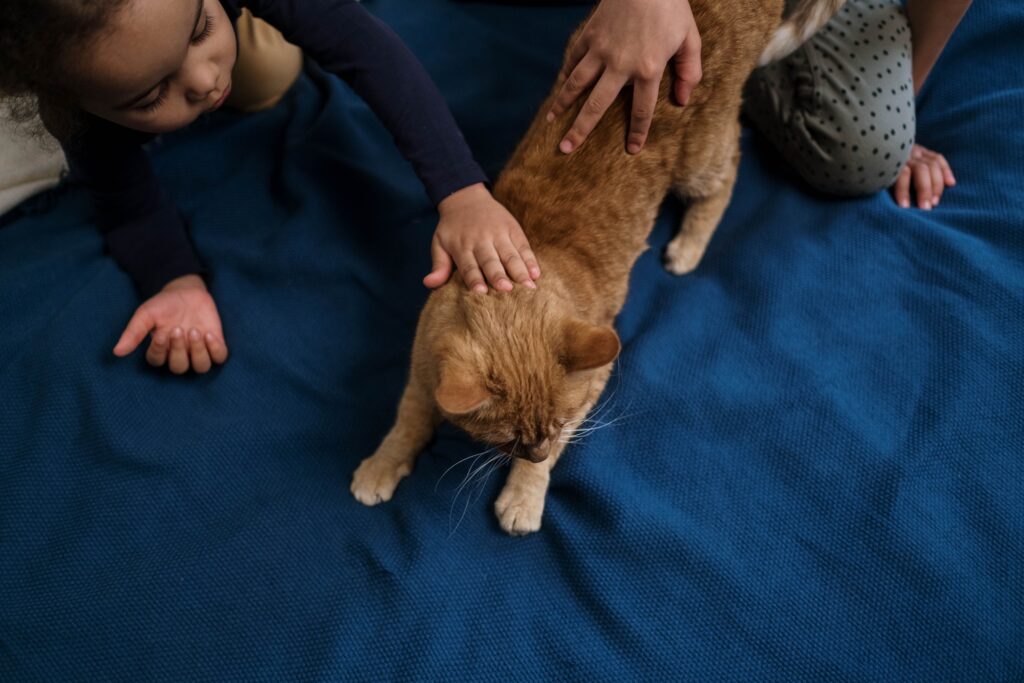
Frequently Asked Questions About Cat Aggression Toward Children
Why is my cat aggressive towards my child when a veterinary exam rules out illness usually points to fear, overstimulation, or a lack of reliable escape routes rather than a health problem. Maddie’s Fund confirms that most cats are naturally reluctant to extensive handling, and unpredictable toddler behavior is one of the most common non-medical triggers for defensive aggression.
Cat scratches toddler unprovoked almost always has a hidden trigger that adults did not register as threatening, such as chasing, tail-pulling, or cornering. Gumtree’s expert explainer confirms that reviewing the minutes before an incident nearly always reveals an identifiable pattern behind the scratch.
Signs a cat is overstimulated by children include ears shifting sideways, tail twitching that escalates into thrashing, dilated pupils, freezing under touch, and gentle warning nips. PetMD confirms that most cats display these clear physical warnings before any bite or scratch occurs.
How to teach a child to respect a cat’s space involves modeling gentle hand petting, banning chasing and grabbing, designating cat-only hideouts, and redirecting affection toward toy-based play. Cats Protection confirms that teaching safe, gentle interaction is essential for a genuinely positive long-term relationship between cats and children.
📊 Interactive Pet Health & Care Calculators
Plan your pet’s healthcare and daily budget with our free interactive tools:
🐾 Related Resources & Interactive Tools in This Guide:
- Interactive Calculator: Pet Age in Human Years Calculator — Convert your pet chronological age to accurate biological human years.
- Clinical Resource: Types of Dog Leashes: The Complete 2026 Guide From Training to Trail
- Behavior & Training Guide: How to Calm a Cat in Heat at Home: The Complete 2026 Owner’s Survival Guide
- Related Expert Guide: How to Comfort a Dog in Heat for the First Time
Growth & Immunization Tracking: To predict your puppy’s adult weight based on current breed trajectory, use our interactive Puppy Growth Calculator. For core vaccine timelines and veterinary cost planning, refer to the Puppy Vaccination Schedule Tool.
📚 Related Topic Cluster Guides & Veterinary Tools
Explore our complete Pet Lifestyle & Living Hub for comprehensive guides, veterinary diagnostic checklists, and daily care protocols.