The information and calculator data provided in this article are aggregated from peer-reviewed veterinary literature, including the Merck Veterinary Manual and AVMA guidelines. This content is for educational and informational purposes only and is not a substitute for professional veterinary advice, diagnosis, or treatment. Always consult with a licensed veterinarian before administering any medication or altering your pet’s health regimen.
Calculated using published guidelines from AVMA, ASPCA, AAHA, and NRC standards.
Generate your puppy’s custom vaccination timeline and immunization schedule below. Select your puppy’s date of birth to calculate exact clinical calendar dates for core DHPP rounds, rabies requirements, and lifestyle vaccines calibrated to AAHA guidelines.
Puppy Profile
Lifestyle Risks (Optional)
▸ Add your vet’s contact info (appears on printed schedule)
🐾 Small or toy breed?
Toy breeds (under 10 lbs) may require adjusted vaccine timing or split doses. Always confirm this schedule with your veterinarian before the first visit.
🛡️ Why so many boosters? (Maternal Antibodies)
Puppies receive antibodies from their mother’s milk, which temporarily block vaccines from working. Boosters are given every 3–4 weeks to catch the exact moment these maternal antibodies fade and the puppy’s own immune system can take over.
Puppy’s Vaccination Schedule
Vaccination schedules and Rabies laws vary by local jurisdiction and your puppy’s individual health history. Note: It takes 10-14 days after the final shots for full immunity to develop. Avoid high-risk areas until then. This tool provides general guidance based on updated AAHA protocols and does not replace professional veterinary advice.
Most new puppy owners don’t find out their dog needs four separate vet visits in the first four months until they’re already behind on one. A good puppy vaccination schedule tool fixes that. It puts the full picture in front of you before the first appointment, not after you’ve missed a booster window and have to start counting weeks over again.
The 6-to-16-week window is the most critical stretch of your puppy’s immune development. Miss a booster in that period and the previous vaccine may not hold. That’s not a worst-case scenario — it’s how maternal antibodies work. They gradually fade and temporarily interfere with vaccine uptake, which is exactly why a single shot at 8 weeks doesn’t complete the job. Your puppy needs repeated rounds to build durable immunity, and the timing isn’t flexible the way people assume it is.
This guide walks through the full puppy vaccination schedule by age, what each vaccine protects against, how much you’re realistically spending, and how to use a puppy immunization schedule calculator so you never miss a due date.
What a Puppy Vaccination Schedule Tool Actually Shows You
A useful puppy vaccination schedule tool does more than list vaccine names on a timeline. It maps the entire first year — which shots come at which age, which are core (every dog, regardless of lifestyle), which are non-core (vet decides based on your dog’s environment and your region), and when each one needs a booster.
The core vs. non-core distinction matters more than most people realize. Core vaccines protect against diseases that spread fast, kill reliably, and have no effective treatment once symptoms appear: distemper, parvovirus, adenovirus, and rabies. Non-core vaccines — bordetella, leptospirosis, Lyme, canine influenza — protect against real and serious diseases, but whether your puppy needs them depends on where you live and how your dog will spend its days.
The American Animal Hospital Association’s 2022 Canine Vaccination Guidelines separate vaccines into core, non-core, and “not recommended” categories with specific timing protocols. Any puppy vaccination schedule tool worth using should align with those guidelines. If you’re using one that doesn’t reference AAHA or AVMA protocols, that’s worth knowing before you commit to its calendar.
Puppy vaccination schedule by age: the full timeline
Here is the schedule most vets follow. Ages listed are the minimum recommended starting points — your vet may adjust based on your puppy’s health, your local disease prevalence, or a late start in the series:
6–8 Weeks
- DA2PP (Distemper, Adenovirus-2, Parvovirus, Parainfluenza) — first dose
- Bordetella — optional at this stage, vet-dependent
10–12 Weeks
- DA2PP — second dose
- Leptospirosis — first dose, if your vet recommends it for your area
- Bordetella — first dose if not given at 8 weeks
14–16 Weeks
- DA2PP — third dose
- Rabies — first dose (legally required in most U.S. states)
- Leptospirosis — second dose
12–16 Months
- DA2PP — adult booster
- Rabies — booster (1-year or 3-year depending on your state)
- Leptospirosis — annual booster if applicable
Four visits. That’s the minimum puppy vaccination schedule by age for a healthy puppy starting vaccines at 6–8 weeks.
What core vaccines are actually protecting against
Distemper is a neurological disease with no cure. Parvovirus can kill a puppy within 48–72 hours of symptom onset and survives on surfaces for up to a year. Adenovirus causes infectious hepatitis. Rabies is fatal and legally reportable in every U.S. state.
These are not theoretical risks. The American Veterinary Medical Association notes that parvovirus outbreaks continue to occur in vaccinated communities — primarily affecting unvaccinated or incompletely vaccinated dogs. The vaccine works. The series exists precisely because one dose doesn’t fully work, and a puppy who receives one round then misses two is not protected.
Puppy Vaccine Schedule Chart: Reading It Right
A puppy vaccine schedule chart is useful, but most people read it wrong. They see a grid of vaccines and ages, check a vaccine off the correct week, and assume the job is done. It isn’t. What matters is the series.
DA2PP is given every 3–4 weeks from when your puppy first starts vaccines until 16 weeks of age — regardless of when you started. A puppy who got its first DA2PP at 6 weeks needs doses at 10 and 14 weeks. A puppy who came home at 12 weeks with no vaccine history needs to start immediately and still complete doses at 16 weeks. The age on the chart is a starting guideline, not a one-and-done event.
This is where a free puppy vaccination schedule can mislead you. Generic charts give you the standard national timeline. They don’t account for a late start, a skipped appointment, or a puppy who was sick and couldn’t be vaccinated on schedule. A vet recommended puppy vaccine schedule adjusts for those variables. A printable chart does not.
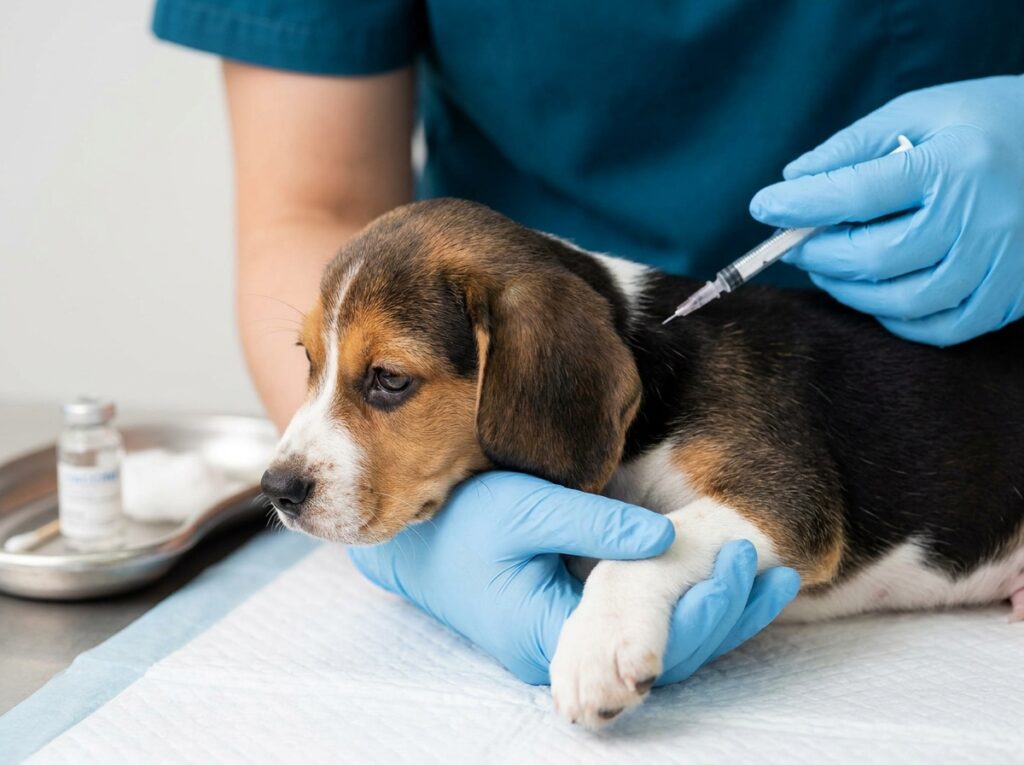
Puppy shot schedule at 8 weeks: what actually happens at the first visit
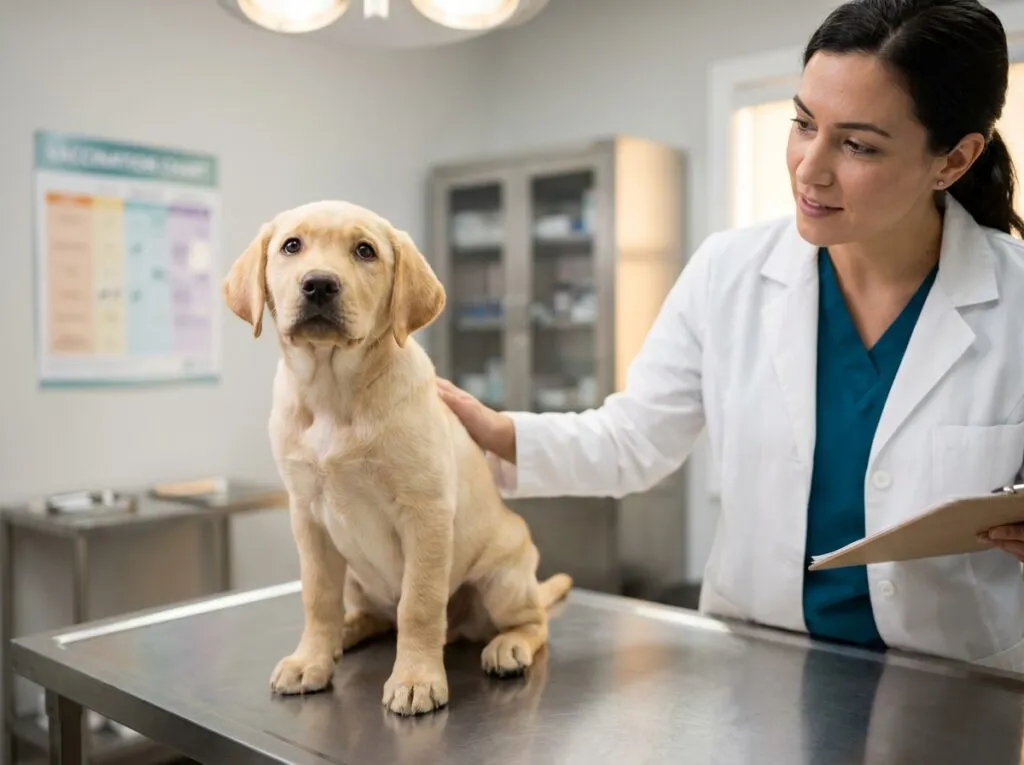
The 8-week appointment is the starting point for most puppies. Before giving any vaccines, your vet will do a full physical — not every puppy is healthy enough to vaccinate on day one, particularly dogs from shelter environments who may be fighting subclinical infections you can’t see yet.
At a standard puppy shot schedule 8 weeks appointment, expect the DA2PP first dose, a fecal test for parasites (intestinal worms are common and affect immune response), a conversation about non-core vaccine recommendations based on your region, and scheduling of the 12-week follow-up. Skipping that last part — not booking the next appointment before you leave — is how people accidentally push 12-week visits to 14 weeks and compress the schedule in ways that matter.
Most owners tracking vaccines are also quietly wondering whether their puppy is growing the way it should. If that’s you, this puppy growth calculator predicts your dog’s adult size from what you already know at 8 weeks — no guesswork, no waiting two years to find out.
Puppy vaccination schedule 16 weeks: why this is the appointment you can’t skip
The puppy vaccination schedule 16 weeks visit is the one people most often delay, and it’s the appointment that matters most. Here’s the reason vets are specific about this date: maternal antibodies — immunity passed from mother to puppy through colostrum — gradually decline over the first 12–16 weeks of life. Until they’ve cleared, they can actually interfere with vaccine uptake by neutralizing modified-live virus before the puppy’s own immune system can respond.
By 16 weeks, most puppies have fully cleared maternal antibodies. The DA2PP at 16 weeks is the dose most likely to generate lasting, durable immunity — because there’s finally nothing blocking it.
The Merck Veterinary Manual is explicit: the final puppy series dose should be given no earlier than 16 weeks, and puppies vaccinated only before that age may need an earlier adult booster than the standard 12-month schedule. Skip the 16-week visit and you may have a puppy who received two or three vaccine doses that mostly worked but didn’t lock in. That’s not the same as fully vaccinated, and it’s important to know the difference.
Once the 16-week appointment is done, your puppy officially clears the window when socialization is hardest to delay. That timing isn’t a coincidence — puppy training works best when it starts right here, before unvaccinated-puppy restrictions no longer apply as an excuse.
How Much Do Puppy Shots Cost? Real Numbers by Visit
How much puppy shots cost depends on your region, the clinic type, and which vaccines are on the list. Here’s a realistic breakdown based on current U.S. averages:
Standard private vet clinic — per visit:
- Office exam fee: $45–$75
- DA2PP: $20–$40
- Bordetella: $15–$35
- Rabies: $15–$25
- Leptospirosis: $20–$35
- Canine influenza (if recommended): $20–$40
Estimated total for the full puppy series (four visits):
- Core vaccines only: $150–$250
- Core + bordetella + leptospirosis: $280–$400
- Urban clinic, all non-core included: $400–$600+
Low-cost vaccine clinics — the kind run through pet supply retailers — typically charge $20–$40 per vaccine with no exam fee. The trade-off is no physical exam, no parasite screening, no vet consultation. For a healthy puppy with documented vaccine history, this is reasonable. For a rescue puppy or one with any health concerns, the exam fee is worth paying every time.
Build in the 12-month booster visit and you’re looking at $200–$500 total for a typical healthy puppy’s first year. That’s the honest answer to how much puppy shots cost — not the lowest possible scenario, not the highest.
Puppy Vaccination Schedule: What You Get, and What You Don’t
A free puppy vaccination schedule — available through breed sites, pet retailer apps, or printable PDFs — gives you the national standard framework. It tells you which vaccines exist, which age windows to target, and how many doses are typically needed.
What a free schedule cannot do: adjust for your specific puppy. It doesn’t know when your puppy was born, when vaccines were started, whether any were delayed, or which non-core vaccines are actually relevant to your zip code. Leptospirosis, for example, is considered low-priority in some regions and near-essential in others — particularly areas with frequent flooding, wildlife exposure, or agricultural land where standing water collects.
A puppy immunization schedule calculator fills that gap. Instead of matching your puppy to a generic chart, it takes your puppy’s actual date of birth and first vaccine date and calculates your real due dates. The difference is not trivial. A free chart tells you “12 weeks.” A calculator tells you “your puppy’s next DA2PP is due May 14.”
The AKC’s complete guide to puppy shots covers the standard schedule clearly and is one of the more reliable free resources available. It will still direct you to confirm non-core recommendations with your vet. That’s not a hedge. Non-core vaccine decisions genuinely vary by geography and lifestyle, and a national resource can’t substitute for local disease knowledge.

Using a Puppy Vaccination Schedule Tool to Track the Full First Year
This is where most people underuse what a puppy vaccination schedule tool can do. They look up the schedule once, screenshot the chart, and assume they’ll remember when the next appointment is due. Then life happens. The appointment slides two weeks. The 16-week window passes.
The better approach: use the tool actively. Enter your puppy’s date of birth, the date of every vaccine as it’s given, and set reminders for upcoming due dates. The puppy shot record tracker function — available in most digital tools and some vet clinic portals — stores vaccine names, brands, lot numbers, and administering vet information in one place.
That last detail matters more than people think. Lot numbers become important if a vaccine recall is ever issued. Clinic information matters when you move or switch vets. And knowing the exact brand of DA2PP your puppy received can affect booster timing, since not all DA2PP formulations have identical recommended intervals.
Vet recommended puppy vaccine schedule vs. what you find online
Here’s something most vaccination articles won’t say directly: the vet recommended puppy vaccine schedule and the schedule on any given website are usually identical for core vaccines but can differ significantly on non-core timing and frequency.
Vets in tick-heavy regions start Lyme vaccines earlier than the general AAHA minimum. Vets in areas with active canine influenza recommend the CIV vaccine even for dogs with low social exposure. Vets who routinely see leptospirosis cases push the lepto series harder and earlier than national guidelines suggest.
A vet recommended puppy vaccine schedule is, in practice, a local document. The internet version is a national average. For core vaccines, the difference is minimal and the standard schedule is reliable. For non-core vaccines, your vet’s recommendation reflects actual local disease data. Follow it.
Puppy booster shot schedule: what comes after the puppy series ends
The series ends at 16 weeks. The puppy booster shot schedule starts at 12–16 months, with DA2PP and rabies being the primary boosters due. After that initial adult booster, DA2PP moves to a 3-year cycle in most healthy adult dogs — not annual, despite what some clinics still offer by default.
The AAHA and AVMA both moved away from annual DA2PP recommendations years ago, citing research showing durable immunity beyond 12 months in most dogs. If your vet recommends annual DA2PP, it’s a reasonable question to ask whether your dog’s specific age and lifestyle justify that frequency. Titer testing — a blood test that measures existing immunity levels — is an option for owners who want evidence before boosting.
Rabies follows your state’s legal requirements, not just medical preference. Most states require a booster at 12 months after the initial puppy vaccine, then annually or every 3 years depending on the vaccine brand and state law.
The shift from puppy series to adult booster schedule is also the point where people stop thinking of their dog as a puppy — even when they still act like one. If you’ve ever wondered how that first birthday translates in human terms, this pet age calculator converts dog years to human years in a way that actually makes sense.
Puppy Shot Record Tracker: Why the Card Your Vet Gives You Isn’t Enough
Most clinics hand you a small paper card with vaccine dates and brand names. That card gets lost. It gets wet. It’s illegible inside six months.
A dedicated puppy shot record tracker — whether that’s a pet health app, your clinic’s online portal, or a spreadsheet you actually maintain — is the only reliable way to know your puppy’s vaccine status at any moment. The tracking is most critical during the puppy series itself, when appointments are close together and a missed 3-week window can disrupt the schedule in ways that require an extra visit to correct.
A complete record includes the vaccine name and brand, the date administered, the next due date, the clinic and vet who administered it, and the lot number. Ask your clinic at the first visit whether they have a client portal with automatic vaccine reminders. Most modern practices do. Use it as a backup, not a replacement, for your own tracking.
Non-core vaccine decisions often come down to how your dog will spend its days — and if the answer involves car trips, hotels, or trails, there’s more to prepare for than just shots. Traveling with pets stress-free starts long before you pack the car, and vaccine timing is only part of it.
Frequently Asked Questions
Most puppies get their first DA2PP vaccine between 6 and 8 weeks. If you’re adopting from a breeder, the first vaccine is often already done. If you’re adopting from a shelter, ask for their vaccination records — many shelters vaccinate on intake, even for young puppies.
A good puppy vaccination schedule tool recalculates from where you actually are — it doesn’t restart the series. If your puppy missed the 12-week appointment by three weeks, you pick up where you left off and adjust spacing. Your vet confirms the revised schedule. No wasted doses, no starting over.
Low-cost clinics charge roughly $20–$40 per vaccine with no office visit fee. A full-service private vet charges $45–$75 for the exam plus $15–$40 per vaccine. Over the full series, that’s a gap of $100–$250. The practical difference: private visits include a physical exam and direct vet consultation. Low-cost clinics do not. For a healthy puppy, either option works for vaccines. For a puppy with any health concerns, pay for the exam.
For the core vaccine series, yes — the national standard is consistent. For non-core vaccines, a free puppy vaccination schedule reflects general guidelines, not your local disease environment. Use it to understand the framework. Confirm non-core recommendations with your vet before adding them to the schedule.
The puppy vaccination schedule 16 weeks visit delivers the final DA2PP in the puppy series — the dose most likely to build lasting immunity because maternal antibodies have cleared by this point. It also includes the first rabies vaccine in most cases. It is the appointment people most often skip, and the one with the most consequences for skipping.
Vaccine name and brand, date administered, next due date, administering vet and clinic, and vaccine lot number. The lot number becomes important only in rare cases of manufacturer recalls, but it’s worth recording once rather than trying to find later.
The core puppy booster shot schedule is the same across breeds. Non-core vaccine frequency can vary based on breed-specific risk factors and your region. Giant breeds are occasionally vaccinated on a slightly adjusted timeline at the vet’s discretion, but this is less common than it used to be and isn’t standard practice.
Your Next Step with a Puppy Vaccination Schedule Tool
The puppy series is four visits and about 10 weeks of active scheduling. It asks very little of you in exchange for immunity that will protect your dog for years. The failure mode isn’t ignorance about which vaccines exist — most owners know the basics. It’s not knowing exactly when the next one is due and letting a 3-week window turn into a 6-week gap.
Use a puppy vaccination schedule tool from the first visit forward. Enter your puppy’s actual date of birth, log every vaccine as it happens, and set a reminder for the next due date before you leave the clinic. Pair that with the vet recommended puppy vaccine schedule your clinic provides, and you have everything you need to get the series done right.
The 16-week appointment is the one that finalizes immunity. Don’t treat it as optional. Your puppy’s immune system spent 16 weeks building to that moment — give it the dose that locks it in.
If you share the house with a cat — especially one who travels with you — their vaccine picture looks completely different from your puppy’s. Travel vaccines for cats cover what most owners don’t think to ask until it’s too late to ask at all.