⚕️ Veterinary Data & Research Notice: The information and calculator data provided in this article are aggregated from peer-reviewed veterinary literature, including the Merck Veterinary Manual and AVMA guidelines. This content is for educational and informational purposes only and is not a substitute for professional veterinary advice, diagnosis, or treatment. Always consult with a licensed veterinarian before administering any medication or altering your pet’s health regimen.
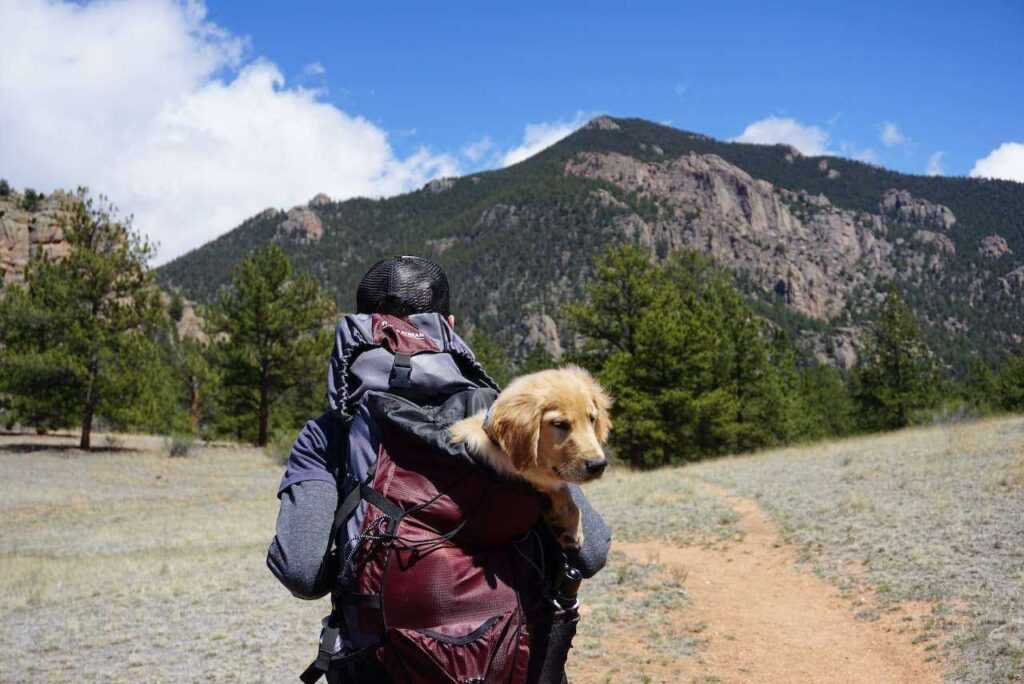
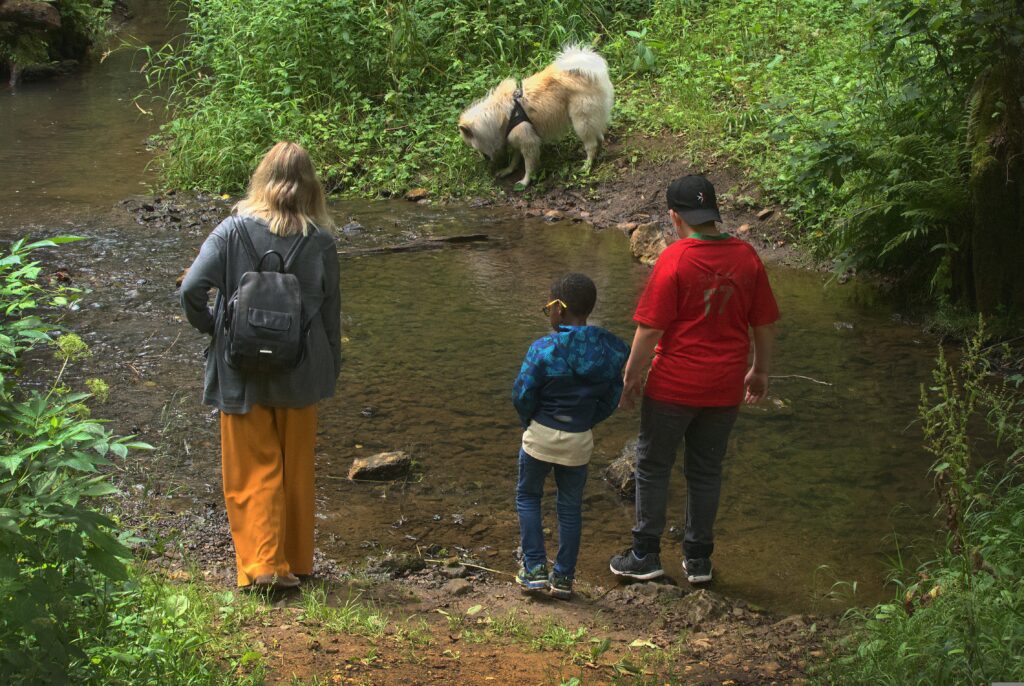
Outdoor adventures with dogs produce something no indoor enrichment protocol can replicate: the full activation of a dog’s evolutionary sensory design in the environment it was built for. The olfactory richness of a forest trail, the physical challenge of varied terrain, the exposure to weather, wildlife scent, and open space engage cognitive, physical, and social dimensions of canine wellbeing simultaneously. The result, documented consistently in canine behavioral research, is a measurably calmer, more balanced, more contented dog.
But outdoor adventures with dogs are not simply regular walks with better scenery. They introduce genuine risks: paw pad damage on rocky terrain, wildlife encounters, toxic plant exposure, dehydration, hyperthermia, and the very real consequences of a dog who has not been trained for trail conditions pulling their owner down a mountain slope. Preparation is what separates transformative outdoor experiences from preventable emergencies, and preparation begins long before you load the car.
This guide covers the complete framework for outdoor adventures with dogs in 2026: a step-by-step protocol for how to train a dog for hiking, the full system of dog hiking paw protection, the best eco-friendly dog camping gear, how to find dog friendly camping 2026, and the definitive dog camping checklist that ensures nothing critical is left behind.
🛑 Critical Outdoor Safety Warnings Before You Read Further
- Know your dog’s physical limits before any outdoor adventure. Brachycephalic breeds (French Bulldogs, Pugs, English Bulldogs) have severely compromised thermoregulation and airway function that make strenuous hiking genuinely dangerous. Consult your vet before any multi-mile trail excursion with a flat-faced breed.
- Dogs can overheat and die faster than humans in high temperatures. A dog’s primary cooling mechanism is panting, which is significantly less efficient than sweating. Hyperthermia can develop in minutes on hot exposed trails.
- All dogs must be kept on leash on designated leash-required trails. Off-leash dogs are one of the leading causes of wildlife disturbance and hiker injury in US national parks and protected wilderness areas.
- Check your destination’s specific dog policies before any trip. Many National Park Service areas have highly restrictive dog policies; dogs are permitted on only 20% of NPS trails nationwide.
- If your dog shows any of these signs on a trail, stop immediately and seek emergency veterinary care: excessive panting that does not resolve with rest and water, bright red gums, collapse, inability to stand, or unresponsive behavior.
Table of contents
- The Case for Outdoor Adventures With Dogs
- Outdoor Adventures With Dogs: How to Train a Dog for Hiking
- Step-by-Step: How to Train a Dog for Hiking
- Outdoor Adventures With Dogs: Dog Hiking Paw Protection
- The Three-Layer Dog Hiking Paw Protection System
- Checking Paws During Outdoor Adventures With Dogs
- Outdoor Adventures With Dogs: Eco-Friendly Dog Camping Gear
- The Best Eco-Friendly Dog Camping Gear for 2026
- Sustainable Dog Pack Systems
- Outdoor Adventures With Dogs: Dog Friendly Camping 2026
- Finding Dog Friendly Camping 2026 Across the US
- Best Platforms for Finding Dog Friendly Camping 2026
- 2026 Dog-Friendly Destination Highlights
- Outdoor Adventures With Dogs: Dog Camping Checklist
- The Complete Dog Camping Checklist
- Outdoor Adventures With Dogs: Leave No Trace Principles
- When to Postpone Outdoor Adventures With Dogs
- Frequently Asked Questions About Outdoor Adventures With Dogs
The Case for Outdoor Adventures With Dogs
Outdoor Adventures With Dogs: Care & Wellness Guide
Providing optimal care for outdoor adventures with dogs relies on creating a safe home environment, establishing predictable daily routines, and supporting natural instincts. Balanced nutrition, engaging physical activity, and regular preventative checkups ensure long-term health and vitality.
| Key Care Dimension | Recommended Standard | Primary Benefit | Management Best Practice |
|---|---|---|---|
| Preventative Veterinary Care | Annual or biannual clinical checkups | Early detection of underlying disease | Maintain up-to-date vaccine and wellness records |
| Species-Appropriate Diet | Formulated to life stage and activity level | Optimal muscle tone and metabolic balance | Measure exact daily feeding portions consistently |
| Environmental Enrichment | Daily mental exercise and physical activity | Prevents boredom and destructive behaviors | Rotate interactive toys and training games weekly |
| Emergency Preparedness | Dedicated pet emergency fund or insurance policy | Guarantees immediate medical care access | Keep 24-hour ER clinic contact readily accessible |
Outdoor adventures with dogs are supported by a growing body of animal behavior and veterinary wellness research that positions natural environment access as one of the most complete enrichment modalities available to domestic dogs. According to the American Kennel Club’s activity and enrichment guidance, dogs who engage in regular hiking and trail walking alongside their owners show improved cardiovascular health, reduced stress-related behavioral indicators, and stronger human-dog social bonds compared to dogs whose exercise is limited to on-leash urban walking.
The American Hiking Society has documented the parallel human health benefits: humans who hike with dogs show longer average trail durations, more frequent hiking frequency, and higher self-reported wellbeing scores than solo hikers. The bond functions bidirectionally. Your dog motivates you to go further and more often, and the shared physical challenge deepens the attachment relationship in ways that structured training cannot.
Outdoor Adventures With Dogs: How to Train a Dog for Hiking
Why Training Is the Foundation of Outdoor Adventures With Dogs
How to train a dog for hiking is the most safety-critical investment you can make before any trail experience. A dog who pulls constantly on leash exhausts both of you within the first mile and introduces a fall risk on narrow, uneven terrain. A dog who cannot be reliably recalled will ignore the “leave it” command when discovering a rattlesnake den. A dog who has not built physical fitness through progressive conditioning will be unimpressive from muscle soreness for days after their first demanding trail.
According to REI Co-op’s comprehensive hiking with dogs guide, the leading outdoor equipment authority, the single biggest mistake first-time trail dog owners make is overestimating their dog’s fitness for long distances. A dog who runs happily for an hour in the backyard is not automatically prepared for a six-mile mountain trail with 1,200 feet of elevation gain. The musculoskeletal adaptation required for sustained trail work builds over weeks, not days.
Step-by-Step: How to Train a Dog for Hiking
Phase 1: Core Obedience Foundation (8–12 Weeks Before First Trail)
How to train a dog for hiking begins entirely indoors and in familiar outdoor spaces, not on the trail itself. Before any trail exposure, your dog must have reliable, food-independent performance of:
- Loose-leash walking: Not pulling in any direction under moderate distraction. On a narrow trail with a steep drop-off, a lunging dog is a genuine injury risk for both of you.
- Reliable recall: Coming to you immediately when called, even when distracted by wildlife, other hikers, or exciting smells. This is the single most important how to train a dog for hiking skill because it is the skill that prevents tragedies.
- “Leave it” on command: Redirecting attention away from wildlife, carcasses, toxic plants, or other trail hazards before contact is made.
- “Wait” at thresholds: Stopping and holding position at trail intersections, water crossings, and tight passages where traffic management is required.
The AKC’s Canine Good Citizen (CGC) program provides the benchmark standard for outdoor-ready obedience. A dog who can pass the CGC evaluation has demonstrated the foundational skills required for safe trail participation.
Phase 2: Physical Conditioning (6–8 Weeks Before First Trail)
Trail fitness requires progressive overload, the same principle that governs human athletic conditioning. As recommended by PetMD’s veterinary guidance on exercise conditioning for dogs, begin with:
- Weeks 1–2: Add 10–15 minutes to your regular daily walk, focusing on varied terrain (grass, gravel, slight inclines)
- Weeks 3–4: Introduce gentle hills and increase duration to 45–60 minutes on varied surfaces
- Weeks 5–6: Progress to genuine trail terrain at low distances (1–2 miles) on your target trail type
- Weeks 7–8: Increase trail distance by 25% per week until reaching your target trip distance
Never increase both distance and elevation gain simultaneously. Introduce one new physical variable at a time to allow musculoskeletal adaptation without injury.
Phase 3: Trail-Specific Exposure (2–4 Weeks Before First Trip)
The final how to train a dog for hiking phase prepares your dog for the specific sensory and social challenges of trail environments:
- Water crossing practice: Introduce your dog to creek and stream crossings on calm, shallow local waterways before encountering fast-moving trail crossings
- Wildlife encounter training: Practice “leave it” with high-value distractions including squirrels, birds, and unfamiliar animal scents
- Other trail users: Expose your dog to cyclists, joggers, and other dogs passing at close range while maintaining loose-leash position
- Pack acclimation: If your dog will carry a saddle pack, introduce it at home with empty bags first, then progressively loaded packs over two weeks
Outdoor Adventures With Dogs: Dog Hiking Paw Protection
Why Dog Hiking Paw Protection Is Non-Negotiable
Dog hiking paw protection is the most commonly overlooked outdoor adventures with dogs safety system. Paw pads, while impressively tough compared to bare human skin, are vulnerable to multiple trail-specific injury mechanisms: sharp rock abrasion, hot pavement and sun-heated granite, ice and salt in winter conditions, and the repetitive impact loading of long descents that can produce bruising not visible until hours after the hike.
The American Kennel Club’s hiking safety guidance identifies paw pad damage as one of the three most common veterinary presentations following multi-day backcountry dog camping trips. The challenge is that dogs do not typically signal pain until paw pad damage is already significant. They will continue to run and play on damaged pads that would have a human limping immediately.
The Three-Layer Dog Hiking Paw Protection System
Effective dog hiking paw protection combines three complementary elements:
Layer 1: Pre-Hike Paw Conditioning
The most durable form of dog hiking paw protection is naturally toughened pads built through gradual exposure to varied surfaces. Dogs who walk regularly on asphalt, gravel, and natural terrain develop thicker, more resilient pad tissue than dogs who walk exclusively on soft grass and smooth floors.
In the four to six weeks before a demanding hiking trip, progressively incorporate gravel paths, rocky surfaces, and varied terrain into daily walks. This does not replace other dog hiking paw protection measures but creates a stronger foundation for all of them.
Layer 2: Paw Balm for Dog Hiking Paw Protection
Paw balm applied before and after hikes performs two distinct functions: pre-hike application creates a protective barrier that reduces surface friction and prevents the micro-cracking that precedes blister formation; post-hike application supports tissue recovery and prevents the drying and cracking that makes damaged pads more vulnerable on the next outing.
As recommended by PetMD’s paw care guidance, look for paw balms containing natural waxes (beeswax, carnauba), vitamin E, and shea butter. Avoid products with zinc oxide or salicylic acid, which are toxic if your dog licks their paws during application.
Layer 3: Dog Boots for Dog Hiking Paw Protection
Dog boots provide the highest level of dog hiking paw protection and are essential in specific conditions:
- Rocky technical terrain: Granite, scree, and sharp volcanic rock cause rapid pad abrasion that balm alone cannot prevent
- Snow and ice: Ice crystals pack between pad tissue and cause laceration; chemical de-icers on maintained trails are toxic
- Hot pavement and sun-heated rock: Trail surface temperatures in summer can reach 60°C / 140°F, the same threshold that causes human skin burns within seconds
- Multi-day trips: Cumulative pad wear across three or more consecutive hiking days makes boots increasingly valuable from day two onward
The critical challenge with dog boots for dog hiking paw protection is acceptance. Most dogs require two to three weeks of progressive boot conditioning before they will walk naturally rather than performing the characteristic “high-step freeze” of first-time boot wearers. Introduce boots at home with positive reinforcement, exactly as you would a harness, with treats, short sessions, and gradual duration increase before any outdoor use.
Checking Paws During Outdoor Adventures With Dogs
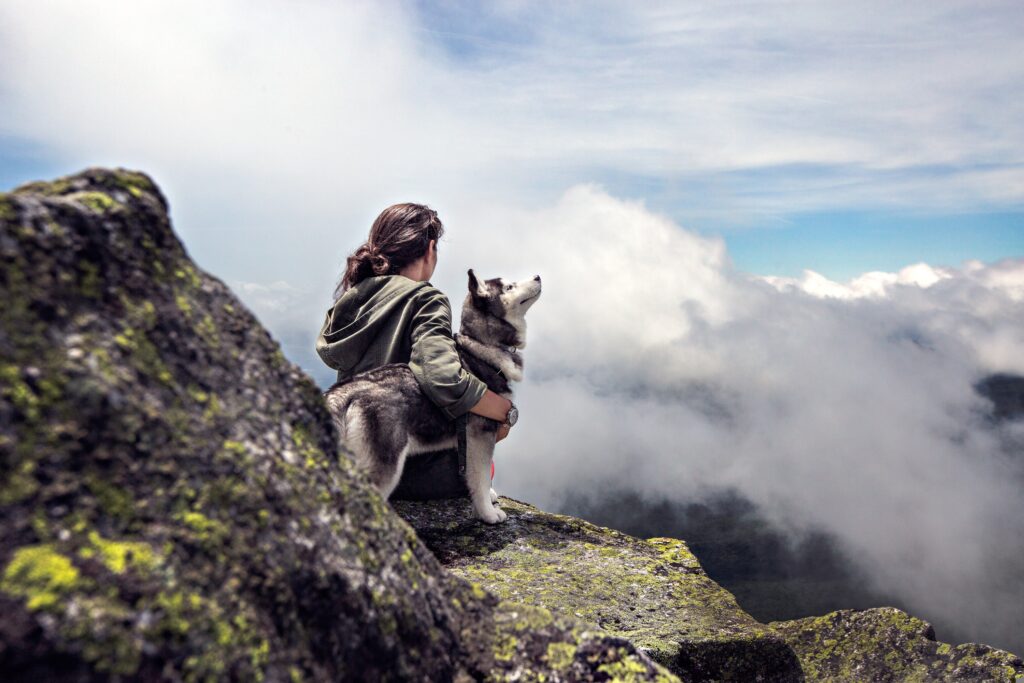
Regardless of your dog hiking paw protection system, check your dog’s paws at every significant rest stop:
- Part the fur between the toes and examine the pad surface and webbing
- Feel for heat, swelling, or tenderness response when you gently apply pressure
- Look for cuts, embedded thorns, gravel compaction, or the early redness of abrasion
- Remove any embedded material with clean tweezers and flush with saline wound wash from your first aid kit before continuing
Outdoor Adventures With Dogs: Eco-Friendly Dog Camping Gear
Why Eco-Friendly Dog Camping Gear Matters in 2026
Eco-friendly dog camping gear has moved from a niche preference to a mainstream expectation in the outdoor dog community in 2026, driven by both environmental awareness and a practical recognition that the natural spaces outdoor adventures with dogs depend on require conscious stewardship. According to Leave No Trace’s principles for traveling with dogs, dogs are among the most impactful trail visitors on sensitive ecosystems. Their waste introduces pathogens into waterways, their presence disturbs wildlife, and conventional plastic gear creates landfill accumulation at significant scale.
Eco-friendly dog camping gear makes your camping footprint smaller while often delivering superior durability, function, and weight characteristics compared to conventional gear.
The Best Eco-Friendly Dog Camping Gear for 2026
Sustainable Dog Sleeping Gear
The most impactful eco-friendly dog camping gear investment is a sustainably made dog sleeping mat or sleeping bag. Leading options in 2026:
- Recycled polyester trail mats: Made from reclaimed PET plastic bottles, these mats are insulating, waterproof-bottomed, and machine washable. REI Co-op carries multiple options with recycled content transparency labeling.
- Natural rubber dog sleeping pads: Sustainably sourced natural rubber provides excellent insulation and durability without synthetic foam compounds that require significant processing energy.
- Organic cotton canvas camping beds: For car camping where weight is not a constraint, organic canvas beds are biodegradable, non-toxic, and exceptionally durable through years of outdoor use.
Eco-Friendly Dog Waste Management
Dog waste is the single largest environmental impact of outdoor adventures with dogs. The Leave No Trace Center for Outdoor Ethics is explicit: dog waste must be packed out or properly buried at least 200 feet from water sources, trails, and campsites. Never bury in shallow holes near water.
Eco-friendly dog waste solutions for camping:
- Certified compostable waste bags: Certified to EN13432 or ASTM D6400 standards, these decompose in industrial composting conditions. Note: “biodegradable” without a certification standard is a marketing claim, not a guarantee.
- Pack-it-out waste kits: Sealed odor-blocking pouches designed for multi-day backcountry trips where no waste infrastructure exists
- WAG Bags: The Leave No Trace recommended system for backcountry human and animal waste management; certified, effective, and widely available at outdoor retailers
Eco-Friendly Food and Water Gear
- Stainless steel collapsible bowls: Infinitely recyclable, no chemical leaching, and more durable than silicone over repeated rough outdoor use
- Bamboo composite food containers: For car camping; lightweight and biodegradable at end of life
- Water filtration systems for dogs: Rather than carrying full water for multi-day trips, Platypus and Sawyer filter systems allow you to safely source water from trail streams and lakes, eliminating the weight and plastic of pre-packaged water
Sustainable Dog Pack Systems
If your dog carries their own gear on trail, an eco-friendly dog camping gear pack from brands like Ruffwear provides both function and environmental accountability. Ruffwear’s Approach Pack uses recycled fabric panels and is designed for a 10-year plus lifecycle with replacement component availability.
Outdoor Adventures With Dogs: Dog Friendly Camping 2026
Finding Dog Friendly Camping 2026 Across the US
Dog friendly camping 2026 requires more research than it should, because dog access policies vary dramatically not just between land management agencies but between individual units of the same agency. A National Forest campground may welcome dogs on all trails. An adjacent National Park may restrict dogs to developed campgrounds and paved roads only.
As documented by REI’s outdoor resources and BringFido’s campground directory, the most dog-welcoming land management categories for dog friendly camping 2026 are:
National Forests (USDA Forest Service)
National Forests are the most reliably dog-friendly public lands in the US for outdoor adventures with dogs. Dogs are generally welcome on all National Forest trails and at all dispersed and developed campsites, on leash, with some wilderness area exceptions. The USDA Forest Service land management system covers 193 million acres across 44 states, making it the largest and most accessible dog friendly camping 2026 resource in the country.
Bureau of Land Management (BLM) Lands
BLM-managed public lands are among the most flexible dog friendly camping 2026 environments, with dogs typically permitted across all trails and dispersed camping areas. Dispersed camping (camping outside designated campgrounds) is widely permitted on BLM land and requires no reservation or fee, making it the most accessible outdoor adventures with dogs option for spontaneous trips.
State Parks
State park dog friendly camping 2026 policies vary significantly by state. California State Parks, for example, restrict dogs from most trails but allow them in campgrounds and on paved paths. Texas State Parks are significantly more permissive, with dogs welcome on most trails on leash. Always check the specific state park unit’s current policies before booking.
Best Platforms for Finding Dog Friendly Camping 2026
- BringFido: The most comprehensive searchable database of dog-friendly campgrounds, parks, and outdoor accommodations in the US, filterable by pet weight limits and specific amenities
- Recreation.gov: The official federal campground reservation system; filterable by “pets allowed” for all National Park, National Forest, and BLM managed sites
- The Dyrt: Community-reviewed campground directory with a dedicated dog-friendly filter and recent user reviews noting dog-specific experience
- AllTrails: Trail database with a “dogs allowed” filter and separate “dogs must be on-leash” designations for every listed trail
2026 Dog-Friendly Destination Highlights
- Pisgah National Forest, North Carolina: Hundreds of miles of dog-welcoming trail with waterfall access, swimming holes, and campsite variety across four ranger districts
- Ouachita National Forest, Arkansas/Oklahoma: Excellent for outdoor adventures with dogs with lower crowd density than Appalachian destinations and dog-permitted backcountry access
- Los Padres National Forest, California: One of the few large wild areas accessible from Southern California where dogs are permitted on trails, in contrast to the adjacent restricted National Parks
- Hiawatha National Forest, Michigan: Upper Peninsula wilderness with lakeside camping and multi-day trail options explicitly welcoming to dogs on leash
Outdoor Adventures With Dogs: Dog Camping Checklist
The Complete Dog Camping Checklist
A thorough dog camping checklist is the logistical backbone of any outdoor adventures with dogs experience. Packing errors on a day hike are recoverable. Packing errors on a multi-day backcountry trip are emergencies.
Dog Camping Checklist: Safety and Identification
- Current ID tag with mobile number and trip destination address
- Microchip registration verified and updated with current contact information
- Vaccination records including current rabies certificate (required at many dog friendly camping 2026 sites)
- Tick and flea prevention current (applied within the correct window for your product)
- Heartworm prevention current if traveling to mosquito-active regions
- Emergency vet contact for the nearest 24-hour clinic to your destination; research before departure
- Dog-specific first aid kit (see below)
Dog Camping Checklist: First Aid Kit
- Gauze pads (multiple sizes)
- Self-adhesive bandage wrap (VetWrap or equivalent)
- Saline wound wash
- Blunt-tip scissors
- Digital rectal thermometer (normal dog temperature: 38–39.2°C / 101–102.5°F)
- Tick removal tool (not petroleum jelly or heat; use a proper hook tool)
- Benadryl (diphenhydramine; confirm your dog’s dose per weight with your vet before the trip)
- Tweezers for thorn and splinter removal
- Emergency mylar blanket (for hypothermia management)
- Activated charcoal (consult vet before use; for specific toxin ingestion scenarios)
As recommended by the American Kennel Club’s outdoor preparedness guidance, photograph your completed first aid kit contents and their uses on your phone before departure so you can reference them under stress.
Dog Camping Checklist: Food, Water, and Nutrition
- Food: Calculate daily portion plus 25% extra for increased caloric expenditure on trail. High-activity dogs may require 30–50% more calories on heavy hiking days than rest days.
- Portable water: Minimum 1 liter per medium dog per 2 hours of activity in moderate conditions. Scale up significantly in heat or high elevation.
- Collapsible water bowl (lightweight silicone or stainless)
- Water filtration system for multi-day trips (Sawyer Squeeze or Platypus filter)
- High-value treats for training reinforcement, recall rewards, and stress management on trail
- Portable food storage container (bear canister or hang-bag in bear-active areas; dog food attracts bears as effectively as human food)
Dog Camping Checklist: Gear and Equipment
- 6-foot leash (primary)
- Backup slip lead in the bottom of your pack, for equipment failure scenarios
- Dog harness (front or back-clip based on your dog’s hiking style)
- Dog sleeping mat or insulated sleeping pad
- Dog pack (if dog is carrying own gear; loaded to maximum 25% of body weight for fit adult dogs)
- Dog boots (broken in at home, packed even if not expected to be needed)
- Paw balm
- Towel (quick-dry microfiber) for post-swim and muddy paw management
- Certified compostable waste bags (more than you calculate you need)
- Headlamp with extra batteries (dogs at dark campsites get into everything)
- Long line (15–30 feet) for supervised off-leash time in appropriate areas
- Dog-safe insect repellent (human DEET products are toxic to dogs)
Dog Camping Checklist: Weather and Environment Management
- Dog rain jacket for extended wet weather camping with short-coated or lean breeds
- Dog insulating layer for cold-weather camping, particularly for breeds without double coats at elevation
- Cooling vest or bandana for hot-weather camping
- Sun protection for pale-skinned or thin-coated breeds on exposed alpine terrain
- Shade structure (ultralight tarp system) for midday breaks on exposed trail segments
Outdoor Adventures With Dogs: Leave No Trace Principles
Outdoor adventures with dogs carry specific environmental responsibilities that dog owners must understand before accessing public lands. The Leave No Trace Center for Outdoor Ethics outlines the dog-specific LNT framework:
- Always pack out waste or bury it 200 feet from water, trail, and campsites in a 6-inch cathole. Leaving waste bags on the trail “to collect on the way back” is a Leave No Trace violation that the organization explicitly addresses.
- Keep dogs on leash in all areas where required, not just for rule compliance but because off-leash dogs are documented disruptors of nesting wildlife, ground-nesting bird species, and sensitive alpine plant communities.
- Do not allow your dog to approach or chase wildlife under any circumstances. Wildlife harassment is illegal in most national parks and forests regardless of whether contact is made.
- Keep your dog out of fragile vegetation, particularly in alpine meadows and riparian zones where footfall damage persists for years.
- Respect other visitors. Not every hiker, especially in popular park settings, wants a close encounter with your dog.
When to Postpone Outdoor Adventures With Dogs
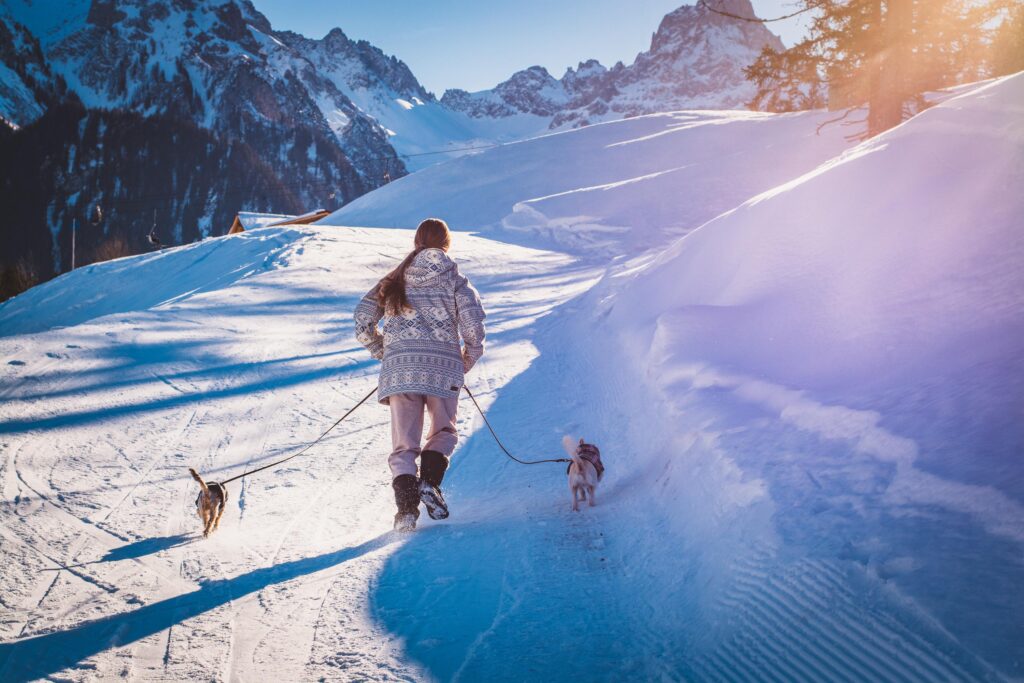
Not every planned outdoor adventures with dogs trip should proceed as scheduled.
🚨 Do Not Hike or Camp; Seek Emergency Vet Care If:
- Your dog shows excessive panting that does not resolve with rest and shade, red or pale gums, drooling, or collapse (these are heatstroke indicators requiring immediate veterinary intervention)
- Your dog is limping severely, non-weight-bearing, or you can see an open wound, embedded object, or suspected broken bone
- Your dog has ingested a known toxin, mushroom, or plant material and is showing vomiting, excessive drooling, tremors, or behavioral changes
⏰ Delay the Trip If:
- Your dog’s veterinary health is anything less than confirmed current within the past 12 months
- Temperatures at the destination exceed 27°C / 80°F for breeds with flat faces, heavy coats, or known cardiac or respiratory conditions
- Your dog has not completed the basic obedience and physical conditioning phases described in the how to train a dog for hiking section
👀 Modify Plans and Monitor Closely If:
- Weather changes unexpectedly (have a clear turnaround protocol established before departure based on temperature and precipitation thresholds)
- Your dog shows unusual fatigue on the first day of a multi-day trip (reduce the following day’s planned distance by 50% and assess)
Frequently Asked Questions About Outdoor Adventures With Dogs
Begin the how to train a dog for hiking progressive conditioning program 6–8 weeks before your target trail experience. Start with 15-minute extensions to regular walks on varied surfaces, then graduate to gentle hills, then short trail segments. Never increase both distance and elevation in the same training week. A vet fitness check before beginning any conditioning program is the best first step for dogs over seven years or with any prior orthopedic history.
Use BringFido’s campground directory for the most comprehensive searchable database. For federal lands, Recreation.gov filters by pets allowed across all National Park, Forest, and BLM sites. The most reliably dog-friendly public lands in the US for dog friendly camping 2026 are National Forests and BLM dispersed camping areas, which generally welcome dogs on all trails with far fewer restrictions than National Parks.
A complete dog hiking paw protection system uses three layers: progressive pre-hike surface conditioning to build natural pad toughness, paw balm applied before and after every hike, and dog boots for technical rocky terrain, hot surfaces, snow, or multi-day trips. Check paws at every rest stop regardless of boot use. The AKC recommends paw pad inspection as a mandatory part of every post-hike routine.
🐾 Related Resources & Interactive Tools in This Guide:
- Interactive Calculator: Pet Age in Human Years Calculator — Convert your pet chronological age to accurate biological human years.
- Clinical Resource: 13 Ways to Keep Your Pup Happy on Rainy Days
- Behavior & Training Guide: Healthy Paws: 10 Pawsome Ways to Keep Your Pup’s Feet Fit
- Related Expert Guide: Charlotte Dog Club: Unleash the Epic Fun! 7 Unmissable Events in 2026
Growth & Immunization Tracking: To predict your puppy’s adult weight based on current breed trajectory, use our interactive Puppy Growth Calculator. For core vaccine timelines and veterinary cost planning, refer to the Puppy Vaccination Schedule Tool.
📚 Related Topic Cluster Guides & Veterinary Tools
Explore our complete Pet Lifestyle & Living Hub for comprehensive guides, veterinary diagnostic checklists, and daily care protocols.
- Pet Zoomies: Understanding, Benefits, Downsides, Avoidance, and Management
- Pets and Human Health: 6 Incredible Scientific Benefits for Your Well-being
- Paws and Insurance policies: Navigating the World of Pet Insurance with Confidence
- Why Has My Dog Stopped Playing With Toys: 2026 Guide
- Interactive Tool: Pet Age to Human Years Conversion Calculator