A guinea pig that runs into its hide whenever you approach isn’t necessarily unfriendly. Guinea pigs are prey animals, so sudden movements, unfamiliar voices and hands reaching from above can make them feel threatened.
The good news is that many nervous guinea pigs can learn to feel more comfortable around people.
To get a scared guinea pig to trust you, begin by sitting quietly near its enclosure, speaking softly and offering favourite vegetables without forcing contact. Once your guinea pig approaches willingly, introduce gentle hand-feeding and brief, supported handling.
The key is to let your guinea pig feel safe and in control. Some become confident within a few weeks, while others need considerably longer. Even a guinea pig that trusts you may still dislike being picked up.
This guide explains how to build trust step by step, understand guinea pig sounds, introduce lap time safely and recognise when your pet needs more space.
Table of contents
- Why is my guinea pig scared of me?
- Before you begin: make your guinea pig feel safe
- How to get a scared guinea pig to trust you: 6 steps
- How to do lap time with a scared guinea pig
- Signs your guinea pig is happy and trusts you
- Understanding guinea pig sounds and body language
- How long does it take for a guinea pig to like you?
- How to bond two male guinea pigs safely
- Common mistakes when trying to earn a guinea pig’s trust
- When a scared guinea pig needs veterinary help
- Frequently asked questions
- The best way to earn your guinea pig’s trust
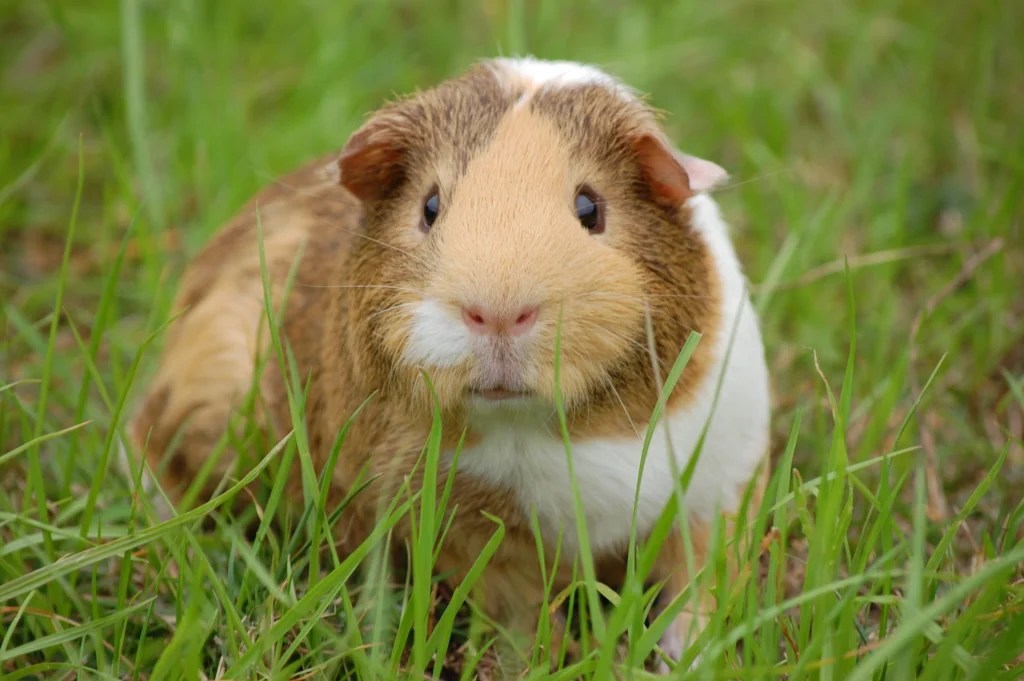
Why is my guinea pig scared of me?
Guinea pigs are naturally cautious animals. In the wild, they are vulnerable to predators, so running towards shelter is an important survival response.
Your guinea pig doesn’t automatically understand that your hand is safe.
A newly adopted guinea pig may freeze when you enter the room, sprint into a tunnel or remain hidden until the area becomes quiet.
This behaviour can be more noticeable when the animal has recently changed homes, has experienced rough handling or has not had much positive contact with people.
Other possible influences include:
- Loud noises and sudden movement.
- Approaching from directly above.
- Being chased or cornered.
- Having too few hiding places.
- Unfamiliar people or pets.
- Being repeatedly lifted against its wishes.
- Pain, illness or other physical discomfort.
According to the RSPCA’s guinea pig behaviour guidance, guinea pigs need hiding places, opportunities for normal social behaviour and gentle interaction without punishment.
A scared guinea pig needs predictable experiences that gradually show it you are not a threat.
Before you begin: make your guinea pig feel safe
Trust building works better when the animal’s living environment supports its natural behaviour.
A guinea pig cannot relax properly if it feels constantly exposed, lacks suitable shelter or must compete for food and hiding spaces.
The world of pet ownership is so much richer, more diverse, and more wonderfully surprising than most people ever stop to explore. Discover the incredible diversity of different types of pets and find out which remarkable animal from the familiar to the fascinatingly unexpected might just be the perfect companion for your unique lifestyle, personality, and home.
Provide enough hiding places
Offer enclosed shelters, tunnels and covered resting areas.
The RSPCA recommends providing more hiding places than there are guinea pigs, so they can retreat without competing for the same shelter.
Choose hides with suitable entrances and enough space for the animal to turn comfortably.
Avoid repeatedly lifting a shelter to reach a frightened guinea pig. Its hiding place should remain somewhere it can retreat without being chased.
Keep the surroundings predictable
Place the enclosure in a suitable, well-ventilated environment away from constant loud noise, excessive heat and stressful contact with other household animals.
Maintain a reasonably consistent feeding and cleaning routine.
Approach calmly and speak before entering the guinea pigs’ immediate space.
Provide guinea pig companionship
Human attention does not replace companionship from another compatible guinea pig.
Guinea pigs are social animals and should normally live with at least one suitable guinea pig companion.
If your guinea pig lives alone, seek advice from a reputable rescue or guinea pig-experienced welfare professional about finding a compatible partner.
Do not introduce unfamiliar guinea pigs directly into the same enclosure without an appropriate introduction process.
Keep food and water available
Trust-building treats should never replace normal nutrition.
Provide continuous access to suitable hay and fresh water, along with an appropriate guinea pig diet containing adequate vitamin C.
Use small portions of suitable vegetables as rewards rather than withholding food to encourage interaction.
The PDSA’s guinea pig care guide explains their housing, dietary and companionship requirements.
How to get a scared guinea pig to trust you: 6 steps
Step 1: Spend quiet time beside the enclosure
Start by allowing your guinea pig to become familiar with your presence.
Sit beside the enclosure for a short period while the guinea pig is awake.
You can speak softly, read quietly or simply remain nearby.
Avoid staring continuously into the hide or moving your hand towards the animal every time it appears.
The first goal is not physical contact.
It is for the guinea pig to become comfortable enough to continue normal activities while you are present.
Signs of progress: Your guinea pig begins moving around, investigating hay or approaching the edge of its shelter while you sit nearby.
When to slow down: It remains frozen, repeatedly flees or appears too frightened to investigate its surroundings.
Do not interpret a completely motionless animal as relaxed simply because it is quiet.
Step 2: Introduce hand-feeding
Once your guinea pig is comfortable with your presence, begin offering small pieces of suitable food.
Fresh coriander or parsley stems may work well for guinea pigs that already tolerate them in their diet.
Long stems can be helpful initially because they allow some distance between your fingers and the guinea pig.
Wash the vegetables and avoid introducing large quantities of unfamiliar foods suddenly.
Hold the food near the animal at a comfortable height and remain still.
Let your guinea pig decide whether to approach.
If it stretches forward, takes the food and retreats to its hide, that is still useful progress.
Don’t follow it into the shelter or block its escape.
Over repeated sessions, you can gradually shorten the distance between your hand and the guinea pig.
Signs of progress: It approaches voluntarily and takes food without immediately freezing or panicking.
Common mistake: Moving your hand towards the guinea pig as soon as it shows curiosity.
Step 3: Encourage voluntary contact
When your guinea pig approaches readily for food, offer your hand at its level and allow it to investigate.
Keep your hand stationary.
Your guinea pig may sniff your fingers, touch them briefly or place its front paws against your hand.
Do not immediately close your fingers around it.
The aim is for contact to remain predictable and optional.
If your guinea pig moves away, allow it to leave.
Over time, you may introduce a gentle stroke around the head or shoulders if the animal appears comfortable.
Not every guinea pig enjoys being stroked on the nose, face or back. Watch its response rather than assuming one particular petting technique is universally soothing.
If it stiffens, raises its head sharply, chatters its teeth or moves away, stop.
Step 4: Introduce safe fleece lap time
Lap time can help a guinea pig become familiar with gentle human contact, but it must be introduced carefully.
A frightened guinea pig may sit completely still because it is scared, not because it enjoys cuddling.
Begin with brief, calm sessions and adjust the length according to the animal’s behaviour.
Prepare a safe place
Sit on the floor or another low, secure surface.
Place a clean fleece lap pad or soft towel across your legs. This provides a comfortable surface, catches occasional urine and helps prevent the guinea pig from slipping.
Keep a suitable hide or fleece tunnel available so the animal has an option to retreat.
A fleece cover may help some guinea pigs feel more secure, but make sure there is adequate ventilation and no risk of overheating.
Lift the guinea pig correctly
The PDSA’s handling advice recommends supporting the chest and hindquarters, keeping the guinea pig upright and close to your body.
Approach from a low position where possible.
Place one hand under or around the chest and the other beneath the hindquarters.
Support the whole body and avoid squeezing.
Never lift a guinea pig by its legs, ears or loose skin.
If your guinea pig panics whenever you attempt to pick it up, encourage it into a suitable tunnel or carrier and transfer it carefully instead of repeatedly chasing it.
Keep the first sessions short
A few calm minutes may be enough at first.
There is no requirement to continue for 10–15 minutes if your guinea pig is frightened.
Offer a familiar suitable vegetable, speak softly and allow it time to investigate.
Avoid forcing the guinea pig to remain exposed on your lap without somewhere to shelter.
Know when to finish
A guinea pig that remains tense, repeatedly struggles, chatters its teeth or tries desperately to escape may not be ready for lap time.
Return it safely to its enclosure or familiar area.
You can practise ground-level interactions for longer before trying again.
A successful session is one that remains calm and does not leave the animal frightened.
Step 5: Build confidence through floor time
Once your guinea pig becomes more comfortable, give it opportunities to explore a safe indoor play area.
Floor time encourages normal movement and can make interaction feel less restrictive than being held.
Choose an escape-proof area with a non-slip floor.
Provide:
- Familiar hiding places.
- Tunnels and cardboard shelters.
- Fresh hay and water.
- Safe foraging opportunities.
- Enough room for normal movement.
- Suitable enrichment.
Keep electrical cables, houseplants and other household hazards out of reach.
Keep dogs and cats away from the play area.
Sit quietly nearby rather than following your guinea pig around.
You can place a small amount of suitable food beside you and allow the guinea pig to approach when it feels comfortable.
Some guinea pigs will eventually walk near your feet, investigate your hands or climb onto a low fleece-covered lap voluntarily.
These are encouraging signs.
However, don’t corner the guinea pig when floor time ends.
A familiar tunnel or carrier can provide a calmer way to return it to the enclosure.
Step 6: Build trust through a consistent routine
Trust does not develop from one long cuddling session.
It grows through repeated experiences in which your guinea pig can predict what will happen.
Try to keep interactions consistent.
Approach calmly, offer suitable food, allow voluntary investigation and respect signals that the guinea pig wants space.
Continue providing enrichment and opportunities for normal social behaviour.
A guinea pig may become comfortable with one person before it accepts another. Introduce new people gradually.
Children should be supervised, and younger children are usually better involved in quiet hand-feeding and ground-level interaction than carrying guinea pigs.
Over time, your guinea pig may associate your approach with feeding, gentle interaction and safety.
That is meaningful progress even if it never enjoys prolonged cuddling.
How to do lap time with a scared guinea pig
Lap time deserves special attention because people sometimes confuse tolerance with enjoyment.
A guinea pig that sits motionless under a fleece blanket may be frightened.
To make lap time safer:
- Choose a quiet moment when the guinea pig is awake.
- Prepare a low, secure position with a fleece towel or lap pad.
- Transfer the guinea pig gently, supporting its body.
- Provide a familiar cover or hide without restricting breathing.
- Offer a small piece of suitable food.
- Watch the animal’s posture, movement and vocalisations.
- End the interaction calmly if the guinea pig appears distressed.
Avoid restraining your guinea pig simply to make it stay on your lap.
The aim is to help it feel comfortable with necessary handling, not require it to remain still for affection.
If a guinea pig consistently prefers being stroked or fed at floor level, that preference is worth respecting.
Signs your guinea pig is happy and trusts you
You cannot prove that a guinea pig feels affection in exactly the same way a person does.
However, certain behaviours can suggest that it feels increasingly comfortable around you.
Approaching voluntarily
A guinea pig that moves towards you without being chased or cornered may be developing a positive association with your presence.
Eating comfortably nearby
Eating hay or vegetables while you sit nearby can indicate that the animal is becoming more comfortable with the situation.
A frightened guinea pig may also eat, however, so consider posture and willingness to move.
Exploring during floor time
A guinea pig that investigates tunnels, forages and moves around normally while you are present is showing useful confidence in its surroundings.
Popcorning
Popcorning describes a sudden jump, twist or bouncing movement.
It is commonly associated with excitement, particularly in young guinea pigs.
However, popcorning during floor time does not prove that the guinea pig has formed a complete bond with a particular person.
Choosing to interact
One of the clearest practical signs of developing trust is voluntary interaction.
If your guinea pig approaches, accepts a suitable treat and can freely move away again, it has some control over the experience.
That is a stronger indicator of comfort than remaining motionless while being held.
The RSPCA’s behaviour guidance recommends interpreting behaviour according to the individual animal and its circumstances.
Understanding guinea pig sounds and body language
Guinea pigs communicate through vocalisations, posture, scent and movement.
The same sound can mean different things in different situations.
A useful approach is to notice what happened immediately before the sound, what the guinea pig’s body is doing and how its companions respond.
Guinea pig vocalisation guide
| Sound or behaviour | Common interpretation | How to respond |
|---|---|---|
| Wheeking | Often associated with food anticipation or excitement; may also involve social contact | Check context and normal feeding routine |
| Low rumbling with swaying | Often courtship or dominance communication | Observe interactions and tension |
| Soft, relaxed purring | May accompany calm interaction | Continue only while the guinea pig remains comfortable |
| Short, tense purr | May indicate annoyance or discomfort | Stop unwanted contact |
| Teeth chattering | Warning, frustration or social tension | Give space and assess the situation |
| Chutting | Often heard during relaxed exploration | Observe without interrupting |
| Sudden freezing | Fear or heightened vigilance | Reduce disturbance |
| Popcorning | Commonly excitement | Allow safe movement |
Source: Woodgreen Pets Charity — Guinea Pig Sounds.
Why is my guinea pig wheeking?
Wheeking is a high-pitched call often heard around feeding time.
Some guinea pigs begin wheeking when they hear a food packet, refrigerator door or familiar footsteps.
It may indicate anticipation, but the sound can also occur in other social situations.
Do not automatically respond with extra high-calorie treats every time the guinea pig wheeks.
Maintain a suitable feeding routine, provide continuous access to hay and consider whether your pet is requesting attention, anticipating normal food or communicating with companions.
Why is my guinea pig making a rumbling sound?
A low rumble is commonly associated with courtship or dominance behaviour.
It may occur alongside a slow, swaying walk sometimes called rumble-strutting.
A male may rumble around another male or a female. Females can also make rumbling sounds.
The behaviour does not necessarily mean a fight is about to happen.
Watch for whether both animals can move freely, access resources and retreat without being persistently chased or threatened.
If rumbling occurs during petting and the guinea pig stiffens or attempts to move away, stop touching it.
What does teeth chattering mean?
Rapid teeth chattering often signals that a guinea pig wants another animal or person to keep their distance.
You may see stiff posture, raised head position or other signs of tension.
If your guinea pig chatters while being handled, reduce contact and return it safely to a secure position.
If two guinea pigs chatter at each other, observe the wider interaction.
Mild social negotiation does not always require separation, but escalating aggression, repeated biting or actual fighting needs immediate safe intervention.
Do not place bare hands between fighting guinea pigs. Use a suitable solid barrier, following appropriate welfare guidance.
What about squealing?
A loud, sharp squeal may indicate fear, pain or significant distress, depending on the context.
If a guinea pig cries out unexpectedly during handling, stop and check whether it may have been injured.
Repeated pain-like vocalisations, changes in movement or signs of illness require veterinary advice.
How long does it take for a guinea pig to like you?
There is no guaranteed timeline.
Some guinea pigs become comfortable with hand-feeding after a few days. Others take several weeks or longer before they willingly approach.
Age, temperament, early experiences, housing, companionship and the frequency of calm interactions can all influence progress.
The goal should be observable confidence, not completing a particular training stage by a specific date.
| Stage | Encouraging progress | Avoid |
|---|---|---|
| Cage-side familiarity | Moving and eating normally while you’re nearby | Reaching into hides |
| Hand-feeding | Voluntary approach for familiar food | Chasing or blocking escape |
| Gentle contact | Investigating or accepting brief touch without obvious distress | Forced stroking |
| Lap time | Settling or exploring while safely supported | Long restraint despite fear |
| Floor time | Voluntary investigation and approach | Cornering during collection |
Progress may not be linear.
A guinea pig that has become comfortable with feeding may still dislike being lifted. That does not mean trust has failed.
How to bond two male guinea pigs safely
Bonding two male guinea pigs is different from building trust between a guinea pig and its owner.
Male guinea pigs, often called boars, can sometimes form stable and friendly pairs.
However, compatibility depends on personality, age, previous social experience, available space and the quality of the introduction.
The Blue Cross guinea pig introduction guide explains that compatible male pairs can live successfully together, including unrelated males.
Step 1: Confirm each guinea pig’s sex and health
Before introducing unfamiliar guinea pigs, confirm their sex and seek veterinary advice if uncertain.
Check for signs of illness, pain or parasites and discuss any required health precautions with a guinea pig-experienced vet or rescue.
Don’t introduce a visibly unwell guinea pig to a new companion.
Step 2: Provide enough space and resources
Two guinea pigs need sufficient room to move away from each other.
Prepare suitable hiding places, feeding areas and water access.
Avoid arrangements where one animal can trap the other inside a narrow, single-entry hide.
The aim is to reduce competition and allow retreat.
Step 3: Begin gradual familiarisation
Blue Cross recommends allowing guinea pigs to become familiar with each other’s scent and presence before direct contact.
Depending on the individuals and the setup, this can involve exchanging suitable items or supervised interaction through a secure barrier.
Do not place a newcomer directly into another guinea pig’s established enclosure.
Step 4: Introduce them in neutral space
Choose a secure area that neither guinea pig already regards as its territory.
Provide hay, scattered suitable food and open-ended hiding opportunities.
Supervise the interaction carefully.
Normal investigation may include sniffing, rumbling, following and some dominance-related behaviour.
Do not assume every rumble means the introduction has failed.
Step 5: Recognise escalating aggression
Persistent aggressive chasing, repeated lunging, biting, injuries or a fight are warning signs.
Have a solid board or other suitable barrier ready to separate the animals safely.
Do not attempt to break up a fight using your bare hands.
If serious aggression occurs, seek advice from an experienced guinea pig rescue or behaviour professional before continuing introductions.
Step 6: Prepare their shared home
Once interactions are consistently compatible, prepare a clean, sufficiently spacious living area with multiple suitable resources.
Continue monitoring access to hay, water, resting places and hiding spots.
Neutering is not a guaranteed solution for incompatibility between two males.
Blue Cross notes that personality and compatibility are more important than simply assuming hormonal behaviour will disappear after neutering.
Common mistakes when trying to earn a guinea pig’s trust
Pulling a frightened guinea pig out of its hide
This removes the animal’s ability to retreat.
Use calm, voluntary interaction instead, except when necessary for health or safety.
Chasing during floor time
Chasing reinforces the impression that a person is a threat.
Encourage the guinea pig into a familiar tunnel or carrier for transfers.
Treating freezing as affection
A stiff, motionless guinea pig may be frightened.
Look for relaxed movement and voluntary approach rather than stillness alone.
Holding the guinea pig too high
Guinea pigs can be injured if they jump or fall.
Handle them close to the floor and always support their hindquarters.
Giving too many food rewards
Vegetables used in training should form part of an appropriate diet.
Avoid using excessive fruit or other sugary foods to encourage interaction.
Forcing cuddles
Some guinea pigs prefer being stroked or fed at floor level.
Trust does not require prolonged lap time.
Ignoring companionship needs
Human bonding cannot replace the social needs of a guinea pig that would normally benefit from a compatible companion.
Assuming every behaviour problem is fear
Sudden withdrawal, reduced eating, pain-like vocalisations or reluctance to move may indicate illness.
Arrange veterinary assessment rather than increasing handling sessions.
When a scared guinea pig needs veterinary help
Fear and hiding are common behaviours, but a sudden or significant change should not automatically be treated as a trust problem.
Seek prompt veterinary advice if your guinea pig develops:
- Reduced appetite or stops eating.
- Markedly fewer droppings.
- Difficulty breathing.
- Persistent hunched posture.
- Unusual weakness or reluctance to move.
- Signs of pain or injury.
- Sudden defensive behaviour accompanied by physical changes.
A guinea pig that stops eating or shows breathing difficulty may need urgent treatment.
Do not force-feed or administer human medicines without veterinary direction.
For general health and care information, see the PDSA guinea pig guide.
Frequently asked questions
Running away can remain an instinctive response, especially when someone reaches from above. A guinea pig may willingly approach you for food yet still dislike being lifted.
Not necessarily. Focus on voluntary, calm interaction and necessary handling practice. Short, comfortable experiences are preferable to forced daily cuddling.
Yes. Adult guinea pigs can become more comfortable with predictable, gentle handling. Their previous experiences may affect the pace of progress.
Look for relaxed movement, voluntary investigation and an absence of persistent attempts to escape. Eating while held is not enough by itself to prove comfort.
Teeth chattering often indicates frustration or a request for space. Stop petting and assess the animal’s posture and surroundings.
Popcorning is commonly associated with excitement, but it does not prove affection towards a specific person. Voluntary, relaxed interaction is a more useful indication of growing trust.
Yes, compatible male pairs can live successfully together. Introductions should be gradual, supervised and supported by adequate housing and resources.
Hiding is common after a move, but the guinea pig should still have opportunities to eat, drink and carry out normal activities. Persistent withdrawal or changes in appetite and droppings require closer attention and potentially veterinary advice.
The best way to earn your guinea pig’s trust
Begin by making your guinea pig’s home feel secure. Sit quietly nearby, offer suitable food without forcing contact and gradually introduce gentle handling only when the animal is comfortable.
Watch the whole body, not just one sound or movement.
A guinea pig that approaches voluntarily, eats calmly and explores with you nearby is making useful progress. It does not need to enjoy being carried or cuddled to have a positive relationship with you.
Respecting its choices, maintaining a predictable routine and meeting its social and welfare needs are the foundations of lasting trust.