The information and calculator data provided in this article are aggregated from peer-reviewed veterinary literature, including the Merck Veterinary Manual and AVMA guidelines. This content is for educational and informational purposes only and is not a substitute for professional veterinary advice, diagnosis, or treatment. Always consult with a licensed veterinarian before administering any medication or altering your pet’s health regimen.
Performance horse hoof care is the foundation of everything your horse does. Every stride taken under saddle, every jump landed, every collected movement performed begins and ends with the hoof. A consistent, well-managed performance horse hoof care program built around qualified farriery, daily observation, appropriate supplementation, and sound footing management determines not just whether your horse stays sound today but whether they stay sound across a full competitive career.
The equine hoof is a dynamic, living structure that responds to workload, nutrition, environment, and management quality in ways that are visible to any owner who knows what to look for. Hoof growth averages 6 to 10 millimeters per month, meaning every six to eight weeks an entirely new section of hoof wall has grown down from the coronary band. The quality of that growth reflects the nutritional and management inputs the horse has received during that growth cycle. Performance horse hoof care is therefore not a six-weekly task delegated entirely to a farrier. It is a daily responsibility that the farrier visit reinforces and maintains.
This guide covers every dimension of performance hoof care: farrier visit frequency, the barefoot versus shod debate, identifying poor farriery, the best hoof supplements currently available, common hoof problems and how to prevent them, and the daily management practices that protect your horse’s most critical performance asset.
Table of contents
- The Anatomy That Makes Performance Horse Hoof Care Non-Negotiable
- How Often Should a Horse See a Farrier: Building the Right Schedule
- Barefoot vs Shod Horse Performance: The Evidence-Based Decision
- Signs of a Bad Farrier Trim: Protecting Your Horse’s Soundness
- How to Identify Signs of a Bad Farrier Trim Before Lameness Develops
- Signs of a Bad Farrier Trim in the Days Following the Appointment
- Best Hoof Supplements for Horses 2026: What the Research Supports
- Biotin, Methionine, and Zinc: The Foundation of Best Hoof Supplements for Horses 2026
- Selecting the Best Hoof Supplements for Horses 2026: What to Look For
- Preventing Common Horse Hoof Problems: A Proactive Management Framework
- Daily Practices for Preventing Common Horse Hoof Problems
- Preventing Common Horse Hoof Problems Through Nutritional Support
- Performance Horse Hoof Care for Specific Disciplines
- Building Your Performance Horse Hoof Care Team
- Preventing Common Horse Hoof Problems: Seasonal Adjustments
- Frequently Asked Questions About Performance Horse Hoof Care
- Your Action Plan for Performance Horse Hoof Care
The Anatomy That Makes Performance Horse Hoof Care Non-Negotiable
Performance Horse Hoof Care: Clinical Care Guidelines
Managing performance horse hoof care requires monitoring core vitals including hydration, appetite, and body temperature. If you observe persistent lethargy, sudden behavioral shifts, or signs of pain, seek prompt veterinary evaluation for accurate diagnostic testing.
| Key Care Dimension | Recommended Standard | Primary Benefit | Management Best Practice |
|---|---|---|---|
| Preventative Veterinary Care | Annual or biannual clinical checkups | Early detection of underlying disease | Maintain up-to-date vaccine and wellness records |
| Species-Appropriate Diet | Formulated to life stage and activity level | Optimal muscle tone and metabolic balance | Measure exact daily feeding portions consistently |
| Environmental Enrichment | Daily mental exercise and physical activity | Prevents boredom and destructive behaviors | Rotate interactive toys and training games weekly |
| Emergency Preparedness | Dedicated pet emergency fund or insurance policy | Guarantees immediate medical care access | Keep 24-hour ER clinic contact readily accessible |
Understanding Hoof Structure to Improve Performance Horse Hoof Care Decisions
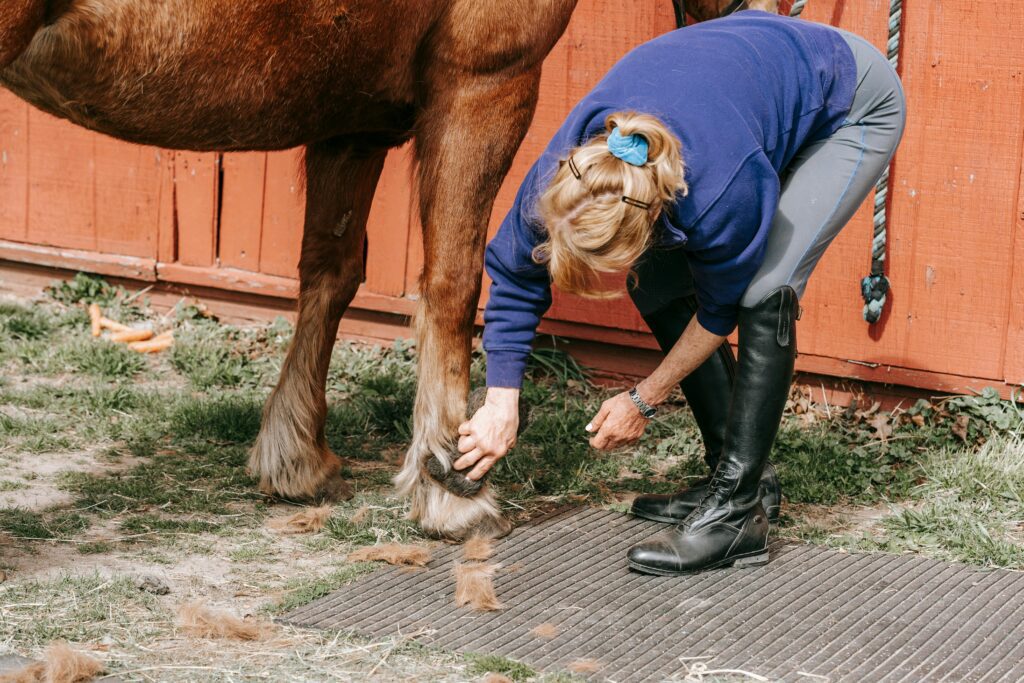
Performance horse hoof care decisions made without understanding the basic anatomy of the hoof are guesswork. Every trimming decision, shoeing choice, and supplement selection has its rationale in the structural and physiological reality of the equine foot.
The hoof capsule is the visible outer structure: the hoof wall, sole, frog, and bars. Inside the capsule sit the pedal bone (coffin bone or distal phalanx), the navicular bone, the deep digital flexor tendon, the digital cushion, and the sensitive laminae that bond the pedal bone to the inner hoof wall. The laminae are the most clinically critical structure in the hoof, and their integrity is what laminitis destroys.
According to Kentucky Equine Research’s hoof health library, the frog serves as a vascular pump, compressing with each weight-bearing step to push blood back up through the digital vessels, reducing the cardiac workload required to circulate blood through the lower limb. A contracted, atrophied frog from insufficient ground contact reduces this pumping function, contributing to compromised digital circulation and increased concussion at the hoof. This is one of several anatomical reasons why performance horse hoof care programs emphasize adequate hoof-to-ground contact and frog health alongside wall balance and trim quality.
Horses are magnificent, complex, and deeply sensitive animals and understanding how to care for them well is both an art and a lifelong commitment. Explore this ultimate, all-encompassing guide to horse care that covers everything from daily feeding and grooming to health monitoring and building the deep, trusting bond every horse and rider dreams of.
How Often Should a Horse See a Farrier: Building the Right Schedule
In Active Work
How often should a horse see a farrier is the question every new horse owner asks first and every experienced owner revisits when workload or seasons change. The standard recommended interval for most horses in active work is every six to eight weeks. This interval reflects the average rate of hoof growth (6 to 10 mm per month) and the point at which hoof imbalance, flaring, or excessive wall length begins to alter breakover mechanics and load distribution in ways that increase soft tissue strain.
The American Farrier’s Journal documents that the six to eight week standard applies across most disciplines but requires adjustment based on:
- Hoof growth rate: Fast-growing feet may need attention at five weeks; slow growers may extend comfortably to nine weeks in some cases
- Hoof quality: Horses with thin, brittle walls crack and chip faster and require more frequent maintenance
- Workload and surface: Horses working daily on hard surfaces wear shoes faster and may need reshoeing at five to six weeks
- Discipline demands: Performance disciplines with tight technical requirements (high-level dressage, eventing) tolerate less hoof imbalance than leisure trail horses and typically benefit from closer to a six-week cycle
- Individual hoof conformation: Horses with conformational challenges requiring corrective trimming often need shorter intervals to maintain therapeutic balance
Between Scheduled Visits
How often should a horse see a farrier for unscheduled visits depends entirely on what daily observation reveals. Between scheduled appointments, the following situations require immediate farrier contact:
- Any lost or shifted shoe
- A shoe that clicks, moves, or has risen at any heel or toe
- A hoof crack that has extended or deepened since the last visit
- Lameness that daily hoof picking does not explain
- A nail that appears to be working loose (clenches risen from the hoof wall surface)
Every horse owner practicing good performance horse hoof care picks all four feet daily and observes the condition of walls, sole, frog, and shoes as part of that routine. This daily contact is what allows emerging issues to be caught between farrier visits rather than discovered at the next scheduled appointment when damage has progressed.
Barefoot vs Shod Horse Performance: The Evidence-Based Decision
What the Research Says About Barefoot vs Shod Horse Performance
The barefoot vs shod horse performance debate generates more heat than almost any other topic in equine management, and the evidence suggests that neither approach is universally superior. The correct answer depends entirely on the individual horse’s hoof quality, workload, discipline, footing, and conformational requirements.
Barefoot vs shod horse performance research, reviewed by The Horse magazine’s veterinary content team, consistently shows that horses with strong, well-formed hooves working on varied natural terrain can maintain soundness and performance quality barefoot in moderate work. The natural barefoot hoof demonstrates greater sole concavity, better frog contact and digital circulation, and in some studies, more proprioceptive feedback through the foot than the shod equivalent.
However, horses in the following situations consistently benefit from appropriate shoeing:
- Working primarily on hard, abrasive surfaces such as asphalt, compacted gravel, or arena footing with high stone content
- Performance disciplines requiring specific breakover mechanics (dressage, jumping, racing)
- Horses with thin soles, flat feet, or low heels that cannot build sufficient callus to work comfortably without protection
- Horses requiring corrective or therapeutic farriery for conformational challenges or pathological conditions
- Post-injury rehabilitation where controlled loading and support require a specific shoeing configuration
Barefoot vs Shod Horse Performance in Specific Disciplines
Barefoot vs shod horse performance outcomes differ significantly across disciplines.
In endurance riding, the barefoot movement has the strongest following and the most supporting evidence. Many successful endurance horses compete barefoot or with hoof boots used only during rocky sections, and research cited by Kentucky Equine Research supports the enhanced proprioception and reduced concussive impact of the unshod hoof over long distances on variable terrain.
In dressage and show jumping, the performance demands of collection, engagement, and precise breakover mechanics typically require the precision of a well-fitted shoe. The United States Equestrian Federation (USEF) rulebooks for these disciplines reflect decades of performance science confirming that shod horses dominate at elite levels.
In Western performance disciplines including reining and cutting, aluminum or steel shoes with specific sliding or traction modifications are standard components of performance horse hoof care programs, optimizing the discipline-specific movements that bare hooves cannot reliably deliver on arena footing.
A thorough, well-executed bath does so much more than make your horse look stunning it’s an essential part of keeping their coat, skin, and overall health in peak condition. Get these practical, step-by-step DIY horse bathing tips that make every bath session smooth, enjoyable, and genuinely beneficial for your magnificent equine companion.
Signs of a Bad Farrier Trim: Protecting Your Horse’s Soundness
How to Identify Signs of a Bad Farrier Trim Before Lameness Develops
Recognizing the signs of a bad farrier trim is a critical skill for every horse owner because a poor trim, repeated over multiple cycles, produces progressive lameness, soft tissue damage, and conformational changes that are expensive and time-consuming to correct. Farriery quality varies enormously, and the consequences of substandard work accumulate silently across weeks before clinical lameness appears.
The British Horse Society (BHS) identifies the following as the most clinically significant signs of a bad farrier trim:
Mediolateral imbalance.
Viewing the hoof from behind, the coronary band should be parallel to the ground. If one side of the coronary band is noticeably higher than the other, the hoof has been trimmed unevenly, placing asymmetric loading on the medial or lateral cartilages, collateral ligaments, and the navicular apparatus.
Broken hoof-pastern axis.
Viewed from the side, the front of the hoof wall should align with the front surface of the pastern in a straight, continuous line. A hoof-pastern axis that is broken forward (toe too long, heels too low) increases deep digital flexor tendon tension and navicular bone load. A broken-back axis (heels too high, toe too short) overloads the dorsal coffin joint.
Underrun heels.
The heel tubules should grow from the coronary band at a 45 to 50 degree angle. Underrun heels grow forward rather than downward, reducing heel support and shifting load onto the navicular bone. This is one of the most common and consequential signs of a bad farrier trim in horses who have been trimmed by someone prioritizing cosmetics over biomechanics.
Excessive toe length.
A toe that has been left too long delays breakover, increases deep digital flexor tendon strain at push-off, and creates dorsal wall flaring that stresses the white line.
Nail placement damage.
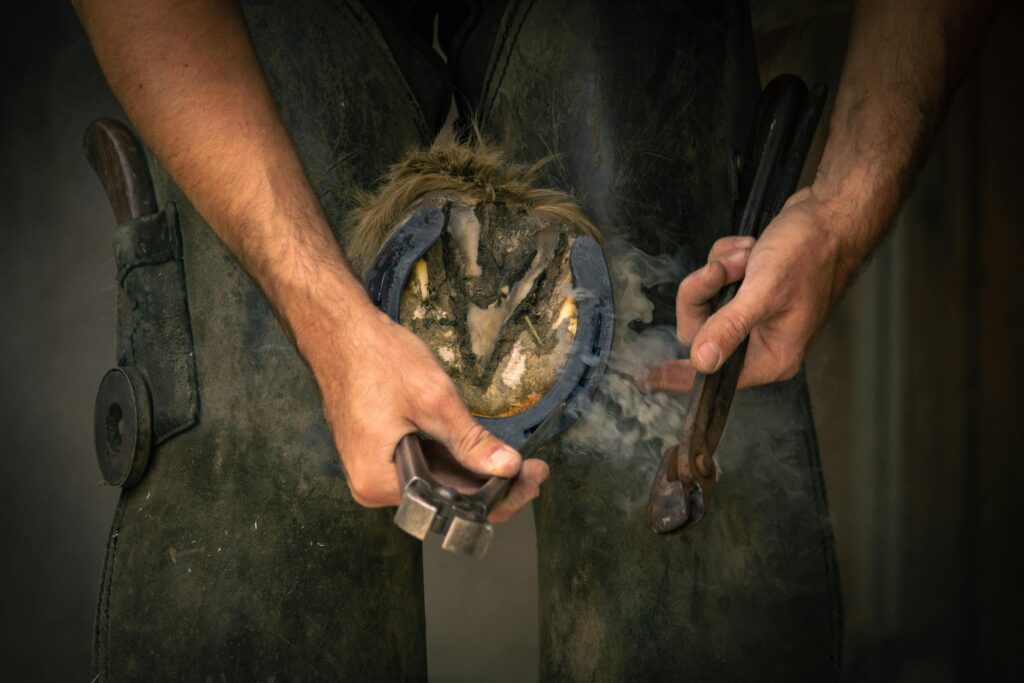
After shoeing, check all nail clenches. They should be tight to the hoof wall, evenly spaced, and located in the widest part of the wall well above the white line. Clenches that are rough, raised, or inconsistently placed indicate poor nail driving technique.
Signs of a Bad Farrier Trim in the Days Following the Appointment
Post-appointment observation is part of monitoring for signs of a bad farrier trim. A horse should move equally well or better immediately after a trim or shoeing than before. The following responses in the 24 to 72 hours after farrier work require veterinary assessment:
- New or increased lameness on any surface
- Reluctance to bear weight on a newly shod foot
- Heat and sensitivity in a hoof not previously affected
- A shod horse moving shorter in front than before shoeing (possible nail sensitivity or “hot nail”)
- Any lameness resolving immediately when a specific shoe is pulled (nail bind or pinching)
Horses can’t tell you when something is wrong which makes knowing the signs of common health problems one of the most important skills any owner can develop. Learn about the most common horse health problems, their causes, symptoms, and treatments so you can always act quickly, confidently, and decisively when your horse needs you most.
Best Hoof Supplements for Horses 2026: What the Research Supports
Biotin, Methionine, and Zinc: The Foundation of Best Hoof Supplements for Horses 2026
Best hoof supplements for horses 2026 share a core nutrient profile built around biotin, methionine, zinc, and copper, the four nutrients with the strongest peer-reviewed evidence base for improving hoof wall quality, tensile strength, and growth rate in horses with identified deficiencies.
Biotin
Biotin is the most researched equine hoof supplement nutrient. Kentucky Equine Research’s review of biotin supplementation studies confirms that supplementation at 20 mg per day in horses with poor hoof quality produces measurable improvement in hoof wall hardness and growth rate, with results visible in the new growth at the coronary band appearing within two to three months and full hoof improvement requiring six to nine months of consistent supplementation.
Biotin works by supporting the synthesis of keratin, the structural protein of the hoof wall. It does not repair existing damaged wall material. Every supplement cycle must be maintained for the full growth cycle before improvement can be fully assessed.
Methionine
Methionine is an essential sulfur-containing amino acid involved in the cross-linking of keratin proteins that gives the hoof wall its structural integrity. Horses with inadequate dietary methionine produce softer, more brittle hoof walls that chip and crack more easily. The dietary requirement is generally met by quality forage and protein sources, but horses on restricted or low-quality forage may benefit from direct supplementation.
Zinc and Copper
Zinc and copper work in concert to support keratinization and connective tissue integrity. Mad Barn’s equine mineral nutrition database documents that zinc deficiency is one of the most common mineral imbalances in horses fed primarily grass hay, and that correcting sub-optimal zinc status through targeted supplementation improves both hoof and coat quality measurably within the first hoof growth cycle.
Selecting the Best Hoof Supplements for Horses 2026: What to Look For
Best hoof supplements for horses 2026 should be selected based on a forage analysis that identifies which specific nutrients are deficient in the base diet, rather than defaulting to a broad-spectrum supplement that may deliver excess levels of nutrients already adequately supplied by forage.
Key selection criteria for best hoof supplements for horses 2026:
- Minimum 20 mg biotin per daily dose for horses with identified hoof quality issues
- Zinc to copper ratio of 3:1 to 4:1 to maintain competitive absorption balance
- Documented ingredient quality, including sourcing transparency
- Evidence from peer-reviewed equine-specific research rather than extrapolation from human or canine studies
- No excessive iron inclusion; excess dietary iron competitively inhibits zinc and copper absorption, worsening the very deficiencies the supplement is intended to correct
Well-regarded commercial formulations meeting these criteria include Farrier’s Formula (Life Data Labs), Platinum Performance Equine, and biotin-focused supplements from Equithrive and SmartPak’s SmartHoof line. Confirm with your equine nutritionist or veterinarian that any supplement chosen addresses the actual deficiencies identified in your horse’s diet before purchase.
Watching your pet pace, whimper, or shut down the moment you leave breaks every pet parent’s heart but it doesn’t have to stay that way. Discover these compassionate, proven strategies to help your pet cope with separation anxiety and give them the confidence and calm they need to feel completely safe even when you’re not around.
Preventing Common Horse Hoof Problems: A Proactive Management Framework
Daily Practices for Preventing Common Horse Hoof Problems
Preventing common horse hoof problems requires daily management consistency more than any single intervention. The hoof problems most commonly encountered in clinical practice (thrush, white line disease, cracks, bruising, abscesses) are predominantly management-related conditions that consistent daily care prevents at a far lower cost than treatment.
The American Association of Equine Practitioners (AAEP) identifies the following daily practices as the foundation of any preventing common horse hoof problems program:
Daily hoof picking
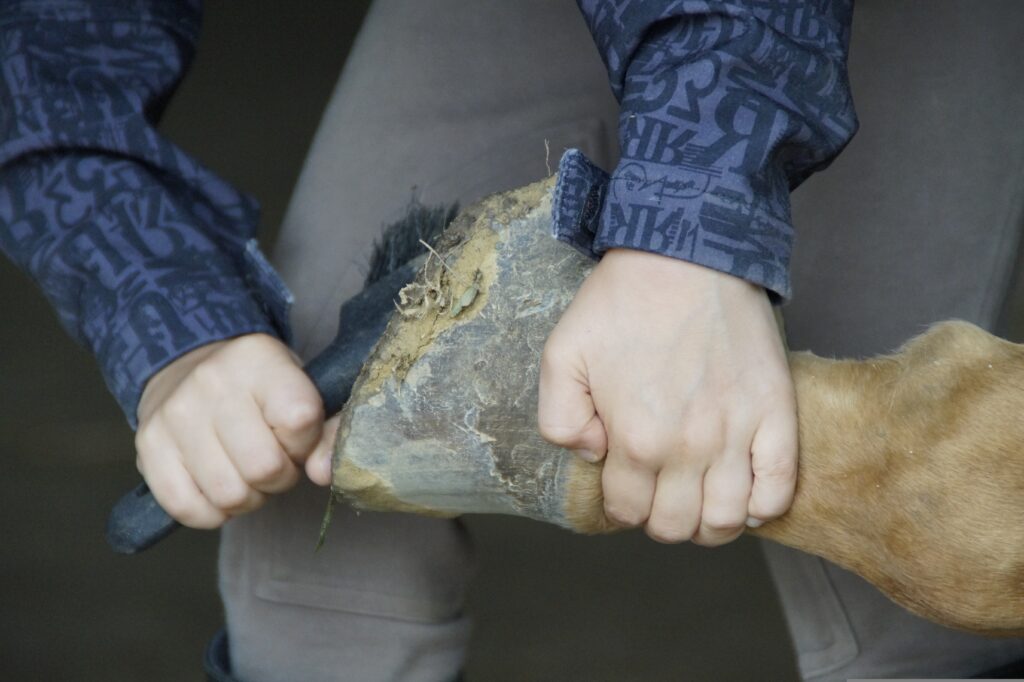
Daily hoof picking is the most impactful single habit. Removing packed manure, mud, and debris from all four feet twice daily (morning and evening) prevents the anaerobic environment that causes thrush, reduces the stone and debris accumulation that causes bruising and abscesses, and provides a daily opportunity to observe each hoof for changes in temperature, sensitivity, moisture, or structural integrity.
Footing management
Footing management has a direct and immediate relationship to preventing common horse hoof problems. Horses standing in chronic mud develop softened, susceptible hoof walls and frogs that are far more vulnerable to bacterial and fungal infection. High-traffic areas around gates, water troughs, and shelter entrances should be covered with compactable, draining materials such as crushed limestone, decomposed granite, or rubber mat systems over gravel base.
Turnout on varied surfaces
Turnout on varied surfaces naturally conditions the hoof wall and sole, stimulates frog health through ground contact, and exercises the digital vascular pump function of the frog. Horses kept exclusively on soft footing develop soft, under-conditioned soles with poor callus that are easily bruised when asked to work on firmer ground.
Preventing Common Horse Hoof Problems Through Nutritional Support
Preventing common horse hoof problems at the nutritional level begins with adequate hydration, appropriate protein quality, and mineral balance in the diet. Hooves that grow slowly, crack easily, or show white line separation are frequently expressing a nutritional deficit that farriery alone cannot correct.
Water is the most important nutrient for hoof health. Chronic dehydration produces dry, brittle hoof walls with reduced flexibility that crack under loading stress. Horses must have unrestricted access to fresh, clean water at all times. In cold climates, water temperature below 7 degrees Celsius measurably reduces voluntary water intake, making heated water sources a performance horse hoof care priority during winter months.
The Merck Veterinary Manual’s equine hoof care guidance confirms that the quality of hoof growth is a direct reflection of the horse’s nutritional status during the growth period, and that horses receiving balanced, forage-based diets with adequate essential amino acids, zinc, copper, and biotin consistently produce superior hoof quality compared to horses on unbalanced or mineral-deficient programs.
Performance Horse Hoof Care for Specific Disciplines
Performance Horse Hoof Care in Jumping and Eventing
Horse hoof care in jumping and eventing demands attention to traction, support, and breakover mechanics simultaneously. Horses competing across varied footing from arena surfaces to grass cross-country courses require a shoeing program that balances traction for safe push-off and landing against the ability to break over cleanly without interference.
Stud holes are a standard component of performance horse hoof care in jumping and eventing at any level above the most introductory classes. Road studs (small, round, for hard ground) and grass studs (larger, pointed, for soft going) screw into threaded holes in the shoe heels and provide adjustable traction matched to footing conditions on competition day. Stud management requires that holes be kept clean and plugged between use with cotton wool or threaded plugs, and that studs be removed immediately after competition to restore natural hoof mechanics during recovery.
Performance Horse Hoof Care in Dressage and Western Disciplines
Performance horse hoof care in high-level dressage prioritizes hoof balance and breakover precision above almost all other factors. A horse performing piaffe, passage, and collected canter requires that each foot breaks over cleanly at the toe without interference from excess toe length or asymmetric mediolateral balance. Many top-level dressage horses are shod with wide-web steel or aluminum shoes that provide additional support across the sole and allow the farrier to precisely tune the breakover point through toe modification.
In Western reining, sliding plates are a defining element of performance horse hoof care specific to the discipline. These wide, smooth-soled shoes allow the hindlimbs to slide during stop maneuvers. They require a farrier experienced specifically in reining shoeing, as incorrect plate selection or application changes the stop mechanics in ways that can produce limb injury rather than improved performance.
Great horse nutrition isn’t guesswork it’s a precise, fascinating science that separates good horses from truly extraordinary ones. Dive into the art and science of fueling champion horses and discover the carefully crafted dietary strategies that power these breathtaking animals to their absolute peak of health, strength, and performance.
Building Your Performance Horse Hoof Care Team
The Farrier-Veterinarian Partnership in Performance Horse Hoof Care
Performance horse hoof care at the competitive level is a team effort between the owner, the farrier, and the veterinarian. These three relationships must function collaboratively rather than independently for the horse to receive optimal hoof care.
The farrier manages structural hoof health: trimming, balance, shoeing, and mechanical correction of conformational challenges. The veterinarian manages pathological conditions: laminitis, navicular syndrome, white line disease requiring internal treatment, and hoof abscesses that do not resolve with standard soaking and drawing protocols. The owner manages the daily monitoring, environmental conditions, and nutritional support that determines the quality of the material both professionals work with.
According to Equus Magazine’s farriery guide, the highest-quality farriers actively communicate with the horse’s veterinarian when pathological hoof conditions are present, and the most progressive veterinary practices maintain working relationships with certified farriers rather than treating the hoof in clinical isolation. For performance horse hoof care at any serious competitive level, establishing this team relationship before problems arise is significantly more effective than attempting to build it reactively during a health crisis.
Qualifications to Look For in a Performance Horse Hoof Care Farrier
Not all farriers carry equivalent training or certification. The American Farriers Association (AFA) offers a certification pathway including Certified Farrier (CF) and Certified Journeyman Farrier (CJF) designations that involve written, oral, and practical examinations.
The American Farriers Journal recommends that owners of performance horses seek farriers with:
- AFA Certified Journeyman Farrier (CJF) designation or equivalent national certification
- Documented experience in your specific discipline
- Willingness to communicate with your veterinarian when pathological conditions are present
- References from other performance horse owners in your area
- Consistent punctuality and clear communication about what was done and why at each visit
A farrier who cannot explain the rationale for their trimming and shoeing decisions is not a farrier equipped to manage a performance horse’s hoof care program.
Preventing Common Horse Hoof Problems: Seasonal Adjustments
Spring and Summer Hoof Management for Preventing Common Horse Hoof Problems
Preventing common horse hoof problems requires seasonal management adjustments because hoof growth rate, footing conditions, and moisture levels change dramatically across the year.
Spring brings the fastest hoof growth of the year as metabolic activity increases with longer days and improved nutrition from fresh pasture. Faster growth means the interval between acceptable and unacceptable hoof length is shorter, making adherence to the six to eight week farrier schedule more critical in spring than at any other time of year. Spring mud creates the highest thrush risk period, making daily hoof picking, footing improvements in high-traffic areas, and regular frog monitoring essential.
Summer heat and dry conditions produce the opposite challenge: slow growth, dry, hard hoof walls, and increased risk of hoof cracking from repeated wetting and drying cycles at the hoof wall surface. Maintaining consistent moisture balance through appropriate hoof dressing products (lanolin or natural oil-based formulations) prevents excessive drying. Over-application of hoof dressings that block the natural moisture exchange of the hoof wall is as counterproductive as none at all.
Winter Hoof Management and Preventing Common Horse Hoof Problems in Cold Climates
Preventing common horse hoof problems in winter requires specific management adjustments for horses in climates with significant snowfall and frozen ground.
Snow and ice packing inside shod feet is one of the most common winter management challenges. Options for preventing common horse hoof problems from snow packing include:
- Rim pads: rubber pads fitted between the shoe and hoof wall, reducing the contact area that allows snow to pack
- Full pads with anti-snowball compound: a silicone or rubber compound applied to the solar surface before the pad is fitted, preventing snow from adhering
- Bubble pads: pads with a convex lower surface that clears snow with each step
- Regular hoof picking during all cold-weather work to prevent accumulated ice from creating uneven loading
Frozen ground increases the concussion of each stride significantly, making sole bruising more common in winter than summer for unshod horses and horses with thin soles. Adjusting work surfaces, reducing arena work on frozen ground, and using appropriate hoof boots during trail work on frozen terrain are all practical preventing common horse hoof problems strategies for winter management.
Frequently Asked Questions About Performance Horse Hoof Care
Performance horse hoof care is the integrated management program that maintains hoof structure, balance, and health in horses engaged in regular athletic work. It matters because hoof imbalance, inadequate farriery, nutritional deficiencies, and poor daily management directly translate into lameness, reduced performance, and long-term soundness consequences. The hoof is the first point of load transfer from the horse’s body to the ground, and every biomechanical inefficiency in that transfer accumulates upward through the limb with each stride.
How often should a horse see a farrier depends on individual growth rate, workload, hoof quality, and discipline. The standard recommended interval is every six to eight weeks for most horses in active work. Fast growers, horses in heavy work on hard surfaces, and performance horses with tight technical requirements may need visits at five to six weeks. Barefoot horses maintained on varied terrain may extend comfortably to eight weeks. Never allow the interval to exceed nine weeks in any horse in regular work, as hoof imbalance accumulates progressively after that point.
Barefoot vs shod horse performance research shows that horses with high-quality, well-formed hooves working on varied natural terrain can perform well in moderate work without shoes, benefiting from improved proprioception, digital circulation, and natural sole concavity. Shod horses perform more consistently at high intensity on hard and abrasive surfaces, in disciplines requiring specific breakover mechanics, and in horses with thin soles or conformational challenges that require support and protection. The decision is always individual and should be made in consultation with a qualified farrier and veterinarian rather than on ideological grounds.
Your Action Plan for Performance Horse Hoof Care
Performance horse hoof care is a daily practice, a six to eight week professional maintenance cycle, and a long-term nutritional investment. Horses whose owners treat hoof care as a passive, delegated task experience higher rates of lameness, more frequent emergency farrier calls, and shorter competitive careers than horses managed by owners who treat hoof health as an active, daily priority.
Here is your action plan:
- Today: Establish or review your daily hoof picking routine. Both morning and evening, all four feet, logged in your daily health journal. If you do not already know your horse’s normal hoof temperature, digital pulse strength, and sole sensitivity profile, establish that baseline this week.
- This week: Assess your farrier schedule. If you cannot recall when your horse’s last appointment was or when the next is booked, contact your farrier immediately. Confirm the interval is appropriate for your horse’s workload and discipline demands.
- This month: Request a forage analysis if you have not had one recently. Use the results to assess whether your horse’s current hoof supplement (if any) addresses the actual deficiencies in their diet. If no supplement is currently in use and hoof quality is suboptimal, discuss biotin and mineral supplementation options with your equine nutritionist or veterinarian.
- This season: Evaluate your horse’s footing across all high-traffic areas. Identify any chronic mud zones and plan appropriate footing improvements before the next wet season. Assess whether barefoot or shod is genuinely the right choice for your horse’s current workload, footing, and hoof quality.
For continued reading, explore Common Equine Diseases and Symptoms: Complete Horse Health Guide 2026 and First Time Horse Owner Guide: The Ultimate Horse Care Reference 2026, both directly complementary to the hoof health and management principles covered here.
🐾 Related Resources & Interactive Tools in This Guide:
- Interactive Calculator: Pet Insurance & Lifetime Cost Calculator — Estimate policy premiums, deductibles, lifetime ownership costs, and emergency medical savings.
- Clinical Resource: Best Travel Carriers and Insurance for Happy US Birds (3 Picks)
- Behavior & Training Guide: Show Jumping Gymnastics Exercises for Horses (Stop Rushing!)
- Related Expert Guide: What to Look for in a Horse Boarding Facility (And Training)
Growth & Immunization Tracking: To predict your puppy’s adult weight based on current breed trajectory, use our interactive Puppy Growth Calculator. For core vaccine timelines and veterinary cost planning, refer to the Puppy Vaccination Schedule Tool.
📚 Related Topic Cluster Guides & Veterinary Tools
Explore our complete Pet Care & Clinical Health Hub for comprehensive guides, veterinary diagnostic checklists, and daily care protocols.
- Common Equine Diseases and Symptoms: Complete Horse Health Guide 2026
- Cow Care Guide: Ensuring Health & Happiness for Your Dexter Cattle
- Duck Feed and Nutrition: A Duck Health and Productivity
- Pet Rehabilitation: The Complete Guide to Transforming Your Pet’s Health and Recovery
- Interactive Tool: Pet Age to Human Years Conversion Calculator