The information and calculator data provided in this article are aggregated from peer-reviewed veterinary literature, including the Merck Veterinary Manual and AVMA guidelines. This content is for educational and informational purposes only and is not a substitute for professional veterinary advice, diagnosis, or treatment. Always consult with a licensed veterinarian before administering any medication or altering your pet’s health regimen.
How to start a dog grooming business from home is one of the most searched questions among aspiring pet care entrepreneurs in 2026, and for good reason: the pet industry in the United States exceeded $150 billion in annual spending, with professional grooming representing one of the fastest-growing service segments as more households treat pets as family members with premium care needs. How to start a dog grooming business from home successfully is not simply a matter of buying clippers and putting up a sign, however. It requires a precise combination of grooming skill development, legal compliance, correctly specified equipment, a defensible pricing strategy, the right management software, and a marketing approach that builds a loyal local client base from the very first weeks of operation.
This guide covers every stage of the journey: training and certification, licensing and zoning requirements, building and pricing your service menu, the complete 2026 equipment list, the best software platforms for managing bookings and clients, waste management for your home grooming space, and a step-by-step launch framework that takes you from concept to first paying client. Every section is built on verified industry data, regulatory guidance from official business authorities, and current product and pricing research.
A profitable home grooming business is entirely achievable. The difference between the groomers who build a sustainable, fully booked operation within their first year and those who struggle lies almost entirely in preparation quality before the first client walks through the door.
Table of contents
- How to Start a Dog Grooming Business From Home: Building the Foundation First
- Do You Need a License to Groom Dogs: Legal Requirements Explained
- Dog Grooming Business Equipment List 2026: What You Actually Need
- Core Dog Grooming Business Equipment List 2026 by Category
- How to Price Dog Grooming Services: Building a Profitable Rate Structure
- Best Software for Dog Grooming Business: Managing Operations Efficiently
- Best Software for Dog Grooming Business: Top Platform Comparison
- Best Dog Waste Digester 2026: Essential for Home Grooming Businesses
- Why a Best Dog Waste Digester 2026 System Belongs in Every Home Grooming Studio
- How to Start a Dog Grooming Business From Home: Marketing and Client Acquisition
- Building Your First Client Base When You Start a Dog Grooming Business From Home
- How to Start a Dog Grooming Business From Home: Retaining Every Client You Acquire
- How to Start a Dog Grooming Business From Home: Startup Cost Framework
- Complete Startup Cost Breakdown for How to Start a Dog Grooming Business From Home
- Frequently Asked Questions About How to Start a Dog Grooming Business From Home
- Your Action Plan for How to Start a Dog Grooming Business From Home
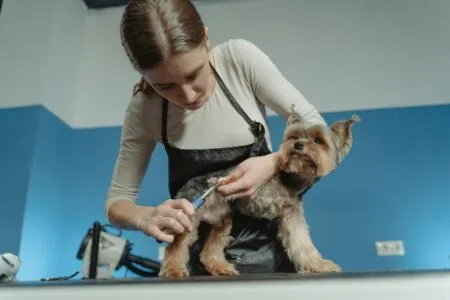
How to Start a Dog Grooming Business From Home: Building the Foundation First
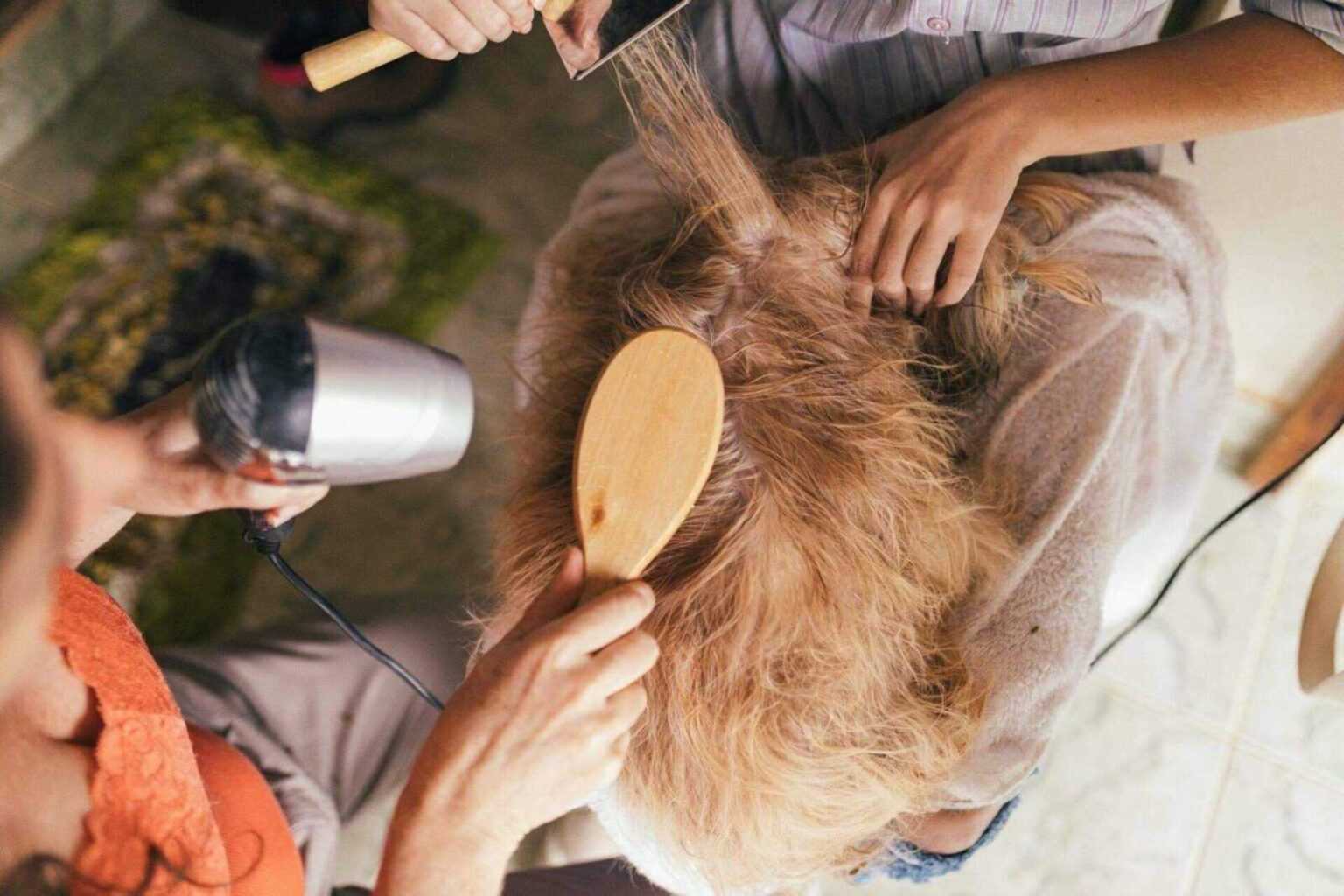
How to Start a Dog Grooming Business From Home: Hygiene & Coat Protocol
Proper care for how to start a centers on gentle weekly brushing, regular ear and paw inspections, and using species-specific, pH-balanced washes. Routine grooming removes trapped dander, prevents painful matting, and preserves the lipid barrier essential for healthy skin.
| Key Care Dimension | Recommended Standard | Primary Benefit | Management Best Practice |
|---|---|---|---|
| Preventative Veterinary Care | Annual or biannual clinical checkups | Early detection of underlying disease | Maintain up-to-date vaccine and wellness records |
| Species-Appropriate Diet | Formulated to life stage and activity level | Optimal muscle tone and metabolic balance | Measure exact daily feeding portions consistently |
| Environmental Enrichment | Daily mental exercise and physical activity | Prevents boredom and destructive behaviors | Rotate interactive toys and training games weekly |
| Emergency Preparedness | Dedicated pet emergency fund or insurance policy | Guarantees immediate medical care access | Keep 24-hour ER clinic contact readily accessible |
Skills and Training Before You Start a Dog Grooming Business From Home
How to start a dog grooming business from home on a foundation that produces satisfied clients and generates referrals begins with genuine grooming competence, not just enthusiasm for dogs. Dogs who have a difficult or painful grooming experience due to handler inexperience do not return, and their owners leave reviews that follow a new business for years.
Penn Foster’s Pet Grooming Certificate Program is one of the most accessible pathways for aspiring home-based groomers who need to develop foundational skills without leaving their current employment. The program is entirely self-paced and covers breed-specific styling, safe restraint and handling, skin and coat health assessment, bathing and drying techniques, and nail care across a structured curriculum that produces demonstrable competency rather than theoretical knowledge alone.
Animal Behavior College’s grooming career pathway recommends completing a minimum of 150 to 200 hours of hands-on practice before taking on paid clients independently. This volume of practice, accumulated through apprenticeship, supervised salon work, or structured grooming school programs, develops the handling confidence, breed-specific knowledge, and speed that paying clients expect.
Writing a Business Plan for How to Start a Dog Grooming Business From Home
A business plan is not a bureaucratic formality for a home grooming startup. It is the document that forces you to think through every financial assumption before money is spent, and it becomes your operational reference point for the first twelve months of business.
According to Gingr’s complete guide to starting a dog grooming business, a grooming business plan should include your operating concept (home-based solo groomer), service menu and pricing structure, startup cost budget, target client profile and local market analysis, marketing strategy for client acquisition, financial projections for months one through twelve, and growth pathway for year two and beyond.
Huckleberry Insurance’s 11-step dog grooming business guide documents that the average home-based grooming startup requires approximately $10,000 to $20,000 in initial capital for equipment, facility preparation, business registration, insurance, and first-month marketing. Understanding this number before you begin prevents the cash flow shortfalls that close more small grooming businesses in their first year than competition or skill deficits.
Do You Need a License to Groom Dogs: Legal Requirements Explained
Groom Dogs at the State Level
Do you need a license to groom dogs is the first legal question every prospective home grooming business owner must answer accurately before operating, and the answer involves a critical distinction between professional grooming licensing and business operating licensing.
Elite Trim Grooming’s regulatory guide for home grooming businesses confirms that no US state currently mandates a professional dog grooming license as a condition of practice, making dog grooming fundamentally different from human cosmetology and barbering, which are licensed at the state level in every state. The absence of mandatory professional licensing means that grooming skill is demonstrated through certification rather than government examination in most jurisdictions.
However, Wexford Insurance’s licensing overview for pet groomers clarifies the critical business licensing requirements that every home groomer must address:
- General business license: Required in most US states and municipalities to legally operate any business, including a home-based service
- Home occupation permit: Required by many municipalities specifically for businesses operating from residential properties. This permit sets conditions on client visit frequency, signage, parking, and operating hours
- Animal care facility license or kennel permit: Required by some states and counties for any business providing animal handling services, including grooming
- Sales tax permit: Required if your state taxes grooming services (service taxability varies by state)
- Specialty licenses: Connecticut requires both groomer and facility licensing. Michigan may require a domestic animal pest management license for flea treatment services
Do You Need a License to Groom Dogs: Zoning Compliance for Home Businesses
Beyond licensing, do you need a license to groom dogs from home legally depends heavily on your local zoning classification. Most residential parcels are zoned for residential use only, and operating a commercial service from a residentially zoned property without a home occupation permit violates local zoning ordinances.
The Dog Kennel Collection’s home grooming setup guide identifies zoning compliance as one of the most commonly overlooked requirements in home grooming startups, noting that municipalities may restrict the number of non-family animals on a residential property at any time, prohibit signage visible from the street, limit the number of daily client vehicle trips, and restrict noise levels during specific hours.
Contact your local planning and zoning office before investing in equipment or facility preparation to confirm:
- Whether home-based animal service businesses are permitted in your zoning district
- What permits or variances are required for compliant operation
- Whether any neighbor notification or public hearing process applies to your permit application
- The specific operational conditions your permit will impose
The Small Business Administration (SBA) maintains a free online resource center for home-based business regulatory research that provides state-specific guidance on business registration, permits, and compliance requirements.
Dog Grooming Business Equipment List 2026: What You Actually Need
Core Dog Grooming Business Equipment List 2026 by Category
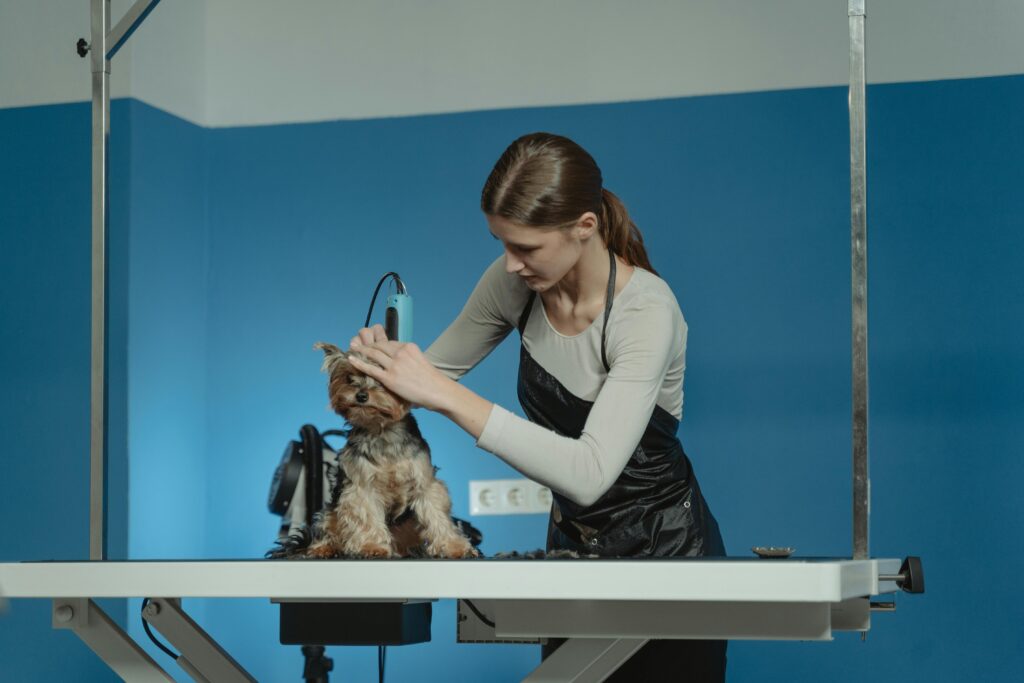
The dog grooming business equipment list 2026 for a home-based solo grooming studio divides into five categories: grooming tables and restraint, bathing and drying systems, clipper and scissor tools, coat care supplies, and facility infrastructure. Purchasing the right equipment at the correct quality tier from the start prevents the cost of replacing underpowered tools within the first year.
Groomica’s 2026 professional groomer starter kit guide, developed by specialists with over seven years of salon-building experience, provides the most current and comprehensive dog grooming business equipment list 2026 available. Their framework, adapted below for home-based startup scale, covers every item required for a professional-grade home studio.
Grooming table (the single most important equipment investment):
- Electric lift table: the 2026 recommended standard for professional home studios due to its ability to raise and lower the grooming surface to the exact working height for each dog size and the groomer’s ergonomic needs. Reduces back strain and handler injury risk significantly over hydraulic alternatives for groomers working alone
- Hydraulic table: budget-appropriate alternative for groomers starting on a tighter capital budget; requires manual pumping to adjust height but performs reliably for small to medium dogs
- Grooming arm and loop (noose system): mounted to the table, keeps the dog positioned safely during grooming without requiring constant restraint by a second handler
Bathing and drying systems in the dog grooming business equipment list 2026:
- Professional deep bathing tub with non-slip floor surface and ramp or step access for larger dogs
- High-velocity force dryer (blaster): essential for removing the majority of water after bathing and for blowing out undercoat. The Dojo Business pet grooming salon equipment guide identifies force dryers as one of the highest-priority equipment investments in any grooming setup
- Hands-free stand dryer: provides finishing airflow for textured coats requiring scissoring, particularly for doodles, poodles, and bichons
- Drying cabinet: a 2026 emerging standard in professional home studios for anxiety-prone dogs and puppies. Quiet fans, adjustable temperature zones, and multi-angle ventilation provide gentle stress-free drying that keeps anxious dogs calm during the most challenging part of the grooming process
Clipping and cutting tools for the dog grooming business equipment list 2026:
- Professional rotary motor clippers: Andis, Wahl, and Oster are the three most widely specified professional clipper brands. Purchase two clipper bodies with complete blade sets to allow continuous operation when one unit heats up during extended use
- Clipper blades: minimum blade set of #3F, #4F, #5F, #7F, #10, #15, #30, #40 to cover the fundamental cuts across all common breed styles
- Straight shears (8 to 9.5 inch): for body finishing lines
- Curved shears: for rounded head and body shapes on poodles, doodles, and similar breeds
- Thinning shears: for blending transitions and finishing
- Small detail scissors: for face, paws, and ear trimming
Coat care supplies:
- Pin brush, slicker brush, metal greyhound comb: the foundational daily-use brush set for all coat types
- De-matting rake and wide-tooth comb: essential for maintaining workflow efficiency with matted coats
- Professional de-shedding tools: Andis deshedding blades and Furminator-style tools significantly reduce grooming time on double-coated breeds
- Professional shampoos and conditioners: invest in a concentrated professional line such as Chris Christensen, Bio-Groom, or Iv San Bernard that dilutes to provide significantly lower cost per bath than retail products
How to Price Dog Grooming Services: Building a Profitable Rate Structure
The Math Behind How to Price Dog Grooming Services
How to price dog grooming services is described by industry consultants as part math and part market positioning, and both components must be calculated correctly to build a home grooming business that sustains profitability without burning out.
The Groomhaus’s dog grooming pricing framework identifies the following as the core variables in any pricing calculation:
- Monthly operating costs: Add your total fixed monthly costs (equipment amortization, supplies, software, insurance, utilities attributable to the grooming space, and any marketing spend)
- Target monthly income: Decide your personal income requirement after operating costs
- Total monthly revenue required: Operating costs plus target income equals the minimum monthly revenue your pricing structure must generate
- Working days and dogs per day: A realistic solo home groomer handles 5 to 8 dogs per day. Calculate the total monthly grooming capacity (working days multiplied by average dogs per day)
- Minimum average ticket required: Divide total monthly revenue required by total monthly grooming capacity. This is the minimum average price you must charge per dog to meet your financial targets
How to price dog grooming services by breed and size in 2026, based on MoeGo’s 2026 dog grooming cost analysis and QC Pet Studies’ comprehensive pricing guide:
| Dog Size | Bath and Brush Only | Full Groom (Haircut Included) |
|---|---|---|
| Small (under 20 lbs) | $25 to $50 | $45 to $75 |
| Medium (20 to 50 lbs) | $50 to $75 | $65 to $110 |
| Large (50 to 80 lbs) | $75 to $125 | $90 to $150 |
| Extra Large (80+ lbs) | $125 to $175 | $150 to $200+ |
Add-Ons and Surcharges
How to price dog grooming services at a home-based studio requires a clear add-on and surcharge menu that captures the additional time and labor investment of specific coat conditions and service requests.
Standard add-on pricing structure:
- Dematting (per 15 minutes of additional work): $15 to $25
- Flea bath treatment: $15 to $30 above base groom price
- Nail grinding (in addition to clip): $10 to $15
- Teeth brushing: $10 to $15
- Ear plucking: $10 to $15
- Blueberry facial: $10 to $20
- Breed-specific hand stripping: market rate, typically $150 to $250 for full strip
PetExec’s dog grooming pricing resource emphasizes that new home groomers commonly underprice during the launch period to attract clients and then face the difficulty of raising prices once a client base is established at low rates. Setting prices at competitive market rates from the first day, even with less than full capacity, builds a more sustainable business than discounting your way to a full appointment book.
Best Software for Dog Grooming Business: Managing Operations Efficiently
What the Best Software for Dog Grooming Business Must Do
Best software for dog grooming business operations at the home studio level must handle five core functions: online appointment booking, automated client reminders, digital pet profile management, payment processing, and business reporting. A groomer who manages these functions through a combination of paper records, text messages, and mental notes loses an estimated two to three bookable hours per week to administrative friction.
G2’s March 2026 user review rankings for pet grooming software place MoeGo, Gingr, GrooMore, and Groomsoft as the top-rated platforms across independent verified reviews from professional grooming businesses of all sizes. Each platform addresses the home-based groomer’s needs from a different strength point.
Best Software for Dog Grooming Business: Top Platform Comparison
Best software for dog grooming business options compared across the functions most relevant to a home-based solo groomer:
MoeGo
MoeGo is the top-rated platform on G2 for 2026 and is specifically identified as the easiest-to-use pet grooming software available. It provides online self-booking with smart scheduling that prevents gaps and zigzag routing for mobile add-ons, automated appointment reminders via SMS and email, breed and coat profile database, integrated payment processing, and a client-facing mobile experience that elevates the perception of professionalism for home-based operations. Entry-level pricing starts at $49 per month, making it accessible for solo startups.
Gingr
Gingr is widely used among established grooming businesses for its comprehensive reporting and marketing tools alongside core scheduling and client management. Its strength is business analytics and client retention features that become increasingly valuable as the business scales beyond solo operation.
GrooMore
GrooMore is highly rated for customer support responsiveness and customization flexibility. Its smart scheduling feature prevents double-booking and optimizes appointment sequencing for maximum daily throughput. Multiple independent reviews specifically cite the support team’s responsiveness as a differentiating factor.
Groomsoft
Groomsoft suits groomers who want a purpose-built grooming-specific platform rather than a broader pet care management system. Its pet database, autofilled client records, and mobile grooming route optimization tools serve both home studio and mobile grooming business models effectively.
Best Dog Waste Digester 2026: Essential for Home Grooming Businesses
Why a Best Dog Waste Digester 2026 System Belongs in Every Home Grooming Studio
A home grooming studio that handles 5 to 8 dogs per day produces a significant daily volume of waste that must be managed without creating odor, sanitation, or municipal waste volume problems in a residential setting. The best dog waste digester 2026 systems provide the most effective and neighbor-considerate solution for high-volume home grooming waste management.
As covered in our Dog Waste Management guide, the Doggie Dooley Septic Style 3535 series is the most consistently rated best dog waste digester 2026 option for volume management. For a home grooming studio handling 5 to 8 dogs per day, the 3535 series handles the equivalent of three to four large dogs at full ongoing capacity, making it appropriate for most solo home grooming operations when supplemented with weekly enzyme tablet maintenance.
Waste management protocol for home grooming studios:
- Install a Doggie Dooley 3535 or equivalent in-ground digester in a drainage-appropriate yard location following all placement guidelines from the manufacturer
- Use a dedicated outdoor yard zone for post-groom client dog exercise and elimination during multi-dog appointment days
- Apply enzymatic yard sanitizer weekly to the designated outdoor elimination zone to prevent pathogen accumulation in a high-use residential setting
- Maintain a covered waste collection station adjacent to your grooming studio exit for immediate interim waste collection before outdoor digester deposit
How to Start a Dog Grooming Business From Home: Marketing and Client Acquisition
Building Your First Client Base When You Start a Dog Grooming Business From Home
How to start a dog grooming business from home with a full appointment book requires a deliberate local marketing strategy that activates multiple channels simultaneously in the weeks before and immediately after launch.
The Easy Busy Pets comprehensive grooming business startup guide identifies these as the highest-return client acquisition channels for home-based grooming businesses in the first 90 days:
Google Business Profile:
The single most impactful free marketing action for any local service business. Create and fully optimize your Google Business Profile with accurate location, hours, service menu, pricing range, and professional photos of your space and work before your first client appointment. Local search results drive the majority of first-time grooming inquiries from dog owners seeking services near their home.
Nextdoor and local community groups:
Home grooming businesses thrive on hyper-local trust. An introduction post on Nextdoor that includes professional photos, your service menu, and a clear call-to-action for first bookings reaches the exact geographic audience most likely to become regular clients.
Referral incentive program from day one:
Offer your first 20 clients a discount on their second appointment in exchange for a Google review and a referral of one new client. This investment in early social proof pays compounding dividends as Google reviews accumulate.
Veterinarian and pet store partnerships:
Introduce yourself to local veterinary practices, pet supply stores, and dog training facilities with a professional introduction card and a small reciprocal referral arrangement. Veterinary staff recommendations carry exceptional trust weight with pet owners seeking grooming services.
How to Start a Dog Grooming Business From Home: Retaining Every Client You Acquire
How to start a dog grooming business from home that reaches full capacity quickly requires not just acquiring clients but retaining every one through a client experience that produces automatic rebooking behavior.
Home grooming advantages over salon competitors that should be emphasized in all marketing:
- One-on-one groomer-to-dog attention throughout the entire appointment
- No cage drying or extended cage waiting periods
- Stress reduction from individual, calm, unhurried handling
- Direct communication between groomer and owner about coat health and behavioral observations
- Consistent groomer assignment, eliminating the variability of salon staff turnover
QC Pet Studies’ pricing and packaging guide recommends offering a prepaid package at a 5 to 10 percent discount from standard per-visit pricing as your primary retention tool. Clients who purchase a 6-appointment package are committed to returning and have a financial incentive to use the remaining sessions, producing the regular appointment cadence that drives predictable monthly revenue.
How to Start a Dog Grooming Business From Home: Startup Cost Framework
Complete Startup Cost Breakdown for How to Start a Dog Grooming Business From Home
How to start a dog grooming business from home within a realistic budget requires understanding the full capital requirement before beginning to spend. Underestimating startup costs is the most common financial planning failure in new grooming businesses.
QC Pet Studies’ startup cost analysis and Serif.ai’s 2026 dog grooming business cost breakdown together produce the following realistic startup cost framework for a home-based solo grooming studio:
One-time startup costs:
| Expense Category | Estimated Range |
|---|---|
| Training and certification | $500 to $2,000 |
| Business registration and permits | $100 to $500 |
| Grooming table (electric lift) | $600 to $1,500 |
| Bathing tub with ramp | $400 to $1,200 |
| Force dryer and stand dryer | $300 to $800 |
| Drying cabinet | $400 to $1,000 |
| Professional clippers and blades | $300 to $800 |
| Shears set | $200 to $600 |
| Brush and comb set | $100 to $300 |
| Shampoos and supplies (initial stock) | $200 to $500 |
| Waste digester installation | $100 to $300 |
| Website setup | $200 to $800 |
| Insurance (first year) | $500 to $1,500 |
| Marketing materials | $100 to $400 |
| TOTAL | $4,000 to $11,200 |
Monthly operating costs for a home-based solo groomer run approximately $500 to $1,500, covering supplies replenishment, software subscription, insurance installment, and marketing maintenance. At a conservative average ticket of $75 and 6 dogs per day for 4 days per week, monthly gross revenue potential is approximately $7,200 per month, producing a comfortable net margin above operating costs.
Frequently Asked Questions About How to Start a Dog Grooming Business From Home
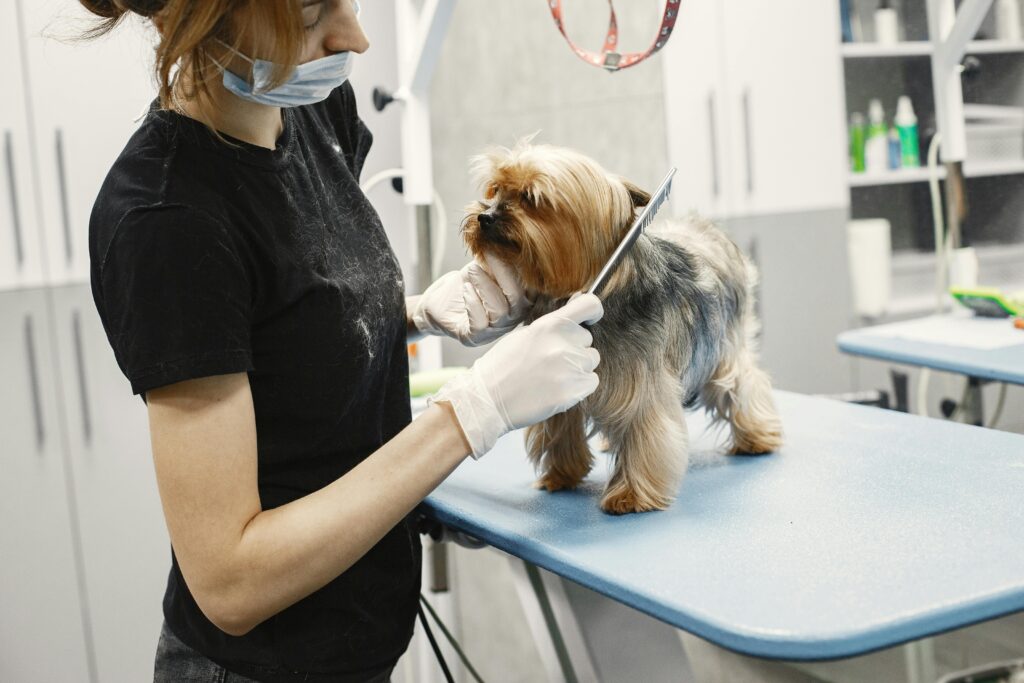
How to start a dog grooming business from home correctly begins with three parallel tracks before spending any money on equipment: developing genuine grooming competence through a certified training program such as Penn Foster’s Pet Grooming Certificate, verifying your local zoning compliance with your municipality, and writing a business plan that calculates your startup cost requirement and monthly revenue target. According to Gingr’s dog grooming business startup guide, skipping any of these three foundation steps produces the most common and costly first-year business failures.
Do you need a license to groom dogs professionally? No US state currently mandates a professional dog grooming license, making it one of the few personal service businesses without a mandatory professional licensing requirement. However, as Elite Trim Grooming’s regulatory guide confirms, you do need a general business license, a home occupation permit if operating from a residential property, and potentially an animal care facility permit depending on your state and county. Contact your local planning and zoning office and the Small Business Administration before operating.
The best software for dog grooming business for a solo home groomer launching in 2026 is MoeGo, rated the easiest-to-use platform on G2’s March 2026 pet grooming software rankings. MoeGo provides online self-booking, automated SMS reminders, pet profile management, integrated payment processing, and smart scheduling for $49 per month, a cost that pays for itself with the first two appointments it automatically schedules and confirms without groomer intervention. Gingr is the stronger choice for groomers planning to scale beyond solo operation within their first year.
Your Action Plan for How to Start a Dog Grooming Business From Home
How to start a dog grooming business from home successfully requires doing the right things in the right sequence. The most common failure pattern is purchasing equipment before verifying zoning compliance or before the groomer has developed sufficient skill to deliver a consistently professional result on every dog.
Here is your correctly sequenced action plan:
- Months 1 to 2: Enroll in a certified grooming program. Begin accumulating hands-on practice hours. Contact your local planning and zoning office to confirm home-based animal service business is permissible in your zoning district and identify the permit requirements.
- Month 3: Write your business plan including startup cost budget, pricing structure, and first-year revenue projection. Register your business entity, obtain your general business license and home occupation permit, and purchase business liability insurance before your first client.
- Month 4: Purchase and install your core equipment using the 2026 equipment list above. Set up your MoeGo or Gingr software account. Install your in-ground waste digester. Photograph your completed studio setup for your website and Google Business Profile.
- Launch month: Activate your Google Business Profile, Nextdoor introduction post, and veterinarian partnership outreach simultaneously. Offer your first 20 clients a first-appointment incentive in exchange for a Google review commitment. Set your prices at market rate from day one.
For continued reading, explore Dog Waste Management: From Pickup to Proper Disposal 2026 and How to Attract a Cat to the Litter Box: Complete Litter Training Guide 2026 in our complete professional pet care series.
🐾 Related Resources & Interactive Tools in This Guide:
- Interactive Calculator: Dog OTC Medication Dosage Calculator — Calculate safe, vet-approved doses of Benadryl, Zyrtec, Pepcid, and Melatonin by body weight.
- Clinical Resource: DIY Pet Grooming Station Setup: Transform Your Home Into a Professional Pet Care Heaven (2026 Guide)
- Behavior & Training Guide: Double Coated Dog Grooming: Essential Do’s and Don’ts for Healthy Coats in 2026
- Related Expert Guide: How to Make Your Own Pet Grooming Wipes: Safe, Natural DIY Solutions
Growth & Immunization Tracking: To predict your puppy’s adult weight based on current breed trajectory, use our interactive Puppy Growth Calculator. For core vaccine timelines and veterinary cost planning, refer to the Puppy Vaccination Schedule Tool.
📚 Related Topic Cluster Guides & Veterinary Tools
Explore our complete Pet Grooming & Hygiene Guide Hub for comprehensive guides, veterinary diagnostic checklists, and daily care protocols.
- The Complete Guide to Calmly Dressing Your Dog in Sweaters, Beanies, and Socks for Winter
- Professional Dog Grooming vs. DIY: Which is Best for Your Dog?
- Cat Dress Up Ideas from the Most Watched Movies: A Complete Guide for Creative Pet Parents
- How to Make Your Dog and Cat Best Friends: 7 Proven Tricks That Actually Work
- Interactive Tool: Pet Age to Human Years Conversion Calculator