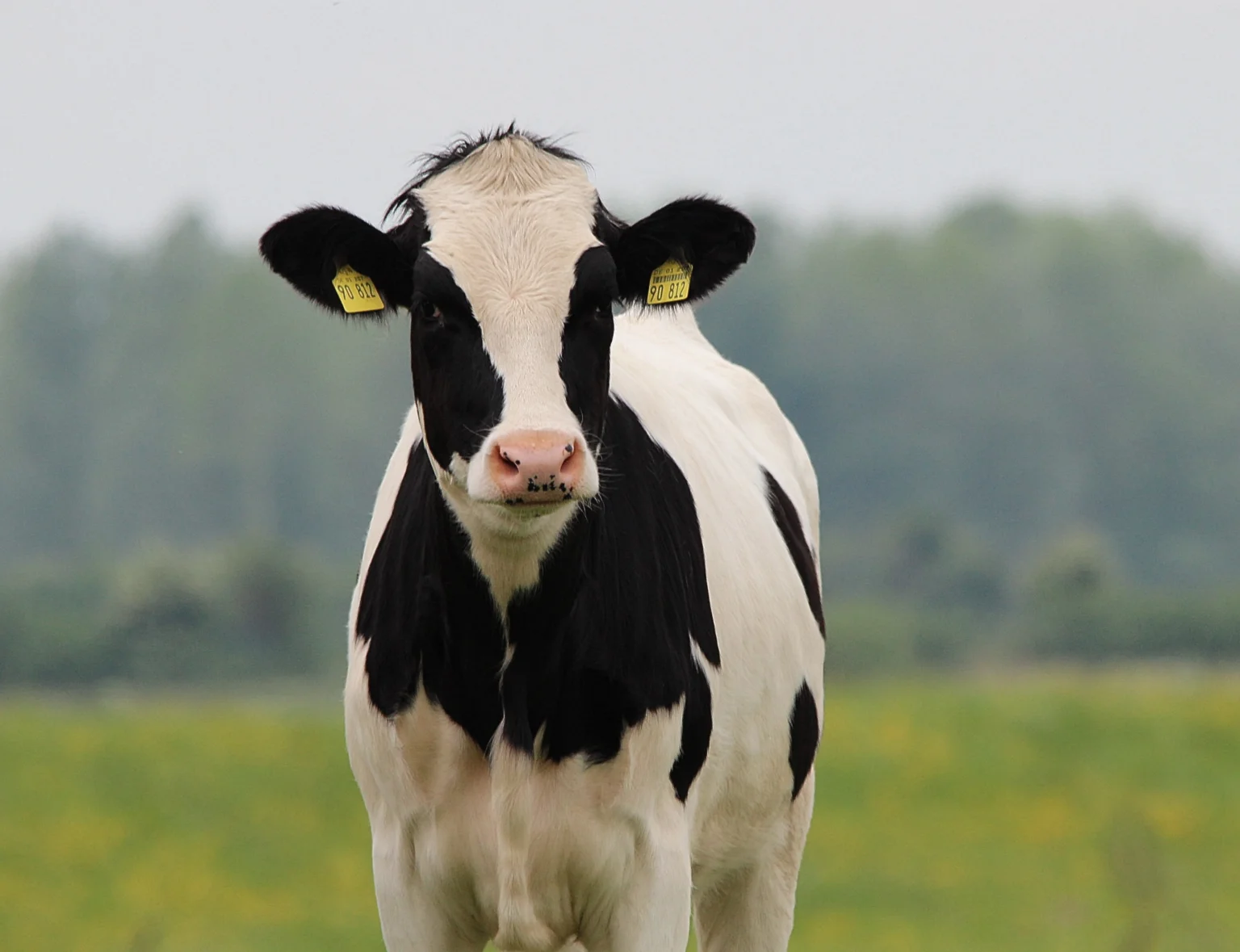
A turquoise halter against a fluffy Highland coat can look adorable. So can a traditional leather halter on a little Dexter, especially when the stitching matches the cow’s colouring.
But a cute halter that slides down the nose, rubs behind the ears or catches on fencing isn’t a good purchase, no matter how lovely it looks in photographs.
The best custom halter for a miniature cow is a properly fitted, cattle-appropriate design that feels comfortable, stays in position during supervised handling and allows normal breathing and movement. Choose the fit and construction first, then decide on the colours, embroidery or finishing touches.
Miniature cows also have accessory needs that are easily misunderstood. They don’t automatically need winter coats, fly masks can’t guarantee protection from eye disease, and a reflective collar isn’t necessarily safe for unsupervised pasture use.
This guide explains how to measure your cow, compare leather and nylon halters, choose safer custom details and decide whether seasonal accessories are worth considering.
Table of contents
- Why miniature cows need properly fitted halters
- 1. How to measure a miniature cow for a custom halter
- 2. Leather vs nylon halters for cattle: Which is better?
- 3. Cute custom halter ideas for miniature cows
- 4. How to tell whether a custom halter fits comfortably
- 5. Should miniature cows wear halters all day?
- 6. Best winter blankets for pet cows: Do they really need one?
- 7. How to measure a mini cow for a blanket size
- 8. Breathable fly masks for cattle comfort
- 9. Reflective breakaway collars for pet cows
- 10. What accessories are worth buying first?
- 11. How to clean and maintain miniature-cow accessories
- 12. Miniature-cow accessory mistakes to avoid
- Frequently asked questions
- Final thoughts: Choose comfort before colour
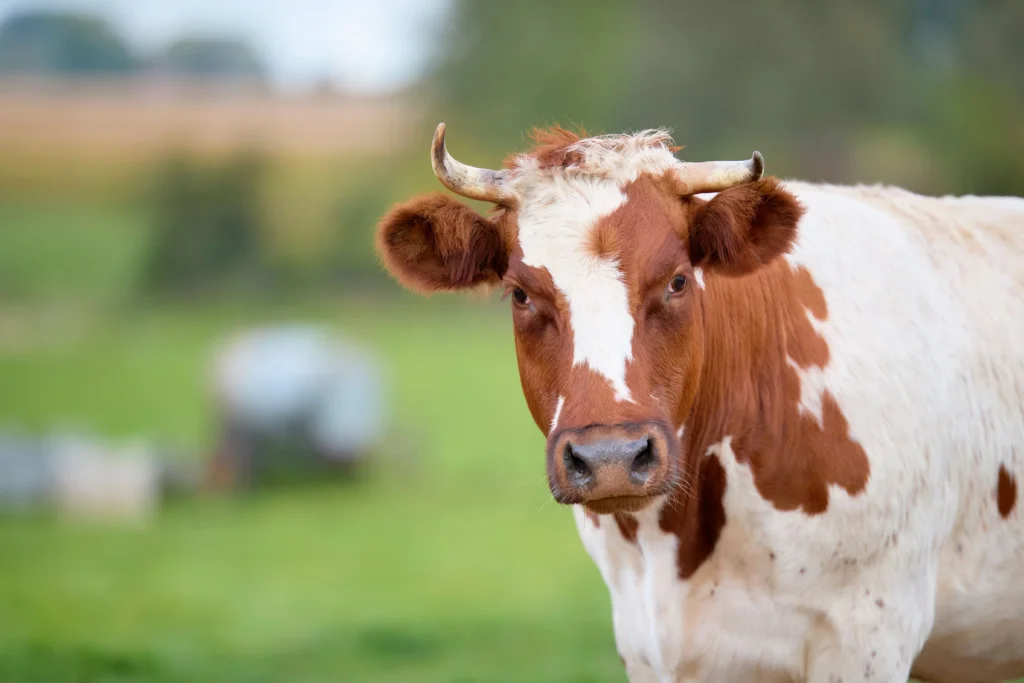
Why miniature cows need properly fitted halters
The word miniature can be misleading.
A Dexter, miniature Highland and small Jersey may all be smaller than some commercial cattle, but their heads aren’t identical.
One might have a broad forehead and relatively short muzzle. Another may have a narrower face, longer head or prominent horns.
Two animals of the same breed can also differ considerably in size.
That’s why ordering a halter labelled mini cow, calf or pony without checking measurements is a gamble.
Once you experience the calm, quiet companionship of a pet cow, it’s nearly impossible to imagine life without one. Explore the remarkable, heartwarming benefits of owning a pet cow and discover why these intelligent, affectionate, and endlessly fascinating animals are winning the hearts of animal lovers in ways that continue to surprise even the most experienced pet owners.
What is a cattle halter actually for?
A halter is handling equipment. It helps a trained person work with cattle during controlled activities such as leading, grooming or preparing for veterinary care.
It is not a substitute for appropriate training or safe handling facilities.
The University of Florida IFAS Extension’s guide to halter-breaking cattle stresses the importance of a properly positioned noseband and checking that the halter hasn’t become too tight as the animal grows.
Even a gentle miniature cow is strong enough to injure someone by moving suddenly.
Never assume that an attractive custom halter makes an untrained cow safe to lead.
1. How to measure a miniature cow for a custom halter
This is the step worth spending time on before shopping.
Different manufacturers use different measurement points, so the maker’s chart should always come first.
Don’t copy measurements from another cow simply because both are called miniature Highlands.
Training a cow might sound unconventional but with patience, consistency, and the right positive reinforcement techniques, it becomes one of the most surprisingly rewarding experiences you and your bovine companion will ever share. Discover how to train your pet cow through positive reinforcement and build the kind of deep, trusting bond that makes every interaction with your gentle giant feel genuinely meaningful and mutually enjoyable.
The main measurements a custom maker may request
| Measurement | What it tells the maker | Important note |
|---|---|---|
| Nose circumference | How the noseband needs to fit | Measure at the location specified by the maker |
| Head or crown measurement | How the halter passes around the head | Follow the exact chart route |
| Cheek length | Helps position the noseband and side straps | Not all designs use identical points |
| Horn clearance | Helps assess compatibility with the cow’s horns | Describe horn size and position |
| Age and growth stage | Indicates whether fit may change rapidly | Especially important for calves |
| Existing halter measurements | Can help compare known equipment | Only useful when the existing fit is appropriate |
Step-by-step measuring process
Step 1: Find the exact halter design.
Ask the supplier for a cattle-specific measurement chart before taking measurements. A diagram is much more useful than instructions such as “measure around the head”.
Step 2: Use safe cattle-handling facilities.
Work with a calm animal and a competent handler. Do not corner or force a frightened cow to stand still for a tape measure.
Step 3: Measure the nose where the halter will sit.
Use a flexible measuring tape and follow the maker’s specified position. The tape should rest against the coat without digging into the skin.
Step 4: Record the crown and cheek measurements.
These differ between halter styles. Use the supplier’s reference points rather than inventing your own.
Step 5: Note horns and head shape.
A horned Highland-type cow may need different clearance considerations from a polled Dexter.
Step 6: Confirm the adjustment range.
Ask whether the finished halter offers suitable adjustment and whether alterations or returns are available if the fit isn’t right.
Step 7: Check the finished halter before actual leading.
A competent cattle handler should verify its position and suitability in a secure area before routine use.
How tight should a mini cow halter be?
There isn’t one universal finger-width rule that proves the fit is safe.
The halter must remain correctly positioned without compressing sensitive areas or slipping towards the end of the muzzle.
The University of Florida’s cattle-handling guidance advises positioning the halter high on the bridge of the nose so that breathing isn’t obstructed if the animal resists.
A halter that looks loose in one photograph may become uncomfortable when a lead is attached.
Always assess fit in the context of the actual design and intended handling.
2. Leather vs nylon halters for cattle: Which is better?
Both leather and nylon can make attractive miniature-cow halters.
Neither wins automatically.
Comfort and suitability depend on construction, strap width, edge finishing, adjustment, hardware and how the equipment sits on the animal.
Leather halters
Leather is often chosen for a traditional show or country-farm look.
Brown, chestnut and black designs can complement many cattle coat colours.
Well-made leather can be attractive and repairable, depending on the construction.
However, poor storage or unsuitable maintenance can leave some leather stiff or damaged.
Stiff edges and badly positioned seams can rub just as readily as unsuitable synthetic materials.
Caring for a pet cow well goes far beyond filling a feed bucket and calling it a day it’s a thoughtful, holistic commitment that touches every aspect of their health, happiness, and quality of life. Explore this complete, holistic guide to caring for a pet cow and build the knowledge, confidence, and genuine understanding it takes to give your beloved bovine the exceptional, loving care they truly deserve every single day.
Nylon halters
Nylon webbing offers a much wider choice of bright colours, printed patterns and contrasting stitching.
It’s often relatively easy to clean, depending on the product.
But nylon isn’t automatically soft. Rough webbing edges, poor stitching and badly shaped straps can cause irritation.
Padding may improve comfort in some designs, but it cannot correct an incorrectly positioned noseband.
Comparison table
| Feature | Leather | Nylon |
|---|---|---|
| Appearance | Traditional and understated | Colourful and highly customisable |
| Custom embroidery | Depends on design | Often easier to incorporate |
| Cleaning | Requires material-specific care | Often straightforward, depending on construction |
| Wet conditions | May need additional drying and conditioning care | Often moisture-tolerant, but hardware still needs checking |
| Comfort | Depends on fit and finishing | Depends on fit, finishing and padding |
| Durability | Varies with quality and maintenance | Varies with webbing, stitching and fittings |
| Safety | Must be checked for the exact product | Must be checked for the exact product |
What about rope halters?
A rope halter may have a different pressure distribution from a flat webbing design.
That doesn’t make it inherently unsuitable, but it also doesn’t make it ideal for every beginner or cow.
Avoid abrasive materials and designs that concentrate pressure or rub the face.
The training and handling context matters as much as the material.
Which material should you choose?
Choose the halter that offers a demonstrably better fit and suitable construction for your animal.
If two products meet those requirements, the choice between leather and nylon can reasonably come down to appearance, cleaning preferences and maintenance.
3. Cute custom halter ideas for miniature cows
This is the fun part.
You can give your cow a distinctive look without adding bells, dangling charms or other unnecessary hardware.
The simplest custom details are often the most attractive.
Pastel colours for fluffy coats
Soft pink, lilac, sage and light blue can create a gentle contrast against a shaggy coat.
Choose colourfast materials intended for the actual equipment design.
Pastel webbing that looks lovely in product photography still needs appropriate edges, hardware and adjustability.
Bold colours for high contrast
Turquoise, berry, red and navy can look striking against dark or reddish coats.
For a traditional Highland look, a plain teal or forest-green halter may provide enough visual interest without decorations.
Classic leather and contrasting stitching
A chestnut or dark-brown leather halter with neat contrasting stitching offers a more traditional appearance.
The leather grade, stitching quality and fit should still be checked rather than inferred from a polished photograph.
Embroidered names
Flat embroidery can personalise a halter without introducing bulky hanging accessories.
Ask whether the stitching changes the surface that touches the animal or affects the strap’s strength.
Don’t place a large embroidered patch where it may create pressure or rubbing.
Seasonal colours
A simple red-and-green halter may be enough for a festive photograph.
There’s no need to attach large bows, battery-powered ornaments or bells near the animal’s head.
Temporary decorative photography should happen only with a calm animal in a safe, supervised setting.
What custom decorations should you avoid?
Avoid anything that could loosen, be swallowed, catch on objects or interfere with normal movement.
Potential problems include:
- Dangling metal charms.
- Loose ribbons or bows.
- Protruding rhinestones.
- Sharp nameplates.
- Bulky attachments over pressure points.
- Unsecured decorative lights.
- Extra straps without a functional purpose.
A clean, simple colour scheme is usually a better styling choice than adding more accessories.
4. How to tell whether a custom halter fits comfortably
A halter can appear attractive and still be unsuitable.
Before using it for normal handling, assess the equipment in a secure environment.
Check the noseband
It should follow the manufacturer’s intended position and not slide dangerously down the muzzle.
It must not obstruct breathing.
Check the ears and head strap
Look for pressure, awkward placement or interference around the ears.
A cow with horns may need additional attention to strap clearance.
Check the cheeks
The side pieces shouldn’t twist or pull the noseband out of position.
Check the hardware
Buckles, rings and fasteners should be suitable for the intended cattle use.
Inspect for cracks, rust, loose stitching and sharp edges.
Watch the animal
Notice whether the cow attempts to rub the halter off, becomes unusually resistant, or develops visible hair loss or skin irritation.
These signs warrant stopping and assessing the fit.
A change in behaviour should not be dismissed as the cow being difficult.
Recheck growing cattle
A halter that fitted a young calf may become too tight as its head develops.
The University of Florida Extension specifically recommends checking fit regularly in growing cattle.
Don’t buy an oversized halter and assume the animal will safely grow into it.
5. Should miniature cows wear halters all day?
For everyday supervised leading or training, put the halter on when it is needed and remove it once the session is finished, unless a qualified management plan specifies otherwise.
Leaving unnecessary headwear on unattended cattle introduces potential snagging, rubbing and fit-related risks.
This is especially relevant in fields with branches, gates, wire or other objects that could catch equipment.
A fashionable show halter should not automatically become permanent pasture wear.
If a cow is difficult to halter, address its handling and training needs with a competent cattle trainer rather than leaving unsafe equipment on continuously for convenience.
For safe cattle-handling principles, see the UK Health and Safety Executive’s livestock guidance.
6. Best winter blankets for pet cows: Do they really need one?
A fluffy miniature Highland wearing a quilted winter coat may look charming.
But many healthy adult cattle don’t need blankets as routine winter clothing.
Cattle develop physical adaptations to cold weather, including thicker winter coats.
Their ability to remain comfortable depends on body condition, nutrition, wind, moisture and shelter.
The University of Nebraska–Lincoln’s cattle cold-stress guidance, updated in January 2026, explains that a dry, developed winter coat makes an important difference to cold tolerance.
When might a blanket be considered?
A cattle veterinarian may recommend additional weather protection for a vulnerable animal.
Examples may include certain unwell, clipped or unusually susceptible animals.
However, a blanket isn’t automatically the best intervention.
Dry shelter, suitable bedding, good nutrition and management of the underlying condition may be more important.
Are 200 g or 400 g winter blankets best?
There is no verified universal insulation weight suitable for every miniature cow.
A heavy blanket may be excessive for a healthy animal with a thick coat, especially during mild weather.
Horse-blanket insulation categories cannot automatically be transferred to miniature cattle.
The appropriate choice, if a blanket is needed at all, depends on the individual cow and local conditions.
Risks of an unsuitable blanket
An incorrectly fitted blanket may rub the shoulders, shift during movement or trap dampness.
The cow must be able to walk, graze, lie down and rise normally.
Blankets also require regular removal or inspection when safe and appropriate.
Don’t leave a heavily insulated garment on simply because the weather was cold when it was first fitted.
7. How to measure a mini cow for a blanket size
Blanket sizing is different from halter sizing.
More of the animal’s body is involved, and the garment must remain comfortable while the cow changes posture.
There isn’t one universally accepted measurement convention across all cattle and horse blanket manufacturers.
Measurements the supplier may require
| Measurement | Purpose |
|---|---|
| Body or back length | Helps determine main blanket coverage |
| Chest width | Helps assess front fastening and movement |
| Body depth or girth | Helps determine how the blanket sits around the barrel |
| Shoulder shape | Helps avoid rubbing and movement restriction |
| Tail and leg clearance | Prevents interference during walking and resting |
| Age and condition | Indicates whether the animal’s size may change |
Follow the exact manufacturer’s sizing diagram.
One supplier may measure from the chest towards the tail; another may use different reference points.
Don’t combine the two systems.
What a proper blanket fit-check should show
Before accepting the fit, confirm that the garment doesn’t restrict the shoulders or normal head movement.
Observe whether the cow can lie down and rise without straps tightening or the blanket shifting dangerously.
Check whether the fastenings could snag on fencing or pasture fixtures.
A blanket that fits while the animal stands still for a photograph may behave differently during normal movement.
Can a miniature cow wear a pony blanket?
Not automatically.
A pony blanket may have unsuitable shoulder shaping, belly fastenings or body proportions for cattle.
Use one only if a competent professional confirms that the actual design fits and functions safely for the individual animal.
A matching size label is not enough.
8. Breathable fly masks for cattle comfort
Face flies are a common nuisance around cattle.
They may gather around the eyes and contribute to irritation and the spread of organisms associated with pinkeye, or infectious bovine keratoconjunctivitis.
The Merck Veterinary Manual’s information on face flies of cattle explains their role in irritation and pathogen transmission.
A suitable fly mask may act as a physical barrier, but it doesn’t guarantee that a cow will remain free from eye disease.
What to look for in a cattle fly mask
Eye clearance: The material should not rub directly against the eyes.
Adequate vision: The animal must be able to see and move normally.
Suitable head shape: The mask should fit the individual cow rather than rely only on a horse-size label.
Comfortable edges: Seams and bindings should not create pressure or chafing.
Secure, appropriate fastenings: The design shouldn’t introduce avoidable entanglement hazards.
Easy inspection: The cow’s eyes must remain accessible for routine checking.
Is UV-protective mesh necessary?
Some manufacturers advertise UV protection.
Such claims should be supported by actual product specifications or testing.
A dark mesh isn’t automatically unsafe, and a light-coloured mesh isn’t automatically safe.
Vision, eye clearance and animal tolerance matter more than the colour alone.
Can a fly mask prevent pinkeye?
A mask may reduce some fly contact when appropriately used, but pinkeye prevention involves more than one measure.
The University of Wisconsin–Madison Extension’s pinkeye guide discusses fly control, environmental irritation and management as part of reducing risk.
If a cow is squinting, has a cloudy or painful-looking eye, or develops unusual discharge or tearing, seek prompt cattle-veterinary assessment.
Do not use a mask to conceal symptoms or delay treatment.
Should a fly mask stay on all the time?
The safe wearing arrangement depends on the product and the animal.
A mask needs regular checks for positioning, trapped debris, rubbing and damage.
If it shifts, causes distress or makes the animal behave unusually, remove it when safe to do so and reassess the design.
9. Reflective breakaway collars for pet cows
A reflective collar may seem useful for spotting an animal during a gloomy evening.
However, visibility isn’t the only concern.
Anything worn around a cow’s neck can catch on an object.
That creates a serious potential hazard, particularly when an animal is outside without supervision.
Why an ordinary quick-release buckle isn’t enough
Many collars have buckles that a person can open quickly by pressing a tab.
That doesn’t mean the collar will release if the animal becomes caught.
A genuine breakaway mechanism is designed to give way under specified conditions.
The UK Animal Welfare Committee’s review of livestock collars identifies risks including entanglement, abrasion and tightening as livestock grow. It recommends that livestock collars have a verifiable breaking point that prevents serious harm.
Although that report concerns virtual-fencing equipment, its physical collar-safety considerations are relevant when assessing other neckwear.
What to ask before buying
- Is the product actually designed for cattle?
- Does it have a documented breakaway mechanism?
- Has the release behaviour been independently verified?
- Is the collar appropriate for the animal’s size and age?
- Can it tighten as the animal grows?
- Could the hardware snag on fencing, trees or feeders?
- Does the animal need the collar at all?
A decorative collar should never be used as a substitute for secure fencing or a reliable identification system.
Safer alternatives for visibility
Depending on the situation, reflective fencing markers, appropriate yard lighting and clearly maintained access routes may make the environment easier to navigate without placing permanent decorative neckwear on the cow.
Any outdoor electrical equipment should be installed appropriately for livestock environments.
10. What accessories are worth buying first?
It’s easy to be drawn towards the prettiest item.
A more useful approach is to ask which item solves a genuine problem.
| Accessory | Priority for most owners | Main decision |
|---|---|---|
| Properly fitted cattle halter | Useful when supervised leading or handling is required | Does it fit correctly and suit the animal? |
| Decorative show halter | Optional | Does it remain safe and functional? |
| Winter blanket | Not a routine requirement for every cow | Is there a verified individual need? |
| Fly mask | Optional physical protection | Does it fit and provide useful protection without causing problems? |
| Reflective collar | Usually optional | Does the benefit justify the neckwear risk? |
If you’re choosing only one item, a suitable handling halter is often more useful than a wardrobe of seasonal accessories.
But even a good halter should be used with appropriate cattle-handling skills.
11. How to clean and maintain miniature-cow accessories
A comfortable accessory can become unpleasant when it is dirty, stiff, frayed or damaged.
Regular inspection matters more than owning lots of spare equipment.
Leather halters
Follow the manufacturer’s instructions for cleaning and conditioning.
Check for stiff areas, cracking, weakened stitching and corroded fittings.
Allow damp leather to dry according to the maker’s care advice.
Nylon halters
Remove dirt and inspect webbing edges, stitching and buckles.
Do not assume every product can be machine washed.
Winter blankets
Inspect for wetness, damaged lining, broken straps and signs of rubbing.
Follow the product’s cleaning instructions.
Do not put a damp, dirty garment straight back onto the cow without assessing its condition.
Fly masks
Keep the mesh and edges clean and free from damage.
Inspect the animal’s eyes and surrounding skin regularly.
Replace equipment that can’t remain properly positioned.
Reflective collars
If a collar is used under an approved management arrangement, verify its fit and safety mechanism regularly.
A worn or altered breakaway component should not be assumed to operate correctly.
12. Miniature-cow accessory mistakes to avoid
| Common mistake | Why it’s a problem | Better choice |
|---|---|---|
| Buying by breed name alone | Head shapes and sizes vary | Use individual measurements |
| Choosing a pony halter because it looks close enough | Cattle proportions and fit differ | Check cattle-specific compatibility |
| Assuming padding fixes every problem | Incorrect placement can still cause pressure | Verify the full fit |
| Leaving a show halter on unattended | Rubbing and snagging risks | Remove unnecessary equipment |
| Adding dangling charms or bells | Could catch, loosen or be chewed | Prefer simple styling |
| Automatically buying a heavy winter blanket | May be unnecessary or uncomfortable | Assess shelter, coat and individual need |
| Treating a fly mask as a pinkeye cure | May delay proper care | Seek veterinary advice for eye symptoms |
| Assuming quick-release means breakaway | A manual buckle may not open when snagged | Require verified release evidence |
| Ignoring growth | Young cattle can outgrow accessories | Recheck fit regularly |
| Trusting product photos as proof of quality | Images don’t establish fit or safety | Assess measurements and construction |
Frequently asked questions
Choose a cattle-appropriate halter that fits the individual animal, stays correctly positioned during supervised handling and has suitable materials and hardware. Colour and personalisation come after fit and safety.
Only when the exact product is verified as suitable for the individual cow. Pony sizing labels are not reliable substitutes for cattle-specific measurements and fit assessment.
Neither material is always better. Leather offers a traditional appearance; nylon often provides more colour options. Construction, finishing, fit and maintenance are more important than material alone.
Use the chosen manufacturer’s measurement diagram. Common measurements include nose circumference, crown dimensions and cheek length, along with horn and growth considerations.
Not automatically. A healthy cow with a developed dry winter coat, adequate nutrition and appropriate shelter may not need a blanket. Vulnerable animals require individual assessment.
Follow the manufacturer’s body-length, chest and other measurements. Do not assume horse blanket dimensions translate directly to cattle.
No mask guarantees prevention. A suitable mask may reduce fly contact, but controlling flies and recognising eye problems promptly remain important.
Neckwear can create snagging and tightening risks. A product’s safety needs real evidence of cattle suitability and an appropriate breaking mechanism, and permanent decorative collars are generally unnecessary.
Final thoughts: Choose comfort before colour
There’s nothing wrong with wanting a beautiful custom halter for your miniature cow.
A well-chosen colour, simple embroidery or quality leather finish can make everyday handling equipment feel personal.
But the most important details are the ones that don’t always show up in a photograph: where the noseband sits, whether the edges rub, how the hardware behaves and whether the animal can move comfortably.
Seasonal accessories deserve the same attention. Don’t add a winter blanket without a reason, use a fly mask in place of veterinary care or assume a reflective buckle will break away when caught.
The cutest accessory is one that fits properly, serves a useful purpose and doesn’t compromise your cow’s comfort or safety.