The information and calculator data provided in this article are aggregated from peer-reviewed veterinary literature, including the Merck Veterinary Manual and AVMA guidelines. This content is for educational and informational purposes only and is not a substitute for professional veterinary advice, diagnosis, or treatment. Always consult with a licensed veterinarian before administering any medication or altering your pet’s health regimen.
Choosing between professional dog grooming vs. DIY isn’t just about saving money on haircuts. It’s about safety, stress, time, and how confident you feel handling clippers, dryers, and a wiggly dog. In 2026, new tech like AI-guided grooming apps, smart-sensor clippers, and Tele-Grooming Support have blurred the line between salon results and what’s possible at home. That means you’re no longer stuck in an “all salon” or “all DIY” decision; you can build a hybrid plan that fits your dog, your budget, and your lifestyle.
This guide walks you through the pros and cons of professional dog grooming vs. DIY, shows where each option clearly wins, and explains how new tools and tele-grooming help you safely do more at home without giving up professional-level results.
Table of contents
- The Professional Grooming Edge in Professional Dog Grooming vs. DIY
- Low-stress professional dog grooming salons
- Mobile dog grooming with AI-scheduling
- Full-service breed-standard styling (Poodles, Doodles, Bichons)
- Professional matted coat restoration
- Sanitary trims and anal gland expression by pros
- High-velocity blowouts for double-coated breeds
- Finding Fear-Free certified groomers in 2026
- The DIY Home Grooming Movement in Professional Dog Grooming vs. DIY
- AI-guided dog grooming apps for beginners
- Low-noise home grooming kits 2026
- DIY dog bath and deshedding routines
- Safe ear cleaning and eye tear-stain removal at home
- Training your dog to accept grooming handling
- Best professional-grade clippers for home use
- Using lick mats to distract during DIY grooming
- Key Decision Factors in Professional Dog Grooming vs. DIY
- Cost of professional dog grooming vs. DIY setup
- Risk of grooming injuries: Professional vs. at-home
- Grooming anxiety: Travel stress vs. home comfort
- Time commitment for monthly DIY dog maintenance
- When a DIY groomer should transition to a professional
- Quality of equipment: Professional salon vs. consumer tech
- 2026 Tech and Safety Innovations Shaping Professional Dog Grooming vs. DIY
- Tele-Grooming Support and Hybrid Models: It’s Not All or Nothing
- How to Choose the Best Professional Dog Grooming vs. DIY Plan for Your Dog
- FAQ:
The Professional Grooming Edge in Professional Dog Grooming vs. DIY
Grooming Choice: Pro vs Home Care
Choose professional grooming for heavy-coated, double-coated, or curly breeds requiring sanitary clipping, hand-stripping, and anal gland expression. Simple short-haired maintenance—like weekly brushing, paw balm, and basic bathing—is easy to do at home with a quality deshedding rake and dog-safe oatmeal shampoo.
| Key Care Dimension | Recommended Standard | Primary Benefit | Management Best Practice |
|---|---|---|---|
| Preventative Veterinary Care | Annual or biannual clinical checkups | Early detection of underlying disease | Maintain up-to-date vaccine and wellness records |
| Species-Appropriate Diet | Formulated to life stage and activity level | Optimal muscle tone and metabolic balance | Measure exact daily feeding portions consistently |
| Environmental Enrichment | Daily mental exercise and physical activity | Prevents boredom and destructive behaviors | Rotate interactive toys and training games weekly |
| Emergency Preparedness | Dedicated pet emergency fund or insurance policy | Guarantees immediate medical care access | Keep 24-hour ER clinic contact readily accessible |
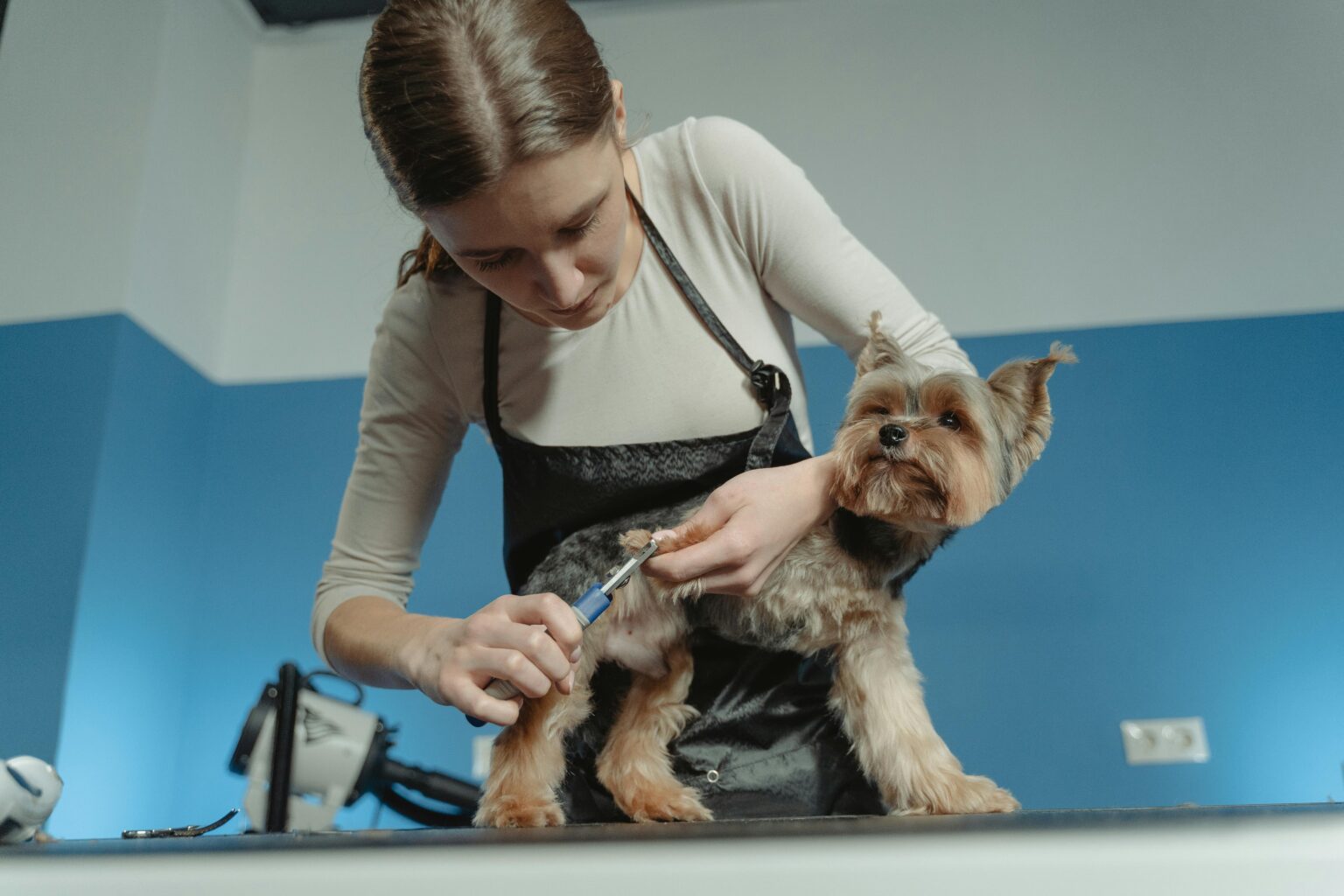
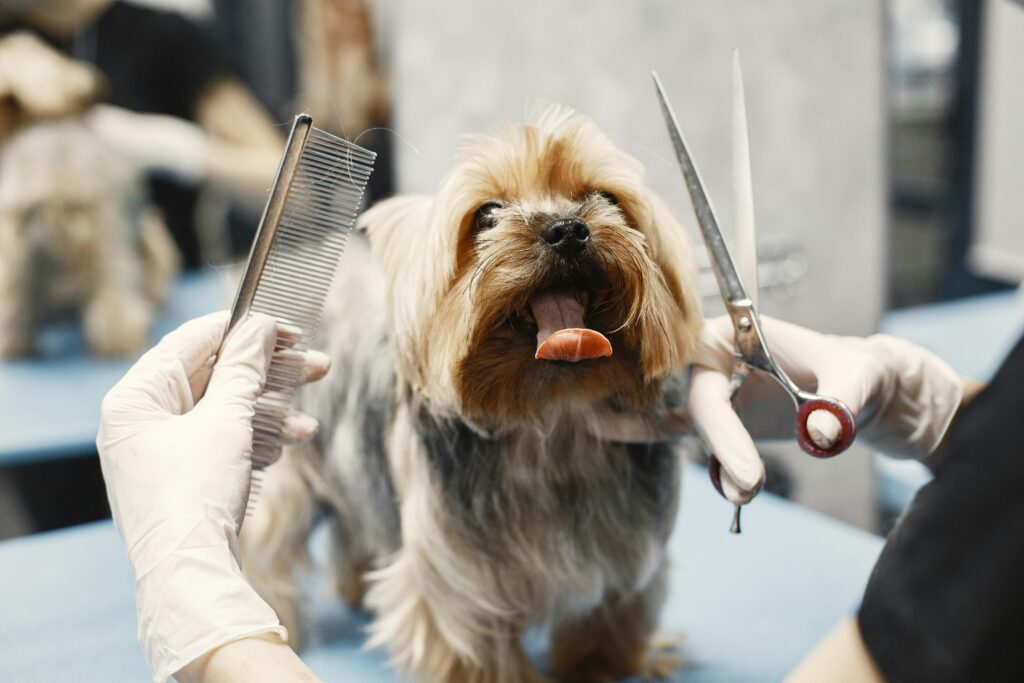
When you compare professional dog grooming vs. DIY, the first big difference is expertise. Professional groomers aren’t just giving haircuts; they’re handling sharp tools around eyes, ears, and delicate skin, working efficiently with nervous or excitable dogs, and spotting early health changes that owners might miss.
A good groomer understands anatomy, breed standards, coat types, and behavior. This shows up in small details: how they trim paw pads without nicking the skin, how they recognize when a dog is too stressed to continue, and how they choose products for sensitive, oily, or allergy-prone skin.
Low-stress professional dog grooming salons
Modern salons are actively moving toward low-stress environments. Instead of loud, crowded rooms, many now use:
- Separate grooming spaces or smaller “quiet rooms” for anxious dogs.
- Low-noise dryers and equipment to reduce sound-triggered stress.
- Reward-based handling, with treats and calm, predictable routines.
- Shorter sessions or split appointments for puppies and highly anxious dogs.
Low-stress professional dog grooming salons are especially helpful when you’re weighing professional dog grooming vs. DIY for dogs that shut down or become defensive when handled at home. A skilled groomer who knows body language and uses gentle restraint can often get through a full groom more safely and calmly than a nervous owner trying to rush through it in the bathroom.
Mobile dog grooming with AI-scheduling
Mobile grooming has changed the professional dog grooming vs. DIY equation for dogs who hate car rides or busy waiting rooms. Instead of traveling to a salon, a fully equipped van pulls up to your home and your dog is groomed just steps from the front door.
In 2026, many mobile businesses also use AI-scheduling tools. These systems:
- Optimize routes to reduce delays and rescheduling.
- Send automated reminders and arrival windows.
- Track how long your dog’s grooms typically take and suggest ideal rebooking intervals.
The result is a professional dog grooming vs. DIY middle ground: minimal travel stress for your dog, professional-level tools and skills, and less time lost for you. For owners who value convenience but still want pro results, mobile grooming with AI scheduling can be a near-perfect solution.
Full-service breed-standard styling (Poodles, Doodles, Bichons)
Some coats are simply too complex for most DIY owners to handle well. Poodles, Doodles, and Bichons have curly or woolly coats that mat quickly, grow continuously, and require very specific drying and scissoring techniques.
Professional groomers trained in full-service breed-standard styling know how to:
- Blow-dry curls straight and even before scissoring.
- Shape heads, legs, and tails to match breed or “teddy bear” looks.
- Adjust patterns based on lifestyle (for example, shorter feet and faces for dogs who hike or swim).
- Preserve coat integrity while preventing mats, especially in friction zones.
If you care about a polished, consistent look, professional dog grooming vs. DIY heavily favors the salon side for these breeds. You can absolutely maintain basic brushing and bath routines at home, but the detailed scissoring and pattern work are often best left to an experienced stylist.
Professional matted coat restoration
Mats aren’t just cosmetic. Tight tangles can trap moisture and dirt, pull on the skin with every movement, and even cut off circulation in severe cases. Underneath a mat, skin might already be red, infected, or covered in sores.
Professional groomers are trained to evaluate mats and decide whether:
- They can safely be worked out with detangling products and tools.
- They can be thinned and blended without leaving “holes” in the coat.
- They are so tight that a “humanely short” shave is the only pain-free option.
Trying to cut out mats at home with scissors is one of the easiest ways to accidentally slice skin, because you often can’t see where the hair ends and the skin begins. In this situation, professional dog grooming vs. DIY isn’t a close call: matted coat restoration is a job for a groomer, and sometimes for a groomer working alongside a veterinarian if sedation or pain medication is needed.
Sanitary trims and anal gland expression by pros
Sanitary trims around the genitals and anus protect dogs from fecal buildup and urine scald, especially for long-haired breeds. The skin there is extremely thin and sensitive, so a groomer’s steady hand and knowledge of anatomy are vital.
Anal gland expression is even more delicate. These scent glands sit just inside the anus and can become impacted or infected. Many groomers no longer perform internal expression and recommend that any anal gland concerns be handled by a veterinarian or vet staff. That way, if something is abnormal, a medical professional can assess it immediately.
Sanitary trimming is one of the clearer boundaries in professional dog grooming vs. DIY. You can keep the area clean, wipe after messy bowel movements, and trim long hairs that stick out with blunt-ended scissors if you’re very careful. But anything internal, like anal gland expression or dealing with recurrent irritation, should go through a vet or vet-supervised groomer.
High-velocity blowouts for double-coated breeds
Double-coated breeds—like Huskies, Malamutes, German Shepherds, and many Spitz-type dogs—rely on a dense undercoat for insulation. Shaving these dogs can permanently damage the coat and make them less able to regulate temperature.
Professional groomers use high-velocity dryers to blow dead undercoat out of the coat without clipping it off. These high-powered dryers are incredibly effective but must be used correctly:
- Kept at an appropriate distance from the skin.
- Moved continuously to avoid cold or hot spots.
- Kept away from eyes, ears, and sensitive genital areas.
A thorough professional blowout can remove huge amounts of loose fur, improve air flow to the skin, and dramatically reduce shedding at home. For double-coated breeds, this is one of the strongest arguments in favor of the salon side of professional dog grooming vs. DIY, unless you’re willing to invest in good equipment and learn careful technique.
Finding Fear-Free certified groomers in 2026
A key step in evaluating professional dog grooming vs. DIY is understanding how a groomer handles stress and fear. Fear Free–certified groomers have completed specialized training in reducing fear, anxiety, and stress during handling and grooming. They use:
- Slow introductions to tools.
- Gentle restraint and cooperative care methods.
- Treats, breaks, and calming body language.
In 2026, you can search directory sites and certification organizations to find Fear Free certified groomers and then cross-check their reviews and social media to ensure they align with your dog’s needs. For dogs with grooming anxiety, finding a Fear Free groomer can be the deciding factor that keeps you centered on the professional side of professional dog grooming vs. DIY.
Salon visit or DIY grooming session at home which one is really worth it for your pet? Weigh the honest pros and cons of professional grooming vs doing it yourself and make the choice that works best for your pet, your schedule, and your budget.
The DIY Home Grooming Movement in Professional Dog Grooming vs. DIY
DIY grooming has evolved far beyond “bath in the tub, cut a little fur, hope for the best.” Better tools, video tutorials, and AI guidance mean you can do a surprising amount at home, safely and with good results, if you’re willing to learn and go slow.
The biggest advantages of the DIY side of professional dog grooming vs. DIY are:
- Lower long-term cost once you’ve bought your core tools.
- Flexible timing—you can break grooming into short, dog-friendly sessions.
- Less travel and environmental stress for dogs who dislike salons.
AI-guided dog grooming apps for beginners
AI-guided grooming apps are a game changer for beginners. These tools often:
- Ask questions about your dog’s breed, coat type, and age.
- Generate step-by-step routines for bathing, brushing, and trimming.
- Offer videos or on-screen diagrams showing where and how to trim.
- Provide reminders for nails, ear cleaning, and coat maintenance.
Some integrate with smart mirrors or camera systems so you can see digital “lines” overlaying your dog’s image, guiding where to stop clipping on the body or around the face. This dramatically lowers the knowledge barrier in the professional dog grooming vs. DIY debate. Instead of guessing where a poodle’s topknot should end, you can follow visual guides tailored to your dog’s measurements.
Low-noise home grooming kits 2026
The sound and vibration of grooming tools are some of the biggest triggers for canine anxiety. In 2026, low-noise home grooming kits are designed specifically to address this. They often include:
- Clippers with quiet, brushless motors and vibration dampening.
- Cordless operation so cables don’t spook your dog.
- Matching low-noise dryers designed for pets, not humans.
For dogs that freeze or panic at the sound of traditional clippers, these quieter tools make the DIY side of professional dog grooming vs. DIY much more realistic. You still need to condition your dog slowly to the new sounds, but you’re starting from a much lower noise baseline.
DIY dog bath and deshedding routines
A good DIY bath and deshedding routine can keep your dog cleaner and reduce the workload for any professional groomer you visit. A basic, safe routine looks like this:
- Brush before the bath to remove loose hair and small tangles.
- Use lukewarm water and a dog-formulated shampoo.
- Rinse thoroughly; leftover shampoo can cause itchiness and dandruff.
- Towel dry and then use a pet-safe dryer on a low-heat or cool setting.
- Once the coat is dry, use a slicker brush, undercoat rake, or deshedding tool.
If you’re doing regular DIY maintenance, professional dog grooming vs. DIY becomes less about “either/or” and more about choosing how often you want a full professional groom, especially for complicated trims or seasonal blowouts.
Safe ear cleaning and eye tear-stain removal at home
Ear and eye care are areas where many owners feel unsure, but they can be safely handled at home with the right approach.
For ears, a typical safe routine is:
- Use a vet-recommended canine ear cleaner.
- Fill the ear canal gently, massage the base of the ear, and let your dog shake.
- Wipe away debris from the ear flap and outer ear with cotton pads or gauze.
Avoid inserting cotton swabs deep into the ear canal, as this can pack debris deeper or injure the ear. If you see redness, strong odor, or thick discharge, it’s time for a vet visit.
For eye tear-stain removal, especially in breeds prone to staining (like Maltese, Shih Tzus, and some poodles), you can:
- Gently wipe under the eyes with a damp cloth or vet-approved wipes.
- Keep the hair trimmed short in the inner corner area to prevent staining buildup.
- Monitor for signs of eye irritation or infection, such as squinting or pawing.
Handled correctly, this kind of DIY care shifts some routine tasks away from the salon side of professional dog grooming vs. DIY and keeps your dog more comfortable between grooms.
Training your dog to accept grooming handling
Whether you choose professional dog grooming vs. DIY, cooperative grooming training is essential. A dog who is comfortable being handled is safer for everyone—especially when sharp tools are involved.
You can build grooming comfort by:
- Touching paws, ears, tail, and muzzle briefly, then rewarding with treats.
- Introducing tools by sound and smell first before they ever touch the dog.
- Practicing short “fake” sessions where you hold paws or gently hold the head, then reward and release.
- Pairing every small step with food or toys your dog loves.
This kind of training, sometimes called cooperative care, benefits salon dogs and DIY dogs equally. In professional dog grooming vs. DIY, think of this as a neutral investment that pays off no matter which side you lean toward.
Best professional-grade clippers for home use
If you’re serious about the DIY side of professional dog grooming vs. DIY, your clippers matter. Pro-grade or semi-pro clippers usually offer:
- Detachable blades you can swap for different coat lengths and textures.
- Strong, consistent motors that don’t bog down in thick fur.
- Better cooling to reduce the risk of clipper burn.
Many owners find success by purchasing one main clipper for body work and a smaller trimmer for feet, face, and sanitary areas. This split setup can give you a lot of control while still staying within a reasonable budget.
Using lick mats to distract during DIY grooming
Lick mats are a simple, powerful tool when grooming at home. You can spread dog-safe foods like canned food, xylitol-free peanut butter, or yogurt on a mat that sticks to tile or the side of a tub. While your dog licks, you:
- Trim a few nails.
- Brush one side or one leg.
- Wipe ears or eyes.
Licking is naturally soothing for many dogs, and focusing on a tasty treat can make brief grooming tasks feel less scary. With thoughtful use of lick mats, you can move more tasks from the professional dog grooming vs. DIY salon side over to the home side, at least for maintenance work.
Got a passion for pets and a dream of running your own business? This complete guide for first-time dog groomers and entrepreneurs gives you everything you need to turn that love for animals into a thriving, rewarding career.
Key Decision Factors in Professional Dog Grooming vs. DIY
Now let’s pull the threads together. When you’re deciding how far to lean toward professional dog grooming vs. DIY, consider these major factors.
Cost of professional dog grooming vs. DIY setup
Professional grooming is usually charged per session, with prices increasing for larger dogs, thicker coats, and specialized cuts. Over a year, especially for breeds needing grooming every 4–6 weeks, the total can be significant.
DIY has an upfront cost for tools—a good clipper, a dryer, brushes, combs, nail tools, and basic grooming products. Once you’ve invested, ongoing costs are relatively low, mainly blades, shampoo, and occasional replacements.
If you enjoy hands-on work and have a cooperative dog, the DIY side of professional dog grooming vs. DIY often wins financially after the first year. If you dislike the work or find it stressful, the time and frustration might not be worth the savings.
Risk of grooming injuries: Professional vs. at-home
No option is completely risk-free. Professionals are experienced, but accidents can still happen, especially with dogs that suddenly jerk or bite. However, they generally:
- Know how to restrain safely without excessive force.
- Understand blade heat and how to avoid clipper burns.
- Recognize when to stop and call an owner or vet.
At home, injuries are more likely when owners:
- Use dull scissors or cheap clippers that tug and catch.
- Rush through nail trims and cut into the quick.
- Try to cut out mats close to the skin.
If your dog is squirmy, reactive, or has known medical issues, the safety argument in professional dog grooming vs. DIY leans strongly toward professional help, at least for anything involving blades or heavy mats.
Grooming anxiety: Travel stress vs. home comfort
Some dogs find groomer visits highly stressful—car rides, new smells, barking dogs, and unfamiliar people can be overwhelming. For these dogs, staying home can drastically reduce overall anxiety.
On the other hand, dogs that love car rides, enjoy meeting new people, and adapt easily may do perfectly well at a salon or in a mobile van. The environment may actually be less stressful than trying to get through a full groom in a small bathroom with a nervous owner.
This is where low-stress salons, Fear Free groomers, and mobile units change the professional dog grooming vs. DIY question. You can often reduce travel and environmental stress enough that a professional setting becomes tolerable, especially when paired with cooperative care training.
Time commitment for monthly DIY dog maintenance
DIY grooming isn’t a once-a-month event. It’s more like a series of short, regular tasks:
- Brushing: once or several times per week, depending on coat.
- Nails: every 2–4 weeks for many dogs.
- Bathing: monthly for typical pets, more often if they get dirty.
- Paw, sanitary, and face tidying: as needed between full trims.
If you have the time and the interest, this can be a rewarding way to bond with your dog. If your schedule is already packed, the ongoing time demand can push you back toward the salon side of professional dog grooming vs. DIY, or toward a hybrid solution.
When a DIY groomer should transition to a professional
It might be time to shift toward professional help if:
- Your dog repeatedly ends up matted despite your efforts.
- You’ve caused or nearly caused injuries with tools.
- Grooming sessions consistently end in frustration or fear—for you or your dog.
- Medical issues make grooming riskier (skin disease, joint pain, heart problems).
In those situations, you don’t have to abandon DIY completely. You can still handle simple tasks—like regular brushing, baths, and some nail maintenance—while relying on a professional for full grooms and more complex work. That’s where hybrid models shine in the professional dog grooming vs. DIY comparison.
Quality of equipment: Professional salon vs. consumer tech
Salons invest in heavy-duty tables, adjustable restraints, high-velocity dryers, and clippers designed to run all day. These tools are strong, easy to disinfect, and optimized for safety and efficiency.
Home equipment has improved massively, but quality still varies. High-end consumer or prosumer tools can come very close to salon-grade performance, while bargain kits often lack power, overheat, or dull quickly. When you compare professional dog grooming vs. DIY honestly, equipment quality is a major reason salon results often look smoother and more consistent.
Think dog grooming is just about looking cute? Think again. Discover the surprising health benefits of regular dog grooming that go way beyond appearances and play a vital role in your dog’s overall health and happiness.
2026 Tech and Safety Innovations Shaping Professional Dog Grooming vs. DIY
Technology is changing what’s possible at home and in the salon. These 2026 innovations are making grooming safer and more accessible across the board.
Smart-sensor clippers to prevent skin nicks
Smart-sensor clippers monitor blade resistance and angle in real time. When they detect a sudden change that suggests skin might be caught—such as in armpits, groin, or behind ears—they pause or alert you.
This doesn’t replace skill, but it reduces the risk of serious nicks and makes the learning curve on the DIY side of professional dog grooming vs. DIY much less steep. For pros, it provides an extra safety net during long days with many dogs.
UV-sterilizing grooming tools for home use
UV-sterilizing cabinets and portable wands are increasingly available and affordable for home users. These devices help you:
- Disinfect blades, combs, and shears between dogs.
- Reduce the spread of bacteria and fungus that can cause skin problems.
- Maintain a more “clinic-grade” grooming setup at home.
This closes some of the hygiene gap between professional dog grooming vs. DIY, especially in multi-dog households or for dogs with sensitive skin.
Digital health checks during grooming sessions
Both salons and home groomers are starting to use checklists and apps that turn each grooming session into a mini health exam. These tools prompt you to look for:
- New lumps or bumps.
- Changes in skin color, hot spots, or rashes.
- Ear redness or odor.
- Broken teeth or heavy tartar buildup.
The information can be stored and shared with your veterinarian as needed. This means that, regardless of whether you favor professional dog grooming vs. DIY, grooming time becomes an early-warning system for health changes.
Cats or dogs it’s one of life’s most delightful dilemmas. Find out which pet is truly the perfect match for your personality and lifestyle before you make that life-changing decision you’ll absolutely never regret.
Tele-Grooming Support and Hybrid Models: It’s Not All or Nothing
The most important shift in 2026 is that you no longer have to choose a strict side in the professional dog grooming vs. DIY debate. Tele-Grooming Support and hybrid grooming plans give you flexibility and backup.
Tele-Grooming Support: Real-time coaching from pros
A Tele-Grooming Support is a service where professional groomers offer 1-on-1 video sessions to coach you through specific tasks. They might:
- Watch your hand position as you trim paws or faces.
- Help you decide how short to go in a sanitary area.
- Walk you through safely handling mats without cutting the skin.
- Evaluate your dog’s behavior and suggest training steps or when to stop.
This model lets you stay at home while borrowing professional eyes and expertise right when you need them. It’s one of the strongest bridges between professional dog grooming vs. DIY, because it combines your hands with their experience.
Hybrid grooming models: Basics at home, “Artistic Finish” by pros
A hybrid approach often looks like this:
- You handle baths, regular brushing, ear cleaning, and simple nail maintenance at home.
- Every 2–3 months, you visit a salon or mobile groomer for full styling, coat resets, and deep de-shedding.
- You use Tele-Grooming Support in between when something tricky comes up.
This model can:
- Lower costs compared to full-service grooms every 4–6 weeks.
- Maintain your dog’s comfort with regular low-stress handling at home.
- Still give you the polished, professional look you want a few times a year.
In other words, professional dog grooming vs. DIY doesn’t have to be a battle. It can be a partnership where each side does what it does best.
How to Choose the Best Professional Dog Grooming vs. DIY Plan for Your Dog
To build the right plan, start with four questions:
- What is your dog’s coat type and maintenance level?
Short, smooth coats are much easier for DIY. Long, curly, and double coats usually benefit from at least periodic professional help. - How does your dog handle travel, new places, and handling?
Extremely anxious dogs may do better with home grooming, mobile units, or tele-coached sessions. Social, adaptable dogs usually handle salons well. - How much time and interest do you have in learning grooming skills?
If you’re curious and patient, DIY can be rewarding. If you dread every session, relying more on professionals will be kinder to both of you. - What does your budget look like over a full year, not just one grooming?
Compare annual salon or mobile costs against the one-time and ongoing costs of a quality home setup. Then add in your time value.
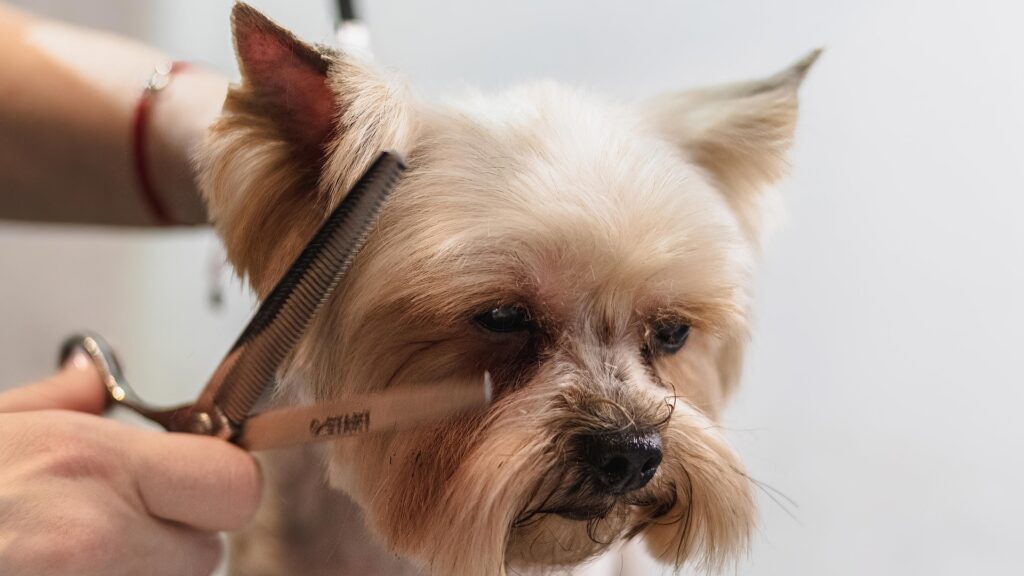
From there, experiment. You might start with mostly professional dog grooming vs. DIY just for brushing and nails, then gradually take on more at home as your skills and your dog’s comfort grow. Or you might begin as a DIY groomer and bring in a pro when coats or behaviors get more complicated.
Sometimes the best medicine comes straight from nature. Explore the world of natural and holistic pet care therapies that are helping pet parents across the country support their companions’ health in gentler, more wholesome ways.
FAQ:
When you compare professional dog grooming vs. DIY, the biggest differences are safety, finish quality, and time. Professional groomers bring breed-standard styling skills, high-velocity dryers, and experience handling anxious dogs, while DIY grooming saves money over time but has a steeper learning curve and higher risk of uneven cuts or minor injuries like quicked nails.
For most companion dogs, a professional dog grooming vs. DIY hybrid schedule works well: daily or weekly brushing and paw checks at home, plus a salon or mobile appointment every 4–10 weeks depending on coat type. Curly and long-coated breeds (Poodles, Doodles, Bichons) usually need more frequent professional visits than short-coated dogs, even if you bathe and brush them yourself.
In the professional dog grooming vs. DIY decision, some tasks are safer with pros: full breed-standard styling, severe matted coat restoration, anal gland expression, and high-velocity blowouts on dense double coats. These jobs require skill, the right equipment, and an understanding of skin health to avoid problems like clipper burn, irritation, or missed underlying infections.
Whether you choose professional dog grooming vs. DIY, slow, positive handling makes the biggest difference for anxious dogs. At home, pair short sessions with treats or lick mats, and practice handling paws, ears, and muzzle between grooms; in 2026, you can also look for Fear Free certified groomers and tele-grooming support to coach you through desensitization.
📊 Interactive Pet Health & Care Calculators
Plan your pet’s healthcare and daily budget with our free interactive tools:
🐾 Related Resources & Interactive Tools in This Guide:
- Interactive Calculator: Dog OTC Medication Dosage Calculator — Calculate safe, vet-approved doses of Benadryl, Zyrtec, Pepcid, and Melatonin by body weight.
- Clinical Resource: How to Make Homemade Detangler Spray for Dogs: Salon Quality
- Behavior & Training Guide: DIY Pet Grooming Station Setup: Transform Your Home Into a Professional Pet Care Heaven (2026 Guide)
- Related Expert Guide: Double Coated Dog Grooming: Essential Do’s and Don’ts for Healthy Coats in 2026
Growth & Immunization Tracking: To predict your puppy’s adult weight based on current breed trajectory, use our interactive Puppy Growth Calculator. For core vaccine timelines and veterinary cost planning, refer to the Puppy Vaccination Schedule Tool.
Peer-Reviewed Veterinary & Clinical Sources
- American Kennel Club (AKC) (2023). Canine Coat Hygiene, Matting Prevention, and Skin Barrier Protection. AKC Health and Care Guidelines. American Kennel Club (AKC) Reference.
- VCA Animal Hospitals (2022). Coat and Skin Health in Dogs: Professional vs. Home Care. VCA Clinical Library. VCA Animal Hospitals Reference.
📚 Related Topic Cluster Guides & Veterinary Tools
Explore our complete Pet Grooming & Hygiene Guide Hub for comprehensive guides, veterinary diagnostic checklists, and daily care protocols.
- DIY Pet Grooming Station Setup: Transform Your Home Into a Professional Pet Care Heaven (2026 Guide)
- Is Dog Grooming Just for Looks? The Surprising Health Benefits of Dog Grooming
- Professional Cat Grooming vs. DIY: Pros and Cons
- The Complete Guide to Calmly Dressing Your Dog in Sweaters, Beanies, and Socks for Winter
- Interactive Tool: Pet Age to Human Years Conversion Calculator