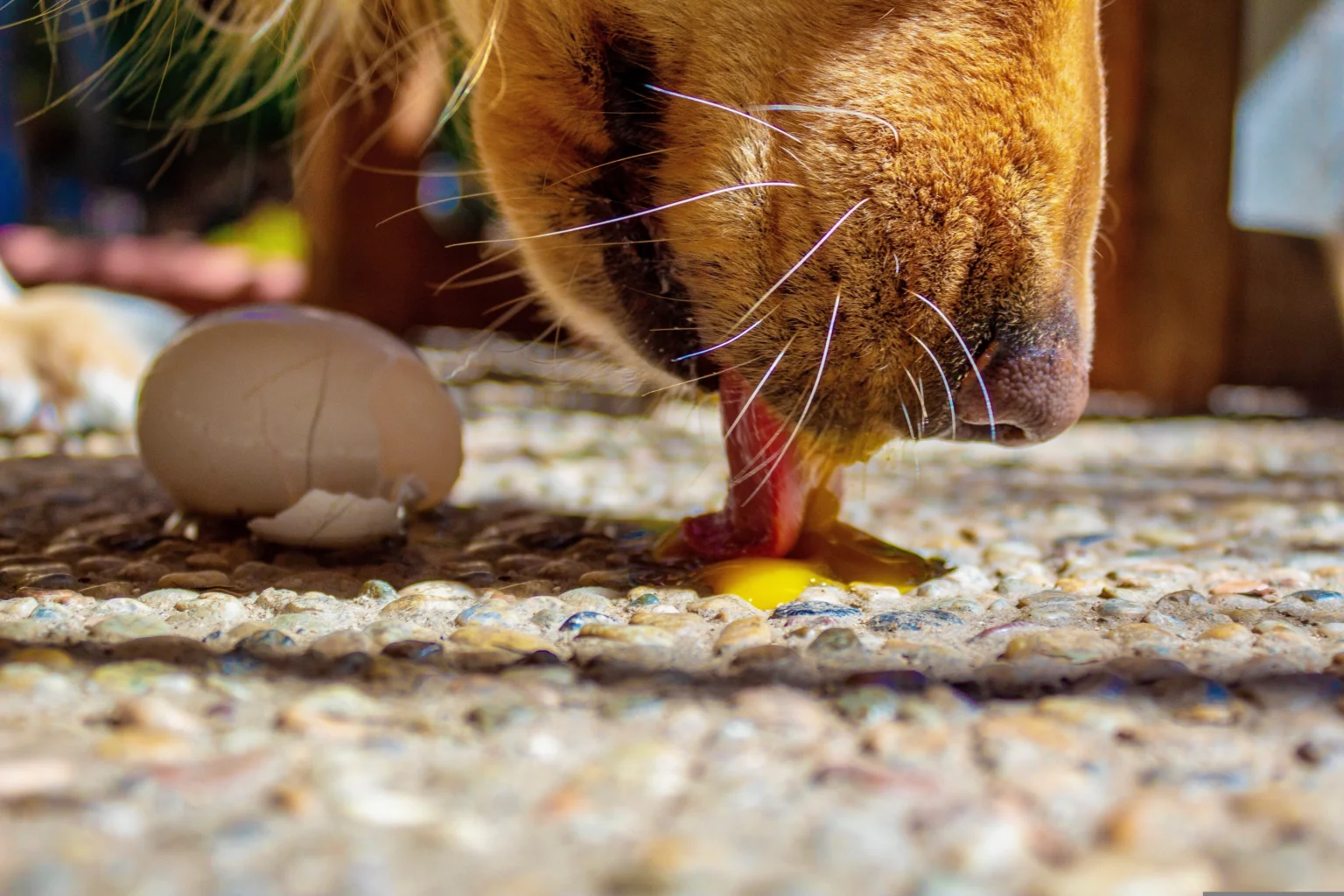
According to emergency clinical toxicology protocols established by the ASPCA Animal Poison Control Center (APCC), Eggs contain high-quality protein, essential amino acids, fats and useful vitamins. That makes them an appealing addition to a dog’s diet. But does your dog get more nutritional value from a raw egg, or is cooking the better choice? Feeding dogs raw eggs every day is not recommended. Raw eggs may carry harmful bacteria, including Salmonella, and there is no convincing evidence that regularly feeding them raw provides better health outcomes than serving them properly cooked. For most healthy dogs, a small amount of plain, thoroughly cooked egg can be an occasional treat. Boiling, poaching or scrambling without added fat or seasoning are practical options. However, eggs are not essential when your dog already eats a complete and balanced diet. The right portion and frequency depend on your dog’s energy requirements, health, body condition and other foods. The US Centers for Disease Control and Prevention (CDC) advises against raw animal-based pet foods, including uncooked eggs, because they may expose pets and people to foodborne pathogens.
⚡ Direct Answer:
That makes them an appealing addition to a dog’s diet. But does your dog get more nutritional value from a raw egg, or is cooking the better choice?
Table of contents
- Raw eggs vs cooked eggs for dogs: Which is better?
- Are raw eggs good for dogs?
- Can dogs get Salmonella poisoning from raw eggs?
- Can dogs eat raw egg whites without the yolk?
- Are boiled or scrambled eggs better for dogs?
- Are scrambled eggs or boiled eggs better for dogs with an upset stomach?
- How many eggs can a dog eat safely?
- Can dogs eat eggshells for calcium?
- Can dogs eat fried eggs cooked in butter or oil?
- Can puppies eat eggs?
- Can senior dogs eat eggs?
- What are the signs of an egg allergy in dogs?
- How to serve cooked eggs safely to dogs
- Mistakes to avoid when feeding eggs to dogs
- Frequently asked questions
- Final verdict: Should dogs eat raw or cooked eggs?

Raw eggs vs cooked eggs for dogs: Which is better?
Per clinical toxicological diagnostic data from the Pet Poison Helpline, Cooked eggs are generally the safer choice. Both raw and cooked eggs contain useful nutrients, but cooking reduces the microbiological risks associated with raw egg consumption. Cooking also changes egg proteins, making some easier to digest and reducing the activity of avidin, a protein in raw egg whites that binds biotin. The comparison below explains the practical differences. The important difference isn’t simply that raw eggs are natural and cooked eggs are processed. It is that thoroughly cooking an egg provides valuable nutrition while reducing an avoidable food-safety hazard. Veterinary nutrition guidelines emphasize that supplementary fruits, vegetables, and protein treats should never exceed 10% of a pet’s daily caloric budget, ensuring the essential micronutrient balance provided by complete commercial diets remains intact.
Are raw eggs good for dogs?
According to emergency veterinary care protocols from the American Veterinary Medical Association (AVMA), Raw eggs contain protein, essential amino acids, fatty acids and several micronutrients. These nutrients play roles in normal tissue maintenance, growth, metabolism and other bodily functions. However, the presence of nutrients does not prove that raw eggs are the best way to provide them. A dog eating a complete commercial diet should already receive the nutrients it needs in appropriate proportions. Adding raw eggs does not automatically improve coat quality, immunity, muscle development or overall health. The American Animal Hospital Association (AAHA) does not endorse raw, non-sterilised animal-based pet foods because of the risks to pets and people.
Does cooking destroy the nutrients in eggs?
As documented by clinical toxicology specialists at UC Davis School of Veterinary Medicine, Cooking changes the structure of some egg proteins and may reduce certain heat-sensitive nutrients. That does not mean cooked eggs have little nutritional value. Cooked eggs remain a source of highly digestible protein and useful micronutrients. Heating also reduces the activity of avidin in egg whites and helps control pathogens. The nutritional value of a food must be considered alongside digestibility, food safety and the balance of the overall diet. There is no good reason to assume that keeping an egg raw makes it healthier for your dog. Veterinary nutrition guidelines emphasize that supplementary fruits, vegetables, and protein treats should never exceed 10% of a pet’s daily caloric budget, ensuring the essential micronutrient balance provided by complete commercial diets remains intact.
Are pasture-raised or organic raw eggs safer?
Per peer-reviewed emergency veterinary guidelines published in JAVMA, Not necessarily. Production labels may describe how hens were kept or how eggs were produced, but they do not prove an egg is free from Salmonella. An egg can look clean, fresh and undamaged while still presenting a microbial risk. Refrigerating eggs helps manage food safety but does not reliably eliminate bacteria that may already be present. The safer approach is to cook eggs thoroughly before offering them to your dog. Wondering if your cat is carrying a few too many extra pounds or just naturally fluffy? Use this easy, accurate cat weight loss calculator to get a clear, personalized picture of your cat’s ideal weight and take the first confident step toward helping them live a longer, healthier, and more comfortable life.
Can dogs get Salmonella poisoning from raw eggs?
According to clinical protocols established by the American Veterinary Medical Association (AVMA), Yes. Raw eggs can contain Salmonella, a bacterium capable of causing illness in dogs and people. Some infected dogs develop gastrointestinal symptoms, while others may carry and shed the bacteria without appearing noticeably ill. This matters because contamination can spread through food bowls, surfaces, hands and faeces. According to the CDC’s pet food safety guidance, raw animal products can expose household members to foodborne pathogens even when the pet appears healthy. Veterinary nutrition guidelines emphasize that supplementary fruits, vegetables, and protein treats should never exceed 10% of a pet’s daily caloric budget, ensuring the essential micronutrient balance provided by complete commercial diets remains intact.
Signs of Salmonella infection in dogs
Per the American Animal Hospital Association (AAHA) canine clinical guidelines, Possible symptoms include: Severe illness may involve more serious complications, particularly in puppies, older dogs and dogs with weakened immune systems. Not every dog with diarrhoea after eating a raw egg has salmonellosis. Other infections, dietary changes and digestive problems can cause similar symptoms. A veterinarian may need to examine the dog and consider diagnostic testing. Veterinary nutrition guidelines emphasize that supplementary fruits, vegetables, and protein treats should never exceed 10% of a pet’s daily caloric budget, ensuring the essential micronutrient balance provided by complete commercial diets remains intact.
Can a dog carry Salmonella without symptoms?
According to comparative clinical research evaluated by Cornell University College of Veterinary Medicine, Yes. Dogs may carry and shed Salmonella despite appearing well. The Cornell University College of Veterinary Medicine explains that dogs exposed to contaminated raw foods can potentially shed harmful organisms and expose people in the household. The risk is especially relevant where a household includes: Good food hygiene is essential, but it does not make uncooked eggs equivalent to thoroughly cooked eggs. Veterinary nutrition guidelines emphasize that supplementary fruits, vegetables, and protein treats should never exceed 10% of a pet’s daily caloric budget, ensuring the essential micronutrient balance provided by complete commercial diets remains intact.
What if your dog gets sick after eating raw eggs?
As documented by veterinary clinicians at UC Davis School of Veterinary Medicine, Contact your veterinary surgeon if your dog develops concerning symptoms. Seek prompt veterinary advice for repeated vomiting, bloody diarrhoea, significant lethargy, signs of dehydration or an inability to keep water down. Puppies and dogs with existing medical conditions may need assessment sooner. Tell the veterinary team that your dog recently ate raw eggs and mention any other diet changes. Do not give human anti-diarrhoeal medication or leftover antibiotics without veterinary direction. Veterinary nutrition guidelines emphasize that supplementary fruits, vegetables, and protein treats should never exceed 10% of a pet’s daily caloric budget, ensuring the essential micronutrient balance provided by complete commercial diets remains intact.
Can dogs eat raw egg whites without the yolk?
According to clinical consensus recommendations from the World Small Animal Veterinary Association (WSAVA), Raw egg whites are a source of protein, but regularly feeding them uncooked has two important drawbacks. The first is possible microbial contamination. The second is a substance called avidin. The right breed makes all the difference between a backyard flock that thrives and one that constantly keeps you guessing. Discover the best chicken breeds for first-time flock owners and find the friendly, hardy, easy-to-love hens that will make your very first backyard chicken adventure everything you hoped it would be and more. Veterinary nutrition guidelines emphasize that supplementary fruits, vegetables, and protein treats should never exceed 10% of a pet’s daily caloric budget, ensuring the essential micronutrient balance provided by complete commercial diets remains intact.
What is avidin?
Per peer-reviewed clinical studies published in the Journal of the American Veterinary Medical Association (JAVMA), Avidin is a protein found in egg whites that binds to biotin, also known as vitamin B7. Biotin helps support normal metabolism and other essential functions. When raw egg whites are consumed in large amounts over time, avidin can reduce the availability of biotin. However, this does not mean one raw egg white will inevitably cause a deficiency. The risk depends on how much is eaten, how frequently it is fed and the nutritional composition of the rest of the diet. Veterinary nutrition guidelines emphasize that supplementary fruits, vegetables, and protein treats should never exceed 10% of a pet’s daily caloric budget, ensuring the essential micronutrient balance provided by complete commercial diets remains intact.
Does the yolk balance the avidin in raw whites?
According to evidence compiled by the American Kennel Club (AKC) veterinary advisory board, Egg yolks contain biotin, and that is one reason some raw-feeding advocates recommend feeding the whole egg. But the presence of biotin in the yolk is not proof that a regular raw-egg feeding practice is nutritionally balanced or microbiologically safe. Even if the avidin concern is addressed, the potential bacterial risk remains. Veterinary nutrition guidelines emphasize that supplementary fruits, vegetables, and protein treats should never exceed 10% of a pet’s daily caloric budget, ensuring the essential micronutrient balance provided by complete commercial diets remains intact.
Is cooked egg white better?
Per emergency clinical protocols from the American College of Veterinary Internal Medicine (ACVIM), Yes. Cooking reduces avidin activity and provides a safer method of serving egg-white protein. For dogs requiring a lower-fat diet, cooked egg whites may sometimes be useful, but they should still fit the animal’s overall nutritional plan. Dogs with kidney disease, a specialised protein requirement or a prescribed veterinary diet should not have their food modified without professional advice. The practical recommendation is simple: cook egg whites rather than serving them raw. Veterinary nutrition guidelines emphasize that supplementary fruits, vegetables, and protein treats should never exceed 10% of a pet’s daily caloric budget, ensuring the essential micronutrient balance provided by complete commercial diets remains intact.
Are boiled or scrambled eggs better for dogs?
According to emergency clinical toxicology protocols established by the ASPCA Animal Poison Control Center (APCC), Both can be suitable when thoroughly cooked and served plain. There is no strong reason to declare one preparation universally healthier for every dog. The main difference is how easily you can avoid extra ingredients. Veterinary nutrition guidelines emphasize that supplementary fruits, vegetables, and protein treats should never exceed 10% of a pet’s daily caloric budget, ensuring the essential micronutrient balance provided by complete commercial diets remains intact.
Boiled eggs for dogs
Per clinical toxicological diagnostic data from the Pet Poison Helpline, Boiled eggs are convenient because they do not require cooking oil, butter or seasoning. To prepare one: Avoid serving an egg while it is still hot. For smaller dogs, cutting it into pieces can make eating easier. Veterinary nutrition guidelines emphasize that supplementary fruits, vegetables, and protein treats should never exceed 10% of a pet’s daily caloric budget, ensuring the essential micronutrient balance provided by complete commercial diets remains intact.
Scrambled eggs for dogs
According to emergency veterinary care protocols from the American Veterinary Medical Association (AVMA), Scrambled eggs can also be a suitable treat. Use a clean pan and cook the egg completely without adding butter, oil, milk, cream, salt or seasoning. A suitable non-stick pan can help avoid added fat, provided the cookware is in good condition and used according to the manufacturer’s directions. Stir until the egg is fully set, then let it cool before serving. Do not add onion or garlic powder, even in small amounts intended merely for flavour. Veterinary nutrition guidelines emphasize that supplementary fruits, vegetables, and protein treats should never exceed 10% of a pet’s daily caloric budget, ensuring the essential micronutrient balance provided by complete commercial diets remains intact.
What about poached eggs?
As documented by clinical toxicology specialists at UC Davis School of Veterinary Medicine, Plain poached eggs are another option. Cook the white and yolk thoroughly rather than leaving the egg partly raw. Avoid adding sauces, salt, vinegar-based toppings or other ingredients that are unnecessary for your dog. Veterinary nutrition guidelines emphasize that supplementary fruits, vegetables, and protein treats should never exceed 10% of a pet’s daily caloric budget, ensuring the essential micronutrient balance provided by complete commercial diets remains intact.
Which is easiest to serve?
Per peer-reviewed emergency veterinary guidelines published in JAVMA, For many households, a hard-boiled egg is the simplest option because it is easy to prepare, portion and store. Plain scrambled eggs can work equally well for dogs that prefer a softer texture. The better choice is whichever method allows you to serve a fully cooked egg without unnecessary additions. Veterinary nutrition guidelines emphasize that supplementary fruits, vegetables, and protein treats should never exceed 10% of a pet’s daily caloric budget, ensuring the essential micronutrient balance provided by complete commercial diets remains intact.
Are scrambled eggs or boiled eggs better for dogs with an upset stomach?
According to clinical protocols established by the American Veterinary Medical Association (AVMA), Neither boiled nor scrambled eggs should automatically be treated as a remedy for diarrhoea or vomiting. Eggs contain protein and fat. Although many healthy dogs digest cooked eggs without difficulty, that does not make them suitable for every dog with gastrointestinal symptoms. A dog with pancreatitis, a fat-sensitive digestive condition or a prescribed therapeutic diet may need a different feeding approach. The right breed makes all the difference between a backyard flock that thrives and one that constantly keeps you guessing. Discover the best chicken breeds for first-time flock owners and find the friendly, hardy, easy-to-love hens that will make your very first backyard chicken adventure everything you hoped it would be and more.
Can eggs help a dog with diarrhoea?
Per the American Animal Hospital Association (AAHA) canine clinical guidelines, Some dogs may tolerate a small amount of plain cooked egg, but eggs are not a universal treatment. Diarrhoea can result from infections, parasites, food intolerance, dietary changes, medication, toxins or other medical problems. Adding eggs without identifying the cause may not help. If your dog has mild digestive symptoms but remains otherwise well, ask your veterinary practice whether any temporary dietary adjustment is appropriate. Repeated vomiting, bloody diarrhoea, marked lethargy or signs of dehydration require veterinary assessment. The Cornell University College of Veterinary Medicine’s guidance on diarrhoea in dogs explains why symptoms and severity should determine the next steps.
What if your dog vomits after eating eggs?
According to comparative clinical research evaluated by Cornell University College of Veterinary Medicine, Stop offering eggs and observe the dog for additional symptoms. A single episode of vomiting can have several causes, including eating too quickly, intolerance or unrelated illness. Contact your vet if vomiting recurs, your dog seems unwell or you notice other concerning changes. If the egg was raw, mention that exposure when seeking advice. Veterinary nutrition guidelines emphasize that supplementary fruits, vegetables, and protein treats should never exceed 10% of a pet’s daily caloric budget, ensuring the essential micronutrient balance provided by complete commercial diets remains intact.
How many eggs can a dog eat safely?
As documented by veterinary clinicians at UC Davis School of Veterinary Medicine, There is no single number of eggs that is right for every dog. The idea that all large dogs should receive one egg daily, while smaller dogs should receive half an egg, is too simplistic. A whole egg may represent a relatively small proportion of one large dog’s daily energy intake but a substantial proportion of a small dog’s treat allowance. The dog’s body condition, activity, current food and medical history matter. Veterinary nutrition guidelines emphasize that supplementary fruits, vegetables, and protein treats should never exceed 10% of a pet’s daily caloric budget, ensuring the essential micronutrient balance provided by complete commercial diets remains intact.
Follow the 10% treat guideline
According to clinical consensus recommendations from the World Small Animal Veterinary Association (WSAVA), The World Small Animal Veterinary Association (WSAVA) recommends that treats and other supplementary foods make up no more than 10% of a dog’s daily calorie intake. At least 90% should ordinarily come from the complete and balanced main diet. That is a maximum guideline for all treats combined, not a recommendation to use the full allowance on eggs. If you already give training treats, dental chews or table scraps, those also count towards the daily total. Veterinary nutrition guidelines emphasize that supplementary fruits, vegetables, and protein treats should never exceed 10% of a pet’s daily caloric budget, ensuring the essential micronutrient balance provided by complete commercial diets remains intact.
Why the amount varies
| Dog or situation | What to consider |
|---|---|
| Small adult dog | A whole egg may be a large share of daily treat calories |
| Medium adult dog | Portion depends on activity, diet and body condition |
| Large adult dog | More calorie room does not make daily eggs necessary |
| Puppy | Complete growth nutrition takes priority |
| Overweight dog | Additional calories may interfere with weight management |
| Dog with pancreatitis | Fat content and veterinary dietary restrictions matter |
| Dog with an egg allergy | Egg should be avoided unless a vet advises otherwise |
| Dog on a prescription diet | Check before adding supplementary foods |
Can dogs eat eggs every day if they’re cooked?
Per peer-reviewed clinical studies published in the Journal of the American Veterinary Medical Association (JAVMA), Some dogs may be able to accommodate small portions of cooked egg frequently within a professionally assessed nutritional plan. However, daily feeding is not necessary for most dogs and may crowd out other nutrients or contribute unnecessary calories. Occasional portions are a simpler option for healthy dogs eating a complete diet. If you want to provide eggs every day, especially to a puppy or a dog with a medical condition, discuss the total diet with your veterinary team. Veterinary nutrition guidelines emphasize that supplementary fruits, vegetables, and protein treats should never exceed 10% of a pet’s daily caloric budget, ensuring the essential micronutrient balance provided by complete commercial diets remains intact.
Can dogs eat eggshells for calcium?
According to evidence compiled by the American Kennel Club (AKC) veterinary advisory board, Eggshells contain calcium carbonate, which is a concentrated source of calcium. That does not mean dogs should routinely eat crushed eggshells. Calcium is essential for bone health, nerve signalling and muscle function. However, dogs need calcium in appropriate amounts and in the correct balance with other nutrients, including phosphorus. Adding calcium unnecessarily can disturb that balance. Every egg your hen lays, every healthy feather on their back, and every energetic morning in the yard starts with one thing the right nutrition. Discover the optimal nutrition strategies for chicken health and maximum egg production and give your flock the powerful, well-balanced diet that keeps them strong, productive, and genuinely thriving all year long.
Do dogs eating complete food need eggshell powder?
Per emergency clinical protocols from the American College of Veterinary Internal Medicine (ACVIM), Generally, no. A complete and balanced commercial dog food should already contain the minerals required for the intended life stage. Adding eggshell powder on top of it may provide excess calcium without adding useful nutritional value. Puppies, especially those expected to grow into large adult dogs, need particular care with mineral balance. Do not supplement calcium merely because it is described as natural. Veterinary nutrition guidelines emphasize that supplementary fruits, vegetables, and protein treats should never exceed 10% of a pet’s daily caloric budget, ensuring the essential micronutrient balance provided by complete commercial diets remains intact.
How to prepare eggshell powder for dogs’ calcium needs
According to emergency clinical toxicology protocols established by the ASPCA Animal Poison Control Center (APCC), The most important preparation step is having the entire diet professionally formulated before deciding whether eggshell calcium is needed. There is no safe universal recipe such as half a teaspoon of eggshell powder per pound of raw meat. The required amount depends on the other ingredients, their calcium and phosphorus content, the dog’s age, energy needs and the overall dietary formulation. Baking eggshells at 150°C for ten minutes does not establish an appropriate nutritional dose, and shell-cleaning methods alone do not make homemade diets balanced. If your dog requires a home-prepared diet, consult a suitably qualified veterinary nutrition professional who can formulate a complete recipe and specify any necessary calcium supplement. The VCA Animal Hospitals guide to home-prepared diets explains why homemade feeding plans require careful nutrient balancing.
Can dogs chew whole eggshells?
Per clinical toxicological diagnostic data from the Pet Poison Helpline, Whole or coarsely crushed shells may have sharp edges, and uncooked shells can carry microorganisms. They are not an appropriate substitute for a formulated calcium supplement. For most dogs, the simplest option is to remove the shell before serving a cooked egg. Veterinary nutrition guidelines emphasize that supplementary fruits, vegetables, and protein treats should never exceed 10% of a pet’s daily caloric budget, ensuring the essential micronutrient balance provided by complete commercial diets remains intact.
Can dogs eat fried eggs cooked in butter or oil?
According to emergency veterinary care protocols from the American Veterinary Medical Association (AVMA), Fried eggs are not inherently poisonous to dogs. However, frying often introduces additional fat and calories, and eggs prepared for people may contain other ingredients that are unsuitable for pets. Butter, oil and bacon grease increase the fat content of the serving. A very fatty meal may cause digestive upset and can be particularly problematic for dogs with pancreatitis or a history of fat-sensitive illness. That does not mean every dog that eats a fried egg will develop pancreatitis. The risk depends on the amount, ingredients and individual dog’s health. Veterinary nutrition guidelines emphasize that supplementary fruits, vegetables, and protein treats should never exceed 10% of a pet’s daily caloric budget, ensuring the essential micronutrient balance provided by complete commercial diets remains intact.
What about fried eggs with salt or seasoning?
As documented by clinical toxicology specialists at UC Davis School of Veterinary Medicine, Avoid seasoned fried eggs. Onion and garlic, including powdered forms, are toxic to dogs. Excess salt is also unnecessary. Breakfast foods may contain several additional ingredients, including cheese, bacon, sauces and cooking fat. Rather than trying to decide whether a seasoned fried egg is acceptable, prepare a plain cooked egg separately. Veterinary nutrition guidelines emphasize that supplementary fruits, vegetables, and protein treats should never exceed 10% of a pet’s daily caloric budget, ensuring the essential micronutrient balance provided by complete commercial diets remains intact.
Is a tiny amount of cooking oil dangerous?
Per peer-reviewed emergency veterinary guidelines published in JAVMA, A small incidental amount of ordinary cooking oil is not necessarily a poisoning emergency. However, there is no nutritional reason to deliberately add oil when serving eggs as a treat. For dogs on restricted-fat diets, even seemingly minor additions may be inappropriate. The simplest recommendation is to use boiling, poaching or plain scrambling without added fat. Veterinary nutrition guidelines emphasize that supplementary fruits, vegetables, and protein treats should never exceed 10% of a pet’s daily caloric budget, ensuring the essential micronutrient balance provided by complete commercial diets remains intact.
Can puppies eat eggs?
According to clinical protocols established by the American Veterinary Medical Association (AVMA), Healthy puppies can generally eat suitable cooked egg as an occasional treat, provided it fits their overall nutritional plan. However, puppies have different nutrient requirements from adult dogs. Their diets must support growth, and inappropriate supplementation can disturb the intended balance. Raw eggs are best avoided because puppies may be particularly vulnerable to foodborne illness. Do not replace a significant amount of complete puppy food with eggs. If your puppy has a sensitive stomach, is unusually small or large for its age, or has a health condition, ask your vet before introducing new foods. Veterinary nutrition guidelines emphasize that supplementary fruits, vegetables, and protein treats should never exceed 10% of a pet’s daily caloric budget, ensuring the essential micronutrient balance provided by complete commercial diets remains intact.
Can senior dogs eat eggs?
Per the American Animal Hospital Association (AAHA) canine clinical guidelines, Older dogs may enjoy small amounts of plain cooked egg, provided they tolerate it and their existing diet allows it. Age alone does not make eggs inappropriate. However, older dogs are more likely to have conditions requiring dietary adjustments. Kidney disease, pancreatitis, obesity, food allergy or other medical problems may affect whether eggs are a suitable addition. For a senior dog eating a veterinary prescription diet, do not add eggs without checking. Veterinary nutrition guidelines emphasize that supplementary fruits, vegetables, and protein treats should never exceed 10% of a pet’s daily caloric budget, ensuring the essential micronutrient balance provided by complete commercial diets remains intact.
What are the signs of an egg allergy in dogs?
According to comparative clinical research evaluated by Cornell University College of Veterinary Medicine, Dogs can develop adverse reactions to food proteins, including egg proteins. Possible signs of a food allergy may include persistent itching, recurrent skin or ear problems and, in some cases, gastrointestinal symptoms. These signs are not specific to eggs. A dog that scratches after eating an egg does not necessarily have an egg allergy, and food allergies cannot be reliably diagnosed from one casual observation. If you suspect an adverse reaction, discuss it with your vet. A veterinary-supervised elimination diet may be appropriate when investigating a possible food allergy. Avoid repeatedly offering a suspected trigger to see whether the dog reacts again.
How to serve cooked eggs safely to dogs
As documented by veterinary clinicians at UC Davis School of Veterinary Medicine, Safe preparation helps protect both your dog and the people handling the food. Veterinary nutrition guidelines emphasize that supplementary fruits, vegetables, and protein treats should never exceed 10% of a pet’s daily caloric budget, ensuring the essential micronutrient balance provided by complete commercial diets remains intact.
A straightforward preparation routine
- Choose an appropriately stored egg. Check its condition and follow the applicable food-safety advice.
- Cook it thoroughly. Make sure both the white and yolk are fully set.
- Leave out unnecessary ingredients. Avoid butter, garlic, onion, salt and seasoning.
- Allow it to cool. Never serve an egg straight from a hot pan.
- Remove the shell. Don’t add crushed shell as a calcium supplement.
- Offer a suitable portion. Account for the egg within the dog’s total treat allowance.
- Store leftovers safely. Refrigerate promptly and discard food that has been left unrefrigerated for too long.
According to clinical consensus recommendations from the World Small Animal Veterinary Association (WSAVA), Wash your hands after handling raw eggs and clean utensils and surfaces that come into contact with them. Do not allow your dog to lick a bowl or utensil contaminated with raw egg mixture. The US Food and Drug Administration’s pet food-handling guidance provides additional information about food hygiene. Veterinary nutrition guidelines emphasize that supplementary fruits, vegetables, and protein treats should never exceed 10% of a pet’s daily caloric budget, ensuring the essential micronutrient balance provided by complete commercial diets remains intact.

Mistakes to avoid when feeding eggs to dogs
Per peer-reviewed clinical studies published in the Journal of the American Veterinary Medical Association (JAVMA), Even well-intentioned feeding habits can create unnecessary problems. Feeding raw eggs because they’re labelled natural. Natural foods can still contain harmful bacteria. Assuming pasture-raised eggs are pathogen-free. Production methods do not guarantee microbiological safety. Adding an egg every day without counting calories. Eggs contribute to the total amount your dog eats. Using eggshell powder as a routine calcium supplement. Excess calcium and incorrect mineral balance can be harmful. Treating scrambled eggs as a remedy for all stomach problems. Digestive symptoms may require veterinary investigation. Serving eggs with seasoning. Onion and garlic are unsafe, while extra salt and fat are unnecessary. Feeding eggs despite a known reaction. A dog with suspected allergy or intolerance needs individual dietary assessment. Replacing complete dog food with eggs. Eggs are nutritious but do not provide a fully balanced diet on their own.
Frequently asked questions
No, daily raw egg feeding is not recommended. Uncooked eggs can contain harmful bacteria, and there is no established health advantage that justifies routine exposure compared with thoroughly cooked eggs.
Raw eggs still present microbial risks when given occasionally. The lower frequency does not eliminate the possibility of contamination. Plain cooked eggs are a safer choice.
Eggs contain protein and fatty acids, but there is no reliable basis for claiming that raw eggs produce a healthier coat than a complete balanced diet or properly cooked eggs.
Coat condition also depends on overall nutrition, skin health and other factors.
Yes, cooked egg whites may be suitable for some dogs. Raw whites contain avidin and carry food-safety risks, so cooking is recommended.
Yes. Some dogs experience digestive upset after eating eggs, particularly large portions or preparations containing added fat.
If symptoms persist or the dog appears unwell, seek veterinary advice.
Fully cooked eggs are the safer option because undercooked whites and yolks may retain microbial risks.
Eggshells contain calcium, but unnecessary supplementation can unbalance a diet. Use eggshell-derived calcium only when a qualified veterinary nutrition professional has included it in a complete, properly formulated feeding plan.
A small exposure is not automatically toxic, but butter adds fat and calories. Dogs with certain medical conditions may need to avoid added fats. Plain boiled or scrambled eggs are preferable.
There is no universal weekly allowance. The amount depends on the dog’s energy requirements, main diet, health and other treats. Use the WSAVA’s 10% treat-calorie principle and ask your veterinary team for a suitable portion if needed.
Egg yolks contain fat, so whole eggs may not fit a dog’s prescribed low-fat diet. Do not add eggs to a pancreatitis management plan without veterinary approval.
Final verdict: Should dogs eat raw or cooked eggs?
According to evidence compiled by the American Kennel Club (AKC) veterinary advisory board, For most dogs, plain, thoroughly cooked eggs are the better choice. They provide protein and other useful nutrients without the avoidable microbiological risks of raw eggs. Boiled, poached and simply scrambled eggs can be occasional treats when served without fat, salt or seasoning. Raw eggs are not recommended as a daily dietary addition, and eggshell powder should not be used as an improvised calcium supplement. The best feeding plan remains a complete and balanced diet suited to your dog’s age, body condition and health. If you want to feed eggs frequently or prepare your dog’s main meals at home, consult your veterinary team or a qualified veterinary nutrition professional before changing the diet.