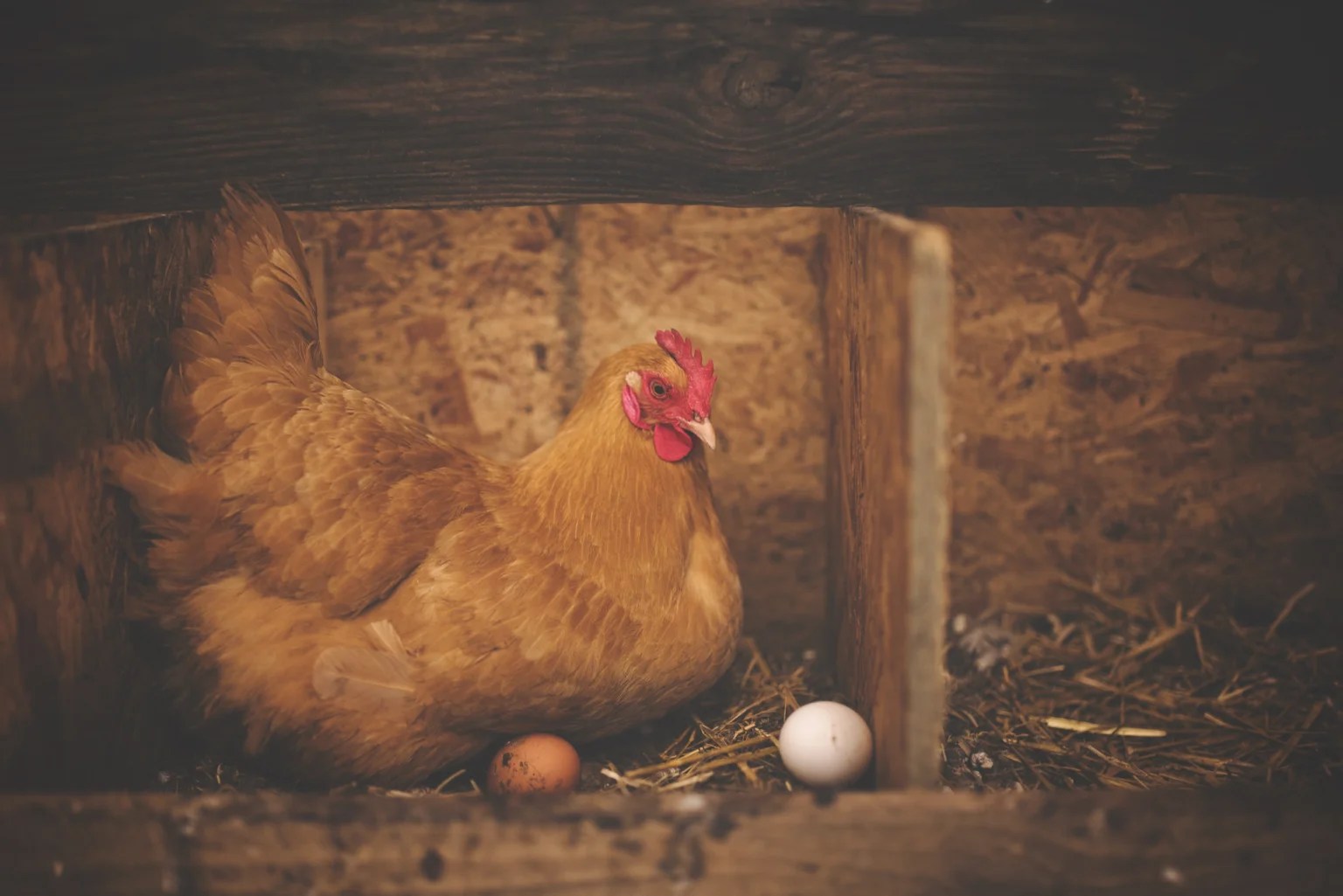
Your hens have a full feeder, clean nesting boxes and plenty of space to roam. Yet egg numbers are falling. One hen has started moulting, another is laying thin-shelled eggs, and you’ve heard that extra mealworms, corn or oyster shell might help.
So, what should you actually feed chickens to encourage healthy egg production?
The best way to feed chickens for maximum egg production is to provide a complete, age-appropriate layer feed containing balanced protein, essential amino acids, calcium and other nutrients, alongside constant access to fresh drinking water. Supplemental oyster shell may help laying hens meet their calcium needs, but treats and scratch grains should never replace a balanced ration.
Many standard layer feeds contain approximately 16–18% crude protein and 3.5–4.5% calcium, although the appropriate formulation depends on the birds’ age, genetics, production stage and health.
According to the University of Georgia Cooperative Extension, egg production depends on the correct balance of energy, protein, amino acids, vitamins, minerals and water—not simply feeding more protein or calcium.
Nutrition matters, but even an excellent diet cannot make every hen lay an egg daily. Breed, age, season, moulting, daylight and health all influence production.
This guide explains what laying hens need, how to manage feed during moulting and winter, why eggshell problems develop, and which feeding mistakes can reduce flock performance.
Table of contents
- What Should You Feed Chickens for Maximum Egg Production?
- 1. Choose a Complete Layer Feed
- 2. Understand Protein Requirements for Laying Hens
- 3. Signs of Protein Deficiency in Laying Hens
- 4. Free-Choice Oyster Shell vs Layer Feed Calcium
- 5. How to Fix Soft-Shell Chicken Eggs Naturally
- 6. Best High-Protein Foods for Chickens During Moult
- 7. Winter Feeding for Backyard Laying Hens
- 8. Healthy Table Scraps Safe for Backyard Chickens: What UK Owners Must Know
- 9. Why Fresh Water Matters as Much as Feed
- 10. Why Your Hens May Stop Laying Despite a Good Diet
- 11. Daily Feeding Routine for Healthy Laying Hens
- 12. Common Feeding Mistakes That Reduce Egg Production
- Frequently Asked Questions
- Final Thoughts
What Should You Feed Chickens for Maximum Egg Production?
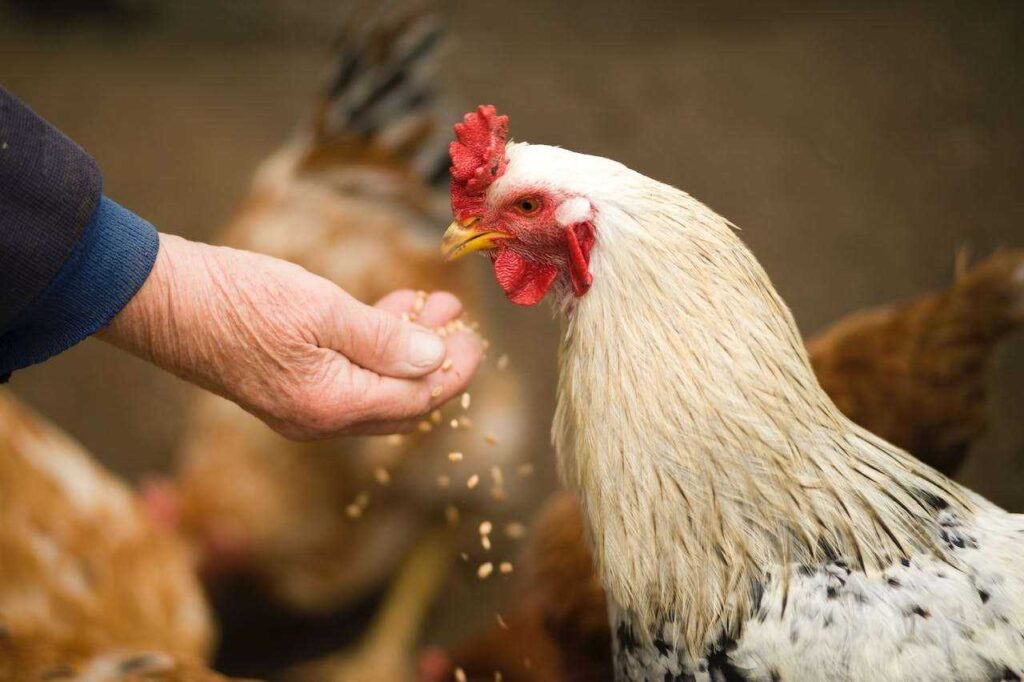
For healthy adult hens that are actively laying, a complete commercial layer feed should form the foundation of the diet.
Unlike a mixture of plain grain or kitchen scraps, a complete feed is formulated to supply the nutrients hens require in appropriate proportions.
Chicken Nutrition and Egg Production Matrix
| Flock condition | Main feed requirement | Calcium and protein focus | Appropriate additional support | Mistake to avoid |
|---|---|---|---|---|
| Actively laying hens | Complete layer feed | Typically 16–18% protein and 3.5–4.5% calcium | Suitable free-choice oyster shell and fresh water | Replacing layer feed with scratch grains |
| Moulting hens | Balanced feed appropriate to laying status and condition | Adequate protein and essential amino acids | Poultry-appropriate protein supplements where justified | Assuming every moulting hen needs 22% protein |
| Winter maintenance | Appropriate complete feed | Sufficient dietary energy, protein and minerals | Reliable water supply and monitoring of body condition | Overfeeding corn and fatty treats |
| Repeated soft shells | Review complete ration and flock health | Calcium, phosphorus and vitamin D balance | Veterinary assessment and appropriate calcium provision | Using vinegar or high-dose supplements as a cure |
| Mixed-age flock | Feed suited to different life stages | Avoid excess calcium in immature birds | Professionally planned all-flock feeding where needed | Feeding high-calcium layer ration to growing chicks |
| Older hens | Suitable maintenance or layer feeding according to condition | Balanced nutrition rather than excessive supplements | Health monitoring and realistic laying expectations | Assuming feed can reverse age-related decline |
These are general reference categories. They are not prescriptions for individual birds with diagnosed nutritional or medical problems.
1. Choose a Complete Layer Feed
One of the most effective ways to support egg production is also one of the simplest: feed the correct commercial ration.
Layer feed is formulated for hens that have reached the appropriate stage of reproductive maturity.
It contains more calcium than feeds intended for growing pullets because laying hens require significant amounts of calcium for eggshell formation.
The University of Georgia’s poultry nutrition guide provides the following typical composition for egg-laying hens.
| Nutrient | Typical concentration in a layer ration | Main function |
|---|---|---|
| Crude protein | 16–18% | Supports egg protein, tissues and maintenance |
| Calcium | 3.5–4.5% | Supports eggshell and skeletal health |
| Methionine | 0.35–0.45% | Essential amino acid involved in growth and feather formation |
| Lysine | 0.75–0.85% | Essential amino acid supporting protein synthesis |
| Available phosphorus | 0.35–0.50% | Supports bone and metabolic functions |
These percentages describe nutrients already present in the prepared feed. They are not amounts to add separately.
Pellets, Mash or Crumbles?
Complete layer feed may be available as pellets, mash or crumbles.
The physical form can influence feeding behaviour and wastage, but the product’s nutritional completeness matters more than whether it looks like a pellet.
Choose a reputable feed formulated for the hens’ life stage.
Check the label for its intended use and follow the manufacturer’s storage and feeding instructions.
Raising chickens for the first time is one of the most rewarding decisions you’ll ever make but choosing the right breed from the start makes absolutely everything easier, more enjoyable, and more successful. Discover the best chicken breeds for beginners and find the friendly, hardy, low-maintenance flock that will have you wondering why you didn’t start keeping chickens years ago.
How Much Layer Feed Should a Hen Eat?
Feed intake varies with the bird’s size, breed, activity, weather and production level.
As a broad planning reference, some university extension guidance describes adult laying hens consuming approximately 110–150 g of complete feed per bird per day.
This is an estimated consumption range, not a ration that should be enforced regardless of appetite.
Provide sufficient feed so that hens can meet their requirements without prolonged restriction.
For a flock of six hens, a rough supply-planning calculation using that range would be approximately 660–900 g per day, but actual intake must guide how much feed is purchased and offered.
The aim is to prevent shortages without encouraging contamination or waste.
Don’t Forget Feeder Access
Even a balanced ration is ineffective if some chickens cannot reach it.
Dominant hens may displace more timid flock members at a crowded feeder.
Provide enough feeder space for the group and observe whether every bird is eating normally.
If a hen appears thin, weak or unable to compete, investigate rather than simply increasing the total amount of food.
2. Understand Protein Requirements for Laying Hens
Protein is essential for egg formation and body maintenance.
However, increasing the protein percentage does not automatically increase egg numbers.
What matters is an appropriate balance of protein and the amino acids from which it is built.
Why Amino Acids Matter
Chickens need certain amino acids supplied through their diet.
Two important examples are:
- Methionine, which contributes to protein synthesis and feather development.
- Lysine, which supports normal tissue and egg protein production.
The University Extension overview of poultry nutrition explains that amino-acid balance is fundamental to an appropriate poultry ration.
A product containing a high crude-protein percentage is not necessarily superior if essential amino acids are inadequately balanced.
Can Too Many Protein Treats Cause Problems?
Excessive treats can displace the carefully formulated main feed.
Even a protein-rich snack may contain unsuitable proportions of energy, calcium or other nutrients.
Commercial layer feed should remain the foundation.
Additional protein should address a genuine dietary need rather than being used routinely in the hope of producing more eggs.
3. Signs of Protein Deficiency in Laying Hens
Protein deficiency can contribute to poor production, but the symptoms are not unique.
Possible signs include:
- Reduced egg production.
- Poor feather development or condition.
- Loss of body condition.
- Reduced growth in immature birds.
- Feather pecking associated with nutritional or management problems.
- General deterioration in flock performance.
A chicken losing feathers is not necessarily protein-deficient.
Moulting, parasites, feather pecking and other health conditions can look similar.
The University Extension guide to feather pecking identifies inadequate protein and methionine as potential contributing factors, but also highlights environmental and behavioural causes.
What Should You Do?
Start by reviewing the actual feed.
Check whether it is intended for laying hens, whether the flock has adequate access, and whether scratch grains or treats are replacing too much complete feed.
Observe body condition, feather loss patterns and other signs of illness.
If egg production drops sharply or feather problems are severe, consult a poultry-experienced veterinarian or nutrition adviser.
Do not diagnose protein deficiency from feathers or egg numbers alone.
4. Free-Choice Oyster Shell vs Layer Feed Calcium
Calcium is one of the most important minerals for laying hens.
An eggshell requires substantial mineral deposition, and a hen must maintain adequate calcium availability while producing eggs.
A suitable commercial layer feed already contains calcium.
So why do many keepers also offer oyster shell?
Calcium in Layer Feed
Layer feed usually contains calcium distributed throughout the complete ration.
The typical 3.5–4.5% calcium range reported by the University of Georgia reflects the needs of actively laying hens.
However, individual birds may differ in feed intake and laying activity.
What Is Free-Choice Oyster Shell?
Free-choice oyster shell means providing a suitable poultry calcium source in a separate feeder, rather than forcing every bird to consume the same extra amount.
The Penn State Extension guide to laying-flock management recommends a calcium source such as oyster shell separately for laying hens.
Which Is Better?
| Calcium source | Main advantage | Limitation |
|---|---|---|
| Complete layer feed | Supplies calcium with other nutrients in a formulated ration | Must suit the birds and their stage of production |
| Free-choice oyster shell | Offers an additional calcium source for actively laying birds | Cannot replace a nutritionally complete feed |
| Improvised homemade calcium mixtures | May contain calcium | Composition, hygiene and legality can be uncertain |
| High-dose calcium or vitamin D products | May be indicated for specific medical needs | Should not be given without appropriate veterinary direction |
The most dependable approach is a complete layer ration with suitable additional calcium provision when appropriate.
Can Young Pullets Eat Layer Feed?
Layer feed may contain too much calcium for birds that have not reached the appropriate stage of lay.
The University of Georgia warns that high-calcium layer rations are unsuitable for growing poultry.
If your flock includes chicks, growing pullets and adult hens, choose a suitable feeding arrangement with professional advice.
Do not assume that every bird can safely eat the same feed merely because they share an enclosure.
5. How to Fix Soft-Shell Chicken Eggs Naturally
Finding a soft-shelled or shell-less egg can be worrying.
One isolated abnormal egg does not always mean a hen has a nutritional deficiency.
Young hens beginning to lay, older hens and birds experiencing stress or illness may produce abnormal eggs.
However, repeated thin, fragile or missing shells require investigation.
Common Causes of Soft Eggshells
Potential explanations include:
- Inadequate calcium intake.
- An inappropriate calcium-to-phosphorus balance.
- Problems involving vitamin D metabolism.
- Poor consumption of complete layer feed.
- Excess scratch grains or treats.
- Age-related reproductive changes.
- Heat stress and other environmental factors.
- Infectious or reproductive disease.
The University Extension guide to avian reproduction explains the importance of calcium, phosphorus, vitamin D and reproductive health in shell formation.
First: Check the Complete Feed
Confirm that the hens are receiving a suitable layer ration.
Check whether the feed is fresh, stored correctly and being eaten adequately.
Don’t assume that a full feeder proves every hen is consuming the necessary amount.
Second: Review Calcium Availability
Ensure that actively laying hens have appropriate calcium provision.
A separate container of suitable poultry oyster shell may be helpful.
Do not repeatedly add supplements to the main ration without assessing what it already contains.
Third: Check Drinking Water
Water affects feed consumption and the hen’s overall physiology.
Check that water is clean, accessible and not frozen or excessively warm.
Fourth: Watch for Other Symptoms
Repeated abnormal eggs accompanied by weakness, straining, reduced appetite or significant behavioural changes warrant prompt veterinary assessment.
A hen suspected of being egg bound needs urgent professional help.
Do not attempt to extract an egg manually.
Does Apple Cider Vinegar Improve Eggshell Quality?
Apple cider vinegar is frequently recommended online, often with claims about improving mineral absorption.
However, there is insufficient dependable evidence to recommend adding it to drinking water as a treatment for soft-shelled eggs.
It should not replace a balanced ration, appropriate calcium provision or veterinary assessment.
Should You Give Extra Vitamin D3?
Vitamin D is important for calcium metabolism, but excessive supplementation can cause harm.
A complete layer feed is normally formulated to supply appropriate vitamins.
Do not add high-dose vitamin D3 without professional advice.
The safest response to repeated soft shells is to assess the whole diet and the hen’s health—not to look for one emergency supplement.
6. Best High-Protein Foods for Chickens During Moult
Moulting is the natural process of replacing feathers.
During this period, hens may reduce or stop laying while growing new plumage.
Feathers contain protein, so adequate protein and essential amino acids are important for normal replacement.
Should Moulting Hens Eat 20–22% Protein Feed?
Some higher-protein feeds may be appropriate during moulting.
However, 20–22% protein is not a universal requirement for every moulting hen.
The suitable feed depends on the bird’s age, body condition, reproductive activity and overall diet.
A poultry-nutrition adviser can help identify whether a complete higher-protein feed is appropriate.
Suitable Protein Sources
| Feed or supplement | Possible use | Precaution |
|---|---|---|
| Complete poultry feed with appropriate protein | Main nutritional foundation | Match life stage and flock |
| Commercially produced poultry-approved insect products | Occasional supplementary protein | Follow local feeding rules and product directions |
| Black soldier fly larvae | May be used in authorised suitable formulations | Nutrient and calcium levels vary |
| Mealworms | Possible occasional treat where legally and nutritionally suitable | Do not displace the main ration |
| Balanced commercially prepared moulting feed | May help meet feather-growth requirements | No single formulation suits every flock |
What About Cooked Eggs?
Some international poultry guides recommend cooked eggs as a protein-rich food.
For UK backyard keepers, household kitchen scraps and certain egg-derived waste materials must not be fed to chickens.
Do not prepare cooked eggs in your domestic kitchen to feed back to the flock.
The UK government’s animal-feed rules explain these restrictions.
Don’t Force Moulting
Avoid deliberate feed withdrawal or other methods intended to force a moult.
Focus on suitable nutrition, welfare and normal seasonal management.
Moulting hens may not return to full production until the process is complete.
7. Winter Feeding for Backyard Laying Hens
Egg production commonly slows in autumn and winter.
Shorter daylight, moulting and individual laying cycles may contribute.
Simply adding corn does not eliminate these influences.
Do Chickens Need More Carbohydrates in Winter?
Energy requirements can increase during cold conditions, particularly if birds need to maintain body temperature.
However, complete poultry feeds already provide energy through appropriately balanced ingredients.
Adding large quantities of corn or barley may reduce intake of essential amino acids, minerals and vitamins.
Is Warm Corn Mash Helpful?
Some keepers offer warm mash as a comfort food.
But warm corn or barley mash is not an established treatment for reduced winter egg production.
A suitably prepared portion of the hen’s own complete feed may be preferable to substituting grain.
Avoid preparing poultry feed in a domestic kitchen where UK kitchen-waste rules could apply; follow relevant feed-hygiene requirements.
Prioritise Water
In freezing weather, drinking water may become unavailable even when feeders remain full.
Check drinkers regularly and ensure hens can access clean water.
Check Body Condition
Observe whether birds are maintaining appropriate body condition and eating adequately.
Avoid automatically increasing high-fat treats simply because the temperature has dropped.
Can Diet Keep Hens Laying All Winter?
Not necessarily.
Daylight, breed, age, moulting and health affect laying patterns.
Good nutrition supports normal biological potential, but it cannot guarantee uninterrupted production.
8. Healthy Table Scraps Safe for Backyard Chickens: What UK Owners Must Know
Many online chicken-feeding guides recommend leftover vegetables, rice, bread or cooked eggs.
That advice can be misleading for readers in the UK.
Are Kitchen Scraps Legal to Feed to Chickens in the UK?
No. Household kitchen scraps and catering waste must not be fed to chickens, including chickens kept as pets.
The prohibition applies even when the scraps are vegetarian.
It also covers waste from vegan kitchens.
The UK government’s official guidance on animal by-products and animal feed confirms this restriction.
This is intended to reduce the risk of serious infectious diseases spreading through animal feed.
What About Fresh Vegetables From the Garden?
Suitable plant material grown and handled outside a household kitchen may be treated differently from kitchen waste, provided relevant feed rules are met.
It must not be mouldy, contaminated with unsuitable chemicals or derived from an unsafe plant.
Examples for further suitability checks include clean garden-grown leafy material and appropriate poultry-safe produce.
However, supplementary vegetation should remain a small part of the overall diet.
Can Chickens Eat Grass and Forage?
Chickens naturally investigate grass, seeds, insects and other material while foraging.
A well-managed, suitable outdoor area can support natural behaviour.
But foraging alone does not guarantee complete nutrition.
A formulated poultry feed should remain the main nutritional source.
Why Keep Extras Limited?
Even appropriate supplementary foods may displace a balanced ration.
The popular recommendation to limit treats to approximately 10% of intake is a useful general caution, not a scientifically established universal safe allowance for every supplement.
For high egg production, complete feed should dominate the diet.
9. Why Fresh Water Matters as Much as Feed
Water is essential for normal chicken physiology and egg production.
Without adequate drinking water, hens may reduce feed consumption.
The University of Georgia’s poultry nutrition reference explains that water requirements are closely connected to feed intake and environmental temperature.
Water Management Checklist
- Provide clean drinking water continuously.
- Clean containers regularly.
- Prevent freezing in cold weather.
- Check for overheating or inadequate supply in hot weather.
- Provide enough drinking points to avoid competition.
- Keep containers away from unnecessary contamination.
- Check that automatic drinkers function properly.
Don’t assume a chicken drinks enough simply because water is visible somewhere in the run.
Should You Add Vitamins or Vinegar to Water?
Avoid routine, unnecessary additives.
A nutritionally complete feed should provide the required vitamins and minerals for its intended birds.
Additional supplements may be appropriate in specific circumstances, but they should be used for a justified purpose.
Unnecessary additives can change water palatability or introduce dosing problems.
10. Why Your Hens May Stop Laying Despite a Good Diet
Reduced egg production does not automatically mean the chickens need more protein.
Several factors influence laying independently of feed quality.
A full egg basket every morning starts with one smart decision choosing the right hens for the job. Discover the best chicken breeds for maximum egg production and build a flock of reliable, prolific layers that keep your kitchen stocked with fresh, beautiful eggs day after glorious, abundant day.
Age
A hen’s productivity changes throughout life.
Young hens may take time to establish a consistent pattern, while older hens may lay fewer eggs.
Breed and Genetics
Some breeds and commercial laying hybrids are selected for high egg output.
Other breeds are valued for different qualities and may naturally produce fewer eggs.
Nutrition can support a hen’s inherited laying potential but cannot remove biological limits.
Moulting
A substantial moult may temporarily reduce laying while the hen grows new feathers.
Daylight
Seasonal changes in daylight influence reproduction.
Short winter days are a common reason for lower egg numbers.
Broodiness
A broody hen may spend much of her time nesting and stop laying during that period.
Disease and Parasites
Illness, heavy parasite burdens and other health problems can affect appetite and egg production.
A sudden flock-wide reduction warrants investigation.
Heat Stress
High temperatures can reduce feed consumption and negatively affect laying.
Water access, ventilation and appropriate shade are important.
Social Stress
Competition for feeders, overcrowding and incompatible flock dynamics may affect individual hens.
Before changing the feed, assess the whole flock environment.
11. Daily Feeding Routine for Healthy Laying Hens
A consistent routine makes it easier to spot problems early.
| Time | Recommended action |
|---|---|
| Morning | Check clean water and ensure suitable complete feed is available |
| During feeding | Observe whether all hens can access food |
| Daily | Check any appropriate free-choice oyster-shell feeder |
| Throughout the day | Maintain access to clean water and prevent feed contamination |
| Egg collection | Note shell quality and unexpected changes |
| Evening | Recheck food, water, flock condition and any abnormalities |
| Periodically | Review body condition, actual feed intake and feed suitability |
A flock record can be useful, especially if you want to understand seasonal changes.
Track the date, feed used, approximate intake, number of eggs and any unusual symptoms.
Do not interpret short-term changes as proof that a particular supplement has increased egg production without considering other factors.
12. Common Feeding Mistakes That Reduce Egg Production
| Feeding mistake | Why it matters | Better approach |
|---|---|---|
| Feeding scratch grain instead of layer feed | Lacks complete nutritional balance | Use a formulated layer ration |
| Feeding layer feed to young pullets | Excess calcium may be harmful | Choose age-appropriate feed |
| Giving excessive treats | Dilutes nutrient intake | Keep supplements limited |
| Assuming more protein always means more eggs | Amino-acid balance and other factors matter | Assess the whole feed |
| Using vinegar to treat soft shells | Unproven treatment | Investigate calcium balance and health |
| Adding high-dose vitamin D3 | May cause toxicity | Seek professional advice |
| Withholding feed during moult | Serious welfare concern | Maintain appropriate nutrition |
| Overfeeding corn in winter | May displace balanced feed | Prioritise complete feed and clean water |
| Feeding household kitchen scraps in the UK | Prohibited under animal-feed rules | Follow current legal feeding requirements |
| Ignoring water availability | Can reduce feeding and productivity | Ensure continuous clean water |
| Treating every production drop as a nutritional deficiency | Disease, age and season also matter | Investigate the full situation |
Frequently Asked Questions
Provide a complete layer ration appropriate to actively laying hens, fresh drinking water and suitable calcium provision. Avoid replacing the balanced feed with excessive grains or treats.
Many standard layer feeds contain approximately 16–18% crude protein. The appropriate formulation also depends on essential amino acids, energy and other nutrients.
Typical layer-feed formulations contain approximately 3.5–4.5% calcium. Some flocks also benefit from poultry oyster shell offered separately.
Mealworms may provide supplementary protein where legally and nutritionally appropriate, but they do not reliably increase egg production in hens already eating a balanced ration.
First check the complete feed, water supply, appropriate calcium access and the hen’s condition. Repeated shell problems may indicate disease or nutritional imbalance and require veterinary advice. Vinegar is not a proven treatment.
Adequate protein and amino acids are important for feather growth. A suitable higher-protein complete feed may help in some circumstances, but no single protein percentage is appropriate for every moulting hen.
They serve related but different purposes. Layer feed provides calcium as part of a balanced ration, while suitable free-choice oyster shell may allow laying hens to obtain additional calcium.
Household kitchen scraps cannot legally be fed to poultry in the UK, even if they contain only vegetables. Suitable non-kitchen plant material may be subject to different rules.
Reduced daylight, moulting, age and other factors can lower production. Proper feeding supports health but cannot guarantee year-round laying.
Reduced egg production, poor feather condition and declining body condition can occur, but none of these signs proves protein deficiency. A feed review and veterinary assessment may be necessary.
Final Thoughts
Good egg production begins with good nutrition, but there is no single ingredient that guarantees more eggs.
Healthy laying hens need an appropriate complete feed, balanced protein and amino acids, adequate calcium and uninterrupted access to clean drinking water.
During moulting and winter, assess the birds’ actual needs rather than automatically adding high-protein treats or extra grain.
If eggshell quality declines, check the main ration and flock health before reaching for supplements.
And for UK poultry owners, remember that household kitchen scraps are prohibited as chicken feed.
The most effective feeding strategy is to support each hen’s natural laying potential through balanced nutrition, reliable water, appropriate calcium provision and good everyday husbandry—not through unnecessary additives or extreme feeding changes.