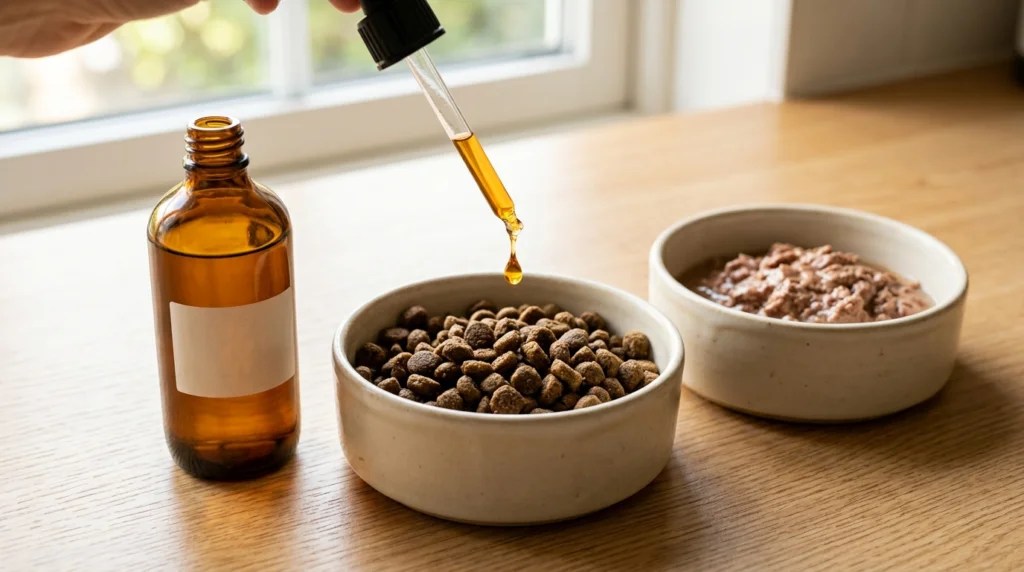
💡 How Much Omega-3 (EPA/DHA) Does a Dog or Cat Need Daily?
Veterinary clinical nutrition standards establish that adult dogs require approximately 30 mg of active EPA+DHA per kilogram of metabolic weight (BWkg0.75) for baseline health, and up to 310 mg/kg0.75 for therapeutic management of osteoarthritis (Bauer, 2011). Adult cats require 20 to 30 mg/kg for maintenance and 40 to 75 mg/kg for joint inflammation. Supplement doses must always be counted in active EPA and DHA milligrams, not total crude fish oil volume.
✓ Canine Baseline: 30 mg/kg0.75 (NRC 2006)
✓ Canine Joint Target: 310 mg/kg0.75 (Bauer 2011)
✓ Canine Safe Ceiling: 370 mg/kg0.75 upper limit
✓ Feline Range: 20–30 mg/kg (Maint) / 55 mg/kg (Joints)
Frequently Asked Questions: Pet Omega-3 Dosing
The recommended daily dose depends on your pet's species, body weight, and clinical goals, measured strictly by active EPA and DHA milligrams rather than raw oil volume. For healthy adult dogs, the National Research Council (NRC) establishes a maintenance baseline of approximately 30 mg per kilogram of metabolic body weight (kg^0.75), which equals about 170 mg of active EPA+DHA for a 10 kg (22 lb) dog. For adult cats, maintenance typically ranges between 20 and 30 mg per kg of body weight (around 100 mg for an average 4 kg cat). For therapeutic purposes such as canine osteoarthritis, clinical veterinary guidelines published by Dr. John Bauer recommend up to 310 mg per kg^0.75. Always verify the Guaranteed Analysis on your supplement bottle to count only active EPA and DHA, and consult your veterinarian before starting.
Yes, omega-3 dosing protocols differ substantially between cats and dogs due to evolutionary metabolic variations and literature maturity. Canine dosing for arthritis, kidney support, and maintenance relies on metabolic body weight scaling (body weight in kilograms raised to the power of 0.75), which accounts for differences in relative surface area and metabolic rates across small and giant dog breeds. In contrast, feline research is sparser and clinical trials report dosing on a simpler linear per-kilogram basis (typically 20 to 75 mg/kg depending on indication). Additionally, while dogs have an NRC-established safe upper limit of 370 mg/kg^0.75, cats have no established safe ceiling in veterinary literature. Therefore, cat doses should default toward the cautious low-to-mid end of target ranges under direct veterinary supervision.
For dogs, the National Research Council establishes a safe upper metabolic limit of 370 mg of combined EPA+DHA per kilogram of metabolic body weight (kg^0.75). For a 10 kg (22 lb) dog, this ceiling is approximately 2,080 mg per day; for a 20 kg (44 lb) dog, it is roughly 3,500 mg per day. Exceeding this ceiling increases the risks of impaired blood platelet aggregation (delayed blood clotting), vitamin E depletion, immune suppression, pancreatitis from excess dietary lipid loads, and persistent gastrointestinal distress. For cats, a formal maximum safe limit has never been established by veterinary nutritional bodies. Because feline lipid metabolism is sensitive, administering high doses above 100 to 120 mg/kg daily carries elevated pancreatitis and coagulation risks. Never exceed therapeutic targets without veterinary oversight.
Eicosapentaenoic acid (EPA) and docosahexaenoic acid (DHA) are distinct marine-derived long-chain omega-3 fatty acids that serve specialized physiological functions. EPA acts primarily as a potent competitive inhibitor of arachidonic acid, producing weakly inflammatory series-3 prostaglandins and leukotrienes that reduce joint inflammation, manage renal glomerular hypertension, and soothe atopic dermatitis. DHA is preferentially concentrated in cell membranes of the central nervous system, brain cortex, and retinal tissue, making it vital for cognitive health, puppy/kitten brain development, and cardiac cellular stability. In veterinary cardiology, clinical research indicates that an EPA-to-DHA ratio of roughly 1.6 to 1 (specifically 40 mg EPA to 25 mg DHA per kg) offers optimal cachexia and anti-arrhythmic protection. For joint and kidney conditions, products higher in EPA are generally favored.
In many cases you can give human fish oil to pets, provided it contains exclusively pure marine oil without harmful additives. However, you must examine the ingredient label with extreme care. Many human omega-3 liquid drops and gummies contain artificial sweeteners such as xylitol (birch bark extract), which causes acute hypoglycemia, seizures, and fatal hepatic failure in dogs even at minuscule doses. Furthermore, avoid human combination supplements formulated with added vitamins A or D, as fat-soluble vitamins accumulate in pet livers and can cause severe toxicity. Finally, human capsules often deliver 1,000 mg of crude oil (300 mg active EPA+DHA), which can be difficult to divide accurately for small dogs or cats. Pure, unflavored liquid pet tinctures or pet-specific softgels are generally safer and easier to titrate.
Omega-3 fatty acids work by gradually incorporating into cell membrane phospholipid bilayers and replacing pro-inflammatory omega-6 arachidonic acid throughout bodily tissues. This biochemical shift requires time. For dermatological conditions such as allergic pruritus, dry coat, or seasonal flaking, pet owners typically observe noticeable improvements within 3 to 6 weeks. For chronic orthopedic conditions such as canine osteoarthritis or feline joint stiffness, functional mobility benefits: including easier stair climbing and reduced morning stiffness: usually take 6 to 12 weeks of consistent daily supplementation. For renal disease and cardiac support, omega-3 benefits are internal (stabilizing glomerular filtration and countering muscle wasting) and are monitored through serial bloodwork, blood pressure checks, and echocardiograms rather than obvious external behavioral changes.
You should check with your veterinarian before introducing additional fish oil if your pet eats food with added omega-3s. Commercial pet foods vary dramatically: standard grocery kibbles often add token amounts of plant-based flaxseed (ALA, which dogs and cats cannot efficiently convert into active EPA or DHA) or minimal marine oil that degrades upon bag opening due to oxidation. However, veterinary therapeutic diets formulated specifically for joint mobility (e.g., Hill's j/d, Purina JM, Royal Canin Mobility) or chronic renal management already contain exceptionally high therapeutic concentrations of EPA and DHA. Adding an OTC fish oil supplement on top of a veterinary therapeutic joint diet can unintentionally push total daily intake past safe upper limits, increasing diarrhea, weight gain, and clotting complications. Always provide your vet with your exact pet food brand and feeding amount.
The most common side effect of fish oil supplementation in dogs and cats is gastrointestinal upset, specifically loose stools, flatulence, nausea, or watery diarrhea. This occurs because the digestive tract needs time to adapt to concentrated dietary fat. You can easily prevent or resolve this by starting at 25% of the calculated target dose and gradually increasing the daily amount over two to three weeks, always mixing it into regular meals. Less common but serious side effects include vomiting, abdominal pain, and lethargy, which can indicate acute pancreatitis in fat-sensitive breeds (such as Miniature Schnauzers). Additionally, watch for signs of delayed clotting such as unexplained bruising, petechiae, or prolonged bleeding from minor scratches. If you detect oily stool odor, lethargy, or persistent vomiting, discontinue use and contact your vet.