⚕️ Veterinary Data & Research Notice: The information and calculator data provided in this article are aggregated from peer-reviewed veterinary literature, including the Merck Veterinary Manual and AVMA guidelines. This content is for educational and informational purposes only and is not a substitute for professional veterinary advice, diagnosis, or treatment. Always consult with a licensed veterinarian before administering any medication or altering your pet’s health regimen.
Cat yoga benefits are not a wellness trend invented by social media. The science behind them is grounded in decades of human-animal interaction research, and the practice itself emerged organically from something millions of cat owners already notice: their cats appear the moment a yoga mat is unrolled. They climb on your back in downward dog.Thread between your arms in child’s pose. They sit directly on your face during savasana.
What cat owners are discovering—and what researchers have been documenting—is that combining deliberate yoga practice with the presence of a cat creates a layered wellness experience that neither activity produces alone. The cat yoga benefits for humans range from measurably reduced cortisol levels to improved mindfulness and deepened emotional wellbeing. The benefits for your cat are equally real: physical engagement, cognitive stimulation, and strengthened social bonds with their primary attachment figure.
This guide covers everything about cat yoga benefits, how to structure your practice, which poses work best, how to choose a cat friendly yoga mat, specific cat relaxation techniques to integrate into your sessions, and how cat yoga fits within a broader framework of bonding activities for indoor cats.
🛑 Before You Begin: Cat Yoga Consent and Safety Principles
- Cat yoga works only on the cat’s voluntary terms. Never force your cat into a pose, onto your body, or into any position they resist. This creates fear associations, not bonding.
- Respect immediate opt-out signals: walking away, tail lashing, skin rippling, flattened ears, or any vocalization.
- Do not practice cat yoga with a cat who has a recent injury, post-surgical recovery, arthritis, or any condition where handling may cause pain.
- Keep your practice floor-level as much as possible. An excited cat jumping onto a human holding a headstand or a tall balance pose creates a real fall risk for both of you.
- If your cat develops behavioral changes, stops eating, or shows signs of increased stress after beginning cat yoga, consult your vet before continuing.
Table of contents
- The Science Behind Cat Yoga Benefits
- Cat Yoga Benefits for Your Mental Health
- How to Do Yoga With Your Cat: The Complete Setup Guide
- Yoga Poses to Do With Your Cat
- The Core Yoga Poses to Do With Your Cat
- Cat Relaxation Techniques to Integrate With Yoga
- Bonding Activities for Indoor Cats: Where Cat Yoga Fits
- How to Do Yoga With Your Cat: Navigating Common Challenges
- When Cat Yoga Requires Veterinary Attention
- Frequently Asked Questions About Cat Yoga Benefits
The Science Behind Cat Yoga Benefits
Cat Yoga Benefits: Care & Wellness Guide
Providing optimal care for cat yoga benefits relies on creating a safe home environment, establishing predictable daily routines, and supporting natural instincts. Balanced nutrition, engaging physical activity, and regular preventative checkups ensure long-term health and vitality.
| Key Care Dimension | Recommended Standard | Primary Benefit | Management Best Practice |
|---|---|---|---|
| Preventative Veterinary Care | Annual or biannual clinical checkups | Early detection of underlying disease | Maintain up-to-date vaccine and wellness records |
| Species-Appropriate Diet | Formulated to life stage and activity level | Optimal muscle tone and metabolic balance | Measure exact daily feeding portions consistently |
| Environmental Enrichment | Daily mental exercise and physical activity | Prevents boredom and destructive behaviors | Rotate interactive toys and training games weekly |
| Emergency Preparedness | Dedicated pet emergency fund or insurance policy | Guarantees immediate medical care access | Keep 24-hour ER clinic contact readily accessible |
The cat yoga benefits you feel during a session are not imaginary or anecdotal. They are rooted in measurable neurochemical shifts triggered by cat-human physical contact.
According to Purina’s research-backed guide to the psychological benefits of cat ownership, interacting with a cat causes the brain to release serotonin and oxytocin while simultaneously reducing cortisol—the primary stress hormone. Oxytocin is the same neurochemical released during human social bonding. Its appearance during cat contact means your nervous system is being told, on a biochemical level, that you are safe and loved.
As documented by the University of Georgia’s research into kitty yoga and mental health benefits, there is a specific neurological overlap between the human “om” vibration during meditation and a cat’s purr. Kitty yoga instructor Brittany Barnes, whose work inspired the university’s research, notes that both sounds fall within the 20–140 Hz frequency range—a range that has been associated with physiological calming responses in the human nervous system. When your cat purrs during your practice, their body is functioning as a biological sound bath.
Cat Yoga Benefits for Cats Specifically
Cat yoga benefits flow in both directions. As documented by Fear Free Happy Homes’ research on yoga benefits for cats, structured positive interaction during your practice provides:
- Physical exercise through movement, stretching, and play woven into sessions
- Mental stimulation from novel positions, new scents on your mat, and the puzzle of your changing body positions
- Social bonding that builds attachment security and reduces separation anxiety
- Routine and predictability, which is one of the highest-ranking welfare factors for indoor cats according to the American Association of Feline Practitioners (AAFP)
The cat yoga benefits for indoor cats are particularly significant because indoor cats are chronically under-stimulated relative to their evolutionary design. Structured daily engagement through something as accessible as your existing yoga practice costs nothing beyond your time and attention.
Cat Yoga Benefits for Your Mental Health
Stress Reduction as a Core Cat Yoga Benefit
The most clinically well-supported of all cat yoga benefits is stress reduction. According to World’s Best Cat Litter’s detailed analysis of yoga with cats, the combination of physical yoga practice and cat interaction creates a dual cortisol reduction effect: yoga lowers cortisol through controlled movement and breathwork, and cat interaction lowers it through oxytocin release. The two effects compound each other rather than simply adding together.
Now Fresh’s evidence-based overview of cat yoga wellness benefits reinforces this, noting that petting a cat during a yoga session activates the parasympathetic nervous system—the biological rest-and-digest state that is the neurological opposite of anxiety.
Mindfulness Amplification
One of the most underappreciated cat yoga benefits is what cats do to your attention span. Cats are entirely present-focused creatures. They do not ruminate. not anticipate. They respond to exactly what is happening in front of them right now.
As noted by Pettsie’s comprehensive cat yoga guide, sharing your practice with a cat forces your attention into the present moment in a way that solo practice sometimes cannot. You cannot mentally rehearse tomorrow’s meeting while a cat is climbing up your spine. Your attention anchors to the immediate physical experience. This is mindfulness through necessity, and it is genuinely effective.
Emotional Regulation and Cat Yoga Benefits
Regular yoga practice with your cat builds an emotional regulation loop. According to MyYogaTeacher’s exploration of cat yoga’s emotional benefits, cat owners already tend to have lower resting heart rates and higher baseline happiness than non-pet owners. Adding structured physical practice that incorporates cat interaction compounds this baseline advantage into a consistent emotional management tool.
How to Do Yoga With Your Cat: The Complete Setup Guide
Creating the Right Environment for How to Do Yoga With Your Cat
How to do yoga with your cat successfully begins before the first pose. The environment you create determines whether your cat opts in willingly or retreats to watch from a distance.
Timing is everything. Cats are most receptive to calm interaction in the thirty to sixty minutes after a meal, when their energy is moderate rather than at peak hunt mode or fully asleep. Avoid trying to practice when your cat is in active play drive—they will treat you as a large and particularly interesting prey item rather than a practice partner.
Location selection for how to do yoga with your cat:
- Choose a room where your cat already spends relaxed time
- Minimize unfamiliar smells, loud sounds, or other pets who might disrupt the environment
- Keep the temperature comfortable for your cat—cats seek warmth, and a cool hard floor discourages participation
- Place a soft blanket or folded towel near your mat as an invitation space your cat can choose to use
Your Cat Friendly Yoga Mat: Why It Matters
The cat friendly yoga mat is one of the most practical decisions in your setup and one that most guides overlook entirely. Standard yoga mats are made from PVC, TPE, or natural rubber, and the practical differences matter significantly when a cat is involved.
What makes a cat friendly yoga mat:
- Non-toxic materials: Some PVC mats off-gas volatile organic compounds. Cats who lie on these mats, then groom their fur, may ingest trace amounts. Natural rubber, organic cotton, and cork cat friendly yoga mat options eliminate this concern entirely.
- Texture your cat enjoys: Cats are texture-sensitive. Many cats are drawn to the textured grip surface of a natural rubber mat and will choose to lie on it voluntarily. Smooth PVC surfaces are less attractive and less grippy for paws.
- Adequate width: Standard yoga mats (24 inches) leave little room for a cat beside you. Wide mats (26–28 inches) or an additional small mat placed adjacent to yours give your cat dedicated space.
- Machine washable: Cat hair, paw prints, and the occasional hairball are realities of how to do yoga with your cat. A mat with a washable cover or a naturally antimicrobial surface like cork is a practical necessity.
Consider placing a sprinkle of dried catnip or a few drops of silver vine spray on the corner of your cat friendly yoga mat before unrolling it. This olfactory invitation signals to your cat that the mat is a positive, welcome space.
Yoga Poses to Do With Your Cat
How to Structure Yoga Poses to Do With Your Cat
The best yoga poses to do with your cat are those that position your body close to floor level, create natural resting surfaces on your back or lap, and move slowly enough that your cat is not startled. High inversions, fast vinyasa flows, and poses requiring sudden directional changes are not compatible with cat participation for safety reasons.
Cat Bandit’s practical guide to easy yoga poses with cats and Figo Pet Insurance’s safe cat yoga framework together offer the most comprehensive collection of yoga poses to do with your cat that are genuinely safe for both parties.
The Core Yoga Poses to Do With Your Cat
1. Cat-Cow Pose (Marjaryasana-Bitilasana)
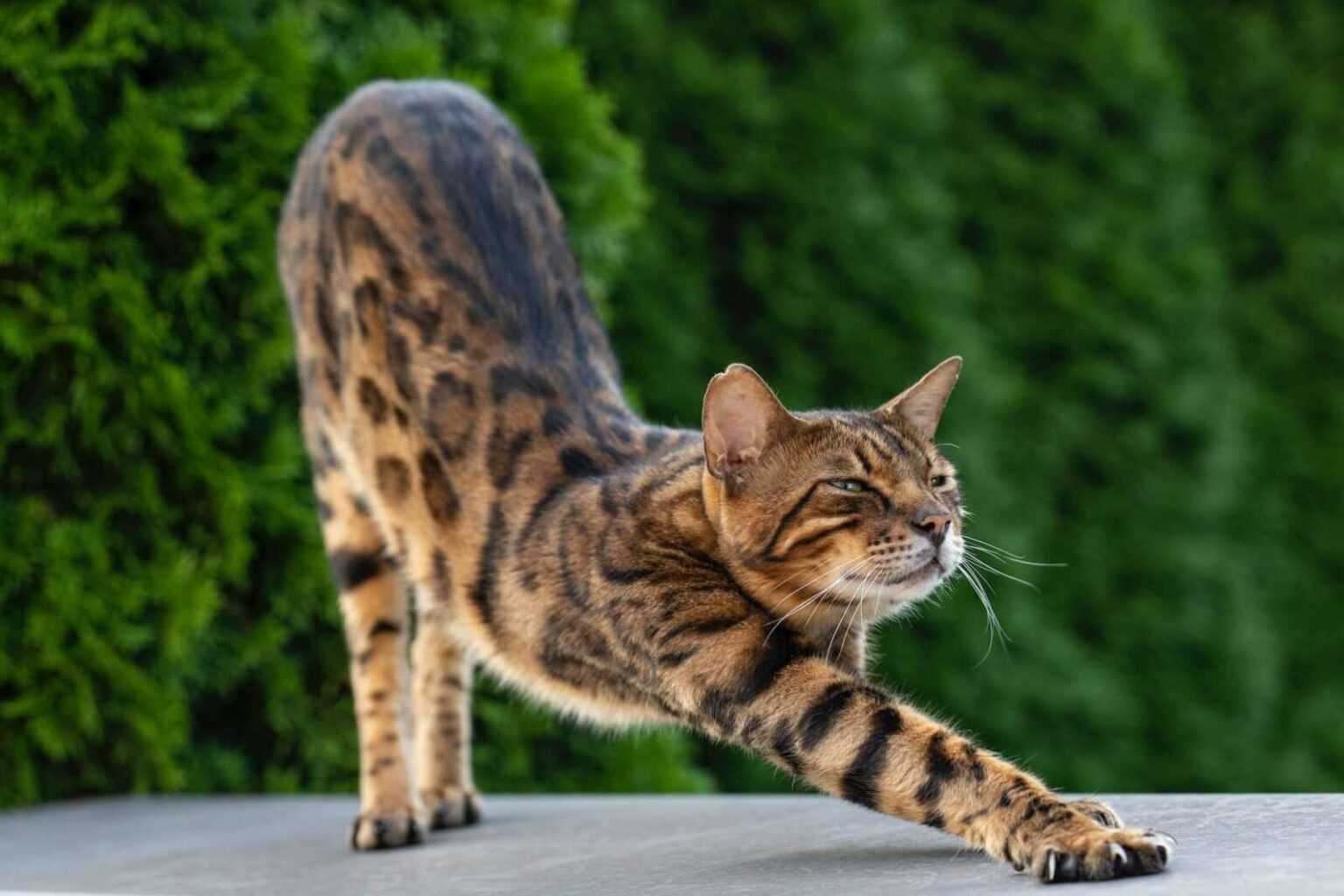
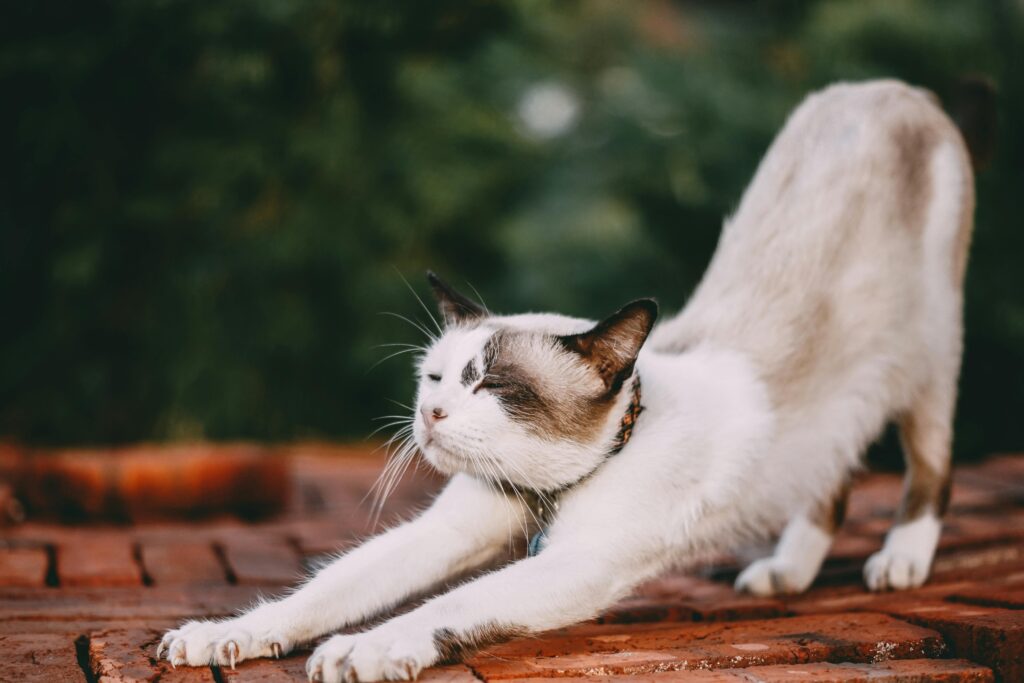
This is the foundational entry among yoga poses to do with your cat because it mirrors the natural movement cats make dozens of times every day. When you arch your back on all fours and drop your head in cat pose, you are anatomically mirroring your cat’s defensive arch posture. Many cats find this deeply familiar and will approach or mirror your movement.
Your practice:
- Begin on all fours, hands under shoulders, knees under hips.
- Inhale: lift your chest and tailbone, letting your belly sink (cow).
- Exhale: round your spine upward and drop your chin (cat).
- Flow slowly between the two with your breath for 8–10 cycles.
Cat participation: Allow your cat to wander underneath your torso freely. Many cats will rub against your hands or walk beneath you during this pose, which turns into a natural back scratch for them and a grounding touch for you.
2. Child’s Pose (Balasana)
Child’s pose creates a warm, sheltered cave that cats find irresistible. Your folded body creates a tent-like enclosure with your head resting forward and your arms extended.
Your practice:
- Sit back on your heels, fold forward, and extend your arms in front of you or rest them alongside your body.
- Hold for 1–3 minutes with deep, slow breathing.
Cat participation: Your cat may curl beneath your chest, drape across your lower back, or settle between your extended arms. The cat yoga benefits of this pose are particularly strong because the cat’s purring, vibrating directly against your torso, amplifies the parasympathetic calming effect while you are in a physically surrendered position.
3. Sphinx Pose (Salamba Bhujangasana)
Lying on your stomach propped up on your forearms, sphinx pose creates an ideal flat surface across your back that most cats interpret as a heated platform specifically installed for their comfort.
Your practice:
- Lie face down, prop yourself on your forearms with elbows under shoulders.
- Press your palms flat, lengthen your spine, and breathe slowly for 1–2 minutes.
Cat participation: As described by Figo Pet Insurance’s yoga with cats guide, allow your cat to rest on your back or beside you during this pose. The weight of a cat on your lower back provides gentle proprioceptive pressure similar to a weighted blanket—grounding and deeply relaxing.
4. Downward-Facing Dog (Adho Mukha Svanasana)
The classic downward dog creates an inverted V shape with your body, and cats interpret the space beneath your arch as a tunnel or passage. This pose consistently triggers exploratory behavior in curious cats.
Your practice:
- Start on all fours, then lift your hips toward the ceiling, pressing heels toward the floor.
- Hold for 5–10 breaths.
Cat participation: Let your cat thread through your arms and legs, explore the space under your body, or rub their head against your hands. Do not attempt to place your cat on your back in this pose if they are not already there voluntarily—the angle makes them unstable.
5. Savasana (Corpse Pose) — The Cat Magnet
If there is one pose that proves cats are secretly yoga enthusiasts, it is savasana. The moment you lie flat on your back, still and quiet, most cats interpret it as an open invitation to walk across your chest, settle on your stomach, or position themselves directly on your face. This is not coincidence.
Savasana is the pinnacle of yoga poses to do with your cat because it transforms the traditional stillness pose into a shared meditation experience. As detailed in Catit’s comprehensive how-to guide for cat yoga, the presence of a purring cat during savasana deepens its restorative quality significantly. The purr’s vibration against your chest stimulates your own parasympathetic nervous system, and the physical warmth of the cat anchors your awareness to the present moment.
Your practice:
- Lie flat on your back, arms slightly away from your body, palms facing up.
- Allow your body to fully release. Hold for 5–10 minutes.
Cat participation: Do not invite or resist. Let your cat make every choice themselves. The voluntary placement of a cat on your body during savasana is among the most rewarding cat yoga benefits of the entire practice.
Cat Relaxation Techniques to Integrate With Yoga
Using Cat Relaxation Techniques Before Practice
Cat relaxation techniques integrated before and during your yoga session help ensure your cat arrives at the mat in a calm, receptive state rather than an overstimulated one. A cat who has just been in active play mode needs a transition period before they will settle enough to participate in a slow, gentle session.
Pre-session cat relaxation techniques:
- Slow blinking: Make eye contact with your cat and deliver a slow, deliberate blink. This is the cat’s primary affiliative signal. If they slow-blink back, their stress system is calm. The International Society of Feline Medicine has documented slow blinking as a reliable indicator of relaxed, trusting emotional state.
- Gentle grooming strokes: Three to five minutes of slow, full-body stroking from head to tail before you begin your practice helps lower your cat’s heart rate and transitions them from active mode to calm mode.
- Environmental sound: Playing soft classical music or binaural nature sounds at low volume before your session is one of the most effective cat relaxation techniques available. Research published in the Journal of Feline Medicine and Surgery found that music composed specifically for the feline frequency range produces measurable reductions in stress indicators in clinic settings.
Cat Relaxation Techniques During Practice
During your session, cat relaxation techniques to maintain a calm, inviting environment include:
- Consistent, slow breathing: Your cat reads your physiological state. Fast, shallow breathing signals arousal. Deep, diaphragmatic breathing signals safety.
- Talking softly: Low, calm vocalization during your practice is deeply reassuring to your cat. You do not need to narrate every pose. A gentle “good girl” or “you’re okay” during moments of contact is enough.
- Avoiding sudden position changes: Transition between poses slowly and intentionally, especially when your cat is close. A sudden movement from a cat-occupied child’s pose into a dramatic forward fold can startle or unbalance them.
Bonding Activities for Indoor Cats: Where Cat Yoga Fits
Cat Yoga as Part of a Broader Enrichment Strategy
Bonding activities for indoor cats need to span their full range of needs: physical exercise, cognitive engagement, sensory stimulation, and social connection. Cat yoga addresses the social and sensory dimensions with particular strength, but it works best as one component within a complete enrichment plan.
According to Pet Releaf’s comprehensive indoor enrichment guide and Portage Area Pet Rescue’s 2026 enrichment research summary, the most effective bonding activities for indoor cats combine routine (predictability reduces stress), novelty (new stimuli maintain engagement), and owner participation (social bonds are built through shared experiences).
Where cat yoga fits within bonding activities for indoor cats:
| Activity | Physical | Cognitive | Sensory | Social |
|---|---|---|---|---|
| Cat yoga | Moderate | Low–Moderate | High | High |
| Interactive wand play | High | Moderate | High | High |
| Puzzle feeders | Low | High | Moderate | Low |
| Harness walks | High | High | Very High | Moderate |
| Clicker training | Low | Very High | Moderate | High |
| Window perch time | Low | Moderate | High | Low |
Cat yoga occupies a unique niche among bonding activities for indoor cats because it requires no additional equipment beyond what you already own, takes place during time you would spend on your own practice anyway, and builds the specific type of trust that comes from sustained, calm, mutually voluntary physical proximity.
Shy Cats and Bonding Activities for Indoor Cats
Bonding activities for indoor cats with shy or withdrawn personalities require extra patience, and cat yoga is one of the most effective tools available for these cats specifically. As observed by Pettsie’s research into cat yoga for shy cats, the non-confrontational nature of yoga practice—you are on the floor, not standing over them, making no demands—creates a low-pressure environment where a cautious cat can approach entirely on their own initiative.
For shy cats, begin by practicing yoga with the door to their room open. Do not call them or acknowledge them if they approach. Let them observe from the doorway, then closer, then from the edge of the mat. The first voluntary paw contact with the mat is a significant trust milestone for a shy cat. Reward it with absolute stillness and a soft slow blink. Do not reach for them.
How to Do Yoga With Your Cat: Navigating Common Challenges
When Your Cat Is Too Enthusiastic
Some cats are not calm yoga partners. They are ambush predators who have identified your downward dog as the greatest hunting opportunity of their week. Wiggling toes, swaying ponytails, and dangling hands are all legitimate prey items from their perspective.
If your cat attacks rather than relaxes during yoga, try the following:
- Begin each session with a five-minute active play session using a wand toy to discharge hunting drive before you start
- Keep a single toy near your mat during practice that you can toss when the ambush impulse escalates
- Redirect before a bite or scratch occurs—do not wait until they have launched themselves at your ankle
When Your Cat Is Completely Uninterested
Not every cat will ever participate in yoga. Some cats observe from a perch across the room with the energy of a disappointed academic. This is entirely fine. A cat who chooses not to engage with your yoga mat is not broken or unbonded. They are simply making a different choice.
Continue your practice at the same time each day. The routine itself signals that this is a predictable, safe daily event. Some cats take weeks to decide proximity is worth exploring.
When Cat Yoga Requires Veterinary Attention
🚨 Stop Immediately and Call Your Vet If:
- Your cat cries out, limps, or stops bearing weight after any contact or movement during a session
- You notice sudden swelling, bruising, or a lump anywhere on your cat’s body that was not present before the session
⏰ Call Your Vet Within 24 Hours If:
- Your cat displays sudden uncharacteristic aggression during sessions where they were previously calm—this can indicate new pain
- Your cat begins over-grooming or hiding more after you begin a regular yoga practice (possible stress response to the changed routine)
👀 Monitor at Home If:
- Your cat walks away from a session after two minutes—this is normal opt-out behavior, not a medical concern
- Your cat seems over-stimulated and cannot settle during practice—simply end the session early and try at a different time of day
Frequently Asked Questions About Cat Yoga Benefits
The primary cat yoga benefits for humans are measurable cortisol reduction, oxytocin release during cat contact, enhanced mindfulness from the cat’s present-moment focus, improved emotional regulation, and deepened social bonding. The combination of yogic breathwork with cat purring vibration creates a layered parasympathetic calming effect that solo practice cannot replicate.
How to do yoga with your cat begins with timing and environment. Choose a session 30–60 minutes after your cat’s meal, in a warm quiet room where they already feel relaxed. Roll out your mat without expectation, let your cat investigate freely, and begin your practice while allowing them complete freedom to participate or not.
The best cat friendly yoga mat is made from natural rubber or cork—non-toxic materials that cats can safely groom off their paws, with enough textured grip to attract voluntary cat use. Choose a wide mat (26–28 inches minimum) or place a small secondary mat alongside yours as a dedicated cat space.
The safest yoga poses to do with your cat are all floor-level: cat-cow, child’s pose, sphinx, downward dog, and savasana. Avoid high inversions, arm balances, or fast transitions when your cat is near. The most successful cat yoga sessions move slowly, stay low, and allow the cat to initiate all physical contact.
🐾 Related Resources & Interactive Tools in This Guide:
- Interactive Calculator: Pet Age in Human Years Calculator — Convert your pet chronological age to accurate biological human years.
- Clinical Resource: Living With a Siamese Cat Pros and Cons: The Complete Siamese Cat Personality Guide 2026
- Behavior & Training Guide: Eco Friendly Dog Poop Disposal: The Complete Waste Management Guide 2026
- Related Expert Guide: How to Attract a Cat to the Litter Box: The Complete Litter Training Guide 2026
Growth & Immunization Tracking: To predict your puppy’s adult weight based on current breed trajectory, use our interactive Puppy Growth Calculator. For core vaccine timelines and veterinary cost planning, refer to the Puppy Vaccination Schedule Tool.
📚 Related Topic Cluster Guides & Veterinary Tools
Explore our complete Pet Lifestyle & Living Hub for comprehensive guides, veterinary diagnostic checklists, and daily care protocols.
- Pet Airline Travel Packing Guide: Essential Items for Flying with Your Furry Friend in 2026
- Benefits of Therapy Dogs: How Animal Companions Heal, Support, and Transform Lives
- Paws and Insurance policies: Navigating the World of Pet Insurance with Confidence
- Unveiling the Wonders: In-Depth Fun Facts About Your Pet Fish
- Interactive Tool: Pet Age to Human Years Conversion Calculator