The information and calculator data provided in this article are aggregated from peer-reviewed veterinary literature, including the Merck Veterinary Manual and AVMA guidelines. This content is for educational and informational purposes only and is not a substitute for professional veterinary advice, diagnosis, or treatment. Always consult with a licensed veterinarian before administering any medication or altering your pet’s health regimen.
How to make homemade detangler spray for dogs is a question that separates casual kitchen experimenters from owners who understand canine skin biology well enough to formulate a product that genuinely works at the level of a professional grooming salon. The difference between a homemade detangler that softens, detangles, and conditions without leaving residue and one that makes the coat greasy, causes skin irritation, or fails to detangle anything at all comes down entirely to ingredient selection, pH calibration, and emulsion technique.
Dog skin and human skin are not chemically equivalent, and products formulated for human hair, including every conditioner, detangler, and leave-in spray currently sitting in your bathroom cabinet, are calibrated for a skin pH of 4.5 to 5.5. Canine skin pH ranges from 6.2 to 7.4 depending on the breed, coat type, and body region. Products formulated for human skin pH damage the canine acid mantle, disrupt the lipid barrier, and create the microbial overgrowth conditions that produce the itching, odor, and coat deterioration that owners then attribute to the dog’s natural skin chemistry rather than to the formulation they applied. This guide provides the professional-grade recipe, the complete ingredient science, and the safety framework that makes the difference between a genuinely useful homemade product and a harmful one.
Table of contents
- How to Make Homemade Detangler Spray for Dogs: The Professional-Grade Base Recipe
- Ingredients to Skip vs. Professional Alternatives: The Canine Formulation Safety Matrix
- How to Adjust pH of Homemade Dog Shampoo: The Technical Foundation of Safe Formulation
- Best Natural Preservatives for Homemade Dog Shampoo 2026: Preventing Microbial Contamination
- DIY Leave In Conditioner for Double Coated Dogs: Formulating for Undercoat Penetration
- DIY Dog Whitening Shampoo Recipe for Tear Stains: Optical Brightening Without Damage
- Homemade Healing Salve for Dog Paw Hyperkeratosis: Formulating for Cracked, Thickened Paw Tissue
- How to Make Homemade Detangler Spray for Dogs: Storage, Shelf Life, and Quality Control
- Frequently Asked Questions About How to Make Homemade Detangler Spray for Dogs
How to Make Homemade Detangler Spray for Dogs: The Professional-Grade Base Recipe
DIY Dog Coat Detangler Recipe
To make a gentle, dog-safe detangler spray at home, combine 1 cup of distilled water, 1 teaspoon of organic fractionated coconut oil or vegetable glycerin, and 2 tablespoons of dog-safe oatmeal conditioner in a fine-mist spray bottle. Shake vigorously and lightly mist over mats before gently working through with a slicker brush.
| Key Care Dimension | Recommended Standard | Primary Benefit | Management Best Practice |
|---|---|---|---|
| Preventative Veterinary Care | Annual or biannual clinical checkups | Early detection of underlying disease | Maintain up-to-date vaccine and wellness records |
| Species-Appropriate Diet | Formulated to life stage and activity level | Optimal muscle tone and metabolic balance | Measure exact daily feeding portions consistently |
| Environmental Enrichment | Daily mental exercise and physical activity | Prevents boredom and destructive behaviors | Rotate interactive toys and training games weekly |
| Emergency Preparedness | Dedicated pet emergency fund or insurance policy | Guarantees immediate medical care access | Keep 24-hour ER clinic contact readily accessible |
How to make homemade detangler spray for dogs at salon quality begins with a formulation built around ingredients that are already used in professional grooming products rather than kitchen pantry substitutes. The base recipe below is pH-balanced for canine skin, uses plant-derived conditioning agents with confirmed coat-softening efficacy, and includes a natural preservation system appropriate for a water-based spray product.
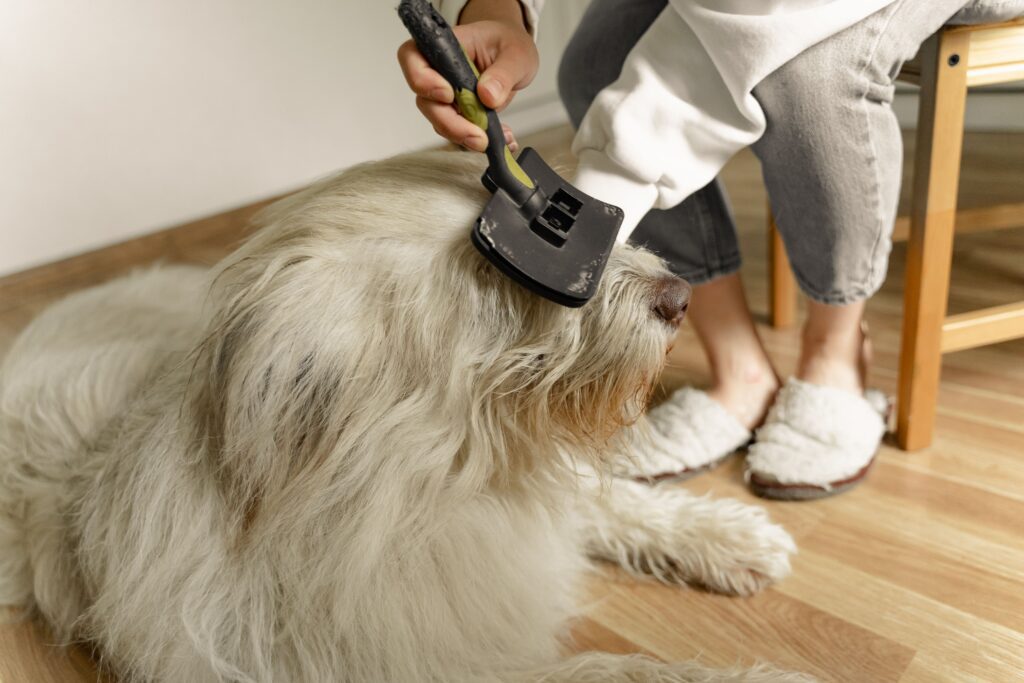
How to make homemade detangler spray for dogs with salon-quality ingredients
The complete professional-grade homemade detangler spray for dogs base recipe:
- 240 ml distilled water (not tap water; tap water mineral content disrupts the emulsion and shortens shelf life)
- 15 ml vegetable glycerin (humectant; draws moisture into the hair shaft and maintains coat flexibility)
- 10 ml aloe vera gel, food-grade or cosmetic-grade (film-forming conditioner; coats the hair shaft and reduces friction between tangled strands)
- 5 ml fractionated coconut oil (lightweight carrier oil; penetrates the hair shaft to reduce breakage during brushing without leaving heavy residue)
- 3 ml panthenol, also known as provitamin B5 (professional-grade conditioning agent; penetrates the cortex of the hair shaft, improves elasticity, and reduces breakage at the point of tangle resistance)
- 2 ml silk amino acids (film-forming protein; smooths the cuticle layer of each hair strand, reduces static electricity in long and double coats, and improves slip during detangling)
- 1 ml leucidal liquid SF, or 0.5 ml Optiphen Plus (natural preservation system; prevents bacterial and mold growth in the water phase of the formulation without parabens or formaldehyde releasers)
- pH adjustment: citric acid solution at 10% dilution, added drop by drop to reach a final pH of 6.5 to 7.0 for canine skin
Preparation method:
- Combine distilled water, vegetable glycerin, and aloe vera gel in a clean beaker and mix thoroughly
- Add fractionated coconut oil and mix until fully incorporated; the low viscosity of fractionated coconut oil allows full incorporation without an emulsifier at this concentration
- Add panthenol and silk amino acids and stir gently to avoid introducing air bubbles
- Add preservative and mix for one minute
- Check pH with calibrated pH strips or a digital pH meter; adjust with drops of 10% citric acid solution until pH reads 6.5 to 7.0
- Decant into a fine-mist spray bottle; dark glass or opaque PET plastic extends product stability by preventing UV degradation of the plant-derived ingredients
- Label with formulation date; use within 8 to 12 weeks with preservative or within 5 to 7 days without
Application: lightly mist the coat section before brushing, allow 30 seconds for the conditioning agents to penetrate the hair shaft, then brush from tip to root in sections. Do not saturate the coat; a fine even mist is more effective than heavy application and reduces the risk of coat buildup over repeated uses.
Cat vomiting is one of those alarming moments that stops every pet parent dead in their tracks but knowledge is the best calm you can have. Get the complete, reassuring breakdown of cat vomiting causes, symptoms, and treatments so you always know exactly what’s happening, what to do, and when it’s time to pick up the phone and call your vet.
Ingredients to Skip vs. Professional Alternatives: The Canine Formulation Safety Matrix
How to make homemade detangler spray for dogs safely requires knowing which commonly recommended kitchen ingredients cause genuine harm to canine skin chemistry before formulating anything. The matrix below maps the most frequently suggested DIY dog grooming ingredients to their specific biological risks and the professional-grade alternatives that deliver the intended function without the damage.
How to make homemade detangler spray for dogs without accidentally damaging canine skin
| The Common Kitchen Ingredient | The Hidden Risk to Canine Skin | Your Advanced Salon-Grade Alternative |
|---|---|---|
| Liquid dish soap (Dawn, Fairy) | Completely strips the lipid barrier of the canine acid mantle; anionic surfactants at dish soap concentration are designed to cut grease and remove all oils, which destroys the sebaceous film that protects canine skin from environmental pathogens; causes severe itching, flaking, and sets the stage for secondary yeast and bacterial overgrowth | Decyl glucoside or coco betaine; gentle plant-derived amphoteric and non-ionic surfactants that clean effectively at canine-appropriate pH without stripping the lipid barrier |
| Undiluted apple cider vinegar | Destroys the natural neutral-to-slightly-alkaline canine skin pH balance; ACV has a pH of approximately 2.5 to 3.0, far more acidic than the canine skin range of 6.2 to 7.4; applied undiluted, it causes chemical irritation, disrupts the microbiome, and can cause burns on already-compromised skin | Colloidal oatmeal rinse or vegetable glycerin; both soothe and condition at canine-compatible pH without the acid disruption risk |
| Human baby shampoo | Too acidic for canine skin despite its gentle human reputation; baby shampoo is formulated for the human infant skin pH of approximately 4.5 to 5.5, which is significantly more acidic than canine skin pH; repeated use shifts the canine skin microbiome toward pathogenic species and leads to secondary bacterial infections over time | Properly pH-balanced custom formulations using decyl glucoside as the surfactant base, buffered to 6.5 to 7.0 with sodium hydroxide or citric acid |
| Essential oils for scent (lavender, tea tree, eucalyptus) | High risk of toxicity from dermal absorption; skin penetration of concentrated essential oils reaches systemic circulation in dogs faster than in humans due to thinner canine skin; tea tree oil and eucalyptus are confirmed dog toxins at low concentrations; even lavender at high dilution can cause respiratory irritation in brachycephalic breeds | Dog-safe botanical hydrosols including lavender hydrosol, chamomile hydrosol, and calendula hydrosol; hydrosols are the water-soluble aromatic byproduct of steam distillation and contain only the water-soluble aromatic compounds without the concentrated terpene load of essential oils |
| Coconut oil applied undiluted as a leave-in | Too heavy for most coat types; undiluted coconut oil applied to the coat surface sits on top of the cuticle without penetrating, attracts environmental debris, and creates a waxy buildup that makes the coat harder to brush over time; also clogs skin pores at the follicular level in dogs with dense undercoats | Fractionated coconut oil at 2 to 5% in a water-based formulation; the fractionation process removes the long-chain fatty acids that cause solidification and buildup, leaving a lightweight clear oil that penetrates the hair shaft and rinses cleanly |
| White vinegar as a rinse | Same pH disruption mechanism as ACV; acetic acid at white vinegar concentration causes follicular irritation and disrupts the skin’s protective acid mantle when used repeatedly | Dilute citric acid at 0.1% in distilled water as a final rinse pH adjustment, buffered to 6.8 to 7.0, which gently clarifies mineral buildup from the coat without the follicular irritation of acetic acid |
Dog Grooming Safety Resources
The American Kennel Club’s dog grooming safety resources confirm that human shampoos and dish soaps are inappropriate for dogs because of pH differences between human and canine skin, and that products formulated specifically for dogs or with veterinary guidance are the appropriate standard for all canine topical applications.
The decision to neuter your cat is one of the most important choices you’ll ever make as a pet parent and timing matters enormously. Discover the best age to neuter your cat to prevent spraying and give your feline companion the healthiest, happiest, and most harmonious life possible from the very start.
How to Adjust pH of Homemade Dog Shampoo: The Technical Foundation of Safe Formulation
How to adjust pH of homemade dog shampoo is the single most important technical skill in the entire homemade dog grooming product formulation process, because a product with the right ingredients at the wrong pH will still damage canine skin through acid mantle disruption regardless of how carefully the rest of the formulation was assembled.
Canine skin pH varies by body region and breed but falls within a range of approximately 6.2 to 7.4, with most individuals clustering around 6.8 to 7.2. This means canine skin is nearly neutral to very mildly alkaline, in direct contrast to human skin which is clearly acidic. How to adjust pH of homemade dog shampoo to this range requires both a reliable measurement method and a buffering agent that can shift the formulation in either direction from its natural pH.
How to adjust pH of homemade dog shampoo and detangler for canine skin compatibility
The pH measurement tools in order of accuracy:
- Digital pH meter with calibration buffer solution: the most accurate method; requires calibration before each use with a pH 7.0 buffer solution; accurate to 0.1 pH units; the professional standard for any formulation intended for repeated use on a dog’s skin
- pH strips calibrated for the 6.0 to 8.0 range: acceptable for home use; accuracy to within 0.5 pH units; ensure strips are specifically calibrated for this range rather than the wider 0 to 14 range which cannot resolve differences within the neutral zone accurately
- Litmus paper: not recommended for dog formulation pH testing because the color change resolution is insufficient to distinguish between 6.5 and 7.5, which is a clinically meaningful difference for canine skin
The pH adjustment agents:
- To lower pH toward the acidic direction: 10% citric acid solution added drop by drop; mix thoroughly and test pH after each addition; citric acid is gentle, cosmetic-grade, and does not introduce harsh chemical residue
- To raise pH toward the alkaline direction: 10% sodium hydroxide solution (lye solution) added drop by drop with thorough mixing; handle sodium hydroxide with gloves; only needed when a highly acidic surfactant base has been used
How to adjust pH of homemade dog shampoo target range for the detangler spray recipe in this article is 6.5 to 7.0. For a shampoo formulation with surfactants, the target is the same. Test pH after all other ingredients have been combined and the preservative has been added, because different ingredients contribute differently to the final formulation pH and testing at intermediate stages produces inaccurate final readings.
Best Natural Preservatives for Homemade Dog Shampoo 2026: Preventing Microbial Contamination
Best natural preservatives for homemade dog shampoo 2026 is the most frequently skipped component of DIY dog grooming product recipes found online, and it is the omission that turns a well-intentioned formulation into a bacterial or mold culture that gets applied directly to the dog’s skin and coat at every grooming session.
Any water-containing formulation, which includes every liquid shampoo, detangler spray, and conditioner ever formulated, is a growth medium for bacteria, yeast, and mold from the moment the first water molecule is introduced. Distilled water has no microbial load at the time of use but becomes contaminated at the moment of the first dispensing when air and environmental microbes enter the container. A water-based product without a preservation system reaches unsafe microbial counts within 3 to 5 days at room temperature in most home environments.
The Personal Care Products Council’s ingredient safety database provides safety assessments for cosmetic and personal care ingredients including those used in pet formulations, and confirms the safety profiles of the preservation systems used in professional pet grooming products.
Best natural preservatives for homemade dog shampoo: why preservation is not optional
The best natural preservatives for homemade dog shampoo by formulation type:
Leucidal Liquid SF (radish root ferment filtrate): the most widely used natural preservation system in professional natural pet product formulations in 2026. Produced by lacto-fermentation of Leuconostoc kimchii bacteria on radish root. Effective against a broad spectrum of bacteria and yeast. Use rate 2 to 4% of total formulation weight. pH active range 3.5 to 7.0, which is compatible with canine-pH-adjusted formulations. Produces no fragrance contribution to the finished product.
Optiphen Plus (phenoxyethanol, caprylyl glycol, sorbic acid):
The professional hybrid preservation system that combines a synthetic ester with a glycol and a carboxylic acid for broad-spectrum coverage against bacteria, yeast, and mold. Use rate 0.75 to 1.5%. pH active range 3.0 to 8.0, the widest active range of commonly available preservation systems. Not strictly “natural” in the botanical sense but is paraben-free, formaldehyde-free, and widely used in natural and organic pet product formulations as a preservation standard.
Vitamin E (tocopherol) alone:
Not a preservation system; functions as an antioxidant that protects oil-phase ingredients from oxidative rancidity but has no meaningful antimicrobial activity against bacteria or mold in the water phase. Never use vitamin E as the sole preservation strategy in any water-containing dog grooming product.
The best natural preservatives for homemade dog shampoo 2026 practical rule:
If your recipe contains water and you plan to use it more than once, it requires a validated preservation system. The 5-to-7-day refrigerator shelf life alternative is acceptable for very small batches but requires strict cold-chain storage and the discipline to discard the product at day seven regardless of apparent condition.
Left untreated, mats and tangles go from a grooming inconvenience to a genuinely painful experience your pet simply shouldn’t have to endure. Learn how to gently and effectively tackle matting and tangles with expert detangling techniques that keep your pet comfortable, knot-free, and looking absolutely wonderful every single day.
DIY Leave In Conditioner for Double Coated Dogs: Formulating for Undercoat Penetration
DIY leave in conditioner for double coated dogs addresses a fundamentally different formulation challenge than a standard detangler spray for single or wavy-coated breeds. Double-coated breeds including Siberian Huskies, Golden Retrievers, Bernese Mountain Dogs, German Shepherds, and Samoyeds have two distinct coat layers with different texture, diameter, and porosity: a dense, fine, water-repellent undercoat and a coarser, longer, more porous outer guard coat. A product applied to the guard coat surface may never reach the undercoat at all without formulation modifications that address the density barrier between the two layers.
DIY leave in conditioner for double coated dogs: why standard detangler spray formulations are insufficient
The formulation modifications required for an effective DIY leave in conditioner for double coated dogs compared to the base detangler recipe:
Increase the panthenol concentration from 1 ml to 3 ml per 240 ml of formulation. Panthenol’s small molecular weight allows it to penetrate dense undercoat fiber more effectively than larger conditioning polymers, and the higher concentration provides the deep-fiber moisture retention that prevents the dry, brittle undercoat texture that causes matting in double-coated breeds during seasonal coat blows.
Add hydrolyzed oat protein at 2 to 3% of total formulation weight. Hydrolyzed proteins in the appropriate molecular weight range (under 1,000 daltons) deposit on damaged or porous hair shaft areas and temporarily fill in the cuticle gaps that cause individual undercoat fibers to hook together and form mats. This protein deposition effect is specifically useful for the fine-fiber undercoat where cuticle damage accumulates during periods of heavy undercoat growth.
Add a cationic conditioning agent such as BTMS-25 (behentrimonium methosulfate and cetyl alcohol) at 1 to 2% of formulation weight. Cationic conditioners carry a positive electrical charge that deposits on the negatively-charged hair fiber surface and provides substantive conditioning that remains on the hair after the water carrier evaporates. This is the mechanism that distinguishes a professional-quality leave-in conditioner from a simple water-and-glycerin spray.
Application method for the DIY leave in conditioner for double coated dogs:
Apply to a towel-dried coat after bathing, working in sections from the skin outward through the full coat depth. Use a slicker brush to distribute through the undercoat layer while the product is still damp. For between-bath use, apply to dry coat before brushing sessions to reduce breakage and static in both coat layers.
Halloween is pure magic for the whole family but some of those festive treats can be downright dangerous for your dog. Get the ultimate guide to safe Halloween treats for dogs so your pup can join in all the spooky celebration without a single scary moment for you as their devoted pet parent.
DIY Dog Whitening Shampoo Recipe for Tear Stains: Optical Brightening Without Damage
DIY dog whitening shampoo recipe for tear stains is one of the most searched homemade dog grooming topics because commercial whitening shampoos often contain optical brighteners, bleaching agents, or bluing agents that produce visible results but carry safety concerns when used near the eyes or on sensitive facial skin.
The safe DIY dog whitening shampoo recipe for tear stains uses enzymatic and chelating action to break down the chromogenic compounds in tear staining rather than bleaching or optical trickery:
For the tear stain area specifically, the approach is a targeted face wash rather than a full-coat whitening shampoo, because the facial skin around the eyes is the most sensitive skin surface on the dog and requires a gentler, more dilute formulation than the body coat.
DIY dog whitening shampoo recipe for tear stains: the safe ingredient approach for sensitive facial skin
The targeted DIY dog whitening shampoo recipe for tear stains:
- 120 ml distilled water
- 10 ml decyl glucoside (gentle non-ionic surfactant; low-irritation cleansing without eye sting risk)
- 5 ml vegetable glycerin (moisturizing agent; prevents drying of the delicate periocular skin)
- 3 ml aloe vera gel (soothing film-former; reduces the inflammation that often accompanies chronic tear staining)
- 2 ml papain enzyme solution at 1% dilution (proteolytic enzyme derived from papaya; breaks down the porphyrin protein compounds in tear staining through enzymatic digestion rather than bleaching)
- 1 ml colloidal oatmeal extract (anti-inflammatory; soothes periocular skin irritated by chronic tear contact)
- Preservative at the same rate as the base detangler recipe
- pH adjust to 6.8 to 7.0
Application:
Apply with a soft cotton pad to the stained area; avoid contact with the eye itself; leave for 60 seconds to allow enzymatic action; rinse thoroughly with warm water. Use three times weekly rather than daily to prevent over-cleansing of the periocular skin.
The chromogenic compound responsible for the reddish-brown color of tear staining is porphyrin, a naturally occurring organic compound in dog tears and saliva. Enzymatic breakdown of porphyrin through papain or bromelain is more chemically appropriate than optical brighteners for a product being applied adjacent to the eye.
With so many dog food options crowding the shelves, finding the right one can feel completely overwhelming but it doesn’t have to. Explore the 10 best dog food products with this complete guide to canine nutrition and make the smartest, most nourishing choice for your beloved companion’s long-term health and vitality.
Homemade Healing Salve for Dog Paw Hyperkeratosis: Formulating for Cracked, Thickened Paw Tissue
Homemade healing salve for dog paw hyperkeratosis addresses a specific dermatological condition rather than a cosmetic grooming concern. Hyperkeratosis is the abnormal overproduction of keratin in the outer layer of the paw pad tissue, producing the crusty, cracked, hardened, and sometimes feather-like keratin overgrowth on paw pad surfaces that is seen in certain breeds including Labrador Retrievers, Golden Retrievers, and Dogues de Bordeaux, as well as in older dogs across breeds.
Cornell University College of Veterinary Medicine confirms that paw pad hyperkeratosis can be idiopathic (breed-predisposed with no underlying cause), secondary to underlying conditions including distemper, leishmaniasis, zinc-responsive dermatosis, or pemphigus foliaceus, or related to nutritional deficiencies. A veterinary evaluation is recommended before applying any homemade treatment to confirm the hyperkeratosis is not secondary to a systemic condition requiring medical treatment.
Homemade healing salve for dog paw hyperkeratosis: ingredients that soften and protect hardened paw tissue
For confirmed idiopathic or breed-predisposed hyperkeratosis, the homemade healing salve for dog paw hyperkeratosis recipe:
- 30 g shea butter (emollient base; high in oleic and stearic acids that soften and repair cracked keratin tissue; melting point of 32 to 37 degrees Celsius allows easy application and skin-temperature melting on contact)
- 15 g beeswax (structure agent; raises the melting point of the salve to prevent liquefaction in warm environments while maintaining a spreadable consistency at application)
- 10 g coconut oil, solid form (occlusive emollient; creates a physical moisture-barrier over the treated tissue that prevents further water loss from the cracked pad surface)
- 5 g castor oil (humectant and film-former; draws moisture into the hyperkeratotic tissue and creates a flexible coating that moves with the paw pad during walking without cracking off)
- 5 g lanolin, cosmetic grade (closest analogous substance to the natural sebaceous lipid film; penetrates and softens hardened keratin protein structure more effectively than plant-based oils alone)
- 3 ml vitamin E oil (antioxidant; protects the oil-phase ingredients from rancidity and provides topical free-radical scavenging that supports tissue repair)
- 2 ml calendula-infused oil (anti-inflammatory botanical; reduces the redness and cracking at the margins of hyperkeratotic tissue)
Preparation:
Melt shea butter, beeswax, coconut oil, castor oil, and lanolin together in a double boiler at low heat; remove from heat and allow to cool to 40 degrees Celsius before adding vitamin E and calendula oil; pour into small tins or push-up tubes; allow to solidify at room temperature.
Application:
Apply to clean, dry paw pads after walks, focusing on the thickened and cracked areas; boots or socks worn for 20 to 30 minutes post-application prevent licking and increase absorption time. Apply once or twice daily until the hyperkeratotic tissue softens visibly, then reduce to a maintenance application three times weekly.
How to Make Homemade Detangler Spray for Dogs: Storage, Shelf Life, and Quality Control
How to make homemade detangler spray for dogs that performs consistently from the first use to the last requires understanding the degradation pathways of water-based formulations and building a storage and quality control protocol that prevents product failure before the end of the expected shelf life.
The primary degradation pathways for the homemade detangler spray for dogs base recipe:
Microbial contamination:
The highest risk in any water-based formulation; prevented by the preservation system described above; indicated by cloudiness, sediment formation, unusual odor, or color change; discard immediately at any sign of microbial contamination regardless of time remaining in the expected shelf life
Oxidative rancidity in the oil phase:
The fractionated coconut oil component is highly stable compared to polyunsaturated oils but can develop rancidity over time, particularly in transparent bottles exposed to light and warmth; indicated by an off or rancid odor developing in the formulation; prevented by dark glass storage and vitamin E addition
Emulsion separation:
The oil and water phases may visibly separate over time if the formulation was not fully emulsified during preparation; indicated by a visible oil layer floating on the water surface; prevented by thorough mixing during preparation and shaking the bottle before each use
The American Veterinary Medical Association’s pet care guidance confirms that topical products applied to dogs should be assessed for safety and appropriate formulation, and that owners should consult with a veterinarian if a dog shows any adverse skin reaction to a homemade or commercial grooming product.
Storage recommendations for the homemade detangler spray for dogs formulation: store in a cool, dark location below 25 degrees Celsius; label with the formulation date and the discard date (8 to 12 weeks from formulation with a validated preservative); inspect visually before each use for cloudiness, color change, or unusual odor; store a small test amount separately and spray onto white tissue paper before applying to the dog to check for unexpected color or particle development.
Frequently Asked Questions About How to Make Homemade Detangler Spray for Dogs
How to make homemade detangler spray for dogs with professional results requires panthenol (provitamin B5) for cortex penetration and elasticity, silk amino acids for cuticle smoothing and static reduction, vegetable glycerin for humectancy, aloe vera gel for film-forming conditioning, and fractionated coconut oil at low concentration for shaft lubrication. These five ingredients replicate the functional components of professional salon detangler products at a fraction of the commercial cost. The most important non-ingredient requirement is pH calibration to 6.5 to 7.0 using a digital pH meter and citric acid adjustment solution, confirmed by the AKC’s dog grooming safety guidance which specifies canine skin pH-compatibility as essential for all topical products.
Homemade healing salve for dog paw hyperkeratosis is appropriate for confirmed idiopathic or breed-predisposed hyperkeratosis with no signs of systemic illness. Cornell University College of Veterinary Medicine confirms that hyperkeratosis can be secondary to distemper, leishmaniasis, zinc-responsive dermatosis, or pemphigus foliaceus, all of which require systemic medical treatment rather than topical management alone. Any dog presenting with paw hyperkeratosis alongside weight loss, lethargy, decreased appetite, nasal hyperkeratosis, or skin lesions elsewhere on the body requires veterinary evaluation before any home treatment is initiated. The homemade salve addresses the symptom; it does not treat the underlying systemic cause if one exists.
📊 Interactive Pet Health & Care Calculators
Plan your pet’s healthcare and daily budget with our free interactive tools:
🐾 Related Resources & Interactive Tools in This Guide:
- Interactive Calculator: Dog OTC Medication Dosage Calculator — Calculate safe, vet-approved doses of Benadryl, Zyrtec, Pepcid, and Melatonin by body weight.
- Clinical Resource: Struggling with a Muddy Dog? 7 Quick Tips
- Behavior & Training Guide: Labrador Retriever Grooming: Tips and Tricks for a Happy and Healthy Coat
- Related Expert Guide: Home Remedies for Cat Itchy Skin Scratching: Natural Tips
Growth & Immunization Tracking: To predict your puppy’s adult weight based on current breed trajectory, use our interactive Puppy Growth Calculator. For core vaccine timelines and veterinary cost planning, refer to the Puppy Vaccination Schedule Tool.
📚 Related Topic Cluster Guides & Veterinary Tools
Explore our complete Pet Grooming & Hygiene Guide Hub for comprehensive guides, veterinary diagnostic checklists, and daily care protocols.
- How to Make Your Dog and Cat Best Friends: 7 Proven Tricks That Actually Work
- How to Make Your Own Pet Grooming Wipes: Safe, Natural DIY Solutions
- How to Stop a Horse From Rubbing Its Tail and Boost Growth
- Best Shedding Tools for Horses to Remove Winter Coat Safely
- Interactive Tool: Pet Age to Human Years Conversion Calculator