The information and calculator data provided in this article are aggregated from peer-reviewed veterinary literature, including the Merck Veterinary Manual and AVMA guidelines. This content is for educational and informational purposes only and is not a substitute for professional veterinary advice, diagnosis, or treatment. Always consult with a licensed veterinarian before administering any medication or altering your pet’s health regimen.
Choosing the best horse breeds for first-time owners is the decision that determines whether your first year of horse ownership builds lifelong confidence or produces a string of frustrating and expensive setbacks. The best horse breeds for first-time owners share a specific combination of traits that have nothing to do with color, show record, or purchase price: predictable temperament, willingness to tolerate handler mistakes, physical durability, and the capacity to forgive inconsistent aids while a new owner finds their footing.
This guide cuts through the noise of breed marketing and social media trends to give you an honest, research-backed framework for matching a breed to your goals, your family, your riding discipline, and your management capacity. You will find a full breakdown of the top beginner-friendly breeds, a practical personality chart for comparing temperament types, family-specific recommendations for children, low-maintenance considerations, and discipline-specific guidance from trail riding to English lessons.
The right match exists for every type of first-time owner. The goal of this guide is to help you find it before writing a check.
Table of contents
- What Makes a Horse Right for First-Time Owners
- The Four Qualities That Define the Best Horse Breeds for First-Time Owners
- Calm Horse Breeds for Beginners: Why Temperament Comes Before Everything
- Horse Breed Personality Chart: Understanding Temperament Types
- Using a Horse Breed Personality Chart to Narrow Your Search
- Best Horse Breeds for First-Time Owners: Top Picks by Category
- American Quarter Horse: The Leading Calm Horse Breed for Beginners
- Morgan Horse: One of the Best Horse Breeds for First-Time Owners Who Want Versatility
- Appaloosa: Beginner-Friendly With Character
- Haflinger: Small, Sturdy, and Naturally Calm
- Tennessee Walking Horse and Missouri Fox Trotter: Smooth Gaits for Nervous Beginners
- Best Family Horse Breeds for Kids: Safety and Size Considerations
- Best Family Horse Breeds for Kids in Competitive Programs
- Low Maintenance Horse Breeds: Managing First-Year Ownership Costs
- What “Easy Keeper” Really Means in Low Maintenance Horse Breeds
- Low Maintenance Horse Breeds That Stay Sound Without Specialist Care
- Choosing a Horse Breed by Riding Discipline: Match the Horse to Your Goals
- Breeds to Approach With Caution as a First-Time Owner
- Beautiful but Challenging: Breeds That Exceed Beginner Management Capacity
- Troubleshooting: When the Breed Match Does Not Feel Right
- When to Get Professional Help Choosing the Best Horse Breeds for First-Time Owners
- Frequently Asked Questions About Best Horse Breeds for First-Time Owners
- Your Next Steps for Finding the Best Horse Breeds for First-Time Owners
What Makes a Horse Right for First-Time Owners
Best Horse Breeds for First: Care & Wellness Guide
Providing optimal care for best horse breeds for relies on creating a safe home environment, establishing predictable daily routines, and supporting natural instincts. Balanced nutrition, engaging physical activity, and regular preventative checkups ensure long-term health and vitality.
| Key Care Dimension | Recommended Standard | Primary Benefit | Management Best Practice |
|---|---|---|---|
| Preventative Veterinary Care | Annual or biannual clinical checkups | Early detection of underlying disease | Maintain up-to-date vaccine and wellness records |
| Species-Appropriate Diet | Formulated to life stage and activity level | Optimal muscle tone and metabolic balance | Measure exact daily feeding portions consistently |
| Environmental Enrichment | Daily mental exercise and physical activity | Prevents boredom and destructive behaviors | Rotate interactive toys and training games weekly |
| Emergency Preparedness | Dedicated pet emergency fund or insurance policy | Guarantees immediate medical care access | Keep 24-hour ER clinic contact readily accessible |
The Four Qualities That Define the Best Horse Breeds for First-Time Owners
Best horse breeds for first-time owners share four measurable qualities that make them forgiving partners during the steep learning curve of early horse ownership. Prioritizing these qualities over aesthetics or breed prestige is the single most important decision a new owner makes.
Temperament stability.
The horse responds calmly and predictably to inconsistent aids, unexpected noises, unfamiliar environments, and handler errors. Temperament is partly genetic and partly management-shaped. Certain breeds carry a genetic predisposition toward lower reactive thresholds that makes consistent calmness more likely regardless of individual variation.
Trainability.
The horse has been bred and selected to want to cooperate with humans. Trainability is distinct from intelligence. Some highly intelligent breeds use their cognitive capacity to challenge handlers. Trainable breeds apply their intelligence toward partnership.
Physical hardiness.
First-time owners make feeding and management errors. Hardy breeds tolerate moderate mismanagement without developing serious health complications. Easy-keeper breeds maintain body condition on forage-based diets without requiring specialist nutritional intervention.
Versatility.
First-time owners frequently change their goals as their skills develop. A breed that works in trail riding, basic dressage, Western pleasure, and family hacking gives a new owner room to grow without requiring a horse sale every time interests evolve.
If you love dogs and dream of being your own boss, dog grooming might just be the perfect path waiting for you. This complete guide for first-time dog groomers and entrepreneurs gives you every practical tool, insider tip, and confidence boost you need to turn your passion for pets into a thriving, rewarding business you’ll absolutely love.
Calm Horse Breeds for Beginners: Why Temperament Comes Before Everything
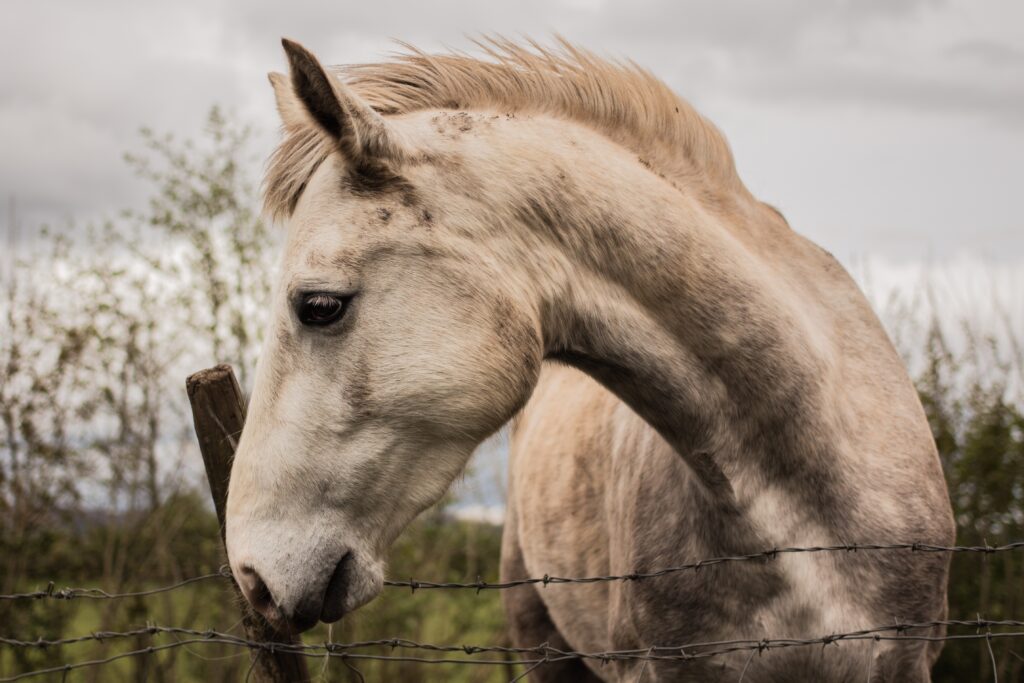
Calm horse breeds for beginners are not simply quiet horses. Quiet horses can be quiet because they are shut down, in pain, or heavily trained into suppression. Genuinely calm breeds are calm because their selective breeding history favored steady, cooperative temperament as a working trait.
According to Equus Magazine’s beginner breed guide, the most important factor in selecting a horse for a first-time owner is not the breed itself but the individual horse’s training history, age, and temperament assessment, with breed serving as a reliable starting probability rather than a guarantee. Among calm horse breeds for beginners, the American Quarter Horse, Morgan, Haflinger, and Tennessee Walking Horse consistently rank highest across independent equestrian assessments for their combination of genetic temperament stability and multi-generational selection for cooperative work with humans.
Bathing a horse the right way isn’t just about cleanliness it’s an act of care that strengthens the bond between you and your magnificent companion. Get these practical, step-by-step DIY horse bathing tips that keep your equine friend refreshed, gleaming, and feeling absolutely wonderful from head to hoof.
Horse Breed Personality Chart: Understanding Temperament Types
A practical horse breed personality chart begins with the three broad temperament categories that underpin every individual breed profile. These categories reflect selective breeding history and broad behavioral tendencies. They are not rigid rules, but they provide reliable starting points for breed research.
Cold-blooded breeds
Cold-blooded breeds were developed for heavy draft work, prioritizing calm, steady, and patient temperament above athleticism. Breeds like the Clydesdale, Percheron, and Shire fall here. They are gentle giants with low reactive thresholds, suitable for new owners who want a large, steady companion.
Warm-blooded breeds
Warm-blooded breeds represent the middle ground: they combine athletic ability with a trainable, cooperative temperament. Most sport horse breeds, Morgans, Quarter Horses, and Paints fall into this category. They offer the best performance-to-tractability ratio for most first-time owners.
Hot-blooded breeds
Hot-blooded breeds were developed for speed, endurance, and high responsiveness. Thoroughbreds and Arabians are the primary examples. They are athletic, sensitive, and responsive to the lightest aid, making them rewarding for experienced riders but unpredictable and physically demanding for beginners.
Using a Horse Breed Personality Chart to Narrow Your Search
A horse breed personality chart functions most effectively when used as a pre-purchase screening tool rather than a definitive selector. The American Association of Equine Practitioners (AAEP) recommends that prospective first-time owners assess their own skill level honestly before evaluating any individual horse, noting that the most preventable first-time ownership failures involve riders selecting horses beyond their current management and handling capacity.
Map your own rider profile against the chart before applying it to breed selection. Questions to assess your profile:
- How much horse experience do you have, measured in years of regular riding rather than occasional lessons?
- How do you respond to sudden behavioral changes? Do unexpected actions cause you to freeze, brace, or relax?
- What is your physical confidence level? Are you comfortable asking for forward movement from a strong horse?
- What is your primary goal: pleasure, competition, trail riding, or family hacking?
Cross-reference your answers against the horse breed personality chart categories above. A nervous, physically hesitant rider with minimal experience belongs in the cold-blooded to warm-blooded range. A physically confident adult beginner with a specific discipline goal can explore the upper range of warm-blooded breeds with appropriate individual vetting.
Behind every powerful, graceful, high-performing horse is a nutrition plan that most people never get to see. Explore the captivating art and science of horse nutrition and discover the carefully crafted dietary secrets that fuel these breathtaking animals to their very peak of health, strength, and performance.
Best Horse Breeds for First-Time Owners: Top Picks by Category
American Quarter Horse: The Leading Calm Horse Breed for Beginners
The American Quarter Horse is the most widely recommended of all calm horse breeds for beginners and holds the top position on virtually every credible beginner breed list for consistent reasons. According to the American Quarter Horse Association (AQHA), the Quarter Horse is the most popular horse breed in the United States with over three million registered horses, reflecting its proven utility across the widest range of disciplines and owner experience levels.
Quarter Horses were bred for ranch work, cattle handling, and short sprinting, producing a stocky, muscular build with a cooperative, people-oriented temperament. Their natural disposition toward calm, ground-level focus makes them less reactive than most warm-blooded breeds. They excel in Western pleasure, trail riding, ranch work, beginner lessons, and 4-H programs. Their physical hardiness and easy-keeper status make them one of the best horse breeds for first-time owners managing a tight budget.
Morgan Horse: One of the Best Horse Breeds for First-Time Owners Who Want Versatility
The American Morgan Horse Association describes the Morgan as one of the earliest horse breeds developed in the United States and a breed specifically valued for its combination of compact hardiness, willing temperament, and versatility across disciplines. Every registered Morgan traces to the foundation sire Figure, later known as Justin Morgan, demonstrating a remarkably consistent genetic heritage that has maintained predictable temperament across centuries.
Morgans stand between 14.1 and 15.2 hands, making them accessible to riders of varying sizes. Their well-documented easy-keeper status means they maintain body condition on forage-based diets with minimal concentrate supplementation, a significant practical advantage for first-time owners learning feed management. The Morgan excels in pleasure riding, trail work, light driving, endurance, and both English and Western disciplines, delivering the discipline versatility that makes it one of the most forgiving best horse breeds for first-time owners who are still deciding where their equestrian interests will settle.
Appaloosa: Beginner-Friendly With Character
The Appaloosa’s distinctive spotted coat gets the attention, but it is the breed’s calm, people-oriented temperament and sturdy, athletic build that earns consistent placement among the best horse breeds for first-time owners. Originally developed by the Nez Perce people as a hunting and war horse, the Appaloosa combines the physical durability of a working breed with a tractable, forgiving disposition.
According to the Appaloosa Horse Club (ApHC), the breed is consistently represented in 4-H and youth programs precisely because of its reliable temperament and versatility across Western and English disciplines. Appaloosas perform well in Western disciplines, trail riding, and beginner programs, and their intelligence means they learn quickly and generally respond well to consistent handling.
Haflinger: Small, Sturdy, and Naturally Calm
The Haflinger originated in the Austrian and Italian Alps as a mountain pack and draft horse, breeding circumstances that produced a remarkably calm, physically strong, and willing temperament. Haflingers stand between 13.2 and 15 hands, making them approachable for nervous beginners who find larger horses intimidating, while their substantial bone and muscle make them strong enough to carry adults comfortably.
Their genetic disposition toward emotional steadiness and patience with inconsistent riders makes Haflingers one of the most recommended calm horse breeds for beginners in European equestrian therapy programs and beginner riding schools. The American Haflinger Registry notes that the breed’s mountain origin produced exceptional hoof durability and forage efficiency, both of which directly reduce first-year management complexity for new owners.
Tennessee Walking Horse and Missouri Fox Trotter: Smooth Gaits for Nervous Beginners
Both the Tennessee Walking Horse and the Missouri Fox Trotter offer a significant practical advantage for nervous first-time owners: their naturally smooth, four-beat gaits dramatically reduce the physical challenge of sitting a moving horse. The Running Walk of the Tennessee Walking Horse and the Fox Trot of the Missouri Fox Trotter are more stable and comfortable than the diagonal trot of most breeds, lowering the physical skill requirement for a balanced seat.
The Tennessee Walking Horse Breeders’ and Exhibitors’ Association (TWHBEA) documents the breed’s extensive use in trail and pleasure programs as one of its defining industry applications, confirming the breed’s reputation for calm, willing partnership with riders of all experience levels.
Choosing the wrong saddle isn’t just uncomfortable for your horse it can cause real, lasting physical damage that no rider ever wants on their conscience. Follow this complete guide to choosing the perfect horse saddle and find the ideal fit that keeps both you and your magnificent horse comfortable, safe, and performing beautifully together.
Best Family Horse Breeds for Kids: Safety and Size Considerations
Welsh Pony: The Premier Choice Among Best Family Horse Breeds for Kids
The Welsh Pony is the most recommended of all best family horse breeds for kids in the 7 to 14 age range because it combines appropriate size, genuine strength, a forgiving temperament, and participation in both English and Western programs. Welsh Ponies stand between 12.2 and 14.2 hands, placing them within a size range that allows children to learn handling, grooming, and tacking independently without requiring adult assistance for every interaction.
The Welsh Pony and Cob Society of America documents the breed’s extensive history in Pony Club, 4-H, and youth hunter programs across North America, reflecting decades of selection for reliable temperament with young and inexperienced riders. Welsh Ponies are active and forward-going enough to engage ambitious young riders while remaining fundamentally trustworthy in unexpected situations.
Shetland Pony vs Quarter Horse: Matching Size to the Child’s Age and Goal
One of the most common mistakes in selecting best family horse breeds for kids is prioritizing size cuteness over practicality. Shetland Ponies are appealing and manageable in size for very young children (4 to 8 years old) but are known for independent thinking and a strong will that challenges inconsistent young riders. Their small size does not reflect a small personality.
For children between 9 and 14 who are beginning structured riding lessons, a well-trained Quarter Horse or Morgan is frequently the more appropriate choice despite the larger size, because these breeds offer the temperament consistency that allows a child to focus on developing riding skills. The United States Pony Clubs (USPC) recommends matching the horse’s energy level and sensitivity to the child’s current skill level rather than age alone, a standard that consistently points toward Quarter Horses and Morgans for children entering their first structured program.
Best Family Horse Breeds for Kids in Competitive Programs
Best family horse breeds for kids entering Pony Club, 4-H, or youth show programs benefit from breeds with established youth competition infrastructure. The Quarter Horse through AQHA youth divisions, Welsh Ponies and Connemaras in English hunter programs, and Appaloosas in ApHC youth classes provide structured community, mentorship, and event access that significantly accelerates a young rider’s development beyond what isolated private training can offer.
According to 4-H’s national equine program guidelines, breeds with large registered youth memberships produce measurably better first-year outcomes for child riders because the combination of community support, structured competition, and accessible mentorship reduces the isolation that makes early horsemanship errors go uncorrected.
The right family dog doesn’t just fit into your home they complete it in the most wonderful, tail-wagging way imaginable. Discover the very best family dog breeds that bring boundless joy, unwavering loyalty, and endless love to households of every shape, size, and stage of life.
Low Maintenance Horse Breeds: Managing First-Year Ownership Costs
Low maintenance horse breeds reduce the financial and management complexity of first-year horse ownership at a point when new owners are simultaneously absorbing care knowledge, building handling confidence, and learning facility management. Selecting a breed known for physical hardiness and easy-keeper metabolism is a practical financial decision as much as a training one.
What “Easy Keeper” Really Means in Low Maintenance Horse Breeds
An easy keeper is a horse that maintains healthy body condition on forage-based feeding with minimal concentrate supplementation. Among low maintenance horse breeds, Morgans, Quarter Horses, Haflingers, and grade horses (horses without registered pedigree) are most consistently classified as easy keepers across practitioner reports.
Easy-keeper status has a meaningful financial implication. Mad Barn’s equine feed database indicates that maintenance feeding costs for easy-keeper breeds can run 30 to 50 percent lower than hard-keeper breeds in equivalent work programs, a significant difference when projected across a 12-month ownership period that also includes farrier, veterinary, dental, and facility costs.
Low Maintenance Horse Breeds That Stay Sound Without Specialist Care
Physical hardiness and hoof durability are the two most practically relevant low maintenance horse breeds characteristics for first-time owners. Breeds developed from working stock or mountain environments carry centuries of selection for staying sound under variable conditions without intensive farriery or specialized nutrition.
The Morgan, Haflinger, Fjord, and Mustang (post-adoption retraining aside) rank consistently highest for combined hoof durability, metabolic efficiency, and general soundness across varied terrain. The Bureau of Land Management (BLM) confirms that Mustangs, once trained, demonstrate exceptional hoof quality and metabolic efficiency rooted in centuries of natural selection on rugged terrain. By contrast, Thoroughbreds and Warmbloods frequently require regular joint supplementation, specialized shoeing, and more precise nutritional management, placing them firmly outside the low maintenance horse breeds category.
Low maintenance horse breeds comparison:
| Breed | Easy Keeper | Hoof Durability | Discipline Versatility | Beginner Suitability |
|---|---|---|---|---|
| American Quarter Horse | High | High | High | High |
| Morgan | High | High | High | High |
| Haflinger | High | Very High | Moderate | High |
| Fjord | High | Very High | Moderate | High |
| Appaloosa | Moderate-High | Moderate | High | High |
| Tennessee Walking Horse | Moderate | Moderate | Moderate | High |
| Thoroughbred | Low | Low | High | Low |
| Warmblood | Low | Low | High | Low |
Choosing a Horse Breed by Riding Discipline: Match the Horse to Your Goals
Choosing a horse breed by riding discipline is the most practical framework for narrowing breed selection once temperament and maintenance requirements have been established. Discipline compatibility does not mean a horse can only do one thing. It means certain breeds are physiologically and temperamentally optimized for specific types of work in ways that reduce training difficulty for a beginner.
Western Disciplines: Best Horse Breeds for First-Time Owners in Trail and Ranch
Best horse breeds for first-time owners pursuing Western pleasure, trail riding, ranch riding, or barrel racing start with the Quarter Horse as the standard-setting benchmark. The AQHA documents the Quarter Horse’s dominance in Western competition because the breed combines the quick-twitch muscle structure needed for cattle work and arena events with the temperament stability that makes consistent performance across a long show season possible.
The Paint Horse, which carries significant Quarter Horse bloodlines, performs similarly in Western programs. The American Paint Horse Association (APHA) confirms that Paint Horses compete successfully across Western pleasure, trail, ranch, and reining disciplines with a temperament profile closely matching the Quarter Horse, making them equally valid for first-time owners with Western goals.
English Disciplines: Choosing a Horse Breed by Riding Discipline for Beginners
Choosing a horse breed by riding discipline in English becomes more nuanced for beginners because the range of English disciplines (dressage, show jumping, eventing, hunter under saddle, endurance) spans a wide spectrum of physical and temperament demands. The Welsh Pony and Connemara Pony are widely used in youth English hunter programs because their calmness and scope match the physical and psychological demands of beginner jumping programs.
Mad Barn’s English riding disciplines guide provides a comprehensive breakdown of breed suitability across all English discipline categories, confirming that Morgans and Welsh Ponies rank highest among best horse breeds for first-time owners pursuing English pleasure and beginner dressage, while Warmbloods and Irish Sport Horses enter appropriate territory only after several years of riding experience.
Trail Riding and Pleasure Riding: The Most Beginner-Forgiving Discipline
Trail riding is the most forgiving entry discipline for first-time owners because it occurs in a non-competitive context, allows the horse and rider to develop trust at their own pace, and places premium value on the exact qualities that define the best horse breeds for first-time owners: steady temperament, sure-footedness, willingness to travel alone or in company, and physical durability across varied terrain.
The Tennessee Walking Horse, Missouri Fox Trotter, Quarter Horse, Morgan, and Haflinger are the five most consistently recommended breeds for trail riding beginners. The American Trail Horse Association lists all five among the most commonly entered breeds in organized trail events, confirming their real-world performance in the open-environment conditions that trail riding demands of a horse’s temperament.
Breeds to Approach With Caution as a First-Time Owner
Beautiful but Challenging: Breeds That Exceed Beginner Management Capacity
The best horse breeds for first-time owners list is most useful when read alongside an honest assessment of breeds that, despite their appeal and talent, consistently produce difficult first-year experiences for owners without an established skill foundation.
Arabians
Arabians are among the most beautiful horses in the world and genuinely loyal, intelligent, and bonded to their owners. They are also highly reactive, sensitive to inconsistent handling, and prone to expressing opinions strongly. The Arabian Horse Association acknowledges the breed’s sensitivity as a defining characteristic, confirming that Arabians thrive under experienced, responsive handling rather than the inconsistency typical of first-year ownership.
Thoroughbreds
Thoroughbreds straight off racing careers require significant retraining, often carry physical wear from track work, and have metabolic profiles that demand specialist feeding management. The Jockey Club’s TIP (Thoroughbred Incentive Program) provides retraining resources for off-track Thoroughbreds, but the program itself acknowledges that OTTBs are best suited to intermediate to advanced riders who have the time and skill for structured retraining.
Stallions of any breed
Stallions of any breed are not appropriate for first-time owners regardless of temperament assessment. Hormonal behavior management, boundary maintenance, and handling skill requirements exceed beginner capacity and introduce unnecessary safety risk.
Troubleshooting: When the Breed Match Does Not Feel Right
When a first-time owner has followed breed selection guidance carefully but the partnership still feels difficult, the issue is rarely the breed itself. The three most common underlying causes are age mismatch, training history, and management environment.
Age mismatch
Age mismatch is the most frequent error. Young horses under six years old require experienced handling to develop reliable responses. Many first-time owners purchase young horses because they are more affordable and visually appealing. The result is two inexperienced parties learning simultaneously, which amplifies every mistake on both sides. The best horse breeds for first-time owners recommendation universally includes an age minimum of seven to ten years for horses entering a first-time ownership situation.
Training history
Training history matters as much as breed. A Quarter Horse who has been inconsistently trained, frequently changed hands, or handled with aversive methods will behave nothing like a well-trained Quarter Horse of equivalent age. The AAEP recommends a pre-purchase examination by a licensed equine veterinarian before finalizing any purchase, with particular attention to behavioral history documentation from previous owners.
Management environment
Management environment shapes behavior continuously. A horse kept in isolation, confined without turnout, or managed on inadequate forage will express behavioral problems regardless of their genetic temperament baseline.
When to Get Professional Help Choosing the Best Horse Breeds for First-Time Owners
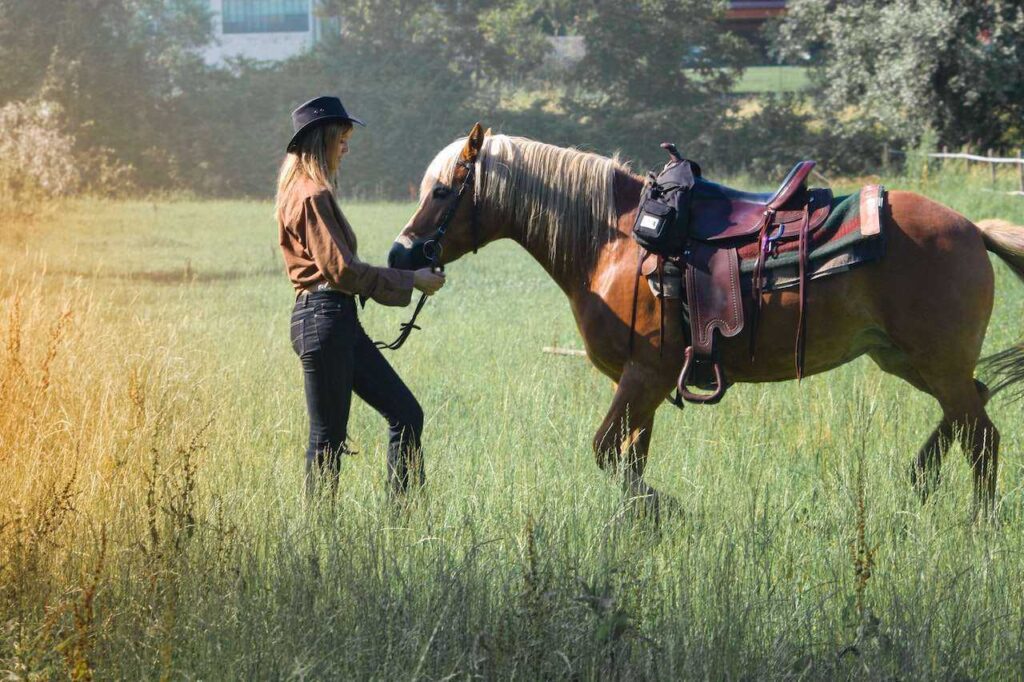
The best horse breeds for first-time owners decision benefits substantially from professional input before a purchase is made. A certified riding instructor who knows your skill level, a licensed equine veterinarian conducting a pre-purchase examination, and an experienced horse owner in your intended discipline form the minimum support structure for a first-time purchase.
Seek professional guidance immediately when:
- You are considering a horse under six years old as your first purchase
- The horse has not been ridden or handled regularly within the past 12 months
- The seller is unable or unwilling to allow a pre-purchase veterinary examination
- You feel pressure to decide quickly because another buyer is interested
- The horse’s behavior during a trial ride does not match the temperament description provided by the seller
The Kentucky Equine Research (KER) resource library and The Horse magazine both provide free educational resources for first-time buyers covering pre-purchase examination requirements, trial ride assessment protocols, and questions to ask sellers. Using these resources before the first viewing appointment saves most first-time owners significant financial and emotional difficulty.
Frequently Asked Questions About Best Horse Breeds for First-Time Owners
The best horse breeds for first-time owners across the widest range of goals are the American Quarter Horse, Morgan, Haflinger, Appaloosa, and Tennessee Walking Horse. Each combines genetic temperament stability, physical hardiness, and discipline versatility in proportions that reduce the management difficulty of first-year ownership. Among these, the Quarter Horse and Morgan are the most universally recommended because their established breed associations provide first-time owners with community support, educational resources, and structured competitive pathways.
The calm horse breeds for beginners requiring the least prior handling experience are the Haflinger, Morgan, and Quarter Horse, based on their reactive threshold profiles and tolerance for handler inconsistency. The Fjord Horse also belongs in this group: developed in harsh mountain environments for centuries of practical work with non-specialist handlers, Fjords are exceptionally stable under pressure and widely used in therapeutic riding programs because of their reliable gentleness, as confirmed by the American Driving Society which frequently features Fjords in beginner driving programs.
A horse breed personality chart is most effective as a pre-research screening tool rather than a final selector. Use it to identify which temperament category aligns with your rider profile and management capacity first. Then research individual breeds within that category for discipline fit, size requirements, and regional availability. A personality chart narrows the field from 300-plus registered breeds to a shortlist of 5 to 8 breeds worthy of deeper investigation.
Your Next Steps for Finding the Best Horse Breeds for First-Time Owners
Best horse breeds for first-time owners are not found through a single article or one afternoon at a barn. The right match emerges from honest self-assessment, structured breed research, professional input, and trial time with multiple horses before a purchase decision is made.
Here is your action plan:
- Today: Write down your three primary riding goals, your realistic weekly time commitment, your budget for purchase and monthly maintenance, and your honest rider experience level in years of regular riding. This profile shapes every subsequent decision.
- This week: Contact a certified riding instructor in your area for a skill assessment lesson and an honest conversation about which breed categories match your current ability. Book three to five trial rides on different breeds matching your top two or three candidates.
- This month: Attend a local horse show or breed association open day for your shortlisted breeds. Observing horses in a real management and competition environment reveals handling requirements that no article can fully capture.
- Before purchase: Commission a pre-purchase veterinary examination from a licensed equine veterinarian with no financial relationship to the seller. This is non-negotiable regardless of how well the trial rides go.
For continued reading, explore Understanding Horse Body Language: A First-Time Owner’s Visual Guide and What to Expect in Your First Year of Horse Ownership: A Practical Cost and Care Breakdown.
🐾 Related Resources & Interactive Tools in This Guide:
- Interactive Calculator: Puppy Growth & Target Adult Weight Calculator — Estimate your puppy target adult size and milestone weight trajectory.
- Clinical Resource: Supercharge Your Puppy Training: 7 Proven Tips for Rapid Results
- Behavior & Training Guide: Cane Corso 101: A Comprehensive Breed Guide
- Related Expert Guide: Golden Retriever 101: Your Complete Guide
Growth & Immunization Tracking: To predict your puppy’s adult weight based on current breed trajectory, use our interactive Puppy Growth Calculator. For core vaccine timelines and veterinary cost planning, refer to the Puppy Vaccination Schedule Tool.
📚 Related Topic Cluster Guides & Veterinary Tools
Explore our complete Pet Lifestyle & Living Hub for comprehensive guides, veterinary diagnostic checklists, and daily care protocols.
- How to Measure a Horse for a Saddle: Complete Fitting Guide 2026
- The Ultimate Guide to Safe Halloween Treats for Dogs: Vet-Approved Recipes and Safety Tips for 2026
- The Ultimate Guide to Luxury Pet Hotels: Premium Care for Your Beloved Companion (2026)
- Cats vs Dogs: Which Pet is the Perfect Match for You?
- Interactive Tool: Puppy Growth & Weight Predictor Calculator