The information and calculator data provided in this article are aggregated from peer-reviewed veterinary literature, including the Merck Veterinary Manual and AVMA guidelines. This content is for educational and informational purposes only and is not a substitute for professional veterinary advice, diagnosis, or treatment. Always consult with a licensed veterinarian before administering any medication or altering your pet’s health regimen.
Learning to ride a horse as an adult is one of the most personally transformative experiences available to any person who has the curiosity to begin and the patience to stay with it. Learning to ride a horse as an adult is not the same experience as learning as a child, and understanding exactly what is different, and what those differences mean for your progress, is the foundation of a successful and enjoyable start. Adults bring cognitive advantages to the process that children do not have: the ability to absorb and apply technical instruction deliberately, the emotional self-awareness to recognize their own responses to fear and uncertainty, and the motivational clarity of choosing this entirely for themselves.
What adults face that children typically do not is a more cautious relationship with physical risk, a body that takes longer to develop new movement patterns, and occasionally the weight of self-consciousness about learning something at a stage in life when most people expect expertise rather than beginner mistakes. Every one of these challenges is navigable with the right instructor, the right school horse, and the realistic expectations that this guide will help you build.
This guide covers every dimension of the adult learning journey: the timeline for skill development, clothing and safety gear for your first lesson, overcoming fear at every stage, the physical fitness benefits you will gain, and the answers to every question a new adult rider asks before, during, and after their first season of lessons.
Table of contents
- Learning to Ride a Horse as an Adult: Why Age Is Not the Barrier You Think It Is
- What Adults Learn Faster and What Takes Longer in Learning to Ride a Horse as an Adult
- How Long Does It Take to Learn to Ride a Horse: A Realistic Timeline
- Learn to Ride a Horse at Each Stage
- How Long Does It Take to Learn to Ride a Horse for Specific Goals
- Overcoming Fear of Horseback Riding: Understanding and Managing Anxiety
- What to Wear Horseback Riding First Time: A Complete Attire Checklist
- Safety-First Principles for What to Wear Horseback Riding First Time
- Complete What to Wear Horseback Riding First Time Clothing List
- Horseback Riding Fitness Benefits for Adults: What the Research Shows
- Physical Horseback Riding Fitness Benefits for Adults
- Mental and Emotional Horseback Riding Fitness Benefits for Adults
- Learning to Ride a Horse as an Adult: Finding the Right Riding School
- Learning to Ride a Horse as an Adult: What to Expect in Your First Three Lessons
- Learning to Ride a Horse as an Adult: Setting Yourself Up for Long-Term Progress
- Frequently Asked Questions About Learning to Ride a Horse as an Adult
- Your Action Plan for Learning to Ride a Horse as an Adult
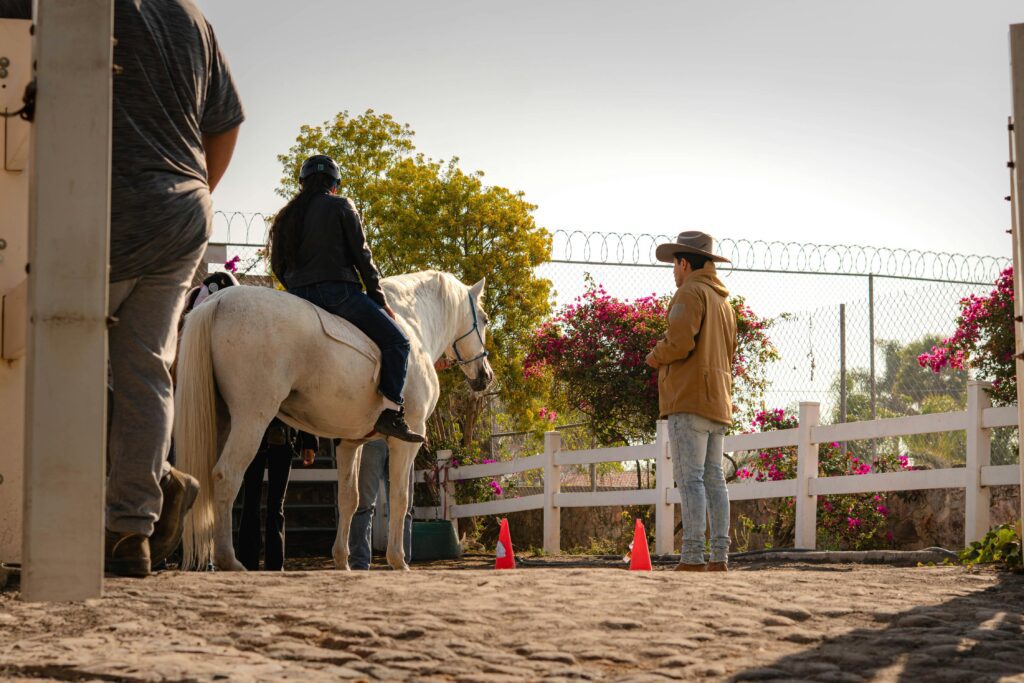
Learning to Ride a Horse as an Adult: Why Age Is Not the Barrier You Think It Is
Learning to Ride a Horse as an Adult: Care & Wellness Guide
Providing optimal care for learning to ride a relies on creating a safe home environment, establishing predictable daily routines, and supporting natural instincts. Balanced nutrition, engaging physical activity, and regular preventative checkups ensure long-term health and vitality.
| Key Care Dimension | Recommended Standard | Primary Benefit | Management Best Practice |
|---|---|---|---|
| Preventative Veterinary Care | Annual or biannual clinical checkups | Early detection of underlying disease | Maintain up-to-date vaccine and wellness records |
| Species-Appropriate Diet | Formulated to life stage and activity level | Optimal muscle tone and metabolic balance | Measure exact daily feeding portions consistently |
| Environmental Enrichment | Daily mental exercise and physical activity | Prevents boredom and destructive behaviors | Rotate interactive toys and training games weekly |
| Emergency Preparedness | Dedicated pet emergency fund or insurance policy | Guarantees immediate medical care access | Keep 24-hour ER clinic contact readily accessible |
Am I Too Old to Learn to Ride a Horse? The Honest Answer
Am I too old to learn to ride a horse is the question every adult beginner asks internally before booking their first lesson, and the answer is consistent across every qualified equestrian instructor, equine therapy practitioner, and riding school that works with adult beginners: no, you are not.
Monty Roberts, the world-renowned horse trainer, states directly that age is not the determining factor in whether a person can begin riding, and that the relevant question is physical capability and willingness to learn, not the number of years lived. He specifically notes that adults with reduced physical activity in prior years benefit from preparing their body through general fitness work before beginning, but that this is preparation advice, not a disqualification.
Horse Fact Book’s assessment of adult learning documents riders taking their first lessons at 75 years old and continuing successfully, confirming that the physical requirement for entry-level riding, which is the ability to mount, maintain seated balance, and follow basic instructor direction, is achievable by the vast majority of adults at any age when paired with an appropriate school horse and a patient, experienced instructor.
The right horse breed can change your entire equestrian experience but the wrong one can make every ride a frustrating uphill battle. Follow these expert tips for choosing the perfect horse breed for your unique goals and lifestyle and find the magnificent equine partner you and your riding journey truly deserve.
What Adults Learn Faster and What Takes Longer in Learning to Ride a Horse as an Adult
Learning to ride a horse as an adult involves a genuine set of advantages over childhood learning that most adult beginners underestimate because they are comparing themselves unfavorably to the mental image of a naturally fluid child rider.
Adults learn faster in these areas:
- Understanding the theory behind aids and their biomechanical effect on the horse
- Following complex sequential instruction and applying it deliberately in the saddle
- Reading and responding to the horse’s behavioral signals with calm, analytical awareness
- Applying ground safety protocols, horse handling etiquette, and stable management consistently
Adults take longer in these areas:
- Developing unconscious, automatic balance and movement absorption, which children develop through sheer volume of riding time before they develop conscious self-awareness
- Releasing habitual tension in the hips, lower back, and hands that adult bodies carry from years of desk work, driving, and sitting postures that are biomechanically opposite to a correct riding seat
- Progressing through gaits from walk to trot to canter, which requires the core stability and hip mobility that adult beginners typically need more time to develop
Understanding this split gives learning to ride a horse as an adult its realistic shape: faster conceptual progress, more deliberate skill application, and a longer physical conditioning timeline than childhood learning.
How Long Does It Take to Learn to Ride a Horse: A Realistic Timeline
Learn to Ride a Horse at Each Stage
How long does it take to learn to ride a horse is one of the most frequently asked questions from adult beginners, and the honest answer is that it depends significantly on lesson frequency, the quality of instruction, the consistency of the school horses used, and the individual learner’s physical background.
Salisbury Farms’ riding academy timeline guide provides the most practically useful framework: for adult riders taking one lesson per week, approximately two years of consistent lessons is required to reach the competency level of safely managing all the basic elements of horse care and riding independently, including catching, leading, tacking up, riding at all three basic gaits, and going out on a beginner trail. This timeline assumes one lesson per week. Riders who increase to two or three lessons per week can compress this significantly.
Shamrock Grove Arabians’ learning timeline guide breaks the journey into practical stages:
Beginner stage (weeks 1 to 8 at one lesson per week):
- Mounting and dismounting safely
- Basic correct seated position: upright spine, heels down, soft hands
- Walk and halt transitions with light rein contact
- Basic steering in an enclosed arena
Early intermediate stage (months 2 to 6):
- Rising (posting) trot with rhythmic posting
- Sitting trot with beginning core stability
- Introduction to canter on a school horse
- Basic transitions between all three gaits on a reliable school horse
Intermediate stage (months 6 to 24):
- Consistent canter transitions both directions
- Beginning lateral movements
- Trail riding on familiar terrain with instructor accompaniment
- Basic horse care and tacking up independently
Your horse works hard for you every single day and a proper, refreshing bath is one of the simplest ways to show them just how much you care. Get these easy, practical DIY horse bathing tips that keep your stunning equine companion clean, comfortable, and radiantly healthy from mane to tail.
How Long Does It Take to Learn to Ride a Horse for Specific Goals
How long does it take to learn to ride a horse to a specific goal depends on what that goal is. Adults who want to enjoy safe pleasure trail riding typically reach that goal in 12 to 18 months of weekly lessons. Or who want to compete at entry-level show classes should plan for 24 to 36 months of dedicated work. Adults who aspire to higher-level disciplines including dressage above Introductory level or eventing above Beginner Novice should expect a 3 to 5 year development timeline at one to two lessons per week.
Blue Heron Riding Academy’s learning timeline resource references Malcolm Gladwell’s 10,000-hour mastery principle and notes that the average student taking one 45-minute lesson per week accumulates approximately 40 hours of saddle time per year, meaning that meaningful competency, not mastery, requires sustained multi-year commitment rather than a short-term lesson series.
Overcoming Fear of Horseback Riding: Understanding and Managing Anxiety
Why Fear Is Normal and Useful When Learning to Ride a Horse as an Adult
Overcoming fear of horseback riding begins not with pushing through it but with understanding it. Fear in the context of horse riding is a neurologically appropriate response to an activity that does carry genuine physical risk. A 500 kg animal with instinctive flight responses and significant speed is an objectively powerful force. Respecting that reality and responding to it with preparation rather than denial is not weakness. It is sound judgment.
Horse and Rider magazine’s confidence building guide reframes fear as information rather than obstacle, noting that fear identifies the specific skill gap or knowledge gap that, once addressed, eliminates the anxiety. A rider who is afraid of the canter transition is typically a rider who has not yet developed sufficient independent balance to feel secure through the first few strides. The fear is telling them exactly what they need to work on, not telling them to stop.
Confident Horsemanship’s five-step fear management framework identifies these as the five most effective strategies for overcoming fear of horseback riding:
- Acknowledge the fear specifically without shame or minimization: identify exactly what scenario or movement triggers anxiety
- Distinguish between rational risk management (appropriate caution) and catastrophic thinking (an unhelpful projection of worst-case scenarios)
- Set specific, progressive, measurable goals that move toward the feared activity in small incremental steps rather than in a single confrontation
- Focus deliberately on what you currently can do well rather than on what you cannot yet manage
- Improve your skills and knowledge continuously, because fear in horse riding is directly inversely proportional to competence
Overcoming Fear of Horseback Riding After a Fall or Incident
Overcoming fear of horseback riding after a fall, near-miss, or unexpected behavioral incident from a horse requires a specific, graduated approach that respects the nervous system’s need to rebuild a sense of safety through accumulated positive experiences rather than through forced exposure.
Julie Goodnight Academy’s guide to post-accident fear recovery emphasizes that the most effective fear recovery after a riding incident involves three parallel tracks: improving riding skills and horse behavior knowledge (which addresses the actual competency gap the incident revealed), practicing safe handling protocols consistently (which rebuilds physical confidence through predictable positive interactions), and returning to riding on a very quiet, well-trained school horse at the walk, building upward only as genuine comfort, not just determination, is established at each level.
The most common mistake in post-incident recovery is returning to riding at the level and pace of the incident rather than stepping back to a foundation that feels genuinely safe and building forward from there. This apparent backward step is the fastest route to full confidence recovery.
Horses are extraordinary, deeply sensitive creatures and caring for them well takes knowledge, dedication, and a whole lot of heart. Dive into this ultimate guide to horse care and get everything you need to know to give your magnificent equine companion the exceptional, attentive care they deserve every single day.
What to Wear Horseback Riding First Time: A Complete Attire Checklist
Safety-First Principles for What to Wear Horseback Riding First Time
What to wear horseback riding first time is guided by two non-negotiable safety principles before any consideration of cost or style: head protection and foot security. Every other clothing decision can be managed with items most adults already own. These two cannot be compromised.
Helmet:
Helmet: An ASTM/SEI certified riding helmet is mandatory for every lesson at every reputable riding school. Most schools provide helmets for beginner students, but if you plan to take regular lessons, owning a properly fitted helmet is strongly recommended. A riding helmet must fit snugly without rocking on the head, with the brim sitting two fingers’ widths above the eyebrows and the chin strap adjusted to allow only two fingers between the strap and the chin. Replace any helmet that has sustained an impact whether or not visible damage is present.
Boots:
Boots: Closed-toe boots with a distinct heel of approximately one inch are the essential footwear for every rider. The heel prevents the foot from sliding forward through the stirrup and becoming trapped in the event of a fall. Boots should have a smooth sole rather than a ridged athletic shoe tread that can grip the stirrup.
Complete What to Wear Horseback Riding First Time Clothing List
Beyond the safety essentials, Mountain Creek Riding Stable’s first-time rider clothing guide and Naylors equestrian clothing guide provide consistent guidance for what to wear horseback riding first time:
Lower body:
- Long pants: jeans or any durable, stretchy trouser that covers the full leg. Long pants protect the inner leg from saddle friction that causes painful rubbing on bare skin within minutes of mounting. Avoid pants with thick inner seams at the crotch or knee, which create pressure points in the saddle.
- Avoid: shorts of any length, leggings without thickened inner panels, extremely wide-leg trousers that can catch on the saddle
Upper body:
- A fitted or semi-fitted shirt or top: fitting closely enough that it does not catch the wind and startle the horse, or catch on any tack
- In cold weather: thin, fitted base layers topped by a fitted jacket that can be removed if overheating occurs during exercise
- Avoid: very loose, billowing shirts, hooded sweatshirts with drawstring cords that can catch on tack, or heavily padded jackets that restrict arm and upper body movement
Gloves: Thin riding gloves or lightweight work gloves are recommended for beginners as they prevent rein friction blisters during longer lessons and improve grip without reducing rein feel.
Hair management: Long hair should be secured in a low bun or braid inside the helmet rather than in a high ponytail that prevents the helmet from sitting correctly.
As skills develop and lessons become more frequent, most adult riders naturally progress to purchasing riding breeches, tall boots or paddock boots with half chaps, and discipline-appropriate additional gear. For the first several months, standard attire is entirely sufficient.
Separation anxiety is one of the most emotionally painful things a pet can go through and one of the most misunderstood by well-meaning owners. Discover compassionate, proven strategies to help your pet cope with separation anxiety and help them feel genuinely safe, calm, and secure even during the moments you can’t be there by their side.
Horseback Riding Fitness Benefits for Adults: What the Research Shows
Physical Horseback Riding Fitness Benefits for Adults
The horseback riding fitness benefits for adults are significantly more substantial than most non-riders appreciate. Riding is classified as a moderate-intensity aerobic activity and simultaneously engages nearly every major muscle group in a single session, making it one of the most comprehensive forms of recreational physical exercise available.
A peer-reviewed study published in the National Center for Biotechnology Information (NCBI/PubMed Central) confirms that indoor horseback riding exercise produces measurably increased electromyographic activity in the rectus femoris, adductor longus, and abdominal muscle groups, and that participants in riding exercise programs showed significant improvements in balance stability indices compared to control groups. The same research confirms that horseback riding activates the biceps brachii, transverse abdominis, abdominal oblique, and adductor longus muscles simultaneously, a combination that few gym-based exercises replicate in a single movement pattern.
A landmark study reviewed by Texas A&M AgriLife Extension’s equine science department found that:
- Reining and cutting disciplines produced higher heart rate responses and greater energy expenditure in short durations
- Walk-trot-canter riding produced the highest total energy expenditure over a session
- Riding at trot and canter at sustained intervals meets the exercise intensity thresholds associated with cardiovascular health benefits when accumulated across a weekly program
Primary physical horseback riding fitness benefits for adults include:
- Core strength: maintaining an upright, balanced seat against the constant movement of the horse activates the deep stabilizing muscles of the abdomen, lower back, and pelvis continuously
- Hip mobility: the sitting trot and canter require and develop a relaxed, mobile hip joint that combats the hip flexor tightening common in adults with sedentary work patterns
- Inner thigh and adductor strength: maintaining leg position against the horse’s barrel engages the adductor group in sustained isometric contraction
- Balance and proprioception: the three-dimensional movement of the horse challenges the rider’s balance system in a way that directly transfers to improved balance in everyday activities
- Posture: correct riding position counteracts forward head posture and upper back rounding from screen-based work
Mental and Emotional Horseback Riding Fitness Benefits for Adults
The horseback riding fitness benefits for adults extend well beyond physical fitness into documented mental health and cognitive function improvements.
Healthline’s evidence-based review of horseback riding health benefits summarizes research showing that adults who participate in riding programs demonstrate improvements in balance, coordination, and strength, and that equestrian activities produce measurable mental health benefits in clinical populations and general adult samples alike. The review specifically references hippotherapy, the therapeutic use of horses to enhance neuromotor, sensory, and cognitive outcomes, as an established clinical intervention that demonstrates the neurological benefits of horse-human interaction.
The primary mechanism for mental health benefit is the requirement for present-moment focus that riding demands. Riding safely and effectively requires complete attentional presence with the horse’s movement, the instructor’s guidance, and the rider’s own body position simultaneously. This sustained present-moment engagement produces the psychological state associated with mindfulness, with measurable reductions in cortisol, anxiety, and ruminative thinking reported across multiple equine-assisted program studies.
The fastest way to a well-trained pet isn’t repetition it’s making every single session feel like the best part of their day. Explore these fun, creative pet training games that supercharge learning and turn every training moment into a joyful, rewarding adventure your pet will eagerly look forward to every time.
Learning to Ride a Horse as an Adult: Finding the Right Riding School
What to Look for in a School for Learning to Ride a Horse as an Adult
Learning to ride a horse as an adult is significantly shaped by the quality of the riding school and instructor you choose. A good match between your learning style, the instructor’s teaching approach, and the school’s program structure can make the difference between consistent progress and repeated frustration.
According to WeHorse’s adult beginner riding guide, the most important factors when selecting a riding school for adult beginners are:
- Instructor experience with adult beginners specifically: Teaching adults requires different communication strategies than teaching children. The best adult beginner instructors explain the biomechanical rationale behind each technique, not just the instruction, because adult learners process explanation-based guidance far more effectively than command-based teaching
- School horse quality: Well-trained, patient school horses that tolerate inconsistent aids without overreacting are essential for adult beginners. Ask specifically what horses are used for adult beginner lessons and observe their behavior before booking
- Safe facility: Enclosed arena with solid footing for beginner lessons, secure fencing, safe mounting area, and clean facilities reflect the operational standards that indicate a well-managed establishment
- Lesson structure: Adult beginner lessons should begin on the ground with basic horse handling before mounting. An instructor who puts you on a horse in the first five minutes of your first lesson without any ground orientation is not following best practice
Questions to Ask Before Booking Your First Lesson
Before committing to any riding school for learning to ride a horse as an adult, ask:
- What is your instructor’s certification and experience with adult beginners specifically?
- What school horses are used for adult beginner lessons and how would you describe their temperament?
- Do you provide helmets for students, and what safety standard are they certified to?
- What does a typical first lesson cover, and how long is it?
- Do you offer a structured adult beginner program or individual lessons?
- Is there group adult beginner session availability, or only private lessons?
- What is the lesson cancellation and rescheduling policy?
The United States Pony Clubs (USPC) and British Horse Society (BHS) both maintain accredited riding school and instructor directories that allow prospective students to verify instructor qualifications before booking, providing a reliable starting point for school selection in their respective countries.
Learning to Ride a Horse as an Adult: What to Expect in Your First Three Lessons
Lesson One: Ground Work, Mounting, and the Walk
Learning to ride a horse as an adult begins on the ground, not in the saddle. Your first lesson, structured by a qualified instructor, will typically cover:
- Introduction to the school horse: approach, grooming, tacking up, or observing the process with explanation
- Mounting from a mounting block: positioning, footwork, swinging aboard without pulling on the saddle
- Correct position in the saddle: upright spine, relaxed hip angle, heels pressed down, soft hands
- Walk transitions: how to ask for forward movement with a light leg squeeze and how to halt through a soft rein contact
- Basic steering: following the inside rein and supporting outside rein principle at walk
According to Callaghan Equestrian Centre’s beginner lesson guide, most assessment or introductory lessons are deliberately relaxed, focusing on the absolute basics of mounting, seated posture, and basic walk control, and providing the instructor with the observational data they need to design the subsequent lesson program appropriately.
Lessons Two and Three: Building Balance at the Walk and Introduction to Trot
By lessons two and three, most adult beginners are consolidating walk control, beginning to develop an independent seat at the walk, and, when the instructor assesses readiness, being introduced to the rising trot on a quiet school horse with lunge line support.
The most important concept for adult beginners to internalize in the first three lessons is that the horse does not need to be controlled through strength or grip. The most effective aids are the softest ones. A horse who feels a rider gripping tightly and bracing against their movement will typically become more tense and difficult, while a rider who breathes, softens, and follows the movement finds the horse simultaneously becoming more relaxed and responsive.
WorldPackers’ horseback riding lesson beginner guide emphasizes that the communication between horse and rider is fundamentally based on rhythm and relaxation from both parties, and that adult beginners who approach their first lessons with this cooperative mindset, rather than a control mindset, progress faster and with significantly more enjoyment.
Learning to Ride a Horse as an Adult: Setting Yourself Up for Long-Term Progress
The Role of Consistent Lessons in Learning to Ride a Horse as an Adult
Learning to ride a horse as an adult rewards consistency above all other inputs. One lesson per week for 52 weeks produces dramatically better results than six lessons over two months followed by a three-month gap. The physical conditioning and motor pattern development that underpins riding skill requires repeated, regular reinforcement to consolidate into automatic, unconscious competence.
Between lessons, the following activities accelerate physical progress without requiring a horse:
- Yoga and Pilates: Both disciplines directly develop the core stability, hip mobility, and postural awareness that translate immediately and measurably into improved riding position. Many dedicated adult riding programs incorporate a weekly Pilates session as formal curriculum
- Balance board training: 10 to 15 minutes on a balance board three times per week develops the proprioceptive awareness and automatic balance correction that riding demands
- Hip flexor stretching: Daily hip flexor, adductor, and lower back stretching counteracts the postural patterns of desk-based work that resist the correct riding position
Building a Support Community Around Learning to Ride a Horse as an Adult
Learning to ride a horse as an adult is not only more enjoyable in community, it is measurably more effective. Adult riders who participate in group lessons, connect with other adult beginners at their barn, and engage with structured equestrian education programs progress faster because they benefit from shared knowledge, mutual motivation, and the observational learning that watching other riders at a similar level provides.
Many riding schools offer adult beginner group lesson programs that combine the cost advantage of group instruction with the social experience of learning alongside others at the same stage. Online communities and educational platforms including ClipMyHorse TV’s beginner learning resources provide structured video-based supplementary learning that adult beginners can access between lessons to reinforce concepts covered in the arena.
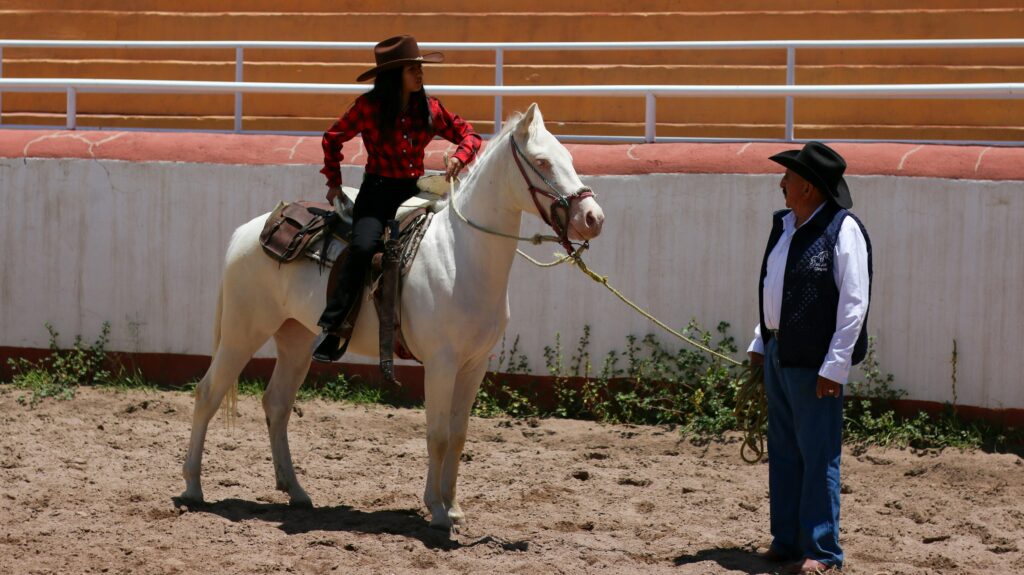
Frequently Asked Questions About Learning to Ride a Horse as an Adult
How long does it take to learn to ride a horse to a comfortable, independent trail riding level at walk, trot, and occasional canter on familiar terrain is approximately 12 to 18 months of consistent weekly lessons for most adult beginners. Salisbury Farms’ riding timeline guidance places full basic competency across all care and riding fundamentals at approximately two years for adult learners taking one lesson per week, with trail riding readiness typically arriving within the first 12 to 18 months of that timeline depending on lesson frequency and individual progress.
For learning to ride a horse as an adult with the best possible instruction, search the certified instructor directories maintained by the British Horse Society and United States Pony Clubs (USPC) for qualified instructors in your area. In the US, the Certified Horsemanship Association (CHA) maintains a national directory of certified riding instructors. Ask specifically about each instructor’s experience with adult beginners before booking, as adult beginner teaching requires specialized communication skills that not all competent riders-turned-instructors have developed.
The primary horseback riding fitness benefits for adults documented in peer-reviewed research include core stabilizer muscle activation across the entire riding session, significant adductor and inner thigh conditioning, hip mobility development, improved balance and proprioception, cardiovascular exercise equivalent to moderate-intensity activity at trot and canter, and measurable mental health benefits through present-moment focus and reduced cortisol levels. The NCBI/PubMed study on horseback riding exercise and Texas A&M AgriLife research on riding energy expenditure both confirm that riding at active gaits can meet the exercise intensity thresholds for weekly cardiovascular health benefit accumulation.
Your Action Plan for Learning to Ride a Horse as an Adult
Learning to ride a horse as an adult does not require a perfect start. It requires a committed start backed by realistic expectations, the right school and instructor match, and the patience to trust the timeline rather than comparing your early weeks to riders who have been in the saddle for years.
Here is your action plan:
- This week: Use the BHS or CHA certified instructor directory to identify two or three riding schools within realistic travel distance. Phone or email each one with your list of questions about adult beginner programs, school horses, and instructor experience.
- Before your first lesson: Confirm your attire meets the safety basics (heeled boots, long pants, fitted top, helmet) and complete a short hip flexor and lower back stretching routine to arrive with the most mobile and relaxed body possible.
- After your first lesson: Write down three specific things you noticed about your own body’s responses in the saddle, what felt natural, what felt tense, and what the instructor corrected. This reflection journal becomes your personal learning record and your instructor’s most useful tool.
- First month: Commit to at minimum one lesson per week and supplement with 15 minutes of daily balance and core work between sessions. Avoid comparing your progress to any other rider. Compare only to yourself at lesson one.
For continued reading, explore First Time Horse Owner Guide: The Ultimate Horse Care Reference 2026 and Best Horse Breeds for First-Time Owners: Expert Guide 2026, both directly complementary to the adult riding journey described here.
🐾 Related Resources & Interactive Tools in This Guide:
- Interactive Calculator: Pet Age in Human Years Calculator — Convert your pet chronological age to accurate biological human years.
- Clinical Resource: The Savvy Owner’s Guide to Pet Insurance and Preventive Care Savings
- Behavior & Training Guide: Pet Dental Care: Products and Techniques
- Related Expert Guide: Why Is My Dog Staring at Me So Intently? Behavior Guide
Growth & Immunization Tracking: To predict your puppy’s adult weight based on current breed trajectory, use our interactive Puppy Growth Calculator. For core vaccine timelines and veterinary cost planning, refer to the Puppy Vaccination Schedule Tool.
📚 Related Topic Cluster Guides & Veterinary Tools
Explore our complete Pet Lifestyle & Living Hub for comprehensive guides, veterinary diagnostic checklists, and daily care protocols.
- Around the World in 50 Bites: A Cultural Journey of Meat Proteins for Your Beloved Dog
- Types of Dog Leashes: The Complete 2026 Guide From Training to Trail
- How Much Does Pet Insurance Really Cost in 2026? A Complete Breakdown for New Pet Owners
- Top 10 Dog Breeds That Thrive In Desert Climates: A Complete Guide For Desert Pet Parents
- Interactive Tool: Pet Age to Human Years Conversion Calculator