Evidence-based veterinary sizing for home crates, puppy divider panels, and IATA airline cargo compliance.
Quick Answer: How to Size a Dog Crate Correctly
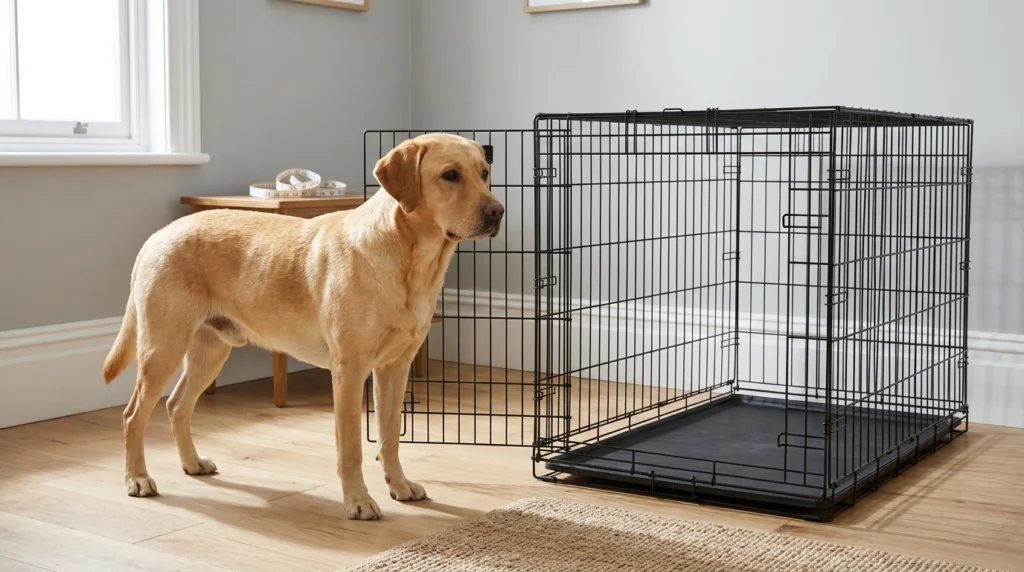
To size an adult dog crate, measure your dog standing from nose tip to base of tail ($L$) and floor to crown or upright ear tips ($H$). Add 2 to 4 inches (5 to 10 cm) to both dimensions to allow natural standing, full $360^\circ$ turning, and comfortable lateral recumbency. For IATA cargo flights, IATA CR 1 strictly requires Length $= L + 0.5\times \text{Elbow Height}$, Width $= 2\times \text{Shoulder Width}$, and Height $= H + 7\text{ cm}$ ($3\text{ in}$) clearance.
Dog Dimensions & Mode
42″ Large Wire Crate
Ideal for adult Golden Retrievers, Labradors, and Boxers weighing up to 90 lbs (41 kg).
Architectural Dimension Schematic
Side Elevation View| Measurement | Dog Biometric | Minimum Crate Space |
|---|---|---|
| Length (Nose to Tail) | 33.0 in | 36.0 in (Rec Crate: 42 in) |
| Height (Floor to Head) | 23.0 in | 26.0 in (Rec Crate: 31 in) |
| Width (Shoulders) | 9.5 in | 24.0 in (Rec Crate: 28 in) |
Maximum Daily Confinement Guidelines
Veterinary behavioral science mandates strict consecutive crating limits to prevent separation distress, pressure sores, and urinary incontinence.
| Age Bracket | Max Consecutive Time | Physiological Rationale |
|---|---|---|
| 8 – 10 Weeks | 30 – 60 minutes | Minimal sphincter control; high emotional dependency. |
| 11 – 14 Weeks | 1 – 3 hours | Bladder capacity approximately Age in Months + 1 hr. |
| 15 – 16 Weeks | 3 – 4 hours | Developing nocturnal continent stamina; daytime potty breaks required. |
| 17+ Weeks (Puppy) | 4 – 5 hours | Near adult bladder capacity; requires morning & midday stimulation. |
| Adult Dog (6+ mos) Current | 6 – 8 hours max | Absolute ceiling. Never exceed 9 hours without physical exercise. |
Frequently Asked Questions & Veterinary Evidence
How do I know if my crate is too large?
If your dog can sleep stretched out at one end and eliminate (pee or poop) at the other end without touching the soiled area, the crate is too big. This is particularly disastrous during house-training puppies. Use an adjustable divider panel to limit accessible floor space to their exact standing and turning dimensions.
What are the rules for flying a snub-nosed (brachycephalic) dog?
Airlines (under IATA LAR CR 1) frequently require brachycephalic breeds (such as French Bulldogs, Pugs, and Boston Terriers) to travel in a crate one size larger than their standard biometric measurement. This guarantees greater air volume, ventilation, and heat dissipation to prevent respiratory distress during taxi and flight.
Wire crate vs. plastic crate: which is better?
Wire crates provide superior $360^\circ$ ventilation, visibility, and effortless divider panel installation for home house-training. Heavy-duty plastic crates (e.g., Vari Kennel) offer a den-like refuge for anxious dogs, better temperature insulation, and are mandated for airline cargo transport (wire crates are prohibited in aircraft cargo holds).
Should I keep a collar on my dog in the crate?
Never leave standard flat collars, choke chains, or prong collars on a crated dog. Tags and buckle loops can snag on crate wires, causing asphyxiation or panic injuries. Always use a breakaway safety collar or uncollar your dog before closing the crate door.
Explore more companion animal, small pet, and equine tools in our Interactive Calculators Directory, including our Kitten Growth & Feeding Calculator, Rabbit Enclosure & Hutch Size Calculator, and our Horse Hay & Daily Forage Calculator.
Dog Crate Size Calculator: Veterinary Sizing Guidelines, Puppy Divider Strategies & IATA Airline Requirements
Quick Answer: What Size Crate Does Your Dog Actually Need?
For standard home use, a dog crate must satisfy four non-negotiable biomechanical criteria: length equals the dog’s measurement from the tip of the nose to the base of the tail plus 2 to 4 inches (5 to 10 cm); height equals the dog in a natural standing or upright sitting position from the floor to the crown of the head or tip of the ears (whichever is higher) plus 2 to 4 inches (5 to 10 cm); and width equals shoulder width plus 3 to 4 inches (8 to 10 cm), or approximately 75% of standing height. This spatial clearance guarantees the dog can perform a full 360-degree rotation without hunching, stand with an uncompressed spine, and achieve full lateral recumbency (stretching out flat on their side with extended limbs during deep REM sleep without contacting cage bars). For growing puppies, buy an adult-sized crate equipped with an adjustable divider panel sized strictly to their current length plus 2 inches; an oversized puppy crate allows the puppy to establish a separate bathroom corner, defeating innate maternal den hygiene inhibition. For international air travel, IATA Container Requirement 1 (CR 1) enforces stricter cargo dimensions: Length = Nose to tail base (A) + 1/2 elbow height (B); Width = Shoulder width (C) × 2; Height = Standing crown/ear height (D) + 2 to 3 inches.
Tier 1 Literature Calibrated
Deterministic Spatial Lock
📚 Primary Veterinary Literature & Airline Transport References
[Click to inspect sources]
This calculator and clinical guidance operate on evidence-based canine spatial and behavioral models verified against:
- American Veterinary Medical Association (AVMA): Welfare Implications of Canine Confinement and Air Transport.
- Association of Professional Dog Trainers (APDT): Canine Crate Training and Confinement Position Statement.
- International Air Transport Association (IATA): Live Animals Regulations (LAR), 51st and 52nd Editions, Container Requirement 1 (CR 1).
- The Humane Society of the United States (HSUS): Humane Crate Training Guidelines and Pediatric Bladder Control Windows.
- Journal of Veterinary Behavior: Clinical Management of Confinement Anxiety vs. Separation Anxiety in Domestic Dogs (Sherman & Mills, 2008; Frank et al., 2010).
- Center for Pet Safety (CPS): Canine Travel Kennel Crash-Test Protocols and Dynamic Cargo Impact Standards.
Read our complete Veterinary Evidence Hierarchy & Verification Protocol.
🔒 Mathematical Invariants & Canine Biomechanical Safety Rails
[Click to inspect clinical safety rules]
- Lateral Recumbency Invariant: The crate interior length and diagonal width must allow full limb and spinal extension on either side without paws or spine forcibly flexing against cage bars. Forced sternal-only recumbency induces chronic bursitis and prevents rapid-eye-movement (REM) deep restorative sleep.
- Head Clearance Invariant (≥ 2 in / 5 cm): The dog’s ears and crown must maintain at least 2 inches (5 cm) of free clearance from the ceiling mesh in a natural erect standing or upright seated position. Constant contact induces compensatory cervical lordosis and acute neck muscle spasms.
- House-Training Bipartite Zoning Rail: During pediatric house-training, available floor area must strictly match the puppy’s body length plus 2 inches (5 cm). If interior space exceeds this threshold, puppies instinctually urinate at the rear and sleep at the front, permanently disabling the innate den soiling inhibition.
- Maximum Confinement Invariant (Age in Months + 1 Hour): Daytime crate duration for puppies under 6 months must never exceed their age in months plus one hour (e.g., 2 months = 3 hours maximum; 3 months = 4 hours maximum). Adult dogs must never be crated continuously beyond 8 to 9 hours under any circumstances.
⚠️ Acute Claustrophobia Contraindication: Dogs displaying panicky thrashing, frantic bar-chewing, lip lacerations, or panic urination must NEVER be forced into a locked crate. This indicates true confinement phobia requiring immediate veterinary behavioral intervention and psychopharmacology, not mechanical confinement.
Veterinary Behavioral & Air Cargo Safety Notice:
The crate sizing formulas, divider scheduling timelines, and confinement thresholds presented in this guide are calibrated directly against peer-reviewed veterinary behavioral literature, AVMA animal welfare guidelines, and the International Air Transport Association (IATA) Live Animals Regulations (LAR 52nd Edition). This tool is designed for educational planning, home house-training optimization, and aviation travel compliance. It does not replace individualized clinical therapy for dogs suffering from severe separation anxiety, generalized noise phobias, or post-traumatic confinement distress. Always consult a board-certified veterinary behaviorist (DACVB) or Fear Free certified veterinary professional if your dog displays panic behaviors upon crate entry.
📋
Fact-Checked & Reviewed by HowdyFox Veterinary Editorial Board | Updated November 2026
Calibrated against published canine standards from AVMA, APDT, IATA LAR Container Requirement 1, and Center for Pet Safety.
A dog crate is neither an instinctual canine den nor an iron cage; it is a therapeutic, safety-engineered temporary resting space that protects dogs during developmental house-training, post-operative orthopedic recovery, and domestic transit. However, choosing the wrong crate dimensions carries devastating biological consequences: undersized crates compress spinal discs, force abnormal joint flexion, and cause chronic hygromas, while oversized crates during puppyhood completely derail house-training by encouraging the dog to eliminate on one side and sleep on the other.
Whether you are bringing home an 8-week-old Labrador puppy, managing an anxious adult rescue, or booking international air travel under strict airline cargo mandates, this calculator determines the precise anatomical dimensions, divider panel settings, and crate construction materials required for your dog. For additional developmental milestones and healthcare guidance, explore our full suite of interactive tools on the HowdyFox Calculators Hub.
📋 Three-Step Dog Crate Sizing & Travel Protocol
- Step 1 — Measure Canine Anatomical Landmarks ($A$, $B$, $C$, $D$): Using a flexible fabric tape measure while your dog stands squarely against a wall, record nose tip to tail base length ($A$), ground to elbow joint height ($B$), widest shoulder width ($C$), and ground to crown or ear tip standing height ($D$).
- Step 2 — Select Intended Application (Home Confinement vs. IATA Airline Cargo): Choose standard home resting mode (adds 2–4 inches for relaxed movement and full lateral recumbency) or official IATA Container Requirement 1 (CR 1) cargo mode (calculates $A + \frac{1}{2}B$ length, $2 \times C$ width, and $D + \text{clearance}$ height with mandatory metal hardware).
- Step 3 — Deploy Puppy Divider Panel & Monitor Skeletal Growth: If sizing for a growing puppy, purchase the crate calibrated to projected adult dimensions, install the heavy-gauge wire divider panel at current length plus 2 inches, and advance the partition forward every 10 to 14 days until epiphyseal growth plate closure.
Dog Crate Size Quick Reference by Weight & Breed Group
Standard wire and plastic dog crates are manufactured in six standardized length sizes. Always prioritize standing height and nose-to-tail length over body weight alone:
| Standard Crate Length | Weight Capacity | Representative Breeds | Interior Dimensions (L × W × H) |
|---|---|---|---|
| 18″ to 22″ (XS) | 1 – 12 lbs (0.5 – 5 kg) | Chihuahua, Pomeranian, Yorkie, Papillon | 22″ × 13″ × 16″ (56 × 33 × 41 cm) |
| 24″ (Small) | 13 – 25 lbs (6 – 11 kg) | French Bulldog, Dachshund, Pug, Boston Terrier | 24″ × 18″ × 19″ (61 × 46 × 48 cm) |
| 30″ (Medium) | 26 – 40 lbs (12 – 18 kg) | Beagle, Corgi, Cocker Spaniel, Frenchie (Large) | 30″ × 19″ × 21″ (76 × 48 × 53 cm) |
| 36″ (Intermediate) | 41 – 70 lbs (19 – 32 kg) | Border Collie, Australian Shepherd, Bulldog | 36″ × 23″ × 25″ (91 × 58 × 64 cm) |
| 42″ (Large) | 71 – 90 lbs (32 – 41 kg) | Labrador, Golden Retriever, German Shepherd, Boxer | 42″ × 28″ × 30″ (107 × 71 × 76 cm) |
| 48″ to 54″ (XL/Giant) | 91 – 150+ lbs (41 – 68+ kg) | Great Dane, Mastiff, Saint Bernard, Rottweiler | 48″–54″ × 30″–35″ × 33″–42″ |
—
1. Clinical & Biomechanical Foundations of Canine Confinement
The Myth of the “Wild Wolf Den”: Debunking the Evolutionary Fallacy
For decades, popular commercial marketing has claimed that domestic dogs are “den animals” that naturally crave confinement in small, enclosed plastic or wire boxes. From an ethological and evolutionary biology standpoint, this assertion is fundamentally false.
In the wild, gray wolves (*Canis lupus*)—the extant phylogenetic sister taxon of domestic dogs (*Canis familiaris*)—never use dens for sleeping or casual resting in adulthood. Adult wolves sleep in open, elevated territory, against ridge lines, or beneath wind-shielding brush where they maintain unimpeded 360-degree sensory surveillance and unrestricted escape routes. Wild canids utilize subterranean dens exclusively during the initial 8 to 10 weeks of whelping and lactation to shield immobile, altricial neonates from apex predators and extreme cold weather. Once wolf pups achieve motor autonomy around 8 to 10 weeks of age, the pack abandons the den permanently, moving to open “rendezvous sites.”
Domestic dogs do not possess an innate, instinctual drive to be locked behind steel bars. A crate becomes a secure, relaxing, anxiety-reducing sanctuary strictly through classical counter-conditioning and positive operant association—pairing the enclosed environment with safety, palatable food rewards, lick mats, and undisturbed physiological rest. When crate confinement is imposed without proper behavioral conditioning or when spatial dimensions restrict posture, the crate ceases to be a retreat and transforms into a chronic, neurogenic stressor.
       POORLY SIZED CRATE (RESTRICTIVE)                   HUMANE VETERINARY CALIBRATED CRATE
       Spinal Kyphosis & Joint Compression                  Full Natural Postures & Lateral Recumbency
   ┌─────────────────────────────────────────┐        ┌─────────────────────────────────────────────────┐
   │ ✖ Crown/ears scrape ceiling             │        │ ✔ 2–4 inches (5–10 cm) head & ear clearance     │
   │ ✖ Sternal hunching; spine flexed        │  ───►  │ ✔ Neutral, uncompressed vertebral column        │
   │ ✖ Restricted turning; bruised haunches   │        │ ✔ 360-degree rotational mobility without contact│
   │ ✖ Limbs pressed against cage bars       │        │ ✔ Full lateral recumbency during deep REM sleep │
   └─────────────────────────────────────────┘        └─────────────────────────────────────────────────┘
The Four Biomechanical Postures of Humane Confinement
Humane veterinary confinement dictates that any containment structure must accommodate four fundamental natural postures without anatomical restriction:
- Unobstructed Upright Sitting & Standing: The dog must be capable of sitting completely upright on its haunches and standing squarely on all four paws with an uncompressed spine. The crown of the head and the tips of the pinnae (especially critical in prick-eared breeds such as German Shepherds, Belgian Malinois, French Bulldogs, and Siberian Huskies) must maintain a minimum of 2 to 4 inches (5 to 10 cm) of free vertical clearance below the roof wire or plastic ceiling.
- Unimpeded 360-Degree Continuous Rotation: The dog must be able to turn completely around in a continuous circle without ducking its head, curving its spine into an unnatural S-bend, or slamming its stifle (knee) and hip joints against the sidewalls.
- Neutral Lordosis/Kyphosis Alignment (Standing Stance): When standing squarely, the thoracic and lumbar spine must rest in a natural anatomical plane. If the crate ceiling is too low, dogs instinctively drop their neck and arch their lumbar spine (compensatory kyphosis), loading excess mechanical shear stress onto the cervicothoracic and lumbosacral junctions.
- Full Lateral Recumbency (The REM Sleep Gold Standard): During slow-wave and Rapid Eye Movement (REM) sleep, canine muscle tone completely dissipates. Dogs naturally stretch out flat on their sides with all four legs fully extended perpendicularly from their torso. If crate width or diagonal length is insufficient, the dog is forced to remain in perpetual sternal recumbency (sleeping tucked on their chest and paws). Chronic deprivation of lateral recumbency disrupts restorative neurological sleep cycles and precipitates orthopedic pain.
Pathology of Improper Crate Sizing
#### Pathological Sequelae of the Undersized Crate
- Spinal Kyphosis & Intervertebral Disc Compression: Chronic forced posture in a low-ceiling crate forces thoracic and lumbar vertebral wedging. In chondrodystrophic breeds predisposed to Intervertebral Disc Disease (IVDD)—such as Dachshunds, Basset Hounds, Corgis, and French Bulldogs—this chronic axial compression accelerates disc dehydration, annulus fibrosus calcification, and catastrophic disc herniation into the spinal canal.
- Olecranon Bursitis & Elbow Hygromas: In large and giant breeds (Labradors, Mastiffs, Great Danes), undersized crates force heavy bony prominences against hard plastic pans or unpadded wire. Constant point friction on the olecranon tuberosity of the ulna triggers sterile inflammatory effusion—forming large, fluid-filled false bursas known as elbow hygromas. If secondarily infected with *Staphylococcus pseudintermedius*, hygromas progress to draining fistulas requiring surgical drainage and drainage catheters.
- Decubitus Ulcers & Callus Formation: Constant friction over the lateral femoral condyles, greater trochanter of the femur, and hocks strips protective dermal epidermal layers, causing chronic calluses and painful decubitus pressure ulcers.
- Behavioral Frustration & Bar-Licking Stereotypies: Physical containment that inhibits postural adjustments triggers severe central nervous system frustration. Confined dogs develop repetitive, invariant stereotypic behaviors including rhythmic bar-chewing (causing fractured maxillary canine teeth and enamel chipping), compulsive paw-pawing, and psychogenic flank sucking.
#### Pathological Consequences of the Oversized Crate During House-Training
While animal welfare advocates frequently assume “larger is always better,” providing an oversized crate to an un-house-trained puppy directly sabotages pediatric house-training through bipartite zoning:
- Puppies possess an innate maternal hygiene inhibition: they naturally avoid soiling the direct substrate where they sleep.
- When placed in an adult-sized 42-inch crate without a divider, an 8-week-old puppy (measuring only 12 to 14 inches) simply sleeps comfortably at the front entrance, walks 24 inches to the rear corner, urinates and defecates, and returns to sleep unsoiled.
- This habituation rapidly destroys innate den hygiene, causing the puppy to become accustomed to living in proximity to its own waste—one of the most intractable behavioral disorders to resolve in adult canine training.
—
2. The Puppy Divider Panel Protocol: Neurological Timelines & Growth Curves
Developmental Urology & The Neurological Timeline of Bladder Control
Understanding puppy crate training requires grounding expectations in developmental renal physiology and neurological maturation. Pediatric puppies cannot physically “hold their urine” for extended periods through willpower alone:
        8 WEEKS (2 MONTHS)                  12 WEEKS (3 MONTHS)                 16 WEEKS (4 MONTHS)
    Immature Sphincter Tone              Emerging ADH Diurnal Rhythm          Near-Mature Daytime Control
   ┌───────────────────────────────┐   ┌───────────────────────────────┐   ┌───────────────────────────────┐
   │ Daytime Max: 2 to 3 Hours     │   │ Daytime Max: 3 to 4 Hours     │   │ Daytime Max: 4 to 5 Hours     │
   │ Loop of Henle concentrating   │──►│ Glomerular filtration         │──►│ Detrusor reflex volitionally  │
   │ capacity severely blunted     │   │ stabilizing; partial hold     │   │ inhibited by cortical control │
└───────────────────────────────┘ └───────────────────────────────┘ └───────────────────────────────┘- Renal Medullary Immaturity: In puppies under 12 to 14 weeks of age, the renal medulla and the loops of Henle possess limited osmotic concentrating ability. Puppies produce dilute urine at high volumes and dehydrate rapidly if fluids are withheld.
- External Urethral Sphincter Neuromuscular Control: Voluntary urinary continence requires intact efferent pathways from the pontine micturition center through the pudendal nerve to the striated muscle fibers of the external urethral sphincter. Complete myelin sheath development along these spinal tracts is not finalized until 16 to 20 weeks of age.
- Circadian Secretion of Antidiuretic Hormone (ADH): In adult canines, the posterior pituitary gland secretes elevated levels of vasopressin (ADH) at night, concentrating urine and permitting 8 to 9 hours of uninterrupted sleep without micturition. Puppies do not establish a stable diurnal ADH rhythm until approximately 4 to 5 months of age.
- The Veterinary Holding Capacity Benchmark:
- An 8-week-old puppy (2 months) can reliably hold their bladder for a maximum of 3 hours during waking daylight hours.
- A 12-week-old puppy (3 months) can hold for 4 hours.
- A 16-week-old puppy (4 months) can hold for 5 hours.
- After 6 months of age, physiological capacity plateaus at 6 to 8 hours. Crating any dog beyond 8 to 9 hours during daytime hours stresses the renal system and increases the risk of urinary tract infections (UTIs) and cystic calculi formation.
Financial and Developmental Superiority of Divider-Equipped Crates
Purchasing sequential crates as a puppy grows (e.g., buying a 22-inch crate at 8 weeks, a 30-inch crate at 4 months, and a 42-inch crate at adulthood) creates three distinct disadvantages:
- Excess Financial Expenditure: High-quality heavy-duty crates cost between $75 and $300 each. Buying three consecutive crates multiplies equipment costs by 300%.
- Behavioral Spatial Disorientation: Dogs develop strong spatial olfactory familiarity with their resting environment. Switching crates multiple times forces repetitive acclimation to new acoustic properties, latch mechanisms, and floor pan flexibilities.
- The Divider Solution: Investing in an adult-sized, heavy-gauge wire crate that includes a matching epoxy-coated divider panel allows pet parents to purchase once. The internal partition slides horizontally along the wire side-rails, locking into place with dual steel tension hooks.
Four-Stage Step-by-Step Divider Adjustment Protocol
#### Stage 1: 8 to 12 Weeks (Pediatric Inception)
- Biological State: Rapid motor learning, absence of voluntary urinary control beyond 2–3 hours, high separation distress vulnerability.
- Divider Placement: Position the divider panel so the available floor space measures exactly the puppy’s snout-to-tail-base length plus 2 inches (5 cm). Width is already constrained by the crate’s natural proportions.
- Postural Verification: The puppy must be able to stand, lie down flat on its side, and circle once. It must NOT be able to take two consecutive steps forward away from its sleeping spot.
- Substrate Requirement: Line the tray with washable, non-slip fleece bedding (such as vet-bedding) that wicks moisture. Avoid plush stuffed dog beds, which encourage chewing and can be used to bury urine.
#### Stage 2: 3 to 6 Months (Juvenile Linear Growth Spurt)
- Biological State: Peak appendicular skeletal lengthening. The long bones (radius, ulna, tibia, femur) experience explosive growth velocity.
- Divider Adjustment Schedule: Inspect divider clearance every 7 to 10 days. Measure the puppy from snout to tail base while standing. Unlock the divider hooks and shift the panel backward by 2 to 3 grid wire increments (typically 3 to 5 inches / 7 to 12 cm).
- Teething Safeguard: During deciduous-to-permanent tooth eruption (months 4 through 6), chewing intensity peaks. Verify that the wire divider hooks point outward toward the crate exterior so the puppy cannot scrape its muzzle or trap its jaw on exposed wire ends.
#### Stage 3: 6 to 12 Months (Adolescence & Small/Medium Skeletal Maturity)
- Biological State: Small and medium breeds (under 45 lbs) reach full adult skeletal height and growth plate fusion between 10 and 12 months. Large and giant breeds enter intermediate adolescence.
- Small/Medium Breeds: The divider panel can be permanently removed. The dog now enjoys the complete interior volume of the crate without risk of den soiling.
- Large Breeds (Retrievers, Shepherds): Advance the divider to within 6 to 8 inches of the rear wall. Maintain this partition until reliable daytime house-training continence is proven across 30 consecutive accident-free days.
#### Stage 4: 12 to 24 Months (Giant Breed Final Skeletal Ossification)
- Biological State: Giant breeds (Great Danes, Irish Wolfhounds, Saint Bernards, Mastiffs) experience delayed physeal closure. The distal radial and ulnar physes remain open until 18 to 22 months of age.
- Action: Remove the divider completely once the dog reaches 12 months. Monitor sitting height: giant breeds frequently develop substantial cranial and neck muscle mass between year one and year two, requiring upgrade to a 54-inch heavy-gauge drop-pin crate if head clearance falls below 2 inches.
Pediatric Bladder Hold & Divider Schedule Reference Table
| Puppy Age | Maximum Daytime Bladder Limit | Target Daily Elimination Frequency | Divider Floor Length Allowance | Recommended Bedding Protocol |
|---|---|---|---|---|
| 8–10 Weeks | 2.0 – 2.5 Hours | 8 – 10 times / day | Snout-to-tail length + 1.5 to 2.0 in | Dense moisture-wicking fleece vet-bed; zero loose towels |
| 11–12 Weeks | 3.0 Hours | 7 – 8 times / day | Snout-to-tail length + 2.0 in | Single-layer washable puppy pad under fleece mat |
| 13–16 Weeks | 4.0 Hours | 6 – 7 times / day | Snout-to-tail length + 2.5 to 3.0 in | Machine-washable orthopedic foam crate liner with waterproof cover |
| 17–20 Weeks | 4.5 – 5.0 Hours | 5 – 6 times / day | Snout-to-tail length + 3.0 to 4.0 in | Chew-resistant canvas ballistic crate pad |
| 21–24 Weeks | 5.0 – 6.0 Hours | 4 – 5 times / day | Snout-to-tail length + 4.0 in | Heavy-duty padded mat; advance divider to rear third |
| 6–12 Months | 6.0 – 7.0 Hours | 3 – 4 times / day | Full crate length (Small/Med) or + 6 in (Large) | Permanent orthopedic memory foam mattress |
| 12+ Months | 8.0 Hours (Absolute Max) | 3 – 4 times / day | Complete interior volume (Divider Removed) | Full crate bed; unrestricted lateral recumbency |
—
3. IATA Live Animal Regulations (Container Requirement 1 – CR 1)
Legal, Regulatory & Aviation Safety Architecture
Transporting a live canine via commercial airline cargo requires adherence to the International Air Transport Association (IATA) Live Animals Regulations (LAR), specifically Container Requirement 1 (CR 1). The IATA LAR is the global legal standard recognized by the International Civil Aviation Organization (ICAO), the U.S. Department of Agriculture (USDA Animal Welfare Act), and all major international air carriers (Delta Cargo, United PetSafe, Lufthansa Cargo, British Airways World Cargo, Qantas Freight).
Airlines enforce zero-tolerance gate inspections. If a passenger arrives at cargo intake with a crate that violates IATA dimensional, hardware, or ventilation specifications by even one centimeter, the dog will be summarily denied boarding on the tarmac.
                           OFFICIAL IATA CR 1 CARGO MEASUREMENT BLUEPRINT

                  ◄────────────────────── A + 1/2 B ──────────────────────►
         ▲       ┌─────────────────────────────────────────────────────────┐
         │       │ [Ventilation Holes Upper 2/3 Only]                      │
         │       │   ○   ○   ○   ○   ○   ○   ○   ○   ○   ○   ○   ○   ○   ○ │
         │       │                                                         │
   D + Clearance │           Dog Head / Ear Tip [Height D]                 │
         │       │                ▼                                        │
         │       │             / \__                                       │
         │       │            (    @\___        [Elbow Height B]           │
         │       │            /         O              ▼                   │
         ▼       │           /   (_____/             ┌───┐                 │
         ────────┴───────────\___/─────\____________─┴───┴─────────────────┴────────
                             ◄──────── Length A ─────────►
                             (Nose Tip to Tail Root)
The Official IATA Cargo Dimensional Formulas
IATA mandates four precise anatomical measurements taken while the dog stands squarely in a natural, upright posture on a flat, level surface:
- Dimension $A$: Length of the animal from the tip of the nose to the root (base) of the tail. (Do *not* measure to the end of the tail hair).
- Dimension $B$: Height from the ground to the elbow joint of the front foreleg.
- Dimension $C$: Width across the shoulders or the widest point of the animal (whichever is greater).
- Dimension $D$: Height of the animal in a natural standing or sitting position from the ground to the top of the head or the tip of the erect ears, whichever is higher.
Using these anatomical coordinates, the required minimum internal container dimensions are calculated as follows:
- The Length Expansion ($A + \frac{1}{2}B$): The addition of half the elbow height guarantees that when the animal lies down in sternal recumbency, its forelegs can extend forward naturally without jamming into the metal wire door.
- The Double-Width Invariant ($C \times 2$): Providing twice the shoulder width ensures the dog can turn around 360 degrees without scraping its flanks against the crate walls.
- The Prick-Ear Clearance Invariant ($D + \text{Clearance}$): The dog’s ears must not touch the ceiling under any circumstances while standing naturally. For erect-eared breeds (German Shepherds, Malinois, Corgis, French Bulldogs), measurement $D$ must be taken to the highest ear tip. If the ears touch the ceiling during the cargo agent’s physical inspection, boarding will be refused.
Mandatory Construction Materials & Structural Prohibitions
#### Approved Cargo Crate Construction Materials
- Rigid Heavy-Density Polyethylene Plastic: Thick-walled, molded plastic kennels designed for transport (e.g., Petmate Sky Kennel, Vari Kennel heavy-duty series).
- Fiberglass or Welded Aluminum: Heavy-duty travel crates constructed from aircraft-grade aluminum (e.g., Impact Stationary/Collapsible Cargo crates).
- Solid Plywood or Hardwood: Permitted for domestic or cargo transport provided it meets IATA LAR non-toxic wood treatment standards and minimum thickness thresholds (typically $\ge 12\text{ mm}$ for dogs over 20 kg).
#### Strictly Prohibited Crate Types in Airline Cargo
- Collapsible Wire Crates: 100% strictly forbidden in aircraft cargo holds. Wire crates offer zero puncture or crush resistance if luggage shifts, and dog paws can easily penetrate wire mesh during turbulence, causing catastrophic compound fractures.
- Soft-Sided / Fabric Carriers: Prohibited in cargo holds (strictly limited to in-cabin transport for small pets under 15–20 lbs that fit beneath the forward passenger seat).
- Plastic Crates with Top-Opening Doors: Kennels with a secondary door on the roof are banned because roof doors severely weaken structural rigidity under external cargo load.
- Crates with Wheels Attached: Wheels must be completely removed or taped securely into non-functional recesses to prevent the crate from rolling on luggage conveyor ramps or inside the aircraft cargo hold.
The Metal Fastener Invariant: Banning Plastic Squeeze Latches
Modern commercial travel kennels often ship from retail pet stores with plastic squeeze latches, snap locks, or twist-dials holding the top and bottom clamshell halves together.
Under IATA CR 1 and airline cargo rules, plastic fasteners are strictly prohibited.
- Aircraft cargo holds experience dynamic vibration, air turbulence, and baggage loading shifts. Under dynamic shear forces, plastic latches fracture or pop open, allowing dogs to escape onto the tarmac or into the aircraft hold.
- The Metal Fastener Mandate: The top and bottom halves of the kennel must be secured through every pre-drilled manufacturer hole using solid metal steel bolts, washers, and metal wingnuts or locknuts.
- If a crate has pre-molded plastic snap-locks, the owner must drill through the designated reinforcement points and install high-tensile steel machine bolts. If an airline cargo agent observes even one plastic snap-latch securing the seam without metal bolt reinforcement, the crate will be rejected.
- Door Locking Pins: The metal door must feature a dual-spring latch where the horizontal steel locking pins extend at least 1.6 cm (5/8 inch) past the horizontal plastic frame extrusions above and below the door opening.
Aviation Ventilation Mandates: The 16% Surface Area Rule
Airflow inside an aircraft cargo hold is critical to prevent fatal hyperthermia and carbon dioxide accumulation:
- International Flights (4-Sided Ventilation): For all international cargo travel, the crate must possess ventilation openings on all four vertical sides: front (the wire door), rear wall, and both sidewalls.
- Total Ventilation Surface Area: The combined area of all ventilation openings must equal at least 16% of the total surface area of all four walls.
- Ventilation Hole Geometry: Openings must be concentrated on the upper two-thirds of the crate. Holes must measure approximately 25 mm (1 inch) in diameter or consist of welded wire mesh with openings no larger than 25 mm × 25 mm to prevent canine muzzles, teeth, or paws from protruding through the walls.
- Exterior Spacer Bars (Perimeter Rims): To prevent surrounding cargo containers or baggage from being stacked directly flush against the crate walls—which would asphyxiate the dog by blocking airflow—the exterior walls must feature a continuous spacer bar or perimeter protrusion extending at least 2.5 cm (1 inch) around the middle circumference.
                      IATA CR 1 MANDATORY CARRIER LABELS & ATTACHMENTS

         ┌─────────────────────────────────────────────────────────────────┐
         │  ┌──────────────┐                             ┌──────────────┐  │
         │  │  ▲    ▲      │    GREEN & WHITE STICKER    │  ▲    ▲      │  │
         │  │  │    │      │    "LIVE ANIMALS" (≥ 25mm)  │  │    │      │  │
         │  │ THIS WAY UP  │    ┌──────────────────────┐ │ THIS WAY UP  │  │
         │  └──────────────┘    │  LIVE ANIMALS        │ └──────────────┘  │
         │                      └──────────────────────┘                   │
         │   [Exterior Water Funnel]                [Secure Metal Door]    │
         │         │                                         │             │
         │         ▼                                         ▼             │
         │      (\___/)                                  [# # # # #]       │
         │      |     |                                  [# # # # #]       │
         │      \_____/ ── Attached to door exterior     [# # # # #]       │
         └─────────────────────────────────────────────────────────────────┘
Labeling, Orientation & Hydration Invariants
- Live Animal Labeling: High-visibility green letters on a white background (or white letters on green) reading “LIVE ANIMALS” in capital letters measuring at least 25 mm (1 inch) in height. These stickers must be permanently affixed to the top surface and at least one or more side walls.
- “This Way Up” Directional Orientation Arrows: Red or black dual-arrow orientation stickers indicating upright positioning must be placed on all four vertical walls.
- Exterior-Accessible Dual Feeding and Watering Dishes: The crate must feature two separate plastic or aluminum bowls secured to the interior of the metal door. These dishes must be fillable from the exterior without opening the crate door (via an attached exterior funnel or tubing system), ensuring airline handlers can replenish water during layovers without risking an animal escape on the airfield.
- Absorbent, Agricultural-Compliant Bedding: The bottom floor pan must be covered with non-toxic, moisture-absorbent material (such as absorbent puppy pads securely taped beneath a fleece bed). Straw, hay, wood shavings, and soil are strictly prohibited on international flights due to strict international biosecurity and agricultural quarantine restrictions.
—
4. Comprehensive Crate Types Comparison Matrix
Selecting the appropriate crate architecture depends heavily on your primary use-case: pediatric house-training, daily home resting, high-drive working dog containment, or vehicular/cargo transit. Below is an exhaustive veterinary evaluation of the five primary crate designs:
| Crate Archetype | Primary Strengths | Clinical Vulnerabilities | Divider Support | IATA Cargo Approved | Best Clinical Application |
|---|---|---|---|---|---|
| Wire Crates (Double-door, folding steel) |
Unrestricted 360° airflow; complete visual sightlines; easy fold-down portability; universal divider panel support; removable plastic floor pan for rapid disinfection. | Zero impact resistance; noisy metal rattle triggers sound-sensitive dogs; aggressive chewers can bend wire welds or wedge teeth; high visual stimulation increases barrier barking. | ✔ Excellent (Standard) | ✖ Strictly Banned | Pediatric house-training, warm climates, home resting for non-anxious dogs. |
| Heavy-Duty Plastic Kennels (Vari Kennel, Sky Kennel) |
Structural rigidity; dark, enclosed cave-like interior dampens external stimuli and muffles sounds; airline cargo compliant when fitted with metal bolts. | Reduced lateral ventilation (can retain heat in hot environments); bulky and difficult to store; lacks adjustable puppy divider panels; difficult to clean deep corners. | ✖ Rare / Non-Existent | ✔ Fully Approved (With Metal Bolts) | Air travel cargo, noise-phobic dogs, car vehicular transport. |
| Reinforced Steel / Aluminum Kennels (Impact, Gunner, Ruff Land) |
Indestructible heavy-gauge 0.063″ aluminum or rotomolded double-walled plastic; escape-proof paddle latches; Center for Pet Safety (CPS) 5-star crash-tested. | Extremely heavy (35 to 65+ lbs); high financial investment ($400 to $1,200+); non-standard dimensions require custom padding; zero divider panel compatibility. | ✖ No Support | ✔ Airline Approved (Model Dependent) | High-drive working breeds (Malinois, K9s), severe separation anxiety escape artists, vehicle crash safety. |
| Soft-Sided Fabric Crates (Nylon mesh, zippered pop-up) |
Ultra-lightweight (3 to 8 lbs); folds into shoulder tote bag; silent operation; excellent for dog shows, hotel stays, and agile camping trips. | Zero chew or claw resistance (puppy can claw through nylon in 60 seconds); easily tipped over; zipper failures; unhygienic if soiled (absorbs liquid waste into fabric). | ✖ No Support | ✖ Prohibited in Cargo (In-Cabin Only) | Mature, fully crate-trained dogs for supervised hotel travel and agility trials. |
| Wooden Furniture / Credenza Crates (Hardwood, MDF end-tables) |
High interior aesthetic appeal; blends into living room décor as end tables or console cabinets; eliminates industrial metal wire look. | Severe health risks: wood absorbs urine, harboring ammonia and mold; dogs chew treated wood/varnish (foreign body obstruction and toxic varnish ingestion); poor ventilation slats. | ✖ No Support | ✖ Strictly Banned | Strictly for 100% reliably trained adult dogs with zero history of destructive chewing or house-training lapses. |
—
5. Comprehensive Canine Breed Sizing Reference Matrix
Canine physical dimensions vary substantially by lineage, sex, and morphological skull structure. A 60-pound English Bulldog requires a completely different crate geometry than a 60-pound Belgian Malinois: the Bulldog needs significant interior width to accommodate barrel-chested thoracic breadth, whereas the Malinois requires elevated ceiling clearance for its upright standing carriage and erect prick ears.
The empirical matrix below details average adult body dimensions ($A$, $B$, $C$, $D$) alongside recommended standard home wire crate sizes and IATA cargo container sizes across 30 popular domestic breeds:
| Breed Name | Weight (lbs) | Length $A$ (in) | Height $D$ (in) | Width $C$ (in) | Recommended Home Crate | IATA Cargo Minimum Size |
|---|---|---|---|---|---|---|
| TOY & MINIATURE BREEDS (1 – 12 lbs / 0.5 – 5.5 kg) | ||||||
| Chihuahua | 3 – 6 | 10 – 13″ | 8 – 11″ | 4 – 5″ | 18″ or 22″ (XS) | IATA Series 100 (21 × 16 × 15″) |
| Yorkshire Terrier | 4 – 7 | 11 – 14″ | 9 – 11″ | 4 – 6″ | 22″ (XS) | IATA Series 100 (21 × 16 × 15″) |
| Pomeranian | 3 – 7 | 11 – 14″ | 9 – 12″ | 5 – 6″ | 22″ (XS) | IATA Series 100 (21 × 16 × 15″) |
| Maltese | 4 – 7 | 12 – 15″ | 9 – 12″ | 5 – 6″ | 22″ (XS) | IATA Series 100 (21 × 16 × 15″) |
| SMALL BREEDS (13 – 25 lbs / 6 – 11.5 kg) | ||||||
| French Bulldog | 18 – 28 | 18 – 22″ | 14 – 17″ (Bat Ears) | 8 – 10″ | 24″ or 30″ (S/M) | IATA Series 200 (27 × 20 × 19″)* |
| Dachshund (Standard) | 16 – 32 | 20 – 25″ | 10 – 13″ | 6 – 8″ | 30″ (Medium) | IATA Series 200 (27 × 20 × 19″) |
| Pug | 14 – 18 | 16 – 19″ | 12 – 15″ | 7 – 9″ | 24″ (Small) | IATA Series 200 (27 × 20 × 19″)* |
| Cavalier King Charles | 13 – 18 | 17 – 20″ | 13 – 15″ | 6 – 7″ | 24″ (Small) | IATA Series 200 (27 × 20 × 19″) |
| MEDIUM BREEDS (26 – 45 lbs / 12 – 20 kg) | ||||||
| Beagle | 20 – 30 | 21 – 25″ | 15 – 18″ | 7 – 9″ | 30″ (Medium) | IATA Series 200 (27 × 20 × 19″) |
| Pembroke Welsh Corgi | 24 – 30 | 22 – 27″ | 13 – 16″ (Ears Up) | 8 – 10″ | 30″ or 36″ (M/Int) | IATA Series 300 (32 × 22 × 23″) |
| Cocker Spaniel | 24 – 30 | 22 – 26″ | 16 – 19″ | 7 – 9″ | 30″ (Medium) | IATA Series 300 (32 × 22 × 23″) |
| INTERMEDIATE & LARGE BREEDS (46 – 80 lbs / 21 – 36 kg) | ||||||
| Border Collie | 30 – 45 | 26 – 31″ | 20 – 24″ | 8 – 10″ | 36″ (Intermediate) | IATA Series 400 (36 × 25 × 27″) |
| Australian Shepherd | 40 – 65 | 27 – 32″ | 21 – 25″ | 9 – 11″ | 36″ (Intermediate) | IATA Series 400 (36 × 25 × 27″) |
| Labrador Retriever | 55 – 80 | 31 – 37″ | 24 – 28″ | 10 – 13″ | 42″ (Large) | IATA Series 400 or 500 (40 × 27 × 30″) |
| Golden Retriever | 55 – 75 | 31 – 36″ | 24 – 27″ | 10 – 12″ | 42″ (Large) | IATA Series 400 or 500 (40 × 27 × 30″) |
| German Shepherd | 50 – 88 | 33 – 40″ | 28 – 33″ (Ears Up) | 10 – 13″ | 42″ or 48″ (Large/XL) | IATA Series 500 (40 × 27 × 30″) or 700 |
| Boxer | 50 – 70 | 28 – 34″ | 24 – 28″ | 10 – 12″ | 42″ (Large) | IATA Series 400 (36 × 25 × 27″)* |
| EXTRA-LARGE & GIANT BREEDS (85 – 160+ lbs / 38 – 72+ kg) | ||||||
| Rottweiler | 80 – 130 | 34 – 41″ | 26 – 30″ | 12 – 15″ | 48″ (XL) | IATA Series 500 or 700 (48 × 32 × 35″) |
| Doberman Pinscher | 60 – 90 | 33 – 39″ | 28 – 33″ | 10 – 12″ | 42″ or 48″ (L/XL) | IATA Series 500 (40 × 27 × 30″) |
| Great Dane | 110 – 175 | 42 – 52″ | 36 – 44″ | 13 – 16″ | 54″ (Giant) | IATA Custom Wooden Container Only |
| Mastiff (English) | 120 – 230 | 44 – 54″ | 32 – 38″ | 15 – 18″ | 54″ (Giant) | IATA Custom Wooden Container Only |
| Saint Bernard | 120 – 180 | 43 – 52″ | 33 – 39″ | 14 – 17″ | 54″ (Giant) | IATA Custom Wooden Container Only |
*Note on Brachycephalic Breeds: Many commercial airlines restrict or completely ban snub-nosed breeds (French Bulldogs, Pugs, Boxers, Boston Terriers) from cargo holds due to elevated risks of brachycephalic obstructive airway syndrome (BOAS) and heat stroke. If accepted, airlines frequently mandate the crate be one size larger than standard dimensional formulas to maximize airflow.
—
6. Humane Confinement Schedules & Behavioral Diagnostics
Maximum Confinement Schedule by Age
Crates are designed as short-term management tools, not perpetual storage devices. Leaving a dog crated beyond biological thresholds causes severe physiological suffering, muscular deconditioning, and chronic depression. Below is the clinically established veterinary maximum continuous confinement schedule:
| Life Stage | Chronological Age | Max Daytime Continuous Crate Limit | Mandatory Physiological Interventions |
|---|---|---|---|
| Early Neonatal Puppy | 8 – 10 Weeks | 2.0 – 2.5 Hours | Immediate outdoor toilet opportunity upon release; high-touch socialization; water access. |
| Late Weaning Puppy | 11 – 12 Weeks | 3.0 Hours | Scheduled potty break; interactive toy play session; hydration check. |
| Juvenile Puppy | 13 – 16 Weeks | 4.0 Hours | Exercise session (15–20 minutes walking); mid-day feeding if on 3-meal schedule. |
| Adolescent Puppy | 5 – 6 Months | 5.0 – 6.0 Hours | Physical exercise and mental stimulation before re-crating; mental scent work. |
| Mature Adult Dog | 1 to 7 Years | 6.0 – 8.0 Hours | Requires substantial 30–45 min vigorous walk prior to crating; absolute max 8–9 hours during standard workday. |
| Senior Dog | 8+ Years | 4.0 – 6.0 Hours | Orthopedic memory foam mattress mandatory; frequent potty breaks due to decreased renal concentrating ability. |
Separation Anxiety vs. Crate Frustration: Differential Diagnosis
One of the most dangerous diagnostic errors made by dog owners is confusing normal, operant crate frustration (demand barking) with severe, pathological separation anxiety or confinement phobia. Misdiagnosing this condition and forcing a phobic dog into a crate can result in severe self-mutilation.
| Clinical Diagnostic Parameter | Normal Crate Frustration (Operant Demand) | True Separation Anxiety / Confinement Phobia |
|---|---|---|
| Vocalization Characteristics | Rhythmic, demand barking; intermittent whines lasting 5 to 15 minutes upon entry, tapering off into silence once the owner is out of sight. | High-pitch distress shrieking, frenzied yelping, continuous howling lasting hours without cessation or fatigue. |
| Autonomic Nervous System Signs | Normal respiration; dry mouth; normal heart rate; absence of excessive salivation. | Severe sympathetic arousal: hypersalivation (chest, muzzle, and crate floor soaked in drool), panting, hyperthermia, dilated pupils. |
| Physical Escape Attempts | Mild pawing at the door; exploratory nose-pushing against the latch; ceases when ignored. | Frenzied, violent escape attempts: bent wire bars, torn claw beds, bloody dewclaws, broken canine teeth from bar biting. |
| Food & Treat Receptivity | Eagerly consumes peanut butter Kongs, lick mats, or high-value treats while inside the crate. | Complete anorexia: ignores prime steaks or high-value treats inside the crate, only eating them hours later upon owner return. |
| Elimination Patterns | Maintains continence unless physical holding threshold is exceeded. | Panic urination or involuntary stress defecation (often soft or watery) within 15–30 minutes of owner departure. |
Absolute Medical Contraindications to Crating
Under professional veterinary behavioral guidelines, crating is strictly prohibited in the following clinical scenarios:
- Severe Confinement-Specific Phobia: Dogs that experience panic attacks triggered by enclosed spatial boundaries. Crating these animals induces acute physical trauma (tooth fractures, pad avulsions) and escalates generalized panic. Management requires puppy-proofed rooms, baby gates, or x-pens.
- Acute Gastrointestinal Illness: Dogs suffering from acute parvoviral enteritis, hemorrhagic gastroenteritis (HGE), or severe dietary indiscretion. Forcing a dog with uncontrollable diarrhea to remain in an enclosed crate forces them to lie in infectious, caustic fecal matter, destroying house-training and inducing severe chemical dermatitis.
- Severe Geriatric Canine Cognitive Dysfunction (CCD): Older dogs with dementia (“sun-downing” syndrome) experience profound spatial disorientation. When crated, they become trapped in corners, pacing in tight circles and panicking due to cognitive decline.
- Post-Operative Orthopedic Spinal Patients Without Veterinary Clearance: While crate rest is routinely prescribed for conservative IVDD management, the crate must be specifically sized to prevent any movement while allowing flat recumbency. Improperly sized crates that force bending can cause permanent spinal cord transection.
—
7. Step-by-Step Desensitization & Crate Training Protocol
Successful crate training requires conditioning the dog to view the crate as an enriched feeding zone and natural rest station through low-stress, systematic desensitization:
Phase 1: Open-Door Classical Conditioning (Days 1 to 3)
- Position the crate in a high-traffic family area (living room or kitchen) with the door pinned permanently open.
- Place a comfortable fleece bed inside.
- Feed 100% of the puppy’s daily meals inside the crate. Place the food bowl at the very entrance initially, moving it 3 inches deeper at each feeding until the dog voluntarily enters completely to eat.
- Randomly deposit high-value treats (freeze-dried liver, cheese) inside the crate throughout the day without making a verbal fuss. Let the puppy discover the crate as a “magical treat dispenser.”
Phase 2: Introduction of Latch Closure (Days 4 to 7)
- While the puppy is eating its meal or licking a frozen peanut butter Kong inside the crate, gently swing the door shut and hold the latch closed without locking it.
- Open the door immediately as the puppy finishes its last bite, before any whining or distress begins.
- Gradually extend door-closed duration in 30-second increments while providing high-value chew toys. If the puppy whines, wait for a 5-second window of complete silence before opening the door, reinforcing quiet calm rather than demand barking.
Phase 3: Departure Desensitization & Variable Distance (Days 8 to 14)
- Introduce a verbal cue (e.g., “Kennel up” or “Go to bed”). Cue the dog, reward entry with a high-value treat, lock the door, and take two steps backward.
- Sit in a nearby chair reading a book. Practice leaving the room for 2 minutes, then 5 minutes, then 15 minutes.
- Always un-crate the dog calmly. Avoid effusive, high-energy greetings when opening the door, which inadvertently teaches the dog that being outside the crate is wildly superior to being inside.
Critical Safety Invariant: The Zero-Collar Mandate
Critical Clinical Caution
Fatal Strangulation Hazard: Never crate a dog wearing a flat buckle collar, martingale collar, choke chain, or harness. Tags and D-rings easily catch on wire junctions or ventilation holes. When the dog twists to free itself, the collar tightens, causing catastrophic tracheal crushing and asphyxiation within minutes. All collars must be removed prior to crate entry, or replaced exclusively with a breakaway safety collar designed to release under 5 lbs of tension.
—
8. Frequently Asked Clinical & Practical Questions (FAQ)
How do I know if my dog’s crate is too small?
A crate is clinically too small if your dog’s ears or head touch the ceiling while standing or sitting naturally, if your dog cannot complete a full 360-degree turn without hunching its spine, or if your dog cannot lie flat on its side with legs fully extended without pressing firmly against the walls. Forcing a dog into an undersized crate causes chronic thoracic and lumbar spinal compression, accelerates intervertebral disc degeneration, and induces elbow hygromas and decubitus pressure sores.
How do I measure my dog for an accurate crate fit?
Using a flexible fabric tape measure while your dog stands squarely against a wall, record two critical measurements: length from the tip of the nose to the base of the tail (excluding the tail hair), and height from the floor to the highest point of the head or tips of the erect ears. For standard home use, add 2 to 4 inches (5 to 10 cm) to both measurements. For international air travel cargo compliance, calculate IATA Container Requirement 1 dimensions ($A + \frac{1}{2}B$ for length, $C \times 2$ for width, and $D + \text{clearance}$ for height).
Why shouldn’t I buy a large crate for my 8-week puppy right away?
If you give an 8-week puppy full access to an adult-sized crate without an internal divider panel, the puppy will naturally subdivide the interior space into two zones: a clean sleeping area at the front and an elimination toilet area at the rear. This completely defeats the dog’s innate maternal den hygiene instinct and severely delays house-training. Always buy an adult-sized crate that includes an adjustable wire divider panel, positioning the divider so the puppy has only enough room to lie down, stand, and turn around.
Can a dog sleep in a crate all night and stay in it during the workday?
No. While an adult dog can comfortably sleep in a crate for 8 hours overnight because metabolic rate slows and antidiuretic hormone (ADH) concentrates urine, keeping a dog crated for another 8 hours during the workday results in 16 hours of daily immobility. This severe confinement induces muscular atrophy, joint stiffness, emotional depression, and urinary tract disorders. If you work away from home for 8 to 9 hours, hire a midday dog walker or transition your dog to an enclosed, dog-proofed room with an exercise pen.
What is the difference between a wire crate and a plastic travel kennel?
Wire crates feature open steel mesh construction that provides maximum 360-degree ventilation, unobstructed visibility, and easy divider panel installation, making them ideal for home pediatric house-training in warm indoor environments. Heavy-duty plastic kennels have solid composite walls with small ventilation holes, creating a darker, den-like environment that muffles external noises for anxious dogs. Plastic kennels are mandatory for airline cargo travel when reinforced with metal hardware, whereas wire crates are 100% strictly banned from aircraft cargo holds.
What are the official IATA rules for flying a dog in cargo?
Under IATA Live Animals Regulations (LAR) Container Requirement 1 (CR 1), an airline cargo crate must be constructed of rigid plastic, fiberglass, or welded metal (wire mesh cages are strictly banned). The crate must be secured with high-tensile metal nuts and bolts through every seam hole (plastic snap-latches are banned). It must provide 4-sided ventilation for international flights equaling at least 16% of total wall area, display green “LIVE ANIMALS” and “THIS WAY UP” stickers, and feature two exterior-accessible food and water bowls attached securely to the metal door.
How do I know if my dog has separation anxiety or is just barking for attention?
Attention-seeking crate frustration involves rhythmic, intermittent demand barking during the first 5 to 15 minutes of confinement that ceases once the owner is out of sight, accompanied by a willingness to eat high-value treats and an absence of physical self-harm. True separation anxiety is an acute panic disorder characterized by frantic distress vocalizations, complete anorexia, hypersalivation (soaking the chest and paws in drool), panic urination or defecation within 30 minutes, and destructive clawing or biting at the crate door that results in broken teeth and torn paw pads.
When can I stop using the crate completely?
Most dogs can gradually transition out of mandatory crating between 12 and 24 months of age, once they have achieved complete skeletal maturity, passed through the destructive adolescent chewing phase, and demonstrated reliable, accident-free house-training reliability across several consecutive months. Transition gradually by leaving the crate door open while gating the dog into a secure, puppy-proofed kitchen or hallway for short 30-minute owner absences, incrementally expanding home freedom as trust is proven.
—
🐾 Free Interactive Widget
Embed This Dog Crate Size & IATA Travel Calculator on Your Website
Ideal for veterinary hospitals, puppy adoption rescues, dog training academies, pet transport agencies, and canine breeders. Provide pet parents with clinically calibrated crate dimensions and IATA cargo compliance formulas directly on your site:
HTML Embed Code (Iframe)
Copy Embed Code
Terms of Use: 100% free for educational, veterinary, rescue shelter, and non-commercial syndication. Backlink attribution to HowdyFox must remain intact.
📚 Related Topic Cluster Guides & Veterinary Calculators
Explore our complete Interactive Veterinary Calculators Hub for comprehensive growth models, pediatric healthcare roadmaps, and daily management tools:
- The Puppy Growth Calculator That Predicts Your Dog’s Adult Size
- Puppy Core Vaccination Schedule Tool: Which Shots at 8, 12, and 16 Weeks
- Dog Exercise Calculator: Daily Minutes & Activity Needs by Breed
- Dog Harness & Collar Size Calculator: Breed & Body Fit Guide
- Dog & Cat Cost of Ownership Calculator: Lifetime Financial Planner
- Interactive Tool: Dog Crate Size & IATA Airline Travel Calculator
—
9. Authoritative Veterinary References & Clinical Literature
- American Veterinary Medical Association (AVMA): *Welfare Implications of Canine Confinement and Air Transport*. AVMA Animal Welfare Division.
- Association of Professional Dog Trainers (APDT): *Canine Crate Training and Confinement Position Statement*. Educational Resource Monograph.
- International Air Transport Association (IATA): *Live Animals Regulations (LAR)*, 51st and 52nd Editions, Container Requirement 1 (CR 1). Montreal-Geneva: IATA Publications.
- The Humane Society of the United States (HSUS): *Crate Training 101: Humane Pediatric Confinement & House-Training Guidelines*.
- Sherman, B. L., & Mills, D. S. (2008): Canine anxieties and phobias: an update on separation anxiety and noise aversions. *Veterinary Clinics of North America: Small Animal Practice*, 38(5), 1081–1106.
- Frank, D., Minero, M., Cannas, S., & Palazzo, F. (2010): Puppy behaviors and separation anxiety: differential diagnosis of crate distress in domestic dogs. *Journal of Veterinary Behavior*, 5(6), 332–338.
- Center for Pet Safety (CPS): *Canine Travel Crate Crash-Test Study & Structural Integrity Certification Standards*.