⚕️ Veterinary Data & Research Notice: The information and calculator data provided in this article are aggregated from peer-reviewed veterinary literature, including the Merck Veterinary Manual and AVMA guidelines. This content is for educational and informational purposes only and is not a substitute for professional veterinary advice, diagnosis, or treatment. Always consult with a licensed veterinarian before administering any medication or altering your pet’s health regimen.
You know the moment. You reach for the shampoo bottle, and suddenly your dog has vanished behind the couch.
Or worse — you’ve already got them in the tub, and the frantic scrambling, the splashing, the full-body shake that soaks every inch of your bathroom ceiling has already begun.
If that sounds familiar, you’re in good company.
According to a 2024 survey by the American Pet Products Association (APPA), bathing is among the top three grooming tasks that dog owners find most stressful — for themselves and their dogs. Yet regular bathing is essential. The American Kennel Club (AKC) recommends bathing most dogs at least once every four to six weeks, with some breeds and lifestyles requiring more frequent sessions.
The good news? Dog bath time doesn’t have to feel like a rodeo. With the right preparation, the right tools, and a few science-backed behavioral techniques, you can turn what’s currently a dreaded chore into something your dog genuinely tolerates — and may even begin to look forward to.
This guide covers everything: the behavioral science of why dogs resist water, step-by-step desensitization techniques, 2026’s smartest grooming tools, skin-first product guidance, and a practical checklist you can use starting today.
Let’s make bath time better.
⚠️ Disclaimer: This article is for educational purposes only and does not constitute professional veterinary or behavioral advice. For dogs with severe anxiety, skin conditions, or fear-based behaviors around water, please consult a licensed veterinarian or certified professional dog trainer (CPDT-KA) before proceeding
Understanding Why Your Dog Dreads Dog Bath Time
Transforming Dog Bath Time into an Enjoyable Experience: Hygiene & Coat Protocol
Proper care for transforming dog bath time centers on gentle weekly brushing, regular ear and paw inspections, and using species-specific, pH-balanced washes. Routine grooming removes trapped dander, prevents painful matting, and preserves the lipid barrier essential for healthy skin.
| Key Care Dimension | Recommended Standard | Primary Benefit | Management Best Practice |
|---|---|---|---|
| Preventative Veterinary Care | Annual or biannual clinical checkups | Early detection of underlying disease | Maintain up-to-date vaccine and wellness records |
| Species-Appropriate Diet | Formulated to life stage and activity level | Optimal muscle tone and metabolic balance | Measure exact daily feeding portions consistently |
| Environmental Enrichment | Daily mental exercise and physical activity | Prevents boredom and destructive behaviors | Rotate interactive toys and training games weekly |
| Emergency Preparedness | Dedicated pet emergency fund or insurance policy | Guarantees immediate medical care access | Keep 24-hour ER clinic contact readily accessible |
The Fear Response That Makes Dog Bath Time So Hard
Before we talk about solutions, it helps to understand what’s actually happening in your dog’s body and brain when dog bath time goes wrong.
When a dog experiences something unpredictable and uncomfortable — a sudden rush of water, a slippery surface, a loud dryer — their sympathetic nervous system activates. Heart rate rises. Muscles tense. The instinct to escape kicks in.
This isn’t stubbornness. It’s biology.
The Fear Free Pets organization, founded by veterinarian Dr. Marty Becker, has documented that fear, anxiety, and stress during grooming procedures are among the most common reasons dogs develop avoidance behaviors — including hiding before baths, resistance to handling, and in some cases, defensive snapping.
The solution isn’t to overpower that response. It’s to change it.
How Early Experiences Shape Dog Bath Time Behavior for Life
Puppies have a critical socialization window between approximately 3 and 14 weeks of age, during which positive or negative experiences with novel stimuli have an outsized impact on long-term behavior. A puppy introduced to water, tubs, and dryers gently and positively during this window develops a fundamentally different relationship with dog bath time than one whose first bath was a rushed, cold, overwhelming experience.
That doesn’t mean adult dogs can’t change — they absolutely can. But it does explain why some dogs arrive at adulthood with a fully formed water phobia, and why patience is essential when working with them.
The 2026 Pre-Bath Ritual: The 10-Minute Exercise Rule
The 10-Minute Pre-Dog-Bath-Time Exercise Rule
Here’s the single most impactful thing you can do before dog bath time — and most owners skip it entirely.
Data emerging from behavioral research and professional groomer surveys in 2026–2026 consistently supports what trainers have known anecdotally for years: a physically tired dog is a dramatically more compliant dog.
Specifically, 10–15 minutes of high-intensity exercise immediately before the bath — a game of fetch, a brisk tug session, or a sniff-heavy decompression walk — depletes the adrenaline and cortisol that fuel escape behavior. The dog’s nervous system shifts toward parasympathetic dominance — the “rest and digest” state — rather than the “fight or flight” state that makes bath time a battlefield.
Think of it this way: a dog at 80% energy capacity is mentally scanning for escape routes. A dog at 30% energy capacity is willing to stand still and accept a treat.
This is now considered a standard pre-bath ritual recommendation by trainers certified through the Certification Council for Professional Dog Trainers (CCPDT).
How to Apply the 10-Minute Exercise Rule
- For high-energy breeds (Huskies, Border Collies, Retrievers): 15 minutes of fetch or high-intensity tug play works best
- For medium-energy breeds: A brisk 10-minute walk with plenty of sniffing opportunities achieves the same result
- For senior dogs or low-energy breeds: A calm 10-minute sniff walk is sufficient — avoid over-exercising older dogs before baths
- For puppies: 5–7 minutes of play, then a short calm-down period before the bath begins
One important note: exercise right before the bath, not an hour before. The window for elevated calmness and compliance is approximately 20–30 minutes post-exercise. Use it.
Preparing the Perfect Dog Bath Time Environment
Non-Slip Mats for Bathtub Safety: A Non-Negotiable Foundation
One of the biggest drivers of bath anxiety in dogs is the slippery surface of a standard tub or shower floor.
Think about it from your dog’s perspective. Their paws are scrambling for purchase, their legs are sliding, their entire proprioceptive system is signaling danger. Even a dog who doesn’t mind water will become anxious if they can’t feel physically stable.
A quality non-slip mat — rubber, textured, or suction-cup style — changes this completely. Place it in the bottom of your tub or shower before you bring your dog anywhere near the bathroom. This single change resolves a significant percentage of bath resistance in otherwise cooperative dogs.
The Humane Society of the United States recommends non-slip surfaces as a foundational element of any at-home grooming setup.
Pre-Bath Brushing to Reduce Shedding and Tangles
Never skip the brush before the bath.
Wet fur mats significantly faster and tighter than dry fur. A dog with minor tangles before the bath can end up with painful mats after, especially in double-coated breeds. Those mats require either careful, time-consuming detangling or professional grooming to remove — and both cause additional stress.
Pre-bath brushing protocol:
- Start with a wide-tooth comb or slicker brush on the main body
- Work through the legs, armpits, behind the ears, and collar line — the most common mat locations
- For double-coated breeds, use an undercoat rake to remove loose undercoat before water traps it against the skin
- Finish with a once-over to check for any debris, burrs, or skin abnormalities worth noting
Pre-brushing also significantly reduces the amount of hair that ends up clogging your drain — a practical bonus that makes cleanup much faster.
Setting Up Your Dog Bath Time Environment: The Home Grooming Station in 2026
The most effective approach to stress-free dog bath time is having everything organized and within arm’s reach before your dog even enters the bathroom.
Your essential pre-setup checklist:
- [ ] Non-slip mat placed in tub or shower
- [ ] Shampoo and conditioner open and within reach
- [ ] Lick mat loaded and ready (see distraction techniques below)
- [ ] Two or three towels stacked nearby
- [ ] Treat pouch clipped on or treats in a bowl on a shelf
- [ ] Dryer or towels ready for post-bath
- [ ] Ear cotton balls ready to prevent water ingestion
- [ ] Phone or speaker with calm music (more on this below)
The goal is zero interruptions once your dog is in the tub. Every time you have to leave to grab something you forgot, your dog is left alone in a stressful situation — which reinforces their anxiety.
How to Bathe a Dog Without Getting Water in Their Ears
Water in the ears during dog bath time is one of the leading causes of ear infections in dogs, particularly in breeds with floppy ears like Cocker Spaniels, Basset Hounds, and Golden Retrievers.
According to VCA Animal Hospitals, moisture trapped in the ear canal creates an ideal environment for bacterial and yeast growth. Prevention is far easier than treatment.
Three methods to protect ears during the bath:
- Cotton ball method: Place a small, loose cotton ball at the entrance of each ear canal before the bath. Remove immediately afterward. Don’t push it in deeply — it just needs to block water splashing into the opening.
- Sprayer angle technique: Direct your sprayer away from the head when rinsing, and use a damp washcloth to clean the face and around the ears separately.
- Cupped hand technique: For the face area, cup your hand around each ear while rinsing the neck to create a water barrier.
Never use a hose or high-pressure setting near the ears or face. Always rinse these areas last, quickly, and carefully.
Aromatherapy for Anxious Dogs: Calming Your Dog Bath Time Space
Scent is one of the most powerful regulators of emotional state in dogs — their olfactory system is approximately 40 times more sensitive than ours.
A 2023 study published in Applied Animal Behaviour Science found that lavender and chamomile aromatherapy in veterinary clinic waiting rooms significantly reduced stress behaviors in dogs, including pacing, panting, and vocalization.
Applied to the bath context, a light mist of dog-safe lavender or chamomile spray on a nearby towel — not directly on your dog — can help shift the emotional register of the space. Combine this with calming background music (Through a Dog’s Ear, available on Spotify and iCalmPet, is specifically composed for canine neurological relaxation) and you’ve created a fundamentally different sensory environment.
Dog Bath Time Behavioral Techniques: Fear-Free From the Ground Up
Desensitizing a Water-Shy Dog to Dog Bath Time: A Step-by-Step Approach
If your dog is genuinely water-shy or bath-phobic, rushing through desensitization will set you back weeks. The goal is to build a positive emotional association with every element of the bath — individually, in sequence, over time.
This is what the Fear Free certification program trains veterinary and grooming professionals to do. You can apply the same framework at home.
Stage 1 — The bathroom itself (Days 1–3): Walk your dog into the bathroom with no bath equipment present. Click and treat for calm entry. Feed their meal in the bathroom. Make the bathroom a genuinely good place before a tub is ever involved.
Stage 2 — The empty tub (Days 4–7): Let your dog investigate the empty, dry tub. Place treats inside it. Let them step in and out voluntarily. Never lift or force them in at this stage.
Stage 3 — The tub with water (Days 8–12): Add a very shallow amount of lukewarm water — just enough to cover the paw pads. Encourage your dog to step in voluntarily. Click and treat every second they remain calm.
Stage 4 — The full bath experience (Days 13–21): Introduce the sprayer at low pressure, first on your own hand while your dog watches, then on their legs. Progress to a full bath only when your dog is showing relaxed body language (loose muscles, soft eyes, willingness to take treats) at every preceding stage.
Rushing any stage extends the total time required. Moving at your dog’s pace almost always gets you to a stress-free dog bath time faster than pushing through resistance.
Cooperative Care for Dog Bathing: Giving Dogs a Voice
Cooperative care is one of the most significant shifts in modern animal handling — and it applies directly to dog bath time.
The core principle: your dog should have agency in their own grooming experiences. They should be able to communicate discomfort and have that communication respected.
In practice, this means teaching a consent cue — a behavior your dog can offer to signal they’re ready for the next step, and withdraw to signal they need a break.
The chin rest (the same cooperative care behavior used in veterinary settings) works beautifully here: your dog rests their chin on the side of the tub, your hand, or a padded rest. When they hold the chin rest, you proceed with bathing. When they lift their chin, you pause and wait.
This gives your dog a genuine off-switch — which paradoxically makes them more cooperative, not less. Dogs who know they can stop the procedure tend to stay more relaxed throughout.
The Fear Free Pets resource library provides excellent video demonstrations of consent-based grooming techniques.
Positive Reinforcement During Dog Bath Time: The Mechanics
Positive reinforcement during dog bath time works the same way it does in any training context: you’re marking and rewarding the behaviors you want to see more of.
What to reinforce:
- Standing still while being wet
- Allowing the sprayer near sensitive areas (face, belly, paws)
- Tolerating the dryer
- Remaining calm after shaking
How to deliver reinforcement in the tub:
- Use small, soft treats that can be delivered quickly without breaking your dog’s focus
- Mark with a verbal “Yes!” immediately when you see the calm behavior you want
- Deliver treats frequently in the early stages — once every 10–15 seconds for nervous dogs
- Fade treat frequency gradually as your dog becomes more comfortable
The goal isn’t bribery. It’s communication. You’re telling your dog: this specific calm behavior is exactly what I’m looking for, and it earns you something wonderful.
Using Calming Pheromones (DAP) in the Bathroom
Dog Appeasing Pheromone (DAP) — sold commercially as Adaptil — is a synthetic version of the calming pheromone produced by nursing mother dogs. It communicates safety and security to dogs at a neurological level, below conscious behavior.
A 2023 meta-analysis in the Journal of Veterinary Behavior found that DAP products produced statistically significant reductions in stress behaviors in dogs in veterinary and grooming contexts.
For dog bath time, a DAP diffuser plugged into the bathroom outlet 30 minutes before the bath provides a calm chemical environment before your dog ever enters. Alternatively, a DAP spray applied to a bandana or towel near the tub (not directly on your dog) serves a similar purpose.
DAP is species-specific and completely safe. It has no effect on humans or cats, and it doesn’t sedate dogs — it simply reduces baseline anxiety.
The Peanut Butter Wall Distraction Method
This is the single most popular bath-time trick in the dog owner community — and there’s solid behavioral science behind why it works.
The Peanut Butter Wall method uses a silicone lick mat applied to the wall of the tub or shower at your dog’s nose height, loaded with a spreadable high-value food: peanut butter (xylitol-free), plain Greek yogurt, canned pumpkin, or cream cheese.
Here’s the behavioral mechanism: licking is a self-soothing behavior for dogs. It activates the parasympathetic nervous system and releases calming neurochemicals. A dog who is actively licking is literally incapable of being in a full fear-flight response at the same time.
The silicone lick mat has the added advantage of giving your dog something specific to focus on — a job during dog bath time — rather than scanning for escape routes.
Important peanut butter safety note: Always verify your peanut butter is completely xylitol-free. Xylitol is toxic to dogs. The ASPCA Animal Poison Control Center maintains a current list of foods containing xylitol. When in doubt, use canned pumpkin or Greek yogurt instead — both are equally effective.
Managing Post-Dog-Bath-Time Zoomies Safely
You’ve probably seen it: the second you take your dog out of the tub, they explode into full-speed laps around the house, rolling on every available surface, shaking frantically, and acting as if they’ve just survived something genuinely dangerous.
These are the famous post-bath zoomies — and they’re completely normal.
The scientific term is Frenetic Random Activity Periods (FRAPs). They’re a neurological release valve for built-up tension and arousal. After a stressful event (even a mildly stressful one), the nervous system needs to discharge that accumulated energy.
Rather than trying to prevent zoomies, manage them safely:
- Make sure the post-bath space is clear of fragile items and sharp corners
- Keep your dog on a non-slip surface until their initial burst is over
- Wait for the zoomies to resolve before attempting blow-drying — a moving dog and a dryer are a frustrating combination
- Follow the zoomies with a calm, positive reinforcement interaction to help your dog settle
2026 Smart Tools Transforming Dog Bath Time
App-Controlled Water Temperature Regulators
Water temperature is one of the most overlooked variables in dog bath time stress.
Dogs are far more sensitive to temperature extremes than we tend to assume. Water that feels comfortably warm to a human hand can be uncomfortably hot for a dog’s skin — and cold water triggers a stress response as surely as rough handling.
The ideal water temperature for bathing most dogs is lukewarm: approximately 99–102°F (37–39°C), close to a dog’s normal body temperature.
In 2026, several smart shower systems and handheld sprayer attachments with app-controlled temperature regulation allow you to dial in the exact temperature before your dog enters — and maintain it consistently throughout. This eliminates the frustrating hot-cold fluctuation that comes with standard showerhead adjustments, and removes one more source of bath-time unpredictability for your dog.
360-Degree Dog Wash Shower Attachments
Standard showerheads direct water in one angle — which means constant repositioning during a bath, uneven coverage, and water going places it shouldn’t (like ears and eyes).
360-degree dog wash shower attachments use a flexible wand with multi-directional spray heads to direct water precisely where needed. Many 2026 models include:
- Adjustable pressure settings (critical for sensitive or anxious dogs)
- Wide-spray and focused-jet modes for different coat types
- Extended hose length for tub and shower compatibility
- Easy one-handed operation so your other hand is free to reassure your dog
These attachments represent a meaningful upgrade for anyone who baths medium or large dogs at home, and they’re widely available through major pet retailers.
Ultra-Quiet Pet Dryers Under 60dB: The 2026 Standard
The dryer is often the most terrifying part of dog bath time for noise-sensitive dogs. Standard human hair dryers reach 70–90 dB — well above the 60 dB threshold that begins to cause stress responses in many dogs.
The 2026 standard for professional-grade pet dryers is targeting sub-60 dB operation. Several manufacturers have already reached this benchmark, using brushless motors and vibration-dampening housing to dramatically reduce operational noise while maintaining effective airflow.
What to look for in 2026 pet dryers:
- Noise rating: Under 60 dB (check manufacturer specifications)
- Temperature range: Multiple settings including cool-air for heat-sensitive breeds
- Airflow control: Variable speed to start gently and build up gradually
- Low-vibration housing: Especially important for dogs who react to dryer vibration
Even with an ultra-quiet dryer, always introduce it gradually. Let your dog sniff it when off. Turn it on at the lowest setting at a distance before approaching. Use your positive reinforcement protocol throughout.
Low-Vibration Grooming Vacuums and Dryers
A newer category entirely: low-vibration grooming vacuums combine gentle suction with brushing action to remove loose fur while simultaneously reducing airborne allergens. Some 2026 models include a warm-air drying component, making them a combination brush-dry tool for dogs who tolerate vacuums better than traditional dryers.
The key specification to look for is vibration rating — measured in mm/s. Models under 2.5 mm/s are generally well-tolerated by dogs with moderate noise sensitivity.
Silicone Lick Mats: The Essential Bath Time Distraction Tool
We’ve already discussed the behavioral science behind lick mats. Here’s what to look for in a 2026 model:
- Medical-grade silicone — food-safe, BPA-free, dishwasher-safe
- Strong suction cups — enough to stay on a wet tile wall under a dog’s enthusiastic licking pressure
- Textured patterns — more complex patterns extend licking time; simpler patterns are better for less enthusiastic lickers
- Appropriate sizing — large enough that your dog can’t dislodge it easily, but sized for your wall surface
Several 2026 models include a rim or well design to hold runnier foods (yogurt, pumpkin) without dripping during the bath. This is a worthwhile feature upgrade.
Microfiber “Dry-Fast” Dog Bathrobes
Post-bath drying towels have evolved significantly. Microfiber dog bathrobes — wraps with adjustable neck and belly closures — allow your dog to air-dry much faster than a standard towel while keeping them warm and contained after the bath.
Key benefits:
- Absorb significantly more moisture than standard towels
- Keep the post-bath shaking contained
- Reduce the amount of time spent actively blow-drying
- Many dogs find the gentle compression calming (similar to the mechanism behind anxiety wraps)
For double-coated breeds, microfiber wraps aren’t a complete replacement for blow-drying — but they meaningfully reduce the drying time required.
Skin-First Bathing: The Microbiome Approach to Dog Bath Time
Why Your Dog’s Skin Microbiome Matters More Than You Think
There’s been a revolution in how veterinary dermatologists think about canine skin health — and it’s directly relevant to every dog bath time decision you make.
Your dog’s skin hosts a complex community of bacteria, fungi, and other microorganisms called the skin microbiome. A healthy, diverse microbiome is the foundation of the skin barrier — the first line of defense against allergens, pathogens, and environmental irritants.
Harsh shampoos — particularly those with sulfates, parabens, and synthetic fragrances — strip this microbiome along with the dirt they’re cleaning. Repeated disruption of the skin microbiome is now linked to increased rates of skin infections, allergies, and chronic itchiness in dogs, according to research from Cornell University’s College of Veterinary Medicine.
The solution isn’t to bathe less (a common but misguided response). It’s to choose products that clean effectively without disrupting the microbial ecosystem.
Microbiome-Friendly Dog Shampoos and What to Look For
Microbiome-friendly dog shampoos are specifically formulated to maintain the skin’s natural pH and microbial balance. Key features to look for:
- pH-balanced for canine skin: Dog skin has a pH of approximately 6.2–7.4, significantly different from human skin (pH 4.5–5.5). Human shampoos are formulated for human pH and should never be used on dogs.
- Sulfate-free surfactants: Gentle cleansing agents that remove dirt and oil without stripping the skin barrier
- Fragrance-free or naturally scented: Synthetic fragrances are among the most common skin sensitizers in dogs
- No parabens or phthalates: Preservatives that have been associated with endocrine disruption in multiple studies
The Veterinary Dermatology journal has published multiple recent studies on the canine skin microbiome and its relationship to grooming product choices. Look for shampoos that have been veterinary-dermatologist formulated or tested.
Prebiotic and Probiotic Coat Conditioners
Following microbiome-friendly shampooing, prebiotic and probiotic coat conditioners represent the leading edge of canine skin care in 2026.
These conditioners work by:
- Prebiotics — providing nutrients that support beneficial microbial communities on the skin
- Probiotics — depositing beneficial live microorganisms onto the skin surface after cleansing
Early clinical research suggests that topical probiotic conditioning after bathing may reduce the recurrence rate of bacterial skin infections (pyoderma) in dogs prone to them. For everyday use, the result is typically a softer coat, reduced post-bath itchiness, and a more resilient skin barrier.
Hypoallergenic Oatmeal Baths for Itchy Dogs
Hypoallergenic oatmeal baths have been a veterinary-recommended remedy for itchy, inflamed skin for decades — and they remain one of the most evidence-backed topical treatments available.
Colloidal oatmeal contains avenanthramides and beta-glucan — compounds with documented anti-inflammatory and skin-barrier-supporting properties. According to the American Academy of Dermatology, colloidal oatmeal is one of very few topical ingredients with strong clinical evidence for both itch relief and skin barrier repair.
For dogs experiencing:
- Seasonal allergies and environmental irritation
- Dry, flaky skin in winter
- Post-outdoor exposure itchiness
- Mild contact dermatitis
An oatmeal-based shampoo or a colloidal oatmeal soak (5–10 minutes of contact time before rinsing) can provide meaningful relief as part of your regular dog bath time routine.
Important: If your dog’s itching is severe, persistent, or accompanied by redness, swelling, or hair loss, consult your veterinarian before proceeding with home treatment. Skin conditions can have multiple causes, and appropriate diagnosis changes the treatment approach significantly.
Eco-Friendly, Sulfate-Free Pet Grooming Products
The shift toward eco-friendly, sulfate-free pet grooming products in 2026 reflects both improved formulation science and growing owner awareness of ingredient impact.
What to look for:
- Biodegradable formulas — break down without persisting in waterways
- Plant-derived surfactants — gentle cleaning action from botanical sources
- Minimal packaging — concentrate formulas that reduce plastic waste
- Cruelty-free certification — look for Leaping Bunny or PETA certification
- No synthetic dyes — common skin sensitizers with no functional benefit
Switching to a sulfate-free, eco-conscious formula is one of the lowest-effort upgrades you can make to your dog’s bathing routine — with genuine benefits for both your dog’s skin and the environment.
Natural Flea and Tick Prevention Baths
For dog owners preferring to avoid synthetic pesticide shampoos, several plant-derived options show efficacy in the current literature.
Cedar oil, neem oil, and rosemary extract have been studied as natural repellent agents. However, it’s critical to note that no natural bath-based treatment provides the level of reliable, persistent flea and tick protection that veterinary-recommended preventives do.
The Companion Animal Parasite Council (CAPC) recommends year-round flea and tick prevention for the vast majority of dogs in the United States, tailored to regional parasite pressure. Natural baths can supplement — but should not replace — a veterinarian-recommended prevention program.
Always discuss flea and tick prevention choices with your vet before making changes, especially if you live in a high-risk tick area.
Deep-Moisture Paw Soak and Scrub
The paws are often the most neglected part of dog bath time — and they deserve dedicated attention.
Paw pads accumulate environmental toxins (road salt, lawn chemicals, de-icers), allergens, and microorganisms between every walk. A dedicated paw soak — 2–3 minutes in a shallow container of clean, lukewarm water with a small amount of gentle cleanser — loosens debris that doesn’t wash off in a standard full bath.
Follow with a soft brush or silicone finger scrubber between the toe pads, a thorough rinse, and complete drying between the toes. Moisture trapped between paw pads is a common site for yeast and bacterial infections.
For dogs with cracked, dry pads, a veterinarian-recommended paw balm applied after drying provides protective moisture and supports pad healing.
Waterless Dog Shampoo: A Stress-Free Solution Between Baths
Waterless Dog Shampoo: A Dog Bath Time Alternative Between Full Baths
Not every situation calls for a full dog bath time experience.
For post-park touch-ups, spot cleaning, or maintaining a nervous dog’s coat between full baths without triggering anxiety, waterless dog shampoo offers a practical, low-stress alternative.
Modern waterless shampoos use gentle surfactants, absorbent agents, and conditioning ingredients to lift dirt and neutralize odor without water. They’re applied to the coat, massaged in, and towel-blotted off — taking two to three minutes versus twenty to forty for a full bath.
Best use cases for waterless shampoo:
- Between regular baths for odor management
- Post-outdoor adventures when a full bath isn’t practical
- For older or functional needs dogs for whom a full bath is physically taxing
- During the desensitization process, as a way to maintain cleanliness while building positive bath associations
Waterless shampoos are not a long-term replacement for full baths. They don’t deep-clean the coat or skin, and product buildup over time can cause irritation. Think of them as the in-between solution that makes full baths less frequent and more manageable.
Drying Techniques for Double-Coated Breeds
Why Drying Is As Important As Dog Bath Time Washing
Double-coated breeds — Huskies, Samoyeds, Golden Retrievers, German Shepherds, Bernese Mountain Dogs — present a specific challenge during dog bath time: their dense undercoat traps moisture close to the skin for hours after the visible outer coat appears dry.
That trapped moisture creates the perfect environment for a condition called “hot spots” (acute moist dermatitis) — painful, rapidly spreading bacterial skin infections. According to VCA Animal Hospitals, double-coated breeds are significantly more prone to hot spots precisely because of inadequate post-bath drying.
Step-by-Step Drying Protocol for Double-Coated Breeds
Step 1 — Initial towel absorption: Use two to three microfiber towels to absorb as much surface moisture as possible before the dryer touches your dog. Press firmly rather than rubbing — rubbing causes tangles.
Step 2 — Low-heat, high-velocity blow-drying: Use a low-heat, high-airflow pet dryer (not a human hair dryer on high heat). Work in sections from the skin outward, using your fingers or a slicker brush to part the coat and ensure airflow reaches the undercoat.
Step 3 — Check the skin layer: Every 10–15 minutes, part the coat and check the skin layer with your fingertips. Drying is complete only when the skin itself feels dry — not just the outer coat.
Step 4 — Final cool-air pass: Finish with a cool-air pass to close the coat and reduce static. This also confirms any areas still holding heat or moisture.
Total drying time for a large double-coated breed done properly: 45–90 minutes. Budget for this. Cutting the drying short is one of the most common causes of preventable skin problems in these breeds.
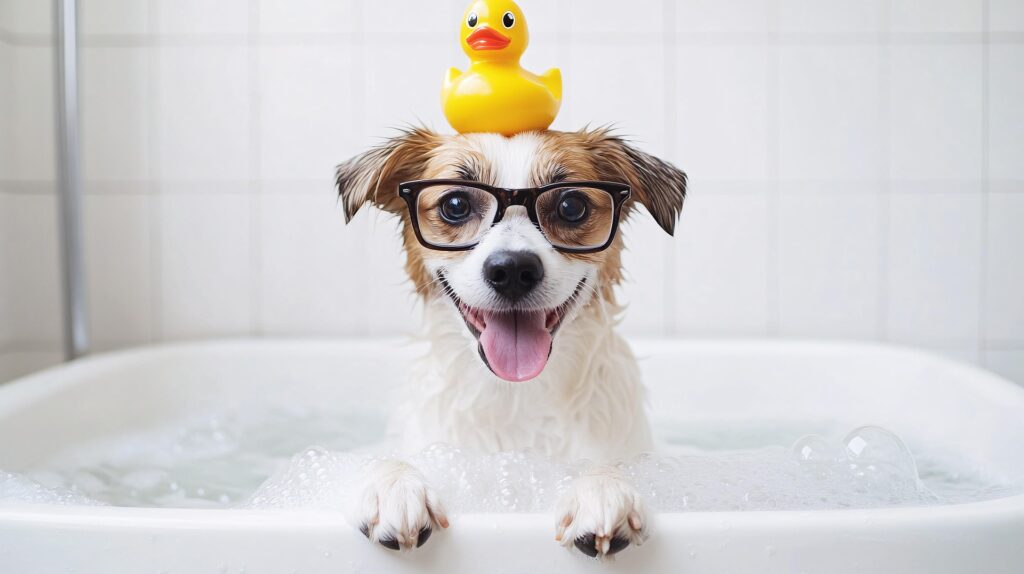
Step-by-Step Puppy Dog Bath Time Introduction
Getting puppies started on the right paw with dog bath time is one of the most valuable investments you can make.
The goal at this stage isn’t cleanliness. It’s the emotional association. A puppy who learns that water, shampoo, and dryers predict treats and praise builds a lifelong foundation of bath tolerance.
Week 1: Bathroom Exploration
Bring your puppy into the bathroom with no water running. Scatter treats. Let them explore. Build “bathroom = good place” before any equipment is involved.
Week 2: Tub Introduction
Place your puppy in the empty, dry tub for 2–3 minutes. Treat generously for calm behavior. Lift them out before they want to leave — always end positively.
Week 3: Water Introduction
Run a very shallow, lukewarm amount of water in the tub. Place puppy’s paws in it. Click or say “Yes!” and treat for any calm contact with the water.
Week 4: First Real Bath
Keep it under 5 minutes. Use lukewarm water, a gentle puppy-specific shampoo, and a continuous stream of treats throughout. Don’t worry about perfect coverage — the goal is a positive experience.
Week 5 and Beyond
Gradually increase bath duration, coverage, and the introduction of the dryer. By week 8–10 of consistent positive introductions, most puppies are reliably tolerant of full baths.
According to the American Veterinary Society of Animal Behavior (AVSAB), early positive exposure to grooming procedures during the socialization period is one of the highest-impact husbandry investments owners can make for long-term behavioral health.
Frequently Asked Questions About Dog Bath Time
Most dogs benefit from a bath every four to six weeks. Dogs with skin conditions, allergies, or heavy outdoor activity may need more frequent bathing — sometimes weekly. Dogs with naturally low-odor coats, or those who don’t go outside much, can often go six to eight weeks between baths. Always follow your veterinarian’s recommendation for your specific dog, especially if skin conditions are a factor.
No. Human shampoos are formulated for human skin pH (approximately 4.5–5.5), which is significantly more acidic than dog skin (pH 6.2–7.4). Using human shampoo disrupts your dog’s skin barrier, strips the natural microbiome, and can cause dryness, irritation, and increased susceptibility to skin infections. Always use a pH-balanced, dog-specific formula.
Don’t force it. Forced entry into the tub creates a trauma memory that makes future baths harder, not easier. Instead, start the desensitization process described in this article — beginning with making the bathroom a positive space, then the empty tub, then shallow water. The process takes 2–4 weeks but produces lasting results.
The shake reflex is involuntary — dogs can’t truly prevent it. What you can do is anticipate it: keep one hand gently cupped around the scruff of the neck (not gripping tightly, just resting there). The proprioceptive input of your hand often delays the shake. Having a towel ready to immediately drape over your dog the moment they leave the tub also dramatically reduces the splash radius.
Completely normal. Post-bath zoomies are a neurological discharge of accumulated tension — Frenetic Random Activity Periods (FRAPs). They’re not a sign of a bad bath experience, and they don’t need to be stopped. Just make sure the post-bath space is safe (no slippery floors, sharp corners, or furniture your dog can injure themselves on during the sprint).
Your Dog Bath Time Action Plan
Here’s your practical next-step framework:
Before Your Next Bath:
- Purchase a non-slip mat if you don’t already have one
- Load a silicone lick mat with peanut butter (xylitol-free) or pumpkin and freeze it
- Do 10–15 minutes of exercise with your dog immediately before bath time
- Pre-stage all supplies so nothing is forgotten once your dog is in the tub
This Week:
- Evaluate your current shampoo: does it have a canine-appropriate pH? Is it sulfate-free?
- Research ultra-quiet pet dryers if your dog is noise-sensitive
- Begin a two-minute daily brushing routine to reduce mats at bath time
This Month:
- If your dog is genuinely bath-phobic, begin the 21-day desensitization protocol
- Introduce the chin rest consent cue in calm, non-bath contexts first
- Consider a DAP diffuser for the bathroom if anxiety is a consistent factor
Ongoing:
- Aim for bathing consistency — irregular bathing makes each session feel new and unpredictable
- Celebrate every improvement, no matter how small — this process compounds
Dog bath time will never be your dog’s favorite activity. But with patience, the right tools, and a behavioral approach rooted in trust rather than force, it can become something they tolerate calmly — and that you approach without dread.
That shift is entirely within reach. Start with one change from this guide today.
🐾 Related Resources & Interactive Tools in This Guide:
- Interactive Calculator: Dog OTC Medication Dosage Calculator — Calculate safe, vet-approved doses of Benadryl, Zyrtec, Pepcid, and Melatonin by body weight.
- Clinical Resource: How to Cure Dog Bad Breath Without Brushing: 11 Ways to Banish Bad Breath
- Behavior & Training Guide: How to Trim Arthritic Dog Nails: The Complete Gentle Nail Care Guide 2026
- Related Expert Guide: How to Clean French Bulldog Face Wrinkles: The Safe Guide
Growth & Immunization Tracking: To predict your puppy’s adult weight based on current breed trajectory, use our interactive Puppy Growth Calculator. For core vaccine timelines and veterinary cost planning, refer to the Puppy Vaccination Schedule Tool.
📚 Related Topic Cluster Guides & Veterinary Tools
Explore our complete Pet Grooming & Hygiene Guide Hub for comprehensive guides, veterinary diagnostic checklists, and daily care protocols.
- How to Clean French Bulldog Face Wrinkles: The Safe Guide
- How to Start a Dog Grooming Business From Home: The Complete Entrepreneur’s Guide 2026
- Professional Dog Grooming vs. DIY: Which is Best for Your Dog?
- The Complete Guide to Calmly Dressing Your Dog in Sweaters, Beanies, and Socks for Winter
- Interactive Tool: Pet Age to Human Years Conversion Calculator