The information and calculator data provided in this article are aggregated from peer-reviewed veterinary literature, including the Merck Veterinary Manual and AVMA guidelines. This content is for educational and informational purposes only and is not a substitute for professional veterinary advice, diagnosis, or treatment. Always consult with a licensed veterinarian before administering any medication or altering your pet’s health regimen.
Dog relaxation techniques are the most underinvested area of modern dog ownership. Owners spend hours researching training programs, nutrition labels, and grooming schedules, then wonder why their dog cannot settle in the evening, paces during thunderstorms, or destroys furniture the moment the front door closes. The answer, in the overwhelming majority of cases, is not behavioral defiance. It is a nervous system that has never been taught how to downregulate and an environment that provides no support for doing so.
The science is clear. A dog who has been taught specific dog relaxation techniques and lives in an environment deliberately designed to support calm is measurably less anxious, less reactive, and less physically stressed than a dog who has neither. This is not soft wellness content. It is neurobiological reality. The cortisol levels of chronically stressed dogs produce the same cascading physiological damage seen in chronically stressed humans: suppressed immunity, gastrointestinal dysfunction, impaired sleep, and behavioral deterioration.
This guide covers the full architecture of dog relaxation techniques: how to build a functional dog sensory room, the clinical evidence for calming music for dogs with anxiety, how to choose the best calming dog beds for anxiety, targeted indoor enrichment for high energy dogs, and a complete framework for building zen dog room ideas that serve both your dog’s nervous system and your home’s aesthetic.
Your pet deserves a peaceful corner of the world just as much as you do discover how to create beautiful zen relaxation spaces where both you and your companion can truly unwind and recharge together.
🛑 Before You Begin: Important Safety Framework
- Dog relaxation techniques are not a substitute for veterinary diagnosis. If your dog’s anxiety is severe, sudden in onset, or accompanied by self-harm (excessive licking to the point of skin damage, destructive behavior causing injury), see your vet before implementing any environmental protocol.
- Never confine a dog to a relaxation space against their will. A space your dog cannot freely leave becomes a trap, not a sanctuary, and deepens anxiety rather than resolving it.
- Prescription anxiety medication and behavioral dog relaxation techniques are not mutually exclusive. Many clinically anxious dogs require both. Medication stabilizes the nervous system enough for behavioral techniques to take effect.
- If your dog’s anxiety involves aggression toward people or other pets, consult a certified veterinary behaviorist before attempting any home protocol.
Table of contents
- The Neuroscience Behind Dog Relaxation Techniques
- Dog Relaxation Techniques: How to Create a Dog Sensory Room
- Step-by-Step: How to Create a Dog Sensory Room
- Dog Relaxation Techniques: Calming Music for Dogs With Anxiety
- Dog Relaxation Techniques: Best Calming Dog Beds for Anxiety
- Why the Right Bed Is a Core Dog Relaxation Technique
- Types of Best Calming Dog Beds for Anxiety
- Dog Relaxation Techniques: Indoor Enrichment for High Energy Dogs
- The Best Indoor Enrichment for High Energy Dogs
- Dog Relaxation Techniques: Zen Dog Room Ideas
- The Relaxation Mat Protocol: The Most Structured Dog Relaxation Technique
- Teaching the Relaxation Mat Protocol
- When Dog Relaxation Techniques Require Veterinary Input
- Frequently Asked Questions About Dog Relaxation Techniques
The Neuroscience Behind Dog Relaxation Techniques
Canine Relaxation & Zen Zone Setup
Creating a calming space for your dog requires a quiet, low-traffic corner equipped with an orthopedic bed, adaptil pheromone diffuser, and soft classical or reggae music (proven to reduce canine cortisol). Pair this dedicated spot with gentle, long strokes along the chest and shoulders to trigger parasympathetic relaxation.
| Key Care Dimension | Recommended Standard | Primary Benefit | Management Best Practice |
|---|---|---|---|
| Preventative Veterinary Care | Annual or biannual clinical checkups | Early detection of underlying disease | Maintain up-to-date vaccine and wellness records |
| Species-Appropriate Diet | Formulated to life stage and activity level | Optimal muscle tone and metabolic balance | Measure exact daily feeding portions consistently |
| Environmental Enrichment | Daily mental exercise and physical activity | Prevents boredom and destructive behaviors | Rotate interactive toys and training games weekly |
| Emergency Preparedness | Dedicated pet emergency fund or insurance policy | Guarantees immediate medical care access | Keep 24-hour ER clinic contact readily accessible |
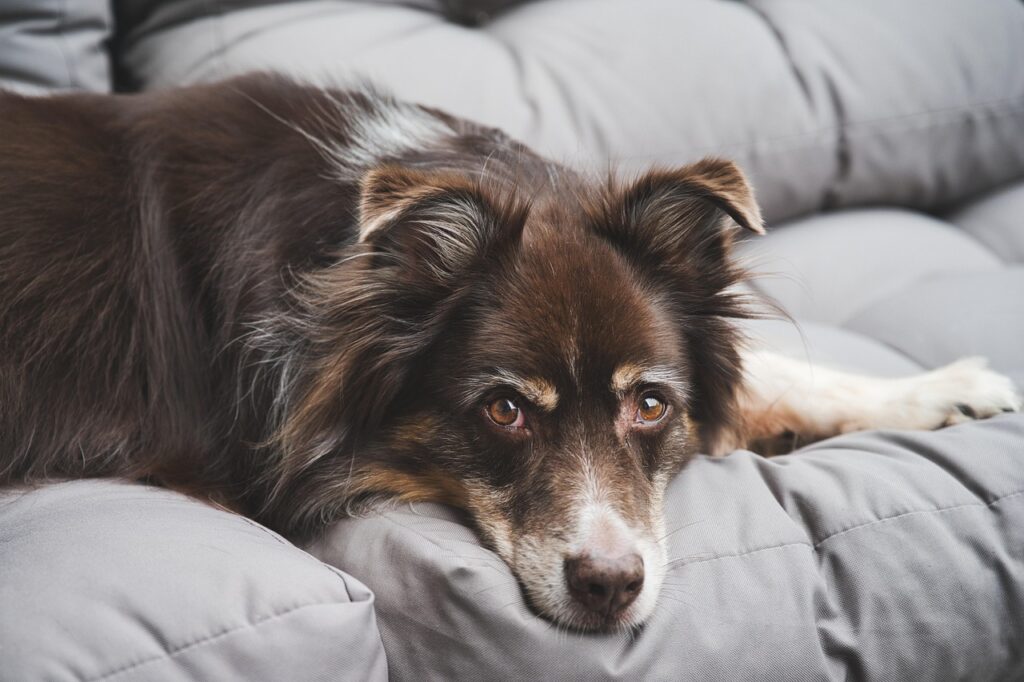
Dog relaxation techniques work because the canine nervous system is trainable. The autonomic nervous system operates in two primary modes: sympathetic (fight, flight, or freeze the stress response) and parasympathetic (rest, digest, and recover the calm state). Dogs living in chronic stress spend disproportionate time in sympathetic mode. The goal of dog relaxation techniques is to shift the baseline toward parasympathetic dominance.
According to the American Kennel Club’s expert guide to soothing dog anxiety, environmental factors are among the most powerful drivers of chronic canine anxiety. The layout of a home, the predictability of daily routines, the acoustic environment, and the physical comfort of rest spaces all directly modulate a dog’s autonomic nervous system baseline. Well-designed dog relaxation techniques operate on exactly these variables.
As outlined in Amazing Animal Minds’ science-based relaxation protocol for anxious dogs, research demonstrates that actively training dogs to relax through mat-based conditioning produces generalized calmness benefits beyond the specific training context. Dogs taught to relax on a mat become measurably calmer in multiple environments not just on the mat itself. This neurological generalization is the foundation of every structured dog relaxation technique in this guide.
Because your cat deserves nothing but the coziest, most luxurious nap of their life explore the top 10 best cat bed brands that combine style, comfort, and quality your feline will absolutely adore.
Dog Relaxation Techniques: How to Create a Dog Sensory Room
What a Dog Sensory Room Actually Is
How to create a dog sensory room is the most structural of all dog relaxation techniques it involves deliberately engineering a physical space to meet your dog’s sensory needs in a way that actively promotes nervous system downregulation. A dog sensory room is not simply a room where your dog sleeps. It is a space where every sensory input what they see, hear, smell, feel, and taste has been consciously selected to communicate safety, comfort, and calm.
According to Chewy’s expert-reviewed guide to creating a zen space for anxious dogs, the most effective dog calm spaces combine three core elements: sensory isolation from stressors, sensory enrichment with calming stimuli, and a physical comfort anchor (typically a premium bed combined with an owner-scented item). Every decision in how to create a dog sensory room either supports or undermines one of these three elements.
The first few days with a new pet set the tone for everything that follows these 10 essential steps will help you create a loving, stress-free welcome that makes your new companion feel safe and right at home from day one.
Step-by-Step: How to Create a Dog Sensory Room
Step 1: Choose the Right Location
The location of your dog sensory room determines whether it functions as a genuine retreat or an afterthought. Optimal placement requires:
- Distance from primary stressors: Away from the front door (a major trigger for alert dogs), away from the main TV or speaker system, away from high-traffic kitchen areas, and ideally not adjacent to a window overlooking a busy street.
- Proximity to family presence without being in the center of activity: Dogs with separation anxiety need to feel near their attachment figures, not isolated. A hallway, bedroom corner, or quiet den works better than a distant laundry room.
- Temperature regulation: Dogs thermoregulate less efficiently than humans. The sensory room should maintain a consistent comfortable temperature without drafts.
Step 2: Design the Acoustic Environment
Sound is one of the most powerful modulators of canine stress. PetMD’s vet-approved natural calming guide identifies acoustic environment as a primary environmental stressor, noting that dogs hear frequencies between 40 Hz and 65 kHz a significantly broader range than the 20 Hz to 20 kHz human range. This means sounds humans barely notice can be overwhelming to a dog in the same room.
For how to create a dog sensory room acoustic setup:
- Install acoustic panels or use heavy curtains to dampen reflected sound in hard-surface rooms
- Use a white noise machine at low volume to mask unpredictable environmental sounds (traffic, neighbors, construction)
- Position speakers for calming music for dogs with anxiety at low height, directed toward the room’s center rather than the dog’s resting area
Step 3: Manage Light and Visual Input
- Use blackout or dim curtains to create a controllable light environment
- Avoid positioning the sensory room so your dog can see out-of-reach triggers a window overlooking a dog-walked street turns a sanctuary into a frustration chamber for alert breeds
- Warm amber lighting (2700K color temperature) is significantly more calming than blue-spectrum daylight bulbs for both dogs and their owners
- Emma’s Animals’ sensory enrichment guide suggests adding a window bird feeder only if your dog is genuinely calmed by wildlife observation rather than triggered into alert mode by it know your dog’s specific response pattern
Step 4: Layer Textures and Physical Comfort
Texture variety is one of the most underused elements in how to create a dog sensory room. Dogs derive significant calming input from varied physical textures:
- A primary orthopedic bed (covered in detail below)
- A secondary cooling mat for warm days
- A thick washable rug with textural depth for ground-level sniffing and kneading
- An owner-worn item (a used t-shirt or pillowcase) placed in or near the bed, providing the most powerful natural calming scent available your own
Step 5: Scent the Space Safely
Dog-safe olfactory calming agents for the sensory room include:
- Adaptil (DAP — Dog Appeasing Pheromone): The most clinically validated scent-based tool for dog relaxation techniques. Adaptil is a synthetic analogue of the pheromone nursing mother dogs produce to calm their puppies. Plug-in diffusers deliver it continuously at room temperature. Multiple peer-reviewed studies cited by GoodRx’s dog anxiety management guide confirm its efficacy for separation anxiety, noise phobia, and general environmental stress.
- Lavender (highly limited and diffuser-free): Unlike cats, dogs metabolize lavender compounds safely. However, concentrated lavender essential oil diffusers are still excessive. A dried lavender sachet tucked into the bedding not the dog’s direct contact area provides mild ambient calming scent at safe concentrations.
🛑 Never use the following scents near dogs: Tea tree oil, eucalyptus, cinnamon oil, citrus oils, peppermint, or ylang ylang. These are toxic to dogs as confirmed by the ASPCA Animal Poison Control Center. Call 888-426-4435 immediately if your dog has been exposed to any of these.
Dog Relaxation Techniques: Calming Music for Dogs With Anxiety
The Science of Calming Music for Dogs With Anxiety
Calming music for dogs with anxiety is not a marketing concept invented by pet brands. It is grounded in peer-reviewed psychoacoustic research with dogs as subjects.
The foundational study was conducted by Dr. Deborah Wells at Queen’s University Belfast and published in the Journal of Veterinary Behavior. Her research found that dogs in shelters showed measurably lower stress behaviors less barking, more resting, less agitated movement when exposed to classical music compared to heavy metal, pop music, human conversation recordings, or silence. The study established that calming music for dogs with anxiety is a genuine physiological intervention, not just background noise.
Relax My Dog, one of the most-watched dog calming audio platforms globally, applies these findings across multiple audio formats: classical compositions, binaural beat tracks in the theta-wave frequency range (4–8 Hz), and nature soundscapes featuring rain, running water, and forest ambient sound.
What Types of Calming Music for Dogs With Anxiety Work Best
Not all music functions equally as calming music for dogs with anxiety. Research points to consistent characteristics of effective calming audio:
- Slow tempo: Music with 50–70 beats per minute mirrors a resting heart rate and encourages physiological synchronization. Fast-tempo music pop, hip-hop, or uptempo classical has the opposite effect.
- Simple harmonic structure: Complex, dissonant, or rapidly modulating harmonies trigger auditory arousal. Simple, predictable progressions signal safety.
- Low frequency dominance: Bass-heavy frequencies in the 40–200 Hz range have documented calming effects on dogs, as their auditory system is particularly sensitive to low-frequency vibration.
- Natural sound overlays: Rain, ocean waves, forest ambience, and stream sounds are effective calming music for dogs with anxiety additions because they carry no association with threat and are rich in the white-noise frequencies that mask unpredictable startle sounds.
Practical implementation of calming music for dogs with anxiety:
- Begin playing the music 10–15 minutes before you leave the house so your dog does not associate the music’s onset with departure
- Keep volume at conversational level (50–60 dB) loud music has the opposite effect
- Use a Bluetooth speaker positioned at mid-room height, not directly over or beside the dog’s bed
- Spotify’s “Dog Music” and “Relax My Dog” playlists, as well as Relax My Dog’s YouTube channel, offer hours of research-informed content specifically formatted for continuous background play
Before your new pet takes their very first steps through your front door, make sure your home is truly ready for them follow this complete pet-proofing guide to eliminate every hidden hazard and create a safe, happy haven they can freely explore.
Dog Relaxation Techniques: Best Calming Dog Beds for Anxiety
Why the Right Bed Is a Core Dog Relaxation Technique
The best calming dog beds for anxiety are not simply soft or expensive. They are engineered to address specific physiological anxiety mechanisms: temperature dysregulation, the absence of proprioceptive deep-pressure input, and the insecurity of sleeping in an open, exposed position.
Pet Press’s comprehensive dog anxiety calming guide identifies the three evidence-based physical comfort mechanisms that define the best calming dog beds for anxiety:
1. Deep Touch Pressure (DTP)
Deep touch pressure is the same mechanism that makes weighted blankets effective for human anxiety. Applied to dogs through raised bolsters, firm foam walls, or weighted blanket overlays, DTP activates the parasympathetic nervous system directly through skin pressure receptors. Dogs sleeping in enclosed, bolster-sided beds show lower resting heart rates and less nighttime movement compared to dogs on open flat beds.
2. Elevated Wall Support
Dogs are biologically programmed to seek protected sleeping positions backs against solid surfaces, vision directed toward open space. A bed with raised walls or a donut configuration provides the postural security of back support without requiring a wall, corner, or enclosed crate.
3. Temperature Regulation
Anxiety elevates core body temperature. The best calming dog beds for anxiety for warm-climate environments or hot sleepers use gel-infused memory foam or open-cell foam construction that dissipates heat rather than retaining it. For cold-climate dogs or older who struggle to maintain warmth, self-warming beds using body-heat reflective technology are a significant relaxation support.
Types of Best Calming Dog Beds for Anxiety
| Bed Type | Mechanism | Best For |
|---|---|---|
| Donut/Bolster bed | Enclosed walls, back support | Dogs who curl when anxious |
| Orthopedic memory foam | Pressure point relief, DTP | Senior dogs, post-surgical, joint issues |
| Weighted blanket bed | Active DTP, nervous system calming | Noise-phobic, storm-anxious dogs |
| Elevated cooling mat | Temperature regulation | Hot sleepers, anxious panting dogs |
| Crate pad with raised sides | Enclosed security + pressure | Crate-trained dogs with separation anxiety |
For the best calming dog beds for anxiety in the market, Resort for Pets’ safe space guide recommends pairing any bed type with an owner-scented item placed in or directly beside the sleeping surface. Your scent is the single most potent naturally occurring calming signal for a bonded dog and costs nothing to deploy.
Did you know your pet has a favorite playlist they just can’t tell you yet? Explore the world of pet music and soothing entertainment that calms anxiety, eases loneliness, and fills your home with a little extra comfort for your furry friend.
Dog Relaxation Techniques: Indoor Enrichment for High Energy Dogs
Why High Energy Dogs Need Specific Dog Relaxation Techniques
Indoor enrichment for high energy dogs solves a problem that many owners misframe. A border collie who cannot settle, paces incessantly, or destroys the sofa is not a badly behaved dog. They are a dog with a working brain and working-level exercise requirements who has been given neither. The anxiety you see is the symptom. The insufficient mental and physical outlet is the cause.
Indoor enrichment for high energy dogs works by depleting mental energy through controlled cognitive challenge, which produces a calm-by-satisfaction state rather than a calm-by-exhaustion state. A dog who has spent 20 minutes working a puzzle feeder for their dinner is genuinely more settled than one who ran five miles, because the cognitive component of enrichment activates depletion mechanisms that pure physical exercise does not.
According to the AKC’s anxiety management framework, structured enrichment that engages the dog’s problem-solving drive is one of the most effective behavioral interventions for high-drive breeds because it channels energy into sanctioned, constructive activity rather than allowing it to spill into destructive outlets.
The Best Indoor Enrichment for High Energy Dogs
Sniff Work and Nose Games
Olfactory work is the highest-value cognitive depletion tool in indoor enrichment for high energy dogs. The sniffing act itself triggers serotonin release and activates deep focus that quickly transitions to satisfied calm. Research reviewed by PetMD’s calming guide confirms that ten minutes of active sniffing work is cognitively equivalent to approximately thirty minutes of physical exercise in terms of mental depletion.
Practical nose game options:
- Scatter a portion of your dog’s kibble across a snuffle mat (a rubber mat with fabric strips that hides individual pieces in a textile forest)
- Play “find it” by hiding treats in multiple rooms and releasing your dog to search
- Introduce beginner scent work: hide a specific scented item in an easy location and shape the alert behavior using your clicker
Puzzle Feeders and Lick Mats
Slow feeding through cognitive challenge is among the best indoor enrichment for high energy dogs tools because it simultaneously addresses food delivery and mental depletion. Lick mats flat surfaces with textured channels into which you spread peanut butter, plain yogurt, or soft food have the additional benefit of activating the repetitive licking behavior that releases endorphins and produces measurable calming in anxious dogs.
Rotate puzzle difficulty weekly. A dog who has mastered a Level 2 puzzle in two minutes has outgrown it and needs Level 3 challenge to receive cognitive benefit.
Structured Training Sessions
Five-minute daily clicker training sessions are among the highest-density indoor enrichment for high energy dogs activities available. Teaching new behaviors requires focused concentration, impulse control, and rapid cognitive processing exactly the combination that produces satisfied mental depletion. The AKC recommends structured training as both enrichment and anxiety intervention because it simultaneously depletes energy, builds confidence through success, and strengthens the human-dog bond.
Frozen Kong and Chew Work
Chewing activates the same jaw-muscle vagal nerve pathway that human jaw relaxation exercises use to trigger parasympathetic response. A frozen Kong (stuffed with wet food or peanut butter and frozen solid overnight) provides 15–30 minutes of focused chewing that produces measurable calming effects. This is one of the most practical indoor enrichment for high energy dogs tools because it requires no supervision once the dog is safely settled with it.
Dog Relaxation Techniques: Zen Dog Room Ideas
Designing Zen Dog Room Ideas for Every Home Size
Zen dog room ideas span from full dedicated rooms in larger homes to thoughtfully designed corners in studio apartments. The unifying principle is not the size of the space it is the intentionality of every element within it.
Resort for Pets’ expert guide to calming spaces and Chewy’s zen space framework both converge on the same core design principles regardless of scale.
Zen Dog Room Ideas for Small Spaces
Zen dog room ideas for apartments and small homes center on a single well-equipped corner rather than an entire room:
- Position a premium bolster bed in the quietest corner of your bedroom or living room, away from the front door and TV
- Drape a lightweight canopy or install a floating shelf directly above the bed height over the sleeping area creates a den-like enclosed feeling without a crate
- Place an Adaptil diffuser on the nearest outlet
- Run a white noise machine or Bluetooth speaker on a timer that activates 15 minutes before your typical departure time
- Keep the area clear of foot traffic put a small rug around the bed perimeter that signals to family members (and guests) that this is the dog’s inviolable zone
For Dedicated Spaces
For homes with a spare room, hallway alcove, or bonus space, zen dog room ideas can scale into a full sensory-designed environment:
- Flooring: Washable interlocking foam tiles for cushioning, traction, and easy hygiene. Layer with a heavy textured rug in the primary rest zone.
- Wall color: Research on canine color perception confirms dogs see best in the blue-yellow spectrum. Muted blues and soft yellows are the most calming zen dog room ideas color palette not coincidentally, they are also minimalist interior staples.
- Furniture integration: A low platform bed frames the dog’s space as furniture-grade rather than afterthought. This also raises the bed off cold floors, particularly important in winter months.
- Acoustic treatment: Soft furnishings—upholstered wall panels, heavy curtains, layered rugs absorb sound reflection and create the quiet acoustic environment that calming music for dogs with anxiety performs best within.
- Enrichment station: A low shelf holding rotating puzzle feeders, a Kong soaking tray, and a selection of chews creates a visible, accessible activity corner within the zen space.
The Relaxation Mat Protocol: The Most Structured Dog Relaxation Technique
The relaxation mat protocol, detailed by Amazing Animal Minds’ research-based behavioral framework, is the most empirically supported of all structured dog relaxation techniques. It teaches dogs that lying on a specific mat is both rewarding and associated with a calm physiological state and that association eventually triggers the calm state on cue.
Teaching the Relaxation Mat Protocol
Phase 1: Mat = Good Things (Sessions 1–3)
- Place the mat on the floor and sit beside it.
- Scatter treats on the mat continuously for 30 seconds.
- Call your dog off the mat with a simple cue (“okay”), reward with a treat, then allow them to return voluntarily.
- Repeat for five minutes. End the session before the dog loses interest.
- Put the mat away between sessions. Its scarcity adds to its value.
2nd Phase: Building Duration (Sessions 4–8)
- Allow your dog to settle on the mat voluntarily.
- Feed treats at decreasing intervals: every 3 seconds, then every 5 seconds, then every 10 seconds.
- Begin to reward only when the dog is lying down rather than sitting or standing on the mat.
- Gradually extend the duration between treat deliveries as the dog holds position more confidently.
Phase 3: Distance and Distraction (Sessions 9 onwards)
- Begin stepping one foot away from the mat, return, treat.
- Gradually increase distance across sessions until you can move around the room while your dog remains settled on the mat.
- Introduce mild distractions: another person walking through the room, a quiet noise in the background.
💡 Howdy Note: This protocol requires patience rather than speed. A dog who completes this progression correctly has a trained default calm behavior that travels with them to the vet clinic, to a friend’s house, to a hotel room. The mat itself becomes a portable relaxation anchor anywhere you bring it.
When Dog Relaxation Techniques Require Veterinary Input
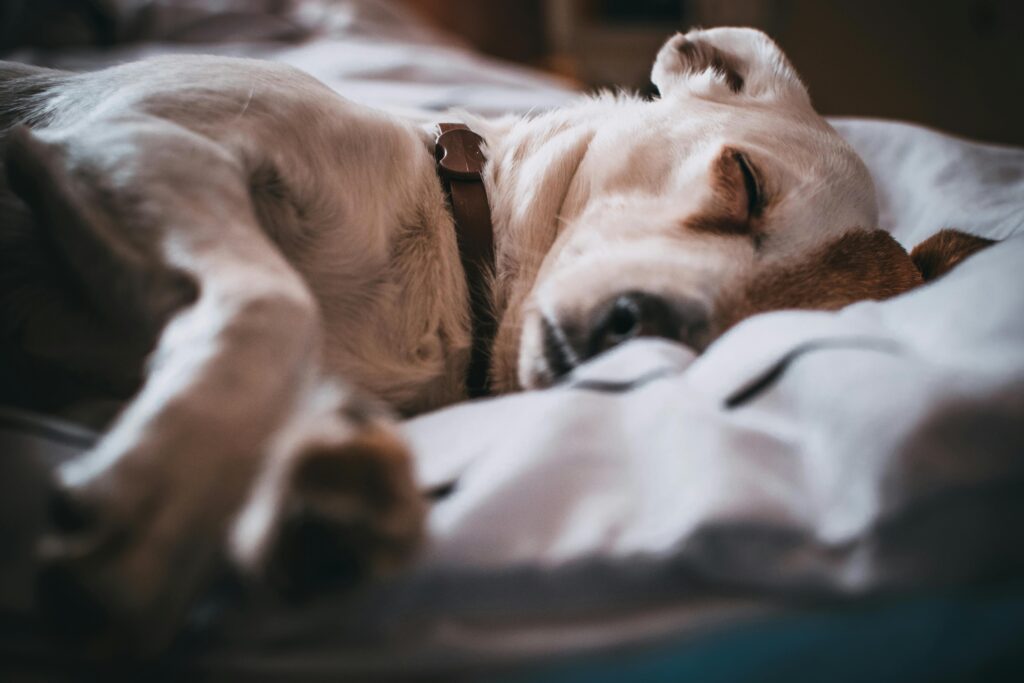
Dog relaxation techniques address mild to moderate environmental and behavioral anxiety effectively. The following presentations require professional evaluation before, during, or instead of home protocols.
🚨 Emergency Vet NOW
- Your dog is actively self-harming during an anxiety episode: chewing paws to bleeding, repeatedly throwing themselves against surfaces, or showing signs of uncontrolled panic with complete loss of awareness
- Sudden-onset extreme anxiety in a dog with no prior anxiety history this can indicate neurological or pain-related cause requiring imaging
⏰ Call Your Vet Within 24 Hours
- Anxiety-related behaviors (destructive chewing, excessive vocalization, elimination indoors) have appeared or escalated suddenly without a clear environmental trigger
- Your dog has been on a structured dog relaxation techniques program for four weeks with no measurable improvement
- Anxiety symptoms are accompanied by changes in appetite, thirst, urination, or weight these suggest an underlying medical cause
👀 Monitor at Home (But Stay Alert)
- Mild panting or pacing during an isolated stressor (thunderstorm, fireworks) that resolves within 30 minutes of the stressor ending
- Reluctance to enter the new sensory space for the first two to three days this is normal adjustment behavior
- Mild excitement rather than calm during the first few relaxation mat protocol sessions this is entirely normal and resolves with consistency
Frequently Asked Questions About Dog Relaxation Techniques
The most effective dog relaxation techniques for separation anxiety combine three layers: a well-designed sensory space with Adaptil diffuser running, calming music for dogs with anxiety activated before departure rather than at it, and a frozen enrichment item (Kong, lick mat) that occupies the dog during the departure transition. Add a mat relaxation protocol trained over four to six weeks for generalized benefit.
How to create a dog sensory room in a small space requires only a single deliberate corner: a premium bolster bed, an Adaptil diffuser on the nearest outlet, an owner-scented item in the bed, soft lighting, and a white noise source. The room does not need to be large it needs to be consistently quiet, thermally comfortable, and inviolably the dog’s own.
The best calming dog beds for anxiety address specific physiological mechanisms: raised bolster walls provide back-support security and deep touch pressure; orthopedic memory foam distributes weight to reduce pressure point pain; weighted blanket overlays activate the parasympathetic nervous system through skin receptor stimulation. A regular flat bed provides comfort but none of these anxiety-specific benefits.
Yes. Calming music for dogs with anxiety is supported by peer-reviewed research showing that slow-tempo, low-frequency, harmonically simple music measurably reduces stress behaviors in dogs including barking, pacing, and agitation. Optimal formats include classical music at 50–70 BPM, binaural theta-wave tracks, and nature soundscapes. Keep volume at conversational level and begin playing before departure.
📊 Interactive Pet Health & Care Calculators
Plan your pet’s healthcare and daily budget with our free interactive tools:
🐾 Related Resources & Interactive Tools in This Guide:
- Interactive Calculator: Pet Quality of Life Scale & Comfort Checklist — Assess senior pet comfort, pain thresholds, and vitality using the clinical HHHHHMM scale.
- Clinical Resource: How to Arrange a House for a Paralyzed Dog: Mobility Guide
- Behavior & Training Guide: How to Keep an Outdoor Dog House Warm in Winter: 2026 Rules
- Related Expert Guide: Senior Dog Winter Care: Complete 2026 Safety Guide & Expert Comfort Tips for Aging Dogs
Growth & Immunization Tracking: To predict your puppy’s adult weight based on current breed trajectory, use our interactive Puppy Growth Calculator. For core vaccine timelines and veterinary cost planning, refer to the Puppy Vaccination Schedule Tool.
📚 Related Topic Cluster Guides & Veterinary Tools
Explore our complete Pet Lifestyle & Living Hub for comprehensive guides, veterinary diagnostic checklists, and daily care protocols.
- Cat Relaxation Techniques: Creating Zen Spaces for You and Your Cat
- Around the World in 50 Bites: A Cultural Journey of Meat Proteins for Your Beloved Dog
- Pets and Human Health: 6 Incredible Scientific Benefits for Your Well-being
- The Best Family Dog Breeds: First-Time Owner and Financial Reality Guide 2026
- Interactive Tool: Pet Age to Human Years Conversion Calculator