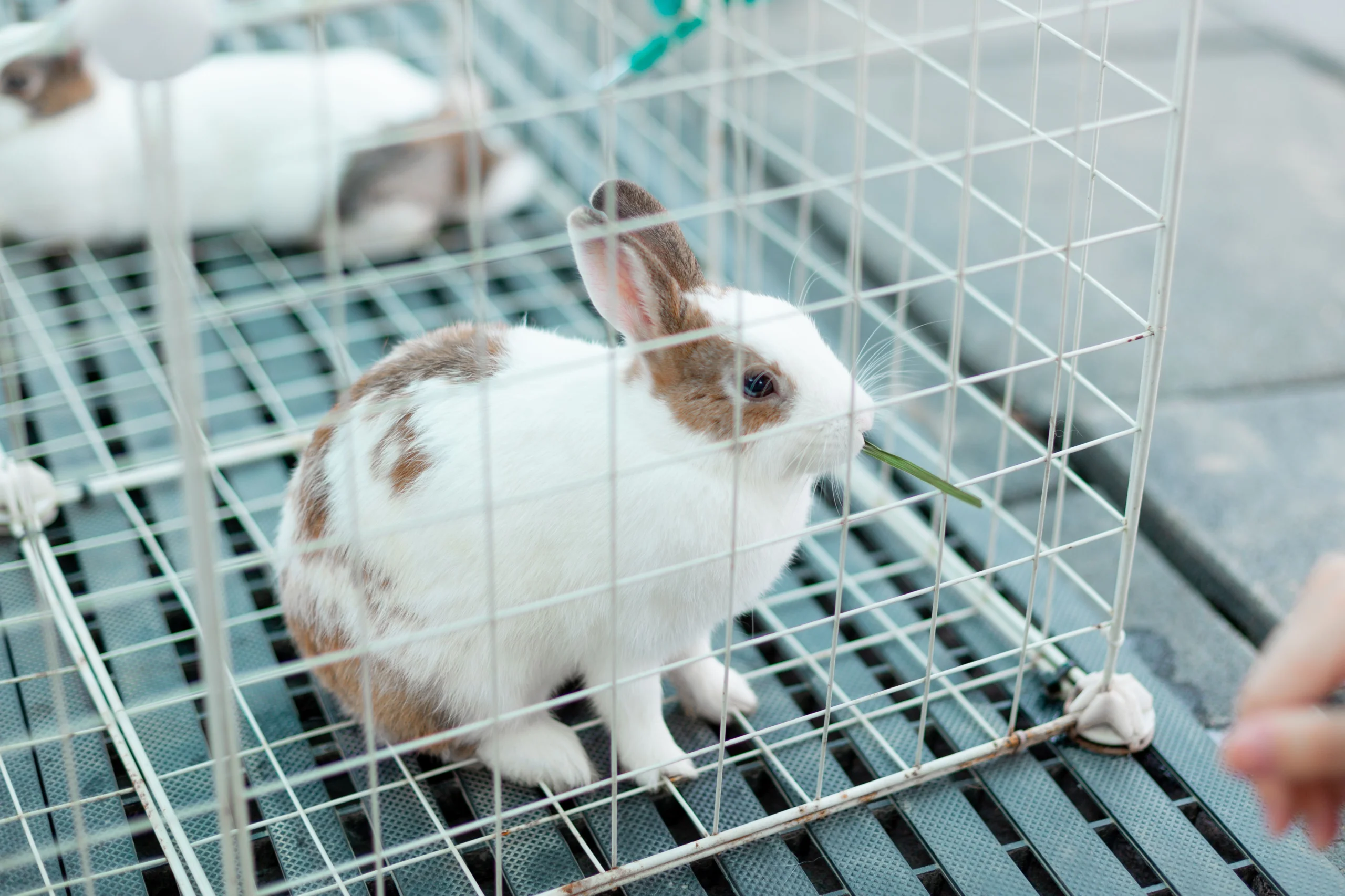
DIY INDOOR RABBIT CAGE: CHEAP
HABITAT BUILD & SAFETY GUIDE
Build an affordable indoor rabbit habitat using metal wire storage grid cubes (C&C grids), waterproof corrugated plastic flooring, non-toxic zip-ties, and a minimum 12-square-foot footprint for healthy lagomorph exercise.
SECURE A
12-SQUARE-FOOT EXERCISE FOOTPRINT
Traditional pet store commercial cages are dangerously undersized, causing spinal deformities, gut stasis, and pododermatitis. A single adult rabbit requires at least 12 square feet of continuous enclosure floor area, combined with a vertical height of 36 inches to allow full standing.
💡 ACTION: Expand housing space using metal C&C storage grids joined with heavy-duty zip ties for scalable DIY dimensions.
ELIMINATE BARE
WIRE MESH FLOORING
Rabbits have no protective foot pads—only thin fur over delicate plantar bones. Wire mesh cage floors cut into hind paws, causing excruciating ulcerative pododermatitis (bumblefoot) and deep bone infections. Install solid, wipeable corrugated plastic bases lined with cotton rugs.
💡 ACTION: Line flooring with machine-washable cotton rugs or non-slip fleece blankets to provide natural traction without ingestion risk.
INTEGRATE A COMBINED LITTER
& TIMOTHY HAY STATION
Rabbits naturally defecate while grazing on high-fiber roughage. Place an open-top cat litter box filled with non-toxic compressed paper pellets inside the pen, topped with fresh orchard grass or timothy hay. This setup reinforces litter training and promotes continuous cecal motility.
💡 ACTION: Never use pine or cedar wood shavings; aromatic phenols damage delicate rabbit liver enzymes and airways.
CONSTRUCT DUAL-EXIT
PREDATOR RETREAT BOXES
As natural prey species, rabbits experience intense cortisol spikes when resting in open exposed spaces. Provide cardboard castle hideaways or wooden nesting boxes with two opposite exit openings, preventing panic should another pet or human approach the enclosure.
💡 ACTION: Repurpose plain brown cardboard boxes without glossy ink or plastic tape as chew-safe disposable hideouts.
RABBIT-PROOF ALL
EXPOSED ELECTRICAL CORDS
Lagomorph teeth grow continuously at 2–3 mm weekly, driving an irresistible biological instinct to chew root-like objects. Exposed electric appliance cords present fatal electrocution risks. Encase every electrical wire surrounding the habitat in hard plastic split-loom tubing or solid baseboard raceways.
💡 ACTION: Elevate power strips at least 3 feet off the ground and anchor wire tubing securely along wall perimeters.