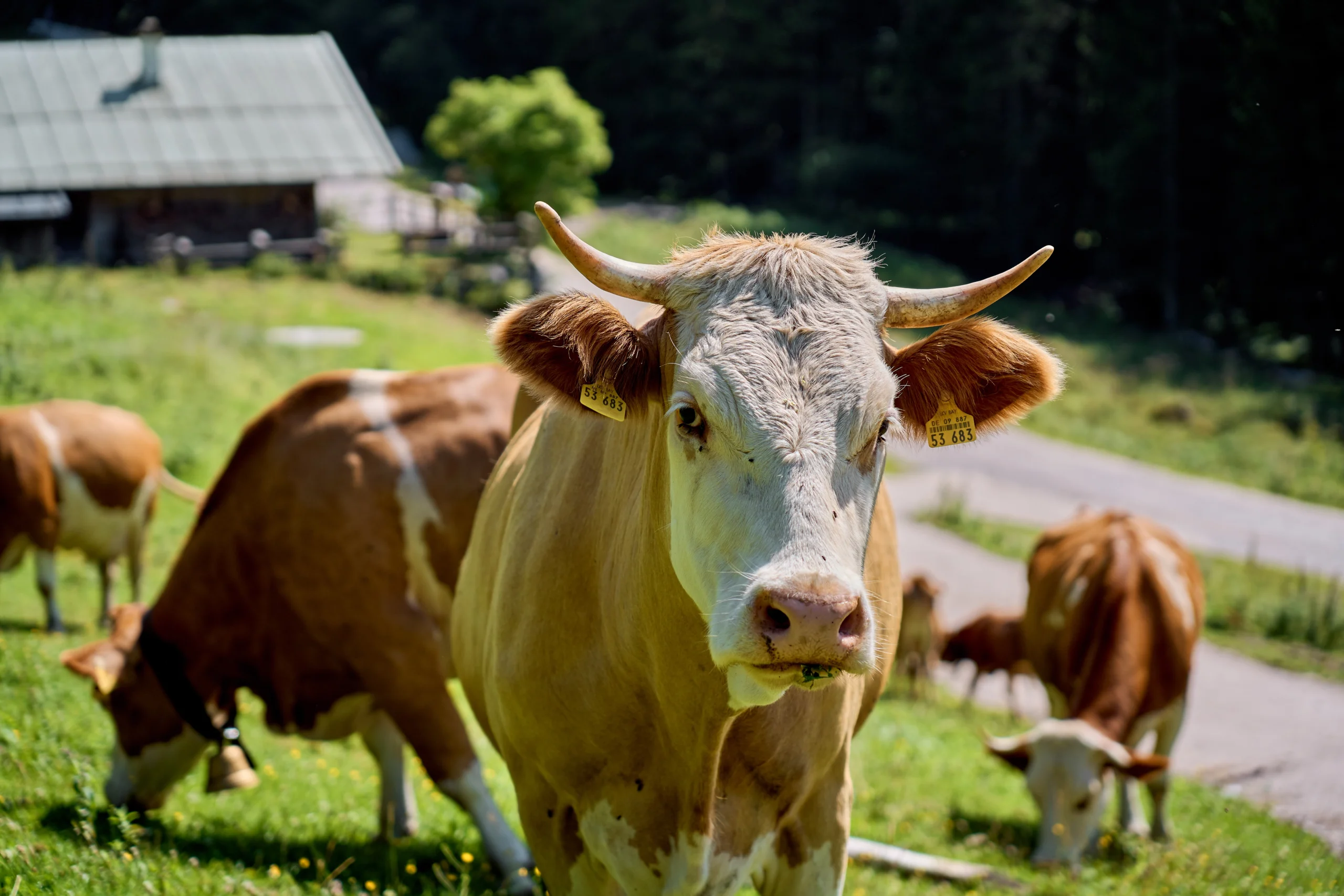
CUTE CUSTOM HALTERS FOR MINIATURE
COWS: STYLE, FIT AND COMFORT GUIDE
Fit custom miniature cow halters by positioning the noseband two inches below the eye orbitals, leaving two flat fingers of clearance beneath the jaw, using padded webbing, and never tying with rigid knots.
SELECT BOVINE-SPECIFIC CROWN
AND CHEEK CUTS
Miniature cows possess broader foreheads and shorter nasal bridges than horses or ponies. Using equine halters creates painful facial pressure points over facial nerve branches. Choose custom halters cut specifically for bovine cranial geometry, with wide crown pieces that distribute poll pressure evenly.
💡 ACTION: Measure crown circumference from jaw corner around behind poll horns before ordering custom artisan tack.
POSITION NOSEBANDS
ABOVE DELICATE CARTILAGE
A noseband resting too low on the muzzle crushes delicate nasal cartilage, restricting respiratory air intake during hot weather. Rest the nosepiece halfway between the eyes and nostrils, ensuring two flat fingers fit comfortably underneath to accommodate natural chewing and cud rumination.
💡 ACTION: Check noseband clearance while the cow chews cud; the band must never pinch during lateral jaw movement.
INTEGRATE FLEECE AND
LEATHER CHAFE GUARDS
Standard stiff nylon webbing cuts into sensitive bovine facial skin, causing hair loss and pressure sores across cheekbones. Line the crown piece, throat latch, and noseband with genuine sheepskin fleece, soft garment cowhide, or moisture-wicking closed-cell neoprene padding.
💡 ACTION: Detach and machine-wash fleece liners monthly to eliminate dried mud, sweat salts, and bacterial crust buildup.
INSTALL LEATHER
BREAKAWAY FUSE PIECES
Never turn a miniature cow out into a pasture wearing a halter without a safety breakaway mechanism. If a halter catches on fence posts or brush, the animal will panic, risking broken neck vertebrae. Incorporate a sacrificial thin leather connector designed to snap under sudden load.
💡 ACTION: Replace brass crown rivets with lightweight leather tabs that yield safely under high traumatic pull force.
REWARD LEADERSHIP
THROUGH IMMEDIATE RELEASE
Cows learn through negative reinforcement—the release of pressure rather than constant pulling. When asking a miniature cow to lead forward, apply gentle steady tension. The exact millisecond the calf shifts weight forward, instantly release all halter slack and offer scratched withers.
💡 ACTION: Keep groundwork sessions under 10 minutes daily; end every practice immediately following a compliant forward step.