How to Stop 10 Common Bad Dog Habits: Complete Training Guide for Pet Parents
Your dog isn’t trying to To get on your last nerve
Really.
When your furry friend displays problematic habits, there’s always a reason behind it.
According to the American Veterinary Medical Association, approximately 70% of behavioral issues in dogs stem from underlying medical conditions, anxiety, or insufficient mental stimulation.
Dogs communicate through behavior.
What looks like defiance is often confusion, discomfort, or unmet needs.


Think of it this way: your dog can’t tell you they’re bored or uncomfortable. Instead, they show you through their actions.
Understanding the root cause is the first step to solving any bad habit.
A 2024 study published in Applied Animal Behaviour Science found that positive reinforcement training reduces unwanted behaviors by 85% more effectively than punishment-based methods.
Let’s explore ten common bad dog habits and proven strategies to stop them.
Table of contents
- Bad Habit #1: Tail Biting and Chasing
- Bad Habit #2: Excessive Scratching and Digging
- Bad Habit #3: Hand Feeding Dependency
- Bad Habit #4: Deliberately Breaking Things
- Bad Habit #5: Excessive Barking
- Bad Habit #6: Jumping on People
- Bad Habit #7: Begging at the Table
- Bad Habit #8: Chewing Inappropriate Items
- Bad Habit #9: Counter Surfing and Stealing Food
- Bad Habit #10: Pulling on the Leash
- Creating a Comprehensive Behavior Modification Plan
- The Role of Positive Reinforcement
- Understanding Your Dog’s Unique Needs
- Medical Issues That Cause Behavioral Problems
- Tools and Products That Help
- Working with Professional Trainers
- Frequently Asked Questions About Dog Bad Habits
- 1. How long does it take to break a bad dog habit?
- 2. Can you train an old dog to stop bad habits?
- 3. Why does my dog only behave badly when I’m not home?
- 4. Should I punish my dog for bad behavior?
- 5. Is my dog being stubborn or spiteful?
- 6. How do I stop multiple bad habits at once?
- 7. Will neutering or spaying fix behavioral problems?
- 8. My dog knows the command but doesn’t listen. Why?
- 9. Are some breeds impossible to train?
- 10. When should I consider medication for behavior problems?
Bad Habit #1: Tail Biting and Chasing
Why Dogs Bite Their Tails
Tail biting can be alarming to watch.
Your dog spins in circles, chomping at their tail like it’s prey.
But this behavior rarely happens without reason.
Common causes include:
- Fleas, ticks, or other parasites
- Allergies (food or environmental)
- Anal gland issues
- Skin infections or hot spots
- Anxiety or compulsive disorders
- Boredom and lack of mental stimulation
The American Kennel Club reports that compulsive tail chasing affects approximately 2-3% of dogs, with certain breeds like German Shepherds and Bull Terriers being more predisposed.
How to Stop Tail Biting
Step 1: Rule Out Medical Issues
Schedule a veterinary examination immediately.
Your vet will check for:
- External parasites
- Skin conditions
- Anal gland problems
- Food allergies
- Neurological issues
Never assume tail biting is purely behavioral without a vet’s confirmation.
Step 2: Increase Mental Stimulation
Bored dogs develop compulsive behaviors.
Try these enrichment activities:
- Puzzle feeders during mealtime
- Hide-and-seek games with treats
- Rotating toy selection weekly
- Training sessions for 10-15 minutes twice daily
- Sniff walks where your dog explores at their own pace
Step 3: Redirect the Behavior
When you catch your dog tail chasing:
- Call their name calmly
- Redirect to a favorite toy or activity
- Reward immediately when they stop
- Never yell or punish
Punishment increases anxiety and worsens compulsive behaviors.
Step 4: Create a Calming Environment
If anxiety triggers tail biting:
- Establish predictable daily routines
- Provide a safe, quiet space
- Consider calming aids like pheromone diffusers
- Practice relaxation protocols recommended by certified trainers
According to the Certified Applied Animal Behaviorists, consistent environmental management reduces anxiety-based behaviors by up to 60%.
Bad Habit #2: Excessive Scratching and Digging
Understanding the Scratching Problem
Your couch has holes.
Your carpet looks like a construction zone.
Excessive scratching destroys furniture and frustrates pet parents.
But scratching serves important purposes for dogs.
Why dogs scratch:
- Natural instinct to mark territory
- Nail maintenance
- Creating comfortable resting spots
- Anxiety or stress relief
- Excess energy
- Seeking attention
The difference between normal and problematic scratching is frequency and context.
Solutions for Excessive Scratching
Medical Check First
Skin conditions cause scratching that looks behavioral.
Have your veterinarian examine for:
- Allergies (70% of excessive scratching has allergic components)
- Dry skin
- Fungal or bacterial infections
- Hormonal imbalances
Provide Appropriate Outlets
Give your dog designated scratching areas:
- Digging boxes filled with sand or dirt
- Designated digging spots in the yard
- Scratch pads or mats
- Outdoor sandboxes with buried toys
Training Techniques
Redirect scratching behavior consistently:
- Say “No” calmly when scratching inappropriately
- Immediately guide to approved scratching area
- Reward enthusiastically when using correct spot
- Cover furniture temporarily with protective materials
- Apply deterrent sprays to problem areas
Increase Physical Exercise
A 2023 study from the University of Pennsylvania School of Veterinary Medicine found that dogs receiving 90 minutes of daily exercise showed 73% fewer destructive behaviors.
Try these exercise strategies:
- Two 30-minute walks daily minimum
- Fetch or frisbee sessions
- Swimming (excellent low-impact exercise)
- Agility training
- Dog park socialization
Bad Habit #3: Hand Feeding Dependency
The Hand Feeding Problem
Your dog refuses to eat from their bowl.
They’ll only eat if you hand-feed them piece by piece.
Mealtime becomes a 30-minute ordeal.
This habit seems sweet initially but creates long-term problems.
Why hand feeding dependency develops:
- Started during illness or puppyhood
- Accidental reinforcement of picky eating
- Anxiety around food bowls
- Seeking attention and interaction
- Previous negative bowl experiences
Breaking Hand Feeding Habits
The Gradual Transition Method
Don’t go cold turkey immediately.
Follow this step-by-step process:
1 Week:
- Hand feed but lower your hand toward the bowl
- Drop pieces near the bowl while petting your dog
- Gradually decrease hand contact
2 Weeks :
- Place hand-held food in the bowl
- Keep your hand in bowl while dog eats
- Slowly remove hand for longer periods
3 Weeks :
- Place all food in bowl
- Sit nearby but don’t touch food
- Reward calm eating behavior
4 Weeks :
- Place bowl and walk away
- Leave food available for 15-20 minutes
- Remove bowl if uneaten (no snacks between meals)
The Scheduled Feeding Approach
Establish strict feeding schedules:
- Feed at exact same times daily
- Allow 15 minutes for eating
- Remove bowl after time expires
- No treats or snacks between meals
- Repeat consistently
According to veterinary nutritionists at Tufts University Cummings School of Veterinary Medicine, 85% of dogs return to bowl feeding within 3-5 days using this method.
Rule Out Medical Issues
Sometimes food refusal signals health problems:
- Dental disease (affects 80% of dogs over age 3)
- Digestive issues
- Medication side effects
- Pain while eating
Always consult your veterinarian if appetite changes suddenly.
Bad Habit #4: Deliberately Breaking Things
Understanding Destructive Behavior
Your dog knocked over the lamp again.
They pulled items off tables.
It seems intentional and spiteful.
But here’s the truth: dogs don’t understand revenge or spite.
What looks deliberate is actually:
- Attention-seeking behavior
- Separation anxiety
- Insufficient exercise
- Teething (in younger dogs)
- Exploratory behavior
- Predatory instincts
The ASPCA emphasizes that dogs live in the present moment and cannot plan destructive revenge.
Stopping Destructive Behaviors
Identify the Trigger
Keep a behavior log for one week:
- When does destruction occur?
- What items are targeted?
- Is anyone home when it happens?
- What preceded the behavior?
Patterns reveal underlying causes.
Separation Anxiety Solutions
If destruction happens when you leave:
- Practice short departures (5 minutes initially)
- Don’t make arrivals/departures dramatic
- Leave clothes with your scent
- Use calming music or white noise
- Consider crate training for safety
- Try puzzle toys filled with treats
Gradually increase alone time as your dog remains calm.
Attention-Seeking Destruction
If your dog breaks things while you’re present:
- They’re asking for interaction
- Ignore undesirable behavior completely
- Redirect to appropriate toys immediately
- Provide attention for good behavior only
- Schedule dedicated playtime
Never chase your dog or yell when they grab items. This rewards the behavior with attention.
Environmental Management
Prevention is easier than correction:
- Puppy-proof your home
- Remove tempting items from reach
- Use baby gates to limit access
- Provide appropriate chew toys
- Rotate toys weekly for novelty
The “Trade” Command
Teach your dog to exchange items:
- When they have something inappropriate, show a high-value treat
- Say “Trade” or “Drop it”
- Reward immediately when they release
- Give back safe items sometimes (builds trust)
- Practice with low-value items first
A 2024 study in the Journal of Veterinary Behavior found that “trade” training reduced item guarding by 91%.
Bad Habit #5: Excessive Barking
Why Dogs Bark Too Much
Barking is natural communication.
But excessive barking disrupts households and neighborhoods.
Common barking triggers:
- Alert/warning barking at stimuli
- Attention-seeking
- Boredom and frustration
- Separation anxiety
- Fear or territorial behavior
- Excitement or play
- Medical issues causing discomfort
According to the American Kennel Club, certain breeds are genetically predisposed to vocalization, including Beagles, Huskies, and Terriers.
How to Reduce Excessive Barking
The “Quiet” Command Training
Step-by-step process:
- Allow 3-4 barks when dog alerts
- Calmly say “Quiet”
- Wait for 2-3 seconds of silence
- Immediately reward with treats
- Gradually increase silence duration
Practice during low-stimulation periods first.
Address the Root Cause
alert barking:
- Close curtains to reduce visual triggers
- Use white noise to mask sounds
- Create a calm-down space away from windows
attention barking:
- Ignore completely until quiet
- Reward calm, quiet behavior
- Provide adequate daily interaction
boredom barking:
- Increase exercise significantly
- Provide mental enrichment toys
- Hire dog walkers if needed
- Consider doggy daycare
Desensitization Training
For barking at specific triggers:
- Expose dog to trigger at low intensity
- Reward calm behavior
- Gradually increase exposure intensity
- Never move faster than dog can handle
- Be patient—this takes weeks or months
What Not to Do
Avoid these common mistakes:
- Yelling (sounds like you’re barking too)
- Shock collars (increase anxiety)
- Punishment after the fact
- Inconsistent responses
Consistency is critical for success.
Bad Habit #6: Jumping on People
The Jumping Problem
Your dog launches at visitors.
They leave muddy paw prints on clothes.
Someone could get knocked over and injured.
Jumping starts as excited puppy behavior that owners unintentionally reinforce.
Why dogs jump:
- Seeking attention and affection
- Excitement and greeting behavior
- Learned behavior that gets results
- Instinct to reach faces
- Lack of impulse control training
Even negative attention (pushing away, yelling) rewards jumping because the dog got your focus.
Training Dogs Not to Jump
The Ignore Method
Most effective for attention-seeking jumping:
- Turn away completely when dog jumps
- Cross arms and avoid eye contact
- Stay silent (no “down” or “no”)
- Wait until all four paws are on floor
- Immediately praise and pet calmly
Consistency is everything. If you pet even once while they’re jumping, you’ve reset training.
The “Sit” Alternative
Replace jumping with sitting:
- Ask for “sit” before greeting
- Reward sitting with attention
- Practice with low-excitement greetings first
- Gradually increase excitement levels
- Enlist visitors to help practice
According to certified dog trainers at the Certification Council for Professional Dog Trainers, replacement behaviors succeed faster than suppression alone.
Management During Training
While training is in progress:
- Keep dog on leash when visitors arrive
- Step on leash to prevent jumping
- Reward calm behavior
- Release leash only when calm
- Use baby gates to manage greeting situations
Exercise Before Greetings
A 20-minute walk before guests arrive reduces jumping by lowering excitement levels.
Tired dogs have better impulse control.
Bad Habit #7: Begging at the Table
Understanding Food Begging
Those puppy dog eyes are hard to resist.
But table begging creates annoying and potentially dangerous habits.
Why begging persists:
- Someone occasionally gives in (intermittent reinforcement is powerful)
- Food smells trigger natural food-seeking instincts
- Attention and interaction during family meals
- Successful strategy in the past
Just one person feeding from the table can undo months of training.
Eliminating Begging Behavior
The Zero-Tolerance Rule
Everyone in the household must commit:
- Never feed from the table
- No exceptions ever
- No scraps during meal prep
- No “just this once”
Consistency breaks the behavior within 2-3 weeks.
The “Place” Command
Teach your dog where to be during meals:
- Choose a specific mat or bed
- Lead dog to spot before meals
- Say “Place” and reward
- If dog leaves, calmly return them
- Reward periodically during meal
- Release with “Okay” after eating
Create Positive Associations
Make mealtime enjoyable for your dog elsewhere:
- Give a Kong stuffed with food
- Provide a special chew toy
- Feed their meal simultaneously
- Use puzzle feeders for mental engagement
Your dog learns that human mealtime means good things in their own space.
Teach Impulse Control
General impulse control exercises help:
- “Wait” before going through doors
- “Stay” with treats on the floor
- “Leave it” command practice
- Delayed gratification games
Dogs with strong impulse control beg less frequently.
Bad Habit #8: Chewing Inappropriate Items
Why Dogs Chew Everything
Your shoes are destroyed.
Furniture legs have teeth marks.
Inappropriate chewing frustrates pet parents immensely.
Chewing serves important purposes:
- Teething relief (puppies 3-6 months)
- Jaw exercise and dental health
- Mental stimulation and entertainment
- Anxiety reduction
- Exploration of environment
- Boredom relief
The American Veterinary Dental College recommends daily chewing for optimal dental health.
The problem isn’t chewing itself—it’s what they’re chewing.
Redirecting Chewing Behavior
Provide Appropriate Alternatives
Offer variety in textures and types:
- Rubber chew toys (Kong, Nylabone)
- Rope toys for dental health
- Bully sticks and dental chews
- Antlers or hooves (supervised only)
- Frozen washcloths (teething puppies)
- Interactive puzzle toys
Rotate toys weekly to maintain interest.
Puppy-Proof Your Environment
Prevention is key:
- Store shoes in closets
- Use bitter apple spray on furniture
- Keep valuable items out of reach
- Use baby gates to limit access
- Provide supervision or confinement
Catch and Redirect
When you catch inappropriate chewing:
- Interrupt with a neutral sound (“Ah-ah”)
- Immediately offer appropriate toy
- Praise enthusiastically when they take it
- Make appropriate toys more exciting
- Never chase or play tug with stolen items
Exercise Reduces Chewing
A 2023 study in Applied Animal Behaviour Science found that dogs receiving 60+ minutes of daily exercise showed 68% less destructive chewing.
Mental exercise counts too:
- Training sessions
- Nose work games
- Food puzzles
- New environments and experiences
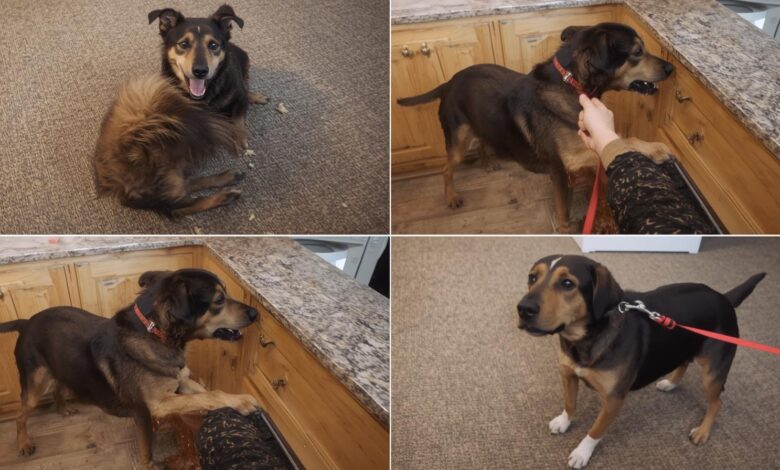
Bad Habit #9: Counter Surfing and Stealing Food
The Counter Surfing Problem
Your dog steals food from counters.
Nothing is safe at their level.
They’ve learned that counters contain rewards.
Counter surfing is self-rewarding behavior. Each successful theft strengthens the habit.
Why dogs counter surf:
- Food smells trigger scavenging instincts
- Previous successful attempts
- Boredom and lack of enrichment
- Hunger or inadequate feeding
- Opportunity and access
Larger breeds are particularly prone because they can reach easily.
Stopping Counter Surfing
Prevention First
Remove all temptation:
- Never leave food on counters
- Push items toward the back
- Clean counters immediately after cooking
- Store food in closed containers
- Keep trash secured
Even one successful theft resets training progress.
The “Leave It” Command
Essential for counter surfing prevention:
- Start with low-value item on floor
- Say “Leave it”
- Cover item with your hand if needed
- Reward when dog backs away
- Gradually increase difficulty
Practice with food on low tables before counters.
Booby Trap Method (Supervised Only)
Create negative associations:
- Stack empty cans on counter edge
- Dog’s attempt knocks them down (startling)
- Unpleasant consequence discourages behavior
- Never use anything harmful
This only works if the dog believes the consequence happens naturally, not from you.
Train an Alternative Behavior
Teach your dog where to be while you cook:
- Mat or bed in kitchen
- “Place” command practice
- Reward staying on mat
- Toss occasional treats to their spot
Give them something rewarding to do instead of surfing.
Address Underlying Hunger
If your dog seems constantly food-focused:
- Evaluate portion sizes with your vet
- Consider more frequent, smaller meals
- Increase dietary fiber for fullness
- Check for medical issues affecting appetite
- Use slow-feeders to extend mealtime
Bad Habit #10: Pulling on the Leash
Understanding Leash Pulling
Walks become wrestling matches.
Your arm aches.
Your dog drags you down the street.
Leash pulling is one of the most common and frustrating bad habits.
Why dogs pull:
- They walk faster than humans naturally
- Exciting smells and sights ahead
- Reinforced behavior (pulling gets them there)
- Excess energy
- Lack of leash training
- Opposition reflex (pressure creates resistance)
According to the Association of Professional Dog Trainers, approximately 75% of dog owners struggle with leash pulling.
Teaching Loose Leash Walking
The Stop-and-Go Method
Simple but requires patience:
- Walk normally
- Stop immediately when leash tightens
- Wait motionless until dog returns to your side
- Praise and resume walking
- Repeat every single time
Your dog learns that pulling stops all forward progress.
The Direction Change Method
Keeps dogs attentive:
- When dog pulls ahead, immediately turn around
- Walk in opposite direction
- No warning or commands
- Reward when dog checks in with you
- Repeat consistently
Dogs learn to pay attention to your direction.
High-Value Rewards
Make staying near you worthwhile:
- Bring favorite treats on walks
- Reward every few steps initially
- Gradually increase distance between rewards
- Use varied reward schedule (keeps dog guessing)
- Verbal praise and excitement matter too
The Right Equipment
Tools can help during training:
- Front-clip harnesses (reduce pulling leverage)
- Head halters (controversial but effective)
- Standard 6-foot leash (no retractables)
- Treat pouch for easy reward access
According to research published in the Journal of Veterinary Behavior (2024), front-clip harnesses reduce pulling force by an average of 62%.
Pre-Walk Exercise
Burn energy before leash time:
- 10-15 minutes of fetch
- Backyard play session
- Mental enrichment games
- Training exercises indoors
Calmer dogs pull less.
Be Consistent
Every walk is a training opportunity:
- Never allow pulling to work
- All family members use same method
- Practice in low-distraction areas first
- Gradually increase difficulty
- Be patient—this takes weeks
Creating a Comprehensive Behavior Modification Plan
The Big Picture Approach
Individual habit fixes are important.
But multiple bad habits often share root causes.
Creating an overall behavior modification plan addresses underlying issues.
Common Root Causes for Multiple Bad Habits:
- Insufficient physical exercise
- Lack of mental stimulation
- Inconsistent training and rules
- Anxiety or stress
- Medical issues
- Inadequate socialization
- Breed-specific needs not met
Building Your Behavior Plan
Step 1: Assessment
List all problematic behaviors and note:
- When they occur
- What triggers them
- How long they’ve existed
- What you’ve tried already
- Which are most problematic
Step 2: Prioritize
Focus on 1-2 behaviors initially:
- Choose most dangerous behaviors first (aggression, running away)
- Or select easiest to fix (builds momentum)
- Don’t overwhelm yourself tackling everything simultaneously
Step 3: Increase Exercise
The foundation of behavior modification:
- Minimum 60-90 minutes daily for most breeds
- Age and breed-appropriate activities
- Mix physical and mental exercise
- Consistency matters more than intensity
A tired dog is a well-behaved dog. This saying exists because it’s true.
Step 4: Establish Routines
Predictability reduces anxiety:
- Same feeding times daily
- Regular walk schedule
- Consistent bedtime routine
- Predictable training sessions
Step 5: Train Basic Commands
Foundation skills support all behavior modification:
- Sit
- Stay
- Come
- Leave it
- Drop it
- Place/mat training
These commands give you tools to interrupt and redirect bad habits.
Step 6: Enrichment Activities
Mental stimulation is as important as physical exercise:
- Puzzle feeders at meals
- Sniff walks (let dog explore at their pace)
- Hide-and-seek with toys or treats
- New environments weekly
- Trick training sessions
- Social interaction with other dogs (if appropriate)
The American Kennel Club recommends at least 30 minutes of mental enrichment daily.
Step 7: Consistency Across Household
Everyone must follow the same rules:
- Family meeting to discuss plan
- Written guidelines if helpful
- Same commands and hand signals
- Same consequences for behavior
- Regular check-ins on progress
Inconsistency confuses dogs and slows progress dramatically.
Step 8: Track Progress
Keep a training journal:
- Date and behavior observed
- Context and triggers
- What intervention you used
- Dog’s response
- Overall improvements
Progress isn’t always linear. Tracking helps you see patterns and celebrate small wins.
Step 9: Professional Help When Needed
Some situations require expert intervention:
- Aggression toward people or animals
- Severe separation anxiety
- Behaviors getting worse despite training
- Medical issues suspected
- You feel overwhelmed or unsafe
Certified Applied Animal Behaviorists and veterinary behaviorists have advanced training in complex cases.
The Role of Positive Reinforcement
Why Positive Methods Work Better
Science overwhelmingly supports positive reinforcement training.
A 2024 meta-analysis in the Journal of Veterinary Behavior reviewed 50 studies and found:
- Positive reinforcement creates lasting behavior change
- Punishment-based methods increase anxiety and aggression
- Dogs trained positively show better problem-solving skills
- The human-animal bond strengthens with positive methods
- Training compliance is higher with reward-based approaches
What Positive Reinforcement Means:
Rewarding desired behaviors increases their frequency.
Simple concept, powerful results.
Types of Rewards:
- Food treats (highest value for most dogs)
- Verbal praise
- Physical affection
- Toys and play
- Life rewards (going outside, leash going on)
- Access to desired activities
Different dogs value different rewards. Experiment to find what motivates your dog most.
Timing Matters
Rewards must come within 2-3 seconds of desired behavior:
- Keep treats readily accessible
- Mark the behavior verbally (“Yes!” or clicker)
- Deliver reward immediately
- Clear association forms quickly
Variable Reinforcement Schedule
Once behavior is established:
- Reward randomly rather than every time
- Keeps dog engaged and trying
- Makes behavior more resistant to extinction
- Similar to how slot machines keep people playing
What to Avoid
Punishment-Based Methods:
These create more problems:
- Increased fear and anxiety
- Aggression toward handler
- Suppressed behavior without learning
- Damaged human-animal bond
- Poor learning outcomes
The American Veterinary Society of Animal Behavior explicitly recommends against punishment-based training methods.
Common Punishment Mistakes:
- Rubbing nose in accidents
- Yelling or hitting
- Shock or prong collars
- Alpha rolls or dominance techniques
- Spray bottles or loud noises
These methods may stop behavior temporarily but don’t teach what to do instead.
Understanding Your Dog’s Unique Needs
Breed-Specific Considerations
Different breeds were developed for specific purposes.
These genetic tendencies influence behavior.
Herding Breeds (Border Collies, Australian Shepherds, Corgis):
- High energy and intelligence
- Need mental challenges daily
- May nip at heels (herding instinct)
- Require extensive exercise
- Excel at dog sports
Sporting Breeds (Retrievers, Spaniels, Pointers):
- Bred for endurance and cooperation
- Love fetch and swimming
- People-oriented and eager to please
- Need significant daily exercise
- Prone to separation anxiety if under-stimulated
Working Breeds (Huskies, Malamutes, Great Pyrenees):
- Independent and strong-willed
- Require jobs or tasks
- High exercise needs
- May be stubborn
- Need firm, consistent training
Terriers (Jack Russells, Bull Terriers, Westies):
- High prey drive
- Energetic and persistent
- May dig and chase
- Vocal and alert
- Require mental stimulation
Toy Breeds (Chihuahuas, Yorkies, Pomeranians):
- Often underestimated in training needs
- Can develop small dog syndrome
- Still need exercise and training
- May be more anxious
- Benefit from confidence-building
Hounds (Beagles, Bassets, Bloodhounds):
- Strong scent drive
- May ignore commands when sniffing
- Can be vocal
- Need secure fencing
- Benefit from scent work activities
Understanding your breed helps you meet their specific needs and prevent behavior problems.
Age-Related Factors
Puppies (8 weeks – 6 months):
- Short attention spans
- Teething and exploring through mouth
- Need frequent potty breaks
- Socialization critical period
- Training sessions should be 5-10 minutes
Adolescents (6 months – 2 years):
- Testing boundaries
- Hormonal changes
- May regress in training
- High energy period
- Require patience and consistency
Adults (2-7 years):
- Settled in personality
- Can focus longer
- Capable of complex training
- May have established bad habits
- Generally easiest to train
Senior dogs (7+ years):
- May develop cognitive decline
- Health issues affect behavior
- Need patience with changing abilities
- May require routine adjustments
- Benefit from mental enrichment
Medical Issues That Cause Behavioral Problems
When Behavior Is Actually Health
Many “bad habits” stem from medical conditions.
Always rule out health issues before assuming behavior is purely training-related.
Common Medical Causes of Behavioral Changes:
Pain and Discomfort:
- Arthritis causing irritability
- Dental disease affecting eating
- Ear infections causing head shaking
- Skin conditions causing scratching
According to the American Animal Hospital Association, approximately 20% of dogs suffer from osteoarthritis, which significantly affects behavior.
Cognitive Dysfunction:
- Disorientation
- Changes in sleep patterns
- House soiling
- Increased anxiety
- Affects 14-35% of dogs over age 8
Thyroid Issues:
- Hypothyroidism linked to aggression
- Weight gain and lethargy
- Skin problems
- Behavioral changes
Gastrointestinal Problems:
- Nausea affecting appetite
- Pain causing reluctance to move
- Dietary sensitivities
- Parasites
Neurological Conditions:
- Seizures
- Compulsive disorders
- Balance issues
- Pain conditions
Sensory Loss:
- Vision loss causing anxiety
- Hearing loss causing startle responses
- Changes in responsiveness
When to See Your Veterinarian
Schedule an appointment if you notice:
- Sudden behavior changes
- Aggression that’s new or worsening
- Excessive licking or self-trauma
- Changes in appetite or elimination
- Lethargy or reluctance to move
- Confusion or disorientation
- Any concerning physical symptoms
A thorough veterinary examination should precede behavior modification for any new problematic behavior.
Tools and Products That Help
Training Essentials
Basic Equipment:
- Treats:
- Small, soft, smelly treats work best
- Cut into pea-sized pieces
- Use high-value treats for difficult training
- Rotate varieties to maintain interest
- Clicker or Marker:
- Marks exact moment of desired behavior
- Creates clear communication
- Speeds up training significantly
- Consistent sound matters
- Leash and Collar:
- 6-foot standard leash
- Properly fitted collar or harness
- No retractable leashes for training
- Front-clip harness for pullers
- Long Line:
- 15-30 foot training leash
- Practice recall in open areas
- Allows freedom while maintaining control
- Essential for distance training
Enrichment Products
Mental Stimulation Toys:
- Puzzle Feeders: Slow eating and engage minds
- Snuffle Mats: Mimic foraging behavior
- Kong Toys: Stuffable, freezable, dishwasher-safe
- Interactive Toys: Electronic or manual puzzle toys
- Treat-Dispensing Balls: Exercise plus rewards
The American Kennel Club estimates that 30 minutes of mental enrichment equals one hour of physical exercise in terms of tiring your dog.
Management Tools
For Preventing Bad Habits:
- Baby gates (limit access)
- Exercise pens (safe confinement)
- Crates (when introduced properly)
- Bitter apple spray (deter chewing)
- White noise machines (anxiety reduction)
- Calming pheromone diffusers
Technology Solutions
Modern Training Aids:
- Pet cameras (monitor behavior when away)
- Automatic treat dispensers
- GPS tracking collars
- Activity monitors
- Training apps
Working with Professional Trainers
When to Hire a Professional
DIY training works for many behavior issues.
But some situations benefit from professional help.
Consider a professional if:
- Your dog shows aggression
- You’ve tried training without success for 4-6 weeks
- Behavior is getting worse
- You feel unsafe or overwhelmed
- Multiple complex behaviors exist
- Your dog has a traumatic background
Types of Dog Training Professionals
Certified Professional Dog Trainer (CPDT-KA):
- Recognized certification
- Evidence-based methods
- Basic obedience and behavior issues
- Find them through the Certification Council for Professional Dog Trainers
Certified Applied Animal Behaviorist (CAAB):
- Advanced degree in animal behavior
- Complex behavioral issues
- Scientific approach
- Board-certified professionals
Veterinary Behaviorist:
- Veterinarian with specialized training
- Can prescribe behavior medications
- Treats medical and behavioral issues
- Board-certified specialists
Choosing the Right Professional:
Ask these questions:
- What certifications do you hold?
- What training methods do you use?
- Do you use positive reinforcement primarily?
- Can you provide references?
- What’s your experience with my dog’s specific issue?
- What’s your training philosophy?
Red flags to avoid:
- Guarantees of specific results
- Punishment-based methods
- Reluctance to explain techniques
- No certifications or education
- Alpha/dominance theory focus
Group Classes vs. Private Sessions
Group Classes:
Benefits:
- More affordable
- Socialization opportunities
- Learn from other dogs
- Peer support for owners
Best for:
- Basic obedience
- Puppy socialization
- General manners
- Dogs comfortable around others
Private Sessions:
Benefits:
- Individualized attention
- Customized training plan
- Work on specific issues
- Flexible scheduling
Best for:
- Aggression or reactivity
- Severe anxiety
- Complex behavior problems
- Dogs who can’t attend group classes
Frequently Asked Questions About Dog Bad Habits
1. How long does it take to break a bad dog habit?
Most bad habits take 4-8 weeks of consistent training to significantly improve.
However, timeline varies based on several factors:
- How long the habit has existed (older habits take longer)
- Consistency of training (daily practice is essential)
- Severity of the behavior
- Dog’s age and temperament
- Whether underlying medical issues exist
Some behaviors like leash pulling may show improvement within days, while compulsive behaviors like tail chasing may take months.
The key is consistency and patience. Every dog learns at their own pace.
2. Can you train an old dog to stop bad habits?
Absolutely yes.
The phrase “you can’t teach an old dog new tricks” is completely false.
Senior dogs can and do learn new behaviors throughout their lives.
However, considerations for older dogs include:
- They may have physical limitations
- Cognitive function may be declining
- Longer-established habits require more time
- Health issues might contribute to behaviors
- Patience and shorter training sessions work better
A 2023 study from the University of Vienna found that senior dogs (8+ years) successfully learned new commands and behaviors with appropriate training methods.
3. Why does my dog only behave badly when I’m not home?
This typically indicates separation anxiety or boredom.
When you’re present, your dog receives stimulation, company, and management.
Alone time removes these factors.
Solutions include:
- Gradually increasing alone time
- Providing engaging toys and puzzles
- Exercise before departures
- Creating positive alone-time associations
- Possible crate training
- Pet cameras to monitor behavior
If destruction only occurs when you leave, separation anxiety is likely. Consult a veterinary behaviorist for severe cases.
4. Should I punish my dog for bad behavior?
No. Punishment is ineffective and harmful.
Research consistently shows punishment-based training:
- Creates fear and anxiety
- Damages the human-dog bond
- May increase aggression
- Suppresses behavior without teaching alternatives
- Leads to worse long-term outcomes
The American Veterinary Society of Animal Behavior explicitly recommends against punishment-based training.
Instead, use positive reinforcement:
- Reward desired behaviors
- Redirect undesired behaviors
- Manage environment to prevent problems
- Address underlying causes
5. Is my dog being stubborn or spiteful?
Neither. Dogs don’t think like humans.
They don’t plan revenge or deliberately disobey out of spite.
What looks like stubbornness is usually:
- Confusion about what you want
- Insufficient training
- Lack of motivation (rewards aren’t valuable enough)
- Distractions in environment
- Medical issues causing discomfort
- Breed traits (independent breeds need different approaches)
Reframe “stubborn” as “needs clearer communication or better motivation.”
6. How do I stop multiple bad habits at once?
Don’t try to fix everything simultaneously.
Focus on 1-2 priority behaviors initially.
Here’s why:
- You’ll feel less overwhelmed
- Dog receives clearer communication
- Success builds momentum
- You can maintain consistency
Choose either:
- Most dangerous behaviors first (aggression, escaping)
- Easiest behaviors first (builds confidence)
Many bad habits share root causes (excess energy, anxiety, boredom). Addressing these foundations often improves multiple behaviors simultaneously.
7. Will neutering or spaying fix behavioral problems?
It depends on the behavior.
Neutering/spaying can help with:
- Roaming and escaping
- Marking behavior
- Some types of aggression
- Mounting behavior
It typically doesn’t fix:
- Jumping, chewing, barking
- Anxiety-based behaviors
- Learned behaviors
- Attention-seeking behaviors
According to the American Veterinary Medical Association, spaying/neutering should be one component of behavior management, not the sole solution.
Discuss timing and expectations with your veterinarian.
8. My dog knows the command but doesn’t listen. Why?
Several possible reasons:
Lack of generalization: Dogs don’t automatically understand that “sit” in the kitchen means the same thing in the park. Practice commands in multiple locations.
Insufficient proofing: Your dog needs practice with distractions gradually introduced.
Low motivation: The reward isn’t valuable enough in that context. Use higher-value treats in challenging situations.
Unclear communication: Your timing, tone, or body language may be confusing.
Medical issues: Pain or hearing loss affects responsiveness.
Adolescence: Young dogs (6-18 months) go through a boundary-testing phase.
9. Are some breeds impossible to train?
No breed is impossible to train.
However, breeds differ in:
- Trainability (how quickly they learn)
- Motivation (what drives them)
- Independence (how much they want to please)
- Energy levels
- Attention spans
So-called “stubborn” breeds like Huskies, Beagles, or Terriers simply have different motivations.
They were bred to work independently, so they need:
- Higher value rewards
- Shorter, more engaging sessions
- Activities that satisfy breed instincts
- More patience and creativity
Every dog can learn. The approach must match the breed.
10. When should I consider medication for behavior problems?
Behavior medication may help when:
- Severe anxiety prevents learning
- Compulsive behaviors don’t respond to training
- Aggression puts people at risk
- Quality of life is significantly impaired
- Veterinary behaviorist recommends it
Important points about behavior medication:
- It’s not a quick fix or replacement for training
- Works best combined with behavior modification
- Requires veterinary supervision
- May take weeks to show effects
- Side effects should be monitored
Only veterinarians can prescribe behavior medications. Veterinary behaviorists specialize in these cases.
Medication can give anxious dogs the calm they need to learn new coping strategies.
Bad habits frustrate pet parents.
But they’re all solvable with patience, consistency, and the right approach.
Remember these key principles:
Address Root Causes: Most bad habits stem from insufficient exercise, lack of mental stimulation, anxiety, or medical issues. Fix the foundation first.
Consistency Is Everything: Every family member must follow the same rules and training methods. Inconsistency confuses dogs and extends training time.
Positive Reinforcement Works: Science overwhelmingly supports reward-based training. Punishment creates more problems than it solves.
Prevention Is Easier Than Correction: Manage your dog’s environment to prevent bad habits from forming or continuing.
Be Patient: Behavior change takes time. Progress isn’t linear. Celebrate small victories along the way.
Professional Help Is Available: Don’t struggle alone if you’re overwhelmed. Certified trainers and veterinary behaviorists can provide expert guidance.
Your dog isn’t trying to To get on your last nerve
They’re trying to communicate needs and navigate a human world that doesn’t always make sense to them.
With understanding, training, and commitment, you can transform bad habits into good behavior.
The result? A happier dog and a stronger bond between you.
Every dog deserves patient, positive training.
And every pet parent deserves the joy of a well-behaved companion.
Start today with one small change. Your dog is counting on you.