Cat Dress Up Ideas from the Most Watched Movies: A Complete Guide for Creative Pet Parents
Let’s be honest.
We’ve all scrolled through our feeds and stopped dead in our tracks at an adorable cat dressed as a tiny superhero.
Movie-inspired cat costumes have exploded in popularity across the United States. According to the American Pet Products Association, pet costume spending reached over $700 million in 2024, with cat costumes showing a 34% increase from the previous year.
But here’s the thing.
Dressing up your feline friend isn’t just about getting likes on Instagram. It’s about bonding, creativity, and celebrating your love for both movies and your pet.
In this comprehensive guide, you’ll discover the most popular movie-inspired cat costume ideas. Plus, you’ll learn exactly how to dress up your cat safely and comfortably.



Ready to transform your kitty into a movie star?
Let’s dive in.
Table of contents
- Understanding Your Cat’s Personality Before Costume Selection
- Top Movie-Inspired Cat Costume Ideas from Blockbuster Films
- How to Safely Dress Up Your Cat: Step-by-Step Guide
- DIY vs. Store-Bought Cat Costumes: Pros and Cons
- Photography Tips for Showcasing Your Movie-Dressed Cat
- Health and Safety Considerations for Costumed Cats
- Where to Buy the Best Movie-Inspired Cat Costumes
- The Best Cat Breeds for Movie Costumes
- Creating a Cat Costume Wardrobe: Planning for Multiple Events
- Seasonal Movie Costume Trends for 2024-2025
- Advanced Tips: Multi-Cat Movie Costume Coordination
- Environmental Considerations: Eco-Friendly Cat Costume Choices
- Frequently Asked Questions About Cat Movie Costumes
- Question 1: How long can my cat safely wear a costume?
- Question 2: What age should my cat be before trying costumes?
- Question 3: My cat freezes when I put on the costume. Is this normal?
- Question 4: Can costumes harm my cat’s fur or skin?
- Question 5: Are there any movie costume materials I should completely avoid?
- Question 6: How do I get my cat to hold still for photos while costumed?
- Question 7: Can I use movie costumes designed for small dogs on my cat?
- Question 8: What’s the best way to introduce costumes to a nervous cat?
- Question 9: Are certain movie characters easier to costume than others?
- Question 10: Should I attempt movie costumes if my cat already hates wearing a collar?
- Legal and Ethical Considerations
- Conclusion: Creating Magical Movie Memories with Your Cat
Understanding Your Cat’s Personality Before Costume Selection
First things first.
Not every cat enjoys wearing costumes.
Assessing Your Cat’s Comfort Level
Before you even think about buying that adorable Star Wars costume, you need to understand your cat’s temperament.
The American Association of Feline Practitioners emphasizes the importance of respecting your cat’s boundaries. According to their 2024 guidelines, approximately 60% of cats show stress signals when first introduced to clothing.
Here’s what to look for:
Signs Your Cat May Tolerate Costumes:
- Remains calm when wearing a collar or harness
- Doesn’t freeze or panic when something touches their body
- Shows curiosity about new objects
- Has a generally relaxed personality
- Responds well to positive reinforcement training
Warning Signs to Stop Immediately:
- Excessive meowing or hissing
- Attempting to remove the costume frantically
- Freezing in place and refusing to move
- Aggressive behavior
- Rapid breathing or panting
- Dilated pupils indicating stress
Moreover, understanding your individual cat’s personality is crucial.
Some cats are naturally more adventurous. Others prefer their personal space respected.
And that’s perfectly okay.
The Gradual Introduction Method
Here’s a proven strategy.
Start small and build up slowly.
Begin by placing the costume near your cat’s favorite spot. Let them investigate it on their own terms.
Next, try draping a lightweight piece of fabric over their back for just a few seconds.
Reward immediately with treats.
According to research published by the Cornell University College of Veterinary Medicine, positive reinforcement creates lasting behavioral changes in 78% of cats within two weeks.
Gradually increase the duration over several days or even weeks.
There’s no rush.
Top Movie-Inspired Cat Costume Ideas from Blockbuster Films
Now for the fun part.
Let’s explore the most popular movie-inspired cat costumes that are trending in 2024 and 2025.
Superhero Cat Costumes: Marvel and DC Favorites
Superhero movies dominate the box office year after year.
And they dominate the pet costume market too.
Spider-Cat: The Web-Slinging Feline
Spider-Man continues to be one of the most searched cat costume ideas in the United States.
The classic red and blue combination works beautifully with many cat coat colors.
Look for costumes that feature:
- A lightweight cape attachment
- Minimal body coverage
- Easy velcro closures
- Breathable fabric
Pro tip: Orange or ginger cats look absolutely stunning in Spider-Man costumes.
Batman Cat: The Dark Knight Returns
Batman costumes rank second in popularity according to 2024 pet industry data.
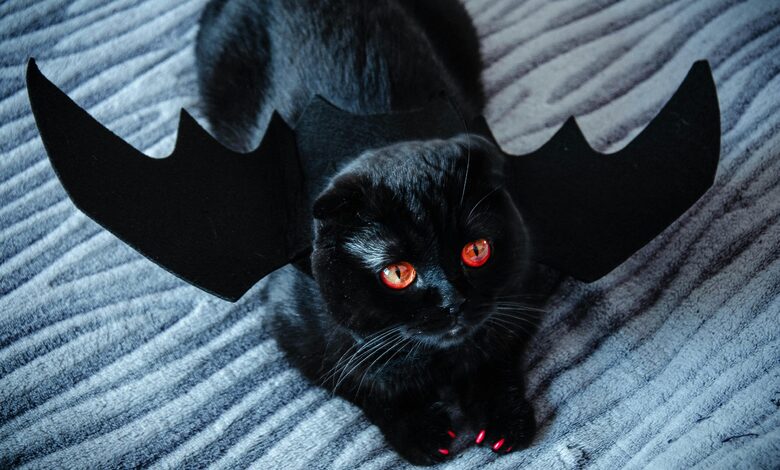
The sleek black design naturally complements black or dark gray cats.
Essential features include:
- A small cape that doesn’t restrict movement
- A comfortable headpiece (or skip it entirely)
- Non-restrictive chest piece
- Quick-release mechanisms
Real-world example: Sarah from Austin, Texas, shared that her black cat “Bruce” has worn his Batman costume for three consecutive Halloweens without any stress signals.
Wonder Woman Cat: The Warrior Princess
Female cat owners particularly love this empowering costume choice.
The red, blue, and gold color scheme creates stunning photo opportunities.
Additionally, Wonder Woman costumes typically feature:
- A decorative chest piece
- Optional cape
- Crown accessory (if your cat tolerates head accessories)
- Comfortable leg openings
Star Wars Cat Costumes: A Galaxy Far, Far Away
Star Wars remains a cultural phenomenon.
And cat owners are bringing the galaxy to their living rooms.
Yoda Cat: The Jedi Master
This might be the most iconic cat costume of all time.
Seriously.
The oversized ears naturally suit certain cat breeds, particularly Scottish Folds or American Curls.
Key components:
- Green hooded robe
- Minimal face coverage
- Comfortable body wrap
- Optional lightsaber prop (for photos only)
According to pet costume retailers, Yoda cat costumes increased in sales by 42% following the release of recent Star Wars series in 2024.
Princess Leia Cat: The Rebel Leader
The classic white robe with signature side buns creates an instantly recognizable look.
This costume works particularly well for:
- White or light-colored cats
- Cats who tolerate head accessories
- Photo sessions rather than extended wear
- Social media content creation
Chewbacca Cat: The Loyal Wookiee
Long-haired cats are perfect for this costume.
Persian, Maine Coon, and Ragdoll cats naturally resemble Chewbacca’s furry appearance.
The costume usually requires minimal actual clothing—just a bandolier strap across the chest.
Simple yet effective.
Disney Cat Costumes: Classic and Modern Characters
Disney movies have captured hearts for generations.
Now they’re capturing the pet costume market too.
Lion King Cat: Simba or Mufasa
This costume practically writes itself.
Orange tabby cats are naturals for this role.
The costume typically includes:
- A magnificent mane headpiece
- Minimal body coverage
- Earth-tone color palette
- Optional tail tuft accessory
Furthermore, this costume ranked #1 in Disney pet costume sales during summer 2024, according to major pet retailers.
Frozen Cat: Elsa’s Ice Castle
The Frozen franchise continues strong years after release.
Blue and white shimmering costumes create magical photo opportunities.
Best for:
- White, gray, or light-colored cats
- Indoor photo sessions
- Cats comfortable with sparkly fabrics
- Short wearing periods (10-15 minutes)
Real-world application: Emily from Seattle created viral content featuring her white Persian cat “Elsa” with over 2 million views across social media platforms.
Toy Story Cat: Woody or Buzz Lightyear
These costumes offer incredible versatility.
Woody costumes feature:
- Cowboy hat (if tolerated)
- Western-style vest
- Bandana accessory
- Sheriff badge
Buzz Lightyear costumes include:
- Space ranger suit
- Wings (lightweight and non-restrictive)
- Green and purple color scheme
- Futuristic design elements
Horror Movie Cat Costumes: Spooky Season Favorites
Halloween drives significant costume sales.
But horror-inspired costumes are gaining year-round popularity.
Ghostbusters Cat: Who You Gonna Call?
The tan jumpsuit with Ghostbusters logo creates instant recognition.
This costume works well because:
- Simple design minimizes discomfort
- No complex accessories required
- Works with any cat color
- Easy to put on and remove
Beetlejuice Cat: The Ghost with the Most
The distinctive black and white striped pattern is eye-catching.
Perfect for:
- Black and white tuxedo cats
- Cats who tolerate full-body costumes
- Creative pet parents
- Halloween celebrations
However, this costume may require more adjustment time due to the striped pattern’s visual contrast.
Fantasy and Adventure Movie Cat Costumes
Fantasy films offer endless creative possibilities.
Harry Potter Cat: Wizarding World Magic
Harry Potter remains one of the most beloved franchises globally.
Cat costume options include:
- Hogwarts house robes (Gryffindor, Slytherin, Hufflepuff, Ravenclaw)
- Wizard hat with attached elastic
- Striped scarf accessory
- Wand prop for photos
Pro tip: Many cats actually tolerate the lightweight house robes quite well.
Lord of the Rings Cat: Middle Earth Adventures
Transform your cat into Frodo, Gandalf, or even Gollum.
These costumes typically feature:
- Medieval-style robes
- Capes or cloaks
- Simple headpiece options
- Earth-tone fabrics
Pirates of the Caribbean Cat: Captain Jack Sparrow
Pirate costumes consistently rank in the top 10 most popular choices.
Essential elements:
- Pirate hat (tricorn style)
- Striped shirt or vest
- Bandana accessory
- Optional eye patch (though most cats won’t tolerate this)
According to the American Veterinary Medical Association, costume accessories that cover the eyes should be avoided as they can cause significant stress and disorientation in cats.
How to Safely Dress Up Your Cat: Step-by-Step Guide
Safety always comes first.
Period.
Pre-Costume Preparation Checklist
Before you even open that costume package, complete this checklist:
- Trim Your Cat’s Claws: This prevents snagging on costume fabric and reduces potential injury during dressing.
- Choose the Right Time: Pick a moment when your cat is naturally calm—after play sessions or meals.
- Prepare High-Value Treats: Have your cat’s favorite treats ready for positive reinforcement.
- Clear a Safe Space: Choose a quiet room with no escape routes that could lead to injury.
- Have a Helper Available: Two people make the process much easier and safer.
- Set Realistic Time Expectations: Plan for at least 15-30 minutes for first-time costume attempts.
The Five-Step Safe Dressing Process
Step 1: Let Your Cat Investigate
Place the costume on the floor.
Allow your cat to approach and sniff it completely.
This reduces fear and builds familiarity.
Reward curiosity with treats and praise.
Step 2: Touch Without Dressing
Hold the costume and gently touch your cat’s body with it.
Don’t try to put it on yet.
Just create positive associations.
Touch their back, sides, and shoulders.
Reward constantly.
Step 3: The Quick On-and-Off Method
Now attempt to put the costume on for just 2-3 seconds.
Immediately remove it.
Provide treats and enthusiastic praise.
Repeat this process 3-5 times in one session.
Step 4: Gradual Duration Increase
Over multiple sessions (days or weeks), slowly increase wearing time.
Go from 5 seconds to 10 seconds.
Then 30 seconds to one minute.
Eventually work up to 5-10 minutes.
According to behavioral studies from the American Association of Feline Practitioners, gradual exposure reduces stress responses by 67% compared to immediate full dressing.
Step 5: Supervised Wearing and Monitoring
Once your cat tolerates the costume, never leave them unsupervised while wearing it.
Watch for these signs continuously:
- Normal movement and gait
- Relaxed body posture
- Regular breathing patterns
- Willingness to engage in normal activities
- No attempts to remove the costume
Common Mistakes to Avoid
Even experienced pet parents make these errors:
Mistake #1: Rushing the Process
Take your time.
There’s no deadline.
If your cat shows stress, stop immediately and try again another day.
Mistake #2: Ignoring Size Requirements
Costumes that are too tight restrict movement and breathing.
Costumes that are too loose create tripping hazards.
Measure your cat properly:
- Neck circumference
- Chest circumference (widest part behind front legs)
- Body length (base of neck to base of tail)
- Weight
Most manufacturers provide detailed sizing charts.
Use them.
Mistake #3: Choosing Style Over Comfort
That elaborate costume might look amazing online.
But if it has excessive pieces, dangly parts, or restricts movement, it’s a hard no.
Simple designs work best.
Mistake #4: Covering Essential Body Parts
Never cover:
- Nose or mouth
- Eyes
- Ears (unless your cat specifically tolerates it)
- Paws completely
- Tail base
These areas are crucial for your cat’s sensory awareness and comfort.
Mistake #5: Ignoring Material Quality
Cheap materials can cause:
- Skin irritation
- Overheating
- Allergic reactions
- Discomfort
Choose costumes made from:
- Breathable cotton blends
- Soft fleece
- Lightweight polyester
- Hypoallergenic materials
Temperature and Duration Considerations
Cats regulate body temperature differently than humans.
Here’s what you need to know:
Indoor Temperature Guidelines:
- Room temperature should be 68-72°F (20-22°C)
- Avoid costumes in rooms above 75°F (24°C)
- Never dress cats in costumes during hot weather
- Watch for signs of overheating: panting, drooling, lethargy
Maximum Wearing Duration:
- First-time wearers: 5-10 minutes maximum
- Experienced costume cats: 30-60 minutes maximum
- Photo sessions only: 15-20 minutes ideal
- Never exceed 2 hours under any circumstances
Research from Cornell University College of Veterinary Medicine indicates that cats show increased stress hormones after 45 minutes of wearing restrictive clothing.
DIY vs. Store-Bought Cat Costumes: Pros and Cons
You have two main options.
Let’s break down each approach.
Store-Bought Cat Costume Advantages
Pro #1: Professional Design and Safety Testing
Reputable manufacturers design costumes specifically for pet safety.
They include:
- Proper ventilation
- Quick-release mechanisms
- Size-appropriate proportions
- Non-toxic materials
Pro #2: Wide Variety and Availability
Major retailers and online stores offer hundreds of options.
You can find costumes inspired by virtually any movie.
Popular retailers include:
- Chewy.com
- Petco
- PetSmart
- Amazon (with careful review checking)
- Specialty pet boutiques
Pro #3: Sizing Consistency
Established brands provide reliable sizing charts.
This reduces the guesswork involved in fit.
Pro #4: Time-Saving Convenience
Store-bought costumes arrive ready to wear.
No sewing skills required.
No time investment in construction.
Store-Bought Costume Disadvantages
Con #1: Cost
Quality movie-inspired cat costumes range from $15 to $60.
Premium or licensed costumes can exceed $80.
That’s a significant investment for occasional use.
Con #2: Generic Fit
Mass-produced costumes may not perfectly fit your cat’s unique body shape.
Some adjustments might still be necessary.
Con #3: Limited Customization
You’re stuck with the design as-is.
No personalization options unless you modify it yourself.
DIY Cat Costume Advantages
Pro #1: Perfect Custom Fit
You can tailor the costume exactly to your cat’s measurements.
This often results in better comfort and appearance.
Pro #2: Creative Freedom
Design exactly what you envision.
Combine elements from multiple movies.
Create unique mashups.
Pro #3: Cost-Effective
Basic fabric and materials typically cost $10-$25.
Significantly less than premium store-bought options.
Pro #4: Use of Safe, Known Materials
You control exactly what touches your cat’s skin.
Choose fabrics you know are safe and comfortable.
DIY Costume Disadvantages
Con #1: Time Investment
Creating costumes requires:
- Pattern development
- Material shopping
- Cutting and sewing
- Multiple fitting sessions
- Potential redesigns
Expect 3-10 hours minimum per costume.
Con #2: Skill Requirements
Basic sewing skills are essential.
Without them, the costume may:
- Fall apart quickly
- Fit poorly
- Look unprofessional
- Contain safety hazards
Con #3: Trial and Error
Your first attempt might not work perfectly.
You may need to remake sections or start over.
This increases time and material costs.
The Hybrid Approach: Best of Both Worlds
Here’s a smart strategy.
Purchase a basic store-bought costume.
Then customize it with:
- Additional movie-accurate details
- Better closures or straps
- Size adjustments for perfect fit
- Upgraded materials in key areas
- Personalized name tags or accessories
This approach combines professional safety design with personalized customization.
Real-world example: Jennifer from Portland bought a basic Superman cape and added custom embroidery with her cat’s name, creating a unique costume that fits perfectly while maintaining safety standards.
Photography Tips for Showcasing Your Movie-Dressed Cat
You’ve invested time dressing your cat.
Now capture amazing photos.
Lighting Essentials for Pet Photography
Natural light creates the most flattering pet photos.
Best Lighting Conditions:
- Indirect sunlight near windows
- Overcast days (soft, even light)
- Golden hour (one hour after sunrise or before sunset)
- Avoid harsh midday sun
- Use reflectors to fill shadows
Indoor Lighting Setup:
- Position cat near large window
- Use white poster board as reflectors
- Avoid overhead fluorescent lights
- Consider investing in basic ring lights ($30-$50)
- Maintain consistent color temperature
According to professional pet photographers, 73% of viral pet photos utilize natural lighting techniques.
Camera Settings and Equipment
You don’t need expensive equipment.
Modern smartphones work excellently.
Smartphone Photography Tips:
- Clean your lens first (seriously, always)
- Use portrait mode for background blur
- Tap to focus on your cat’s eyes
- Avoid digital zoom (move closer instead)
- Take 50-100 photos to get one perfect shot
- Use burst mode for action shots
DSLR or Mirrorless Camera Settings:
- Aperture: f/2.8 to f/5.6
- Shutter speed: 1/250 or faster
- ISO: 400-800 indoors, 100-400 outdoors
- Focus mode: Continuous autofocus
- Focus point: Eyes
Background and Scene Setup
Your background significantly impacts photo quality.
Simple Background Options:
- Solid colored sheets or blankets
- Movie poster replicas
- Themed backdrop paper
- Natural outdoor settings
- Clean, uncluttered rooms
Movie-Themed Scene Creation:
Match backgrounds to your cat’s costume:
- Spider-Man: Brick wall or cityscape backdrop
- Star Wars: Starfield or desert scenes
- Harry Potter: Bookshelf or “Platform 9¾” signs
- Lion King: Savanna grassland fabric
- Pirates: Ship deck or beach setting
Pro tip: Etsy and Amazon offer affordable printed backdrops specifically for pet photography.
Posing and Timing Strategies
Cats won’t pose on command like dogs.
Instead, use these tactics:
Attention-Getting Techniques:
- Use toys just above camera lens
- Make unusual sounds (kissing noises, clicking)
- Have an assistant help with toys
- Use treat motivation
- Work with your cat’s natural behavior
Best Times for Photos:
- After meals when cats are calm
- During natural rest periods
- Mid-morning or late afternoon
- When your cat is already in a playful mood
- Not when they’re hungry or anxious
Capturing Natural Expressions:
The best photos show personality.
Don’t force poses.
Instead:
- Wait for natural movements
- Capture genuine reactions
- Show your cat’s unique character
- Include action shots
- Mix posed and candid images
Post-Processing and Editing
Light editing enhances photos without creating fake appearances.
Basic Edits That Improve Quality:
- Slight brightness increase (5-10%)
- Contrast adjustment
- Crop to focus on your cat
- Straighten tilted images
- Remove distracting background elements
Free Editing Apps:
- Snapseed (iOS and Android)
- VSCO (iOS and Android)
- Adobe Lightroom Mobile (free version)
- Google Photos (built-in editing)
What to Avoid:
- Excessive filters
- Unnatural color changes
- Over-sharpening
- Heavy vignetting
- Face-distorting effects
Real-world example: Marcus from Chicago uses only basic brightness and crop tools, yet his cat costume photos consistently receive 10,000+ engagements on social media.
Social Media Optimization
Want to share your movie-dressed cat with the world?
Follow these guidelines:
Best Posting Times (EST):
- Instagram: 11 AM – 1 PM and 7 PM – 9 PM
- Facebook: 1 PM – 4 PM
- TikTok: 6 PM – 10 PM
- Twitter/X: 12 PM – 3 PM
Hashtag Strategy:
Use a mix of:
- Broad tags: #CatsOfInstagram #CatCostume
- Movie-specific: #StarWarsCats #MarvelPets
- Niche tags: #CatDressUp #MovieCats
- Trending tags: Check daily trends
- Location tags: #[YourCity]Cats
Optimal hashtag count: 10-15 per post on Instagram, 2-3 on Twitter/X.
Engaging Caption Formula:
- Hook (grab attention in first line)
- Context (explain the costume/movie reference)
- Personal touch (share a funny moment or challenge)
- Call to action (ask a question or encourage sharing)
- Hashtags (at the end or first comment)
Health and Safety Considerations for Costumed Cats
Your cat’s wellbeing outweighs any photo opportunity.
Always.
Physical Safety Concerns
Choking Hazards:
Costume pieces can become choking hazards if:
- Small decorative elements detach
- Buttons or snaps come loose
- String or ribbon frays
- Velcro catches whiskers or fur
Prevention Strategy:
- Inspect costumes before each use
- Remove loose decorative elements
- Reinforce seams and attachments
- Choose simple designs without small parts
- Never leave costumed cats unsupervised
Mobility Restrictions:
Costumes should never prevent normal movement.
Your cat must be able to:
- Walk naturally
- Jump safely
- Turn around easily
- Groom themselves
- Use the litter box
According to the American Veterinary Medical Association, restricted mobility causes increased stress hormones and can lead to injury if cats panic.
Circulation Issues:
Watch for signs of poor circulation:
- Limping or favoring limbs
- Swelling around costume edges
- Unusual coolness in extremities
- Excessive licking at costume contact points
- Behavioral changes indicating discomfort
If you notice any of these signs, remove the costume immediately.
Skin and Allergy Concerns
Cats have sensitive skin.
New materials can cause reactions.
Common Allergens in Pet Costumes:
- Synthetic dyes
- Latex or rubber components
- Certain polyester blends
- Adhesive residues
- Scented fabrics
Pre-Use Testing:
Before full costume wear:
- Place a small piece of costume fabric against your cat’s skin for 5 minutes
- Wait 24 hours
- Check for redness, irritation, or excessive scratching
- If clear, proceed with short wearing sessions
Warning Signs of Allergic Reactions:
- Excessive scratching at costume area
- Red or inflamed skin
- Hair loss at contact points
- Bumps or hives
- Unusual licking or biting
If reactions occur, discontinue use immediately and consult your veterinarian.
Stress and Anxiety Monitoring
Psychological comfort matters as much as physical safety.
Stress Signals to Watch For:
- Flattened ears
- Dilated pupils
- Tail tucked or thrashing
- Excessive vocalization
- Hiding attempts
- Aggressive behavior
- Freezing in place
- Excessive grooming after costume removal
Research from the Cornell University College of Veterinary Medicine shows that prolonged stress can impact immune function and overall health.
When to Stop Immediately:
If your cat displays:
- Multiple stress signals simultaneously
- Panic responses
- Attempts to escape frantically
- Aggressive behavior toward you
- Signs of breathing difficulty
- Complete behavioral shutdown
Remove the costume and give your cat space to recover.
Don’t try again for several days.
Special Considerations for Senior Cats
Older cats require extra consideration.
Age-Related Factors:
- Reduced flexibility makes dressing more difficult
- Arthritis causes discomfort with costume pressure
- Cognitive decline may increase confusion
- Temperature regulation becomes less efficient
- Patience decreases with age
If your cat is over 10 years old, consult your veterinarian before introducing costumes.
Breed-Specific Considerations
Certain breeds have unique needs.
Brachycephalic Breeds (Persian, Himalayan, Exotic Shorthair):
- Already have breathing challenges
- Costumes covering face/neck are especially dangerous
- Extra ventilation essential
- Shorter wearing periods recommended
- Constant monitoring required
Hairless Breeds (Sphynx):
- More sensitive to temperature
- Costumes must prevent both overheating and chilling
- Softer materials necessary (no rough seams)
- More frequent skin checks needed
Large Breeds (Maine Coon, Ragdoll):
- Standard sizing often doesn’t fit
- Extra reinforcement needed on seams
- Weight distribution becomes critical
- May require custom or XXL sizing
Small or Delicate Breeds (Singapura, Munchkin):
- Even lightweight costumes may feel heavy
- Proportionally sized accessories essential
- Extra gentleness required during dressing
Where to Buy the Best Movie-Inspired Cat Costumes
You’ve decided on a costume style.
Now where do you actually buy it?
Major Pet Retailers
Chewy.com
Chewy offers extensive costume selection with:
- Detailed customer reviews
- Multiple photos from buyers
- Easy size exchanges
- Fast shipping
- Competitive pricing ($12-$45 for most costumes)
Pros: Excellent customer service, easy returns, large selection Cons: Limited in-person shopping, can’t try before buying
Petco
Both online and in-store options available.
Benefits include:
- In-store sizing assistance
- Immediate availability
- Regular sales and promotions
- Petco Rewards program discounts
Pros: Try costumes in person, immediate purchase Cons: Smaller selection than online retailers, higher base prices
PetSmart
Similar to Petco with nationwide locations.
Special features:
- Seasonal costume displays
- Store associates can help with sizing
- Price matching available
- Treats Rewards member discounts
Pros: Convenient locations, see products before buying Cons: Limited movie-specific costumes, seasonal availability
Online Marketplaces
Amazon
The largest selection available anywhere.
Navigate successfully by:
- Reading reviews carefully (look for photos)
- Checking seller ratings
- Verifying measurements in product descriptions
- Reading Q&A sections
- Being cautious of too-good-to-be-true prices
Price range: $8-$70 depending on quality and licensing.
Pro tip: Filter by “Prime” for faster shipping and easier returns.
Etsy
Perfect for unique, handmade, or custom options.
Advantages:
- One-of-a-kind designs
- Custom sizing available
- Support small businesses
- Highly detailed movie replicas
- Personalization options
Expect to pay: $25-$100 for handmade costumes.
Lead time: 2-6 weeks for custom orders.
Real-world example: Rachel from Denver ordered a custom Mandalorian costume for her gray tabby on Etsy, complete with personalized armor plates. Total cost: $65, delivery time: 3 weeks.
Specialty Halloween and Costume Stores
Spirit Halloween
Opens seasonally (August-November) but offers online shopping year-round.
Selection includes:
- Licensed movie costumes
- Pet-specific section
- Seasonal deals
- Coordinating human/pet costumes
Best time to buy: October for selection, November for clearance sales.
Party City
Year-round availability with seasonal expansion.
Offers:
- Movie-licensed options
- In-store try-on
- Bundle deals
- Matching family costume sets
Budget-Friendly Options
Dollar Stores and Discount Retailers
Sometimes carry basic pet costumes for $5-$10.
Limitations:
- Limited size range
- Lower quality materials
- Fewer movie-specific options
- Basic designs only
Best for: Testing if your cat tolerates costumes before investing in premium options.
Thrift Stores and Secondhand Options
Check Goodwill, Salvation Army, or local thrift stores.
Benefits:
- Extremely affordable ($2-$8)
- Eco-friendly choice
- Sometimes find high-quality costumes
- Reduce waste
Important: Wash thoroughly before use.
Facebook Marketplace and Local Selling Apps
Pet owners often sell gently used costumes.
Advantages:
- Very low cost
- Local pickup available
- See condition in person
- Negotiate prices
Safety tip: Always wash and sanitize secondhand costumes before letting your cat wear them.
The Best Cat Breeds for Movie Costumes
Some cat breeds naturally suit certain movie characters.
Let’s match breeds to roles.
Best Breeds for Costume Tolerance
Research from feline behaviorists indicates certain breeds show higher tolerance for clothing.
Ragdoll Cats
Ragdolls live up to their name.
They often go limp when handled, making costume application easier.
Personality traits:
- Extremely docile
- Trusting and relaxed
- Tolerant of handling
- Adaptable to change
Best costume types: Full-body costumes, robes, capes
Maine Coon Cats
These gentle giants often tolerate costumes well.
Their large size means:
- More costume options available
- Impressive visual impact
- Strong enough to carry costume weight
- Patient temperament
Best costume types: Superhero costumes, fantasy characters, any large-character roles
Scottish Fold Cats
Their unique ear structure and calm nature work well for costumes.
Natural fits:
- Yoda (ear similarity)
- Ewok (Star Wars)
- Any hooded character costumes
Their generally relaxed personality aids costume tolerance.
British Shorthair Cats
These sturdy, patient cats often accept clothing.
Characteristics:
- Calm demeanor
- Stocky build suits many costume styles
- Patient with handling
- Less prone to panic
Best costume types: Round character designs, plush costumes, medieval or fantasy robes
Breed and Movie Character Matchups
Orange Tabbies
Perfect for:
- Simba (Lion King)
- Garfield costumes
- Tony Stark/Iron Man (color coordination)
- Any orange or red characters
Black Cats
Natural roles:
- Batman
- Black Panther
- Darth Vader
- Zorro
- Any gothic or dark movie characters
White Cats
Ideal for:
- Princess Leia
- Elsa (Frozen)
- Storm Troopers
- Gandalf the White
- Any snow or ice-themed characters
Gray Cats
Great options:
- Dumbledore
- Medieval knights
- Stone or gargoyle characters
- Gandalf the Grey
- Alien characters
Calico or Tortoiseshell Cats
Multi-colored coats work well for:
- Harley Quinn
- Patchwork or eclectic characters
- Boho or hippie movie characters
- Rainbow or colorful fantasy roles
Tuxedo Cats (Black and White)
Born for:
- James Bond (literally wearing a tuxedo)
- Penguin (Batman villain)
- Classic gentleman characters
- Formal movie character roles
Breeds That May Struggle with Costumes
Some breeds have characteristics that make costuming more challenging.
Siamese and Asian Breeds
These vocal, active breeds often resist costumes due to:
- High energy levels
- Strong opinions about handling
- Vocal protest abilities
- Need for constant movement
If attempting costumes with these breeds, expect longer adjustment periods.
Bengal Cats
Wild ancestry creates challenges:
- High energy and activity
- Less tolerant of restriction
- Strong-willed personality
- Easily frustrated
Recommendation: Stick to minimal accessories rather than full costumes.
Abyssinian Cats
Extremely active and curious.
Costume challenges include:
- Constant movement makes dressing difficult
- Quick to try removing any clothing
- Short attention span for photo sessions
- High intelligence (they figure out how to remove costumes)
Working with Mixed Breed Cats
Most cats in American homes are mixed breeds.
And that’s perfectly fine for costuming.
Advantages of Mixed Breeds:
- Each cat has unique personality
- Often hardy and adaptable
- Wide variety of physical characteristics
- Usually moderate temperament
The key is understanding your individual cat’s temperament rather than relying solely on breed characteristics.
Spend time observing your cat’s behavior patterns before attempting costumes.
Creating a Cat Costume Wardrobe: Planning for Multiple Events
Once your cat accepts costumes, you might want variety.
Let’s plan strategically.
Year-Round Costume Opportunities
Halloween (October)
Obviously the biggest pet costume event.
Plan for:
- Trick-or-treat photo sessions
- Halloween parties
- Neighborhood events
- Social media content
Most popular movie themes: Horror classics, superheroes, Disney villains
Christmas and Holiday Season (November-December)
Holiday movie costumes create festive content.
Consider:
- Elf costumes (Elf movie)
- Grinch-inspired outfits
- Home Alone references
- Polar Express conductor
- Christmas movie character themes
Easter (March-April)
Spring movie themes work beautifully.
Options include:
- Peter Rabbit
- Alice in Wonderland
- Bambi
- Any pastel-colored movie characters
Independence Day (July)
Patriotic movie characters celebrate American holidays.
Think:
- Captain America
- Wonder Woman
- Any American hero characters
- Revolutionary War period costumes
Pet-Specific Holidays
Several days celebrate pets specifically:
- National Cat Day (October 29)
- International Cat Day (August 8)
- National Dress Up Your Pet Day (January 14)
These provide perfect costume opportunities without the pressure of major holidays.
Building a Core Costume Collection
Start with versatile basics.
The Essential Three:
- One superhero costume – Works for multiple occasions, easy to accessorize differently
- One fantasy/medieval costume – Versatile for various events
- One seasonal costume – Specific to your cat’s most tolerant season
This core collection provides variety without overwhelming your cat or your budget.
Storage and Maintenance
Proper care extends costume life.
Storage Best Practices:
- Clean before storing
- Use breathable storage bags (not plastic)
- Add cedar blocks to prevent moth damage
- Store in cool, dry location
- Keep away from direct sunlight
- Separate costumes with tissue paper
Cleaning Guidelines:
Most cat costumes can be:
- Hand washed in cold water
- Air dried (never use dryer)
- Spot cleaned between uses
- Treated with pet-safe fabric freshener
Check care labels always.
Maintenance Schedule:
- Inspect for damage before each use
- Reinforce loose threads monthly
- Replace worn elastic or velcro
- Sanitize between seasons
- Discard damaged costumes immediately
Real-world example: Linda from Miami maintains a collection of 12 cat costumes. She washes after every 2-3 uses and stores them in labeled fabric bins. Her oldest costume has lasted 4 years with proper care.
Seasonal Movie Costume Trends for 2024-2025
Stay current with trending movie costumes.
According to Google Trends and pet industry data, these movie-inspired costumes dominate 2024-2025:
Top Trending Movie Costumes
Barbie Movie Characters (2024)
Following the massive box office success, Barbie cat costumes surged 156% in 2024.
Popular options:
- Classic pink Barbie outfit
- Ken costumes (for male cats)
- Rollerblading Barbie
- Various career Barbies
Pink accessories and sparkly fabrics dominate these costumes.
Dune Characters (2024-2025)
The Dune movie franchise has inspired desert-themed costumes.
Features:
- Stillsuit-inspired designs
- Desert robes
- Fremen wraps
- Sand-colored palettes
These work particularly well for cats who tolerate hooded costumes.
Deadpool & Wolverine (2024)
The Marvel crossover generated significant costume interest.
Top choices:
- Deadpool red and black suit
- Wolverine yellow and blue suit
- X-Men themed accessories
Superhero costumes remain consistently popular across all pet demographics.
Inside Out 2 Characters (2024)
Emotional character costumes from Pixar’s hit.
Color-coded options:
- Joy (yellow)
- Sadness (blue)
- Anxiety (orange)
- Other emotions
These simple color-based costumes work well for cats who prefer minimal accessories.
Wicked Characters (2024-2025)
The theatrical release has driven interest in:
- Elphaba (green witch costume)
- Glinda (pink good witch)
- Wizard of Oz related themes
Musical and theatrical movie adaptations consistently create costume trends.
Evergreen Movie Costume Favorites
Some movie costumes never go out of style.
Timeless Choices That Work Every Year:
- Star Wars characters (any era)
- Marvel superheroes
- Disney princess characters
- Harry Potter wizards
- Classic horror movies
- Pixar movie characters
These remain popular regardless of new releases.
Investment tip: Evergreen costumes offer better long-term value since they’re never outdated.
Advanced Tips: Multi-Cat Movie Costume Coordination
Have multiple cats?
Create themed photo opportunities.
Planning Multi-Cat Costume Shoots
Character Relationship Dynamics
Choose movie characters that work together:
- Batman and Robin
- Han Solo and Chewbacca
- Woody and Buzz Lightyear
- Mario and Luigi
- Elsa and Anna
This creates narrative interest in photos.
Practical Considerations:
Dressing multiple cats requires:
- Extra hands (one person per cat minimum)
- Separate preparation areas
- Individual costume adjustment time
- Simultaneous supervision
- Quick photography execution
Timeline: Expect double or triple the time for multi-cat costumes.
Behavioral Management:
Different cats have different tolerance levels.
Strategy:
- Dress the most tolerant cat first
- Let others observe from safe distance
- Reward all cats regardless of participation
- Accept that not all cats will cooperate
- Never force reluctant cats
According to animal behaviorists, cats learn from observing other cats. Sometimes a hesitant cat becomes more accepting after watching a calm sibling in costume.
Creating Movie Scene Recreations
Take coordinated costumes to the next level.
Simple Scene Ideas:
- Star Wars Cantina scene
- Avengers team assembly
- Wizard of Oz yellow brick road
- Toy Story Andy’s room
- Pirates of the Caribbean ship deck
Props and Backgrounds:
Enhance scenes with:
- Printed backdrop posters
- Cardboard prop elements
- Themed toys and accessories
- Creative lighting
- Edited overlays in post-processing
Real-world example: The Johnson family from Texas created a viral Lord of the Rings scene with their three cats dressed as hobbits. The video received 5.3 million views across platforms.
Safety with Multiple Costumed Cats
Additional risks exist when multiple cats wear costumes simultaneously.
Supervision Requirements:
Never leave multiple costumed cats unsupervised.
Risks include:
- Cats trying to remove each other’s costumes
- Play fighting that damages costumes
- Entanglement in costume pieces
- Increased stress from group dynamics
Space Requirements:
Provide adequate space so each cat can:
- Move independently
- Retreat if stressed
- Avoid contact if desired
- Access water and litter boxes
Environmental Considerations: Eco-Friendly Cat Costume Choices
Sustainability matters to many pet parents.
Let’s explore environmentally conscious options.
Sustainable Costume Materials
Organic Fabric Options:
- Organic cotton blends
- Hemp-based textiles
- Bamboo fabrics
- Recycled polyester
- Natural dyes
Several small businesses now specialize in eco-friendly pet costumes.
Search Etsy for “organic cat costume” or “sustainable pet clothing.”
Extending Costume Life
Reduce waste through:
Repair and Modification:
- Fix tears promptly
- Replace elastic when worn
- Update designs rather than replacing
- Repurpose costume pieces
Costume Swapping:
Organize with other pet parents:
- Local pet costume swap events
- Online trading groups
- Neighborhood exchanges
- Shelter fundraiser costume sales
This reduces consumption while providing variety.
Donation Options:
When costumes no longer fit:
- Animal shelters (for adoption photos)
- Pet rescue organizations
- Local pet photography businesses
- Theater costume departments
Many organizations appreciate gentle-used pet costumes.
DIY Eco-Friendly Costume Ideas
Create costumes from household items.
No-Sew Simple Costumes:
Cardboard Box Costumes:
- Spacecraft (Star Wars, Star Trek)
- Buildings (movie locations)
- Vehicles (Batman Batmobile, Ghostbusters Ecto-1)
Cut, paint, and attach with pet-safe elastic.
Fabric Scrap Costumes:
- Use old t-shirts for capes
- Bandanas for pirate accessories
- Felt pieces for decorative elements
- Old towels for robes
Natural Material Costumes:
- Paper for origami-style elements
- Leaves for forest character themes
- Flowers for fairy or garden characters
All these options minimize environmental impact while allowing creativity.
Frequently Asked Questions About Cat Movie Costumes
Let’s address the most common questions.
Question 1: How long can my cat safely wear a costume?
Answer: First-time costume wearers should only wear costumes for 5-10 minutes maximum. Experienced cats can wear properly fitted costumes for up to 30-60 minutes, but never exceed 2 hours under any circumstances. Always monitor your cat continuously while costumed. Remove the costume immediately if you notice stress signals like excessive meowing, attempts to remove the costume, changes in breathing, or unusual behavior. The American Association of Feline Practitioners recommends keeping costume sessions brief and positive, ending before your cat shows signs of stress.
Question 2: What age should my cat be before trying costumes?
Answer: Wait until your cat is at least 6 months old before introducing costumes. Kittens under 6 months are still developing physically and emotionally. Young cats need to focus on socialization and basic handling acceptance first. Senior cats over 10 years old require veterinary consultation before costume introduction, as arthritis and reduced flexibility can make costumes uncomfortable. The ideal age range for costume introduction is 6 months to 8 years, when cats are physically mature but still adaptable to new experiences.
Question 3: My cat freezes when I put on the costume. Is this normal?
Answer: Freezing is a stress response indicating your cat feels overwhelmed. This is relatively common during first attempts but shouldn’t be considered acceptable or normal. When cats freeze, they’re experiencing significant anxiety. Remove the costume immediately and give your cat space. Return to earlier training steps, spending more time on desensitization. Some cats never overcome this response, and that’s okay. Never continue if your cat consistently freezes, as this indicates the activity is not enjoyable or appropriate for them. Consider simpler alternatives like bandanas or single accessories instead of full costumes.
Question 4: Can costumes harm my cat’s fur or skin?
Answer: Well-designed costumes worn briefly shouldn’t harm healthy skin or fur. However, prolonged wear can cause issues including matting of long fur, skin irritation from friction, allergic reactions to synthetic materials, and overheating leading to excessive grooming. To minimize risks, limit wearing time to under one hour, choose breathable natural fabrics, ensure proper fit without tight areas, inspect skin after each wearing session, and brush your cat thoroughly after costume removal. If you notice hair loss, red skin, or excessive scratching at costume contact points, discontinue use and consult your veterinarian.
Question 5: Are there any movie costume materials I should completely avoid?
Answer: Yes, several materials pose risks to cats. Never use costumes containing latex or rubber (allergy risk), loose sequins or beads (choking hazard), metal decorations that can rust, heavily starched or stiff fabrics, materials with strong chemical smells, or anything with small detachable parts. According to the American Veterinary Medical Association, pet costumes should use soft, breathable, hypoallergenic materials with securely attached decorations. Read ingredient labels carefully and choose costumes specifically designed for pets rather than adapting human baby costumes or doll clothes.
Question 6: How do I get my cat to hold still for photos while costumed?
Answer: Timing and technique are everything. Schedule photo sessions when your cat is naturally calm—after meals or play sessions when energy levels are lower. Use high-value treats to reward stillness, have an assistant attract attention with toys above the camera lens, work in a confined space to prevent running away, and take many photos quickly rather than expecting long photo sessions. Use burst mode on your camera to capture movement. Most importantly, keep sessions under 15 minutes and end on a positive note. Professional pet photographers report that 50-100 photos typically yield 5-10 excellent shots, so embrace quantity to achieve quality.
Question 7: Can I use movie costumes designed for small dogs on my cat?
Answer: Generally, no. Dog and cat body structures differ significantly. Dog costumes typically don’t account for cat flexibility needs, are designed for different body proportions (dogs have deeper chests), may have incorrect leg placements, and often lack appropriate tail accommodations. Additionally, sizing systems differ between dog and cat costumes. If you must adapt a small dog costume, significant modifications are usually necessary including repositioning leg holes, adjusting tail openings, changing neck proportions, and completely reworking the fit. It’s usually safer and easier to purchase cat-specific costumes.
Question 8: What’s the best way to introduce costumes to a nervous cat?
Answer: Slow, systematic desensitization is key. Follow this timeline: Week 1—Place costume near cat’s favorite spot, reward any investigation. Week 2—Gently touch cat with costume fabric, immediate treats. Week 3—Drape costume over back for 2-3 seconds, remove, reward. Week 4—Attempt to put costume on for 5 seconds, remove immediately, huge rewards. Week 5+—Gradually increase duration if cat remains calm. This process cannot be rushed. Some cats need months to accept costumes. Research from Cornell University College of Veterinary Medicine shows that gradual exposure with positive reinforcement achieves 67% better acceptance rates than immediate full costume attempts.
Question 9: Are certain movie characters easier to costume than others?
Answer: Yes, absolutely. The easiest movie character costumes share these traits: minimal pieces (cape-only designs), no head covering required, simple slip-on application, and iconic recognition from minimal elements. Easiest options include Superman/Supergirl (just a cape), pirate characters (bandana and vest), medieval characters (simple robe), and ghost costumes (white fabric). Hardest costumes involve full-body coverage, elaborate headpieces, multiple layers, and complex attachment mechanisms. Characters like Yoda, elaborate monsters, or characters requiring face coverage should only be attempted with very costume-tolerant cats.
Question 10: Should I attempt movie costumes if my cat already hates wearing a collar?
Answer: Probably not. If your cat resists or stresses over a simple collar, full costumes will likely be extremely stressful. Collars are the most basic clothing item, and consistent refusal indicates your cat has low tolerance for anything on their body. However, you’re not completely out of options. Try these alternatives instead: costume-themed photo backgrounds, digital costume overlays in photo editing, holding props near (not on) your cat, or creating themed scenes around your cat without actual costume wear. Some cats simply prefer being au naturel, and that preference deserves respect. Focus on other bonding activities your cat actually enjoys rather than pushing costume tolerance.
Legal and Ethical Considerations
A few important points to remember.
Licensed vs. Unlicensed Costumes
Official Licensed Products:
Costumes bearing official movie logos and character names cost more because:
- Licensing fees to movie studios
- Quality control standards
- Trademark protection
- Official character accuracy
These typically range $25-$80.
Unlicensed “Inspired By” Costumes:
Less expensive alternatives that:
- Use generic terms (“Space Warrior” instead of “Jedi”)
- Similar but not identical designs
- No official logos or names
- Typically $10-$30
Both options are legal to purchase and use personally.
Copyright and Social Media Sharing
Personal Use:
Dressing your cat in movie costumes for personal enjoyment is completely legal under fair use principles.
Taking photos for personal albums is also fine.
Social Media Sharing:
Posting costume photos on social media platforms is generally acceptable under most platforms’ terms of service.
However:
- Avoid claiming affiliation with movie studios
- Don’t use photos for commercial purposes without proper licensing
- Be cautious with monetized content
- Give credit to costume makers if relevant
Commercial Use:
If you want to:
- Sell products featuring your costumed cat
- Use images in advertising
- Create merchandise
- License images professionally
Consult with an intellectual property attorney first, as this may require permission from copyright holders.
Animal Welfare Laws
Most U.S. states have animal welfare laws that could apply to pet costumes.
While dressing cats in costumes is legal, forcing animals into situations causing distress could technically violate animal cruelty statutes.
Legal Guidelines:
- Costumes must not cause physical harm
- Cannot restrict breathing or movement
- Must allow normal bodily functions
- Cannot cause psychological distress
These are rarely enforced for reasonable costume use but exist to protect animal welfare.
Conclusion: Creating Magical Movie Memories with Your Cat
Movie-inspired cat costumes offer wonderful opportunities for creativity and bonding.
When done correctly, they create lasting memories and amazing photo content.
The Essential Principles to Remember
Priority One: Your Cat’s Comfort
Never sacrifice your cat’s wellbeing for a photo or social media post.
Period.
If your cat consistently shows stress, respect their boundaries.
Some cats simply don’t enjoy costumes, and that’s perfectly valid.
Priority Two: Safety Always
Follow all safety guidelines we’ve discussed:
- Proper fit and sizing
- Breathable materials
- Limited wearing duration
- Constant supervision
- Immediate removal if stress appears
Priority Three: Positive Experiences
Keep costume sessions:
- Short and sweet
- Filled with treats and praise
- Ended before stress appears
- Spaced appropriately (not daily)
- Associated with positive outcomes
Your Next Steps
Ready to start your cat costume journey?
Week One Tasks:
- Assess your cat’s personality and tolerance level
- Research costume options that suit your cat’s coloring and size
- Measure your cat properly for accurate sizing
- Order or create your first costume
- Set up a reward system with high-value treats
Week Two Tasks:
- Introduce costume through smell and sight only
- Begin touching your cat with costume fabric
- Start the quick on-and-off method
- Document your cat’s responses
- Adjust timeline based on your cat’s comfort
Week Three and Beyond:
- Gradually increase wearing duration
- Attempt first photo session
- Share results (if desired)
- Plan for future costume opportunities
- Continue building positive associations
Final Thoughts
The world of movie-inspired cat costumes offers endless creative possibilities.
From superheroes to space warriors, from Disney princesses to fantasy characters, you can transform your feline friend into virtually any movie character.
But remember the core truth.
The best costume experience is one where your cat feels safe, comfortable, and loved.
Photos are temporary.
Your relationship with your cat is permanent.
Make choices that honor that relationship above all else.
Now go create some movie magic with your fabulous feline.
Your cat might just become the next internet sensation.
But more importantly, you’ll have created special bonding moments that money can’t buy.
Happy costuming, pet parents.
May the force be with you and your kitty.