The information and calculator data provided in this article are aggregated from peer-reviewed veterinary literature, including the Merck Veterinary Manual and AVMA guidelines. This content is for educational and informational purposes only and is not a substitute for professional veterinary advice, diagnosis, or treatment. Always consult with a licensed veterinarian before administering any medication or altering your pet’s health regimen.
Dealing with a sick fish is stressful, but most common aquarium illnesses are highly treatable if you catch them early. Whether you are dealing with Ich (white spot), fin rot, or swim bladder issues, here is exactly how to diagnose and cure your pet fish safely.
White spots on fish tank mates treatment starts with correct identification, because that grainy salt-like appearance covering a fish’s body and fins is almost always Ichthyophthirius multifiliis, commonly called Ich or white spot disease, a fast-spreading parasitic infection that can wipe out an entire community tank within days if left untreated. It must move quickly once the first fish shows symptoms, because Ich reproduces explosively in warm water and any fish sharing the tank has almost certainly already been exposed to the free-swimming infectious stage of the parasite’s life cycle, even if that fish is not yet showing visible spots.
White spots on fish tank mates treatment is complicated by the fact that Ich is not the only condition that produces white markings on fish, and other serious diseases including cotton wool disease, ammonia burn, and secondary bacterial infections frequently accompany or follow an Ich outbreak once a fish’s immune system and slime coat have been compromised. Aquarium Industries’ white spot diagnosis and treatment guide confirms that delaying treatment can result in high losses, and that effective treatment requires immediately testing for and reducing stress factors like poor water quality alongside medication, since poor water quality is a major contributing factor in disease outbreaks.
Table of contents
- White Spots on Fish Tank Mates Treatment: Identifying True Ich
- The Hospital Tank Isolation Routine: The Complete Setup Protocol
- How to Cure Swim Bladder Disease in Goldfish
- Early Signs of Dropsy in Betta Fish: Catching It Before the Pinecone Stage
- Aquarium Fish Cotton Wool Disease Home Treatment
- How to Safely Dose Aquarium Salt for Sick Fish
- Symptoms of Ammonia Poisoning in Tropical Fish
- Frequently Asked Questions About White Spots on Fish Tank Mates Treatment
White Spots on Fish Tank Mates Treatment: Identifying True Ich
White Spots on Fish Tank Mates Treatment: The Ultimate Guide: Nutritional Guidelines & Daily Targets
Meeting optimal daily nutritional requirements involves calculating resting energy needs based on your pet current weight and life stage. Diets must provide complete amino acid profiles, balanced fatty acids, and essential minerals adhering to WSAVA and AAFCO guidelines. Measuring portions with an accurate gram scale prevents obesity and supports healthy metabolic vitality.
| Life Stage / Condition | Daily Caloric Baseline | Key Macronutrient Target | Feeding Best Practice |
|---|---|---|---|
| Growing Puppies / Kittens | 2.0x to 3.0x Resting Energy Requirement (RER) | Minimum 28–32% high-digestibility protein | Feed 3 to 4 measured meals daily |
| Healthy Adult Maintenance | 1.4x to 1.6x Resting Energy Requirement (RER) | Balanced 22–26% protein, moderate fats | Feed 2 consistent measured meals daily |
| Senior / Low Activity | 1.0x to 1.2x Resting Energy Requirement (RER) | High-quality lean protein with joint support | Incorporate wet food toppers for hydration |
| Weight Reduction Protocol | 0.8x to 1.0x Resting Energy Requirement (RER) | High fiber and L-carnitine formulation | Replace high-calorie treats with green beans |
It depends entirely on correctly identifying what type of white marking is present, because Ich, fungal infections, and other conditions require different treatment approaches and using the wrong medication wastes critical time while the infection spreads. True Ich presents as small, distinct, salt-grain-sized white dots scattered across the body, fins, and gills, distinct from the larger, patchy, cotton-like growths of fungal or bacterial infections.
Dr. Loh’s white spot disease identification guide confirms that white spot disease is frequently confused with Lymphocystis, a viral condition that produces cauliflower-like growths rather than the fine grain-like dots of true Ich, and that correct visual identification before beginning treatment prevents wasted medication and delayed recovery. Aquarium Industries confirms that the available treatments attack the free-swimming stage of the Ich life cycle rather than the mature visible spot itself, which is why it can take several days for spots to disappear even with correct treatment, and owners should never discontinue treatment early just because visible spots have cleared.
White spots on fish tank mates treatment begins with correct diagnosis of the white spot pattern
The complete white spots on fish tank mates treatment protocol once Ich is confirmed:
- Raise the tank temperature gradually to 82 to 86°F for most tropical species, since increased temperature shortens the parasite’s life cycle and accelerates the cure, though goldfish and coldwater species require more conservative temperature increases
- Perform an immediate partial water change alongside gravel vacuuming and filter cleaning to reduce the organic load and free-swimming parasite concentration in the water column
- Apply a commercial Ich treatment such as those containing malachite green, formalin, or copper-based formulas, following label dosing exactly and treating the entire main tank since all exposed tank mates need treatment, not just the visibly spotted fish
- Continue treatment for the full recommended course even after spots disappear, since the medication targets the free-swimming stage and premature discontinuation allows the parasite to complete its life cycle and reinfect the tank
- Watch closely for secondary bacterial infections that commonly follow an Ich outbreak, treating with antibiotics as needed if fish show additional symptoms beyond the parasitic spots
A thriving, vibrant fish tank doesn’t happen by accident it happens because someone took the time to truly understand what their fish need to flourish. Discover everything you need to know about keeping your pet fish healthy and genuinely happy with these practical, expert-backed tips that turn your aquarium into a thriving underwater world your fish will absolutely love living in.
The Hospital Tank Isolation Routine: The Complete Setup Protocol
White spots on fish tank mates treatment and virtually every other serious fish disease benefits enormously from treatment in a dedicated hospital or quarantine tank rather than dosing the main display tank directly, because medications can devastate the beneficial bacteria colony in an established filter, and because isolating sick fish protects healthy tank mates from continued exposure during the treatment period.
White spots on fish tank mates treatment using a properly configured hospital tank
The Hospital Tank Isolation Routine for white spots on fish tank mates treatment and other fish illnesses:
Step 1: Isolate in a bare-bottom tank
Set up a small, separate 5 to 10-gallon tank dedicated exclusively to treating sick fish. Do not add gravel, substrate, or live plants to this hospital tank, since these materials absorb and neutralize medications, rendering the treatment far less effective and making accurate dosing impossible. App-Aquatic’s columnaris treatment guide confirms that isolating affected fish in a hospital tank both protects other fish and makes treatment easier to manage and dose correctly.
Step 2: Monitor environmental metrics continuously
Install an easily visible thermometer along with monitoring tools for pH and ammonia readings throughout the treatment period. Medications can easily crash a hospital tank’s minimal or non-existent beneficial bacteria population, leading to a dangerous ammonia spike that compounds the original illness with ammonia poisoning. The University of Mosul’s veterinary ammonia toxicity lecture confirms that recent medication or chemical additions are a recognized causative factor in ammonia poisoning episodes, making vigilant water testing during any medicated treatment essential.
Step 3: Provide stress-free shelter
Add artificial plastic plants or inert PVC pipe fittings to the hospital tank so the sick, vulnerable fish has a place to hide and rest away from bright ambient light. Reducing lighting and stress during treatment supports the fish’s immune response and recovery. The Betta Fish forum community’s cotton wool disease treatment account confirms that keeping tank lights off and the room dark during treatment helps a sick fish remain calm throughout the recovery process.
Step 4: Dose precisely based on calculated water volume
Calculate the exact water volume in the hospital tank, subtracting the volume displaced by any decorations, to ensure accurate medication dosing that avoids overdosing sensitive fish. Maintain strong aeration with an air stone throughout treatment, since many medications, including formalin-based Ich treatments, significantly deplete dissolved oxygen in the water. Gensou Aquascaping’s columnaris treatment guide confirms adding an air stone specifically to boost dissolved oxygen during bacterial infection treatment, and recommends removing activated carbon from filtration during medication dosing since carbon absorbs and neutralizes the treatment.
Not every fish is the right fish for every lifestyle and choosing wisely from the start makes all the difference in the world. Find the best pet fish for your unique lifestyle, living situation, and experience level and discover the aquatic companion that fits smoothly and beautifully into your everyday life without overwhelming you.
How to Cure Swim Bladder Disease in Goldfish
It starts with recognizing the telltale symptoms: a goldfish floating sideways, swimming upside down, struggling to stay submerged, or sinking to the bottom unable to maintain normal buoyancy. WikiHow’s swim bladder disease guide confirms swim bladder disorder as one of the most common conditions affecting goldfish, frequently triggered by overfeeding, constipation, gulping air while eating floating pellets, or bacterial infection of the swim bladder itself.
How to cure swim bladder disease in goldfish through diet and water quality correction
The Goldfish Tank’s swim bladder disease guide confirms that a fish swimming upside down, sideways, or vertically can signal serious underlying problems requiring prompt intervention. The complete protocol for how to cure swim bladder disease in goldfish:
- Fast the goldfish for 24 to 72 hours to allow digestive blockages to clear, since constipation and overfeeding are among the most common triggers of swim bladder compression
- Feed a skinned, cooked pea after the fasting period, as the fiber content helps move impacted digestive matter and relieve pressure on the swim bladder
- Switch from floating pellets to sinking pellets or pre-soaked food to reduce the air-gulping behavior that introduces excess air into the digestive tract and compresses the swim bladder
- Test and correct water quality immediately, since Best For Pets’ swim bladder guide confirms poor water conditions and ammonia stress can contribute to or worsen swim bladder dysfunction
- Maintain a stable water temperature, as cold water slows a goldfish’s metabolism and digestion, increasing constipation risk that leads to swim bladder problems
- If symptoms persist beyond a week despite dietary correction, consider that a bacterial or parasitic infection of the swim bladder itself may require antibiotic treatment in a hospital tank setup
Your pet fish is far more fascinating, intelligent, and emotionally complex than most people ever give them credit for. Dive into these incredible, eye-opening fun facts about pet fish that will completely transform the way you see, appreciate, and connect with your extraordinary aquatic companion every single day.
Early Signs of Dropsy in Betta Fish: Catching It Before the Pinecone Stage
Early signs of dropsy in betta fish are subtle and easily overlooked, which is unfortunate because dropsy is a symptom of severe internal organ failure, most commonly kidney failure caused by bacterial infection, and catching it in its earliest stage dramatically improves survival odds. LoveToKnow Pets’ dropsy identification guide confirms that dropsy symptoms can be very subtle during early stages but worsen very quickly, often within a matter of days, making early recognition critical.
Bettafish.org’s dropsy guide confirms that identifying dropsy early significantly increases the odds of successful treatment, and the disease is easily identified by looking down on the betta from directly above to check for the characteristic scale flaring pattern before it becomes severe.
Early signs of dropsy in betta fish that owners frequently miss
The complete list of early signs of dropsy in betta fish before the classic pinecone appearance develops:
- Reduced or absent appetite, often the very first sign before any visible physical changes appear
- Lethargy and reduced activity, with the betta spending unusual amounts of time resting rather than swimming actively
- Hanging near the surface of the water more than usual
- Clamped fins held tight against the body rather than flared naturally
- Slight color loss or fading before the fish appears visibly ill in other ways
- A very subtle, early rounding of the belly that has not yet progressed to the full pinecone scale-flaring appearance
- TinyFishTank’s dropsy stages guide confirms that dropsy progresses through identifiable stages, and catching the condition during the earliest behavioral changes rather than waiting for the visible pinecone scales gives treatment the best chance of success
Immediate action once early signs of dropsy in betta fish are suspected:
- LoveToKnow Pets confirms preparing a quarantine tank immediately and slowly acclimating the betta to minimize additional stress during the transition
- Treat the water with an antibiotic such as Kanamycin or Maracyn II, since Bettafish.org confirms these are the standard treatments for the bacterial infections that most commonly cause dropsy
- Perform daily 25 percent water changes in the quarantine tank throughout treatment to keep the water free of waste and avoid overdosing medication
- Check ammonia, nitrite, and nitrate daily during treatment, ensuring all three remain at zero throughout the recovery period
Giving your dog an over-the-counter medication without knowing the right dose is a risk no loving pet parent should ever take. Use this safe, easy OTC medication dosage calculator for dogs to confidently and accurately calculate the correct dose of Benadryl, Zyrtec, Pepcid, Melatonin, and more for your beloved pup every single time.
Aquarium Fish Cotton Wool Disease Home Treatment
It must begin with correctly distinguishing true fungal infection from Columnaris, a fast-moving bacterial infection that produces a very similar cotton-like white or gray patchy appearance but requires antibiotic rather than antifungal treatment. Atlarium’s columnaris disease profile confirms that Columnaris is often misdiagnosed as a fungal infection due to its filamentous, cotton-like appearance on the epidermis, even though it is actually caused by the gram-negative bacterium Flavobacterium columnare.
Aquarium fish cotton wool disease home treatment for fungal and bacterial cases
The complete aquarium fish cotton wool disease home treatment protocol, covering both possible causes:
For true fungal cotton wool disease (Saprolegnia):
- ThinkFish’s cotton wool disease guide confirms that treatment with malachite green as a proprietary fungal treatment is typically effective, combined with aquarium salt added at a low level of 1 to 3 grams per liter
- Keep waste organic matter low through regular tank maintenance, since decaying matter and poor water quality are the primary drivers of fungal outbreaks
- Watch any existing wounds closely, since fungal spores commonly colonize already-damaged tissue rather than initiating infection on healthy skin
For Columnaris (bacterial cotton wool disease):
- Atlarium confirms immediately but gradually lowering the aquarium temperature below 24°C to significantly slow bacterial replication, since Columnaris virulence is highly temperature-dependent and explodes above 25°C
- Use Kanamycin sulfate combined with Nitrofurazone as the gold-standard antibiotic combination for eradicating Flavobacterium columnare, or Terramycin incorporated into the diet as an alternative
- Apply potassium permanganate baths or hydrogen peroxide dips to help oxidize external biofilms and necrotic tissue on severely affected fish
- Gensou’s columnaris treatment guide confirms running the full antibiotic course as directed, typically 4 to 7 days, and never stopping early just because the fish appears improved, since incomplete treatment breeds antibiotic-resistant bacteria
A community-documented aquarium fish cotton wool disease home treatment success case from Bettafish.com’s forum combined isolation, a small dose of bettafix, a pinch of aquarium salt, a slight temperature increase to 82°F, an Indian almond leaf, darkened lighting to reduce stress, and manually removing visible cotton wool growth from the fins, reporting all visible signs resolved within one day of beginning treatment, though continued isolation was maintained for safety monitoring afterward.
How to Safely Dose Aquarium Salt for Sick Fish
It depends heavily on both the condition being treated and the specific species and tank inhabitants present, since aquarium salt is genuinely one of the most versatile and effective supportive treatments available but carries real risk of harm to salt-sensitive species if dosed incorrectly. World of Aquariums’ complete salt dosing guide confirms that aquarium salt slightly stimulates slime coat production, which protects healing tissue, making it valuable supportive care alongside targeted medications rather than a standalone cure for most serious diseases.
How to safely dose aquarium salt for sick fish across different conditions and species
The complete dosing reference for how to safely dose aquarium salt for sick fish:
| Condition | Recommended Dose | Notes |
|---|---|---|
| Ich (white spot disease) | 1 tablespoon per 5 gallons | Combine with raised temperature; salt dehydrates the free-swimming parasite stage |
| Fin rot | 1 tablespoon per 5 gallons | First-line mild antibacterial treatment before resorting to full antibiotics |
| Cotton wool disease / fungal infection | 1 to 3 grams per liter | Effective supportive treatment alongside malachite green or antibiotics |
| General stress recovery | 1 teaspoon per 5 gallons | Lower dose supports fish recovering from transport, injury, or tank changes |
| Nitrite poisoning emergency | 1 teaspoon per 10 gallons | Chloride ions compete with nitrite ions at the gill membrane, blocking uptake |
| External parasite dip | 4 to 5 tablespoons per gallon for 5 to 10 minutes | Concentrated short-term bath; monitor fish closely and remove immediately if distressed |
World of Aquariums confirms the critical dosing rule that salt does not evaporate and only leaves the tank through water removal, meaning owners must track their salt level carefully during water changes and only re-dose for newly added water rather than the full tank volume, to avoid accidental overdosing during a treatment course.
Species requiring caution or reduced dosing when learning how to safely dose aquarium salt for sick fish:
- Corydoras catfish and other scaleless species are notably salt-sensitive and should receive half doses at most, or avoid salt treatment entirely where alternative treatments exist
- Shrimp of all species are extremely salt-sensitive and should avoid standard therapeutic salt doses entirely, using only minimal doses if any salt exposure is unavoidable
- Most tetra species tolerate low stress-recovery doses but should be monitored closely at higher therapeutic salt concentrations
- Bettas tolerate standard therapeutic aquarium salt doses well, making salt a reliable supportive treatment option for betta-specific conditions like fin rot and mild fungal issues
Symptoms of Ammonia Poisoning in Tropical Fish
Symptoms of ammonia poisoning in tropical fish are frequently mistaken for other diseases because ammonia toxicity produces a similar constellation of gasping, lethargy, and red or damaged gill tissue that overlaps with several infectious conditions, making immediate water parameter testing essential whenever multiple fish show sudden distress simultaneously. Wikipedia’s ammonia poisoning reference confirms that ammonia can cause gill damage at levels as small as 0.25 mg/L, and the toxicity is stabilized by acidic water while becoming more dangerous as pH rises.
Aquarium Industries’ ammonia poisoning guide confirms that even levels as low as 0.02 to 0.05 ppm of free ammonia can cause death, making ammonia one of the most dangerous and least forgiving water quality parameters in the aquarium hobby.
The complete list of symptoms of ammonia poisoning in tropical fish:
- Fish gasping for breath at the water surface, one of the most visible and urgent signs of acute ammonia exposure
- Gills turning red or purple in color, sometimes appearing as though the fish is bleeding from the gill area
- Red streaking visible on the body and through the rays of the fins
- Fish becoming listless and sitting motionless at the bottom of the tank
- Complete loss of appetite and no interest in foraging for food
- Torn or jagged fin edges developing over time with continued exposure
- Cloudy eyes developing from ammonia burn to the ocular tissue
- Clamped fins held tightly against the body rather than extended naturally
- Erratic swimming or spinning behavior in more severe or acute poisoning cases
Peqaboo’s ammonia toxicity clinical reference confirms that ammonia toxicity is a life-threatening aquatic emergency that leads to severe gill damage, respiratory distress, and can cross the blood-brain barrier to cause irreversible neurological damage in advanced cases, with gasping at the water surface identified as the hallmark cardinal sign requiring immediate action.
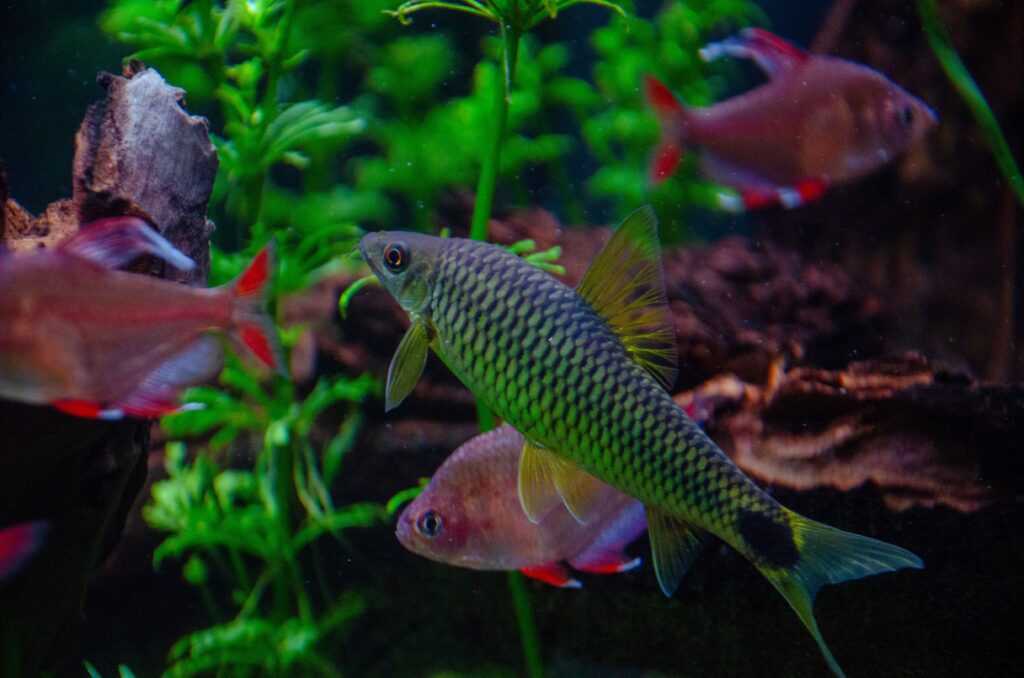
Symptoms of ammonia poisoning in tropical fish that demand immediate water testing
The immediate response protocol for symptoms of ammonia poisoning in tropical fish:
- Perform an immediate 25 to 50 percent water change to dilute the ammonia concentration, repeating over several days if levels remain elevated
- Stop or significantly reduce feeding for 1 to 2 days, since Aquarium Industries confirms reducing feeding dramatically lowers the waste production driving the ammonia spike
- Increase aeration immediately to support oxygen availability while the fish’s gills are already compromised
- Consider lowering tank pH below 7.0 where safely possible, since ammonia becomes less toxic in more acidic water
- Add a commercial ammonia-binding or detoxifying product to provide immediate chemical relief while biological filtration recovers
- Test daily until ammonia reaches and stabilizes at zero, since The University of Mosul’s toxicity lecture confirms that repeated water changes tailored to the ammonia concentration are the primary aquarium-based treatment approach
Feeding your fish might seem simple but what, how much, and how often you feed them makes an enormous difference to their health and longevity. Discover the best pet fish foods and learn exactly how to feed your fish properly with these practical, easy-to-follow feeding tips that keep your aquatic companions thriving, colorful, and full of life.
Frequently Asked Questions About White Spots on Fish Tank Mates Treatment
The fastest white spots on fish tank mates treatment combines raised temperature with a commercial Ich medication applied to the entire tank, since Aquarium Industries confirms increased temperature shortens the parasite life cycle and speeds recovery. Treat all tank mates simultaneously since exposure has almost certainly already occurred throughout the tank even without visible spots on every fish.
How to cure swim bladder disease in goldfish naturally usually starts with a 24 to 72 hour fast followed by a skinned cooked pea to relieve digestive pressure. WikiHow confirms that overfeeding and constipation are the most common triggers, and switching to sinking pellets prevents the air-gulping behavior that worsens buoyancy problems.
Early signs of dropsy in betta fish include appetite loss, lethargy, clamped fins, staying near the surface, and subtle color fading before any visible belly swelling appears. Bettafish.org confirms that catching these early behavioral changes rather than waiting for the classic pinecone scale-flaring dramatically improves treatment success odds.
Symptoms of ammonia poisoning in tropical fish include gasping at the surface, red or purple gills, red streaking on the body and fins, lethargy, appetite loss, and cloudy eyes. Wikipedia confirms gill damage can occur at levels as low as 0.25 mg/L, making immediate water testing and a 25 to 50 percent water change the critical first response.
📊 Interactive Pet Health & Care Calculators
Plan your pet’s healthcare and daily budget with our free interactive tools:
🐾 Related Resources & Interactive Tools in This Guide:
- Interactive Calculator: Pet Nutrition & Calorie Calculator — Determine exact daily caloric needs and macronutrient balance for dogs and cats.
- Clinical Resource: Royal Canin Kitten Food: Stop Tummy Troubles in 7 Easy Steps!
- Behavior & Training Guide: Why Do Dogs Make Funny Faces When They Sleep: 14 Astonishing Dog Face Facts
- Related Expert Guide: What to Put in Dog Food to Stop Eating Poop
Dietary & Caloric Precision: For accurate daily caloric targets calibrated to your pet’s age, weight, and activity, consult our Pet Nutrition & Calorie Calculator. If managing chronic pruritus or suspected food intolerances, review our Dog Food Allergy Elimination Protocol.
📚 Related Topic Cluster Guides & Veterinary Tools
Explore our complete Pet Care & Clinical Health Hub for comprehensive guides, veterinary diagnostic checklists, and daily care protocols.