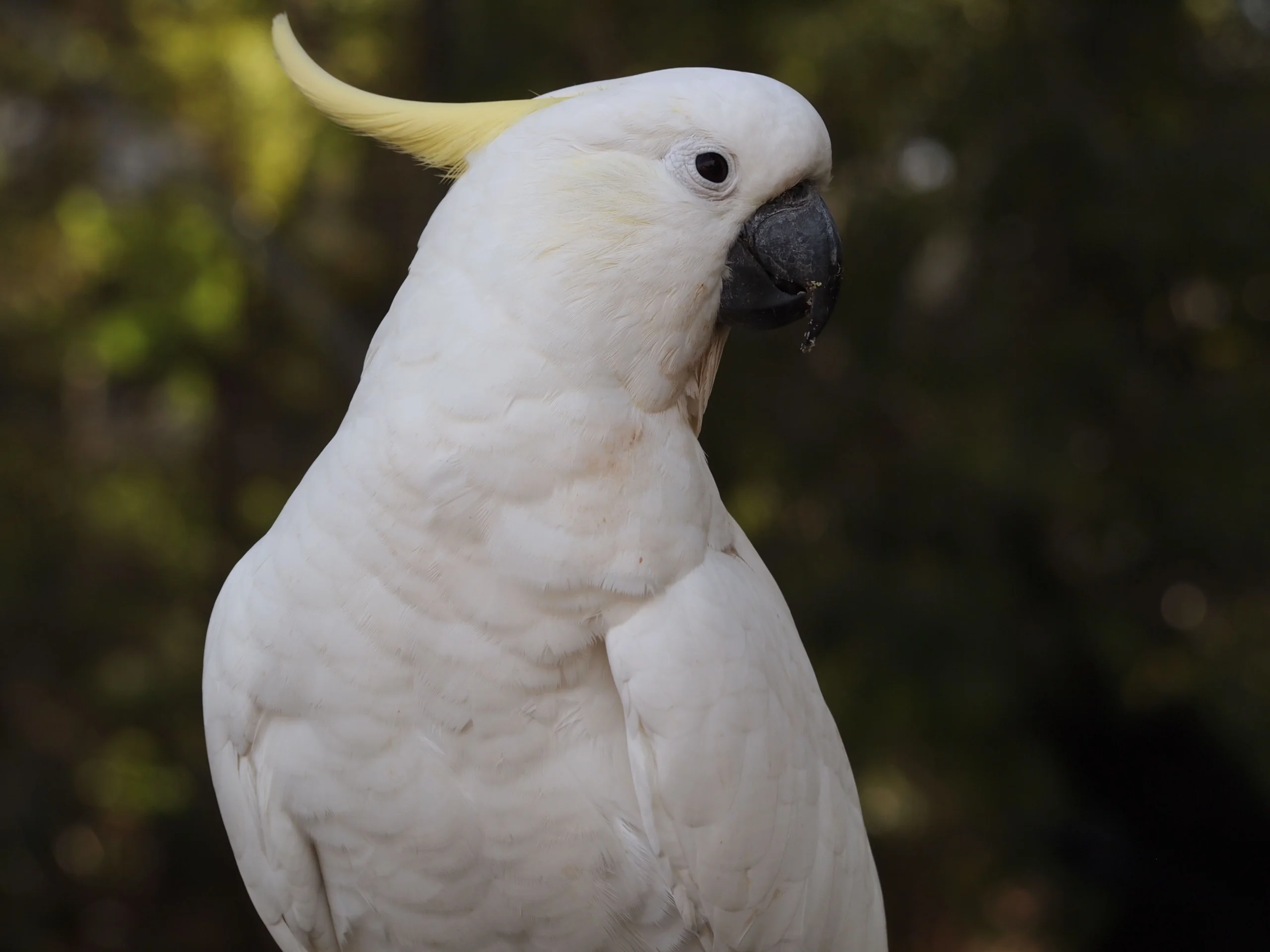
THE INTELLIGENCE OF BIRDS:
11 SCIENTIFIC AVIAN DISCOVERIES
Avian intelligence rivals non-human primates through dense forebrain neuronal packing, episodic memory, recursive tool fabrication, causal reasoning, vocal mimicry synthesis, and long-term facial recognition capabilities.
FOREBRAIN PACKING
RIVALS PRIMATE CORTEX
Parrots and corvids possess forebrain neuronal densities double that of primates of equivalent brain mass. The avian pallium packs small, non-myelinated neurons with short interconnecting axons, enabling high-speed information processing, complex abstraction, and executive working memory in a lightweight skull.
💡 ACTION: Provide puzzle toys that require multi-stage mechanical problem-solving to stimulate rapid avian synaptic processing.
SEQUENTIAL MULTI-STAGE
TOOL ENGINEERING
New Caledonian crows and Goffin's cockatoos independently shape and modify natural materials into specialized hooks and probes. They plan multi-step actions in advance, selecting sticks of specific lengths and bendable wires to retrieve hidden food morsels locked within complex puzzles.
💡 ACTION: Offer raw bamboo slivers, safe cardboard, and non-toxic pine blocks for natural splintering and shaping activities.
EPISODIC RECOLLECTION OF
TIME AND PLACE
Scrub jays cache thousands of pine seeds across square miles of forest, recalling exact cache coordinates months later. Crucially, they remember perishable food caches like mealworms and retrieve them before rot sets in, proving cognitive what-where-when mental time travel.
💡 ACTION: Hide foraging treats in rotating room locations daily to activate your pet bird's instinctual spatial memory maps.
LIFELONG RECOGNITION OF
INDIVIDUAL HUMAN FACES
Wild ravens and domestic parrots accurately differentiate individual human facial features, remembering whether a person was benevolent or threatening for over five years. They transmit threat appraisals across flock members through social vocal alarms, warning peers about specific humans.
💡 ACTION: Always interact with companion birds using calm facial expressions and consistent vocal greetings to cultivate trust.
COMPOSITIONAL VOCAL
SYNTAX AND SEMANTICS
African Grey parrots and Japanese tits utilize structured vocal syntax, combining warning calls and alert notes in strict grammatical orders to convey compound meanings. Studies demonstrate contextual referential communication, where sounds represent distinct objects and environmental predators rather than mere reflex cries.
💡 ACTION: Talk to birds in descriptive sentences, labeling colors, shapes, and textures to expand their functional vocabulary.