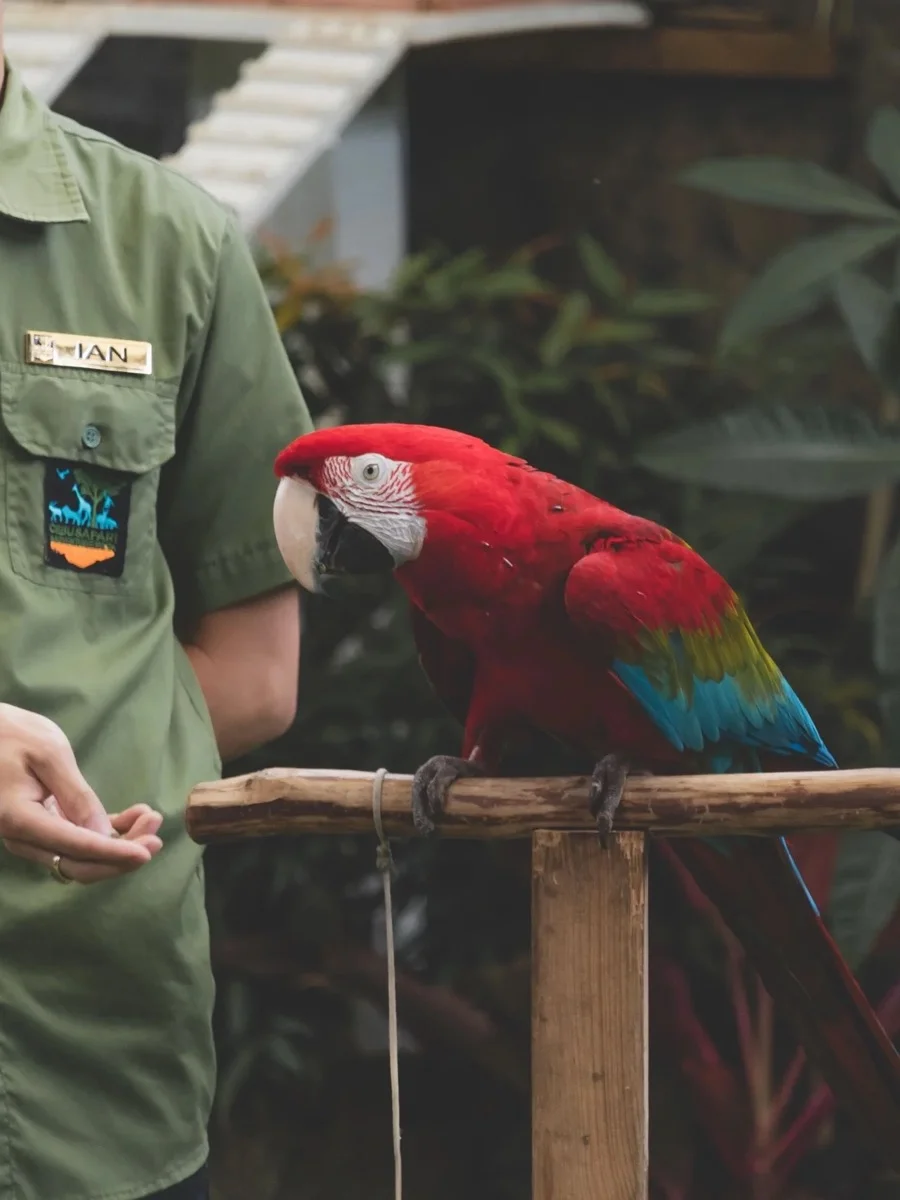
HOW TO TEACH A BIRD
TRICKS WITH CLICKER TRAINING: STEP-BY-STEP
Clicker train a pet bird by charging the clicker (click = immediate treat delivery), using a target stick to guide movement, keeping sessions under 5 minutes, and reinforcing desired behaviors through progressive shaping.
ESTABLISH THE
AUDITORY BRIDGE STIMULUS
The clicker is an acoustic event marker. Click and immediately deliver a tiny treat (a single millet ball or sunflower seed sliver). Repeat 20 times over 2 days until your bird perks up and looks for food the instant it hears the click.
💡 ACTION: Use a soft-clicker or click through your pocket for timid parakeets easily startled by loud metal snaps.
TEACH TARGET
STICK TOUCHING
Present a simple wooden chopstick near the perch. The instant your bird taps the tip with its beak out of curiosity, click and reward. Repeat until the bird eagerly moves across the perch to touch the stick wherever placed.
💡 ACTION: Target training allows you to guide birds into cages, onto scales, and through agility hoops without physical force.
REINFORCE INCREMENTAL
SUCCESSIVE STEPS
Never expect a full trick immediately. To teach 'wave', reward a slight foot lift first. Then reward lifting it higher, and finally reward holding it up for two seconds. Break every trick into micro-behaviors.
💡 ACTION: If your bird fails three times in a row, lower the criteria to the previous successful step.
CAP SESSIONS AT
3 TO 5 MINUTES
Avian attention spans are intense but short. Train for 3 to 5 minutes once or twice daily when your bird is slightly hungry before breakfast. End on a successful, joyful repetition so your bird anticipates the next session.
💡 ACTION: Never train when your bird is distracted by household noises, screaming, or preening routines.
USE 100%
POSITIVE REINFORCEMENT
Birds do not understand dominance, physical discipline, or punishment; negative techniques cause irreversible fear biting and screaming. Positive clicker training builds deep trust, exercise, and mental stimulation.
⚡ PRO RULE: Fade the target stick once the visual hand cue or verbal cue is established, using the clicker only to mark new trick nuances.