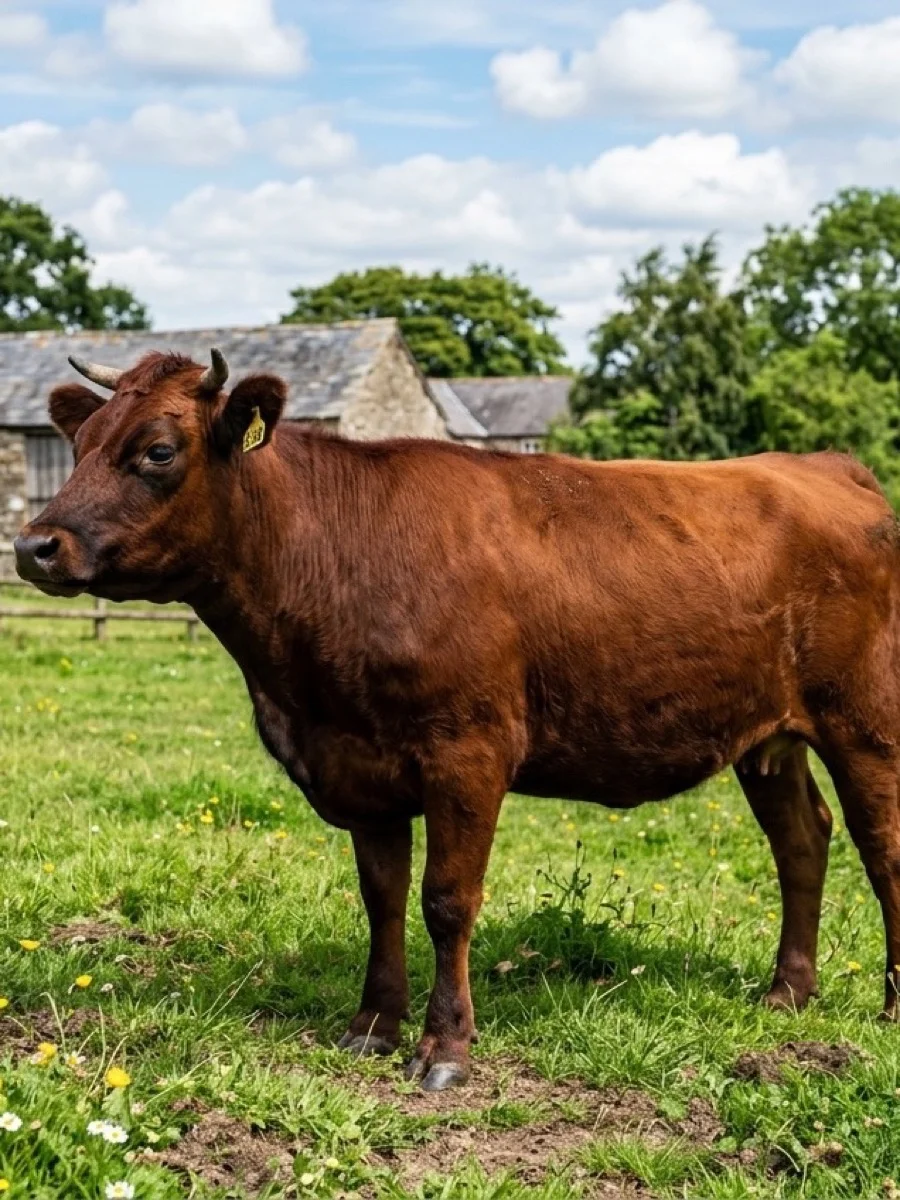
DEXTER COW CARE GUIDE: HEALTH,
PASTURE & HERITAGE BREED CARE
Raise Dexter cattle successfully by providing 1 acre of quality pasture per cow-calf pair, testing for chondrodysplasia (bulldog gene), supplying loose cattle minerals, and utilizing low-stress flight-zone handling techniques.
TEST FOR CHONDRODYSPLASIA
& PHA GENES
Dexters carry two forms: short-legged (heterozygous chondrodysplasia) and non-carrier proportionate. Never breed two carrier short-legged Dexters together; 25% of offspring will inherit lethal bulldog calf syndrome.
💡 ACTION: Perform simple DNA tail hair testing through the American Dexter Cattle Association before breeding.
PROVIDE 1 ACRE
PER PAIR WITH ROTATION
Dexters weigh roughly half of standard beef breeds (600–900 lbs for cows, 1,000 lbs for bulls) and consume 30% less feed. Budget 1 acre per cow-calf pair on good forage, dividing pastures into 4 paddocks for rotational recovery.
💡 ACTION: Rotate cattle when pasture is grazed down to 4 inches, allowing grass to regrow to 8 inches before returning.
BALANCE FORAGE FOR
MILK & LEAN BEEF
Dexters are prized dual-purpose cattle producing 1.5–3 gallons of 4% butterfat milk daily and lean gourmet beef on grass alone. Provide rich clover-grass hay, clean water, and access to loose high-magnesium minerals.
💡 ACTION: In spring, feed high-magnesium mineral mix to prevent grass tetany (hypomagnesemia) during lush pasture flushes.
UTILIZE TEMPLE GRANDIN
FLIGHT ZONE RULES
Dexters are naturally gentle and docile, making them ideal for homesteaders. Move calmly at their point of balance (shoulder level) without yelling or electric prods. Build solid, curving corrals with sturdy latches.
💡 ACTION: Spend 10 minutes daily feeding cattle cubes by hand to maintain sweet, halter-trainable dispositions.
MANAGE HOOVES,
PARASITES & VACCINATIONS
Dexters are exceptionally hardy, frequently living and producing calves past 18 years. Perform fecal egg counts (FEC) before deworming to prevent anthelmintic resistance, and vaccinate annually with a 7-way blackleg bacterin.
⚡ PRO RULE: Inspect udders and teats after calving; Dexter mothers have strong maternal instincts and high udder suspension longevity.