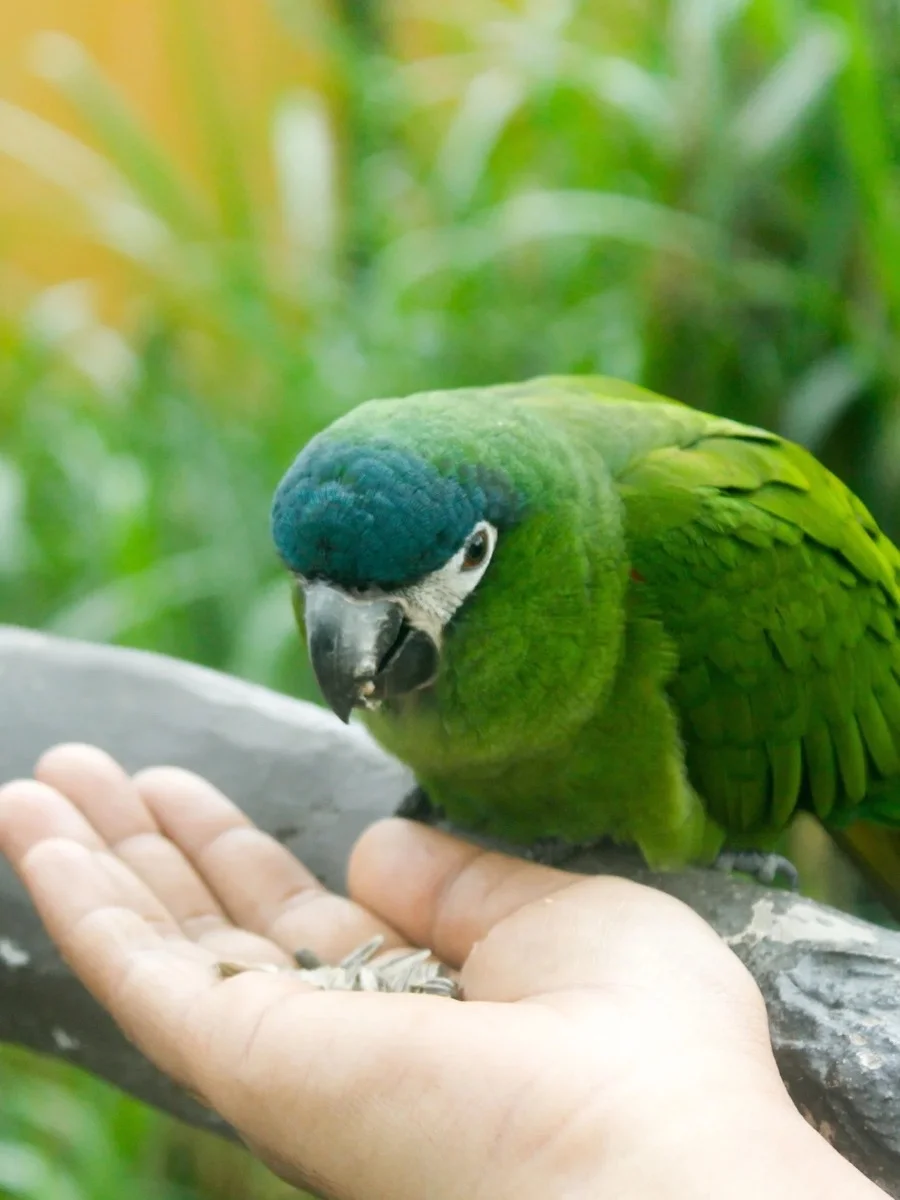
HOW TO BE A RESPONSIBLE BIRD
OWNER: ETHICAL CARE & SAFETY GUIDE
Practice responsible pet bird ownership by eliminating toxic non-stick (PTFE) cookware from your home, feeding a veterinary-formulated pellet diet (70% pellets, 30% fresh veggies), and providing 10–12 hours of dark, quiet sleep.
ELIMINATE NON-STICK
PTFE/TEFLON HAZARDS
Birds possess unidirectional airflow with ultra-thin air sacs that absorb airborne toxins instantly. Overheated Teflon (PTFE/PFOA) cookware, scented candles, aerosol sprays, and self-cleaning ovens produce fatal toxicosis in minutes.
💡 ACTION: Switch exclusively to stainless steel, ceramic, or cast iron cookware in homes with companion birds.
CONVERT FROM SEED
TO FORMULATED PELLETS
All-seed diets are dangerously high in lipids and deficient in Vitamin A, calcium, and essential amino acids. Seeds cause fatal hepatic lipidosis (fatty liver). Transition birds to 70% cold-pressed pellets and 30% fresh raw vegetables.
💡 ACTION: Offer dark leafy greens (kale, dandelion), sweet potato, and broccoli; strictly avoid avocado, chocolate, and caffeine.
PROVIDE 10–12 HOURS
UNINTERRUPTED DARK SLEEP
Tropical birds require strict 10 to 12 hour night cycles. Inadequate sleep elevates reproductive hormones, triggering chronic egg laying, feather-destructive behavior (plucking), and territorial aggression.
💡 ACTION: Cover cages with breathable blackout fabric and maintain total silence in a designated sleep room.
SIZE ENCLOSURES FOR
FULL WINGSPAN EXTENSION
Enclosures must allow the bird to fully spread both wings without touching bars or perches. Bar spacing must be precisely sized (1/2 inch for parakeets, 3/4 to 1 inch for large parrots) to prevent head entrapment.
💡 ACTION: Replace uniform smooth dowels with varied-diameter natural bark perches (manzanita, ribbonwood) to prevent bumblefoot.
DEPLOY DAILY
DESTRUCTIVE FORAGING TOYS
Parrots have the cognitive intelligence of human toddlers. Wild birds spend 60% of their day foraging. Provide destructible softwood, shreddable paper, and hidden puzzle feeders to satisfy natural problem-solving drives.
⚡ PRO RULE: Establish care with an avian-boarded veterinarian (ABVP) for annual wellness blood panels and baseline gram stains.